
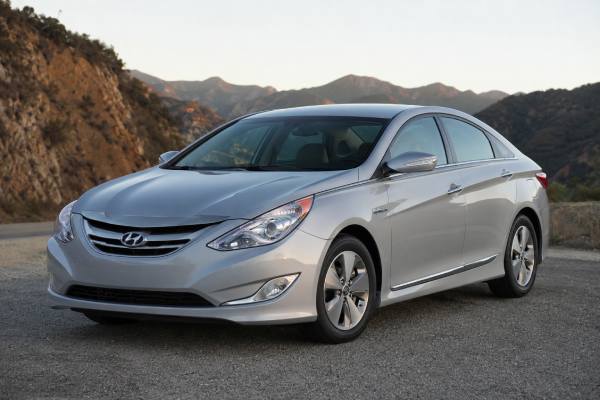
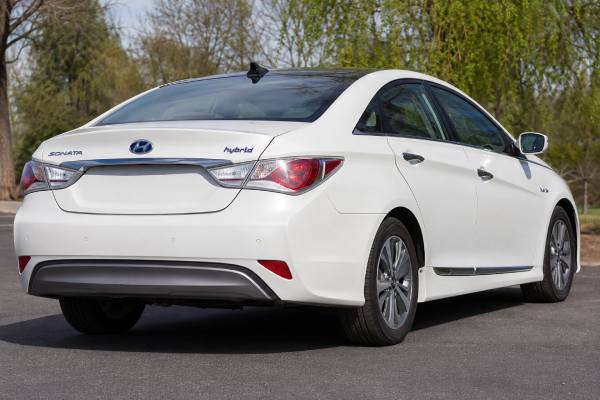
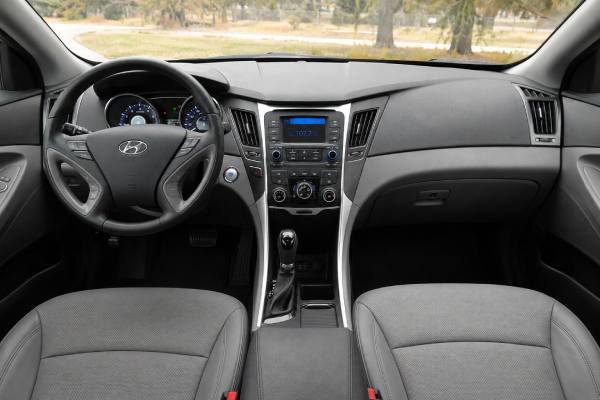
The 2011–2013 Hyundai Sonata YF with the Theta II 2.4 GDi engine is one of the more important midsize sedans of its era. It gave Hyundai a sharper design, a roomy cabin, direct-injection power, strong fuel economy for its size, and a long standard equipment list at a price that often undercut Japanese and American rivals.
For today’s used-car buyer, the 2.4 GDi Sonata can still make sense as a comfortable, efficient, and practical family sedan. The main decision point is not whether the car is spacious or pleasant to drive; it is whether the exact car has the right engine campaign history, service records, oil-change discipline, and underbody condition. A well-documented example can be a useful daily driver. A neglected one can become expensive quickly.
Owner Snapshot
- The 198 hp 2.4 GDi engine gives the Sonata YF lively midsize-sedan performance without needing a V6.
- Cabin space is generous, with a large rear seat and a 16.4 cu ft trunk for family or commuter use.
- Safety equipment was strong for the period, with standard stability control, six airbags, and good IIHS results in key tests.
- The major ownership caveat is Theta II connecting-rod bearing risk, so recall, KSDS update, and engine-service proof matter.
- A practical oil-service target is every 7,500 miles or 12 months in normal use, and 3,750–5,000 miles in severe city, hot, cold, or short-trip use.
Table of Contents
- Sonata YF 2.4 GDi Used Overview
- Sonata YF 2.4 GDi Specs Data
- Sonata YF Trims and Safety
- Reliability, Issues and Service Actions
- Maintenance and Buyer’s Guide
- Driving, Performance and Economy
- How Sonata YF Compares
Sonata YF 2.4 GDi Used Overview
The Hyundai Sonata YF was sold as a midsize front-wheel-drive sedan with a strong focus on interior space, fuel economy, and value. The 2.4 GDi version used Hyundai’s Theta II direct-injection four-cylinder engine, rated at 198 hp in most trims. In SE form with dual exhaust, output was commonly listed at 200 hp, but the core engine family, layout, and ownership considerations are closely related.
Unlike some competitors that offered V6 engines during the same period, the YF Sonata leaned heavily on advanced four-cylinder engines. The naturally aspirated 2.4 GDi replaced traditional multi-port injection with gasoline direct injection, helping the car deliver good power while keeping official fuel economy competitive. In normal use, it feels stronger than many older 2.4–2.5L midsize sedans, especially once revs rise past the midrange.
The Sonata’s other major strength is packaging. It is closer to the larger end of the midsize class inside, with generous front and rear legroom, a broad cabin, and a trunk that is useful for luggage, groceries, work gear, or a family stroller. The roofline looks coupe-like from outside, but the cabin remains practical enough for everyday sedan duty.
There are two main buyer profiles for this car. The first is someone looking for an affordable commuter with automatic transmission, decent fuel economy, and enough space for passengers. The second is someone comparing a higher-trim Limited or SE against older Camry, Accord, Altima, Fusion, and Malibu models. In both cases, the Sonata can look attractive because it often offers more equipment for the money.
The caution is reliability history. The 2.4 GDi engine is part of the Theta II family affected by well-known connecting-rod bearing recalls, inspections, software updates, and warranty-extension programs in several markets. That does not mean every car will fail, and many engines have covered high mileage. It does mean a buyer should treat recall completion, oil-change proof, engine noise, oil level, and diagnostic scan results as central parts of the purchase decision.
The best examples are not simply the lowest-mileage cars. A higher-mileage Sonata with documented oil services, completed campaigns, a quiet cold start, clean underbody, smooth transmission, and evidence of proper repairs can be a safer buy than a lower-mileage car with missing records. For this model, paperwork is not a bonus; it is part of the car’s value.
Sonata YF 2.4 GDi Specs Data
The figures below apply primarily to the 2011–2013 Hyundai Sonata YF 2.4 GDi gasoline sedan in North American-style specification. Exact values can vary by market, trim, transmission, production date, wheel package, and VIN.
Powertrain and Efficiency
| Item | Hyundai Sonata YF 2.4 GDi |
|---|---|
| Engine code | Theta II GDi, commonly G4KJ family |
| Engine layout | Inline-4, aluminum block and head, DOHC, 4 valves per cylinder |
| Bore × stroke | 88.0 × 97.0 mm (3.46 × 3.82 in) |
| Displacement | 2.4 L (2,359 cc) |
| Induction | Naturally aspirated |
| Fuel system | Gasoline direct injection |
| Compression ratio | 11.3:1 |
| Maximum power | 198 hp (148 kW) @ 6,300 rpm; SE dual-exhaust versions often listed at 200 hp |
| Maximum torque | 249 Nm (184 lb-ft) @ 4,250 rpm |
| Timing drive | Chain |
| Rated efficiency | About 9.8 city / 6.9 highway / 8.7 combined L/100 km; 24 / 34 / 27 mpg US; 28.8 / 40.8 / 32.4 mpg UK |
| Real-world highway at 120 km/h (75 mph) | Typically about 7.3–8.5 L/100 km; 28–32 mpg US; 34–39 mpg UK when healthy and correctly aligned |
Transmission and Driveline
| Item | Specification |
|---|---|
| Transmission | 6-speed automatic with SHIFTRONIC is the mainstream fitment; 6-speed manual listed in some early/base-market configurations |
| Automatic transmission family | Hyundai 6-speed automatic, commonly A6MF-series depending market and calibration |
| Drive type | Front-wheel drive |
| Differential | Open front differential |
Chassis and Dimensions
| Item | Specification |
|---|---|
| Front suspension | MacPherson strut, coil springs, stabilizer bar |
| Rear suspension | Multi-link independent rear suspension, coil springs, stabilizer bar |
| Steering | Power-assisted rack-and-pinion; ratio about 14.5:1 depending trim |
| Brakes | Four-wheel disc brakes with ABS, brake assist, and electronic brake-force distribution; front discs about 300 mm (11.8 in), rear discs about 284 mm (11.2 in) |
| Common tyre sizes | 205/65 R16, 215/55 R17, 225/45 R18 depending trim and wheel package |
| Ground clearance | About 135 mm (5.3 in) |
| Length / width / height | 4,821 / 1,834 / 1,471 mm (189.8 / 72.2 / 57.9 in) |
| Wheelbase | 2,794 mm (110.0 in) |
| Turning circle | About 10.9 m (35.8 ft), kerb-to-kerb |
| Kerb curb weight | About 1,451–1,504 kg (3,199–3,316 lb), depending trim and equipment |
| GVWR | About 1,950 kg (4,300 lb), but confirm on the door-jamb certification label |
| Fuel tank | 70 L (18.5 US gal / 15.4 UK gal) |
| Cargo volume | 464 L (16.4 ft³), SAE trunk measurement |
Performance and Capability
| Metric | Typical Figure |
|---|---|
| 0–100 km/h (0–62 mph) | About 8.6–9.4 seconds depending transmission, tyres, condition, and test method |
| 0–60 mph | About 8.1–8.8 seconds in typical independent testing conditions |
| Top speed | About 210 km/h (130 mph), market and limiter dependent |
| 100–0 km/h braking | About 40–42 m (131–138 ft) on good tyres and healthy brakes |
| Towing capacity | Not generally promoted as a U.S. tow-rated sedan; confirm local type approval before towing |
| Payload | Usually about 445–500 kg (980–1,100 lb), depending curb weight and door-label GVWR |
Fluids and Service Capacities
| System | Specification and Capacity |
|---|---|
| Engine oil | 5W-20 commonly recommended for fuel economy; 5W-30 acceptable by climate/market. Use API SM / ILSAC GF-4 or newer equivalent. Capacity about 5.0 L (5.3 US qt) with filter. |
| Coolant | Ethylene-glycol coolant suitable for aluminum engines, typically 50/50 mix. Capacity about 6.6 L (7.0 US qt). |
| Automatic transmission fluid | Hyundai/Kia ATF SP-IV specification. Total capacity about 7.1 L (7.5 US qt); drain-and-fill amount is lower. |
| Manual transmission fluid | SAE 75W/85 GL-4 where manual transmission is fitted. Capacity about 1.8 L (1.9 US qt). |
| Brake fluid | DOT 3 or DOT 4. Capacity roughly 0.7–0.8 L (0.7–0.8 US qt) for system service. |
| A/C refrigerant | R134a, commonly about 550 g (19.4 oz); verify underhood label by VIN and market. |
| A/C compressor oil | PAG-type oil, commonly about 150 mL (5.1 fl oz); verify compressor and label before service. |
| Key torque values | Wheel nuts about 88–107 Nm (65–79 lb-ft); oil drain plug about 35–45 Nm (26–33 lb-ft); spark plugs commonly about 15–25 Nm (11–18 lb-ft). Always confirm by VIN-specific service data. |
Safety and Driver Assistance
| Item | Availability or Rating |
|---|---|
| IIHS | 2013 model listed as Top Safety Pick, with Good ratings in moderate overlap front, side, roof strength, and head restraints; small overlap driver-side rated Marginal |
| NHTSA | Commonly promoted with a 5-star overall federal rating under the applicable period test program |
| Airbags | Six airbags: dual front, front seat-mounted side, and full-length side-curtain airbags |
| Stability and braking systems | Electronic stability control, traction control, ABS, brake assist, electronic brake-force distribution |
| ADAS | No modern AEB, ACC, lane keeping, or cyclist detection on this generation. Camera/navigation features vary by trim and package. |
Sonata YF Trims and Safety
The 2011–2013 Sonata YF range was built around three main gasoline trims in many North American configurations: GLS, SE, and Limited. Equipment changed by model year and market, but the basic trim logic remained easy to understand.
GLS was the value trim. It typically included the 2.4 GDi engine, front-wheel drive, cloth seating, alloy wheels, Bluetooth, stability control, traction control, ABS, and the full airbag package. It is often the most affordable used example, and it can be the smartest buy if maintenance records are strong. The main trade-off is that many GLS cars have simpler interiors and fewer comfort features.
SE was the sportier trim. It is the easiest to identify by its 18-inch wheels, firmer suspension tuning, sportier interior details, paddle shifters on automatic versions, and dual-exhaust setup on 2.4L cars. The SE feels more alert and controlled, especially in quick lane changes, but it rides more firmly and its low-profile tyres cost more to replace. On rough roads, a GLS or Limited on 16- or 17-inch wheels may feel calmer.
Limited was the comfort-oriented trim. It usually brought leather upholstery, heated seats, dual-zone climate control, upgraded cabin trim, and available navigation or premium audio packages. A Limited can feel far more upscale than a base midsize sedan from the same period, but buyers should check every power feature carefully. Sunroof drains, seat heaters, navigation screens, backup cameras, door locks, and audio controls should all be tested during inspection.
Year-to-Year Notes
For 2011, the Sonata YF was fresh and attracted attention for its styling, direct-injection engine, and strong equipment level. By 2012 and 2013, feature availability and packages had evolved, and more cars were sold with automatic transmission. The most important year-to-year issue for a used buyer is not a cosmetic update; it is whether the vehicle falls into affected engine recall or service-campaign groups and whether the work was completed.
Quick identifiers include the rear badge, wheel size, exhaust layout, seat material, steering-wheel controls, navigation screen, and VIN/build label. For U.S.-built Sonata YF cars, the VIN commonly starts with 5NP. That is useful when checking recall applicability, but it is not enough by itself; the exact VIN must still be checked through official systems.
Safety Equipment and Ratings
The Sonata YF was well-equipped for passive and basic active safety in its period. Six airbags were standard, including front, front-side, and curtain coverage. Electronic stability control and traction control were also standard, which mattered because not all older midsize sedans had these systems across every trim in earlier years.
Child-seat support includes LATCH anchors for the rear outboard seats and a center tether point. As with any sedan, buyers should physically test their child seats because the sloping roofline and rear-seat cushion angle may affect installation ease.
The IIHS record is generally positive for the period, especially in moderate overlap front, side impact, roof strength, and head restraint testing. The small-overlap test is a tougher later-style crash scenario, and the Sonata’s Marginal result there is worth knowing if maximum crash-test performance is a top priority.
Modern driver assistance is limited. This generation does not offer the kind of forward automatic emergency braking, adaptive cruise control, lane centering, blind-spot intervention, or traffic-sign recognition found in newer sedans. Any camera or navigation equipment should be treated as convenience equipment, not as a substitute for modern ADAS.
If windshield, steering, or suspension repairs have been performed, there are no complex camera/radar calibrations comparable to newer cars. However, ABS, steering-angle, yaw, and stability-control systems should still be scanned if warning lights are present or if the car has been in a collision.
Reliability, Issues and Service Actions
Reliability is the most important section for this Sonata. The car’s cabin, performance, and value are appealing, but the 2.4 GDi engine has a known history that requires careful screening. A buyer should not judge one of these cars by mileage alone.
| Issue | Prevalence | Severity | Typical Signs | Best Response |
|---|---|---|---|---|
| Connecting-rod bearing wear | Common enough to be a core buying concern | High | Cold or warm knocking, oil-pressure warning, reduced power, P1326, limp mode, stalling risk | Verify recalls, KSDS update, engine inspection or replacement history, and warranty eligibility by VIN |
| Oil consumption | Occasional to common with age | Medium to high | Low dipstick level, blue smoke, catalyst codes, rough running, owner topping up frequently | Perform oil-consumption test, inspect PCV system, check service records, avoid cars run low on oil |
| GDI intake carbon buildup | Occasional | Medium | Rough cold idle, misfire, hesitation, reduced high-rpm pull | Diagnose first; intake valve cleaning may be needed on high-mileage cars |
| Automatic transmission shift flare or harshness | Occasional | Medium | Delayed engagement, harsh 2–3 or 3–4 shifts, shudder, dirty ATF | Check for software updates, service ATF with correct SP-IV fluid, inspect mounts and sensors |
| Brake pedal stopper deterioration | Known service action on affected years | Low to medium | Brake lights stay on, shift interlock odd behavior, traction warning | Check recall or extended-warranty completion and replace stopper if aged or missing |
| Suspension, steering, and wheel bearings | Common with mileage | Low to medium | Clunks, wandering, uneven tyre wear, humming at speed | Inspect struts, links, bushings, ball joints, tie rods, bearings, and alignment |
| Corrosion in salt climates | Common by region | Medium to high | Rusty rear suspension, brake lines, subframe edges, exhaust, rocker pinch welds | Lift inspection before purchase; avoid severe structural or brake-line corrosion |
Theta II Bearing Concerns
The main engine issue involves connecting-rod bearing wear that can lead to knocking, reduced power, oil-pressure warnings, engine seizure, or stalling. Earlier service actions focused heavily on machining debris and oil-flow restriction, while later campaigns expanded inspection and remedy paths for additional affected vehicles. The official remedy path may include inspection, software updates, or engine replacement, depending on VIN, campaign status, symptoms, and dealer findings.
The Knock Sensor Detection System update is especially important. It is designed to detect vibration patterns associated with bearing wear and place the car into a protective mode before catastrophic damage. A car that has not had the update, or has unclear campaign history, deserves extra caution.
On a test drive, listen for metallic knocking at cold start, under light throttle, and after full warm-up. Check the oil level before starting if possible. A car with a low dipstick, fresh oil added with no service record, or a seller who says “they all make that noise” should be treated carefully.
Other Engine and Fuel-System Issues
Because the 2.4 GDi uses direct injection, intake valves do not receive the same fuel-washing effect as port-injected engines. Over high mileage, carbon deposits can form on intake valves. Symptoms can mimic ignition or injector problems, so diagnosis should include scan data, misfire counters, fuel trims, compression or leakdown testing when needed, and inspection for vacuum leaks.
Ignition coils, spark plugs, high-pressure fuel pump issues, oxygen sensors, and EVAP faults can also appear with age. These are not unusual for an older direct-injection sedan, but they should not be ignored because poor running can stress the catalyst and worsen fuel economy.
The timing chain does not have a normal scheduled replacement interval like a belt. It should be inspected or diagnosed if there is start-up rattle, cam/crank correlation fault codes, metal debris, poor maintenance history, or oil starvation. Chain, guide, or tensioner replacement should be based on symptoms, measurements, and official service criteria.
Recalls, Campaigns, and Records
For a used Sonata YF, ask for proof of:
- Engine recall inspection or replacement where applicable.
- Knock Sensor Detection System software update.
- Any engine warranty-extension or customer-satisfaction program status.
- Brake pedal stopper recall or extended coverage completion.
- Seat-belt pretensioner and airbag-related recall completion where applicable.
- Dealer service printout showing campaign status by VIN.
A seller’s verbal statement is not enough. The best proof is a dealer record, recall completion document, service invoice, or official VIN-check result. If an engine was replaced, confirm whether it was a Hyundai replacement, a used salvage engine, a rebuilt unit, or an independent repair. That distinction changes the car’s value.
Maintenance and Buyer’s Guide
A Sonata YF 2.4 GDi rewards clean oil, correct fluids, and early attention to small warning signs. The factory maintenance schedule is the baseline, but age and known engine history make conservative service sensible.
| Service Item | Practical Interval | Notes |
|---|---|---|
| Engine oil and filter | Up to 7,500 miles / 12,000 km or 12 months in normal use; 3,750–5,000 miles / 6,000–8,000 km in severe use | Use correct viscosity and specification. Check level every 1,000 miles or before long trips. |
| Engine air filter | Every 30,000 miles / 48,000 km, sooner in dust | A dirty filter can reduce economy and worsen throttle response. |
| Cabin air filter | Every 12 months or 12,000–15,000 miles | Important for HVAC airflow and defogging. |
| Spark plugs | About 97,500 miles / 156,000 km, or sooner if misfires appear | Use correct iridium plugs and torque carefully in the aluminum head. |
| Coolant | Initial long-life interval may be high, but age now makes replacement advisable if history is unknown | Use aluminum-compatible ethylene-glycol coolant and proper mix. |
| Automatic transmission fluid | Every 60,000 miles / 96,000 km in practical used-car service; sooner for severe use | Use Hyundai/Kia SP-IV specification only. Avoid universal fluids unless clearly approved. |
| Brake fluid | Every 2–3 years | DOT 3 or DOT 4. Moisture-contaminated fluid affects braking consistency and ABS components. |
| Brake pads and rotors | Inspect every service or tyre rotation | Check rear caliper operation, rotor corrosion, and brake hose condition. |
| Tyre rotation | Every 7,500 miles / 12,000 km | Align if tyre wear is uneven or steering is off-center. |
| Serpentine belt and hoses | Inspect every 30,000 miles / 48,000 km; replace when cracked, swollen, noisy, or aged | Age matters as much as mileage on a 2011–2013 vehicle. |
| Timing chain system | No routine belt-style interval | Inspect for chain stretch, guide or tensioner wear, start-up rattle, and cam/crank correlation faults. |
| 12 V battery | Test annually after 3 years; replacement often needed around 4–6 years | Weak batteries can trigger misleading electronic faults. |
Pre-Purchase Inspection Checklist
Before buying, inspect the car as if engine history, rust, and fluids are the main value drivers.
- Confirm the VIN, production date, trim, and engine type.
- Request dealer campaign printout and engine recall completion proof.
- Check whether the KSDS software update has been completed.
- Ask for oil-change receipts, not just a stamped booklet.
- Start the engine cold and listen for metallic knock, chain rattle, or rough idle.
- Check the dipstick before the test drive and again afterward.
- Scan for stored and pending codes, including misfire, catalyst, knock sensor, and transmission codes.
- Inspect under the car for oil leaks, coolant seepage, rusty subframes, brake-line corrosion, and exhaust damage.
- Test every gear, including reverse engagement and kickdown.
- Confirm all power windows, locks, HVAC modes, seat heaters, camera, audio, and steering-wheel controls work.
- Check tyre date codes, matching sizes, uneven wear, and wheel damage.
- Inspect brake pedal stopper function if brake lights behave oddly.
Recommended Years and Trims
A documented 2013 car can be attractive because it may have slightly newer equipment and less age than a 2011. That said, production date and recall status matter more than model year alone. A 2011 with a properly replaced engine, clean body, and excellent records may be a better buy than a 2013 with unknown history.
GLS is usually the best low-cost choice if you want simple commuting. SE is the better choice if you value sharper handling and like the look of the 18-inch wheels, but check tyre condition and ride quality. Limited is best for comfort and equipment, but inspect every added feature because aged convenience electronics can become nuisance repairs.
Avoid cars with active knocking, low oil, unexplained check-engine lights, overheating history, salvage titles from front-end impacts, missing recall records, or heavy underbody rust. Also be cautious with cars that have a replacement engine but no paperwork showing source, mileage, warranty, or installation details.
The long-term durability outlook is mixed but manageable. The body, interior, suspension layout, and automatic transmission can hold up well with normal care. The engine is the deciding factor. Buy the condition and history, not just the badge, mileage, or price.
Driving, Performance and Economy
The Sonata YF 2.4 GDi feels stronger than its displacement suggests. The engine does not have turbocharged low-rpm shove, but it revs freely and gives the car enough acceleration for merging, passing, and everyday commuting. Around town, the automatic transmission shifts early for economy. Press harder and it will downshift readily, though it is not as smooth or predictive as the best later transmissions.
Throttle response is generally crisp because of the direct-injection engine and light vehicle weight for the class. At low rpm, the engine can sound a little coarse compared with a Toyota Camry four-cylinder or Honda Accord 2.4, especially when cold or under load. A healthy engine should not produce metallic knocking, deep bearing noise, or heavy vibration.
Ride quality depends heavily on trim. GLS and Limited models on 16- or 17-inch wheels are the most comfortable. They absorb expansion joints and broken pavement better and are easier to live with on rough city streets. SE models with 18-inch wheels and sportier suspension feel more tied down, but they also transmit more impact harshness.
Steering is light and easy in parking lots, with enough response for normal driving. It is not a sports sedan, and feedback is modest, but the chassis feels secure at highway speeds. The long wheelbase helps straight-line stability, while the multi-link rear suspension gives the car a more composed feel than some simpler rear-suspension rivals.
Braking feel is predictable when the system is fresh. On older cars, brake performance depends on rotor condition, caliper slide lubrication, brake-fluid age, tyre quality, and rear brake condition. A soft pedal, vibration, pulling, or rusty rear rotors should be corrected before judging the car’s stopping ability.
Real-world economy varies widely. In urban use with short trips, expect about 10.0–12.5 L/100 km, or 19–24 mpg US and 23–29 mpg UK. In mixed use, a healthy car often lands around 8.5–10.0 L/100 km, or 24–28 mpg US and 29–34 mpg UK. On steady highway runs at 100–120 km/h, about 7.3–8.5 L/100 km is realistic, equal to roughly 28–32 mpg US and 34–39 mpg UK.
Cold weather, winter tyres, roof racks, poor alignment, low tyre pressure, dragging brakes, and old spark plugs can all reduce economy. A Sonata that struggles to beat 20 mpg US in gentle mixed driving should be checked for thermostat issues, brake drag, fuel-trim problems, oxygen sensor faults, carbon buildup, or transmission slip.
Towing is not a strength. In markets where sedan tow ratings are not provided or not promoted, it is better to treat the Sonata as a passenger and luggage car rather than a towing vehicle. With a full load of passengers and cargo, it remains stable, but braking distance increases and the engine works harder on grades.
How Sonata YF Compares
The 2011–2013 Sonata 2.4 GDi competes most directly with the Toyota Camry 2.5, Honda Accord 2.4, Nissan Altima 2.5, Ford Fusion 2.5, and Chevrolet Malibu 2.4. Its strongest advantages are style, equipment, cabin space, trunk size, and power for the price. Its biggest weakness is the engine-risk history that buyers must verify carefully.
| Model | Main Strength | Main Weakness | Best Buyer Fit |
|---|---|---|---|
| Hyundai Sonata YF 2.4 GDi | Strong power, roomy cabin, high equipment value | Theta II engine recall and bearing-risk history | Buyer who can verify recalls, service records, and engine condition |
| Toyota Camry 2.5 | Excellent reputation for low-stress ownership | Less distinctive styling and often higher used prices | Buyer prioritizing reliability and resale value |
| Honda Accord 2.4 | Balanced handling, efficient engine, strong cabin quality | Road noise and used-market pricing can be higher | Buyer wanting a sharper, more polished all-rounder |
| Nissan Altima 2.5 | Comfortable ride and good fuel economy | CVT durability concerns on many used examples | Buyer who values comfort but verifies CVT service and behavior |
| Ford Fusion 2.5 | Solid chassis feel and conservative powertrain | Less rear-seat and trunk appeal than the Sonata | Buyer wanting composed handling and straightforward mechanics |
| Chevrolet Malibu 2.4 | Quiet ride and often low purchase prices | Interior space and efficiency are less compelling | Buyer seeking a budget sedan with comfort-first tuning |
Against the Camry, the Sonata usually gives more visual style and equipment for the money, but the Toyota has the simpler ownership reputation. Against the Accord, the Sonata feels roomier and often cheaper, while the Honda usually feels more refined and more confidence-inspiring over high mileage. Against the Altima, the Sonata’s conventional automatic transmission may appeal to buyers wary of CVTs, but the Hyundai’s engine history balances that advantage.
The Fusion is an underrated alternative if handling feel and durability matter more than rear-seat spaciousness. The Malibu can be a good budget choice, but it does not match the Sonata’s combination of power, trunk space, and design appeal.
The Sonata YF is therefore not the safest blind purchase in the class, but it can be one of the better values when properly vetted. The right car is a documented, recall-complete, rust-free example with clean oil, quiet operation, smooth shifts, and a seller who can prove its history. The wrong car is a cheap one with missing records and engine symptoms.
References
- 2013 Hyundai Sonata 2012 (Brochure and Specifications) ([dealerinspire-brochure.s3.amazonaws.com][1])
- YF (CAN) ENG 8.qxp 2013 (Owner’s Manual Specifications) ([hyundaicanada.com][2])
- Gas Mileage of 2013 Hyundai Sonata 2026 (Fuel Economy) ([fueleconomy.gov][3])
- 2013 Hyundai Sonata 2026 (Safety Rating) ([IIHS][4])
- Part 573 Safety Recall Report 17V-226 2017 (Recall Database)
Disclaimer
This article is for informational purposes only and is not a substitute for professional diagnosis, repair advice, or official service procedures. Specifications, torque values, service intervals, fluids, capacities, recalls, and repair steps can vary by VIN, market, production date, trim, and equipment. Always verify critical information against the official owner’s manual, service documentation, dealer records, and VIN-specific recall data before buying, servicing, or repairing a vehicle.
If this guide helped you, please consider sharing it on Facebook, X/Twitter, or your preferred automotive community to support our work.