
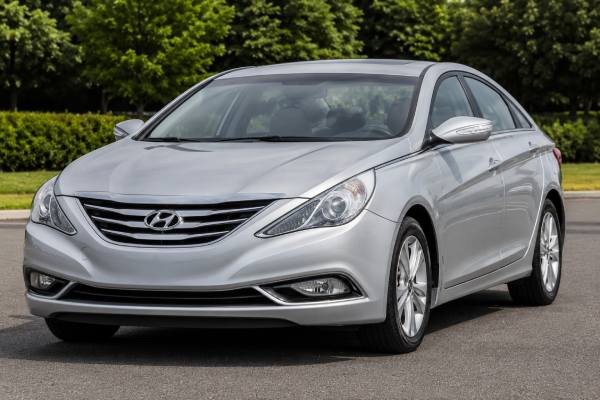
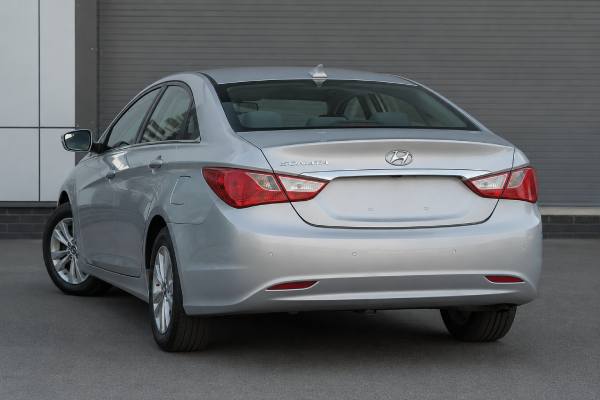
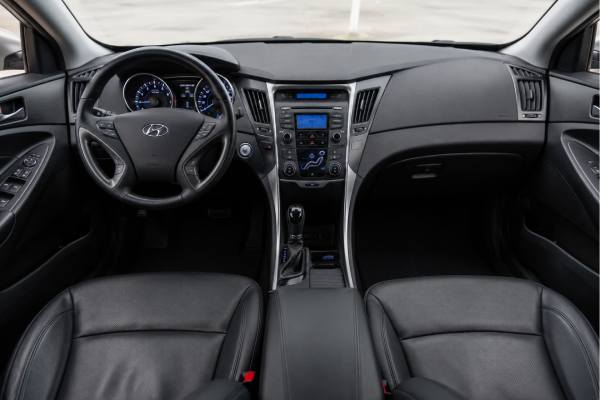
The 2011–2013 Hyundai Sonata YF with the Theta II 2.4 GDi engine is a roomy front-wheel-drive sedan that mixed bold styling, strong standard equipment, and unusually high output for a naturally aspirated four-cylinder family car. In 200 hp form, most commonly associated with the SE-style dual-exhaust specification, it offered stronger performance than many midsize rivals while keeping fuel use reasonable.
It is also a car that needs careful evaluation today. The YF Sonata can be a good used buy, but engine-bearing recalls, oil-consumption complaints, service history, and VIN-specific campaign completion matter more than mileage alone. This guide covers the technical data, ownership risks, maintenance priorities, safety ratings, driving character, and buying checks needed to judge one properly.
Quick Overview
- Spacious cabin and large trunk make it practical for families, commuting, and long highway trips.
- The 2.4 GDi delivers strong naturally aspirated performance, especially in the 200 hp dual-exhaust tune.
- Good IIHS results and available upscale equipment made the Sonata competitive when new.
- Engine recall/extended-coverage history is the main ownership caveat; verify VIN campaigns and engine documentation.
- Use a conservative oil-service rhythm of 7,500 miles / 12 months maximum, or 3,750–5,000 miles in severe use.
Table of Contents
- Hyundai Sonata YF in Context
- Hyundai Sonata YF Technical Specs
- Hyundai Sonata YF Trims and Safety
- Reliability and Service Actions
- Maintenance and Buying Advice
- Driving Feel and Economy
- Rivals and Value Comparison
Hyundai Sonata YF in Context
The YF-generation Sonata was a major break from Hyundai’s older, more conservative midsize sedans. Its “fluidic sculpture” bodywork, long wheelbase, coupe-like roofline, and high equipment levels helped it compete directly with the Toyota Camry, Honda Accord, Nissan Altima, Ford Fusion, Chevrolet Malibu, Mazda6, and Kia Optima.
For the 2011–2013 gasoline 2.4 GDi version, the key appeal is simple: it gives you a large, comfortable sedan with the running costs of a four-cylinder car and the performance of some older V6 family sedans. The Theta II 2.4 GDi is an all-aluminum, DOHC, 16-valve inline-four with gasoline direct injection, dual continuously variable valve timing, and a timing chain. Depending on trim and market tune, factory output is commonly listed as 198 hp, while the SE-style dual-exhaust specification is rated at 200 hp.
This article focuses on the U.S.-market 2011–2013 Sonata YF 2.4 GDi gasoline sedan, especially the 200 hp naturally aspirated variant. Some markets used slightly different ratings, equipment packages, fuel-economy figures, service schedules, and towing guidance, so VIN and market verification remain important.
In daily use, the car’s strengths are cabin space, a large trunk, strong highway manners, good equipment for the price, and a powertrain that feels more responsive than many basic four-cylinder rivals of the same era. The automatic transmission is a conventional six-speed unit, not a CVT, which many buyers prefer for feel and long-term serviceability.
The main reason to slow down before buying one is not the cabin, gearbox, or body structure. It is the engine history. The 2.4 GDi belongs to Hyundai’s Theta II family, and certain 2011–2013 vehicles were involved in engine inspection/replacement campaigns related to connecting-rod bearing wear and possible stalling. A good example with documented recall completion, frequent oil changes, and no abnormal engine noise can still be attractive. A cheap example with missing records, low oil, bearing knock, or unresolved campaigns is a risk.
The right way to view the Sonata YF 2.4 GDi is as a value-focused used midsize sedan that rewards careful selection. It is not the most refined car in the class, and it is not the safest blind purchase if the engine history is unknown. But with proper verification, it can offer a lot of space, comfort, equipment, and performance for the money.
Hyundai Sonata YF Technical Specs
The figures below summarize the typical U.S.-market 2011–2013 Hyundai Sonata YF 2.4 GDi sedan. Exact values can vary by model year, trim, wheels, emissions certification, build plant, and transmission.
| Item | Hyundai Sonata YF Theta II 2.4 GDi |
|---|---|
| Engine code / family | Theta II 2.4 GDi, commonly G4KJ family |
| Layout | Inline-4 gasoline, aluminum block/head |
| Valvetrain | DOHC, 4 valves per cylinder, dual CVVT |
| Bore × stroke | 88.0 × 97.0 mm (3.46 × 3.82 in) |
| Displacement | 2.4 L (2,359 cc) |
| Induction | Naturally aspirated |
| Fuel system | Gasoline direct injection (GDi) |
| Compression ratio | About 11.3:1 |
| Maximum power | 200 hp (149 kW) @ 6,300 rpm in SE-style dual-exhaust tune; many GLS/Limited listings show 198 hp (148 kW) |
| Maximum torque | Up to 252 Nm (186 lb-ft) @ 4,250 rpm; many non-SE listings show 249 Nm (184 lb-ft) |
| Timing drive | Chain |
| EPA economy, 2011 automatic | 22 city / 34 highway / 26 combined mpg US; about 10.7 / 6.9 / 9.0 L/100 km |
| EPA economy, 2011 manual | 24 city / 34 highway / 27 combined mpg US; about 9.8 / 6.9 / 8.7 L/100 km |
| Real highway at 120 km/h / 75 mph | Typically about 7.4–8.4 L/100 km (28–32 mpg US / 34–38 mpg UK), depending on tires, wind, load, and terrain |
| Item | Typical specification |
|---|---|
| Transmission | 6-speed manual on some base cars; 6-speed automatic with SHIFTRONIC on most used examples |
| Automatic transmission family | Hyundai/Kia A6-series transverse 6-speed automatic, commonly associated with A6MF applications |
| Drive type | Front-wheel drive |
| Differential | Open front differential |
| Front suspension | MacPherson strut with stabilizer bar |
| Rear suspension | Multi-link independent rear suspension with stabilizer bar |
| Steering | Power-assisted rack and pinion; about 14.5:1 ratio |
| Brakes | Vented front discs about 300 mm (11.8 in); rear discs about 284 mm (11.2 in) |
| Common tire sizes | 205/65R16, 215/55R17, or 225/45R18 depending on trim |
| Ground clearance | About 140 mm (5.5 in) |
| Length / width / height | 4,820 / 1,835 / 1,470 mm (189.8 / 72.2 / 57.9 in) |
| Wheelbase | 2,795 mm (110.0 in) |
| Turning circle | About 10.9 m (35.8 ft), curb-to-curb |
| Curb weight | About 1,450–1,550 kg (3,200–3,420 lb), depending on trim and equipment |
| GVWR | About 2,030 kg (4,475 lb), market dependent |
| Fuel tank | 70 L (18.5 US gal / 15.4 UK gal) |
| Cargo volume | About 464 L (16.4 ft³), SAE trunk volume |
| Item | Typical figure or guidance |
|---|---|
| 0–100 km/h / 0–62 mph | About 8.5–9.0 seconds, depending on trim and test conditions |
| 0–60 mph | About 7.8–8.5 seconds in independent testing |
| Top speed | About 210 km/h (130 mph), market dependent |
| 100–0 km/h braking | Typically about 38–41 m (125–135 ft) with good tires and healthy brakes |
| Towing | U.S. owner guidance generally does not recommend trailer towing for this vehicle |
| Payload | Typically around 480–570 kg (1,050–1,250 lb), depending on curb weight and trim |
| Engine oil | API SM/SN or later; SAE 5W-20 preferred in many U.S. conditions, 5W-30 also commonly allowed; about 4.6–4.8 L (4.8–5.1 US qt) with filter |
| Coolant | Ethylene-glycol long-life coolant, typically 50/50 mix; about 6.6 L (7.0 US qt) |
| Automatic transmission fluid | Hyundai/Kia SP-IV type ATF; total capacity roughly 7 L range, drain-and-fill amount lower |
| Brake fluid | DOT 3 or DOT 4, verify cap/manual |
| A/C refrigerant | R-134a on these years; charge varies by label, commonly around 550 g (19 oz) |
| Wheel lug torque | About 88–107 Nm (65–79 lb-ft) |
| Oil drain plug torque | About 39 Nm (29 lb-ft), using a new crush washer |
| Spark plug torque | Typically about 15–25 Nm (11–18 lb-ft), depending on plug type and service manual procedure |
| Item | 2011–2013 Sonata YF 2.4 GDi |
|---|---|
| IIHS | 2013 listing shows Top Safety Pick; Good in moderate overlap front, side, roof strength, and head restraints; Marginal in driver-side small overlap |
| NHTSA | Generally 5-star overall rating for later-release YF Sonata years, with year/build-date differences to verify |
| Euro NCAP | No directly equivalent Euro NCAP rating for the U.S.-spec YF sedan covered here |
| Headlight rating | Modern IIHS headlight ratings were not part of the original 2011–2013 YF evaluation period |
| ADAS | No modern AEB, ACC, lane centering, or traffic-sign assist on this generation; blind-spot and rear cross-traffic features were not typical for these years |
| Core safety equipment | Six airbags, ABS, stability control, traction control, active front head restraints, TPMS, and LATCH child-seat anchors |
Hyundai Sonata YF Trims and Safety
The core U.S. trim structure for the 2011–2013 Sonata was GLS, SE, and Limited, with hybrid and turbo variants outside the scope of this 2.4 GDi guide. The GLS was the value model, the SE was the sportier-looking and firmer-riding version, and the Limited added more comfort and appearance equipment.
The GLS usually came with cloth upholstery, air conditioning, keyless entry, power accessories, stability control, six airbags, and 16-inch wheels. Some early GLS cars were available with a six-speed manual transmission, but most used examples have the six-speed automatic. Popular equipment packages could add alloy wheels, upgraded audio, steering-wheel controls, Bluetooth, or other comfort features depending on year.
The SE is the one most closely associated with the 200 hp version of the 2.4 GDi because of its dual exhaust tuning. It also commonly brought larger wheels, sportier suspension tuning, steering-wheel paddle shifters on automatic versions, different exterior trim, and interior details such as bolstered seats or sportier trim finishes. It is the sharpest-looking 2.4 GDi Sonata of these years, but the 18-inch tire package can make the ride busier and increase road noise.
The Limited emphasized comfort. Typical features included leather upholstery, power driver seat, heated seats, upgraded audio, dual-zone climate control on some configurations, chrome exterior accents, and available navigation or sunroof packages. It is often the best fit for buyers who want the Sonata as a quiet commuter rather than a sportier sedan.
Quick identifiers include wheel size, exhaust outlet style, upholstery, front-seat controls, infotainment screen, steering-wheel paddle shifters, and trim badging. A VIN decode and window sticker are better than relying on badges alone, because equipment can vary by model year, package, and previous repairs.
Safety equipment was strong for the era. Standard stability control, traction control, ABS, front airbags, front-seat side airbags, full-length curtain airbags, active front head restraints, and LATCH anchors gave the Sonata a solid base. However, it does not have the modern crash-avoidance suite many newer buyers now expect. Automatic emergency braking, adaptive cruise control, lane-keeping assistance, cyclist/pedestrian AEB, and surround-view camera systems are not part of this generation’s mainstream equipment.
The IIHS record is broadly positive, with strong results in the original moderate-overlap, side, roof-strength, and head-restraint tests. The important nuance is small-overlap performance: the 2013 IIHS listing shows a Marginal driver-side small-overlap rating. That does not make the Sonata unsafe for its age, but it means it does not match later midsize sedans designed around newer crash-test demands.
After collision repairs, safety-related calibration concerns are simpler than on modern ADAS-heavy cars, but still important. Check that the airbag light comes on briefly and goes out, the steering angle sensor is correctly calibrated after steering/suspension work, ABS wheel-speed sensors are functioning, and any seat-belt pretensioner or airbag repairs used correct parts.
Reliability and Service Actions
Reliability is the section that matters most on the Sonata YF 2.4 GDi. Many owners have had good long-term service from these cars, but the Theta II GDi engine family has enough documented campaign history that a casual purchase is not wise.
| Issue | Prevalence | Severity | Typical signs | Best response |
|---|---|---|---|---|
| Connecting-rod bearing wear / engine failure risk | Known campaign issue on affected VINs | High | Knock, oil-pressure light, P1326, reduced power, no-start, stalling | Verify recall/KSDS status, dealer inspection, engine replacement if failed criteria are met |
| Oil consumption | Occasional to common on higher-mileage examples | Medium to high | Low dipstick level, blue smoke, fouled plugs, catalyst stress | Document consumption test, shorten oil intervals, evaluate warranty/coverage eligibility |
| GDi intake-valve deposits | Occasional | Medium | Rough idle, misfire, poor cold running, reduced response | Diagnosis first; walnut/media cleaning if deposits are confirmed |
| Automatic shift flare or harsh engagement | Occasional | Medium | Delayed Drive/Reverse, 2–3 flare, harsh downshift | Fluid condition check, software update if applicable, scan for solenoid/speed-sensor faults |
| Steering coupler / front-end clunk | Common enough to check | Low to medium | Clunk over small bumps or when rocking steering wheel | Inspect steering column coupler, tie rods, struts, sway links, control-arm bushings |
| Brake hose recall on some 2011 cars | VIN-specific | High if unresolved | Soft pedal, fluid leak, warning light | VIN check and dealer campaign completion proof |
The engine-bearing concern is the headline. Hyundai campaigns covered affected 2011–2012 Sonata YF vehicles with 2.4 GDi and 2.0T GDi engines, and a later campaign covered 2013–2014 Sonata vehicles with 2.0 and 2.4 GDi engines. The underlying risk involves bearing wear that can lead to knock, stalling, or engine damage. Many cars also received knock-sensor detection software intended to detect bearing-related vibration and place the car into a protective mode.
For a buyer, the practical question is not “Was this engine family ever recalled?” It is “What does this exact VIN show today?” Ask for dealer records showing whether engine inspection, replacement, or software updates were completed. If the engine was replaced, confirm the date, mileage, part number if available, and whether the replacement engine has been maintained properly since installation.
Oil consumption deserves separate attention. A clean-running 2.4 GDi should not need constant topping off between services. Check the dipstick before a cold start, after the test drive, and again after idling. Look for oil-change stickers, service receipts, and signs that the owner has been using the correct oil grade and interval. A car that arrives one or two quarts low is a poor candidate unless priced as a repair project.
GDi carbon build-up is not unique to Hyundai. Because fuel is injected directly into the combustion chamber, the intake valves do not receive the same fuel-washing effect as port-injected engines. Short trips, poor PCV function, long oil intervals, and high mileage can worsen deposits. Do not assume every rough idle is carbon, but do include it in the diagnostic path for misfires with good coils and plugs.
The automatic transmission is generally acceptable when serviced and not abused. Harsh shifts may come from old fluid, adaptive learning, software, solenoids, or internal wear. A proper test drive should include cold engagement into Drive and Reverse, light-throttle 1–2–3 shifts, kickdown, steady-speed cruising, and a long enough drive to warm the transmission fully.
Chassis wear is typical midsize-sedan fare: struts, sway-bar links, control-arm bushings, engine mounts, wheel bearings, brake rotors, and tires. Cars in snow-belt regions need inspection around the subframes, brake lines, rocker seams, rear suspension mounting areas, and fuel/brake pipe routing. Surface rust is normal; swollen seams, perforation, or heavily scaled brake lines are not.
Maintenance and Buying Advice
A Sonata YF 2.4 GDi should be maintained more carefully than a generic old sedan. The engine’s history makes clean oil, correct level, and documentation especially important.
| Interval | Service items |
|---|---|
| Every fuel stop or monthly | Check engine oil level, coolant level, tire pressure, lights, and visible leaks |
| 3,750–5,000 miles / 6 months in severe use | Replace engine oil and filter; rotate tires; inspect brakes, suspension, axle boots, and underbody leaks |
| 7,500 miles / 12 months maximum in normal use | Replace engine oil and filter; rotate tires; inspect brake pads/rotors, steering, suspension, exhaust, and fluid levels |
| 15,000 miles / 12–24 months | Replace cabin filter; inspect engine air filter, brake fluid, parking brake, fuel lines, vapor hoses, and battery condition |
| 30,000 miles / 24–36 months | Replace engine air filter if dirty; inspect fuel system, cooling hoses, belts, mounts, alignment, and tire wear pattern |
| 45,000–60,000 miles | Consider automatic transmission drain-and-fill under severe use; inspect spark plugs, ignition coils, PCV system, and throttle body |
| 60,000 miles / 5 years | Replace brake fluid if not already done; inspect serpentine belt, coolant hoses, radiator, thermostat behavior, and A/C performance |
| 95,000–105,000 miles | Replace spark plugs using correct iridium-type plugs; inspect coils, valve-cover gasket, timing-chain noise, and engine mounts |
| 120,000 miles / 10 years | Replace coolant if not done earlier; inspect timing chain system for noise, correlation faults, guide wear, and tensioner issues |
For fluids, stay close to official specifications. Use a quality oil meeting the correct API/ILSAC standard, with 5W-20 commonly preferred for fuel economy and 5W-30 often acceptable depending on climate and manual guidance. The automatic needs SP-IV type fluid, not a universal fluid chosen by guesswork. Brake fluid should be DOT 3 or DOT 4 as specified. Coolant should be compatible long-life ethylene glycol mixed correctly with distilled water unless using a premix.
The timing chain has no routine replacement interval like a belt, but “lifetime” should not mean ignored. Listen for start-up rattle, warm idle chain noise, cam/crank correlation codes, and metal contamination in oil. Chain, guide, and tensioner replacement is condition-based.
Pre-purchase checklist
Before buying, insist on:
- VIN recall check from Hyundai and NHTSA.
- Proof of engine campaign completion, KSDS/software updates, or engine replacement if applicable.
- Cold start after the car has sat for several hours.
- No bearing knock, no oil-pressure warning, no P1326 history without documentation.
- Oil level at the full mark and no evidence of chronic neglect.
- Smooth automatic engagement when cold and hot.
- No coolant/oil mixing, overheating history, or unexplained coolant loss.
- Even tire wear and no clunks from the front suspension or steering.
- Dry trunk, clean rear floor area, and no water intrusion around the spare-tire well.
- Clean title, consistent mileage, and no hidden airbag/structural repairs.
The best examples are usually not the cheapest ones. A well-kept GLS or Limited with complete service records may be a better buy than a rough SE with larger wheels, missing maintenance, and unresolved engine questions. If you want the 200 hp tune specifically, confirm the trim and exhaust configuration rather than relying only on a seller’s description.
Long-term durability outlook is mixed but manageable. The body, cabin, suspension, and automatic transmission can age reasonably well. The engine is the decisive factor. Buy one with the right paperwork and maintain it conservatively; walk away from one with unexplained engine noise, low oil, active warning lights, or vague recall answers.
Driving Feel and Economy
The Sonata YF 2.4 GDi feels lighter and more energetic than many older midsize sedans. The engine likes revs, but it has enough mid-range torque for normal commuting. It is not as creamy as a V6, and it can sound coarse when worked hard, but the performance is strong for a naturally aspirated four-cylinder family car of this period.
Throttle response is generally crisp because there is no turbo lag and no CVT rubber-band effect. The six-speed automatic shifts smoothly when healthy, though it may downshift more readily on hills because the 2.4 makes its best torque at higher rpm than a turbo engine. In manual-shift mode, it gives useful control for grades and passing, but it is not a sports-sedan gearbox.
Ride quality depends heavily on trim and tire size. GLS and Limited cars on 16- or 17-inch wheels are more comfortable and quieter. SE cars on 18-inch wheels look better and feel sharper, but they transmit more impact harshness over broken pavement. Steering is quick enough for the class, though feedback is not as natural as in a Mazda6 or some older hydraulic-steering rivals.
Highway stability is a strong point. The long wheelbase, low body, and aerodynamic shape help the Sonata settle well at cruising speed. Wind noise is reasonable, while tire noise varies noticeably by tire brand and wheel size. On rough concrete highways, the SE can sound busier than a Camry or Accord.
Braking performance is adequate when the system is fresh. Pedal feel should be firm and predictable. Pulsation usually points to rotor thickness variation or pad deposits rather than a fundamental design flaw. Because many cars are now more than a decade old, brake hose condition, caliper slide lubrication, fluid age, and rear brake corrosion matter more than published stopping numbers.
Real-world fuel economy depends on traffic, tires, oil condition, driving style, and climate. A healthy automatic 2.4 GDi commonly returns about 10.0–12.5 L/100 km in city use (19–24 mpg US / 23–29 mpg UK), about 7.0–8.4 L/100 km on steady highways (28–34 mpg US / 34–41 mpg UK), and about 8.5–10.0 L/100 km mixed (24–28 mpg US / 29–34 mpg UK). Cold weather, short trips, winter tires, and remote-start idling can easily worsen those numbers by 10–20 percent.
The Sonata is not a tow vehicle in U.S. guidance. For carrying passengers and luggage, it is stable and roomy. For trailer work, look elsewhere or follow market-specific documentation very carefully.
Rivals and Value Comparison
The Sonata YF 2.4 GDi competes in one of the strongest used-car classes. Its biggest advantage is value: you often get more equipment, a larger cabin, sharper styling, and strong four-cylinder performance for less money than a similarly aged Toyota Camry or Honda Accord.
| Rival | What it does better | Where the Sonata can win |
|---|---|---|
| Toyota Camry | Reputation for low-drama ownership, softer ride, broad parts support | Usually better value, more distinctive styling, strong 2.4 GDi performance |
| Honda Accord | Sharper chassis feel, strong resale value, durable powertrains when maintained | Often cheaper with more equipment; automatic feel is conventional and easy to live with |
| Nissan Altima | Comfortable ride, strong fuel economy in some versions | No CVT in the Sonata 2.4 automatic, which many used buyers prefer |
| Ford Fusion | Solid chassis, available AWD/V6 in some versions | Roomier-feeling cabin, strong feature value, simpler FWD-only decision path |
| Kia Optima | Related platform with sportier styling and similar powertrains | Sonata may be easier to find in conservative trims with lower insurance/ownership image |
| Mazda6 | More engaging steering and handling | Sonata has stronger straight-line output in 2.4 GDi form and often more cabin space |
Against the Camry, the Sonata is usually the higher-risk, higher-value choice. A Camry may cost more but often brings stronger perceived durability. A Sonata with verified engine campaign history and excellent maintenance can close that gap while costing less.
Against the Accord, the Sonata feels roomier and more feature-rich for the money, but the Accord’s chassis polish and long-term reputation are hard to ignore. Buyers who prioritize resale value may prefer the Honda. Buyers who prioritize equipment and purchase price may prefer the Hyundai.
Against the Altima, the Sonata’s conventional six-speed automatic is a meaningful advantage for many used-car shoppers. Nissan’s CVT can deliver good economy, but it is not universally loved for durability or feel. The Hyundai also feels more traditional to drive.
The final verdict is conditional. The 2011–2013 Hyundai Sonata YF 2.4 GDi is worth considering if the price reflects the market, the engine history is documented, recalls are complete, and the test drive is clean. It is not the right car to buy blindly from a vague seller. Choose the best-maintained example, not the lowest odometer reading or flashiest wheel package.
References
- Manuals & Warranties | Hyundai Resources | MyHyundai 2026 (Owner’s Manual Portal) ([MyHyundai][1])
- Gas Mileage of 2011 Hyundai Sonata 2026 (Fuel Economy) ([Fuel Economy][2])
- 2013 Hyundai Sonata 2026 (Safety Rating) ([IIHS Crash Testing][3])
- Hyundai 2026 (Sonata Engine Recall Campaign 132) ([Hyundai Auto Service][4])
- Hyundai 2026 (Sonata and Santa Fe Sport Engine Recall Campaign 162) ([Hyundai Auto Service][5])
Disclaimer
This article is for informational purposes only and is not a substitute for professional diagnosis, repair, or inspection by a qualified technician. Specifications, torque values, service intervals, recall eligibility, procedures, and equipment can vary by VIN, market, production date, trim, and prior repairs. Always verify critical information against official Hyundai service documentation, the under-hood labels, recall databases, and dealer records for the exact vehicle.
If this guide helped, please consider sharing it on Facebook, X/Twitter, or your preferred automotive community to support our work.