
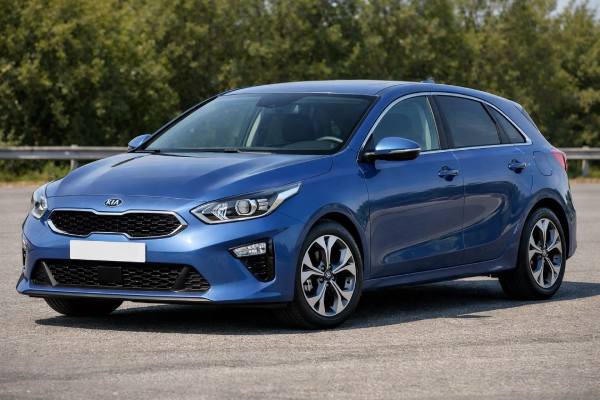
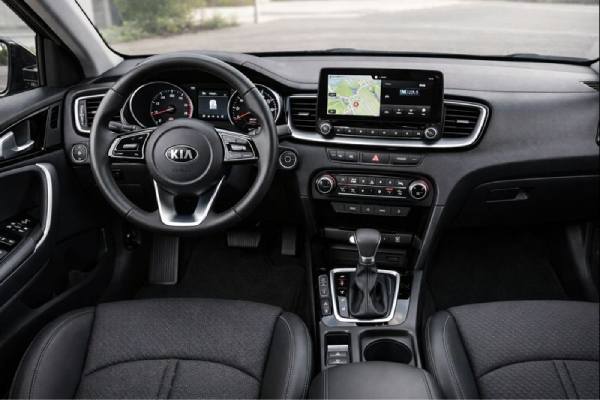
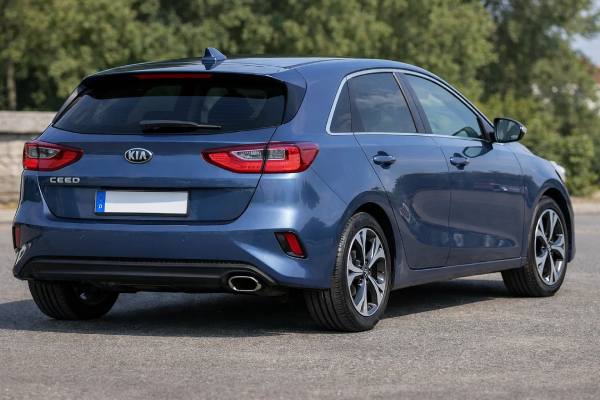
The 2018–2021 Kia Ceed (CD) with the 1.4 T-GDi (138 hp) is a smart “middle engine” choice in the range: it offers real everyday torque, modern emissions hardware, and long-distance refinement without the higher running costs that can come with the hottest trims. Mechanically, it is a compact, turbocharged direct-injection petrol setup, typically paired with either a 6-speed manual or Kia’s 7-speed dual-clutch (7DCT), depending on market and trim.
From an ownership perspective, this Ceed is about balance. It is quick enough to feel effortless in traffic, stable at motorway speeds, and generally predictable to service—so long as you treat it like a modern turbo engine: correct oil, warm-up habits, and timely fluid changes matter more than they did on older naturally aspirated units. Buy well, maintain it properly, and it can be a very satisfying long-term daily.
Essential Insights
- Strong low-to-mid torque makes it feel “bigger” than 1.4 litres in everyday driving, especially with the 7DCT.
- Practical cabin and boot packaging for a C-segment hatch, with a stable motorway ride.
- Safety can vary by equipment—seek cars with the factory safety pack features if you prioritize top ratings.
- Direct injection and turbo hardware reward short oil intervals and quality fuel on mostly city use.
- Plan engine-oil service about every 10,000 mi (16,000 km) or 12 months, and sooner under severe use.
Jump to sections
- Ceed CD 1.4 T-GDi ownership fit
- Ceed CD 1.4 T-GDi specifications
- Ceed CD trims, safety, and ADAS
- Common problems and service bulletins
- Maintenance schedule and buying guide
- Driving feel and fuel use
- Ceed CD 1.4 rivals comparison
Ceed CD 1.4 T-GDi ownership fit
Think of the 1.4 T-GDi Ceed (CD) as the “daily-driver sweet spot” in the petrol lineup. With 138 hp, it does not chase hot-hatch drama, but it delivers the kind of usable torque you notice every day: joining fast traffic, climbing grades with passengers, and overtaking without needing constant downshifts. In most markets, you will find it in higher-volume trims (often with the 7DCT option), which can make it easier to locate with good equipment and a full service record.
The engineering story is modern and slightly demanding: turbocharging and direct injection (DI) give efficiency and performance, but they also raise sensitivity to oil quality and service intervals. Owners who mainly do short trips should be extra cautious—frequent cold starts and stop-go driving are exactly what accelerates intake-valve deposits on DI engines and increases moisture and fuel dilution in the oil. This does not mean the engine is fragile; it means it is less forgiving of neglected maintenance than older naturally aspirated petrols.
On the road, the Ceed CD platform prioritizes stability and predictability. Steering is typically light to medium-weight, and the chassis is tuned to feel secure rather than playful. In daily use that translates to fewer surprises: it tracks straight at motorway speeds, resists crosswinds well for its size, and feels composed on broken pavement. The 7DCT brings a different character than the manual: it can feel crisp and efficient at speed, but it also behaves like a computer-controlled clutch system at low speed—smoothness depends on calibration, driver inputs, and how healthy the clutch packs and fluid are.
For buyers, the best ownership fit is someone who wants a compact hatch that feels “grown up,” values driver-assist availability, and will commit to consistent servicing. It is less ideal if you want a simple, low-tech petrol that tolerates stretched oil intervals, or if your driving is almost exclusively cold, short, and congested without occasional longer runs.
Ceed CD 1.4 T-GDi specifications
Below are model-relevant specs for the 2018–2021 Ceed (CD) with the 1.4 T-GDi 138 hp petrol. Exact figures can vary slightly by body style (hatch vs Sportswagon), wheel and tyre package, and market homologation.
Powertrain and efficiency
| Item | Specification |
|---|---|
| Engine family | Kappa II T-GDi (turbocharged direct injection) |
| Layout | Inline-4, DOHC, 16 valves (4 valves/cyl) |
| Displacement | 1.4 L (1,353 cc) |
| Bore × stroke | 71.6 × 84.0 mm (2.82 × 3.31 in) |
| Induction | Turbocharged |
| Fuel system | Direct injection (GDI) |
| Max power | 138 hp (103 kW) @ 6,000 rpm |
| Max torque | 242 Nm (178 lb-ft) @ 1,500–3,200 rpm |
| Timing drive | Chain |
| Rated efficiency | commonly ~5.8–6.6 L/100 km (varies by test cycle, wheels, and gearbox) |
| Real-world highway @ 120 km/h | typically ~6.3–7.3 L/100 km depending on tyres, wind, and load |
Transmission and driveline
| Item | Specification |
|---|---|
| Drive type | FWD |
| Transmissions | 6-speed manual or 7-speed dual-clutch (7DCT), market-dependent |
| Differential | Open (traction managed by ESC and brake-based torque control) |
Chassis and dimensions (Ceed hatchback baseline)
| Item | Specification |
|---|---|
| Suspension (front / rear) | MacPherson strut / multi-link |
| Brakes | Ventilated discs front, discs rear (sizes vary by trim) |
| Common tyre size | often 225/45 R17 (popular mid-high trim fitment) |
| Ground clearance | 140 mm (5.5 in) |
| Length / width / height | 4,310 / 1,800 / 1,447 mm (169.7 / 70.9 / 57.0 in) |
| Wheelbase | 2,650 mm (104.3 in) |
| Turning circle | 10.6 m (34.8 ft) |
| Kerb weight | commonly ~1,290–1,400 kg (2,844–3,086 lb), depending on gearbox and equipment |
| Fuel tank | 50 L (13.2 US gal / 11.0 UK gal) |
| Cargo volume | typically ~395 L seats up (VDA), varies by spare wheel and trim |
Performance and capability (typical)
| Item | Specification |
|---|---|
| 0–100 km/h (0–62 mph) | commonly high-8s to low-9s seconds (gearbox and tyres affect results) |
| Top speed | about 200–205 km/h (124–127 mph), market-dependent |
| Towing | often permitted in Europe; check the VIN plate and handbook for braked/unbraked limits |
Fluids and service capacities (official capacity tables are market-sensitive)
| Fluid | Specification (typical) | Capacity |
|---|---|---|
| Engine oil (drain and refill) | Full synthetic; commonly 0W-30 or 5W-30 meeting required ACEA/API spec by market | 4.2 L (4.44 US qt) |
| Coolant | Ethylene glycol-based mix suitable for aluminum radiators | 7.4 L (7.8 US qt) |
| 7DCT fluid (if equipped) | Kia-approved DCTF | 1.6–1.7 L (1.7–1.8 US qt) |
| Manual gearbox fluid (if equipped) | SAE 70W / API GL-4 type fluid | 1.5–1.6 L (1.6–1.7 US qt) |
| A/C refrigerant | R-134a (per equipment) | 450±25 g (15.9±0.9 oz) without rear A/C |
| A/C compressor oil | PAG 30 | 120±10 g (4.2±0.4 oz) without rear A/C |
Safety and driver assistance (headline metrics)
- Euro NCAP score sets exist with different equipment levels; see the next section for how the “safety pack” affects the outcome.
Ceed CD trims, safety, and ADAS
Trim names vary widely by country, but the 1.4 T-GDi commonly sits in the upper-middle of the range—often paired with more comfort and tech options than the entry engines. When you shop used, the most important thing is not the badge on the tailgate; it is the equipment list and how it was packaged in your market.
Trims and options that matter most
Look for features that change the ownership experience or resale value:
- Transmission choice: The 6-speed manual is simpler and typically cheaper to maintain, while the 7DCT can be excellent when serviced and driven smoothly, but is more sensitive to calibration updates and fluid condition.
- Wheel and tyre packages: Larger wheels can sharpen response but increase tyre cost and road noise. They also affect real-world consumption.
- Lighting: LED headlamps (where fitted) improve night driving and can raise used-market demand, but replacement costs are higher than halogen.
- Infotainment tier: Factory navigation and larger screens can be desirable, but confirm that mapping, Bluetooth, and camera functions are healthy—repairs can be expensive out of warranty.
Quick identifiers help during inspection. A Ceed with a more advanced ADAS suite usually has extra steering-wheel buttons, additional sensors behind the windscreen, and radar hardware in the front grille area. Always verify that warning lights illuminate and extinguish correctly on startup; a “quiet” dashboard can hide disabled systems.
Safety ratings: what to understand before you assume
The Ceed’s Euro NCAP results are a good example of why you must read the test configuration. Euro NCAP has published results for the Ceed where a safety pack changes the rating outcome. In practice, that means two used cars from the same year can feel very different: one may have more capable AEB (automatic emergency braking), lane support, and speed-assist functions, while another has the basics only.
If safety is a priority, shortlist cars with:
- AEB that covers both car-to-car and vulnerable road users (pedestrians and cyclists) where available
- Lane keeping support (LKA) and, if fitted, lane following assist (LFA)
- Adaptive cruise control (ACC) for long-distance use
- Blind-spot monitoring and rear cross-traffic alert on higher trims
Service implications for ADAS
ADAS hardware is not “fit and forget.” After windscreen replacement, front-end repairs, wheel alignment changes, or suspension work, some systems may require camera and radar calibration. A car that pulls slightly, wears tyres unevenly, or shows intermittent ADAS warnings is not automatically a deal-breaker—but it should trigger a careful inspection and a scan for stored fault codes.
The simplest rule: buy the best-equipped safety specification you can verify, not the one you hope it has.
Common problems and service bulletins
The 1.4 T-GDi Ceed is generally a solid modern turbo hatch, but owners should expect a few predictable patterns. It helps to think in terms of prevalence and cost tier, because not every issue is equally likely or equally expensive.
Common (higher frequency)
- Ignition-coil or spark-plug sensitivity (low to medium cost):
Symptoms: misfire under load, hesitant acceleration, flashing engine light.
Root cause: worn plugs, marginal coils, or moisture intrusion in connectors.
Remedy: replace plugs on schedule, use correct heat range, and replace coils if misfire follows a coil. - 7DCT low-speed judder or hesitation (medium cost if ignored):
Symptoms: shudder when pulling away, abrupt engagement in traffic, or “hunting” between gears.
Root cause: clutch adaptation out of range, old fluid, or driving pattern that overheats clutches.
Remedy: fluid service where specified, update software where available, and ensure clutch adaptations are learned properly after service. - Direct-injection deposit build-up on mostly short trips (medium cost):
Symptoms: rough cold idle, reduced efficiency, gradual loss of smoothness at higher mileage.
Root cause: DI engines do not wash intake valves with fuel, so deposits accumulate faster with short, cold journeys.
Remedy: frequent oil service, regular long runs to fully warm the engine, and intake cleaning if symptoms develop.
Occasional (moderate frequency)
- Turbo actuator noise or wastegate rattle (medium cost):
Symptoms: light metallic rattle at certain rpm, often more noticeable near walls or under light load.
Root cause: wear in actuator linkage or wastegate mechanism.
Remedy: confirm it is not a heat shield; repair varies from adjustment to actuator/turbo replacement depending on severity. - Cooling-system seepage (medium cost):
Symptoms: coolant smell after driving, slow reservoir level drop, crusty residue near hose joints.
Root cause: clamp relaxation, plastic fitting aging, or minor radiator tank seepage.
Remedy: pressure test; fix early to avoid overheating.
Rare (lower frequency but higher impact)
- Fuel system faults (high cost):
Symptoms: long crank, limp mode, persistent lean codes.
Root cause: high-pressure fuel pump or injector issues are uncommon but possible on turbo DI engines.
Remedy: proper diagnosis with fuel-pressure logging; avoid parts-swapping.
Recalls, software, and how to verify
Because campaigns differ by country, the practical advice is consistent:
- Run a VIN recall check using an official database where available.
- Ask the seller for dealer history showing recall completion and software updates.
- Scan the car for ECU and transmission fault history—especially if it is a 7DCT car with drivability complaints.
A well-maintained Ceed will usually feel smooth, quiet, and consistent. If it feels “busy” (frequent gear indecision, lurchy takeoff, or rough idle), assume it needs attention and price it accordingly.
Maintenance schedule and buying guide
Modern small turbo engines last when you keep fluids fresh and heat under control. Use the official schedule for your VIN, but the checklist below is a practical baseline for 2018–2021 Ceed 1.4 T-GDi ownership.
Practical maintenance schedule (distance or time, whichever comes first)
- Engine oil and filter: every 10,000 mi (16,000 km) or 12 months; sooner for short-trip, cold-climate, or heavy city use.
- Engine air filter: inspect every service; typically replace 30,000–40,000 km depending on dust.
- Cabin filter: every 12 months (more often if urban or allergy use).
- Spark plugs: commonly 60,000 km (or per market schedule); replace earlier if you see misfire history.
- Coolant: follow the official long-life interval; inspect annually for level and condition.
- Brake fluid: every 2 years, regardless of mileage.
- 7DCT fluid (if equipped): follow the official requirement; if you do heavy city driving, consider more frequent changes than the minimum.
- Manual gearbox fluid (if equipped): inspect for leaks; change at higher mileage or if shifting quality changes.
- Tyres: rotate every 10,000–12,000 km, align if you see uneven wear.
- 12 V battery: test annually after year 4; replace proactively if start-stop behavior becomes erratic.
Fluid specs and capacities you can plan around
- Engine oil capacity: 4.2 L drain and refill. Oil specification can differ by market (some references specify ACEA A5/B5 5W-30, others specify ACEA C2 low-SAPS oils). The safest approach is to follow the handbook and under-hood label for your exact car.
- Coolant capacity: 7.4 L total system, use correct ethylene-glycol mix for aluminum radiators.
- A/C service: refrigerant charge and oil amount are equipment-dependent; the under-hood label should match the official values.
Buyer’s guide: what to inspect before purchase
- Service proof: Oil services on time matter more than “low miles.” Prefer stamped records with itemized invoices.
- Cold start quality: Listen for abnormal rattles, rough idle, or warning lights. A smooth cold start is a strong sign.
- 7DCT behavior (if fitted): Drive in slow traffic, uphill starts, and gentle parking maneuvers. Excessive shudder or harsh engagement suggests adaptation, fluid, or clutch issues.
- Cooling system: Check for dried coolant residue and confirm the heater works strongly.
- Tyre wear pattern: Uneven inner-shoulder wear can hint at alignment or suspension bushing issues.
- ADAS function: Confirm lane assist and AEB warnings are not disabled; windscreen replacements should include calibration where needed.
Long-term outlook is best when the car gets periodic longer runs, quality oil, and a careful inspection of the gearbox type you are buying.
Driving feel and fuel use
In real-world driving, the 1.4 T-GDi Ceed feels stronger than the headline displacement suggests. The turbo torque arrives early and stays usable through the midrange, which means you can short-shift around town and still keep pace effortlessly. On the motorway, it is less about outright speed and more about relaxed cruising: it holds speed on grades with fewer downshifts than the smaller petrols, and it is quieter at steady throttle than you might expect from a compact hatch.
Ride, handling, and NVH
The CD platform aims for a mature “European hatch” feel: stable, composed, and predictable. The multi-link rear suspension helps it stay settled over mid-corner bumps, and it tends to track well at higher speeds. Road noise is more dependent on tyre choice than on the chassis itself—larger wheels and sportier tyres can bring a noticeable increase in hum on coarse asphalt.
Steering is usually light in parking and medium on the move. It is not a feedback-rich system, but it is accurate enough for daily use. Brakes tend to be easy to modulate in normal driving; pedal feel can degrade if pads and fluid are neglected, so a proper brake-fluid interval matters.
Powertrain character (manual vs 7DCT)
- Manual: more direct control, fewer low-speed quirks, and often the simplest long-term ownership path.
- 7DCT: crisp shifts once rolling, but at very low speed it behaves like two automated clutches. Smoothness improves if you use gentle throttle, avoid creeping for long periods, and let the gearbox fully engage rather than constantly slipping.
Real-world efficiency you can expect
Economy varies strongly with speed and temperature. As a practical guide:
- City: often around 7.0–8.5 L/100 km depending on traffic and warm-up time.
- Highway (100–120 km/h): often around 6.3–7.3 L/100 km when conditions are calm.
- Mixed: many owners land near 6.5–7.8 L/100 km.
Cold weather and short trips can push consumption up meaningfully because turbo petrol engines run richer during warm-up and spend more time below optimal temperatures. If your driving includes frequent short runs, plan service intervals accordingly and consider occasional longer trips to keep oil and emissions components healthier.
Ceed CD 1.4 rivals comparison
The Ceed 1.4 T-GDi competes in one of the most crowded classes in Europe. Its strengths are balance and ownership logic rather than a single standout headline.
Versus Volkswagen Golf 1.5 TSI
A Golf 1.5 TSI often feels a little more refined in power delivery and may return strong economy at steady speed, especially with mild-hybrid versions. However, used pricing can be higher, and equipment levels vary dramatically. The Ceed can be the better value if you find one with strong safety equipment and a clean service history, and you prioritize warranty coverage history.
Versus Ford Focus 1.0 EcoBoost and 1.5 EcoBoost
The Focus usually offers sharper steering and a more playful chassis. The Ceed counters with a calmer motorway character and a straightforward “daily usability” tuning. If you want engaging handling, the Focus often wins. If you want stable, easy commuting with good torque and a less fussy cabin experience, the Ceed is a strong alternative.
Versus Opel Astra 1.4 Turbo
The Astra’s 1.4 turbo variants can feel similar in torque and everyday pace. Differences come down to gearbox behavior, cabin ergonomics, and the condition of the specific used car. The Ceed’s advantage is often the overall package consistency—many examples have a sensible equipment mix and a predictable driving feel.
Versus Hyundai i30 1.4 T-GDi
This is the closest mechanical cousin. The comparison becomes about trim availability, local pricing, and which specific features matter to you (infotainment tier, ADAS, seat comfort). If both are equally well maintained, choosing the best documented car usually matters more than the badge.
The practical verdict
Choose the Ceed CD 1.4 T-GDi if you want:
- an everyday-torque petrol that does not feel strained,
- a stable, confidence-inspiring chassis,
- and a used-car purchase where a clean service record and correct spec can deliver satisfying long-term value.
Skip it if your driving is almost entirely short, cold trips and you are unlikely to keep up with careful oil service and occasional longer runs—because modern turbo DI engines reward disciplined maintenance.
References
- Recommended lubricants and capacities 2020 (Owner’s Manual)
- Air conditioning system 2020 (Owner’s Manual)
- Official Kia Cee’d 2019 safety rating 2019 (Safety Rating)
- Euro NCAP | Tesla, Mercedes and Škoda Score a Touchdown in Euro NCAP’s Latest Safety Tests 2019 (Press Release)
- Engine Oil Grades and Capacities 2023 (Service Guidance)
Disclaimer
This article is for informational purposes only and is not a substitute for professional inspection, diagnosis, or repair. Specifications, torque values, service intervals, and procedures can vary by VIN, market, model year, and equipment, so always verify details against your official Kia owner’s manual and service documentation for your exact vehicle.
If you found this guide helpful, please consider sharing it on Facebook, X (Twitter), or your favorite forum to support our work.