
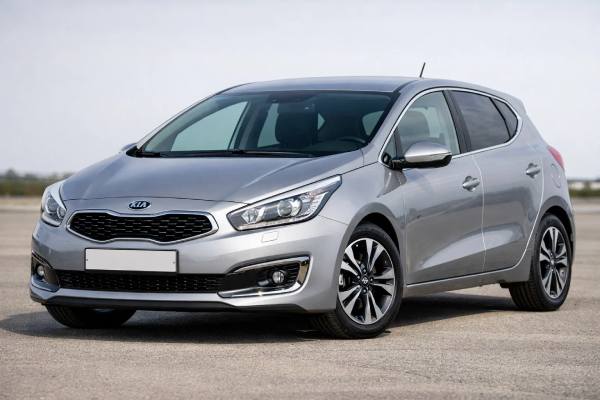
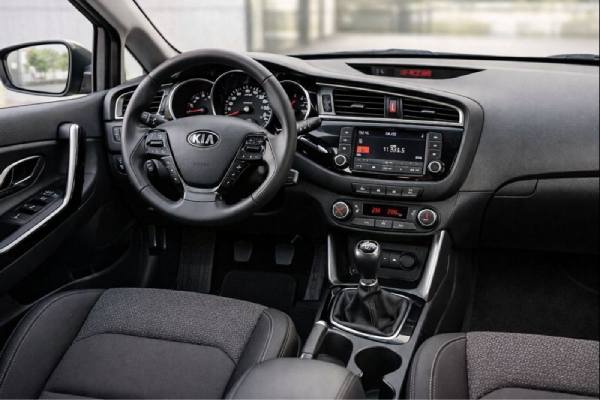
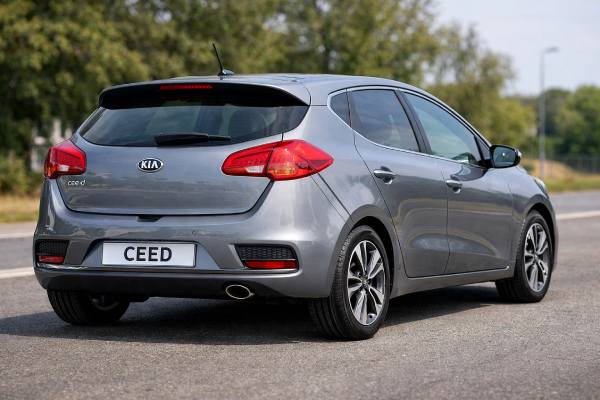
The facelifted Kia Cee’d (JD) with the 1.4 Gamma MPi (100 hp) sits in a sweet spot for buyers who want a modern-feeling compact without the complexity of a turbocharger or diesel aftertreatment. This is a straightforward, port-injected petrol engine paired most commonly with a 6-speed manual and front-wheel drive, tuned for smoothness and low running stress rather than outright speed. In daily use, the big ownership story is predictability: warm-up is quick, cold starts are easy, and servicing is familiar to any independent shop. The trade-off is that you need to drive it like a naturally aspirated engine—rev it a bit, plan overtakes, and avoid lugging in high gear. Choose well, maintain it on time, and it’s a sensible long-term commuter or family runabout.
What to Know
- Simple, naturally aspirated petrol setup—no turbo, no DPF, and usually fewer “big ticket” surprises.
- Practical JD platform: stable handling, easy-to-place size, and good everyday ergonomics.
- Best for mixed driving and steady commuting; it’s not a fast motorway overtaker when loaded.
- Watch for age-related chassis wear (bushings, drop links) and sticky brake slider pins on higher-mileage cars.
- Plan engine oil and filter service every 10,000–15,000 km or 12 months (whichever comes first), depending on use.
Quick navigation
- Kia Cee’d JD 1.4 MPi in depth
- Kia Cee’d JD 1.4 MPi specifications
- Kia Cee’d JD equipment and safety
- Reliability and known problems
- Maintenance and smart buying
- Driving and real-world economy
- Rivals and alternatives
Kia Cee’d JD 1.4 MPi in depth
The 2015–2018 facelift version of the Cee’d (JD) kept the same core recipe—front-wheel drive, a compact multi-link style chassis tuning focus (comfort first), and a practical interior—while tightening up refinement and equipment packaging depending on market. With the 1.4 Gamma MPi, the car’s character is defined by two things: linear throttle response and mechanical simplicity.
Where it fits best. This engine suits drivers who do consistent, moderate trips: commuting, school runs, and mixed suburban routes. Because it’s naturally aspirated (no turbo boost), it feels most relaxed when you keep momentum and use the mid-range. On long motorway grades or when fully loaded, you’ll downshift more often than you would in a turbo petrol or diesel.
Ownership strengths.
- Port injection (MPI) tends to avoid the heavy intake-valve carbon build-up headaches common on some direct-injection engines.
- Lower thermal stress than small turbo engines when driven gently, which can support long-term durability.
- Predictable servicing: familiar fluids, conventional ignition system, and no turbo plumbing.
What to be realistic about. This isn’t the “effortless” Cee’d. The same body with a turbo petrol or a diesel will overtake more confidently at low rpm. The 1.4 MPi’s advantage is that it usually costs less to keep stable over many years if you don’t ignore maintenance.
Best-use advice (for longevity).
- Let it reach operating temperature before sustained high revs.
- Avoid “lugging” (full throttle below ~1,500–2,000 rpm in high gear), which can strain mounts and driveline.
- If you do short trips, shorten oil intervals and keep the battery in good condition.
If you want a Cee’d that feels modern, dependable, and easy to own—without chasing performance—the facelift 1.4 MPi is a sensible, low-drama choice.
Kia Cee’d JD 1.4 MPi specifications
Below are typical European-market figures for the facelift-era Cee’d (JD) with the 1.4 Gamma MPi 100 hp. Specs can vary by VIN, body style (3/5-door), wheel size, and country homologation.
Powertrain and efficiency
| Item | Typical value |
|---|---|
| Code | Gamma 1.4 MPi (commonly G4FA family, market-dependent) |
| Engine layout and cylinders | Inline-4, DOHC, 16 valves (4/cyl) |
| Bore × stroke | ~77.0 × 74.9 mm (3.03 × 2.95 in) |
| Displacement | 1.4 L (1,396 cc) |
| Induction | Naturally aspirated |
| Fuel system | MPI (port injection) |
| Compression ratio | ~10.5:1 (varies by market) |
| Max power | 100 hp (74 kW) @ ~6,000 rpm |
| Max torque | ~134 Nm (99 lb-ft) @ ~4,000 rpm |
| Timing drive | Chain (typical for Gamma petrol) |
| Rated efficiency | ~5.8–6.6 L/100 km (40–49 mpg US / 43–57 mpg UK), depending on wheels and test cycle |
| Real-world highway @ 120 km/h (75 mph) | ~6.5–7.5 L/100 km (31–36 mpg US / 38–44 mpg UK) |
Transmission and driveline
| Item | Typical value |
|---|---|
| Transmission | 6-speed manual (most common); 6-speed automatic in some markets |
| Drive type | FWD |
| Differential | Open |
Chassis and dimensions
| Item | Typical value |
|---|---|
| Suspension (front/rear) | MacPherson strut / multi-link or torsion-beam depending on variant/market (verify by VIN) |
| Steering | Electric power steering (EPS) |
| Brakes | Ventilated front discs / rear discs or drums (trim-dependent) |
| Wheels and tyres (common) | 195/65 R15 or 205/55 R16 (varies by trim) |
| Ground clearance | ~140–150 mm (5.5–5.9 in), market-dependent |
| Length / width / height | ~4,310 / 1,780 / 1,470 mm (169.7 / 70.1 / 57.9 in) |
| Wheelbase | ~2,650 mm (104.3 in) |
| Turning circle | ~10.6 m (34.8 ft) |
| Kerb weight | ~1,200–1,320 kg (2,646–2,910 lb) depending on body and equipment |
| Fuel tank | ~53 L (14.0 US gal / 11.7 UK gal) |
| Cargo volume | ~380 L (13.4 ft³) seats up / ~1,300 L (45.9 ft³) seats down (method varies) |
Performance and capability
| Item | Typical value |
|---|---|
| 0–100 km/h (0–62 mph) | ~12.5–13.5 s |
| Top speed | ~175–185 km/h (109–115 mph) |
| Braking distance 100–0 km/h | ~38–41 m (trim/tyres dependent) |
| Towing capacity | Often 1,200–1,300 kg braked (2,646–2,866 lb), 600–650 kg unbraked (1,323–1,433 lb), market-dependent |
| Payload | ~450–550 kg (992–1,213 lb), spec-dependent |
Fluids and service capacities
| Item | Typical value (verify by engine/VIN) |
|---|---|
| Engine oil | API/ACEA spec per manual; common viscosities 5W-30 or 5W-40; capacity ~3.3–3.6 L (3.5–3.8 US qt) |
| Coolant | Long-life ethylene glycol; 50/50 mix typical; capacity ~5.5–6.5 L (5.8–6.9 US qt) |
| Manual transmission oil | Gear oil spec per manual; capacity ~1.8–2.0 L (1.9–2.1 US qt) |
| A/C refrigerant | R-134a on many cars of this era; charge varies by system label |
| Key torque specs | Wheel nuts commonly 88–108 Nm (65–80 lb-ft); verify others in service documentation |
Kia Cee’d JD equipment and safety
Trim naming varies widely across Europe (and even within the same country by year), so the most useful approach is to understand what changes with trim and how to spot it quickly on a used car.
Common trim structure (typical). Many markets offered a base grade (steel wheels, simpler infotainment), mid grades with comfort features (better audio, climate control, parking sensors), and top trims with larger alloys, LED-style lighting elements, upgraded seats, and the best infotainment. Facelift cars often brought fresher headlight designs, updated infotainment options, and incremental cabin refinements, but exact combinations depend on the original buyer’s options list.
Quick identifiers when viewing a car.
- Wheel size: 15-inch wheels often indicate efficiency-focused or base trims; 16–17-inch typically appear on higher grades.
- HVAC controls: manual dials vs automatic climate panel is an easy interior clue.
- Rear parking sensors/camera: camera availability often tracks with infotainment tier.
- Steering wheel buttons: more buttons usually means higher audio/phone integration.
Mechanical and functional differences to note.
- Rear brake type can vary (discs vs drums) by trim/market—important for brake service cost and feel.
- Suspension and tyre package changes ride comfort and road noise more than most buyers expect. Smaller wheels usually ride better and cost less long term.
- Transmission choice (where automatic exists) affects maintenance planning and driving feel.
Safety ratings and structure. The Cee’d (JD) was engineered to meet modern European crash requirements for its era, and many cars have strong passive safety fundamentals: rigid passenger cell design, front/side curtain airbags (count varies by trim and market), and ISOFIX/LATCH points for child seats (check rear seat labels).
Driver assistance (ADAS) reality check. On many 2015–2018 compact cars, advanced systems like autonomous emergency braking (AEB) and lane-keeping assist were not universally standard. Expect the core set on most trims:
- ABS, ESC (stability control), traction control
- Brake assist and hill-start assist (often)
- Tyre pressure monitoring (often, market-dependent)
If the car has camera- or radar-based assistance, confirm it works and ask about windshield replacement history and calibration after repairs. Even simple systems can be sensitive to mismatched tyres, incorrect alignment, or accident repairs.
Reliability and known problems
The facelift Cee’d JD with the 1.4 MPi is generally a “low drama” combination, but any 2015–2018 used car can develop predictable wear points. Below is a practical map by prevalence and cost tier, with symptoms and typical fixes.
Common and usually low cost
- Ignition coil or spark plug aging
Symptoms: occasional misfire, rough idle, hesitation under load, engine light.
Likely cause: coil degradation or worn plugs.
Remedy: replace plugs at the correct interval; replace failing coil(s) and inspect wiring/connectors. - Brake slider pin sticking (especially after winters)
Symptoms: uneven pad wear, one hot wheel after a drive, pulling under braking.
Cause: dried grease or corrosion on caliper slider pins.
Remedy: clean and lubricate with correct brake grease; replace boots or caliper hardware if damaged. - Front suspension consumables (drop links, bushings)
Symptoms: clunks over bumps, vague steering, uneven tyre wear.
Cause: worn anti-roll bar links, control-arm bushings, or top mounts.
Remedy: replace worn parts; align afterwards.
Occasional, medium cost
- Engine mounts
Symptoms: vibration at idle, thump on gear changes, driveline “shunt.”
Cause: rubber mount fatigue, often accelerated by city driving and lugging.
Remedy: replace the affected mount(s); re-check exhaust flex and heat shields. - Cooling system age issues
Symptoms: slow coolant loss, sweet smell, temperature fluctuations.
Cause: thermostat aging, hose seepage, radiator cap weakness, or water pump wear over time.
Remedy: pressure test; replace weak parts; refresh coolant on schedule. - Battery and charging health
Symptoms: slow cranking, stop-start (if equipped) misbehavior, random warning lights.
Cause: weak 12 V battery or alternator regulation issues.
Remedy: load-test battery; verify charging voltage; replace battery with correct type.
Rare, higher cost (but worth screening)
- Manual gearbox synchro wear or clutch issues (depends heavily on driver)
Symptoms: notchiness into a specific gear, grinding on quick shifts, clutch slip.
Cause: wear from hard shifting, riding the clutch, or high mileage.
Remedy: gearbox inspection; clutch kit replacement; consider flywheel condition. - A/C compressor or condenser damage
Symptoms: poor cooling, noisy compressor, oily residue on condenser.
Cause: age, stone damage, or leaks.
Remedy: leak test, replace components, evacuate and recharge with correct mass.
Recalls, service campaigns, and software updates
Even “simple” cars can have campaign work—airbag modules, wiring harness routing, or ECU calibration updates for drivability. Before purchase, ask for:
- Proof of recall/campaign completion in service history.
- Dealer printout or official database check by VIN.
- Evidence of correct maintenance intervals (especially oil changes).
Maintenance and smart buying
A clean service routine matters more than clever modifications on the 1.4 MPi. The goal is to keep the engine lubricated, the cooling system stable, and the chassis tight—because those are the areas that decide whether the car stays pleasant at 150,000–250,000 km.
Practical maintenance schedule
Use the shorter interval if you do short trips, cold starts, heavy city traffic, or dusty conditions.
- Engine oil and filter: every 10,000–15,000 km or 12 months
- Cabin air filter: every 15,000–30,000 km or 12–24 months
- Engine air filter: every 30,000 km (inspect more often in dusty areas)
- Spark plugs: typically 60,000–100,000 km (verify plug type and manual)
- Coolant: typically 5 years / 100,000 km, then per interval thereafter (varies by coolant spec)
- Brake fluid: every 2 years
- Manual gearbox oil: often “lifetime” in marketing, but a sensible refresh at 100,000–150,000 km can improve shift feel
- Drive/aux belt and tensioner: inspect at every service; replace on cracking/noise (often around 100,000–160,000 km)
- Tyre rotation and alignment: rotate every 10,000–12,000 km; align if wear is uneven or after suspension work
- 12 V battery: test annually after year 4; many last 4–6 years depending on climate and trip length
Fluids, specs, and decision-making basics
- Choose oil viscosity and ACEA/API specs that match the engine label/manual. In many climates, 5W-30 is common; hotter climates may use 5W-40 where permitted.
- Coolant should be the correct long-life type and mixed properly (often 50/50). Mixing types is a common cause of sludge and corrosion.
Buyer’s checklist for this engine
- Cold start: should settle quickly to a smooth idle; listen for persistent rattles or belt squeal.
- Test drive at low rpm: check for driveline shunt (mounts), clutch take-up smoothness, and gear engagement.
- Braking: confirm straight stops and no hot-wheel smell after the drive (sticking calipers).
- Suspension noise: speed bumps at low speed reveal drop links and top mounts.
- Cooling system: verify stable temperature, working cabin heat, and no coolant smell.
- Service history quality: consistent oil changes matter more than “dealer stamps.”
Long-term outlook
If the car has documented maintenance and feels mechanically tight, the 1.4 MPi tends to age gracefully. The biggest risk is neglect—long oil intervals, cheap tyres, and ignored brake/suspension wear that slowly turns a good car into a noisy one.
Driving and real-world economy
Driven back-to-back with turbo petrol rivals, the 1.4 MPi Cee’d feels calmer and more linear. That’s the point: it’s tuned to be easy to modulate in traffic and smooth at everyday speeds, not to deliver a surge of torque at 1,500 rpm.
Ride, handling, and NVH
The JD platform usually feels stable on the motorway and predictable in corners, with a steering tune that’s light at parking speeds and firmer as speed rises. On smaller wheels (15–16 inch), ride comfort is typically a strong suit: it rounds off sharp edges better and keeps road noise down. On larger wheels, expect more tyre roar and a busier feel over broken surfaces.
Braking feel is generally confidence-inspiring if the car is maintained, but neglected slider pins or cheap pads can create uneven bite and vibration. If you sense pulsing through the pedal, don’t assume “just discs”—check caliper movement and hub cleanliness too.
Powertrain character
Expect a clean response at low throttle openings and a willingness to rev, but modest low-end torque. Best practice for smooth progress:
- In town, shift for smoothness but don’t be afraid to hold a lower gear when merging.
- On hills, downshift early rather than pressing harder in a tall gear.
- For overtakes, plan to drop to the gear that lands you in the stronger mid-range.
Manual shift quality is usually positive when the gearbox oil and linkage are healthy. If it feels stiff when cold, it can improve with correct fluid and normal warm-up—grinding or consistent refusal into one gear is different and should be investigated.
Real-world efficiency
Typical owner-reported patterns for a healthy car:
- City: ~7.0–8.5 L/100 km (28–34 mpg US / 33–40 mpg UK)
- Highway (100–120 km/h): ~6.0–7.5 L/100 km (31–39 mpg US / 38–47 mpg UK)
- Mixed: ~6.5–7.8 L/100 km (30–36 mpg US / 36–43 mpg UK)
Cold weather, short trips, winter tyres, and roof boxes can easily add 10–20% consumption. If fuel use seems far worse, look for dragging brakes, low tyre pressures, old spark plugs, or a tired thermostat keeping the engine cool for too long.
Rivals and alternatives
Choosing the facelift Cee’d 1.4 MPi often comes down to whether you value simplicity and predictable upkeep over low-rpm performance. Here’s how it typically stacks up against common alternatives in the same used-price ecosystem.
Hyundai i30 (GD) 1.4/1.6 petrol. Mechanically close in philosophy, often similar in parts and servicing logic. If you find a better-maintained i30 with the same level of equipment for the money, it can be an equal pick. Decide based on condition, gearbox feel, and trim features rather than badge.
VW Golf 7 1.4 TSI. Faster and more effortless at low rpm, and often feels more “premium” inside. The trade-off is higher powertrain complexity (turbo and direct injection) and potentially pricier failure modes. If you do lots of motorway overtakes or carry heavy loads, the Golf can feel easier. If you prioritize low-stress ownership, the Kia’s simpler engine can be appealing.
Ford Focus 1.0 EcoBoost / 1.6 Ti-VCT. The Focus often wins on steering feel and chassis balance. The naturally aspirated petrol variants are closer to the Kia in simplicity, while small turbo variants can be more responsive but need careful maintenance discipline. Buy on service history quality and cooling system condition.
Opel/Vauxhall Astra J 1.4 NA / 1.4T. The NA versions are straightforward but can feel heavier and less lively; turbo versions are punchier but add complexity. Cabin ergonomics and infotainment age vary widely by year.
Renault Megane 1.6 16V / TCe. Comfort and value can be strong; electronics and trim aging are more variable. A well-kept Megane can be a bargain, but the Kia often feels more “set-and-forget” for general ownership.
Verdict logic. If you want the easiest version of the Cee’d to live with long term, the 1.4 MPi is a rational choice—especially if you buy the cleanest example you can find and keep the maintenance conservative. If you regularly drive fully loaded at motorway speeds, consider stepping up to a turbo petrol or diesel variant from the same range.
References
- Official Kia Ceed 2019 safety rating 2019 (Safety Rating)
- Euro NCAP | Press Releases 2019 (Safety Rating)
- Theft-alarm system 2015 (Owner’s Manual)
Disclaimer
This article is for informational purposes only and is not a substitute for professional inspection, diagnosis, or repair. Specifications, torque values, service intervals, and procedures can vary by VIN, market, model year, and installed equipment. Always verify details using official Kia service literature and the vehicle’s labels/documentation before purchasing parts or performing maintenance.
If this guide helped you, consider sharing it on Facebook, X (Twitter), or your favorite forum to support our work.