
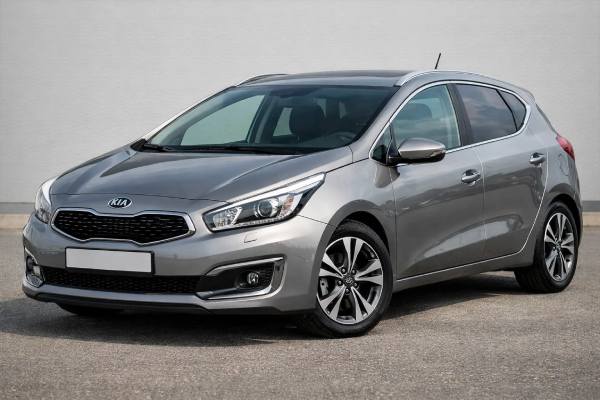
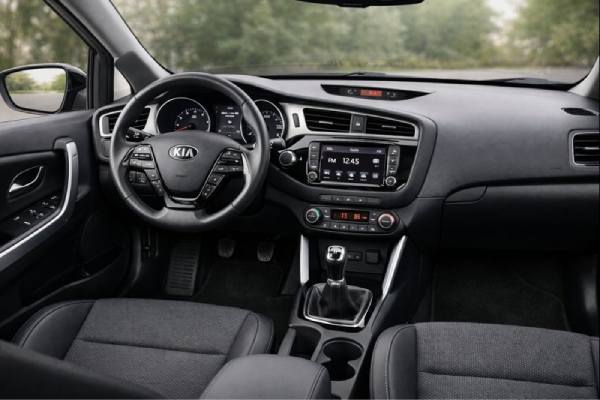
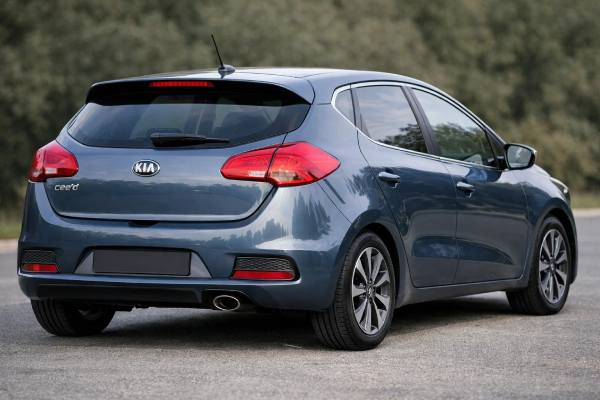
The facelift Kia Cee’d (JD) with the 1.0 T-GDi (118 hp) is the “small engine, grown-up manners” version of the range. It uses a turbocharged three-cylinder with direct injection to deliver the kind of mid-range pull you normally associate with larger engines, while keeping everyday running costs sensible. In the real world, that means easy urban drivability, strong in-gear response at 1,500–3,000 rpm, and relaxed cruising without needing constant downshifts.
As an ownership proposition, this setup rewards people who keep up with oil quality and service timing, and who drive it in a way that allows the engine to warm fully (especially in winter). The Cee’d’s strengths remain its stable chassis, straightforward controls, and a cabin that’s durable rather than flashy. If you’re choosing between this and a naturally aspirated petrol, the decision comes down to torque and flexibility versus ultimate simplicity.
Owner Snapshot
- Strong low-rpm torque for a 1.0-liter; feels more “1.6” than “1.0” in daily traffic.
- Comfortable, planted ride at highway speeds; good long-trip stability for a compact hatch.
- Typically lower fuel use than older 1.6 NA petrols when driven gently, especially on mixed routes.
- Caveat: direct injection and turbocharging raise the stakes on oil quality and warm-up habits.
- Practical interval: change engine oil and filter every 10,000–15,000 km (6,000–9,000 mi) or 12 months (whichever comes first).
Quick navigation
- Kia Cee’d JD facelift profile
- Kia Cee’d JD 1.0 T-GDi tech specs
- Kia Cee’d JD equipment and safety
- Known weak spots and fixes
- Service plan and buying tips
- How it drives day to day
- Rivals: where it wins
Kia Cee’d JD facelift profile
This facelift-era Cee’d sits in a sweet spot: modern enough to feel current, but not so complex that it becomes intimidating to maintain. The 1.0 T-GDi (118 hp) was introduced to offer diesel-like flexibility without diesel-specific hardware. The key engineering idea is simple: a small displacement engine with a fast-spooling turbo and direct injection, tuned for usable torque rather than headline horsepower. In practice, it’s the torque curve—arriving early and holding through the mid-range—that defines the car.
In the JD hatchback body, the drivetrain suits the chassis well. You get predictable front-wheel-drive traction, a suspension setup that favors stability and comfort, and steering that’s light at parking speeds but steady on the motorway. This matters because many small turbo engines feel busy or nervous at speed; the Cee’d generally does not. It’s also a car that tends to age well inside: controls are conventional, visibility is good, and the cabin materials typically handle daily use without dramatic peeling or rattling if the car has been treated well.
Where owners should be a bit more deliberate is the engine’s operating environment. Turbocharged direct-injection petrol engines run hotter and place more demand on the oil than older naturally aspirated designs. The Cee’d’s 1.0 T-GDi can be very durable, but it rewards correct oil spec, sensible change intervals, and the habit of letting the engine warm up before repeated heavy throttle. If most of your driving is short trips, you’ll want to tighten the service interval and be extra attentive to the cooling system and ignition health (coils and plugs).
As a used buy, the best examples are the ones with consistent servicing, clean boost behavior (no hesitation, no limp mode history), and a gearbox/clutch that feels calm under load. A smooth, linear pull from 1,500 rpm is the signature of a healthy car; anything that surges, whistles unusually, or smokes deserves a deeper look.
Kia Cee’d JD 1.0 T-GDi tech specs
Specs vary by market and trim, but the figures below reflect the common European facelift hatchback configuration with the 1.0 T-GDi (118 hp) and manual transmission. Use this as a practical baseline, then verify with VIN-specific documentation.
Powertrain and efficiency (typical)
| Item | Specification |
|---|---|
| Code | Kappa II T-GDi (commonly referenced as G3LC in many markets) |
| Engine layout and cylinders | Inline-3, 3 cylinders, DOHC, 4 valves/cyl (12-valve total) |
| Bore × stroke | ~71.0 × 84.0 mm (2.80 × 3.31 in) |
| Displacement | 1.0 L (998 cc) |
| Induction | Turbocharged (single turbo) |
| Fuel system | Direct injection (GDI) |
| Compression ratio | ~10.0:1 (market dependent) |
| Max power | 118 hp (87 kW) @ ~6,000 rpm |
| Max torque | ~172 Nm (127 lb-ft) @ ~1,500 rpm |
| Timing drive | Chain |
| Rated efficiency (official) | typically ~5.0–5.8 L/100 km (varies by test cycle, trim, tyres) |
| Real-world highway @ 120 km/h (75 mph) | typically ~6.2–7.2 L/100 km depending on wind, tyres, load |
Transmission and driveline
| Item | Specification |
|---|---|
| Transmission | 6-speed manual (most common) |
| Drive type | FWD |
| Differential | Open (traction control via brakes) |
Chassis and dimensions (hatchback, common values)
| Item | Specification |
|---|---|
| Suspension (front/rear) | MacPherson strut / multi-link (common on many trims; some markets differ) |
| Steering | Electric power steering (EPS); ratio varies by version |
| Brakes | Front ventilated discs / rear discs or drums (trim dependent) |
| Wheels and tyres (popular) | 205/55 R16 or 225/45 R17 (market/trim dependent) |
| Ground clearance | ~140–150 mm (5.5–5.9 in) |
| Length / width / height | ~4,310 / 1,780 / 1,470 mm (169.7 / 70.1 / 57.9 in) |
| Wheelbase | ~2,650 mm (104.3 in) |
| Turning circle (kerb-to-kerb) | ~10.6 m (34.8 ft) |
| Kerb weight | typically ~1,200–1,300 kg (2,646–2,866 lb) |
| GVWR | varies; often ~1,750–1,850 kg (3,858–4,079 lb) |
| Fuel tank | typically ~53 L (14.0 US gal / 11.7 UK gal) |
| Cargo volume | ~380 L seats up / ~1,318 L seats down (VDA; depends on spare wheel and floor height) |
Performance and capability (typical)
| Item | Specification |
|---|---|
| Acceleration | 0–100 km/h (0–62 mph): ~10.9–11.5 s |
| Top speed | ~190–195 km/h (118–121 mph) |
| Braking distance (100–0 km/h) | tyre and brake-spec dependent; commonly mid-to-high 30 m range on good tyres |
| Towing capacity | market dependent; often ~1,200 kg braked / ~600 kg unbraked (verify by VIN) |
| Payload | commonly ~450–550 kg (992–1,213 lb), trim dependent |
Fluids and service capacities (common workshop planning figures)
| Item | Specification |
|---|---|
| Engine oil | typically 0W-30 or 5W-30 meeting the required OEM/API/ACEA standard; ~3.5–4.0 L (3.7–4.2 US qt) with filter |
| Coolant | long-life ethylene glycol mix (often 50/50); capacity commonly ~5.5–6.5 L (5.8–6.9 US qt) |
| Manual gearbox oil | MTF per OEM spec; often ~1.8–2.2 L (1.9–2.3 US qt) |
| A/C refrigerant | typically R134a (many markets in this era); charge varies by equipment |
| Key torque specs | wheel nuts commonly ~88–108 Nm (65–80 lb-ft); always verify per wheel and hub spec |
Safety and driver assistance (baseline)
| Item | Specification |
|---|---|
| Euro NCAP crash ratings (model line) | 5-star result for the Cee’d generation; commonly cited scores include Adult 89%, Child 88%, VRU ~61%, Safety Assist 86% |
| IIHS | generally not rated for most European-market Cee’d variants |
| ADAS suite | varies by trim/year: AEB/FCW, lane support, and speed-limit recognition were typically optional or package-based in this era |
Kia Cee’d JD equipment and safety
The facelift range is easiest to think of as a “core car” plus equipment layers. Mechanically, the 1.0 T-GDi hatchback typically keeps the same fundamental drivetrain and suspension architecture across trims, but wheel size, rear brake type, and tyre width can change how it feels and how much it costs to run. If you’re shopping used, don’t focus only on badges—focus on the functional differences that affect ownership.
Trims and options: what changes in practice
Across European markets you’ll see trim naming vary (for example, numeric “1/2/3/4,” “LX/EX,” “Business,” “GT Line,” or navigation-focused editions). The important equipment patterns are usually:
- Wheels and tyres: 16-inch wheels tend to give the calmest ride and lowest tyre cost. 17-inch packages sharpen steering response but make pothole impacts harsher and can raise road noise.
- Infotainment and connectivity: facelift cars commonly gained improved head units, with navigation packages or later updates adding phone integration features. Check that Bluetooth, USB, steering-wheel controls, and (if fitted) the reversing camera work without glitches.
- Climate and comfort: dual-zone climate, heated seats, and heated steering wheels are common in higher trims and add real winter comfort without adding much mechanical complexity.
- Lighting: projector or LED-type signatures may be trim-dependent. More complex headlamps cost more to replace, so inspect lens condition and leveling behavior.
Safety ratings and what they mean
The Cee’d line achieved strong crash performance in its class, with a 5-star Euro NCAP result widely associated with the generation. The cited percentages (Adult 89%, Child 88%, Safety Assist 86%, and a VRU score around the low-60% range depending on protocol) are a useful shorthand: it’s a structurally competent car with good occupant protection, and it benefits from stability systems that were becoming standard in this era.
Safety systems and ADAS availability
A key ownership point: many driver-assistance features in this timeframe were not universal across all trims and markets.
Commonly fitted (often standard):
- Multiple airbags (front, side, curtain depending on trim/market)
- ABS with electronic brakeforce distribution
- ESC (stability control) and traction control
- ISOFIX/LATCH points for child seats (rear seats)
Often optional or package-based (varies by year/trim):
- Forward collision warning and autonomous emergency braking (AEB)
- Lane departure warning and lane keeping support
- Driver attention alerts
- Rear parking sensors and reversing camera
If the car has camera- or radar-based systems, plan for calibration needs after windshield replacement, bumper work, or suspension alignment changes. A car can drive “fine” after body repairs while the ADAS is quietly misaligned—so confirm warning lights, camera clarity, and proper operation during a test drive.
Known weak spots and fixes
Overall reliability is good when the car is maintained correctly, but the 1.0 T-GDi’s durability is closely tied to oil health, cooling stability, and clean ignition. Below is a practical map of issues by prevalence and cost impact. Treat these as checkpoints, not guarantees—condition and maintenance history matter more than model stereotypes.
Common (plan to check)
- Coils and spark plugs (low–medium cost):
Symptoms: misfire under load, rough idle, flashing engine light.
Likely cause: tired coil packs or worn plugs, sometimes worsened by short-trip use.
Remedy: replace plugs with the correct heat range and gap; replace coils as needed (often best in pairs or set if mileage is high). - Carbon build-up on intake valves (medium cost, mileage dependent):
Symptoms: hesitant cold running, reduced performance, uneven idle over time.
Likely cause: direct injection can allow deposits to accumulate because fuel does not wash the intake valves.
Remedy: diagnostic confirmation first; cleaning methods range from chemical treatments to walnut blasting depending on severity. - PCV and breather system wear (low cost):
Symptoms: oil consumption trends, oily intake plumbing, idle instability.
Likely cause: aging valves/hoses and increased blow-by on frequent short trips.
Remedy: inspect and replace PCV components; check for vacuum leaks.
Occasional (watch list)
- Turbo control issues (medium–high cost):
Symptoms: loss of boost, limp mode, irregular acceleration, abnormal whistle or rattle.
Likely cause: wastegate actuator wear, boost leak, sensor faults, or sticky control hardware.
Remedy: smoke test for leaks, check boost control solenoids, verify actuator movement, then repair/replace the failed component. - Cooling system seepage (low–medium cost):
Symptoms: slow coolant loss, sweet smell, residue at hose joints or thermostat housing.
Likely cause: aging hose clamps, plastic housings, or water pump seepage with age.
Remedy: pressure test the system and fix the true source; avoid “stop leak” shortcuts. - Manual clutch wear or judder (medium cost):
Symptoms: chatter when pulling away, slipping in higher gears, high bite point.
Likely cause: city driving, aggressive launches, or towing beyond what the clutch tolerates.
Remedy: evaluate clutch and (if fitted) dual-mass flywheel condition together.
Rare (but expensive if ignored)
- Timing chain stretch or tensioner issues (high cost if severe):
Symptoms: rattling on cold start, timing correlation fault codes, poor running.
Likely cause: neglected oil changes or repeated oil dilution from short trips.
Remedy: early diagnosis is crucial; replace chain/tensioner/guides if out of spec.
Software, calibrations, and service actions
Driveability complaints (hesitation, odd throttle response, warning lights) are sometimes resolved with ECU updates. When a seller claims “it just needed a software update,” ask for documentation. Regardless of what you’re told, verify open recalls and service campaigns using the official Kia recall lookup for your market and confirm completion with dealer records tied to the VIN.
Service plan and buying tips
A good maintenance plan for the 1.0 T-GDi is less about over-servicing and more about doing the right items on time, with the correct fluids and parts. Turbocharged direct-injection engines are sensitive to oil breakdown and ignition quality, so that’s where you put your attention.
Practical maintenance schedule (ownership-focused)
Use the stricter end of these intervals if you do frequent short trips, cold starts, heavy city use, or hot-climate driving.
- Engine oil and filter: every 10,000–15,000 km (6,000–9,000 mi) or 12 months.
Choose the exact viscosity and specification required for your VIN/market; avoid “close enough” oils. - Engine air filter: inspect every service; replace typically every 30,000 km (18,000 mi) or sooner in dusty areas.
- Cabin air filter: typically every 15,000–20,000 km (9,000–12,000 mi) or annually for best HVAC performance.
- Spark plugs: commonly every 60,000 km (37,000 mi) on small turbo engines; replace sooner if misfire history exists.
- Coolant: long-life coolant is often 10 years / 200,000+ km in many markets, but age and contamination matter—test and inspect regularly.
- Brake fluid: every 2 years, regardless of mileage.
- Manual gearbox oil: not always listed as routine, but a preventive change around 100,000–120,000 km (62,000–75,000 mi) can improve shift feel and longevity.
- Belts and hoses: inspect annually after year 5; replace if cracking, glazing, or seepage appears.
- Tyres, alignment, and rotation: rotate every 10,000–12,000 km, align if you see uneven wear or steering pull.
Buyer’s guide: what to check before purchase
Bring this checklist to keep the inspection objective:
- Cold start behavior: listen for timing rattle, check idle stability, and confirm there’s no misfire.
- Boost delivery: in a higher gear at ~1,500 rpm, apply moderate throttle—power should build smoothly without surging.
- Cooling system health: verify stable temperature, no coolant smell, and no residue around housings and hose joints.
- Oil condition and service proof: look for consistent intervals and correct oil spec on invoices (not just a stamped book).
- Clutch feel: check for slip under load and judder during gentle pull-away.
- Electronics and ADAS: test every button, camera, sensors, and verify no warning lights are masked or recently cleared.
- Corrosion hotspots: inspect underbody seams, rear suspension mounting areas, and brake/fuel lines in salted-road climates.
Which versions to seek
- Best all-rounder: mid-trim with 16-inch wheels and comfort features—often the best blend of ride quality and running costs.
- If you value safety tech: find a car with documented AEB/lane support packages (and confirm operation).
- If you value looks/handling: sport-styled trims can be fine, but budget for pricier tyres and a firmer ride.
Long-term outlook is strong when servicing is consistent. Most “bad stories” trace back to skipped oil changes, persistent misfires, or overheating that was ignored too long.
How it drives day to day
The 1.0 T-GDi facelift Cee’d feels more mature than its displacement suggests. Around town, the engine’s turbo torque arrives early, so you can short-shift and surf the mid-range instead of revving it out. This is where it beats many older naturally aspirated 1.4–1.6 petrols: you get useful pull from low rpm, especially when merging or climbing, without needing dramatic throttle.
Ride, handling, and NVH
The chassis leans toward stability and predictability. On 16-inch tyres, ride comfort is usually the highlight—controlled over broken pavement, not floaty, and not overly harsh. With 17-inch wheels, impacts become sharper, and road noise can rise noticeably on coarse asphalt. Steering is light and easy in parking lots, then settles at speed with decent on-center stability. It’s not a sports hatch steering rack, but it’s confidence-inspiring on the motorway.
Cabin noise depends heavily on tyres. The engine itself is typically quiet at steady cruise, though three-cylinder thrum can be noticeable during hard acceleration or at low rpm if you lug the engine. The fix is simple: don’t demand full boost below the comfortable range—drop a gear and the engine feels smoother.
Powertrain character and gearbox behavior
Throttle response is generally strong once boost is available, but small turbo engines can feel slightly muted right off idle compared with a larger naturally aspirated unit. Most drivers adapt quickly: keep it above ~1,500 rpm when you want brisk response. The 6-speed manual usually suits the engine well, giving you flexibility for both city and highway use. A healthy car should pull cleanly in third and fourth without hesitation. If it doesn’t, suspect ignition or boost-control issues.
Real-world efficiency
In mixed driving, owners often see results that beat older petrol engines and approach mild diesel-like consumption when driven calmly:
- City: often 6.5–8.0 L/100 km (29–36 mpg US / 35–43 mpg UK) depending on traffic and warm-up time.
- Highway (100–120 km/h): often 6.0–7.2 L/100 km (33–39 mpg US / 39–47 mpg UK).
- Mixed: commonly 6.0–7.5 L/100 km (31–39 mpg US / 38–47 mpg UK).
Cold weather and short trips can raise consumption sharply because the engine spends more time warming up and the cabin heater load is higher. If you do mostly short runs, the “best” fuel economy strategy is maintenance: fresh oil, healthy ignition, and tyres at the correct pressures.
Rivals: where it wins
In the compact hatchback class, the facelift Cee’d 1.0 T-GDi competes directly with the era’s mainstream small-turbo choices. The most natural cross-shops are the Volkswagen Golf 1.0 TSI, Ford Focus 1.0 EcoBoost, Opel/Vauxhall Astra 1.0 Turbo, Peugeot 308 1.2 PureTech, and the closely related Hyundai i30 1.0 T-GDi. Each has a strong case; the Cee’d’s advantage is how “normal” and durable it feels when maintained.
Where the Cee’d 1.0 T-GDi stands out
- Chassis calmness: It tends to feel planted at highway speed, with stable straight-line behavior and predictable braking. Some rivals feel sharper; the Kia often feels more relaxed.
- Everyday usability: Controls are straightforward, visibility is good, and the cabin generally tolerates family use well. If you want a car that doesn’t demand attention, this is a strength.
- Value over time: In many markets, parts availability and service familiarity are good, and the car doesn’t rely on exotic tech to deliver its performance.
Where rivals may beat it
- Engine refinement: The best 4-cylinder small turbos can feel smoother, and some competitors’ 3-cylinders are better isolated. Tyre choice can narrow or widen this gap.
- Latest driver assistance: Depending on trim, some rivals offered more widely available ADAS earlier (especially in upper trims). With the Kia, you must shop the options carefully.
- Brand-specific weak points: Each competitor has its own watch list: EcoBoost cooling and belt-related concerns on certain Ford engines, PureTech timing belt-in-oil maintenance on some PSA units, and DSG-related considerations on some VW group cars. The Kia’s main “tax” is disciplined oil service and attention to ignition and boost health.
Quick recommendations by buyer type
- Best for long-term, low-drama ownership: the Cee’d with 16-inch wheels, full service history, and clean boost behavior.
- Best for sharper driving feel: some rivals may feel more eager in steering response, but you’ll trade some comfort.
- Best for tech-first shoppers: shop trim/package lists carefully; the “best” Cee’d is the one with the features actually fitted and working—not the one you assume has them.
If you want a compact hatch that balances torque, comfort, and sensible ownership—without turning into a high-maintenance project—the facelift Cee’d 1.0 T-GDi is a strong pick, provided you buy on condition and service history.
References
- Kia updates cee’d model range and reveals new Niro hybrid drivetrain 2015 (Press Release)
- KIA cee’d ziskal najvyssie hodnotenie bezpecnosti Euro NCAP. 2012 (Safety Rating)
- Kia Recalls 2026 (Recall Database)
- Käyttöohjekirjat | Kia Finland 2026 (Owner’s Manual)
Disclaimer
This article is for informational purposes only and is not a substitute for professional diagnosis, repair, or safety inspection. Specifications, torque values, service intervals, and procedures can vary by VIN, market, model year, and installed equipment. Always verify details using your vehicle’s official owner’s manual and factory service documentation.
If this guide helped you, please consider sharing it on Facebook, X (Twitter), or your favorite forum to support our work.