
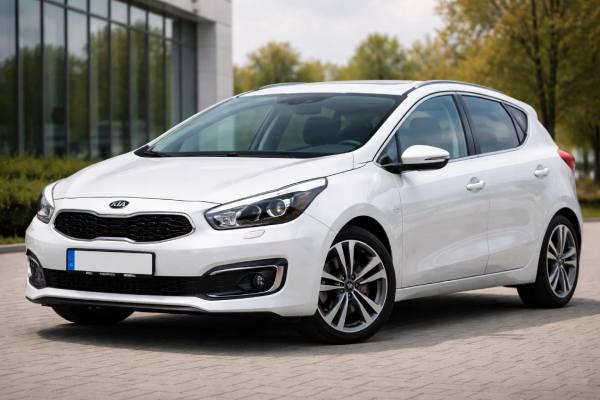
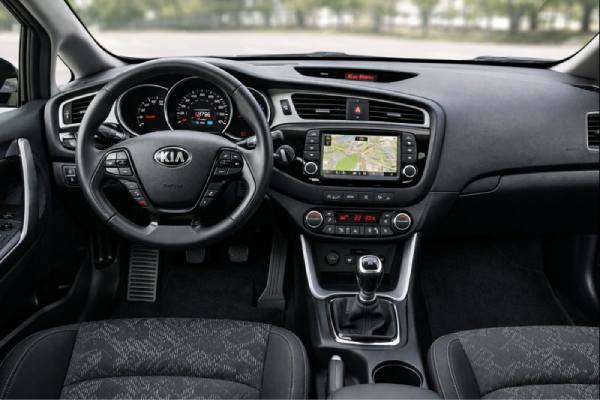
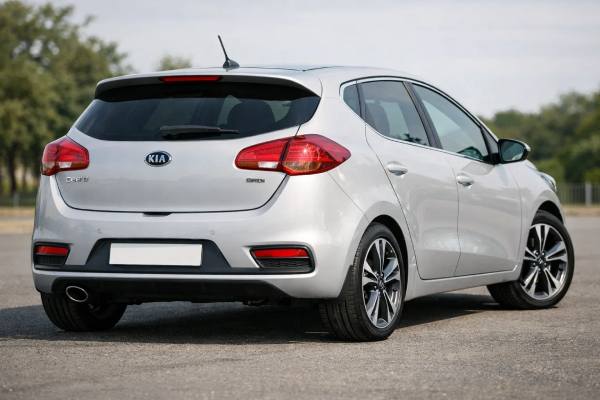
The 2015–2018 facelift Kia Cee’d (JD) with the 1.6 U-II CRDi 134 hp diesel is one of the more balanced “do-everything” European hatchbacks of its era: torquey, quiet enough for long motorway runs, and generally inexpensive to keep on the road when it has been serviced on schedule. The engine’s low-rpm pull makes it feel stronger than the headline horsepower suggests, while the chassis stays predictable on rough surfaces—an ownership advantage in regions with imperfect roads.
Where this model rewards careful ownership is emissions hardware and driveline wear. Like most modern diesels, it is happiest when it regularly reaches full operating temperature and gets occasional longer runs, helping the DPF system manage soot load. Buy well, maintain it methodically, and the Cee’d can deliver a very sensible mix of efficiency, comfort, and durability.
Quick Specs and Notes
- Strong mid-range torque makes relaxed overtakes and low-rev city driving easy.
- Practical hatch packaging: useful boot space and good everyday ergonomics.
- Predictable handling and stable motorway manners for the class.
- Short-trip use can accelerate DPF/EGR fouling; plan periodic longer drives.
- Baseline oil service is typically every 20,000 miles / 12 months (whichever comes first), but shorten it for severe use.
Navigate this guide
- Kia Cee’d JD facelift snapshot
- Kia Cee’d JD 1.6 CRDi specs
- Kia Cee’d JD trims and safety tech
- Reliability and common faults
- Maintenance plan and buyer tips
- Real-world driving and economy
- Rivals and best alternatives
Kia Cee’d JD facelift snapshot
Think of the facelift JD Cee’d diesel as a “high-mileage specialist” that can still do family duty. The 1.6 U-II CRDi was tuned for everyday torque rather than a dramatic top-end rush. In real ownership, that means fewer downshifts, calmer cruising, and less stress when the car is loaded with passengers or luggage. On paper it’s a 134 hp hatch; on the road it behaves like a larger-engined car at normal speeds because peak torque arrives early and stays flat across the rev range.
The facelift years matter because Kia continuously refined equipment levels and emissions calibration. Depending on market, you’ll see stop/start (often branded ISG), updated infotainment options, and trim reshuffles that can change the “value equation” more than the styling tweaks. The key buyer takeaway is that two cars that look identical in photos can be very different in day-to-day feel if one has different wheels, tyres, or gearbox (manual vs DCT), and if one has a stronger maintenance history.
For the typical used buyer, the Cee’d’s sweet spot is a car that has been used as intended: regular longer journeys, consistent oil services, and proof that consumables were handled on time (brakes, tyres, battery, and clutch components). Diesels that lived on short commutes can still be good cars, but they demand more diligence: check for a clean idle, stable coolant temperature, and evidence that the DPF system is regenerating normally (no chronic warning lights, no persistent limp mode, no strong exhaust smell after every drive).
Finally, the chassis is one of the quiet strengths here. The steering and suspension are tuned for stability and comfort rather than razor-sharp sportiness. That pays off over broken pavement, and it makes the car feel “grown up” at motorway speed. If your goal is a dependable, efficient hatch that can rack up kilometres without draining your budget, this powertrain and generation are worth serious consideration—provided you buy on condition, not just mileage.
Kia Cee’d JD 1.6 CRDi specs
Below are practical, ownership-focused specifications for the 1.6 U-II CRDi 134 hp facelift-era Cee’d. Exact figures vary by market, gearbox, wheels, and homologation cycle, so treat the tables as a decision guide and verify against your VIN documentation.
Powertrain and efficiency
| Item | Specification (typical for 134 hp variant) |
|---|---|
| Code | U-II CRDi (1.6 diesel family) |
| Engine layout | Inline-4, DOHC, 4 valves/cyl |
| Displacement | 1.6 L (1,582 cc) |
| Induction | Turbocharged |
| Fuel system | Common-rail diesel injection |
| Max power | 134 hp (100 kW) @ ~4,000 rpm |
| Max torque | ~280 Nm (206 lb-ft) @ ~1,500–3,000 rpm (manual); some DCT tunes higher |
| Timing drive | Chain (typical for this engine family) |
| Rated efficiency (varies by wheels/gearbox) | roughly 3.8–4.4 L/100 km (about 64–74 mpg UK) |
| Real-world highway @ 120 km/h (75 mph) | commonly ~5.0–5.7 L/100 km depending on load and temperature |
Transmission and driveline
| Item | Specification |
|---|---|
| Transmission | 6-speed manual common; 7-speed DCT offered in some markets/years |
| Drive type | FWD |
| Differential | Open (traction controlled via ESC/brake-based systems) |
Chassis and dimensions (key points)
| Item | Typical value |
|---|---|
| Suspension (front/rear) | MacPherson strut / multi-link (market-dependent details) |
| Brakes | Ventilated front discs, rear discs (sizes vary by trim/wheels) |
| Wheels/tyres (common) | 205/55 R16 or 225/45 R17 (trim-dependent) |
| Length | ~4,310 mm (169.7 in) |
| Width | ~1,780 mm (70.1 in) (mirrors wider) |
| Height | ~1,470 mm (57.9 in) (trim/wheels can shift slightly) |
| Wheelbase | ~2,650 mm (104.3 in) |
| Kerb (curb) weight | roughly 1,360–1,510 kg (about 3,000–3,330 lb) depending on spec |
| Fuel tank | ~53 L (14.0 US gal / 11.7 UK gal) |
| Cargo volume | typically ~362–380 L seats up; ~1,300+ L seats folded (method varies) |
Performance and capability (typical)
| Metric | Typical figure |
|---|---|
| Acceleration | ~0–100 km/h (0–62 mph) in about ~10 s (gearbox/trim dependent) |
| Top speed | roughly ~190 km/h (about 118 mph) |
| Towing (where rated) | often up to ~1,500 kg braked (market/trim dependent) |
Fluids and service capacities (verify by VIN)
| Item | What to use (typical) |
|---|---|
| Engine oil | Low-SAPs ACEA C2/C3 oil common; 0W-30 or 5W-30 often listed (market dependent) |
| Oil capacity | ~5.3 L (with filter) as a common service fill reference |
| Coolant | Ethylene-glycol OAT/HOAT type used by many Kia applications; verify the exact spec |
| Manual gearbox oil | Varies by gearbox code; confirm before filling |
| DCT fluid | Use only the specified OEM fluid; procedure-sensitive |
| Brake fluid | DOT 4 commonly specified |
| A/C refrigerant | R-134a typical for this era (confirm under-hood label) |
| Key torque specs | Wheel nuts often ~90–110 Nm range (confirm for your wheels) |
Kia Cee’d JD trims and safety tech
Trim structure varies widely by country, but the facelift Cee’d range usually clusters into “value,” “mid,” and “high” equipment grades, plus sport-styled lines in some markets. For the diesel buyer, the practical differences that matter most are not cosmetic—they’re mechanical and functional: wheel/tyre size, brake package, lighting type, and gearbox choice. Bigger wheels can sharpen response but increase tyre cost, road noise, and the likelihood of pothole damage. If your roads are rough, a 16-inch setup is often the best long-term compromise.
Trims and options: what to prioritize
- Headlights: If equipped with brighter projector/HID/LED systems (market dependent), check lens clarity and leveling function. Better lights meaningfully reduce fatigue on long winter drives.
- Infotainment: Later systems can add Bluetooth stability and better navigation support. Check screen response, USB ports, and speaker distortion at moderate volume.
- Climate and comfort: Heated seats, heated wheel, and dual-zone climate can be “winter quality-of-life” upgrades in cold regions—usually more valuable than styling packs.
- Transmission choice:
- 6-speed manual is typically simpler and cheaper to service long term, but clutch/DMF wear becomes a cost item in high-mileage cars.
- 7-speed DCT (where fitted) can be pleasant when healthy, but it is more sensitive to fluid quality, adaptation, and stop-start urban heat. Choose it only with clear service documentation and smooth operation.
Safety ratings (what they mean here)
The JD-generation Cee’d achieved a strong safety standing for its period under Euro NCAP testing. It’s important to read ratings as “best-in-era,” not “best-by-modern-standards.” Test protocols evolve, so a 5-star from the early 2010s is not directly comparable to today’s 5-star.
In practical terms, this car benefits from a stable passenger cell performance, solid child-seat provisions, and the standard stability-control foundation that helps keep drivers out of trouble in emergency maneuvers.
Safety systems and driver assistance
Common safety equipment you should expect (varies by trim/market):
- Multiple airbags (front, side, and curtain), plus seatbelt pretensioners and load limiters
- ESC (stability control) and traction control
- Hill-start assist on many trims
- ISOFIX/LATCH anchor points and top tethers for child seats
ADAS (advanced driver assistance) in this era is typically limited compared to newer vehicles. If your facelift Cee’d has features like autonomous emergency braking, lane support, blind-spot monitoring, or adaptive cruise, treat them as trim- and market-specific extras rather than guaranteed equipment.
Service note: After any front-end repair, wheel alignment, or windscreen replacement, confirm that any fitted driver-assistance sensors (camera/radar) have been calibrated correctly. Poor calibration can cause nuisance warnings or reduced feature performance—problems that look “electrical” but are often setup-related.
Reliability and common faults
Overall, the Cee’d JD diesel is capable of long service life, but its reliability profile is shaped by diesel realities: emissions hardware, heat cycles, and how the car was driven. Below is a practical issue map you can use when inspecting a used example.
Common (more likely with short trips)
- DPF loading / frequent regenerations (medium cost if neglected)
Symptoms: rising fuel consumption, fans running after shutdown, warning lights, limp mode.
Likely root cause: repeated short drives prevent complete regeneration; soot load builds.
Remedy: confirm the car can complete regenerations; address underlying causes (stuck thermostat, EGR fouling, boost leaks). In severe cases, professional DPF cleaning or replacement. - EGR valve and intake fouling (low to medium cost)
Symptoms: hesitant throttle response, uneven idle, reduced low-rpm pull, intermittent fault codes.
Root cause: soot/oil mist buildup, especially with low-temperature operation.
Remedy: cleaning/replacement depending on condition; ensure correct oil spec and allow periodic full warm-up cycles.
Occasional (depends on mileage and driving style)
- Clutch and dual-mass flywheel wear on manuals (medium to high cost)
Symptoms: shudder when pulling away, vibration, rattling at idle, higher bite point, slipping under load.
Root cause: normal wear accelerated by heavy traffic, towing, or aggressive launches.
Remedy: clutch kit and DMF together is often the sensible long-term fix. - Turbo control issues (medium cost)
Symptoms: inconsistent boost, limp mode under load, whistle changes, smoke under hard acceleration.
Root cause: vacuum leaks, actuator sticking, sensor issues, or boost hose leaks.
Remedy: pressure/vacuum testing first; replace only what’s proven faulty. - Steering column/motor assist noises (low to medium cost)
Symptoms: clunk or knock over small bumps, especially at low speed.
Root cause: wear in steering assist coupler/bushings (varies by steering design).
Remedy: targeted replacement of wear parts; confirm suspension bushings aren’t the real source.
Rare (but expensive if missed)
- Cooling system/thermostat problems (medium cost, high consequence if ignored)
Symptoms: slow warm-up, unstable temperature, cabin heat inconsistent, higher soot/DPF frequency.
Root cause: thermostat stuck open or sensor faults.
Remedy: fix promptly; diesels rely on correct temperature control for emissions health.
Software and calibrations (what to ask a dealer about)
Even without obvious fault lights, ask for confirmation that the car has received relevant ECU updates for driveability, regeneration strategy, or gearbox logic (if DCT). Updated calibration can reduce nuisance warnings and improve smoothness. If the car has advanced safety features, confirm any module updates and sensor calibrations were completed after repairs.
Recalls, campaigns, and how to verify completion
Because recall scope is market- and VIN-specific, treat “I think it was done” as not enough. Use an official VIN-based recall checker and request dealer proof of completion. When you inspect the car, ask for:
- VIN recall status printout (or dealer invoice lines showing campaign codes)
- Service record continuity (especially oil spec and interval discipline)
- Evidence of recent consumable replacements (battery, tyres, brakes) on higher-mileage cars
Maintenance plan and buyer tips
A dependable Cee’d diesel is usually the one that follows a simple rule: correct fluids, correct intervals, and fewer short-trip weeks. Below is a practical schedule that works well for long-term ownership; adjust for climate, driving pattern, and load.
Practical maintenance schedule (distance/time)
- Engine oil and filter: every 20,000 miles / 12 months (typical baseline). For heavy city use, frequent cold starts, or short trips, consider 10,000–12,000 miles (15,000–20,000 km). Use the correct low-SAPs oil spec for DPF health.
- Air filter (engine): inspect every service; replace about every 20,000–40,000 km depending on dust conditions.
- Cabin filter: every 12 months (or sooner if airflow drops or smells develop).
- Fuel filter: commonly every 40,000–60,000 km; shorten if fuel quality is inconsistent.
- Coolant: follow the official interval for your market; many long-life coolants are 5 years / 100,000+ km but verify for your VIN.
- Brake fluid: every 2 years, regardless of mileage.
- Manual gearbox oil: often “inspect/replace as needed,” but a preventative change around 100,000–150,000 km can improve shift feel.
- DCT fluid (if equipped): follow the exact service plan; DCTs are fluid-sensitive and procedure-sensitive.
- Accessory belt and hoses: inspect every service; replace at signs of cracking, glazing, or noise.
- Battery (12 V): test annually after year 4; replacement is common in the 4–6 year window depending on climate.
- Tyres: rotate every 10,000–12,000 km; align annually or after pothole impacts.
Fluids: what “doing it right” looks like
- Use the specified diesel-compatible, DPF-friendly oil (low ash).
- Do not mix unknown coolants; top up with the correct type and concentration.
- Avoid “universal” DCT fluids—use only what the gearbox requires.
Buyer’s guide: inspection checklist
Before the test drive
- Cold start: should be clean and controlled (no heavy hunting idle).
- Check for coolant residue, oil leaks around the engine perimeter, and damp intercooler hoses.
- Verify tyre wear is even; uneven wear often hints at alignment or suspension bushings.
On the test drive
- Let the car warm fully. Confirm stable temperature and steady cabin heat.
- Pull strongly in 3rd/4th from low rpm: it should build boost smoothly without surging.
- Listen for DMF chatter at idle (manual) and feel for shudder during take-off.
- Braking: should be straight and consistent, with no pulsing.
After the drive
- Check for repeated fan run-on and strong hot smells every single time (could hint at regeneration issues; not always a fault, but worth investigating).
- Scan for stored codes if possible—even if the dash is clear.
Long-term durability outlook
With disciplined oil services and a driving pattern that includes periodic longer runs, the 1.6 CRDi Cee’d can age well. The biggest ownership “swings” are typically emissions-system health (DPF/EGR) and driveline wear items (clutch/DMF or DCT behavior). Buy the cleanest history you can, even if it costs more upfront.
Real-world driving and economy
The 1.6 CRDi’s defining trait is usable torque at everyday rpm. Around town, that means you can short-shift and surf the mid-range without feeling like you’re constantly chasing revs. In traffic, the car is easy to place and generally calm—particularly on the common 16-inch wheel setups. With larger wheels, you’ll feel sharper initial response but also a firmer edge over broken surfaces and more road noise on coarse asphalt.
Ride, handling, and NVH
- Ride: tuned for comfort and stability. It filters small bumps well, while larger potholes still transmit a firm hit (more noticeable on 17–18 inch wheels).
- Handling: safe and predictable. It prefers smooth inputs over aggressive mid-corner corrections.
- Steering feel: usually light-to-medium with decent precision; not a “sports car” communicator, but trustworthy at speed.
- Cabin noise: diesel clatter is present on cold starts, then settles. At motorway pace, tyre choice often matters more than the engine.
Powertrain character
- Low-rpm response: strong for the class; ideal for merging and overtakes without dropping multiple gears.
- Turbo behavior: typically mild lag if you demand full boost below the sweet spot; it becomes smoother once the engine is warm.
- Manual gearbox feel: generally straightforward; test for notchiness and clutch uptake consistency.
- DCT behavior (if equipped): can be smooth when healthy, but pay attention to creeping shudder, hesitation in stop-start traffic, or harsh engagement—those are the early warnings you should not ignore.
Real-world efficiency (what owners often see)
Your results depend heavily on temperature, speed, terrain, and traffic density. As a realistic guide:
- City: often ~5.5–7.0 L/100 km (about 34–43 mpg US / 40–51 mpg UK), with higher numbers in winter.
- Highway (100–120 km/h): commonly ~5.0–5.7 L/100 km (about 41–47 mpg US / 50–57 mpg UK).
- Mixed driving: often ~5.2–6.2 L/100 km (about 38–45 mpg US / 46–54 mpg UK).
Cold-weather note: Frequent short trips in freezing weather can add a meaningful penalty because the engine runs richer during warm-up and regenerations can become more frequent.
Selective performance metrics that matter
- Overtaking: the torque band supports confident 80–120 km/h passing without drama, especially in the manual.
- Braking feel: typically consistent if the car is on quality tyres and has fresh brake fluid; soft pedal feel often improves after a brake fluid change and proper pad bedding.
- Turning and maneuvering: compact hatch dimensions make it easy to park; tyre width and alignment have a big influence on steering effort and tramlining.
If you want a car that feels relaxed rather than exciting, and you value range and running costs, this powertrain’s real-world personality is a good match—just ensure your usage pattern fits a modern diesel.
Rivals and best alternatives
The facelift Cee’d JD 1.6 diesel sits in a crowded segment, and your best alternative depends on whether you prioritize simplicity, refinement, or driving feel.
If you want a similar “all-rounder”
- VW Golf 7 1.6 TDI / 2.0 TDI: often feels more premium inside and can be very efficient, but repair costs can climb with emissions and DSG complexity.
- Škoda Octavia 1.6 TDI: more space for the money and excellent practicality; choose it if rear-seat and boot room matter more than hatch compactness.
If you prioritize reliability and predictable ownership
- Toyota Auris 1.4 D-4D (where available) or hybrid petrol alternatives: hybrids avoid diesel emissions hardware complexity but change the driving feel and long-distance economics.
- Honda Civic 1.6 i-DTEC: efficient and generally strong on the highway; parts and specialist knowledge may vary by region.
If you want sharper handling
- Ford Focus 1.5/1.6 TDCi: engaging steering and chassis balance, but pay close attention to service history and diesel-specific maintenance, as neglected examples can be costly.
- Mazda3 diesel (region-dependent): can be rewarding to drive, but diesel variants in some eras can be sensitive to maintenance and usage pattern.
Where the Cee’d JD 1.6 CRDi often wins
- Value-for-spec: you can often get comfort features (heated equipment, good infotainment, practical cabin design) without paying a premium badge tax.
- Everyday torque: makes it feel effortless in real traffic.
- Ownership predictability (when maintained): straightforward maintenance planning, and many wear items are conventional for the segment.
Where rivals may be the better pick
- Choose a Golf/Octavia if you want a more “Germanic” cabin feel and don’t mind higher potential repair cost variability.
- Choose a Civic if you value a more distinctive driving position and long-distance efficiency.
- Choose a petrol-hybrid alternative if your driving is mostly short urban trips and you want to avoid DPF/regen concerns entirely.
The best move is to match the car to your usage. If you regularly do longer drives and you buy a well-documented example, the Cee’d diesel can be one of the more sensible purchases in the used C-segment.
References
- new-kia-ceed-specification.pdf 2017 (Technical Specification)
- Engine Oil Grades and Capacities 2023 (Service Guide)
- Kia Service Intervals 2023 (Maintenance Schedule)
- euroncap_kia_ceed_2012_5stars.pdf 2012 (Safety Rating)
- Kia Recalls | Kia Europe 2026 (Recall Database)
Disclaimer
This article is for informational purposes only and is not a substitute for professional diagnosis, inspection, or repair. Specifications, torque values, service intervals, and procedures can vary by VIN, market, model year, and equipment, so always verify details using your official Kia owner’s literature and service documentation before purchasing parts or performing work.
If you found this guide helpful, please consider sharing it on Facebook, X (Twitter), or your favorite forum to support our work.