
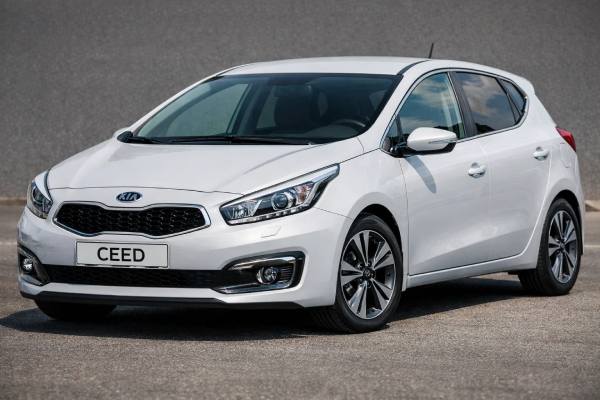
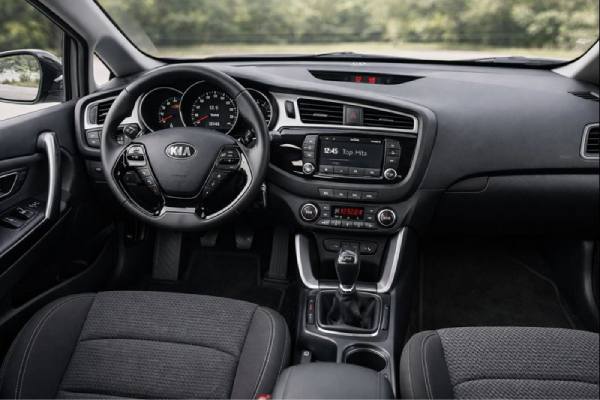
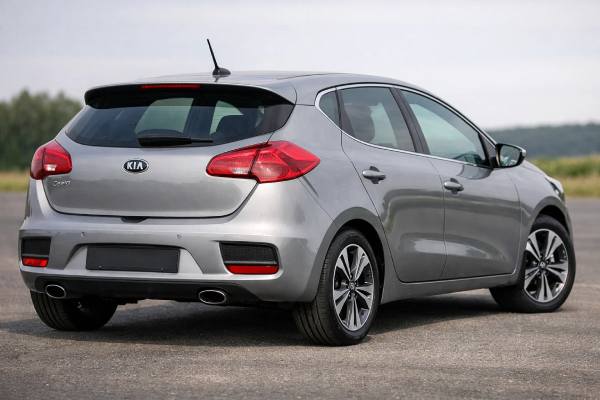
The facelifted Kia Cee’d (JD) with the naturally aspirated 1.6 GDI is an underrated “middle ground” in the compact class: simpler than the small turbos, smoother and quieter than most diesels, yet still lively enough for daily driving. This Gamma-family direct-injection engine delivers its best work higher in the rev range, while the chassis stays composed and predictable on real roads. For owners, the story is mostly about choosing the right maintenance approach: GDI engines reward clean oil, good fuel, and occasional long, hot runs that keep deposits in check. Get those basics right and the 2015–2018 Cee’d becomes a durable, easy-to-live-with hatch with strong ergonomics, sensible running costs, and a parts network that makes fixes straightforward.
Owner Snapshot
- Smooth, linear power delivery and generally low mechanical complexity versus small turbo rivals.
- Practical cabin and usable cargo space for a compact hatch, with stable highway manners.
- Good value in the used market because the 1.6 GDI is often overlooked.
- Plan for intake-valve carbon cleaning over time (a normal GDI ownership reality).
- Sensible oil service target: every 10,000–15,000 km or 12 months (whichever comes first).
Guide contents
- Kia Cee’d JD 1.6 GDI profile
- Kia Cee’d JD 1.6 GDI specs
- Kia Cee’d JD trims and safety tech
- Common faults and campaigns
- Service schedule and buyer tips
- Road manners and efficiency
- Rivals: best alternatives
Kia Cee’d JD 1.6 GDI profile
Think of the 2015–2018 facelift Cee’d 1.6 GDI as the “honest” petrol option in the lineup. It avoids the extra heat and torque spikes of small turbo engines, but it also avoids the sleepy low-end feel of many older non-turbo 1.6s by using direct injection (GDI). The result is crisp throttle response once you’re moving, clean mid-range for overtakes, and a top end that encourages you to use the last 2,000 rpm when you need it. Around town, it’s happy to loaf along, but it feels best when you occasionally let it warm fully and run under steady load—something that also helps a GDI engine stay cleaner over time.
The JD facelift brought detail improvements—more refined infotainment options, updated lighting and trim, and in many markets a slightly improved NVH (noise, vibration, and harshness) feel. Underneath, the fundamentals stayed the same: a practical hatchback body, a stable wheelbase, and suspension tuning that targets everyday comfort without losing composure on a fast, bumpy B-road. Steering is light at parking speeds, predictable on-center, and easy to place. It’s not a “hot hatch” in this trim, but it’s confident enough that good tyres make a noticeable difference in both grip and braking.
Ownership tends to be straightforward when the service history is solid. The 1.6 GDI uses a timing chain (not a belt), which removes one big scheduled expense, but it shifts the focus to oil quality and oil-change discipline. GDI engines can also develop intake valve deposits because fuel no longer washes the back of the valves. That doesn’t mean it’s fragile—it means you should treat it like a modern DI engine: use correct oil, avoid endless short trips where possible, and be ready for periodic cleaning if symptoms show up.
Who is this car for? Drivers who want a simple, naturally aspirated petrol hatch that still feels modern, who value predictable handling and daily usability, and who want a compact that can do highway duty without feeling busy or underpowered.
Kia Cee’d JD 1.6 GDI specs
Specs vary by market and trim, so the most useful approach is to list the typical 2015–2018 facelift configuration and note common ranges. Figures below reflect the 1.6 GDI 99 kW (135 hp) petrol, usually paired with a 6-speed manual or optional 6-speed automatic, and front-wheel drive.
Powertrain and efficiency (1.6 GDI 135 hp)
| Item | Specification |
|---|---|
| Code | Gamma 1.6 GDI (commonly G4FD in many markets) |
| Engine layout and cylinders | Inline-4, DOHC, 4 cylinders, 4 valves/cyl |
| Bore × stroke | ~77.0 × 85.4 mm (3.03 × 3.36 in) |
| Displacement | 1.6 L (1,591 cc) |
| Induction | Naturally aspirated |
| Fuel system | Gasoline direct injection (GDI) |
| Compression ratio | ~11.0:1 (market-dependent) |
| Max power | 135 hp (99 kW) @ ~6,300 rpm* |
| Max torque | ~165 Nm (122 lb-ft) @ ~4,850 rpm* |
| Timing drive | Chain |
| Rated efficiency | ~5.9–6.7 L/100 km (40–35 mpg US / 48–42 mpg UK)** |
| Real-world highway @ 120 km/h (75 mph) | ~6.6–7.6 L/100 km (36–31 mpg US / 43–37 mpg UK), tyre and wind dependent |
*Peak rpm points can differ slightly by calibration/market.
**Official test cycles and tyre sizes shift the published number noticeably.
Transmission and driveline
| Item | Specification |
|---|---|
| Transmission | 6-speed manual (common) or 6-speed automatic (market/trim dependent) |
| Drive type | FWD |
| Differential | Open (traction control via brake-based systems where equipped) |
Chassis and dimensions (5-door hatch, typical)
| Item | Specification |
|---|---|
| Suspension (front/rear) | MacPherson strut / multi-link (most EU-market models) |
| Steering | Electric power steering (EPS); ratio varies by rack version |
| Brakes | 4-wheel discs; front ventilated / rear solid (diameters vary by trim) |
| Wheels and tyres (popular) | 205/55 R16 (16 in) or 225/45 R17 (17 in) |
| Ground clearance | ~140 mm (5.5 in), market/tyre dependent |
| Length / width / height | ~4,310 / 1,780 / 1,470 mm (169.7 / 70.1 / 57.9 in) |
| Wheelbase | ~2,650 mm (104.3 in) |
| Turning circle (kerb-to-kerb) | ~10.6 m (34.8 ft) |
| Kerb weight | ~1,220–1,350 kg (2,690–2,980 lb), trim/gearbox dependent |
| GVWR | Commonly ~1,800–1,900 kg (3,970–4,190 lb), market dependent |
| Fuel tank | ~53 L (14.0 US gal / 11.7 UK gal) |
| Cargo volume | ~380 L (13.4 ft³) seats up / ~1,318 L (46.5 ft³) seats down (VDA typical) |
Performance and capability (typical published ranges)
| Item | Specification |
|---|---|
| 0–100 km/h (0–62 mph) | ~9.9–10.8 s (manual quicker than auto) |
| Top speed | ~190–197 km/h (118–122 mph) |
| Braking 100–0 km/h | ~37–40 m (tyres and brake condition dominate) |
| Towing capacity | Often ~1,200–1,400 kg (2,650–3,090 lb) braked / ~600 kg (1,320 lb) unbraked (market dependent) |
| Payload | Commonly ~450–550 kg (990–1,210 lb), trim dependent |
Fluids and service capacities (typical; verify by VIN/market)
| Item | Specification |
|---|---|
| Engine oil | ACEA A5/B5 or C2/C3 (market), 5W-30 common; ~3.6 L (3.8 US qt) with filter |
| Coolant | Long-life ethylene glycol OAT/HOAT type (Kia spec); ~6.0 L (6.3 US qt) (varies) |
| Manual gearbox oil | GL-4 type; ~1.8–2.0 L (1.9–2.1 US qt) |
| Automatic ATF | Kia/Hyundai-spec ATF; total fill varies, drain-and-fill typically ~3–4 L |
| A/C refrigerant | R134a; charge often ~500–600 g (18–21 oz), varies by equipment |
| Key torque specs | Wheel nuts ~90–110 Nm (66–81 lb-ft); spark plugs ~18–22 Nm (13–16 lb-ft); oil drain plug often ~30–35 Nm (22–26 lb-ft) |
Safety and driver assistance (typical for JD generation)
| Item | Specification |
|---|---|
| Crash ratings | Euro NCAP: 5 stars (JD generation test; protocols vary by year) |
| Airbags | Typically front, side, and curtain; exact count depends on market/trim |
| Core systems | ABS, ESC, traction control; TPMS in many markets |
| ADAS suite | On facelift cars: commonly parking sensors/camera; advanced AEB/ACC/lane systems depend heavily on market and option packs |
Kia Cee’d JD trims and safety tech
Trim naming varies widely by country, but the facelift Cee’d usually followed a familiar ladder: entry trims focused on value (smaller wheels, simpler infotainment), mid trims added comfort and convenience (climate control, better audio, parking aids), and higher trims bundled the “nice to have” equipment (bigger screens, LED lighting elements, upgraded seat materials, and sometimes driver assistance features). Because trims are inconsistent across borders, the most practical way to identify a used car is to look for functional equipment rather than the badge on the tailgate.
Quick trim and option identifiers (what to look for on a viewing)
- Wheels and brakes: 16-inch wheels are common on comfort-oriented trims; 17-inch packages often come with wider tyres and a slightly firmer feel over sharp edges.
- Infotainment: basic head units are easy to spot by smaller displays and fewer menus; higher systems often add navigation and a reverse camera.
- Lighting: projector-style headlamps and LED daytime running lights (DRLs) usually indicate mid-to-high trim or option packs.
- Cabin features: dual-zone climate, heated seats/steering wheel, and keyless start tend to cluster together—if you see one, check for the others.
- Build date: the facelift era starts in 2015, but registration dates can confuse this; use the VIN/build plate for certainty.
Safety ratings and what they mean for 2015–2018 cars
The JD Cee’d generation achieved a strong Euro NCAP result when tested under its period’s protocols. That is meaningful—structure, restraint design, and basic crash performance don’t “expire”—but it’s also important context: Euro NCAP updates its scoring and test methods over time. So, a 5-star result from an earlier protocol does not automatically equal a 5-star result under later, tougher tests. In practical terms, the facelift Cee’d remains a solid compact for passive safety (body structure, belts, airbags) but may not offer the same breadth of modern active safety (advanced AEB, lane-centering, adaptive cruise) that became common later in the segment.
Safety systems and ADAS availability
Most facelift Cee’d models include the baseline safety stack you want in a daily driver:
- ABS and ESC (electronic stability control): standard in many markets, providing stability interventions on low-grip surfaces.
- Brake assist and traction control: often integrated with ESC and helpful in emergency stops or wheelspin conditions.
- ISOFIX/LATCH: rear outboard ISOFIX points are typical; check for top-tether anchors if you regularly carry child seats.
- Parking assistance: rear sensors are common; a reverse camera is a meaningful upgrade for urban use.
Advanced driver assistance varies the most. Some markets offered forward collision warning or autonomous emergency braking (AEB) in later years or upper trims, while others didn’t. If ADAS matters to you, treat it as a must-verify item: confirm the presence of the front radar/camera module, check that the instrument cluster shows the relevant menus, and ensure windscreen replacements or front-end repairs haven’t disturbed calibration.
Finally, remember that safety tech is only as good as maintenance: worn tyres, mismatched tyre brands, tired dampers, and old brake fluid can erase a surprising amount of real-world safety margin—especially in wet or cold conditions.
Common faults and campaigns
The facelift Cee’d 1.6 GDI is generally dependable, but it has a few predictable patterns. The best way to think about issues is by prevalence and cost tier, because many “faults” are really maintenance timing problems.
Common (low to medium cost)
- Intake valve carbon buildup (GDI trait):
- Symptoms: rough idle, hesitation, reduced fuel economy, occasional misfire codes.
- Likely cause: deposits on intake valves from PCV oil vapors and EGR behavior (fuel doesn’t wash valves in GDI).
- Remedy: professional intake cleaning (often walnut blasting) and addressing PCV/oil quality; keep oil intervals sensible.
- Ignition coils and spark plugs (age and heat):
- Symptoms: misfires under load, flashing MIL, uneven acceleration.
- Cause: coil degradation or worn plugs (especially if intervals were stretched).
- Remedy: replace coils as needed; fit correct plug type and gap; avoid cheap mismatched plugs.
- PCV valve and crankcase ventilation issues:
- Symptoms: idle instability, higher oil consumption, oily intake piping.
- Cause: sticky PCV valve or tired seals.
- Remedy: replace PCV valve and inspect hoses; check for vacuum leaks.
Occasional (medium cost)
- High-pressure fuel pump (HPFP) noise or performance faults:
- Symptoms: ticking noise (some ticking is normal), hard starts, lean codes, power loss.
- Cause: wear, fuel quality, sensor issues.
- Remedy: diagnose with rail-pressure logs; avoid guessing—many “pump” complaints are sensor or injector-related.
- Cooling system seepage (thermostat housing or hoses):
- Symptoms: coolant smell, low reservoir level, dampness around housings.
- Cause: plastic housings and gasket aging.
- Remedy: replace housing/gaskets before it becomes a true overheat event.
- Manual clutch hydraulics (if manual):
- Symptoms: soft pedal, inconsistent engagement, difficulty selecting gears.
- Cause: slave cylinder or fluid neglect.
- Remedy: flush fluid; replace cylinder if leaking or weak.
Rare (higher cost, but watch for it)
- Catalyst efficiency faults on high-mileage cars:
- Symptoms: P0420-type catalyst codes, occasional sulfur smell.
- Cause: aging catalyst, persistent misfires, or oil burning.
- Remedy: fix the root cause first (misfire, oil control), then evaluate catalyst.
- Timing chain concerns (usually condition-related):
- Symptoms: rattle on cold start, correlation codes, rough running.
- Cause: poor oil history or very high mileage.
- Remedy: inspect before it becomes a skip; chains are durable when oil care is good.
Software, calibrations, and service actions
Even on non-turbo petrol models, software updates can matter: idle quality, throttle mapping, and certain sensor diagnostics can improve with revised calibration. On a used-car inspection, ask for proof of dealer services and any campaign completion. If the car has ADAS features (rare but possible depending on market), confirm that any windscreen replacement or front bumper repair was followed by sensor calibration where required.
How to verify recalls and campaigns
Use official recall resources where available and cross-check with a Kia dealer using the VIN. A car can drive “fine” with an outstanding recall—until it doesn’t. Treat recall completion the same way you treat service history: if it’s undocumented, assume it still needs verification.
Service schedule and buyer tips
A good maintenance plan for the 1.6 GDI balances manufacturer intervals with how these engines age in real life. If you do many short trips, lots of cold starts, or heavy city traffic, follow a more conservative schedule.
Practical maintenance schedule (distance/time, whichever comes first)
- Engine oil and filter: every 10,000–15,000 km or 12 months.
Use the correct spec oil for your market (ACEA classification matters as much as viscosity). Short-trip use justifies the shorter interval. - Cabin air filter: 15,000–30,000 km or yearly if you drive in dust/pollen-heavy areas.
- Engine air filter: 30,000 km (inspect every service; replace sooner in dusty conditions).
- Brake fluid: every 2 years, regardless of mileage (moisture lowers boiling point and increases corrosion risk).
- Coolant: follow official long-life coolant guidance; a common real-world approach is inspection annually and replacement around 8–10 years if the correct long-life coolant has been used consistently.
- Spark plugs: typically 60,000–100,000 km depending on plug type and market schedule; replace sooner if misfire history exists.
- Manual gearbox oil: not always listed as routine, but a preventative change around 90,000–120,000 km can improve shift quality and longevity.
- Automatic ATF (if equipped): a drain-and-fill around 60,000–90,000 km is a sensible longevity move, especially if you do city driving.
- Serpentine/aux belt and tensioner: inspect by 90,000 km; replace if cracked, noisy, or if the tensioner is weak.
- Tyres: rotate every 10,000–12,000 km; align yearly or after any suspension work.
GDI-specific upkeep (what owners often miss)
- Don’t baby it forever. A fully warmed engine that occasionally sees steady highway load tends to stay happier than one that only does cold, short hops.
- Watch idle quality early. Minor hesitation or rough idle can be your first hint of deposits or ignition wear—cheap fixes early prevent expensive guesswork later.
- Use decent fuel. The goal is consistency and clean burning; if your region offers “Top Tier”-style detergency standards, it’s worth prioritizing.
Buyer’s guide: inspection checklist (fast but meaningful)
- Cold start: listen for timing-chain rattle, check for unstable idle, and watch for warning lights.
- Acceleration under load: third gear pull should be smooth; misfire shudder often shows up here first.
- Cooling system: check reservoir level and look for dried coolant traces around housings and hoses.
- Oil condition and history: dark oil is normal, but burnt smell, very low level, or sludge hints at neglect.
- Brakes: pedal should feel firm; pulsing suggests warped discs, and a long pedal suggests old fluid or air.
- Suspension and steering: clunks over bumps point to links/bushes; vague tracking may be alignment or tired dampers.
- Electrics: confirm every window switch, mirror, infotainment function, and A/C performance—small failures add up.
- Rust hotspots: inspect rear hatch seams, underbody, and subframe areas—especially on salted-road cars.
Best “sweet spot” configurations
- If you value simplicity: 6-speed manual, 16-inch wheels, and a clear service file.
- If you value comfort: mid-to-high trim with climate control and parking aids, but avoid neglected automatics without proof of ATF service.
Long-term durability outlook is good when oil and ignition maintenance is kept tight and the GDI deposit story is handled proactively rather than reactively.
Road manners and efficiency
On the road, the facelift Cee’d feels like a mature compact: stable, predictable, and easy to drive quickly without drama. The suspension’s main skill is composure—mid-corner bumps don’t upset it much, and it tracks straight on the motorway without constant corrections. Steering is light and not especially chatty, but it’s consistent, which matters more day-to-day than razor-sharp feedback. With 16-inch wheels, ride quality is usually the best balance; 17s can sharpen turn-in but add impact harshness over broken surfaces.
Powertrain character
The naturally aspirated 1.6 GDI doesn’t deliver turbo-style punch at 1,500 rpm. Instead, it builds speed progressively and feels most responsive once you’re above the low-to-mid range. For overtakes, it often rewards a downshift more than extra throttle. This is not a weakness—many drivers prefer the linear, predictable response, especially on wet roads where sudden turbo torque can overwhelm front tyres.
- Manual gearbox: generally suits the engine well, letting you keep it in the stronger part of the rev range. A good clutch and fresh gearbox oil can noticeably improve shift feel on higher-mileage cars.
- Automatic: prioritizes smoothness; it can feel slower if it holds higher gears for economy. A healthy unit shifts cleanly without flare, shudder, or delayed engagement.
NVH (noise, vibration, harshness)
At steady highway speeds, the Cee’d is typically calm for its era. Tyre choice matters a lot—some budget tyres create more cabin roar than the engine ever will. Engine noise rises clearly when worked, but it’s usually a clean, mechanical sound rather than a strained buzz.
Real-world efficiency
Expect fuel economy to depend more on speed and trip length than you might think:
- City (stop-start, short trips): roughly 7.5–9.0 L/100 km (31–26 mpg US / 38–31 mpg UK).
- Highway (100–120 km/h): roughly 6.2–7.6 L/100 km (38–31 mpg US / 46–37 mpg UK).
- Mixed driving: roughly 6.8–8.0 L/100 km (35–29 mpg US / 42–35 mpg UK).
Cold weather can add 10–20% consumption, mainly because the engine runs richer while warming up and because winter tyres increase rolling resistance.
Key metrics that shape the verdict
- 0–100 km/h: feels consistent with the numbers; manual cars tend to feel noticeably more eager.
- Braking feel: typically stable if the car has quality pads, correct tyres, and fresh brake fluid.
- Turning circle: good for city use; parking ease depends more on sensor/camera equipment than size.
If your driving includes frequent full loads (four adults plus luggage) or steep mountain routes, the 1.6 GDI is still capable—but you’ll use more revs and more downshifts than you would in a turbo petrol or a diesel. The payoff is fewer heat-related components and generally simpler long-term ownership.
Rivals: best alternatives
The facelift Cee’d 1.6 GDI sits in a competitive space. Its biggest advantage is balance: it’s rarely the absolute best at one thing, but it avoids many worst-case ownership scenarios.
Volkswagen Golf Mk7 (1.2/1.4 TSI, similar era)
- Why choose it: more premium interior feel, strong turbo torque, broad drivetrain options.
- Why choose the Cee’d instead: fewer turbo-related concerns, often better value used, and a simpler ownership story if service history is mixed.
- Watch-outs on Golf: turbo and cooling-system complexity varies by engine; careful engine-code shopping matters.
Ford Focus (1.0 EcoBoost / 1.6 Ti-VCT)
- Why choose it: class-leading steering/handling feel, strong practicality, good parts availability.
- Why choose the Cee’d instead: the 1.6 GDI avoids some small-turbo stress and can be easier to maintain predictably.
- Watch-outs on Focus: some powertrain combinations can be maintenance-sensitive; verify the exact engine/gearbox pairing.
Hyundai i30 (GD facelift, closely related)
- Why choose it: very similar fundamentals, sometimes different trim/value mix in your market.
- Why choose the Cee’d instead: used prices and equipment bundles can be more favorable depending on region.
- How to decide: buy the better-kept car with the better history; they share many strengths.
Opel/Vauxhall Astra (J or early K petrols)
- Why choose it: comfortable ride, wide used-market selection, often good highway refinement.
- Why choose the Cee’d instead: typically simpler naturally aspirated behavior (in this configuration) and strong day-to-day ergonomics.
- Watch-outs on Astra: engine choice matters greatly; some turbo options require more careful history checks.
Peugeot 308 (1.6 VTi / THP)
- Why choose it: efficient packaging, often strong ride comfort, good diesel options (if you’re comparing across fuels).
- Why choose the Cee’d instead: a more straightforward naturally aspirated petrol ownership path in many cases.
- Watch-outs on 308: performance engines can be rewarding but demand stricter maintenance discipline.
Bottom line: If you want a compact hatch that’s predictable to drive, straightforward to maintain, and less dependent on turbocharged torque to feel “fast enough,” the Cee’d 1.6 GDI is a strong pick—especially when bought with a clean service record and realistic expectations about GDI deposit maintenance.
References
- Kia Owner’s Manual & Guides | Kia Ireland 2026 (Owner’s Manual)
- Kia szerviz intervallumok 2025 (Service Schedule)
- Vehicle recalls and safety defects – GOV.UK 2026 (Recall Database)
- euroncap_kia_ceed_2012_5stars.pdf 2012 (Safety Rating)
Disclaimer
This article is for informational purposes only and is not a substitute for professional inspection, diagnosis, or repair. Specifications, torque values, service intervals, and procedures can vary by VIN, market, model year, and installed equipment, so always verify details using the official owner’s manual and service documentation for your exact vehicle.
If you found this guide useful, please consider sharing it on Facebook, X (Twitter), or your favorite forum to support our work.