
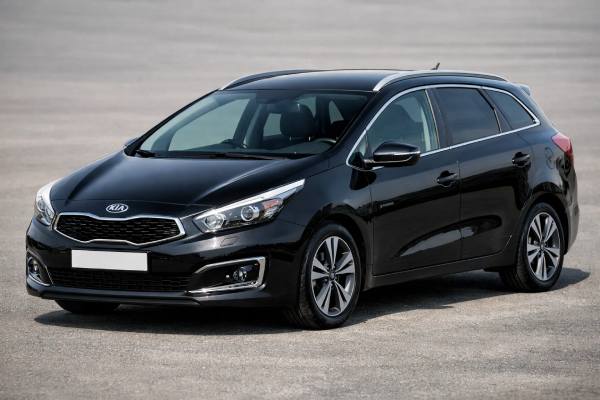
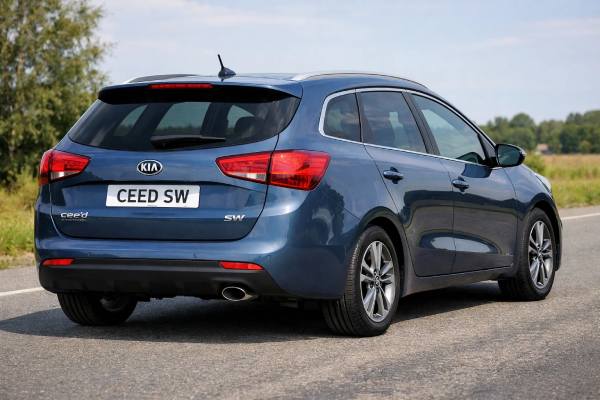
The facelifted Kia Cee’d SW (JD) with the 1.6 U II CRDi diesel (134 hp) is a practical long-roof compact built around one core idea: deliver low running costs without feeling “fleet-spec.” In real ownership, this version stands out for its torque-first drivability, relaxed motorway pace, and long-legged range—especially if you do steady A-road or highway miles. The wagon body also makes it more useful than the hatch: the load bay is easy to square-off, and rear-seat space works well for families.
Where buyers should be cautious is diesel-specific upkeep. This engine’s emissions hardware (DPF and EGR) rewards proper operating temperature and longer runs, while repeated short trips can trigger soot loading and drivability complaints. Buy one with a clean service record, use the right oil spec, and it can be a durable, economical daily.
What to Know
- Strong mid-range torque makes it feel quicker than the power figure suggests, especially from 1,500–3,000 rpm.
- Wagon packaging is genuinely useful: long load floor, family-friendly rear access, and stable highway manners.
- Best suited to regular longer drives; frequent short trips increase DPF and EGR stress over time.
- Plan for fuel-filter and brake-fluid servicing as “must-do” items, not optional extras.
- Typical oil service cadence is 15,000 km or 12 months (use the correct low-ash diesel oil spec for DPF use).
Quick navigation
- Kia Cee’d SW JD 134 diesel focus
- Kia Cee’d SW 1.6 CRDi specs and capacities
- Kia Cee’d SW equipment and safety gear
- Common problems and official fixes
- Maintenance plan and buying checklist
- On-road performance and real economy
- How it stacks up against rivals
Kia Cee’d SW JD 134 diesel focus
In the 2015–2018 facelift years, the Cee’d SW (JD) sits in a sweet spot for buyers who want a compact estate that behaves like a bigger car at speed. The wagon’s longer rear overhang adds real cargo utility, but the underlying platform still feels tidy in town—especially with the diesel’s low-rpm pull reducing the need for constant shifting.
The 1.6 U II CRDi (134 hp) is the “do-most-things” diesel in this range. It is not tuned for outright acceleration; it is tuned for usable torque and low consumption. That matters in daily driving: you can short-shift, surf the midrange, and keep noise down. On a motorway grade with passengers and luggage, it typically holds speed with less throttle than smaller petrol engines, and it feels less strained than you might expect from a compact wagon.
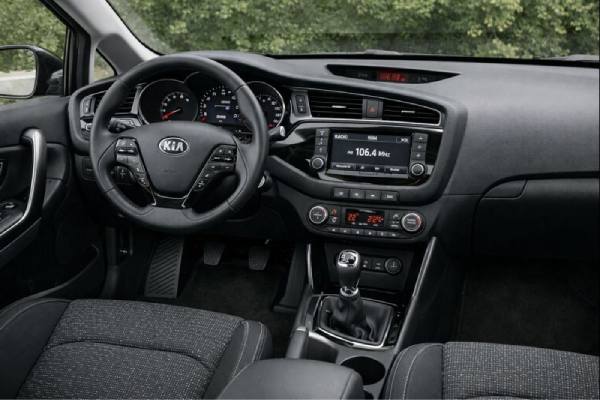
The facelift also matters beyond cosmetics. Most markets saw incremental improvements in infotainment, available driver assistance, and cabin noise suppression. You still get a straightforward layout—physical controls for key functions and a driving position that suits long stints. The estate body brings a practical tailgate opening, lower liftover than many crossovers, and a load area that is easier to pack with boxes or a stroller than a sloping-roof SUV.
Ownership, however, is defined by how you use it. Like most modern diesels, this engine’s emissions hardware wants heat and steady operation. If your routine is mostly school-run distances or short urban hops, the DPF (diesel particulate filter) and EGR (exhaust gas recirculation) system can become the limiting factor, even when the core engine is mechanically sound. If your routine includes regular 20–30 minute drives and occasional motorway time, this version is typically in its element.
Bottom line: this is a strong pick for high-mileage commuting, mixed regional driving, and family hauling—provided you choose a well-maintained example and treat diesel-specific servicing as part of the deal.
Kia Cee’d SW 1.6 CRDi specs and capacities
Below are practical, ownership-relevant specifications for the facelift Cee’d SW (JD) with the 1.6 U II CRDi ~134 hp diesel. Exact figures can vary by market, emissions certification, wheel size, and gearbox, so treat “typical” values as guidance and verify by VIN for service work.
Powertrain and efficiency (typical for 99 kW class)
| Item | Specification |
|---|---|
| Engine family / code | U II CRDi (U2 family, market-dependent sub-code) |
| Layout | Inline-4, DOHC, 16 valves (4 valves/cyl) |
| Displacement | 1.6 L (≈ 1,582 cc) |
| Induction | Turbocharged (usually VGT) with intercooler |
| Fuel system | Common-rail direct injection (CRDi) |
| Compression ratio | Typically mid-teens to ~16:1 (variant-dependent) |
| Max power | ~134 hp (≈ 99 kW) @ rpm (market-dependent) |
| Max torque | Typically ~280–300 Nm (206–221 lb-ft) @ low rpm (variant-dependent) |
| Timing drive | Chain |
| Rated efficiency | Typically ~4.0–4.8 L/100 km (NEDC-era listings vary by market) |
| Real-world highway @ 120 km/h | Often ~5.5–6.5 L/100 km in good conditions |
Transmission and driveline
| Item | Specification |
|---|---|
| Drive type | FWD |
| Gearboxes commonly paired | 6-speed manual; 7-speed DCT in some markets/years |
| Differential | Open (traction via brake-based stability/traction control) |
Chassis and dimensions (wagon body, typical)
| Item | Specification |
|---|---|
| Suspension (front / rear) | MacPherson strut / multi-link (market/trim dependent; some trims use torsion-beam) |
| Steering | Electric power steering (EPS) |
| Brakes | Front ventilated discs / rear discs or drums (trim dependent) |
| Wheels and tyres (common) | 205/55 R16 or 225/45 R17 (market/trim dependent) |
| Ground clearance | Typically ~140–150 mm class (varies with wheels/trim) |
| Length / width / height | Compact-wagon footprint (varies slightly by trim) |
| Wheelbase | ~2.65 m class |
| Turning circle | ~10.4–10.8 m class |
| Kerb weight | Commonly ~1,350–1,500 kg depending on gearbox/trim |
| Fuel tank | Typically ~53 L class |
| Cargo volume | Wagon advantage: large, square load bay; figures vary by measurement method and options |
Performance and capability (typical)
| Item | Typical figure (varies by gearbox/trim) |
|---|---|
| 0–100 km/h (0–62 mph) | ~10–11 s class |
| Top speed | ~195–205 km/h (121–127 mph) class |
| Towing capacity | Market-dependent; commonly ~1,300–1,500 kg braked class |
| Payload | Trim/market-dependent; often ~450–550 kg class |
Fluids and service capacities (typical ranges; verify by VIN)
| System | Specification (typical) |
|---|---|
| Engine oil | Low-ash oil for DPF use (ACEA C2/C3 class per market), common viscosity 5W-30; capacity often ~5.0–5.7 L with filter (variant-dependent) |
| Coolant | Long-life coolant; typical mix 50/50; capacity often ~6–7 L class |
| Manual gearbox oil | Usually ~1.8–2.2 L class (spec varies by gearbox) |
| DCT fluid (if equipped) | Specific OEM fluid; service approach varies by region and DCT type |
| Brake fluid | DOT 4 class typical |
| A/C refrigerant | R-134a in many markets/years (check under-hood label); charge varies |
Key torque specs (common “decision” fasteners; verify by service manual)
| Fastener | Typical torque |
|---|---|
| Wheel bolts/nuts | ~88–110 Nm |
| Engine oil drain plug | Often ~25–35 Nm class |
| Brake caliper carrier bolts | Often “high torque” class; verify by manual before service |
Safety and driver assistance (market and trim dependent)
| Item | Notes |
|---|---|
| Euro NCAP | Cee’d generation achieved a 5-star class rating in period testing; exact sub-scores vary by test year and protocol |
| Airbags | Commonly front, side, and curtain airbags; count varies by trim/market |
| Core systems | ABS, ESC, traction control; tyre pressure monitoring in many markets |
| ADAS | Some trims/years offered AEB, lane support, and traffic sign recognition; availability is market-specific |
Kia Cee’d SW equipment and safety gear
Trim names vary widely across Europe (and even within the same country across model years), so the best way to think about equipment is by “layers”: base comfort, convenience upgrades, and safety/tech packs. With the facelift, Kia generally improved infotainment usability and broadened availability of driver assistance features, but the exact mix depends on the market and price point.
Trim and options: what changes in real ownership
- Wheels, tyres, and ride: Many cars sit on 16-inch wheels with taller sidewalls (often the best everyday compromise). Sportier trims move to 17-inch packages that sharpen steering response but can increase road noise and make pothole impacts harsher. If you prioritize comfort and low tyre cost, 16-inch setups are usually the sweet spot.
- Lighting: Halogen headlights are common on lower trims; higher trims may add projector setups, LED daytime running lights, or adaptive features depending on market. For night driving, lens condition and aim matter as much as bulb type—cloudy lenses and misalignment can make any headlight feel weak.
- Cabin and infotainment: Expect Bluetooth and basic media on many trims, with navigation and larger displays on higher ones. The facelift era often brought more modern connectivity and better screen responsiveness, but check functionality on the exact car: pairing stability, USB ports, and steering-wheel button behavior are quick tells of overall electrical health.
- Comfort features: Heated seats/wheel, dual-zone climate, and parking sensors/camera often appear in option packs rather than fixed trims. If you care about these, search by equipment, not badge.
Quick identifiers when shopping
- Brake type (rear): Some trims use rear discs, others rear drums. Discs are not automatically “better” for daily driving, but they can simplify inspection and provide more consistent feel under repeated braking.
- DCT vs manual: A DCT-equipped car should shift cleanly with predictable engagement. Hesitation, shudder, or inconsistent take-up can indicate clutch wear, adaptation needs, or mechatronic issues.
- Factory tow equipment: If you plan towing, a factory towbar (or properly installed aftermarket kit) and a documented towing rating for that VIN matter more than guesses based on engine output.
Safety ratings and what they mean
Cee’d models of this generation earned strong crash-test results for their time, helped by a stable body structure and the widespread fitment of stability control. Keep in mind that official ratings are tied to specific test years and protocols; a “5-star” result from the early/mid-2010s is not directly comparable to today’s stricter scoring. Still, in real-world terms, this car generally has the fundamentals you want: predictable braking, strong stability-control intervention, and a cabin layout that supports attentive driving.
ADAS and calibration implications
If your car has AEB, lane support, radar cruise, or traffic sign recognition, treat windshield replacement, front bumper work, wheel alignment, and camera/radar servicing as calibration-sensitive. Poor repairs can lead to warning lights, reduced functionality, or false alerts. When buying, confirm that all driver-assistance features operate without intermittent faults and that there’s documentation for any windshield or collision repairs.
Common problems and official fixes
No modern diesel is completely “set-and-forget,” and the Cee’d SW 1.6 CRDi is no exception. The good news is that many issues are predictable and preventable when you match the car to the right usage and maintain it on time. Below is a practical issue map by prevalence and typical cost severity.
Common (higher likelihood over time)
- DPF soot loading (medium cost if caught early):
Symptoms: DPF light, frequent regeneration, rising fuel consumption, sluggish response.
Likely cause: Short trips, repeated cold starts, interrupted regenerations, incorrect oil.
Remedy: Confirm correct oil spec; check soot load with diagnostic tool; perform controlled regeneration if safe; address underlying causes (thermostat stuck open, EGR problems, boost leaks). - EGR valve/cooler fouling (medium to high depending on access):
Symptoms: Rough idle, hesitation, smoke, recurring fault codes, limp mode.
Likely cause: Carbon buildup from low-load operation and frequent short runs.
Remedy: Clean/replace EGR components as required; confirm coolant flow and correct operating temperature. - Intake and boost leaks (low to medium):
Symptoms: Whistling, underboost codes, oily residue on hoses, reduced torque.
Likely cause: Aging charge pipes, clamps, intercooler seepage.
Remedy: Pressure-test intake; replace cracked hoses; check intercooler end tanks.
Occasional (depends on mileage, service history, and conditions)
- Turbo actuator/boost control issues (medium to high):
Symptoms: Inconsistent power, limp mode under load, boost-related faults.
Likely cause: Sticking vanes, vacuum/actuator faults, sensor drift.
Remedy: Diagnose systematically (vacuum lines, actuator movement, MAP sensor), avoid “parts darts.” - Injector sealing or fuel-system sensitivity (medium):
Symptoms: Hard starting, diesel smell, uneven idle, increased correction values.
Likely cause: Poor fuel quality, overdue fuel filter, seal degradation.
Remedy: Replace fuel filter on schedule; use quality fuel; perform injector leak-off testing before replacing parts. - Dual-mass flywheel and clutch wear (manual) (high):
Symptoms: Rattle at idle, vibration on take-up, slipping under load.
Likely cause: High-torque use at low rpm, heavy city driving, towing.
Remedy: Replace clutch/DMF as a set when symptoms confirm wear.
Rare (but costly if ignored)
- Cooling system faults leading to wrong operating temperature (medium to high):
Symptoms: Slow warm-up, poor heater output, frequent DPF issues.
Likely cause: Thermostat stuck open, sensor fault.
Remedy: Restore correct operating temperature; it protects emissions hardware and efficiency.
Recalls, TSBs, and software updates
For any used purchase, treat recall completion as non-negotiable. Use an official VIN check and ask for dealer proof of completed campaigns. Software updates can also matter on diesels, especially for drivability, regeneration strategy, and fault sensitivity. Even when a car “runs fine,” an out-of-date calibration can contribute to nuisance faults or more frequent regenerations.
Pre-purchase checks worth requesting
- Full service history with dates and mileage (not just stamps).
- Proof of correct oil specification and sensible intervals.
- Diagnostic scan for stored/emissions-related codes and DPF soot load.
- Evidence of thermostat health (stable coolant temp once warm).
- For DCT cars: smooth take-up, no shudder, and consistent shifts hot and cold.
Maintenance plan and buying checklist
A diesel wagon can be an excellent value when maintained proactively. The strategy is simple: protect the turbo and fuel system with clean oil and filtration, protect the DPF by ensuring proper operating temperature and correct oil spec, and keep fluids fresh so small problems do not become expensive ones.
Practical maintenance schedule (typical; verify by market/VIN)
- Engine oil and filter: every 15,000 km or 12 months (shorten to 10,000–12,000 km if mostly city driving). Always use the correct low-ash oil spec suitable for DPF-equipped diesels.
- Air filter: inspect every service; replace about 30,000 km (more often in dusty areas).
- Cabin filter: every 15,000–30,000 km or annually if you have allergies or heavy urban use.
- Fuel filter (critical on diesels): typically 30,000–60,000 km (do not stretch it; it protects the high-pressure pump and injectors).
- Coolant: commonly 5 years / 100,000+ km class depending on coolant type; replace if unknown history.
- Brake fluid: every 2 years regardless of mileage.
- Brake pads/rotors: inspect every service; replace as needed based on thickness and corrosion.
- Manual gearbox oil: consider 80,000–120,000 km as a preventive change if you want long-term smoothness.
- DCT service (if equipped): follow the exact regional schedule and fluid spec—DCT servicing is not “one size fits all.”
- Aux belt and tensioner: inspect regularly; replace if cracked/noisy or at major mileage intervals.
- Alignment and tyre rotation: rotate around 10,000–15,000 km; align if you see uneven wear or steering pull.
- Battery (12 V): test annually after year 4; many last 4–6 years depending on climate and usage.
Fluids and “good habits” that pay off
- Warm-up philosophy: Drive gently until warm; avoid hard boost while cold. This extends turbo life and improves combustion.
- DPF-friendly use: If your driving is mostly short trips, plan one longer drive weekly (20–30 minutes at steady speed) to help the car complete regenerations.
- Do not ignore warning lights: A small sensor or thermostat problem can snowball into DPF trouble.
Buyer’s checklist (quick but effective)
- Cold start behavior: It should start cleanly without extended cranking or uneven idle. Excess smoke or heavy vibration suggests deeper issues.
- Cooling system: Confirm the engine reaches and holds normal temperature; weak cabin heat after warm-up is a red flag.
- Boost delivery: Smooth torque rise; no sudden drop into limp mode under load.
- Underside inspection: Look for oil seepage at intercooler pipes, turbo plumbing, and engine undertray area.
- Suspension and steering: Listen for front-end knocks and check for uneven tyre wear (often indicates tired bushings or alignment issues).
- Electrical sanity check: All windows, mirrors, infotainment functions, parking sensors/camera, and steering-wheel controls should behave consistently.
Durability outlook: With the right usage profile and disciplined servicing, this powertrain can be a long-lived, economical companion. The biggest ownership risks are not “the engine exploding,” but emissions hardware stress from unsuitable driving patterns and neglected filtration.
On-road performance and real economy
This Cee’d SW diesel is best understood as a torque-led wagon, not a hot hatch. The 134 hp figure understates how it feels from the driver’s seat because diesel torque arrives early and stays useful through the midrange. Around town, you can pull away cleanly without revving, and in rolling traffic it needs fewer downshifts than smaller petrol engines. That relaxed character is one of the main reasons people like this configuration.
Ride, handling, and NVH
For a compact estate, straight-line stability is a strong point. The wagon’s longer body and well-judged suspension tuning give it a planted feel at motorway speeds, and it generally tracks cleanly in crosswinds. Ride quality depends heavily on wheel size: 16-inch setups typically offer the best comfort and lowest noise, while 17-inch packages can feel sharper but transmit more road texture.
Noise levels are also usage-dependent. At a steady cruise, the diesel settles down, but under hard acceleration you will hear the typical CRDi note. On coarse asphalt, tyre choice dominates cabin noise—so budget tyres can make the car feel less refined than it really is.
Powertrain character and gearbox behavior
- 6-speed manual: Usually the simplest ownership choice. Expect strong pull in the mid gears and easy motorway cruising. Clutch and dual-mass flywheel life depends on driving style; repeated low-rpm lugging in high gear is a common way to shorten life.
- 7-speed DCT (where fitted): It can be quick and efficient when healthy, but it demands clean behavior: smooth engagement, no shudder when hot, and predictable low-speed creep. Any hesitation or vibration is worth investigating before purchase.
Real-world efficiency (what owners often see)
Actual consumption varies with speed, temperature, tyres, and whether the car is regularly regenerating the DPF:
- City-heavy use: commonly 6.0–7.5 L/100 km (DPF regenerations can push it higher).
- Highway 100–120 km/h: often 5.0–6.5 L/100 km in good conditions.
- Mixed driving: commonly 5.3–6.8 L/100 km.
Cold weather typically increases consumption noticeably because warm-up takes longer and regeneration frequency can rise. If you do many short trips in winter, the economy advantage over a small turbo petrol can shrink—another reason this engine is happiest with longer runs.
Braking and control
Pedal feel is usually predictable and easy to modulate. The stability-control system intervenes smoothly, and traction control can help in wet conditions, though it cannot replace good tyres. If you drive in snow, prioritize a proper winter tyre over any powertrain choice—it will transform confidence more than any engine option.
How it stacks up against rivals
In the compact-wagon class, the Cee’d SW 1.6 diesel competes on practicality and running costs rather than badge prestige. Its best rivals often come down to what you value most: driving feel, cabin tech, long-distance comfort, or long-term diesel durability.
Versus Volkswagen Golf Variant 1.6 TDI
The Golf Variant is often the benchmark for perceived refinement and resale value. It can feel slightly more “polished” in cabin materials and suspension composure. However, ownership costs can be higher depending on local parts pricing and service rates. If you want a simpler cost-per-kilometer story and you find a clean Kia with history, the Cee’d can be the more rational buy.
Versus Škoda Octavia Combi 1.6 TDI
The Octavia Combi is the space king: rear room and cargo packaging are excellent. If maximum interior volume is your top priority, it often wins. The Kia counters with a more compact footprint that can be easier in tight cities, and in many markets it offers strong value for money on the used market.
Versus Ford Focus Estate 1.5/1.6 TDCi
The Focus is typically the handling pick—steering feel and cornering balance can be more engaging. The trade-off is that some buyers find its ride and road noise less relaxed for long motorway days compared with the Kia on comfort-oriented tyres. Choose the Ford if you care about chassis feel; choose the Kia if you want calm, steady travel and a straightforward control layout.
Versus Peugeot 308 SW 1.6 BlueHDi
The 308 SW can be very efficient and often feels modern inside, especially in later years. Its diesel emissions systems can also be sensitive to short-trip use. If you want a more “continental” cabin vibe and you do long drives, it’s a strong alternative. If you want familiar ergonomics and easy day-to-day use, the Kia’s conventional layout is a plus.
The buying decision in one sentence
Pick the Cee’d SW 1.6 CRDi 134 hp if you want a sensible, comfortable, torque-rich wagon for real mileage—then protect that value by buying on condition, verifying recalls, and maintaining it like a modern diesel (not like an old one).
References
- Kia Recalls | Kia Europe 2026 (Recall Database)
- Engine Oil Grades and Capacities 2024 (Service Reference)
- Kia Car Owners Manual | Kia UK 2025 (Owner’s Manual Portal)
- Kia C’eed – Crash Test 2012 2012 (Safety Rating)
Disclaimer
This article is for informational purposes only and is not a substitute for professional inspection, diagnosis, or repair. Specifications, torque values, fluid types, capacities, service intervals, and procedures can vary by VIN, market, emissions certification, and equipment. Always verify details using official Kia documentation for your exact vehicle and follow qualified service guidance when performing maintenance.
If you found this guide useful, please consider sharing it on Facebook, X (Twitter), or your favorite forum/community to help others find reliable ownership information.