
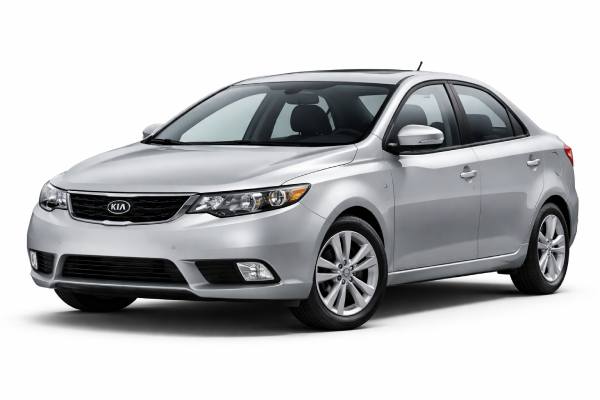
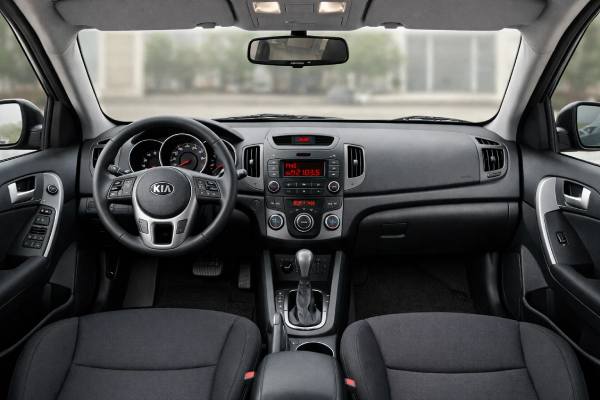
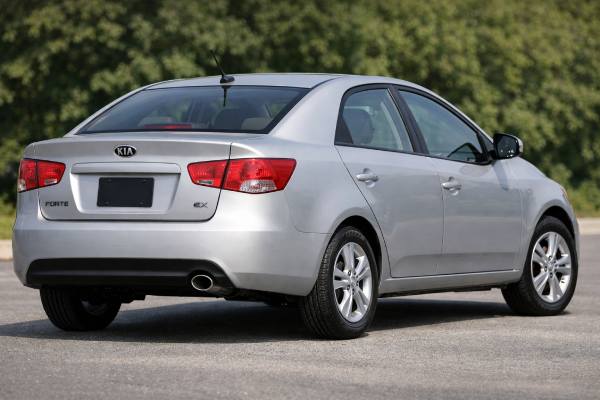
The 2012–2013 facelift Kia Forte (TD) with the 2.0-liter Theta II is a practical compact that rewards owners who value simple, proven hardware over cutting-edge complexity. This powertrain uses multi-port fuel injection (MPI) and a timing chain, which generally keeps routine service straightforward and helps avoid some of the long-term deposits and pump sensitivity seen in early direct-injection engines. In real use, the Forte’s strengths are predictable controls, a stable highway feel, and competitive efficiency when paired with the 6-speed automatic—especially in lighter trims and on narrower tires.
Where owners should stay alert is not the basic engine design, but age-related wear: rubber mounts and bushings, cooling system seals, and electrical “small stuff” that can add up if neglected. If you approach it with a maintenance-first mindset, the 2012–2013 Forte 2.0 can be a durable, budget-friendly daily driver.
Quick Specs and Notes
- Strong value if you want a conventional 2.0L MPI engine with a timing chain and simple service needs.
- Stable highway manners for a compact, with a calm steering and suspension tune on stock tire sizes.
- Good fuel economy potential on long trips, especially with the 6-speed automatic.
- Watch for recall completion and aging rubber parts (mounts, bushings, hoses) as mileage climbs.
- Plan on engine oil and filter service every 6 months / 8,000–10,000 km (5,000–6,000 mi) in typical use (short trips or heat may need shorter intervals).
Section overview
- Kia Forte TD facelift profile
- Kia Forte TD 2.0 technical specs
- Kia Forte TD trims and safety features
- Reliability problems and service actions
- Maintenance plan and buyer checklist
- Real-world driving and efficiency
- Rivals and segment comparisons
Kia Forte TD facelift profile
The 2012–2013 facelift version of the Forte (TD) sits in the sweet spot of the first-generation car: most early production quirks were already known, while the mechanical package stayed traditional and serviceable. In most markets you’ll see the same basic trio of body styles (sedan, coupe, and 5-door hatch), but the “Forte” name typically points buyers to the sedan first. The 2.0-liter Theta II MPI engine at 156 hp is the volume choice because it balances acceptable performance with reasonable fuel costs and fewer “high-strung” behaviors than smaller engines under heavy load.
From an ownership perspective, the appeal is simple: the Forte’s drivetrain is conventional (FWD, 6-speed manual or 6-speed automatic), the engine bay is not tightly packed, and parts availability is usually strong. That matters when the car ages into second or third ownership, where maintenance discipline varies. The MPI fuel system tends to be tolerant of normal fuel quality and doesn’t rely on high-pressure pumps or specialized injector cleaning routines. Combined with a timing chain (rather than a scheduled timing belt replacement), the big-ticket calendar items are fewer—though chain-driven does not mean “maintenance-free,” as oil quality still matters.
The facelift itself is mainly about equipment packaging and day-to-day usability rather than a radical engineering change. Typical updates for this era include feature reshuffling by trim (clusters, steering adjustments, infotainment choices) and minor interior revisions, while core suspension layout and braking hardware remain familiar: MacPherson struts in front and a torsion-beam rear axle. That setup is cost-effective and durable, but it also explains the Forte’s character—stable and predictable rather than sporty and adjustable.
For shoppers today, the most important framing is this: you’re not buying a “forever car” that thrives on deferred service. You’re buying a simple compact that does well when fluids are kept fresh, cooling and charging systems are monitored, and known recalls are completed. If you confirm those fundamentals, the Forte 2.0 can deliver a low-drama ownership experience.
Kia Forte TD 2.0 technical specs
Below are practical, ownership-relevant specifications for the 2012–2013 facelift-era Forte (TD) with the 2.0L Theta II MPI engine at 156 hp. Values can vary slightly by market emissions spec, trim, wheel/tire package, and body style, so treat them as a decision guide and verify against your VIN-specific documentation.
Powertrain and efficiency
| Item | Specification |
|---|---|
| Code | Theta II 2.0 (commonly G4KD family) |
| Engine layout and cylinders | Inline-4, DOHC, 4 valves/cyl, Dual CVVT |
| Bore × stroke | 86.0 × 86.0 mm (3.39 × 3.39 in) |
| Displacement | 2.0 L (1,998 cc) |
| Induction | Naturally aspirated |
| Fuel system | MPI (multi-port injection) |
| Compression ratio | 10.5:1 |
| Max power | 156 hp (116 kW) @ 6,200 rpm (some emissions variants slightly lower) |
| Max torque | 195 Nm (144 lb-ft) @ 4,300 rpm |
| Timing drive | Chain |
| Rated efficiency (typical US spec) | 6MT: 9.4 / 6.9 L/100 km (25 / 34 mpg US) city/hwy; 6AT: 9.0 / 6.5 L/100 km (26 / 36 mpg US) city/hwy |
| Real-world highway @ 120 km/h (75 mph) | ~7.0–7.8 L/100 km (30–34 mpg US), wind and tire size dependent |
Transmission and driveline
| Item | Specification |
|---|---|
| Transmission | 6-speed manual or 6-speed automatic (Sportmatic-style manual mode on many trims) |
| Drive type | FWD |
| Differential | Open |
Chassis, dimensions, and capacities (sedan reference)
| Item | Specification |
|---|---|
| Suspension (front / rear) | MacPherson strut / torsion beam |
| Steering | Rack and pinion, hydraulic power assist (market/trim may vary) |
| Brakes (front / rear) | 279 mm (11.0 in) vented disc / 262 mm (10.3 in) solid disc |
| Wheels/tyres (common) | 205/55 R16 (popular); 215/45 R17 on sport packages |
| Ground clearance | ~150 mm (5.9 in) |
| Length / width / height | ~4,544 / 1,760 / 1,461 mm (178.9 / 69.3 / 57.5 in) |
| Wheelbase | ~2,649 mm (104.3 in) |
| Turning circle (kerb-to-kerb) | ~10.33 m (33.9 ft) |
| Kerb weight | ~1,235–1,241 kg (2,722–2,737 lb), transmission dependent |
| GVWR | ~1,775–1,790 kg (3,913–3,946 lb), transmission dependent |
| Fuel tank | ~51.9 L (13.7 US gal / 11.4 UK gal) |
| Cargo volume (trunk) | ~416 L (14.7 ft³) |
Performance and capability (typical expectations)
| Item | Typical value (depends on tires, transmission, test method) |
|---|---|
| 0–100 km/h (0–62 mph) | ~8.8–10.0 s |
| Top speed | ~185–195 km/h (115–121 mph) |
| Braking 100–0 km/h | ~38–42 m (125–138 ft) on good tires |
| Towing / payload | Often not rated or limited for this class; verify locally |
Fluids and service capacities (practical guidance)
Exact capacities vary by sub-variant and service method (drain vs total fill). Use these as planning ranges:
| Fluid | Specification (typical) | Capacity guidance |
|---|---|---|
| Engine oil | API SM/SN class; SAE 5W-20 often preferred for economy (5W-30 acceptable in heat) | ~3.9–4.2 L (4.1–4.4 US qt) with filter |
| Coolant | Ethylene-glycol long-life coolant, 50/50 mix | ~5.5–6.5 L (5.8–6.9 US qt) |
| Automatic transmission | Kia/Hyundai SP-IV family fluid | Drain/fill often ~3–4 L; total fill higher |
| Brake fluid | DOT 3 or DOT 4 (check cap/label) | As required |
Key torque specs (critical fasteners only)
| Fastener | Typical torque |
|---|---|
| Wheel lug nuts | ~88–108 Nm (65–80 lb-ft) |
| Engine oil drain plug | ~34–44 Nm (25–32 lb-ft) |
Kia Forte TD trims and safety features
Trim naming varies by region, but most 2012–2013 Forte lineups follow a familiar ladder: an entry model focused on price and fuel economy, a mid-trim with comfort upgrades, and a higher trim that adds appearance, wheels/tires, and convenience tech. For the 2.0L 156 hp engine specifically, it’s most commonly tied to the value-oriented trims rather than the performance-focused 2.4L variants.
Trims and options that matter in real life
When you’re shopping used, the “best” trim is usually the one with the fewest expensive-to-fix extras—unless those extras are exactly why you’re buying the car. These are the options that change ownership experience the most:
- Transmission choice: The 6-speed manual is simple and can be long-lived with clutch care, while the 6-speed automatic is generally smooth but benefits from periodic fluid service (especially in city use and hot climates).
- Wheel/tire package: 16-inch wheels with taller sidewalls are typically quieter, cheaper to replace, and kinder to suspension bushings than 17-inch low-profile packages.
- Infotainment and navigation: Factory navigation head units can be costly to replace; if you don’t need it, a basic audio system can be a better long-term bet.
- Tech packages (market dependent): Items like automatic climate control, push-button start, and upgraded gauge clusters improve daily comfort but add more modules and switches to age.
Quick identifiers can help you confirm equipment without decoding every option sheet:
- Wheels (16 vs 17 in) and tire size on the sidewall often signal the package level.
- Steering wheel controls, screen size, and backup camera presence (if fitted) are strong interior tells.
- A telescopic steering wheel (in some configurations) is a useful comfort feature and can hint at a higher equipment group.
Safety ratings and crash structure
In the U.S., the Forte of this generation performed well in the major IIHS tests for its era, including strong roof strength and good results in several crash modes under the applicable test versions. Insurance Institute for Highway Safety results can still be a valuable baseline when comparing older compacts, but remember that test protocols evolve—what was “excellent” in 2012 may not equal a top score under modern small-overlap or updated headlight criteria.
Safety systems and driver assistance (ADAS)
This is a pre-modern-ADAS car. You should expect solid basics rather than advanced automation:
- Airbags: Typically a full set for the class (front, side, and curtain), but confirm airbag count by market and trim.
- Stability and traction control: Electronic stability control is commonly present and is one of the most important real-world safety features for emergency maneuvers and slippery roads.
- Braking systems: ABS is common; maintain brake fluid and address warning lights promptly.
- Child-seat provisions: LATCH/ISOFIX anchoring is generally provided; verify the exact anchor locations and weight limits in your manual.
If you’re coming from a newer vehicle, the biggest adjustment is that the Forte won’t “save” inattentive driving with lane centering or automatic emergency braking. The upside is fewer sensors and calibrations to worry about after windshield replacement or front-end repairs.
Reliability problems and service actions
A well-kept 2012–2013 Forte 2.0 can be dependable, but the pattern of ownership issues is typical for aging compacts: small failures accumulate, and neglected fluids turn “minor” into “expensive.” Below is a practical map of what tends to show up, organized by prevalence and cost severity. (Exact rates vary by climate, maintenance history, and how much city driving the car has seen.)
Common (low to medium cost)
- Ignition coils and spark plugs (80,000–160,000 km / 50,000–100,000 mi):
Symptoms: misfire under load, flashing check-engine light, rough idle.
Likely cause: coil aging, plug gap wear, oil seep into plug wells in some cases.
Remedy: replace coils as needed (sometimes in sets) and install correct plugs; inspect plug tube seals if oil is present. - Front suspension wear (100,000–200,000 km / 60,000–120,000 mi):
Symptoms: clunks over bumps, uneven tire wear, vague steering on-center.
Likely cause: stabilizer links/bushings, control-arm bushings, strut mounts.
Remedy: replace worn links/bushings first; align after major work. - Engine mounts (age-driven; often after 8–12 years):
Symptoms: vibration at idle in gear, thump on takeoff.
Likely cause: rubber collapse.
Remedy: replace the failed mount(s); recheck exhaust hangers and subframe fasteners. - A/C performance drift:
Symptoms: weak cooling at idle, cycling, noise.
Likely cause: low refrigerant from seepage, condenser damage, aging compressor clutch.
Remedy: leak-check and repair before recharging; avoid repeated “top-offs” without diagnosis.
Occasional (medium cost)
- Cooling system leaks:
Symptoms: coolant smell, low reservoir, temperature creep in traffic.
Likely cause: radiator end tanks, hose connections, water pump seep.
Remedy: pressure test, replace leaking component, refill with correct coolant mix; bleed air correctly. - Automatic transmission shift quality changes:
Symptoms: delayed engagement, harsher 2–3 or 3–4 shifts, mild flare.
Likely cause: old ATF, adaptation drift, solenoid wear.
Remedy: correct fluid and level check procedure; consider a drain/fill service cycle rather than an aggressive flush unless the unit is being replaced.
Rare but high severity (verify recalls and warnings)
- ABS/ESC module fire risk recall population:
Some vehicles in the broader Forte TD generation fall under recall campaigns related to the hydraulic electronic control unit (HECU) / ABS module electrical faults.
Owner action: confirm completion via National Highway Traffic Safety Administration VIN records and dealer documentation; follow interim guidance if a remedy is pending. - Brake pedal stopper pad recall (shift interlock and brake lights):
Symptoms: brake lights stuck on, ability to shift out of Park without pressing the brake, traction control warnings.
Owner action: verify recall completion; it’s a small part with an outsized safety impact.
Software and calibrations
This era doesn’t rely heavily on modern ADAS calibration, but control modules still matter:
- If the transmission or engine has drivability complaints, a dealer-level scan for stored codes, software updates, and correct fluid level verification can prevent misdiagnosis.
- If you replace steering angle sensors, ABS components, or certain throttle parts, confirm whether a relearn or calibration is required.
Pre-purchase checks to request
- Recall completion printout (dealer) and VIN lookup confirmation.
- Cold start + full warm test drive: listen for belt noise, feel for mount vibration, confirm fan operation in traffic.
- OBD scan for pending codes (misfire history, EVAP, catalyst efficiency).
- Brake lights and shift interlock test (press brake, shift sequence).
- Undercarriage inspection for corrosion hotspots and wetness around the radiator, hoses, and transmission case.
Maintenance plan and buyer checklist
A Forte 2.0 that “just gets oil changes” can still run—but it’s far more likely to nickel-and-dime you. The goal is to service the car like a system: fluids, filters, ignition, brakes, and rubber parts on a schedule that fits how you drive.
Practical maintenance schedule (time/distance)
Use the shorter interval if you do frequent short trips, long idling, very hot/cold climates, dusty roads, or heavy city driving.
- Engine oil and filter: every 8,000–10,000 km (5,000–6,000 mi) or 6 months.
Tip: If oil consumption appears, shorten the interval and check level every 1,000–1,500 km (600–1,000 mi). - Engine air filter: inspect every oil change; replace every 24,000–48,000 km (15,000–30,000 mi) depending on dust.
- Cabin air filter: every 12,000–24,000 km (7,500–15,000 mi) or annually.
- Coolant: typically 10 years / 160,000 km (100,000 mi) initial, then 5 years / 96,000 km (60,000 mi) (confirm your coolant type and manual).
- Spark plugs: typically 160,000–170,000 km (100,000–105,000 mi) for long-life plugs; replace earlier if misfires occur.
- Automatic transmission fluid (6AT): consider a drain-and-fill service every 60,000–100,000 km (40,000–60,000 mi), sooner for heavy city use.
- Manual transmission fluid (6MT): consider every 80,000–120,000 km (50,000–75,000 mi) if shifts feel notchy.
- Brake fluid: every 2 years, regardless of mileage (moisture is the enemy).
- Brakes (pads/rotors): inspect at every tire rotation; replace as needed based on thickness and surface condition.
- Tire rotation: every 8,000–10,000 km (5,000–6,000 mi); align annually or after suspension work.
- Serpentine belt and hoses: inspect annually; expect replacement around 8–12 years depending on climate.
- 12V battery: test yearly after year 3; many batteries last 3–5 years in typical climates.
Fluid specs, capacities, and decision-making notes
- Stick to the correct oil viscosity for your climate and the correct ATF spec for your transmission. “Universal” fluids can create shift issues over time.
- Treat capacities as a range unless you have the VIN-specific manual. Drain-and-fill quantities for transmissions are often far lower than “dry” total fill.
Buyer’s guide: inspection checklist
Bring this list to a pre-purchase inspection (PPI). It targets the high-value checks that prevent regret:
- Underhood: oil leaks around valve cover, coolant stains, cracked intake tube, battery corrosion.
- Cooling system: radiator end tanks, hose swelling, fan operation in traffic, heater performance.
- Driveline: smooth engagement (auto), no clutch slip (manual), no axle click on full-lock turns.
- Brakes: pedal feel, ABS warning lights, stuck brake lamps (stopper pad concern).
- Suspension/steering: clunks, wandering, uneven tire wear, torn bushings, leaking struts.
- Electrics: window regulators, door lock actuators, blower speeds, A/C clutch noise.
- Corrosion hotspots: rear subframe seams, brake line routing areas, lower control arm mounts (region dependent).
Recommended configurations
If long-term durability is your priority:
- Favor simpler trims with 16-inch wheels, fewer power accessories, and a clean service record.
- The 6-speed automatic can be excellent if you can prove regular fluid service; otherwise, budget for it immediately after purchase.
A realistic durability outlook: with consistent maintenance and recall completion, this powertrain can deliver well past 200,000 km (125,000 mi) with manageable repairs. The difference between a “good Forte” and a “bad Forte” is almost always service history.
Real-world driving and efficiency
The Forte 2.0 is not a hot hatch or a sharp sports sedan, but it has a pleasing, predictable balance that suits daily use. In stock form, it tends to feel more composed than “exciting,” which is often what owners want in a compact commuter.
Ride, handling, and NVH
- Straight-line stability: The car tracks well at highway speeds, especially on 16-inch tires with normal sidewall height. Crosswinds can still nudge it—typical for the class—but it doesn’t feel nervous.
- Cornering balance: Expect safe, mild understeer. The torsion-beam rear favors stability over rotation, so it won’t pivot eagerly, but it’s easy to place.
- Steering feel: The steering is usually light to medium in effort. Feedback is modest, but the on-center response is predictable—helpful for long trips.
- Braking feel: When the system is in good shape (fresh fluid, quality pads), the pedal is consistent. If the pedal feels soft, brake fluid age is often the first fix.
- Cabin noise: Tire roar rises noticeably with wider, lower-profile tires. A quiet Forte usually sits on 16-inch wheels and decent touring tires.
Powertrain character
The 2.0L Theta II MPI makes its power in a familiar naturally aspirated way: it’s responsive in normal traffic, but it needs revs for strong passing. That means your impression depends heavily on transmission choice.
- 6-speed manual: More engaging, better control of revs, and can feel quicker in passing if you downshift decisively.
- 6-speed automatic: Smooth and relaxed; kickdown is reasonable, but it won’t feel urgent unless you push past mid-throttle.
If you’re test driving, do one full-throttle merge and one 60–100 km/h (37–62 mph) passing run. Hesitation, flare, or shudder can indicate overdue fluid service or ignition issues.
Real-world efficiency
Owner results depend on speed, tires, and climate more than most people expect:
- City: ~8.5–10.5 L/100 km (22–28 mpg US) depending on traffic and warm-up time.
- Highway (100–120 km/h / 60–75 mph): ~7.0–7.8 L/100 km (30–34 mpg US) for most drivers.
- Mixed: ~7.8–9.0 L/100 km (26–30 mpg US) is a realistic planning range.
Cold weather can add 10–20% consumption due to longer warm-up, winter fuel blends, and higher rolling resistance tires. If fuel costs are a key reason you’re shopping this model, prioritize maintenance that preserves efficiency: correct tire pressures, clean air filter, fresh spark plugs at the right time, and prompt repair of oxygen-sensor or EVAP faults that can drag economy down.
Performance metrics that change the verdict
For most buyers, the only “numbers” that truly matter are:
- Whether the car can merge confidently with a passenger load and A/C running.
- Whether braking remains straight and stable without ABS warnings.
- Whether the turning circle and visibility work for your parking environment.
On those practical points, the Forte generally scores well—provided it’s on good tires and its suspension and brakes are kept up to standard.
Rivals and segment comparisons
Shopping a 2012–2013 Forte 2.0 almost always involves cross-shopping other compact sedans from the same era. Here’s how the Forte tends to compare in the ways that matter most to used buyers: durability risk, repair cost profile, real fuel economy, and daily comfort.
Versus efficiency-focused rivals
- Toyota Corolla: Typically the benchmark for low-stress ownership. The Forte often feels better equipped for the money, but Corolla parts and long-run reliability reputation can be stronger. If your priority is “least surprises,” Corolla often wins; if your priority is “most features per dollar,” Forte can win.
- Honda Civic: Usually sharper to drive with better steering feel. The Forte counters with a more relaxed ride in some trims and often lower purchase prices. Civic can cost more upfront; Forte can cost more in “little fixes” if maintenance has been skipped.
Versus value-and-tech competitors
- Hyundai Elantra (same corporate family): Very similar shopping logic—features, price, and serviceability. The advantage comes down to condition and service history more than model name. Buy the best-maintained example, not the best story.
- Ford Motor Company Focus (era dependent): Some versions drive well, but certain powertrain combinations are riskier and can be costly. Forte’s conventional automatic/manual choices are a comfort for long-term planning.
Versus “more fun” alternatives
- Mazda Mazda3: Often the driver’s pick with a quality feel. The Forte may be quieter on the highway in some trims and is often cheaper to buy. If you enjoy spirited driving, Mazda3 may satisfy more; if you want a calm commuter with good value, Forte remains competitive.
What makes the Forte 2.0 a smart pick today
Choose the Forte when:
- You want a traditional 2.0L MPI compact without modern ADAS complexity.
- You can verify maintenance history and recall completion.
- You prioritize value and predictable daily use over class-leading refinement.
Avoid it (or price it accordingly) when:
- Service records are missing and warning lights are present.
- The car has neglected tires/brakes/suspension (it will feel far worse than it “should”).
- Recalls are incomplete or the seller can’t show documentation.
A well-kept Forte 2.0 is rarely the absolute best at any single category, but it is often the best overall deal when condition and price align—especially for buyers who stay disciplined about preventative maintenance.
References
- 2012 Kia Forte Overview 2011 (Press information)
- 2012 Kia Forte Specifications 2012 (Specifications)
- Gas Mileage of 2013 Kia Forte 2013 (Fuel Economy)
- 2012 Kia Forte 2012 (Safety Rating)
- Part 573 Safety Recall Report 23V-652 2023 (Recall Database)
Disclaimer
This article is for informational purposes only and is not a substitute for professional diagnosis, inspection, or repair. Specifications, torque values, fluid types, capacities, intervals, and procedures can vary by VIN, market, production date, and equipment; always verify details using your official owner’s manual and service documentation for the exact vehicle.
If you found this guide useful, please consider sharing it on Facebook, X (Twitter), or your favorite forum to help others maintain and buy smarter.