
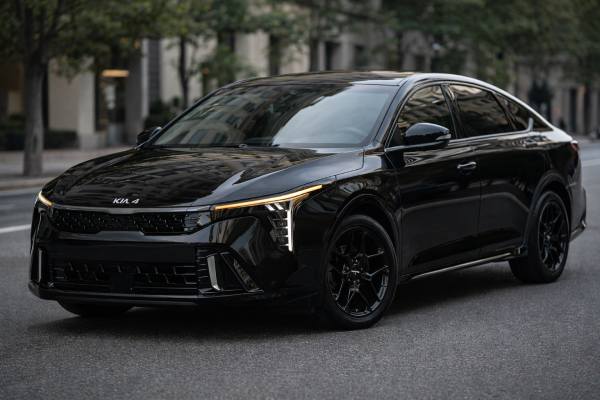
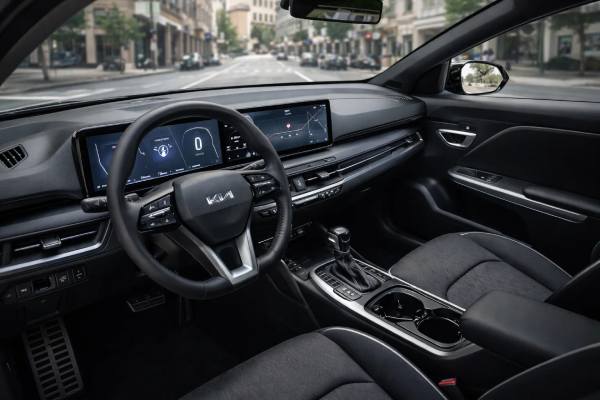
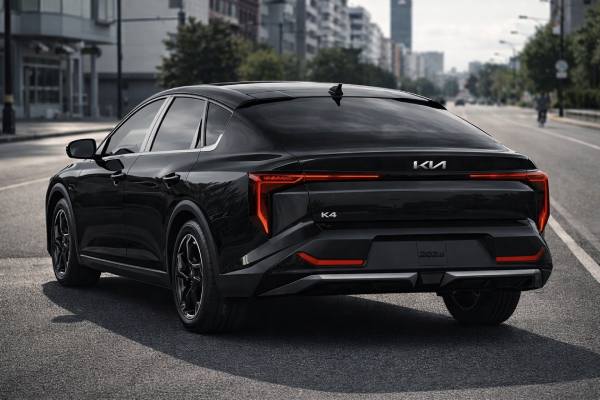
The Kia K4 (CL4) with the 1.0 T-GDi is the “smart” end of the lineup: a compact car tuned for daily efficiency without feeling underpowered or flimsy. In European spec, it’s a turbocharged three-cylinder built around low-rpm torque and short, usable gearing, offered with either a 6-speed manual or a 48-volt mild-hybrid paired to a 7-speed dual-clutch transmission (DCT). The chassis is set up for European roads, with a front strut and rear multi-link layout and a tight turning circle that makes it easy to live with in town.
For owners, the big themes are: modern safety tech that can reduce fatigue on long trips, an engine that rewards correct oil and warm-up habits, and a maintenance plan that is simple if you stay consistent with fluids and filters.
Quick Specs and Notes
- Strong everyday torque for a 1.0-liter turbo, making city driving and merging easier than the horsepower number suggests.
- Available 48-V mild-hybrid system can smooth stop-start behavior and reduce fuel use in mixed driving.
- Rear multi-link suspension gives the K4 a more composed feel than many entry compact cars on rough pavement.
- Caveat: DCT versions demand clean fluid history and gentle low-speed technique to avoid clutch shudder and heat wear.
- Typical interval: change engine oil and filter every 10,000–15,000 km (6,000–9,000 mi) or 12 months, depending on driving severity.
Navigate this guide
- Kia K4 CL4 1.0 T-GDi explained
- Kia K4 CL4 1.0 T-GDi specs
- Kia K4 CL4 trims and safety tech
- Reliability and known early issues
- Maintenance plan and buying tips
- Driving feel and real economy
- How Kia K4 1.0 stacks up
Kia K4 CL4 1.0 T-GDi explained
The CL4-generation Kia K4 replaces the idea of a “basic compact” with something more engineered: a roomy cabin, a modern electrical architecture for driver assistance, and powertrains that scale from efficient to genuinely quick. In Europe, the 1.0 T-GDi is the entry point, but it’s not a penalty box. It’s a turbocharged three-cylinder designed to produce useful torque early, so it feels responsive in real traffic—especially if you keep it in the mid-range rather than chasing high rpm.
Two versions matter for ownership:
- 1.0 T-GDi (manual): simpler hardware, fewer hybrid components, and a straightforward driving feel.
- 1.0 T-GDi 48V (DCT): adds a belt-driven starter-generator and 48-volt electrical support. The mild-hybrid system can “fill” torque briefly, improve stop-start smoothness, and enable short engine-off coasting under certain conditions, all aimed at lowering fuel consumption.
Chassis tuning is a big part of why this K4 variant appeals to practical buyers. The suspension layout (front strut, rear multi-link) is a step above the torsion-beam setups still common in the budget end of the segment. In practice, multi-link rear geometry helps the car stay settled over mid-corner bumps and sharp expansion joints—exactly the kind of imperfections that make a compact car feel cheap if the rear axle can’t control its wheel angles.
Finally, the K4’s ownership case is strengthened by its packaging: generous rear legroom for the class and a hatch-like cargo volume in European form. The result is a car that can serve as a commuter, a small family vehicle, or a high-mileage workhorse—provided you follow the right oil, warm-up, and (for DCT cars) low-speed driving habits.
Kia K4 CL4 1.0 T-GDi specs
Below are the most relevant technical details for the European-market 1.0 T-GDi (113 hp) K4. Where equipment varies by market or body style, the row notes the dependency rather than guessing.
Powertrain and efficiency
| Item | Specification |
|---|---|
| Engine family | Smartstream 1.0 T-GDi (turbocharged gasoline I-3) |
| Layout and valvetrain | Inline-3, transverse; DOHC; 4 valves/cyl |
| Bore × stroke | 71.0 × 84.0 mm (2.80 × 3.31 in) |
| Displacement | 1.0 L (998 cc) |
| Fuel system | Direct injection (DI) |
| Induction | Turbocharged, intercooled |
| Max power | 113 hp (84.6 kW) @ ~6,000 rpm |
| Max torque | 200 Nm (148 lb-ft) @ ~2,000–3,000 rpm |
| Timing drive | Chain (typical for this engine family) |
| Rated efficiency (combined) | ~6.0 L/100 km (manual) / ~5.8 L/100 km (48V DCT), market dependent |
| Real-world highway @ 120 km/h (75 mph) | Expect ~6.5–7.3 L/100 km (36–43 mpg US / 40–47 mpg UK) depending on tyres, wind, and temperature |
Transmission and driveline
| Item | Specification |
|---|---|
| Drive type | FWD |
| Manual | 6-speed manual (base 1.0 T-GDi) |
| Automatic option | 7-speed dual-clutch (DCT) on 48V mild-hybrid |
| Differential | Open (traction managed by brake-based ESC/TC) |
Chassis and dimensions (typical Europe compact/hatch spec)
| Item | Specification |
|---|---|
| Suspension (front / rear) | MacPherson strut / multi-link |
| Steering | Electric assist; ~2.41 turns lock-to-lock (market dependent) |
| Turning circle (kerb-to-kerb) | ~10.72 m (35.2 ft) |
| Length / width | ~4,440 mm / 1,850 mm (174.8 in / 72.8 in) |
| Wheelbase | Market dependent (often ~2,720 mm class) |
| Cargo volume | ~438 L (15.5 ft³) seats up (body dependent) |
| Wheels/tyres (common) | 205/55 R16 on efficiency-focused trims; larger wheels on sport trims |
Performance and capability (1.0 T-GDi focus)
| Metric | Typical figure |
|---|---|
| 0–100 km/h (0–62 mph) | ~12.0 s (manual); ~12.3 s (48V DCT) |
| Top speed | ~186 km/h (116 mph) |
| Towing (braked) | Up to ~1,010 kg (manual); ~710 kg (48V DCT), market dependent |
| Payload | Varies by trim/tyres; check door-jamb sticker for your VIN |
Fluids and service capacities (owner-facing essentials)
| Fluid | Spec highlight | Capacity (typical) |
|---|---|---|
| Engine oil | API SN PLUS/SP or ILSAC GF-6 (market dependent); common viscosity is 0W-20/5W-30 depending climate | ~3.6 L (3.8 US qt) drain/fill |
| Coolant | Ethylene glycol base for aluminum radiators | ~5.7 L (6.0 US qt) |
| Manual transmission fluid | GL-4, 70W class (exact product varies by market) | ~1.6–1.7 L (1.7–1.8 US qt) |
| Brake fluid | DOT 4 low-viscosity class | ~0.4–0.44 L (0.42–0.46 US qt) |
Key torque specs (high-level guidance): for critical fasteners (wheel nuts, drain plug, brake caliper bolts), always use the VIN-correct service manual. If you don’t have it, treat any internet torque number as unverified—incorrect torque can strip threads or cause wheel/brake failures.
Kia K4 CL4 trims and safety tech
Trim naming varies by country, but the European pattern is usually consistent: a value-oriented base grade, a mid trim with comfort upgrades, and a sport-flavored GT-Line. For the 1.0 T-GDi specifically, the most important differences aren’t cosmetic—they’re functional.
Trims and options that change how it drives
- Manual vs 48V DCT: The 6-speed manual tends to feel lighter and more direct at low speeds. The 48V DCT version trades some simplicity for smoother stop-start behavior, short engine-off “coasting,” and faster response in rolling traffic once calibrated well.
- Wheel size: 16-inch wheels with taller sidewalls often ride better and protect you from pothole damage. 17–18-inch packages can look sharper, but they can add impact harshness and increase tyre cost.
- Cabin tech tiers: Look for the larger panoramic display setups, wireless phone integration, and premium audio on higher grades. These don’t just add comfort—modern infotainment also tends to integrate better with over-the-air updates and driver assistance settings.
Quick identifiers when shopping used (or ordering):
- GT-Line often adds sportier exterior trim, larger wheels, and steering-wheel/paddle-shifter cues where fitted.
- The presence of a DCT is typically obvious from the shift pattern and trim sheet; confirm by VIN build data when possible.
Safety ratings and what’s actually relevant today
Because the K4 nameplate is new in many regions, crash-test coverage may differ by market and test date. In the U.S., the K4 sedan has strong results from Insurance Institute for Highway Safety for the applicable build windows, including Top Safety Pick+ recognition in certain configurations. In Europe, you may not always have a published Euro NCAP star rating yet for every body style and year, so treat “unrated” as “not yet tested,” not “unsafe.”
Driver assistance and ADAS availability
Expect these technologies to be common (standard or widely available depending on trim and transmission):
- AEB (Autonomous Emergency Braking): vehicle and pedestrian detection; some versions add junction/turning logic.
- Adaptive cruise control (ACC): particularly helpful for long motorway drives; DCT versions may add more advanced functions like navigation-based speed adaptation where supported.
- Lane support: lane keeping assist (LKA) and lane following/centering assistance (varies by region).
- Blind-spot and rear cross-traffic alerts: useful in dense parking lots; higher trims may add active braking intervention.
- Occupant and exit warnings: rear occupant alert and safe-exit style warnings can reduce “door into cyclist” incidents.
Calibration note after repairs: camera/radar-based features often require recalibration after windshield replacement, front bumper work, or alignment changes. If you buy used, ask for invoices that show calibration was performed when those parts were replaced.
Reliability and known early issues
The K4 (CL4) is still early in its lifecycle, so the most honest reliability picture combines (1) what’s known from early field actions, and (2) predictable patterns for modern small turbo engines and DCT gearboxes.
Common vs occasional vs rare: what to watch
Common (low–medium cost, often preventable)
- Oil dilution and short-trip stress: small turbo DI engines can suffer from fuel dilution in the oil if they live on short cold trips. Symptoms: rising oil level, fuel smell, rough idle. Remedy: shorten oil intervals and make sure the engine reaches full temperature regularly.
- DI intake carbon build-up (long-term): direct injection can allow deposits to form on intake valves over time, especially with lots of idling. Symptoms: misfires under load, rough cold start. Remedy: periodic intake cleaning if performance degrades (interval depends heavily on driving style).
Occasional (medium cost)
- DCT low-speed shudder or hesitation (48V DCT): dual-clutch units dislike creeping in traffic with constant clutch slip. Symptoms: judder when inching forward, hot smell after stop-and-go. Remedy: use deliberate throttle, avoid “creep battles,” and keep software up to date; if persistent, the dealer may perform a re-learn or clutch service.
- 12V battery sensitivity: modern cars draw more standby power (connectivity, alarm, telematics). Symptoms: slow cranking, random warning lights. Remedy: battery testing, software updates, and avoiding long storage without a maintainer.
Rare (high cost, but important to know)
- Early-production assembly defects addressed by field actions: an example from early K4 production in another market included a limited engine-related safety recall affecting a small population and a service action related to washer fluid contamination. Even if your 1.0 T-GDi is a different engine than the affected units, it’s a strong reminder: early VINs deserve extra diligence on recall completion.
Software and updates: treat them as maintenance
On a new platform, some “problems” are really calibration issues:
- ECU/TCU updates can improve shift mapping, stop-start smoothness, and turbo response.
- ADAS updates can refine lane-centering and reduce nuisance alerts.
- Infotainment updates can fix phone pairing and stability issues.
If you own one, make it a habit: at every service visit, ask the dealer to check for outstanding software campaigns. If you’re buying used, request proof (a service printout or dealer receipt).
Pre-purchase checks that actually reduce risk
- Verify recall and service action completion by VIN through official channels and dealer records.
- For DCT cars: test drive in slow traffic and do a few gentle hill starts. A healthy DCT should feel consistent, not jerky or confused.
- Scan for stored faults (even if the dash is clean). Intermittent sensor or misfire codes can show a pattern before it becomes a breakdown.
Maintenance plan and buying tips
A 1.0-liter turbo can be very durable, but it’s less forgiving of neglected fluids than an old-school naturally aspirated engine. The goal is simple: keep oil clean, keep intake air clean, and keep the cooling system healthy so the turbo and catalyst stay in their happy temperature range.
Practical maintenance schedule (distance or time)
Use the shorter interval if you do short trips, heavy city driving, high heat, or lots of idling.
- Engine oil and filter: every 10,000–15,000 km (6,000–9,000 mi) or 12 months. For best long-term results on a small turbo, many owners choose 10,000 km intervals.
- Engine air filter: inspect every 15,000 km; replace around 30,000 km (20,000 mi) or sooner in dusty areas.
- Cabin air filter: every 15,000–30,000 km (10,000–20,000 mi) depending on air quality.
- Spark plugs: typically 60,000–100,000 km (40,000–60,000 mi) depending on plug type and tune; confirm for your VIN.
- Coolant: commonly 5 years / 100,000 km class intervals, but follow the official schedule for your market.
- Brake fluid: every 2 years, regardless of mileage.
- Manual transmission fluid (6MT): often “lifetime” in marketing terms, but a smart owner changes it around 80,000–120,000 km (50,000–75,000 mi) for shift quality and synchro life.
- DCT fluid (48V DCT): follow the official interval strictly; DCTs are sensitive to fluid condition and correct procedure.
- Tyres: rotate every 10,000–12,000 km (6,000–7,500 mi); alignment check annually or after any major pothole hit.
- 12V battery: test annually after year 3; many modern batteries last 4–6 years depending climate and usage.
Fluids, specs, and “do not guess” items
Use the correct oil standard (API/ILSAC/ACEA as listed for your market) and viscosity for climate. The wrong oil can increase timing chain wear and turbo deposit formation. For gear oils and DCT fluids, don’t substitute “close enough” products—shift quality and clutch control depend on friction modifiers.
Buyer’s guide: what to seek (and what to avoid)
Seek:
- A car with documented oil changes at least annually (more often is a plus).
- 16-inch wheel packages if you prioritize ride comfort and low tyre costs.
- DCT cars with dealer service history and evidence of software updates.
Approach carefully:
- Early VIN cars with missing recall documentation.
- DCT cars that were used primarily in dense urban traffic and show hesitation, shudder, or odd clutch behavior during the test drive.
Long-term outlook (realistic): If you keep oil clean and avoid constant clutch slip on DCT cars, the K4 1.0 T-GDi should age like other well-maintained modern turbo compacts: dependable, economical, and more refined than older entry-level cars.
Driving feel and real economy
The 1.0 T-GDi K4 is not about drama—it’s about making normal driving feel easy. The engine’s key advantage is its torque delivery: you don’t need to rev it hard to keep pace, and it tends to feel strongest in the mid-range where commuters spend most of their time.
Ride, handling, and NVH
- Ride quality: with the rear multi-link suspension, the K4 usually handles broken pavement with better composure than torsion-beam rivals. On 16-inch tyres, impacts are rounded off instead of thudding through the cabin.
- Handling balance: it’s a front-drive compact, so ultimate grip is tyre-limited. The benefit is predictability—smooth, stable cornering rather than playful rotation.
- Steering: modern electric steering typically prioritizes accuracy over road feel. Expect light effort in town and more weight at speed.
- Cabin noise: three-cylinder engines can have a distinctive thrum under load. In steady cruising, the K4’s gearing and insulation matter more; the best setups keep rpm low at 120 km/h to reduce droning.
Powertrain character: manual vs 48V DCT
- 6MT: feels straightforward and is usually the better pick for drivers who want maximum mechanical simplicity. Turbo lag is typically small at normal rpm, but you’ll still notice a brief pause if you demand full boost from very low revs.
- 48V DCT: can feel smoother in stop-start traffic once you adapt your technique. The mild-hybrid system supports smoother restarts and can reduce “busy” engine behavior in rolling queues. The DCT’s weak point is heat: crawling traffic and constant inching forward can increase clutch wear.
Real-world fuel consumption
Official combined figures hover around the high-5s to ~6.0 L/100 km depending on gearbox and market. Real-world numbers usually look like this:
- City (stop-start): ~6.8–8.0 L/100 km (29–35 mpg US / 35–42 mpg UK)
- Highway 100–120 km/h: ~6.5–7.3 L/100 km (36–43 mpg US / 40–47 mpg UK)
- Mixed driving: ~6.3–7.2 L/100 km (33–37 mpg US / 39–45 mpg UK)
Cold weather can push consumption higher by 10–20% because the engine spends more time warming up and the cabin heater load rises.
Performance metrics that matter
The quoted ~12-second 0–100 km/h time sounds modest, but the more relevant metric is how it passes and merges. In real life, the K4 1.0’s mid-range torque makes it feel alert from 40–90 km/h—especially with the right gear selected—so it tends to drive “quicker than the brochure” in everyday use.
How Kia K4 1.0 stacks up
In the European compact segment, the K4 1.0 T-GDi competes with a mix of mild-hybrid small turbos and full hybrids. Your best choice depends on how you drive.
Versus small-turbo mild hybrids (best apples-to-apples)
Typical rivals: 1.0–1.2 turbo mild hybrids in cars like the Volkswagen Golf class, Ford Focus class, and Hyundai i30 class.
- Where the K4 wins: value-for-space, rear-seat comfort, and a chassis that feels “grown up” thanks to the rear multi-link. If you live with passengers, that packaging advantage matters daily.
- Where rivals can win: some competitors offer more refined steering feel, more mature driver-assistance tuning, or a longer track record for a specific engine/gearbox combination.
Buying tip: if you’re debating between a K4 1.0 DCT and a rival with a torque-converter automatic, your commute matters. Heavy stop-and-go traffic often favors a torque converter for smoothness and long-term tolerance. If your driving is mixed and you like crisp shifts, the DCT can be satisfying.
Versus full hybrids (the economy king route)
Typical rivals: Toyota-style full hybrids.
- Hybrid advantage: better city fuel economy and smoother low-speed behavior, often with fewer “turbo-and-clutch” quirks.
- K4 advantage: a more conventional driving feel, potentially lower purchase price, and fewer high-voltage hybrid components (on the non-48V manual).
If you do mostly urban miles and want maximum efficiency with minimal driver technique, a full hybrid often wins. If you do mixed driving, want a manual option, and prioritize space and tech for the money, the K4 1.0 stays very competitive.
The simple decision rule
- Choose K4 1.0 manual if you want the simplest long-term ownership story and you don’t mind shifting.
- Choose K4 1.0 48V DCT if you want easier daily driving and you can commit to correct fluid service and gentle low-speed habits.
- Choose a full hybrid rival if your weekly driving is mostly city and you want the lowest fuel spend with the smoothest low-speed operation.
References
- Kia K4 разчупва граници между пазарни сегменти и впечатлява със съчетание от самоуверен дизайн и интелигентни иновации 2026 (Manufacturer News)
- Recommended lubricants and capacities 2026 (Owner’s Manual)
- 2025 Kia K4 4-door sedan 2025 (Safety Rating)
- Vehicle Detail Search – 2025 Kia K4 | NHTSA 2025 (Recall Database)
- The Kia K4 – The Kia K4 Specifications 2026 (Specification Sheet)
Disclaimer
This article is for informational purposes only and is not a substitute for professional diagnosis, inspection, or repair. Specifications, torque values, fluid capacities, service intervals, and procedures can vary by VIN, market, model year, and equipment. Always verify details using your vehicle’s official owner’s manual and the manufacturer’s service documentation for your exact configuration.
If you found this guide useful, please consider sharing it on Facebook, X (Twitter), or your favorite forum to help others find reliable ownership information.