


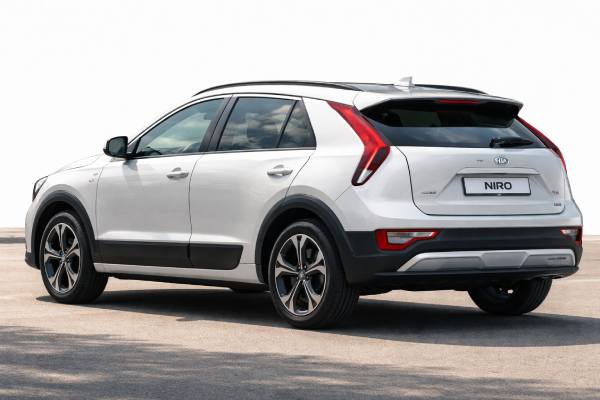
The Kia Niro Plug-in Hybrid (SG2, 2022–present) is built for drivers who want EV-style commuting without losing the flexibility of a gasoline car. Its value comes from a well-matched trio: a 1.6-liter hybrid engine designed for efficiency, an electric motor strong enough for relaxed city driving, and a usable plug-in battery that turns many short trips into mostly-electric miles. The facelift-era SG2 body also targets better aerodynamic efficiency and refinement than the previous generation, which matters for highway consumption and cabin noise.
Ownership is usually straightforward, but PHEVs reward the “right” routine: charging often, using scheduled cabin pre-conditioning when possible, and keeping up with fluids that many EV-first owners forget still exist (engine oil, coolant loops, brake fluid). If you treat it as a hybrid that sometimes plugs in, it’s good. If you treat it as an EV that sometimes burns fuel, it can be excellent.
Quick Specs and Notes
- A true “two-car solution”: EV commuting when charged, gasoline flexibility for long trips.
- Smooth day-to-day driving with strong low-speed response from the electric motor.
- Efficiency stays good even when the battery is empty, but it depends heavily on tire choice and speed.
- Plan for occasional PHEV-specific checks (charging port condition, charge-cable sealing, HV coolant loop health).
- Rotate tires every 10,000–12,000 km (6,000–7,500 mi) to protect range and reduce uneven wear.
Section overview
- Kia Niro Plug-in Hybrid SG2 in depth
- Kia Niro Plug-in Hybrid SG2 specs and capacities
- Kia Niro Plug-in Hybrid SG2 trims and ADAS
- Known faults and service actions
- Maintenance plan and buyer checks
- Real-world EV range and driving
- Rivals and smart alternatives
Kia Niro Plug-in Hybrid SG2 in depth
Think of the SG2 Niro Plug-in Hybrid as an efficiency-focused crossover that happens to have an EV mode you can actually use daily. The engineering goal is not maximum horsepower; it’s delivering predictable, repeatable savings across mixed driving—especially if you can charge at home. In practice, that means the car spends a lot of time blending power sources rather than chasing a single “pure” identity.
How the system behaves (and why it feels the way it does):
- At low loads and city speeds, the electric motor does most of the work. This is where the PHEV advantage is most obvious: clean takeoff, quiet cabin, and minimal fuel use.
- Under moderate acceleration, the control system chooses the most efficient mix. You’ll often feel the engine join in smoothly, then fade out again when conditions allow.
- At highway speeds, the engine becomes the primary energy source, with the motor assisting for hills and passing. A charged battery still helps, but sustained high-speed EV-only running is not the design priority.
The SG2 body packaging is also part of the ownership story. Compared with many PHEVs, the Niro keeps a practical cargo layout and does not feel like a compromised “battery-first” vehicle. Still, any plug-in hybrid carries extra complexity: you have a gasoline engine, a traction motor, a high-voltage (HV) battery, power electronics, and a conventional 12 V system that must remain healthy for everything to wake up reliably.
Where owners get the best results:
- Charge frequently (even partial top-ups help).
- Use EV mode for the first part of your day (cold starts are when engines are least efficient).
- Save hybrid operation for faster roads where the engine is naturally efficient.
If you match the car to that pattern, the SG2 Niro PHEV can deliver EV-like running costs for many miles without requiring an EV lifestyle.
Kia Niro Plug-in Hybrid SG2 specs and capacities
Specifications can vary by market, wheel size, and model year, so treat the tables below as typical SG2 PHEV figures and confirm against your VIN-specific documentation. The goal here is decision-useful data: what changes maintenance, running costs, or real-world performance.
Powertrain and Efficiency (typical SG2 PHEV)
| Item | Specification |
|---|---|
| Powertrain code | Smartstream G1.6 Plug-in Hybrid (market-dependent code naming) |
| Engine layout and cylinders | I-4, DOHC, 4 cylinders, typically 4 valves/cyl |
| Displacement | 1.6 L (approx. 1,580 cc) |
| Induction | Naturally aspirated |
| Fuel system | Typically GDI (market-dependent calibration) |
| Electric motor | PMSM, single motor on front axle (typical) |
| System voltage | ~360 V class (PHEV architecture typical) |
| Battery chemistry | Commonly NMC Li-ion (market dependent) |
| Battery capacity | ~11 kWh usable class (varies by market) |
| Max system power | 180 hp (varies slightly by rating standard) |
| Max system torque | Manufacturer may quote combined system output differently by market |
| Timing drive | Typically chain (verify for your exact engine family) |
| Real-world highway @ 120 km/h (75 mph) | Often ~5.5–6.8 L/100 km (34–43 mpg US) once the battery is depleted |
Transmission and Driveline
| Item | Specification |
|---|---|
| Transmission | 6-speed DCT (dual-clutch), hybrid-integrated |
| Drive type | FWD |
| Differential | Open (traction managed by brake-based systems) |
Chassis and Dimensions (common European-spec range)
| Item | Specification |
|---|---|
| Suspension (front/rear) | MacPherson strut / multi-link (typical SG2) |
| Steering | Electric power steering |
| Brakes | 4-wheel discs (sizes vary by wheel and trim) |
| Wheels and tyres (popular sizes) | 205/60 R16 or 225/45 R18 (market/trim dependent) |
| Ground clearance | Typically ~160–170 mm (6.3–6.7 in) |
| Length / width / height | ~4,420 / 1,825 / 1,545 mm (varies by trim and rails) |
| Wheelbase | ~2,720 mm |
| Turning circle (kerb-to-kerb) | Typically ~10.6–11.0 m |
| Kerb (curb) weight | Often ~1,550–1,650 kg (3,420–3,640 lb) |
| Fuel tank | Commonly ~42 L (11.1 US gal / 9.2 UK gal) |
| Cargo volume | PHEV often ~330–350 L seats up; ~1,300+ L seats down (method varies) |
Performance and Capability (typical)
| Item | Specification |
|---|---|
| 0–100 km/h (0–62 mph) | ~9.5–10.5 s (wheel and market dependent) |
| Top speed | ~160–168 km/h (99–104 mph) |
| Braking distance 100–0 km/h | Tire-dependent; expect mid-to-high 30 m range with good tyres |
| Towing capacity | Often limited on PHEVs; verify by market homologation |
| Payload | Typically ~400–500 kg (verify by door sticker) |
Fluids and Service Capacities (decision-useful guidance)
| Item | Typical guidance (verify by VIN) |
|---|---|
| Engine oil | Usually 0W-20 or 5W-30 depending on climate; ~3.8–4.5 L (4.0–4.8 US qt) |
| Engine coolant | Ethylene glycol long-life coolant; capacity varies due to heat management |
| DCT fluid | Use only manufacturer-specified DCT/hybrid transmission fluid |
| Brake fluid | DOT 4 (typical), replace by time interval |
| A/C refrigerant | R-1234yf on many modern markets; confirm under-hood label |
| Key torque specs | Wheel nuts commonly ~90–110 Nm (66–81 lb-ft); always confirm for wheel type |
Safety and Driver Assistance (spec overview)
| Item | Notes |
|---|---|
| Crash ratings | Vary by region and protocol year; check your market’s official rating body |
| ADAS suite | AEB, lane support, ACC, blind-spot features often trim-dependent |
| Headlights | Performance varies significantly by trim (reflector vs LED projectors) |
The practical takeaway is simple: wheel size and trim influence range and ride quality more than most owners expect, and market calibration can change rated consumption more than the power figure changes your real experience.
Kia Niro Plug-in Hybrid SG2 trims and ADAS
Trim structure varies by country, but SG2 Niro PHEV offerings tend to follow a consistent pattern: a well-equipped base model, a mid-grade that bundles the “comfort tech,” and a top trim that adds premium interior finishes, stronger lighting, and the most complete driver assistance set.
Trims and options that matter most
When shopping, prioritize equipment that changes daily usability and long-term cost:
- Heat management features: Heated seats and (if available) a heat pump or efficient cabin heating strategy can preserve winter EV range. PHEVs can lose a meaningful share of EV distance in cold weather because cabin heat is energy-hungry.
- Wheel size: 16-inch wheels usually ride better and protect efficiency; 18-inch wheels typically look sharper but can cost range and increase tire replacement expense.
- Charging equipment: Some markets bundle a higher-capacity onboard charger or include a better portable EVSE cable. Even when AC charging is “slow,” good hardware reduces nuisance faults and improves reliability.
Quick identifiers for used buyers
Because badges and naming vary by country, use physical cues and the vehicle screen menus:
- Charge-port door on the body (PHEV-specific).
- Energy flow display and EV settings in infotainment.
- Rear suspension layout (multi-link is common) and brake size can hint at trim or package level.
- VIN/build sheet from a dealer remains the cleanest way to verify option packs.
Safety ratings and what they mean in practice
Safety scores are not just “stars.” They reflect:
- Structure and restraint performance (how well the cabin protects occupants).
- Vulnerable road user protection (pedestrian and cyclist impacts).
- Safety assist effectiveness (AEB and lane support performance under a test protocol).
If you’re comparing Niro PHEV across years, confirm the rating protocol year. A five-star result under a newer protocol can represent a higher bar than an older five-star rating.
Safety systems and ADAS: what to look for
Most SG2 cars include the fundamentals: stability control, traction control, multiple airbags, and ISOFIX/LATCH anchorage points. The big differences usually sit in ADAS content:
- AEB coverage: Some trims add cyclist detection or junction turning support.
- Adaptive cruise control (ACC): Often optional or tied to a package in some markets.
- Lane keeping vs lane centering: “Lane keep assist” nudges you back; “lane following/lane centering” actively helps track lanes when ACC is on.
- Blind-spot tools: Basic warning vs camera-based blind-spot view in the cluster.
After windshield replacement, front radar work, or suspension alignment changes, ADAS calibration can become necessary. A well-maintained SG2 with properly calibrated sensors will feel smoother and more trustworthy than a higher-trim car with mismatched calibration.
Known faults and service actions
The SG2 Niro PHEV has a generally solid reputation, but it’s still a complex vehicle. The smartest approach is to categorize issues by how often they happen and how expensive they are if ignored.
Common or recurring (usually low-to-medium cost)
- 12 V battery weakness (PHEV-wide trait):
Symptoms: No-start, warning lights, intermittent infotainment resets, “Ready” not appearing.
Cause: Short trips, long parking periods, or a weak battery that can’t support wake-up cycles.
Fix: Test the 12 V battery under load; replace if marginal. Keep terminals clean and ensure correct battery spec (AGM where required). - Charge-port and cable handshake problems:
Symptoms: Charging stops early, charge flap moisture issues, repeated charging error messages.
Cause: Dirty pins, water ingress at seals, or EVSE incompatibility.
Fix: Inspect port seals, clean gently with proper electrical contact methods, and try a different EVSE before replacing hardware. - Brake feel changes from regen blending:
Symptoms: Slightly grabby low-speed braking after rain or after long regen-heavy driving.
Cause: Friction brakes used less; surface corrosion can form.
Fix: Periodic firm braking (when safe), scheduled brake service inspections, and timely fluid changes.
Occasional (medium cost, avoid by early detection)
- DCT drivability quirks:
Symptoms: Shudder at takeoff, hesitation, inconsistent shifts.
Cause: Software calibration, clutch wear pattern, or adaptation drift.
Fix: Dealer software updates and clutch adaptation/reset procedures; verify correct fluid and no leaks. - Cooling system complexity (multiple loops):
Symptoms: Heater performance changes, warnings related to temperature management.
Cause: Air in coolant circuits after service, valve or pump issues.
Fix: Proper bleeding procedures and correct coolant type; avoid “universal” coolant mixing.
Rare but high impact (verify history)
- High-voltage component faults (charger, DC–DC, contactor events):
Symptoms: Vehicle won’t charge, “check EV system” warnings, reduced power.
Cause: Component failure, harness faults, or software-related protection triggers.
Fix: Diagnostic scan with manufacturer tooling, then targeted component replacement or reflash.
Software and calibrations matter more than many owners expect
Modern PHEVs depend on software to control:
- Engine start/stop behavior
- DCT shift logic
- Battery thermal strategy
- Charging safety routines
- ADAS sensor interpretation
A vehicle with up-to-date modules can feel smoother, charge more reliably, and throw fewer false warnings. When shopping used, ask for proof of completed software campaigns and confirm with a dealer using the VIN.
Recalls, TSBs, and extended coverage
Campaigns vary by market and model year. Your best protection is a simple routine:
- Run an official VIN recall check in your region.
- Ask the seller for dealer invoices showing campaign completion.
- Confirm no unresolved safety recalls before purchase.
Even when a campaign is “minor,” completing it can prevent repeat faults that waste time and money later.
Maintenance plan and buyer checks
A Niro PHEV that gets routine service usually stays dependable. The tricky part is that owners sometimes skip engine-related maintenance because they drive many miles on electricity. The engine still ages by time, moisture, and heat cycles—even if it runs less.
Practical maintenance schedule (use distance OR time, whichever comes first)
Every 10,000–15,000 km (6,000–9,000 mi) or 12 months
- Engine oil and filter (correct viscosity for your climate)
- General inspection: coolant level, hoses, leaks, underbody, suspension bushings
- Tire rotation and pressure check (critical for range)
- Brake inspection (pads, rotor surface condition, slide pins)
Every 20,000–30,000 km (12,000–18,000 mi)
- Cabin air filter
- Engine air filter (earlier in dusty conditions)
- Alignment check if tire wear appears uneven
Every 40,000–60,000 km (25,000–37,000 mi)
- Brake fluid (often time-based too: every 2 years is common)
- DCT service if your market specifies an interval (follow the manual, not generic advice)
- Cooling system inspection with attention to multiple loops (engine and electrified components)
Every 90,000–120,000 km (56,000–75,000 mi)
- Spark plugs (engine-specific; some markets specify earlier)
- Full driveline inspection: mounts, CV boots, wheel bearings
Every 4–6 years (time-based items that get missed)
- Coolant replacement if specified by your manual (some long-life coolants run longer)
- A/C service check (refrigerant type matters for cost and correct procedure)
Electrified-system checks worth doing
- Traction battery health check: Not just “state of charge,” but capacity and balance (dealer scan tool results).
- Charge-port inspection: Seals, hinge, pin condition, and water ingress signs.
- Regen brake corrosion routine: Occasional firm braking keeps friction brakes healthy.
Buyer’s guide: inspection checklist
Bring a flashlight and take your time:
- Charging test: Plug in and confirm stable charging for at least 10–15 minutes.
- Cold start and warm-up: Listen for belt noise, coolant pump whine irregularities, or warning lights.
- Transmission feel: Smooth engagement from a stop; no repeated shudder.
- Tire condition: Uneven wear can signal alignment or suspension bushing issues.
- Underbody: Check for impact damage around battery-protected areas and coolant lines.
- Electronics: Verify all keys work, and confirm driver assistance warnings are not present.
Best ownership practices for longevity
- Keep tires at correct pressures (range and safety).
- Don’t let the car sit for weeks with a low 12 V battery.
- If you rarely use the engine, schedule periodic longer drives so the engine reaches full operating temperature and burns off moisture.
Done right, the SG2 Niro PHEV can age like a good hybrid—just with more opportunities to save money if you stay disciplined about charging and time-based service.
Real-world EV range and driving
The SG2 Niro PHEV’s driving character is defined by smoothness and efficiency, not aggressive performance. In daily use, it feels like an EV in traffic and like a refined hybrid on faster roads, with the transition managed by software rather than by driver technique.
Ride, handling, and NVH
- Ride: Generally composed, with 16-inch wheels typically delivering the most comfortable response over broken pavement. Larger wheels can sharpen initial turn-in but often add impact harshness.
- Handling: Stable and predictable rather than sporty. The battery mass sits low enough to help composure, but it’s tuned for confidence, not corner carving.
- Noise: Wind and tire noise dominate at highway speeds. Tire model choice matters more than most people expect; some eco-focused tires are quiet, others drone.
Powertrain character
- Low-speed response: Stronger than a non-plug-in hybrid because the motor can carry more of the load.
- Engine start/stop events: Usually smooth, but you may notice them more under heavy HVAC demand or when the battery is low.
- DCT behavior: A hybrid-integrated DCT can feel more “direct” than an eCVT-style hybrid, but it may also reveal low-speed hesitation if software is outdated or if adaptations are off.
Real-world efficiency and EV range
Real-world EV range depends on temperature, speed, and cabin heating:
- Mild weather city/suburban: commonly 40–55 km (25–34 mi) EV-only if you drive gently.
- Cold weather with heat: often drops to 25–35 km (16–22 mi), sometimes less if you do short trips with frequent warm-ups.
- High-speed EV use: EV distance falls quickly above ~100 km/h (62 mph) because aero drag rises steeply.
Once the battery is depleted, expect “good hybrid” numbers rather than miracles:
- Mixed driving: often 4.5–6.0 L/100 km (39–52 mpg US) depending on speed and tire choice.
- Fast highway (120–130 km/h): often 5.5–7.0 L/100 km (34–43 mpg US) depending on conditions.
Charging performance (typical PHEV expectations)
Most PHEVs charge on AC only, and the Niro is generally designed for:
- Overnight home charging as the default use case
- Reliable, repeatable charging rather than fast refills
If you want to maximize value, treat charging like brushing your teeth: small, consistent routines beat occasional “big” efforts. Pre-conditioning the cabin while plugged in can also preserve EV range because the battery doesn’t have to supply that initial HVAC load.
Rivals and smart alternatives
Cross-shopping a PHEV is less about brand loyalty and more about matching your real usage pattern. The SG2 Niro PHEV is strongest for drivers who want daily EV commuting plus simple long-trip ability in a compact crossover footprint.
Closest “mission match” rivals
- Toyota Prius Prime: Often more aero-efficient and can deliver excellent fuel economy, but it’s less crossover-like in seating position and cargo flexibility. If you drive mostly highway and don’t need the crossover form, it can be a smart alternative.
- Hyundai Tucson Plug-in Hybrid: More space and a stronger “SUV” feel. It can be a better family tool, but it may cost more in tires and fuel at speed due to size and weight.
- Kia Sportage Plug-in Hybrid: Similar story to Tucson PHEV: roomier and often more powerful, but typically heavier and less efficiency-optimized.
When a non-PHEV alternative makes more sense
- Toyota Corolla Cross Hybrid (or similar hybrids): If you can’t charge reliably, a conventional hybrid often gives 70–80% of the savings with less complexity.
- A full EV: If you can charge at home and your long trips are rare, an EV removes engine maintenance and can lower running costs further—assuming charging access is easy in your region.
How to decide quickly
Ask yourself three questions:
- Can you charge at home or work at least 4–5 times per week?
- Is your typical daily driving under ~50 km (31 mi)?
- Do you value a crossover seating position and cargo practicality?
If the answer is yes to all three, the SG2 Niro PHEV is usually a strong fit. If you can’t charge consistently, prioritize a standard hybrid instead—your costs and hassle level will likely be better.
References
- 2025 Kia Niro Plug-in Hybrid – Specifications 2025 (Specifications)
- RCONL-25V024-4871 2025 (Recall Document)
- RCLRPT-23V298-3588 2023 (Recall Document)
Disclaimer
This article is for informational purposes only and is not a substitute for professional diagnosis, inspection, or repair. Specifications, torque values, service intervals, and procedures can vary by VIN, market, model year, and installed equipment. Always verify details using official manufacturer service documentation and your local regulatory guidance.
If this guide helped you, please consider sharing it on Facebook, X (Twitter), or your favorite forum group—your support helps us keep publishing practical owner-focused articles.