
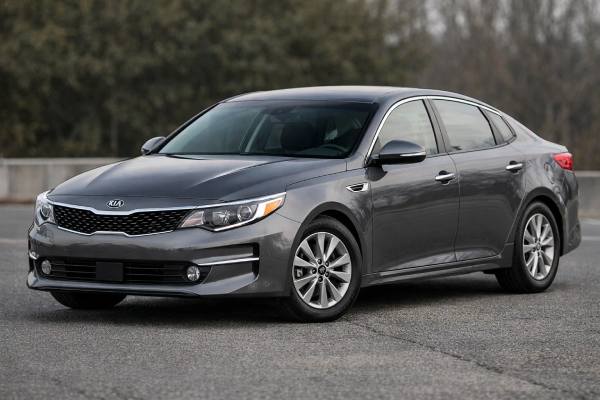
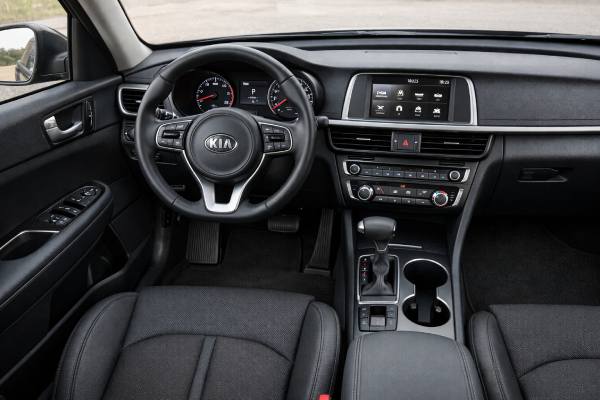
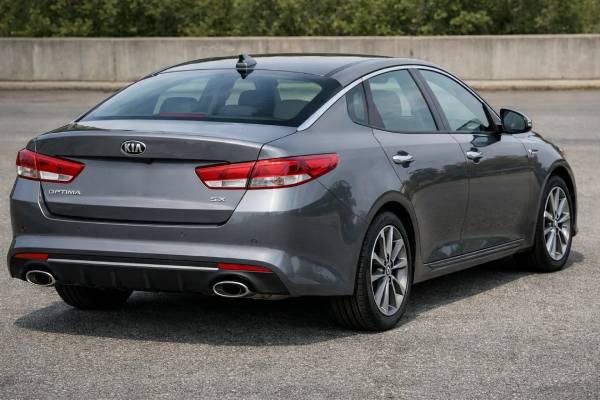
The 2016–2018 Kia Optima JF with the 2.4-liter G4KJ is the “simple” gasoline choice in the lineup: naturally aspirated, conventional 6-speed automatic, and front-wheel drive. That simplicity is a real advantage if you want a midsize sedan you can keep for years without chasing turbo hardware or hybrid-specific parts. At the same time, this engine family is sensitive to oil quality and oil level, so ownership is at its best when you treat maintenance as a habit, not an event.
As a daily driver, the Optima JF 2.4 balances a quiet highway ride with a roomy cabin and a trunk that stays useful even with a full-size stroller or airport luggage. It also benefits from modern safety engineering for its era, with strong crash-test performance when properly equipped. If you shop carefully—prioritizing service history and completed recall work—this version can be a smart value in the used market.
Essential Insights
- Strong everyday drivability with a straightforward 2.4 NA engine and 6-speed automatic—no turbo heat management to worry about.
- Spacious cabin and 15.9 ft³ (about 450 L) trunk make it easy to live with as a family sedan.
- Best ownership results come from frequent oil checks; low oil level is a bigger risk than most owners expect.
- Plan for engine oil and filter service every 12,000 km (7,500 mi) or 12 months in normal use; halve that for short trips and heavy city driving.
- Safety ratings can depend on options—verify whether the car has the driver-assist package you care about before buying.
Section overview
- Kia Optima JF 2.4 in use
- Kia Optima JF 2.4 specs table
- Kia Optima JF trims and safety
- Reliability patterns and recalls
- Maintenance plan and buying tips
- Driving feel and economy
- Rivals compared for value
Kia Optima JF 2.4 in use
Think of the Optima JF 2.4 as the “steady-state” Optima: it’s not the quickest version, but it’s the one that feels predictable and low-drama when you commute, run errands, and do long motorway stretches. The naturally aspirated 2.4 has linear throttle response—no turbo lag and no sudden torque spike—so it’s easy to drive smoothly in traffic. Paired with a traditional torque-converter automatic, it tends to be forgiving of stop-and-go life and less “busy” than some dual-clutch rivals of the same era.
Packaging is one of the Optima’s strengths. Rear seat space works well for adults, and child-seat installs are generally straightforward because the cabin is wide and the seat bases are fairly flat. The trunk is genuinely midsize-sedan practical: deep enough for suitcases and wide enough for bulky items, while the rear seatbacks (when equipped with a fold-down pass-through or split fold) help with longer cargo.
Where owners should be honest with themselves is maintenance discipline. The G4KJ is happiest when oil level is kept near the full mark, oil changes are not stretched, and the engine is allowed to reach full operating temperature regularly. If your use pattern is mostly short trips—cold starts, short idle periods, then shutdown—treat that as “severe service” and shorten oil intervals. This also reduces the odds of carbon buildup and keeps the variable valve timing system clean.
On the road, the Optima leans toward comfort. Steering is light and accurate rather than talkative, and the chassis is tuned to feel stable at speed. That stable feel is part suspension tuning, part wheelbase, and part good sound insulation for the class. If you’re shopping used, remember that tire choice matters: a worn set of budget tires can make the car feel noisier and less composed than it should.
Advantages that tend to matter most long-term:
- Conventional powertrain (2.4 NA + 6AT) with widely available service parts
- Strong highway comfort and low fatigue driving position
- Cabin and trunk utility that still competes well in today’s used-market price bands
- Safety engineering that can be excellent when the car is equipped with the right option package
Kia Optima JF 2.4 specs table
Below are the core specifications for the 2016–2018 Optima JF with the 2.4-liter G4KJ (185 hp) in typical North American configuration. Specs can vary by market, emissions certification, and trim, so treat the tables as a strong baseline and confirm against your VIN label and service documentation.
Powertrain and efficiency
| Item | Specification |
|---|---|
| Code | G4KJ |
| Engine layout and cylinders | Inline-4, DOHC, 4 valves/cyl |
| Bore × stroke | 88.0 × 97.0 mm (3.46 × 3.82 in) |
| Displacement | 2.4 L (2,359 cc) |
| Induction | Naturally aspirated |
| Fuel system | Gasoline direct injection (GDI) |
| Compression ratio | 11.3:1 |
| Max power | 185 hp (138 kW) @ 6,000 rpm |
| Max torque | 242 Nm (178 lb-ft) @ 4,000 rpm |
| Timing drive | Chain |
| Rated efficiency (typical) | ~7.8–9.4 L/100 km (30–25 mpg US combined/city range by trim) |
| Real-world highway @ 120 km/h | ~7.0–8.0 L/100 km (34–29 mpg US), tires and weather dependent |
Transmission and driveline
| Item | Specification |
|---|---|
| Transmission | 6-speed automatic (torque converter) |
| Drive type | FWD |
| Differential | Open |
Chassis and dimensions
| Item | Specification |
|---|---|
| Suspension (front/rear) | MacPherson strut / Multi-link |
| Steering | Rack and pinion, electric assist |
| Steering wheel turns (lock-to-lock) | ~2.78 turns (common trims) |
| Turning circle (kerb-to-kerb) | 10.9 m (35.8 ft) |
| Brakes (front/rear) | Ventilated disc / solid disc |
| Brake diameter (typical) | 305 mm (12.0 in) front / 284 mm (11.2 in) rear |
| Wheels and tyres (popular) | 205/65 R16 or 215/55 R17 (trim dependent) |
| Ground clearance | 135 mm (5.3 in) |
| Length / width / height | 4,854 / 1,859 / 1,466 mm (191.1 / 73.2 / 57.7 in) |
| Wheelbase | 2,804 mm (110.4 in) |
| Curb weight (range by trim/wheels) | ~1,461–1,631 kg (3,219–3,594 lb) |
| Fuel tank | ~70 L (18.5 US gal / 15.4 UK gal) |
| Cargo volume (trunk) | ~450 L (15.9 ft³) (method varies by market) |
Performance and capability (typical observed ranges)
| Metric | Typical value |
|---|---|
| 0–100 km/h (0–62 mph) | ~8.5–9.5 s (trim, tire, and test method dependent) |
| Top speed | ~205–215 km/h (127–134 mph) |
| Braking 100–0 km/h | ~37–41 m (121–135 ft) with good tires |
| Towing capacity | Often not rated or limited in many markets; verify your owner’s manual |
| Payload | Market and trim dependent; check door-jamb label |
Fluids and service capacities (decision-useful guidance)
These values vary by market and production changes, so use them for planning and parts buying, then confirm before servicing.
| System | Spec and typical guidance |
|---|---|
| Engine oil | Full-synthetic meeting the correct API/ACEA spec for your market; commonly 5W-20 or 5W-30 depending on climate; capacity typically ~4.5–5.0 L (4.8–5.3 US qt) with filter |
| Coolant | Long-life ethylene glycol coolant; pre-mix or 50:50; capacity commonly in the ~6–8 L range |
| Automatic transmission fluid | Hyundai/Kia ATF to the correct spec for the 6-speed unit; service approach depends on whether you do drain-and-fill or exchange |
| A/C refrigerant | R-134a in many markets for this generation; charge amount varies by label under the hood |
Safety and driver assistance (high-level)
| Item | Notes |
|---|---|
| Crash ratings | Strong results for its era; some awards depend on optional crash prevention |
| ADAS suite availability | AEB and lane features often optional by trim/package; verify by VIN build or window sticker equivalents |
| Headlight performance | Can vary widely by trim and lamp type; test outcomes are not uniform |
Kia Optima JF trims and safety
For 2016–2018, Optima trims differ more in equipment and safety tech than in mechanical fundamentals for the 2.4. Most 2.4 cars are built around the same core chassis, the same basic engine output, and a 6-speed automatic. What changes is the ownership experience: wheels and tires, infotainment, seat materials, headlamp type, and the availability of advanced driver assistance.
Trims and options that matter in real life
Common trim naming varies by market, but you’ll usually see an entry trim (often “LX”), a mid trim (often “EX”), and sport/lux trims that may pair with different engines. For the 2.4 specifically, the shopping checklist should focus on:
- Wheel size and ride feel: 16-inch tires ride softer and cost less to replace; 17-inch setups often feel sharper and can brake slightly better with fresher rubber.
- Headlamps: Halogen vs HID/LED makes a bigger difference than many buyers expect. If you drive unlit roads often, prioritize the better lighting package.
- Infotainment: Base systems are functional; upgraded audio/navigation can add convenience but also increases the cost of repairs if a screen fails.
- Comfort options: Heated seats and dual-zone climate are common value add-ons that age well and are easy to enjoy daily.
Quick identifiers when buying used
You can often spot higher equipment levels without tools:
- Fog lamps, projector headlamps, or LED accents often indicate an option package.
- Larger wheels and different caliper/brake hardware can signal higher trim.
- Steering wheel buttons (lane and cruise controls) can hint at ADAS capability, but always confirm via the instrument cluster menus and sensor locations.
Look for these external cues:
- Radar panel or sensor area behind the front grille (varies by package).
- Windshield camera housing near the rear-view mirror for lane features.
- Parking sensor dots in bumpers for front/rear sonar.
Safety ratings: how to read them for this car
A key point with the Optima JF is that safety outcomes can be option-dependent. In some rating systems, the top award requires optional front crash prevention to be present. That means two used Optimas from the same year can both be “safe cars,” but only one qualifies for the top label because the second lacks the AEB system.
Also, headlamp ratings can be a weak spot in this era across many brands. If you do night driving, treat headlamp type as a safety feature, not a cosmetic item. When you test-drive, include a night check if possible or at least inspect the lens clarity and beam pattern against a wall.
Safety systems and ADAS overview
Most 2016–2018 Optimas include the basics you want:
- Front, side, and curtain airbags (configuration varies by market)
- ABS and electronic stability control
- ISOFIX/LATCH child-seat anchors
Driver assistance features to verify (often optional):
- Autonomous emergency braking (AEB)
- Blind-spot monitoring and rear cross-traffic alert
- Lane departure warning / lane keeping support
- Adaptive cruise control on higher packages
If the car has ADAS, keep in mind calibration after repairs. A windshield replacement, front bumper repair, or wheel alignment can require camera/radar calibration. Factor that into your repair planning, especially if you buy a car with prior accident history.
Reliability patterns and recalls
The Optima JF 2.4 can be a durable daily car, but it has a clear ownership pattern: reliability is strongest when oil management is strong, and risk increases when maintenance is inconsistent or the car has an unknown history. The goal is not to be alarmist—it’s to match your expectations to how this engine family behaves over time.
Common issues (higher prevalence)
1) Oil consumption and low-oil operation (medium to high severity)
- Symptoms: Oil level drops between changes, ticking noise on cold start, rough idle, or oil warning events.
- Likely causes: Normal consumption that becomes excessive with age, stuck oil control rings, or prolonged oil-change intervals; GDI engines also tend to load oil with fuel and soot in heavy short-trip use.
- Remedy: Check level regularly (every fuel fill is ideal when the car is new to you). Use a high-quality oil and shorten intervals if usage is mostly city/short trips. If consumption is high, a formal diagnostic and consumption test is the right first step before replacing parts.
2) Carbon buildup on intake valves (medium severity, common over time)
Because GDI injects fuel directly into the cylinder, the intake valves don’t get the “fuel wash” that helps keep them clean in port-injected engines.
- Symptoms: Loss of crisp throttle response, mild misfires, rough cold starts.
- Remedy: Preventive driving (regular full warm-ups), correct PCV system health, and professional intake valve cleaning if performance drops.
3) Ignition coil and plug wear (low to medium severity)
- Symptoms: Misfire under load, flashing check engine light, uneven idle.
- Remedy: Replace spark plugs at the correct interval and coils as needed; avoid cheap plugs that don’t match the original heat range.
Occasional issues (trim/age dependent)
Cooling system seepage (medium severity)
Hoses, thermostat housings, and radiator end tanks can develop leaks as the car ages.
- Symptoms: Coolant smell, low coolant level, temperature swings.
- Remedy: Pressure test and fix leaks early; overheating is far more expensive than the parts that prevent it.
Suspension wear (low to medium severity)
Multi-link rear setups ride well but have more bushings.
- Symptoms: Clunks over bumps, inner tire wear, vague rear stability on rough roads.
- Remedy: Inspect control arm bushings and alignment; don’t mask wear with “cheap alignment only.”
Recalls, service actions, and software updates
For this generation and engine family, recalls and service campaigns are important enough that they should be part of your purchase process, not an afterthought:
- How to verify: Run an official VIN recall check, then ask a dealer for completion history.
- Why it matters: Some recall remedies are software updates or inspections designed to reduce the risk of severe engine damage and, in rare cases, fire risk scenarios.
Pre-purchase checks to request
If you only do five things before buying, do these:
- Confirm open recalls are completed (bring proof).
- Ask for oil change records and interval consistency.
- Check oil level and condition at viewing (low oil is a red flag).
- Cold start listen: knock, heavy ticking, or long cranking deserves investigation.
- Scan for codes and review readiness monitors; don’t rely on the dashboard light alone.
A well-documented Optima JF 2.4 with verified recall work and consistent oil service is a very different car than one with unknown history—even if both look clean on the outside.
Maintenance plan and buying tips
This is the section that pays you back. The Optima JF 2.4 doesn’t demand exotic care, but it rewards consistency. Below is a practical schedule you can actually follow, plus a buyer’s checklist that focuses on the few things that truly change the long-term outcome.
Practical maintenance schedule (distance/time)
Use the “normal” line only if your driving includes regular full warm-ups and steady cruising. If you do short trips, heavy traffic, dusty roads, or lots of idling, follow the “severe” line.
- Engine oil and filter:
- Normal: every 12,000 km (7,500 mi) or 12 months
- Severe: every 6,000 km (3,750 mi) or 6 months
- Habit: check oil level monthly (or every 1,000 km) until you learn the car’s consumption pattern.
- Engine air filter: every 24,000–48,000 km (15,000–30,000 mi) depending on dust and air quality.
- Cabin air filter: every 15,000–20,000 km (9,000–12,000 mi) or yearly—cheap comfort win.
- Coolant: typically long-life; plan an initial change around 160,000–200,000 km (100,000–120,000 mi) or 8–10 years, then shorter thereafter (confirm for your market).
- Spark plugs: commonly around 160,000 km (100,000 mi) for long-life plugs, but inspect sooner if you drive short trips.
- Brake fluid: every 2 years regardless of mileage (moisture matters).
- Automatic transmission fluid:
- If you want maximum longevity: drain-and-fill around 60,000–80,000 km (40,000–50,000 mi), then repeat on a steady cadence.
- If the car tows or sees mountain driving: shorten intervals.
- Belts and hoses: inspect at every oil service; replace when cracks, glazing, or seepage appear.
- Tires: rotate every 8,000–10,000 km (5,000–6,000 mi); align yearly or with any new tire set.
- 12 V battery: test annually after 3 years; expect replacement around 4–6 years depending on climate.
Fluid specs and “smart planning” notes
- Choose oil viscosity based on climate and manufacturer guidance for your market. If you live in very cold winters, cold-flow behavior matters more than a slightly thicker grade.
- Don’t mix coolant types unless you fully flush; incompatible coolants can shorten water pump and gasket life.
- For ATF, use the exact specification recommended for the transmission—this matters for shift quality and longevity.
Essential torque values (verify before tightening)
These values are commonly in these ranges, but should be confirmed for your exact model:
- Wheel lug nuts: typically ~90–110 Nm (66–81 lb-ft)
- Engine oil drain plug: commonly ~25–40 Nm (18–30 lb-ft)
Buyer’s guide: what to inspect
Under the hood
- Oil level and oil cap sludge (sludge suggests poor interval discipline).
- Coolant level and signs of dried coolant around hose junctions.
- Serpentine belt condition and tensioner noise.
Under the car
- Fresh oil wetness around the oil pan and timing cover areas.
- CV axle boot condition (tears are common and inexpensive if caught early).
- Exhaust flex joint noise or soot marks (age-related).
Road test
- Smooth 1–2 and 2–3 shifts when warm; harsh engagement deserves diagnosis.
- No hesitation or surging at steady throttle around 60–80 km/h.
- Straight braking with no steering wheel shake (warped rotors or worn bushings).
Best value trims to seek (general guidance)
- If you want lowest operating cost, target 16-inch wheel cars with solid service history.
- If you want best safety tech, target trims with AEB and lane features, and verify sensors are present and functional.
- If you want night-driving confidence, prioritize the best headlamp package available in your market.
Long-term durability outlook: a “known good” maintenance history is the biggest predictor of how this car will treat you. Buy the record, not the shine.
Driving feel and economy
In day-to-day driving, the Optima JF 2.4 feels more mature than its power number suggests. It’s not a sports sedan, but it’s composed, quiet for the class, and easy to place on the road. The suspension tuning is biased toward stability and comfort, which is exactly what many midsize-sedan buyers want—especially if your driving includes long motorway runs.
Ride, handling, and NVH
- Ride: The Optima tends to absorb broken pavement well, especially on 16-inch tires with taller sidewalls. On larger wheels, impacts become sharper and road noise can increase.
- Handling: Cornering is neutral and predictable. The rear multi-link setup helps the car feel planted mid-corner compared to simpler torsion-beam designs.
- Steering: Light to medium effort with good accuracy. It’s not loaded with feedback, but it’s consistent—important for confidence in poor weather.
- Braking feel: Generally stable and easy to modulate. If a used car has a long pedal, budget for brake fluid service and an inspection rather than assuming pads alone.
Powertrain character
The 2.4’s torque peak arrives higher in the rev range, so it won’t feel punchy at very low rpm like a modern small turbo. Instead, it builds speed steadily. The 6-speed automatic typically prioritizes smoothness; kickdown is competent but not instant. For passing, the best results come from a firm throttle input that prompts a downshift, rather than slowly rolling into the pedal.
If your test drive includes a hill:
- Watch for gear hunting (repeated up/down shifts). Mild hunting can happen; aggressive hunting may suggest transmission fluid issues or an engine that isn’t producing clean power.
Real-world fuel use (what most owners see)
Official numbers vary by trim and market, but for the 2.4 gasoline model, these are realistic planning figures:
- City-heavy use: ~9.0–10.5 L/100 km (26–22 mpg US)
- Highway at 100–120 km/h: ~7.0–8.0 L/100 km (34–29 mpg US)
- Mixed driving: ~8.0–9.0 L/100 km (29–26 mpg US)
Cold weather and short trips can add 10–20% fuel use because the engine spends more time warming up and the gearbox stays in lower gears longer. If you do mostly short trips, the fuel penalty is real—but the bigger concern is that short trips also push you toward “severe service” oil intervals.
Selective performance metrics that matter
- 0–100 km/h: Mid-to-high 8-second range is typical when traction is good.
- Passing (80–120 km/h): Usually acceptable rather than brisk; plan your gaps like you would in any naturally aspirated midsize sedan.
- Turning circle: Easy parking-lot maneuvering for the segment helps this car feel smaller than it is.
If you want the Optima experience with stronger passing power, the turbo trims exist—but the 2.4’s appeal is that it trades “fast” for “straightforward.”
Rivals compared for value
In the 2016–2018 midsize-sedan class, the Optima JF 2.4 sits in an interesting spot. It often undercuts the most famous nameplates on price, yet it can match them on space and daily comfort. The right comparison depends on what you value most: long-term risk profile, fuel economy, ride quality, or resale stability.
Versus Honda Accord 2.4 (same era)
- Optima advantages: Often better used pricing for similar mileage; comfortable ride; generous equipment for the money.
- Accord advantages: Strong reputation for powertrain longevity when maintained; typically sharp driving feel.
- How to choose: If you’re buying purely for long-term “set it and forget it,” the Accord has a strong case. If you want more features per dollar and you’re disciplined about maintenance and recall verification, the Optima can be the better value buy.
Versus Toyota Camry 2.5
- Optima advantages: Cabin design and features can feel more modern for the price; often better infotainment at equal cost.
- Camry advantages: Conservative engineering and strong track record; tends to be less sensitive to imperfect maintenance.
- How to choose: If you want maximum tolerance for imperfect owner history, Camry wins. If you’re willing to shop carefully and verify service, Optima often delivers more car for the money.
Versus Ford Fusion 2.5
- Optima advantages: Typically more rear-seat comfort and a calmer long-distance feel; good interior packaging.
- Fusion advantages: Competitive chassis feel and steering; wide market availability.
- How to choose: Pick the Fusion if you prioritize a more “European” road feel. Pick the Optima if you prioritize cabin space, comfort, and a simpler ownership mindset.
Versus Mazda6 2.5
- Optima advantages: Softer ride and often more rear-seat friendliness; strong value on the used market.
- Mazda6 advantages: More engaging handling and steering; efficient powertrain tuning.
- How to choose: If you enjoy driving and want feedback, Mazda6 is usually the enthusiast pick. If you want relaxed comfort and features, Optima is compelling.
The Optima JF 2.4 value verdict
The Optima’s strongest argument is “balanced ownership” when you buy smart:
- Choose a car with verified recall work and consistent oil service history.
- Prefer the best safety package you can find, especially if you commute in heavy traffic.
- Judge headlamp performance as part of safety, not aesthetics.
Do that, and the Optima JF 2.4 becomes a sensible, comfortable family sedan that can be a better deal than the segment’s default choices—without feeling like a compromise every day.
References
- 2016 Kia Optima Specifications 2016 (Specifications)
- 2016 Kia Optima 4-door sedan 2016 (Safety Rating)
- Gas Mileage of 2016 Kia Optima 2016 (Fuel Economy Database)
- Vehicle Detail Search – 2016 KIA OPTIMA | NHTSA 2016 (Recall Database)
- Five-star safety ratings for all-new Kia Optima and Sportage 2015 (Safety Rating)
Disclaimer
This article is for informational purposes only and is not a substitute for professional diagnosis, inspection, or repair. Specifications, torque values, service intervals, and procedures can vary by VIN, market, production date, and equipment. Always verify details using your official owner’s manual and service documentation for your exact vehicle.
If this guide helped, please consider sharing it on Facebook or X (Twitter) so more owners can benefit.