
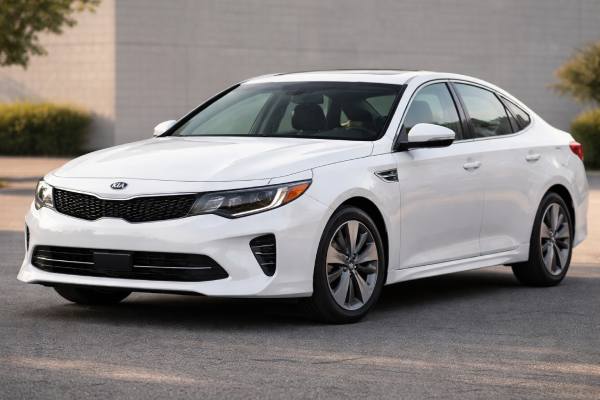
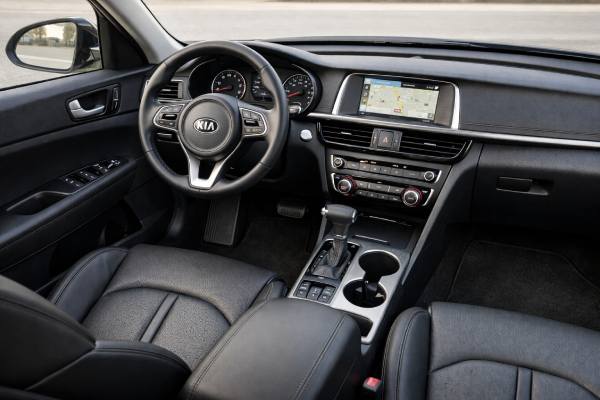
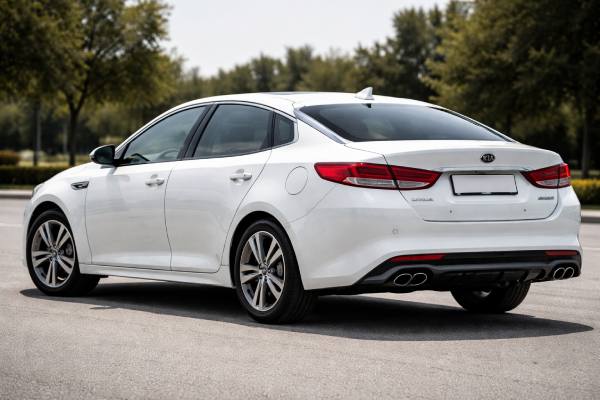
The 2016–2018 Kia Optima (JF) with the G4KH 2.0-liter turbo (245 hp) is the “quick” Optima: a comfortable midsize sedan that can genuinely move when you lean on the throttle. In most markets it pairs a direct-injected, twin-scroll turbo four-cylinder with a conventional 6-speed automatic and front-wheel drive, so it feels familiar in daily traffic but strong on highway merges and passing. The upside is effortless torque and a higher equipment ceiling—often including bigger brakes, sport-tuned suspension, and richer cabin tech. The trade-off is that turbo heat and direct injection demand better maintenance habits than the base engines. If you’re shopping used, focus less on the badge and more on proof of correct oil changes, cooling system health, and recall completion. Done right, this powertrain delivers a balanced ownership experience: quick, quiet, and still practical.
Quick Specs and Notes
- Strong mid-range pull for highway passing; the 6-speed automatic suits relaxed commuting.
- Typically well-equipped trims bring better headlights, brakes, and cabin tech than base models.
- Turbo DI ownership rewards strict oil quality and warm-up habits; neglect can get expensive.
- Plan on checking plugs around 60,000–100,000 km (40,000–60,000 mi) depending on market schedule and driving.
- Change brake fluid about every 2 years, especially if you drive hard or in humid climates.
Jump to sections
- Optima JF 2.0T ownership tour
- Optima JF 2.0T spec breakdown
- Optima JF 2.0T trims and ADAS
- Weak points and campaigns
- Service schedule and buying checks
- Power delivery and real mpg
- Best alternatives in class
Optima JF 2.0T ownership tour
Think of the G4KH Optima as two cars in one. At light throttle it behaves like a typical midsize sedan—quiet, stable, and easy to place. When boost arrives, it feels closer to an entry sport sedan, with a noticeable surge from low rpm that shortens gaps in traffic and makes passing less stressful. Most owners buy it for that “effortless” power, but the real ownership story is how the turbo package changes priorities.
First, heat management matters. Turbochargers run hot, and direct injection runs hotter at the piston crown than older port-injected designs. That doesn’t mean the engine is fragile; it means it is less forgiving of stretched oil intervals and low-quality oil. A clean lubrication system supports the turbo bearings, the timing chain tensioner, and the oil control rings. If the service history is vague, assume it needs a baseline refresh (fluids, filters, plugs, and a careful inspection).
Second, the Optima JF platform itself is a strength. The chassis is mature and predictable, and the longer wheelbase helps it track straight at speed. Road noise depends heavily on tire choice—many cars come on 18-inch wheels, which look great but transmit more impact harshness on broken pavement. A buyer who values comfort can often improve the ride simply by choosing touring-focused tires and keeping pressures correct.
Third, this model’s best “value” is usually in the details: lighting, braking feel, and everyday ergonomics. Higher trims typically add stronger headlights, larger brakes, and interior comfort features that age well (heated seats, better infotainment, more driver aids). If you’re cross-shopping within the Optima range, the 2.0T is less about “need” and more about the complete package it tends to bring.
Bottom line: the Optima JF 2.0T is a satisfying daily driver if you treat it like a turbocharged performance variant—maintained a bit more carefully than the base engine cars, but rewarding every time you merge or pass.
Optima JF 2.0T spec breakdown
Below are the core specs most buyers and owners actually use—powertrain, size, running costs, and service capacities. Figures can vary slightly by market and trim, so treat them as a practical reference and verify against your VIN-specific documentation.
Powertrain and efficiency (G4KH 2.0T)
| Item | Specification |
|---|---|
| Code | G4KH |
| Engine layout and cylinders | Inline-4, aluminum block/head, DOHC, 4 cyl, 4 valves/cyl |
| Displacement | 2.0 L (1998 cc) |
| Bore × stroke | 86.0 × 86.0 mm (3.39 × 3.39 in) |
| Induction | Turbocharged (twin-scroll) |
| Fuel system | Gasoline direct injection (GDI) |
| Compression ratio | ~9.5:1 (varies by calibration/market) |
| Max power | 245 hp (183 kW) @ 6,000 rpm |
| Max torque | ~353 Nm (260 lb-ft) @ ~1,350–4,000 rpm (market dependent) |
| Timing drive | Chain |
| Rated efficiency | Depends on market; commonly around 8.5–10.5 L/100 km combined (27–22 mpg US range by cycle) |
| Real-world highway @ 120 km/h (75 mph) | Often ~7.5–9.0 L/100 km (31–26 mpg US), tires and wind matter |
Transmission and driveline
| Item | Specification |
|---|---|
| Transmission | 6-speed automatic (conventional torque-converter) |
| Drive type | FWD |
| Differential | Open (traction control and brake-based torque management) |
Chassis and dimensions (typical sedan)
| Item | Specification |
|---|---|
| Suspension (front/rear) | MacPherson strut / multi-link |
| Steering | Electric power steering (rack-mounted on sport trims in some markets) |
| Brakes | 4-wheel discs; commonly ~320 mm (12.6 in) front and ~284 mm (11.2 in) rear on 2.0T trims |
| Wheels/tyres (popular) | 235/45 R18 (18 in rim) |
| Ground clearance | ~135 mm (5.3 in) (varies by market and load) |
| Length / width / height | ~4,855 / 1,860 / 1,465 mm (191.1 / 73.2 / 57.7 in) |
| Wheelbase | ~2,805 mm (110.4 in) |
| Turning circle (kerb-to-kerb) | ~11.0 m (36.1 ft) |
| Kerb weight | ~1,520–1,610 kg (3,350–3,550 lb) depending on equipment |
| Fuel tank | ~70 L (18.5 US gal / 15.4 UK gal) |
| Cargo volume | ~425–510 L (15.0–18.0 ft³) depending on measuring method |
Performance and capability (realistic expectations)
| Item | Typical value |
|---|---|
| 0–100 km/h (0–62 mph) | ~6.8–7.5 s (tire grip and conditions matter) |
| Top speed | ~220–230 km/h (137–143 mph), market limited |
| Braking distance (100–0 km/h) | Often ~36–40 m with good tires |
| Towing capacity | Commonly limited/varies; many markets rate the sedan low or not at all—verify local rating |
| Payload | Typically ~400–500 kg (880–1,100 lb), verify door-jamb label |
Fluids and service capacities (decision-useful)
| Item | Specification (typical) |
|---|---|
| Engine oil | Full synthetic recommended; commonly 5W-30 or 5W-40 depending on climate; ~5.0 L (5.3 US qt) with filter |
| Coolant | Ethylene glycol long-life; 50/50 mix typical; ~7–8 L (7.4–8.5 US qt) |
| Transmission/ATF | Hyundai/Kia SP-IV or equivalent spec; service drain often ~4–5 L, total higher (varies by unit) |
| A/C refrigerant | Usually R-134a; charge often ~500–550 g (17.6–19.4 oz) — check under-hood label |
| A/C compressor oil | PAG oil per label; amount varies with compressor |
| Key torque specs | Wheel lugs: ~88–108 Nm (65–80 lb-ft); oil drain plug commonly ~30–40 Nm (22–30 lb-ft) — verify per manual |
Safety and driver assistance (high-level)
| Item | Notes |
|---|---|
| Crash ratings | Ratings depend on region and test year/version; many JF Optimas scored strongly in major programs when equipped similarly |
| ADAS suite | Often includes AEB and lane support on higher trims or option packs; availability varies by market |
| Headlights | Higher trims typically bring better-performing lamps; verify type (halogen/HID/LED) and level function |
Optima JF 2.0T trims and ADAS
The 2.0T powertrain is usually tied to the upper end of the Optima range, and that matters because equipment—not horsepower—often decides long-term satisfaction. While trim names differ by market, most regions follow the same logic: the turbo model tends to bundle sport appearance, larger wheels, and more standard tech.
How to recognize the 2.0T trims quickly (used-car lot checklist):
- Wheels and brakes: 18-inch wheels are common, and the brake calipers/rotors are often visibly larger than base trims.
- Interior cues: sportier seat trim, stitched dash/door inserts, and more buttons on the steering wheel for driver aids.
- Transmission behavior: the 2.0T typically uses a 6-speed automatic; if you find a 7-speed dual-clutch, you’re likely looking at a different engine variant in markets where both exist.
Option packages that change ownership (worth seeking):
- Driver assistance package: Forward collision warning and autonomous emergency braking (AEB) can reduce stress in heavy traffic and help resale value. These systems typically rely on a windshield camera and/or front radar; after a windshield replacement or front-end repair, proper calibration matters.
- Better headlights: Headlights are one of the highest “daily benefit” options. If your market offers projector HID/LED or adaptive lighting on higher trims, it’s a meaningful upgrade for night driving.
- Comfort package: Ventilated seats, heated rear seats, and upgraded audio tend to age well and improve the feeling of “getting your money’s worth.”
Safety systems you should expect (baseline):
- Multiple airbags (front, side, and curtain) plus stability control and traction control.
- ISOFIX/LATCH anchors for child seats (check rear-seat labels and that the anchor covers aren’t broken—small detail, but it hints at how the cabin was treated).
- Tire pressure monitoring (TPMS) in many markets.
ADAS and maintenance reality:
Modern driver aids are not “set and forget.” AEB sensors can be sensitive to a cracked emblem cover, a slightly bent radar bracket, or aftermarket grilles. Lane systems rely on clear windshield glass and correct camera alignment. When buying used, look for:
- A clean windshield area around the camera housing (no sloppy tint edges, no aftermarket mount glued near it).
- No warning lights at startup, and a short test drive on a well-marked road to confirm lane detection works.
- Documentation for windshield replacement or collision repairs—then confirm calibration was performed if your market requires it.
If you want the safest and least annoying version of this car, prioritize the trim with the best headlights and the simplest, properly functioning ADAS—not the largest screen or the flashiest wheels.
Weak points and campaigns
A turbo Optima can be reliable, but it has a different failure “shape” than a naturally aspirated sedan. The goal is to separate common nuisances from high-cost risks, then spot them early.
Common (usually low to medium cost)
- Ignition coil or plug wear (60,000–120,000 km / 40,000–75,000 mi):
Symptoms: misfire under load, rough idle, flashing check engine light.
Likely cause: plug gap growth, coil breakdown, or oil-contaminated plug wells.
Remedy: replace plugs with correct heat range; replace coils as needed; fix valve cover seepage if present. - PCV and crankcase ventilation issues:
Symptoms: oil smells, minor oil consumption, oily intercooler piping, occasional idle instability.
Likely cause: stuck PCV valve or hardened hoses.
Remedy: replace PCV valve and inspect hoses; keep oil level correct. - Carbon buildup (direct injection reality):
Symptoms: hesitation, rough cold start, reduced fuel economy as mileage climbs.
Likely cause: intake valve deposits because fuel doesn’t wash valves.
Remedy: walnut blasting or professional intake cleaning when symptomatic; avoid short-trip-only use when possible.
Occasional (medium to high cost if ignored)
- Turbo and charge-air leaks:
Symptoms: whooshing under boost, reduced power, overboost/underboost codes.
Likely cause: cracked intercooler couplers, loose clamps, or split hoses.
Remedy: smoke test, replace couplers, verify diverter/bypass valve operation. - High-pressure fuel system sensitivity:
Symptoms: long crank, stutter under load, lean codes.
Likely cause: high-pressure pump wear, injector imbalance, or low-quality fuel stress.
Remedy: proper diagnostics (fuel pressure under load), replace failing components, keep the tank above very low levels in hot weather.
Rare but high-severity (treat seriously)
- Bottom-end or lubrication-related engine damage (varies by production batch and maintenance):
Symptoms: knocking, metal in oil, low oil pressure warnings, sudden loss of power.
Likely cause: sustained oil neglect, oil starvation, or internal bearing damage.
Remedy: immediate shutdown, professional evaluation. When shopping used, prioritize documented oil changes and any campaign/recall proof.
Recalls, service actions, and how to verify
Because recalls and service campaigns can be VIN-specific, the safest approach is procedural:
- Run the VIN through your official recall portal (manufacturer) and your national safety authority database.
- Ask the seller for dealer repair history showing campaign completion.
- Check for warning signs of “recall-adjacent” issues—brake module warning lights, burning smells, or electrical anomalies—then walk away if the story doesn’t add up.
A well-kept 2.0T Optima is usually a “smooth miles” car. A neglected one can turn into a turbo-and-fuel-system project quickly. The difference is almost always maintenance discipline and documentation.
Service schedule and buying checks
This section is a practical, ownership-first schedule aimed at long life. Always align final intervals with your local manual, but use the logic below to protect the expensive parts: turbo, timing chain system, and fuel delivery.
Maintenance schedule (practical baseline)
Every 8,000–10,000 km (5,000–6,000 mi) or 6–12 months
- Engine oil and filter (turbo engines reward shorter intervals).
- Visual check: coolant level, oil level, charge pipes for seepage, and any fresh leaks.
Every 15,000–20,000 km (9,000–12,000 mi) or yearly
- Rotate tires; inspect brake pads/rotors.
- Replace cabin air filter (more often in dusty cities).
- Inspect battery health and charging voltage.
Every 30,000–40,000 km (18,000–25,000 mi)
- Engine air filter (earlier if dusty).
- Brake fluid test; replace if dark or moisture is high.
Every 60,000–100,000 km (40,000–60,000 mi)
- Spark plugs (earlier for hard driving, towing, or tuned engines).
- Inspect coils and PCV system; replace PCV if sticky.
- Inspect serpentine belt and tensioner.
Every 60,000–90,000 km (40,000–55,000 mi)
- Transmission fluid service (a drain-and-fill is often safer than “flush” on high-mileage cars). Use the correct spec fluid.
Every 160,000–200,000 km (100,000–125,000 mi) or 5–10 years
- Coolant replacement (time matters as much as distance).
- Inspect water pump seepage and radiator condition.
Timing chain guidance
The G4KH uses a chain rather than a belt. Chains are not “lifetime.” What you do is inspect and listen:
- Cold-start rattle that persists, timing correlation codes, or metal glitter in the oil are red flags.
- If symptoms appear, address them early (tensioner/guides and chain as needed) before the chain skips.
Buyer’s guide (what to inspect in 45 minutes)
Paperwork checks
- Oil change records showing consistent intervals.
- Transmission service evidence by ~90,000 km/55,000 mi if the car is driven in cities.
- Recall/campaign completion printout.
Mechanical checks
- Cold start: listen for abnormal knocking or prolonged rattles.
- Boost test: moderate acceleration should feel smooth; surging or whooshing can indicate leaks.
- Cooling system: look for crusted coolant residue at hose joints and radiator edges.
- Exhaust smoke: blue smoke after idling can hint at oil control or turbo seal issues.
Chassis and electronics
- Steering should be consistent and centered; wandering can mean alignment, tires, or worn components.
- Confirm all driver aids work without warning lights.
- Check headlights and tail lights for moisture—water intrusion can become an electrical headache.
Best “sweet spot” setup
For long-term ownership, prioritize the car with:
- The best service history,
- The best headlights,
- And the least evidence of hard tuning or repeated overheating.
A slightly higher-mileage, well-documented car usually beats a lower-mileage one with unknown oil habits.
Power delivery and real mpg
The G4KH 2.0T’s personality is defined by torque. Around town, you rarely need to rev it; it builds boost early and rides a broad mid-range. That’s why many owners describe it as “effortless.” The 6-speed automatic generally matches the engine well, keeping revs low in steady cruising and dropping gears decisively when you ask for acceleration. Under gentle driving it can feel almost like a larger-displacement engine—quiet, smooth, and unstrained.
Ride, handling, and NVH (noise and vibration)
- Ride: Sport-tuned trims often feel firm at low speed over sharp edges (potholes, expansion joints), mostly due to the 18-inch tire sidewalls. On the highway, the platform settles and feels composed.
- Handling: Predictable, mildly nose-led balance (typical FWD). Good stability in sweeping curves, with traction limits defined more by tires than chassis.
- Braking: The larger brake setup on turbo trims improves confidence, but tire quality still dictates stopping distance. Fresh brake fluid noticeably improves pedal feel.
- Cabin noise: Wind noise is generally well controlled; tire roar can rise as tires age or if you choose aggressive tread patterns.
Efficiency in real use
Turbo power doesn’t automatically mean poor economy—but it is sensitive to speed and boost.
- City driving: Expect higher consumption if your route is short trips with cold starts. Stop-and-go traffic pushes the turbo into frequent low-boost events that add fuel.
- Highway (100–120 km/h / 60–75 mph): The engine is often efficient when cruising without boost. The moment you drive fast enough to fight wind resistance, fuel use climbs quickly.
- Mixed driving: Many owners see a “reasonable” average when they keep acceleration smooth and speed moderate, and a steep penalty when they drive it like a sport sedan.
Tips that actually help
- Warm it gently: Avoid full boost for the first few minutes. This is as much for oil flow as it is for temperature.
- Use quality oil and don’t stretch intervals: It’s the cheapest protection for turbo bearings and timing components.
- Check tire pressures monthly: Underinflation costs fuel and makes the steering feel dull.
- Don’t ignore small boost leaks: A tiny leak can cause the ECU to add fuel and reduce power, hurting both performance and economy.
Driven calmly, the 2.0T Optima can be a quiet long-distance cruiser. Driven hard, it behaves like most turbo cars: it trades fuel for speed without apology.
Best alternatives in class
The Optima JF 2.0T sits in a crowded midsize segment, but it has a clear identity: strong torque, high equipment levels, and good long-distance comfort. The best rival for you depends on which part of that identity you value most.
If you want a sportier feel
- Honda Accord (2.0T where available): Typically sharper powertrain response and strong aftermarket/parts familiarity. Often feels lighter on its feet.
- Mazda 6 (2.5T in some markets): More steering feel and a “premium” driving vibe, with a cabin that appeals to drivers who value control feedback.
Optima advantage: often comparable straight-line performance with a more relaxed ride and a value-heavy equipment list.
Optima watch-out: turbo maintenance discipline matters; don’t buy a neglected example.
If you want the lowest ownership stress
- Toyota Camry (naturally aspirated engines): Usually the safe bet for predictable long-term running costs.
- Hybrid alternatives: If your driving is mostly city congestion, a hybrid rival can reduce fuel and brake wear.
Optima advantage: more punch and often more features for the money.
Optima watch-out: direct injection and turbo heat add complexity.
If safety tech is your priority
Compare trims carefully because “same model” does not mean “same safety equipment.” Many rivals offer strong crash structures, but the real-world difference often comes down to:
- Headlight performance,
- AEB availability,
- And whether lane support is standard or optional.
Optima advantage: higher trims commonly bundle driver aids that cost extra on some competitors.
Optima watch-out: make sure ADAS is functioning and properly calibrated after any repairs.
Best-fit buyer profiles
- Great fit: highway commuters, drivers who value torque and comfort, buyers who can follow a strict maintenance routine.
- Not ideal: buyers who want the cheapest possible long-term running costs, or those who can’t verify service history.
A clean, well-documented Optima JF 2.0T is a satisfying “daily fast” sedan. In this class, that combination—strong torque plus a comfortable cabin—still makes it worth seeking out.
References
- 2016 Kia Optima Specifications 2016 (Technical Specifications)
- Gas Mileage of 2016 Kia Optima 2016 (Official Fuel Economy Data)
- Vehicle Detail Search – 2016 KIA OPTIMA | NHTSA 2016 (Safety and Recalls Database)
- 2016 TOP SAFETY PICKs 2016 (Safety Rating)
- Five-star safety ratings for all-new Kia Optima and Sportage 2015 (Euro NCAP Summary)
Disclaimer
This article is for informational purposes only and is not a substitute for professional diagnosis, inspection, or repair. Specifications, torque values, fluid capacities, service intervals, and procedures can vary by VIN, market, production date, and equipment. Always confirm details using your official owner’s manual, service manual, and manufacturer service information for your specific vehicle.
If this guide helped, please consider sharing it on Facebook or X/Twitter—it supports our work and helps other owners shop and maintain with confidence.