
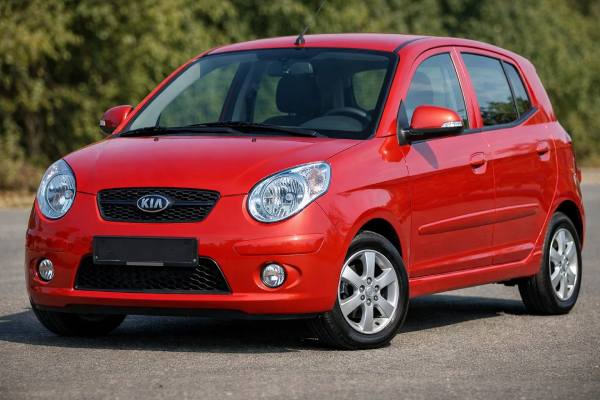

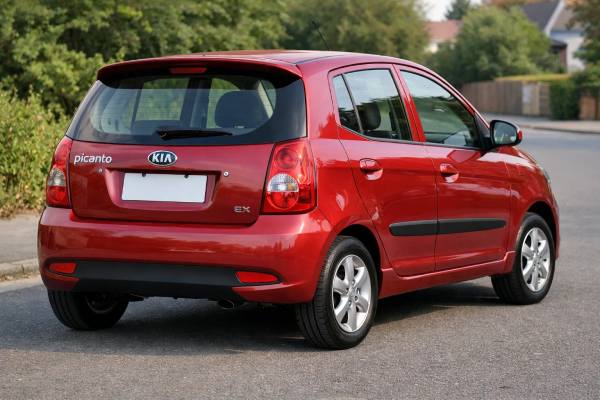
The facelifted 2007–2011 Kia Picanto (SA) with the G4HE 1.0 petrol engine is a simple, city-first hatchback built around low running costs and easy upkeep. You’re looking at a naturally aspirated, small-displacement four-cylinder that rewards regular basic maintenance more than complex diagnostics. In real ownership terms, this version is best known for tight exterior dimensions, light controls, and parts availability—along with modest performance that suits urban speeds better than fast highway commuting.
Because most examples are now well over a decade old, condition matters more than mileage alone. Cooling health, service history, and rust prevention often decide whether the car feels “cheap and cheerful” or “tired and needy.” If you buy smart and stay ahead of fluids, belts, and brakes, the Picanto can still be a dependable daily tool.
Quick Specs and Notes
- Easy to park and maneuver; compact footprint with a practical 5-door layout on many trims.
- Simple naturally aspirated engine; good match for short trips when serviced on time.
- Low tyre and brake costs; common sizes keep replacement prices reasonable.
- Age-related issues (rubber hoses, mounts, cooling parts) are more likely than major engine failures.
- Plan oil and filter changes every 10,000 miles (16,000 km) or 12 months, whichever comes first.
Guide contents
- Kia Picanto SA facelift 1.0 ownership fit
- Kia Picanto SA facelift G4HE specifications
- Kia Picanto SA facelift equipment and safety
- Common faults, recalls, and weak points
- Service plan and buyer checklist
- Real-world performance and economy
- Facelift Picanto vs city-car rivals
Kia Picanto SA facelift 1.0 ownership fit
This facelift-era Picanto is at its best when you treat it like what it is: a lightweight city car designed to do small distances cheaply and predictably. The G4HE 1.0 is not a “warm hatch” engine, and it won’t feel relaxed if you regularly load the car with passengers and hold 120–130 km/h for long stretches. What it does well is low-speed response, simple servicing, and forgiving running costs.
Who it suits most
- Urban commuters and new drivers: Light steering, small turning circle, and good visibility make it unintimidating.
- Budget-focused owners: Tyres, brakes, and most service parts are typically inexpensive and widely stocked.
- Short-trip users (with a caveat): It tolerates short runs, but you must be stricter about oil quality and battery health because repeated cold starts are hard on any engine.
Where it feels limited
- Highway pace and hills: 60 hp means you’ll plan overtakes and accept downshifts on inclines. Air conditioning use can be noticeable on acceleration.
- Noise and refinement: Road and engine noise are normal for the class and age. Fresh door seals, good tyres, and intact exhaust hangers help more than people expect.
- Safety expectations: Even if your car has airbags and ABS, the underlying crash performance reflects early-2000s design standards rather than modern superminis.
The ownership “sweet spot”
The best examples are usually the boring ones: standard wheels, stock suspension, clean cooling system, and receipts for routine items. A tidy Picanto can feel tight and honest; a neglected one can quickly stack small faults (battery, alternator belt noise, thermostat issues, sticking rear brakes) that make it feel unreliable even when the core engine is fine.
If you’re choosing between this 1.0 and the 1.1 petrol, the 1.0 often wins on slightly lower running costs, while the 1.1 can feel less strained. But condition remains the deciding factor: pick the car with the stronger service record, healthier cooling system, and least corrosion.
Kia Picanto SA facelift G4HE specifications
Below is a practical spec sheet focused on the facelift 2007–2011 Picanto (SA) with the G4HE 1.0 petrol. Values can vary slightly by market, transmission, and equipment, so treat them as a baseline for comparison and planning.
Powertrain and efficiency
| Item | Spec |
|---|---|
| Code | G4HE |
| Engine layout and cylinders | Inline-4, front-transverse |
| Valvetrain | OHC, 12 valves (3 valves/cyl) |
| Bore × stroke | 66 × 73 mm (2.60 × 2.87 in) |
| Displacement | 1.0 L (999 cc) |
| Induction | Naturally aspirated |
| Fuel system | Multi-port injection (MPI) |
| Compression ratio | ~10.0:1 |
| Max power | 60 hp (45 kW) @ ~5600 rpm |
| Max torque | ~86 Nm (63 lb-ft) @ ~2900–3000 rpm |
| Timing drive | Belt |
| Rated efficiency (typical combined) | ~4.8–5.2 L/100 km (≈49–55 mpg US / 54–59 mpg UK) |
| Real-world highway @ 120 km/h (75 mph) | ~6.2–6.8 L/100 km (≈35–38 mpg US / 41–46 mpg UK) |
Transmission and driveline
| Item | Spec |
|---|---|
| Transmission | 5-speed manual (common); 4-speed automatic (market-dependent) |
| Drive type | FWD |
| Differential | Open |
Chassis and dimensions
| Item | Spec |
|---|---|
| Suspension (front / rear) | MacPherson strut / torsion beam |
| Steering | Electric or hydraulic assist (market-dependent) |
| Brakes (front / rear) | Disc / drum (typical) |
| Popular tyre size | 155/70 R13 (common); some trims use 14-inch wheels |
| Ground clearance | ~150 mm (5.9 in) |
| Length / width / height | ~3535 / 1595 / 1480 mm (139.2 / 62.8 / 58.3 in) |
| Wheelbase | ~2370 mm (93.3 in) |
| Turning circle (kerb-to-kerb) | ~9.4–9.8 m (30.8–32.2 ft) |
| Kerb (curb) weight | ~820–980 kg (1808–2161 lb), varies by spec |
| Fuel tank | ~35 L (9.2 US gal / 7.7 UK gal) |
| Cargo volume | ~155–160 L (≈5.5–5.7 ft³) seats up (method varies) |
Performance and capability
| Item | Spec |
|---|---|
| 0–100 km/h (0–62 mph) | ~15.8–16.5 s |
| Top speed | ~150–153 km/h (93–95 mph) |
| Braking distance 100–0 km/h | ~41–45 m (approx, tyres/road dependent) |
| Towing capacity | Often not rated or very limited on small-engine city cars (check your VIN plate/manual) |
| Payload | Commonly ~350–450 kg (772–992 lb), equipment dependent |
Fluids and service capacities (verify by VIN)
| Item | Typical spec |
|---|---|
| Engine oil | API SL/SM-era equivalent; common viscosity 5W-30 or 5W-20 depending on climate/market |
| Engine oil capacity | ~3.0 L (3.2 US qt) with filter (typical) |
| Coolant | Ethylene glycol long-life; commonly 50/50 mix (capacity varies by radiator/heater) |
| Manual transmission oil | GL-4 gear oil (spec varies) |
| A/C refrigerant | Typically R134a on this era (charge varies) |
Safety and driver assistance
| Item | Notes |
|---|---|
| Crash ratings | Euro NCAP tested early Picanto generation; results reflect early-2000s protocols |
| IIHS | Typically not tested for this model/market |
| ADAS | None in the modern sense; some cars have ABS/EBD depending on trim/market |
Kia Picanto SA facelift equipment and safety
Equipment on the facelift Picanto varies widely by country and original buyer profile, so it helps to identify trims by function rather than badge names. Many cars were sold as value leaders with minimal extras; others added air conditioning, power windows, upgraded audio, and extra airbags.
Trims and options that matter in daily use
Common comfort and convenience differences
- Air conditioning: A major quality-of-life feature, but it adds load to a 60 hp engine. Check that it cools quickly at idle and that the radiator fan cycles normally.
- Electric windows and mirrors: Nice to have, but regulators and switches can age. Slow windows often point to dry guides or weakening motors.
- Audio and interior updates: Facelift cars may have better head units and trim pieces, but rattles often come from worn clips rather than “bad build.”
Mechanical and functional differences to watch
- ABS availability: Some markets made ABS common, others didn’t. If ABS is fitted, confirm the warning lamp behavior: it should illuminate at key-on and then go out after start.
- Wheel and tyre packages: 13-inch tyres ride more softly and cost less; larger wheels can sharpen steering response but may worsen impact harshness.
- Automatic transmission (where offered): The 4-speed automatic trades simplicity for slower acceleration and slightly higher fuel use; it should shift cleanly without flare or harsh engagement.
Safety ratings: how to interpret them today
For this generation, safety ratings—where available—come from older test protocols. That does not mean the car is “unsafe” in normal driving; it means you should not compare its star rating to a modern supermini’s rating. Structure design, side-impact protection, and restraint technology have improved significantly since the early 2000s.
Safety systems you may find (and how to verify)
Airbags
- Many cars have front airbags as standard; side airbags may be trim-dependent.
- Check for an airbag warning light that behaves correctly at startup. A missing bulb or a light that stays on needs diagnosis before purchase.
Brakes and stability
- ABS/EBD: Not universal. If present, confirm it works on a low-grip surface in a safe environment and ensure no stored fault lights.
- Stability control (ESC): Generally not a feature on this era/segment, but verify by looking for an ESC button or indicator in the cluster if the seller claims it.
Child-seat provisions
- ISOFIX/LATCH presence depends on market year and trim. Physically check the rear seat bight for ISOFIX tags and confirm top-tether points if required in your region.
If safety is a top priority for your household, the most meaningful “upgrade” may simply be moving to a newer-generation city car with standard ESC and more advanced side-impact design. Within the facelift SA range, prioritize cars with ABS, well-maintained tyres, and brakes in excellent condition—those factors influence real stopping performance more than trim badges.
Common faults, recalls, and weak points
At this age, most Picanto problems fall into two buckets: wear-out items and maintenance debt. The G4HE itself is usually straightforward, but small cars amplify neglect because they have less “reserve” in cooling, charging, and braking systems.
Common issues (high prevalence)
- Cooling system tiredness (low to medium cost)
Symptoms: Slow warm-up, overheating in traffic, coolant smell, weak cabin heat.
Likely causes: Aging thermostat, radiator cap, tired radiator fan motor, brittle hoses, or small leaks at clamps.
Remedy: Pressure test, replace thermostat/cap as needed, refresh coolant, inspect fan operation and relays. - Battery and charging complaints (low to medium cost)
Symptoms: Slow cranking, intermittent dash lights, repeated dead battery after short trips.
Likely causes: Old battery, poor terminals/grounds, short-trip usage, or alternator belt slip.
Remedy: Battery test with load, clean grounds, check belt condition/tension, verify alternator output. - Front suspension knocks (low to medium cost)
Symptoms: Clunks over bumps, vague steering, uneven tyre wear.
Likely causes: Worn drop links, tired strut mounts, control arm bushes.
Remedy: Inspect for play, replace in pairs, align afterward.
Occasional issues (moderate prevalence)
- Oil seepage and gasket sweating (low cost unless ignored)
Symptoms: Light oil film around rocker cover, oil smell.
Likely causes: Aging valve cover gasket, crank seal seep.
Remedy: Replace gasket, monitor oil level, clean and re-check after a few weeks. - Brake drag at the rear (low to medium cost)
Symptoms: Hot rear wheel, poor fuel economy, squeal after rain, weak handbrake.
Likely causes: Drum brake hardware corrosion, sticky adjusters, worn cylinders.
Remedy: Strip, clean, replace hardware, bleed if cylinders are changed.
Rare but expensive if missed
- Timing belt neglect (high consequence, medium cost to prevent)
Symptoms: Often none until failure; sometimes belt noise or visible cracking on inspection.
Likely cause: Belt aged out by time, not just mileage.
Remedy: Replace timing belt kit on schedule (belt, tensioner, idlers), and strongly consider water pump and coolant refresh at the same time.
Recalls, service actions, and how to verify
Recalls depend on VIN, country, and import history. The most reliable method is to run the official VIN recall check for your region and compare the result with dealer service records. When you inspect a candidate car, ask for:
- Proof of recall completion (invoice or dealer printout).
- Evidence of regular servicing (oil changes matter for long-term timing and ring health).
- Any past cooling system repairs (a good sign if done properly, a warning sign if repeatedly patched).
Even if a recall database shows none for your specific VIN, you still want to treat age-related prevention—belts, fluids, brakes, tyres—as the core of “reliability” for this Picanto.
Service plan and buyer checklist
A practical maintenance approach for the facelift Picanto is simple: short intervals, consistent fluids, and proactive rubber replacement. The engine is small, so it benefits from clean oil and a healthy cooling system.
Maintenance schedule (distance/time)
Every 10,000 miles (16,000 km) or 12 months
- Engine oil and filter
- Inspect coolant level and condition
- Inspect accessory/aux belt, tension, and pulleys
- Brake inspection (pad/shoe thickness, leaks, slider movement)
- Tyre rotation (if wear pattern allows) and pressure check
Every 20,000 miles (32,000 km) or 24 months
- Cabin filter (if fitted) and engine air filter
- Brake fluid replacement (especially important in humid climates)
- Alignment check if tyre wear is uneven or steering feels off
Every 40,000–60,000 miles (64,000–96,000 km) or 4–6 years (whichever comes first)
- Timing belt kit replacement (time matters as much as mileage)
- Coolant replacement (and inspect thermostat, cap, hoses)
- Spark plugs (interval varies by plug type and market)
As needed, based on inspection
- Manual gearbox oil change if shifts feel notchy or if history is unknown
- Suspension bushes/links when play is found
- Battery replacement often every 4–6 years, sooner with short-trip use
Fluids, specs, and “good enough” decision rules
Because oil recommendations vary by market and climate, the best rule is: use the correct standard and viscosity for your region, and shorten intervals if you do short trips. If your engine uses oil between changes, don’t ignore it—small engines with low sump capacity are less forgiving.
Essential torque values (verify in service documentation)
For planning work, focus on a few “critical fasteners” where under- or over-tightening causes real problems:
- Wheel nuts/bolts (correct torque prevents warped brake discs and loose wheels)
- Spark plugs (avoid stripped threads)
- Drain plug (avoid leaks and sump damage)
Since torque values can vary by wheel type and hardware, treat any number found online as provisional and verify in model-year service documentation.
Buyer’s inspection checklist (quick but effective)
Body and corrosion
- Check sills, rear arches, door bottoms, and underbody seams.
- Look for uneven panel gaps or overspray that suggests accident repair.
Engine bay
- Coolant should be clean and at the right level; oily residue in coolant is a red flag.
- Listen for belt noise and confirm stable idle with headlights and blower on.
Test drive
- The car should track straight and brake without pulling.
- Clunks over bumps suggest suspension wear; budget for links/mounts.
- Confirm heater output (cooling system health indicator) and A/C performance if equipped.
Paperwork
- Timing belt history is a big value divider.
- Look for consistent oil change records, not just one recent “fresh service” before sale.
If you buy one that’s fundamentally sound and then baseline it (fluids, belt status, brakes, tyres), you can stabilize costs and avoid the drip-feed of small failures that gives old city cars a bad reputation.
Real-world performance and economy
The 60 hp facelift Picanto is a momentum car: smooth inputs and good planning make it feel far quicker than the numbers suggest. It’s happiest in city traffic and suburban speeds where low weight and compact gearing do the work.
Ride, handling, and NVH
Ride quality:
On standard 13-inch tyres, the car generally rides with a soft initial response, then you feel sharper impacts over potholes because the wheelbase is short. Worn shocks exaggerate bounce and make the car feel nervous at speed—fresh dampers often transform the “adult” feel more than any other single repair.
Handling and steering:
Steering is light and quick enough for tight streets. Grip levels are modest, but the car is predictable. Good tyres matter disproportionately here; cheap hard-compound tyres can make braking and wet handling feel much worse than expected.
Noise:
Expect audible engine note under load, plus road noise from the rear. Cabin noise at 100–120 km/h is normal for the segment; sealing and tyre choice help, but this isn’t a quiet long-distance hatch.
Powertrain character
The naturally aspirated G4HE delivers usable response at low rpm, but acceleration is gradual. With a manual gearbox, keeping the engine in the mid-range makes merging safer. With an automatic (where fitted), it’s more relaxed in traffic but noticeably slower when you need a quick gap.
Practical tips that improve drivability:
- Keep the air filter and spark plugs fresh—small engines show neglect quickly.
- Fix vacuum leaks and tired engine mounts early; they create roughness that people mistake for “engine problems.”
- Ensure the cooling system is healthy; heat soak hurts power and can trigger fan-related issues in summer traffic.
Real-world fuel use
Most owners see their economy swing based on speed and trip length:
- City with short trips: higher consumption, especially in winter, because warm-up takes a larger share of the journey.
- Steady 90–100 km/h: usually the best economy zone.
- 120 km/h cruising: consumption rises notably; the engine is working harder and noise increases.
If your priority is maximum economy, the best “mod” is maintenance: correct tyre pressures, aligned wheels, clean filters, and oil changes that prevent friction and blow-by from creeping up over time.
Useful metrics that change the verdict
- 0–100 km/h: roughly mid-16 seconds means you plan overtakes rather than chase them.
- Braking consistency: healthy front brakes and good tyres matter more than raw engine output for safety in mixed driving.
- Turning circle: small enough to make dense parking and U-turns easy—one of the car’s biggest daily advantages.
In short: accept the pace, keep it maintained, and the Picanto feels honest and efficient. Try to drive it like a larger car, and it feels strained.
Facelift Picanto vs city-car rivals
If you’re shopping the facelift Picanto today, you’re likely cross-shopping other older city cars where condition and parts support matter more than brochure specs. Here’s how the Picanto typically stacks up, focusing on real ownership trade-offs rather than nostalgia.
Where the Picanto tends to win
1) Straightforward mechanics and parts availability
The Picanto’s simple petrol drivetrain, common service parts, and wide independent-garage familiarity often keep repairs manageable. For owners who don’t want specialized tools or rare parts, this is a real advantage.
2) Compact packaging that’s actually usable
Many rivals are equally short, but the Picanto’s 5-door availability and practical driving position make it easier to live with. Visibility and parking ease remain strong points.
3) Low routine running costs
Tyres, brakes, and basic servicing are usually inexpensive. Insurance can also be favorable for new drivers, depending on your market.
Where rivals may do better
1) Refinement and highway comfort
Some competitors feel more stable and quieter at speed, especially models that are slightly wider or heavier. If you do frequent highway miles, that can outweigh small cost differences.
2) Safety equipment and crash structure (especially newer designs)
Newer-generation city cars often bring standard ESC and improved side-impact design. If you’re comparing across generations (not just within the same era), safety tech can be the deciding factor.
3) Engine flexibility
A rival with slightly more power (or a more modern engine design) may feel less stressed with passengers and A/C. The Picanto 1.0’s main limitation is simply output.
A practical short list of cross-shopping checks
No matter which rival you choose, apply the same reality-based filters:
- Buy the car with the best cooling system health, brake condition, and tyre quality.
- Prefer documented timing belt history (for belt-driven engines).
- Avoid cars with electrical “gremlins” caused by water ingress or poor aftermarket wiring.
- Check for corrosion underneath, not just shiny paint.
The bottom line
The facelift Picanto makes sense when you want an affordable, compact car that’s easy to service and cheap to keep on the road—especially for city use. If your needs lean toward long highway commutes, maximum crash protection, or effortless overtaking, you may be happier stretching to a newer-generation city car. But if you choose a well-kept Picanto and baseline its maintenance, it can still deliver exactly what many buyers want: predictable transport with few surprises.
References
- Kia Recalls | Kia Europe 2026 (Recall Database)
- Kia Car Owners Manual | Kia UK 2026 (Owner’s Manual Portal)
- Engine Oil Grades and Capacities 2023 (Service Maintenance)
- Adult occupant protection Child restraints Pedestrian … 2004 (Safety Rating)
Disclaimer
This article is for informational purposes only and is not a substitute for professional inspection, diagnosis, or repair. Specifications, torque values, service intervals, and procedures can vary by VIN, market, production date, and installed equipment. Always verify details using official owner and service documentation for your exact vehicle and consult a qualified technician when needed.
If you found this guide useful, please consider sharing it on Facebook or X to help others find reliable ownership information.