
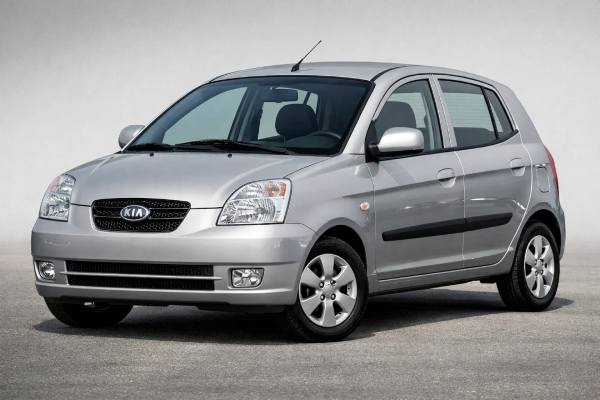
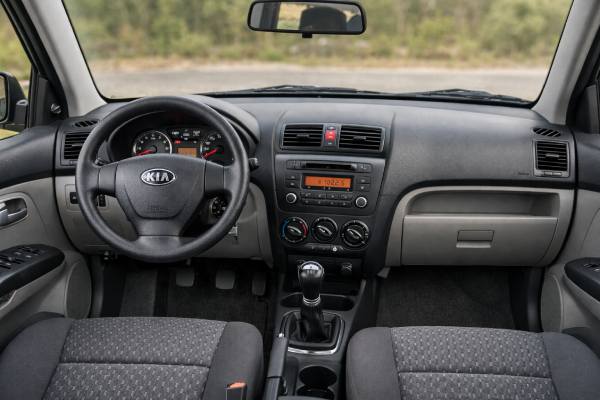
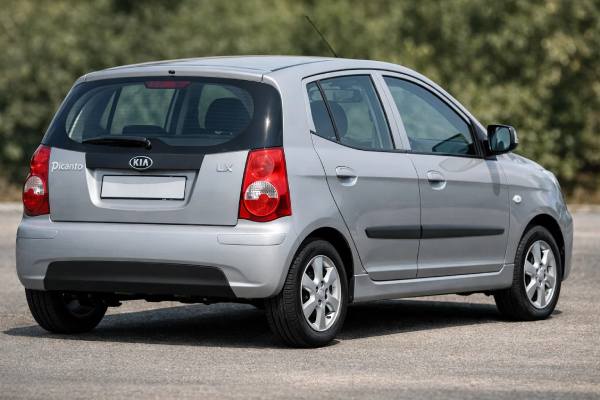
The 2004–2007 Kia Picanto (SA) with the G4HE 1.0-litre engine is a classic “simple city car” done the old-school way: a small, lightweight hatch with a naturally aspirated multi-point injection petrol engine and a manual gearbox. Its strongest ownership traits are predictable running costs, easy packaging (it feels bigger inside than its footprint suggests), and a drivetrain that rewards basic maintenance.
Where it asks more from an owner is age-related care. Most examples are now deep into the stage where rubber parts, cooling components, and electrical connectors matter as much as the engine itself. The Picanto’s performance is adequate rather than quick, so you get the best experience by keeping the engine healthy, the tyres matched, and the brakes and suspension tight. Treated as a maintained tool—not a neglected appliance—it can still be a very practical, dependable small car.
Owner Snapshot
- Very low fuel use is realistic if tyres, alignment, and oxygen sensors are in good shape.
- Compact exterior footprint, but genuinely usable cabin and boot for the class.
- Simple MPI engine layout keeps parts and labour relatively affordable.
- Timing belt service matters; skipping it is the fastest way to turn “cheap car” into “expensive repair.”
- Plan engine oil changes every 10,000 km (6,200 mi) or 12 months, whichever comes first.
Navigate this guide
- Kia Picanto SA 2004–2007 overview
- Kia Picanto SA 1.0 key specs
- Kia Picanto SA trims and safety
- Common faults and service actions
- Maintenance plan and buying tips
- On-road feel and economy
- How it stacks up against rivals
Kia Picanto SA 2004–2007 overview
This first-generation Picanto (often coded “SA” in many markets) was engineered around a straightforward brief: deliver a manoeuvrable, space-efficient hatchback with low ownership costs. In practice, it does exactly that. The body is short and tall, so you get easy parking and a surprisingly upright seating position with good sight lines—useful in dense traffic and tight neighbourhood streets.
The G4HE 1.0-litre petrol engine is a naturally aspirated inline-four with multi-point injection. That matters for long-term ownership: MPI is typically less sensitive to fuel quality than direct injection, and the intake system is less prone to carbon build-up patterns seen on some DI engines. Power output (60 hp / 45 kW) is modest, but the car is also modest in mass, and it’s geared for urban use rather than highway passing. If you mostly drive in-town or on short regional routes, the performance feels honest and consistent. At sustained high speeds, the engine will simply be working hard—by design.
The best “hidden advantage” of this model today is how forgiving it can be to repair. Access in the engine bay is reasonable for a small car, parts availability is generally good, and many jobs are conventional: belts, plugs, fluids, filters, brakes, and suspension wear items. That said, age is now the deciding factor. A well-kept Picanto can feel tight and eager; a neglected one can feel noisy, vague, and expensive in small ways (coolant leaks, tired mounts, worn bushings, intermittent electrical faults).
For most buyers, the right mental model is: this is a simple car that needs a clear baseline. If you restore the maintenance rhythm—timing belt history, fresh fluids, sound cooling system, matched tyres, and a healthy charging system—the Picanto becomes a dependable, low-stress daily driver with very predictable costs.
Kia Picanto SA 1.0 key specs
Below are the core specifications that matter for the 2004–2007 Picanto (SA) with the 1.0 G4HE and 60 hp output. Real-world variations happen by market and trim (especially brakes, wheel sizes, and curb weight), so treat these as the most common reference values.
Powertrain and efficiency
| Item | Specification |
|---|---|
| Code | G4HE |
| Engine layout and cylinders | Inline-4, front transverse, OHC, 3 valves/cyl (12-valve) |
| Displacement | 1.0 L (999 cc) |
| Bore × stroke | 66 × 73 mm (2.60 × 2.87 in) |
| Induction | Naturally aspirated |
| Fuel system | Multi-point injection (MPI) |
| Compression ratio | 10.0:1 |
| Max power | 60 hp (45 kW) @ 5600 rpm |
| Max torque | 86 Nm (63 lb-ft) @ 2900 rpm |
| Timing drive | Timing belt |
| Rated efficiency (combined) | 4.9 L/100 km (48 mpg US / 57.6 mpg UK) |
| Real-world highway @ 120 km/h (75 mph) | Expect roughly 6.0–7.0 L/100 km (39–32 mpg US) depending on wind, tyres, and load |
Transmission and driveline
| Item | Specification |
|---|---|
| Transmission | 5-speed manual (most common) |
| Drive type | FWD |
| Differential | Open |
Chassis and dimensions
| Item | Specification |
|---|---|
| Suspension (front/rear) | Front strut / rear torsion beam |
| Steering | Rack and pinion (assist varies by market) |
| Brakes | Front discs; rear drums common (some markets list rear discs) |
| Wheels/Tyres (most common size) | 155/70 R13 on 13 in rims |
| Ground clearance | Commonly around 145 mm (5.7 in) (market dependent) |
| Length / width / height | 3495 / 1595 / 1480 mm (137.6 / 62.8 / 58.3 in) |
| Wheelbase | 2370 mm (93.3 in) |
| Turning circle (kerb-to-kerb) | 9.2 m (30.2 ft) |
| Kerb (curb) weight | Often listed around 980 kg (2160 lb); can vary by equipment |
| GVWR | Around 1340 kg (2950 lb) (market dependent) |
| Fuel tank | 35 L (9.25 US gal / 7.7 UK gal) |
| Cargo volume | 220 L (7.8 ft³) seats up / 882 L (31.2 ft³) seats down |
Performance and capability
| Metric | Typical figure |
|---|---|
| 0–100 km/h (0–62 mph) | 16.3 s |
| Top speed | 150 km/h (93 mph) |
| Braking distance | Highly tyre-dependent; expect “adequate” rather than standout |
| Towing capacity | Often not officially rated high; treat as minimal unless your local documentation states otherwise |
| Payload | Often listed around 359 kg (791 lb) (market dependent) |
Fluids and service capacities (common reference values)
| Fluid | Spec and capacity (typical) |
|---|---|
| Engine oil | Common grades: 5W-30 or 5W-40 (climate dependent); capacity often listed ~3.0 L (3.17 US qt) |
| Coolant | Ethylene glycol long-life coolant; capacity often listed ~4.7 L (5.0 US qt) |
| Manual gearbox oil | Verify by gearbox code; typically a GL-4 manual transmission fluid |
| Brake fluid | DOT 3/4 (verify cap and manual) |
Key torque specs (decision-level guidance): on older small cars these vary by fastener and service manual revision, so use these as ballpark only until verified for your VIN:
- Wheel nuts: 90–110 Nm (66–81 lb-ft)
- Spark plugs: 18–25 Nm (13–18 lb-ft)
- Engine oil drain plug: 30–40 Nm (22–30 lb-ft)
Kia Picanto SA trims and safety
Trim naming on the 2004–2007 Picanto (SA) varies widely by country, but the practical differences usually fall into three buckets: comfort equipment, brake/tyre package, and safety equipment. If you’re shopping used, focus less on the badge and more on what’s physically on the car.
Trims and options that change day-to-day ownership
Common equipment breakpoints include:
- Air conditioning vs. non-A/C cars (A/C affects comfort and slightly affects performance and fuel use).
- Power steering type and feel (some markets used hydraulic assist early on; others moved to electric assist later—verify by build year and local spec).
- Front fog lamps, electric mirrors, central locking, and audio head unit differences.
- Wheel and tyre packages: base cars often run 13-inch wheels (e.g., 155/70 R13), while higher trims may use wider tyres that improve grip but can increase road noise and cost.
Quick identifiers when viewing a used car
- ABS check: turn the key on and confirm the ABS lamp illuminates, then goes out after start. If the car never shows an ABS lamp, it may not be equipped—or the bulb may be removed.
- Brake hardware: visually confirm rear drums vs rear discs (if fitted). Drums are common and not a problem if maintained.
- Airbag count: base cars may have only front airbags; some markets offered side airbags as an option. Check the steering wheel, dash markings, and seat tags.
- VIN plate and build date: helps confirm model year in markets where “registration year” differs from “build year.”
Safety ratings and what they mean for a 2004–2007 car
This generation Picanto was tested under the older Euro NCAP protocols of the mid-2000s. The headline result often quoted is 3 stars for adult occupant protection in that era. The more important takeaway is not the star number alone, but the pattern: small city cars of that time generally had less sophisticated restraint tuning and less robust passenger-compartment energy management than modern superminis. In plain terms, it’s meaningfully less protective than newer cars—especially in higher-speed impacts.
Safety systems and driver assistance
Expect traditional, “pre-ADAS” safety:
- Seatbelts with pretensioners (front) are typical; rear belt features vary.
- ABS may be standard or optional depending on market and year.
- Electronic stability control (ESC) is typically not present on early examples.
- ISOFIX/LATCH availability varies by market and rear-seat design; check for ISOFIX labels and metal anchor points between the rear seat base and backrest.
If your priority is maximum crash protection, the Picanto’s advantage is not absolute safety performance—it’s predictable behaviour at low speeds, good visibility, and the ability to keep tyres and brakes in top condition without high cost. That’s the safety strategy that fits this model: prevent incidents with maintenance and good tyres, and understand the limits of a mid-2000s city car in modern traffic.
Common faults and service actions
A well-maintained Picanto (SA) can be very durable, but the typical problems cluster into a few systems. Below is a practical way to think about them by prevalence and cost tier, with the usual symptoms → likely cause → recommended remedy flow.
Common (expect to see on higher-mileage or poorly serviced cars)
- Timing belt overdue
- Symptoms: no warning until it fails; may show belt noise, cracked belt, or unknown history.
- Likely cause: age and mileage; long intervals; oil contamination from a leak.
- Remedy: replace belt, tensioner(s), and idler(s) together; consider the water pump “while you’re in there” if it’s driven by the belt or shows seepage.
- Cooling system small leaks
- Symptoms: coolant smell, low coolant, temperature creep in traffic, wet staining near hose joins.
- Likely cause: ageing hoses, radiator end tanks, thermostat housing seals, tired cap.
- Remedy: pressure test; replace weak hoses/clamps; refresh coolant with correct mix; verify radiator fan operation.
- Ignition and idle quality issues
- Symptoms: misfire under load, rough idle, hesitation, higher fuel use.
- Likely cause: old spark plugs, tired ignition leads/coils (market dependent), dirty throttle body, vacuum leaks.
- Remedy: baseline tune-up (plugs + air filter); clean throttle body; smoke-test for vacuum leaks; confirm charging voltage.
- Front suspension wear
- Symptoms: clunks over bumps, wandering, uneven tyre wear.
- Likely cause: worn drop links, control arm bushings, ball joints, strut mounts.
- Remedy: replace worn joints/bushings; align afterwards; keep tyre pressures correct.
Occasional (depends on use and climate)
- Manual gearbox and clutch wear
- Symptoms: clutch slip, heavy pedal, notchiness, input shaft noise.
- Likely cause: city driving, poor clutch technique, aged cable/hydraulics (market dependent).
- Remedy: clutch kit replacement when slipping; consider release bearing and inspect flywheel surface.
- Brake system age issues
- Symptoms: soft pedal, pull, squeal, uneven braking.
- Likely cause: old brake fluid, seized caliper pins, rear drum adjustment out of spec.
- Remedy: brake fluid flush every 2 years; service caliper slides; adjust rear drums if fitted.
- Electrical niggles
- Symptoms: intermittent windows/locks, random warning lamps, weak starting.
- Likely cause: aged battery, ground points, alternator wear, corroded connectors.
- Remedy: load-test battery; clean grounds; measure alternator output; fix water ingress points.
Rare but expensive (worth screening before purchase)
- Overheat episode history
- Symptoms: past coolant loss, mayonnaise under cap, persistent overheating, bubbling in expansion tank.
- Likely cause: neglected cooling system leading to head gasket stress.
- Remedy: walk away unless priced for proper diagnosis (compression test, leak-down, cooling system checks).
Recalls, TSBs, and “service actions” reality
Because these cars were sold across many markets, recall coverage is region- and VIN-specific. The practical approach:
- Ask the seller for dealer invoices showing recall completion.
- Run an official VIN recall check in your country (or ask a dealer to print the campaign status).
- Treat any unknown campaign status as a negotiation point, not a disaster—many fixes are simple, but you want proof.
Maintenance plan and buying tips
If you want this Picanto to feel reliable, the goal is to remove uncertainty. That means establishing a maintenance baseline, then keeping a steady rhythm. Here’s a practical schedule for the G4HE 1.0 that matches how these cars age.
Practical maintenance schedule (distance/time)
Every 10,000 km (6,200 mi) or 12 months
- Engine oil and filter (use a grade suitable for your climate; avoid bargain filters)
- Check coolant level and condition; inspect for leaks
- Inspect tyres (tread, cracking, pressures) and check alignment wear patterns
- Inspect brakes (pad/shoe thickness, disc condition, brake hoses)
Every 20,000–30,000 km (12,000–18,000 mi) or 2 years
- Engine air filter (more often in dusty areas)
- Cabin filter (if equipped)
- Brake fluid flush (2 years is a smart rule for older cars)
- Clean throttle body and inspect PCV/breather hoses if idle is unstable
Every 40,000–60,000 km (25,000–37,000 mi)
- Spark plugs (earlier if misfiring or if the car has spent its life on short trips)
- Manual gearbox oil (if shifting feels notchy or history is unknown—many manuals last longer, but fresh fluid can help)
Timing belt (critical)
- Replace at the manufacturer interval for your market or sooner if history is unknown.
- On a used purchase, treat “no proof” as “due now.”
Coolant
- Refresh on a time basis (commonly 3–5 years depending on coolant type). On an older car, fresh coolant is less about freezing protection and more about corrosion control.
12 V battery
- Expect replacement roughly every 4–6 years depending on climate and driving patterns. Weak batteries create “phantom” electrical issues.
Buyer’s guide: what to check before you commit
Body and corrosion
- Inspect wheel arches, sills, rear hatch seams, and underbody mounting points.
- Check for damp carpet (water ingress can cause electrical faults).
Engine health
- Cold start should be clean: no heavy smoke, no loud rattles that persist.
- Look for coolant staining, oil leaks onto belts, and swollen hoses.
- Confirm stable idle with A/C on and off (if equipped).
Transmission and clutch
- Smooth take-up, no slip in higher gears, no crunch on fast 2nd–3rd shifts.
- Check driveshaft boots for grease sling.
Suspension and steering
- Clunks over speed bumps usually mean links or bushings.
- Uneven tyre wear suggests alignment or worn components.
Paperwork that matters
- Timing belt proof (parts + date + mileage)
- Cooling system repairs (radiator, thermostat, water pump)
- Regular oil services (even if “cheap car,” service history is the value)
Long-term durability outlook
With the belt kept current, cooling system maintained, and tyres/brakes in good order, the Picanto (SA) is one of those cars that tends to “wear honestly.” It rarely surprises you with exotic failures; it more often asks for predictable, age-related replacement of common parts. That’s a good trade if you want affordable transport and you’re willing to stay ahead of maintenance.
On-road feel and economy
The 60 hp Picanto is not designed to impress on acceleration; it’s designed to be easy to place, easy to drive, and economical. When everything is working properly, it feels light on its feet at city speeds. The upright seating and short bonnet make parking and tight turns simple, and the 9.2 m turning circle helps it feel nimble in real-world manoeuvres.
Ride, handling, and NVH
- Ride: The short wheelbase means sharp bumps come through more than in larger cars. Good tyres and healthy dampers matter a lot here; worn dampers make the car feel “busy” and noisy.
- Handling balance: Predictable front-wheel-drive behaviour—safe understeer when pushed. Fresh suspension bushings can transform stability.
- Steering feel: Typically light, with limited feedback. If it feels heavy or inconsistent, suspect tyre pressures first, then alignment, then steering-assist issues.
- Cabin noise: Expect noticeable engine sound under load and road noise on coarse asphalt. Tyre choice (especially budget tyres with hard compounds) can raise noise dramatically.
Powertrain character
The G4HE’s best trait is how usable its torque is at low-to-mid rpm for city driving. It won’t surge; it builds speed steadily. In a 5-speed manual, you’ll often use lower gears to stay in the engine’s comfortable range, especially with passengers or on hills. If the car feels unusually weak, look for maintenance causes first: clogged air filter, tired plugs, dragging brakes, or oxygen sensor issues.
Real-world efficiency (what owners typically see)
Factory combined figures around 4.9 L/100 km are attainable, but only in the right conditions. In everyday use:
- City: often 5.8–7.5 L/100 km (41–31 mpg US) depending on traffic and short-trip frequency.
- Highway (100–120 km/h): often 5.5–7.0 L/100 km (43–34 mpg US) depending on wind and tyre setup.
- Mixed: many owners land around 5.5–6.5 L/100 km (43–36 mpg US) once the car is well maintained.
Cold weather and short trips hit this model harder than many drivers expect because the engine spends more time warming up relative to the trip length.
Performance metrics that matter
- 0–100 km/h: about 16 seconds means planning is the driving skill. Leave space, build speed early, and keep the engine healthy.
- Braking confidence: More dependent on tyres and brake condition than raw hardware. A Picanto on good tyres with fresh brake fluid can stop far more consistently than one with cheap tyres and old fluid.
If you accept it as a city-focused hatch and maintain it accordingly, the Picanto delivers a calm, efficient daily drive—especially where speeds are moderate and parking space is limited.
How it stacks up against rivals
To judge the 2004–2007 Picanto 1.0 fairly, compare it to other mid-2000s city cars and entry superminis. These are the rivals buyers most commonly cross-shop in the used market.
Versus Hyundai Getz (small supermini class)
- Picanto advantage: smaller footprint, typically lower running costs, and very easy urban manoeuvring.
- Getz advantage: usually feels more relaxed at higher speeds and may offer stronger engine choices in many markets.
- Verdict: If your driving is mostly city and you value compact size, the Picanto fits better; if you do more highway, the Getz is often the calmer tool.
Versus Toyota Aygo / Peugeot 107 / Citroën C1
These “triplet” city cars are famous for low weight and simple mechanicals.
- Picanto advantage: often more conventional engine layout (inline-four MPI) and a slightly “grown-up” cabin feel in some trims.
- Triplet advantage: very low mass can make them feel lively even with modest power, and parts support is strong in many regions.
- Verdict: Choose based on condition. A cleaner, better-maintained car wins more than the badge in this category.
Versus Chevrolet Spark (including Daewoo-based variants)
- Picanto advantage: typically stronger sense of durability in everyday components and good packaging.
- Spark advantage: often cheaper to buy, sometimes simpler trim content.
- Verdict: The Picanto is often the safer bet if you care about long-term predictability rather than the lowest purchase price.
Versus Fiat Panda
- Picanto advantage: straightforward serviceability and generally good fuel economy for its size.
- Panda advantage: can feel roomier and more flexible depending on version; some variants offer features the Picanto doesn’t.
- Verdict: If you want a very compact car with simple running costs, Picanto makes sense; if you want a “small car that feels like a bigger car,” Panda may appeal more.
The practical takeaway
In the used market, the Picanto’s biggest competitive edge is not a single headline stat—it’s the combination of small size, simple drivetrain, and manageable maintenance demands. Against almost any rival, a Picanto with documented belt service, a healthy cooling system, and good tyres will feel more trustworthy than a “better model” with unknown history.
References
- Kia Picanto I 1.0 i 12V (60 Hp) | Technical specs, data, fuel consumption, Dimensions 2026 (Specifications)
- KIA Picanto Specs, Performance & Photos – 2004, 2005, 2006, 2007 – autoevolution 2026 (Specifications)
- 2004 Kia Picanto owner’s manuals 2026 (Owner’s Manual)
- Adult occupant protection Child restraints Pedestrian … 2004 (Safety Rating)
Disclaimer
This article is for informational purposes only and is not a substitute for professional diagnosis, inspection, or repair. Specifications, torque values, service intervals, and procedures can vary by VIN, market, model year, and equipment. Always confirm details using official documentation and service information for your specific vehicle before purchasing parts or performing work.
If this guide helped, consider sharing it on Facebook or X to support our work.