
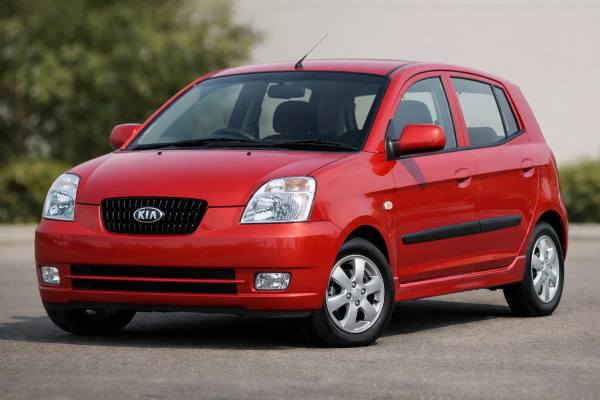
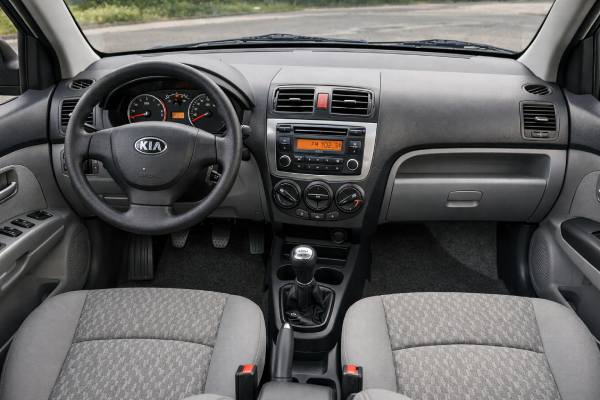
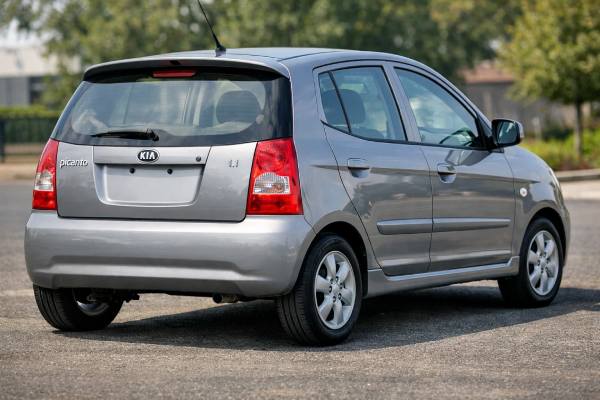
The 2004–2007 Kia Picanto (SA) with the G4HG 1.1-litre petrol engine is the “sweet spot” of the early Picanto range for many owners: it keeps the car’s simple packaging and low running costs, but adds a noticeable bump in torque and highway composure over the 1.0. Mechanically it’s a straightforward, naturally aspirated inline-four with multi-point injection, a timing belt, and a conventional front-wheel-drive layout—meaning most repairs stay predictable and affordable when the car is maintained.
Today, the ownership story is less about the engine design and more about age management. Cooling hoses, rubber bushings, mounts, and electrical grounds become as important as oil changes. The best examples feel light, tidy, and honest; neglected ones feel noisy and vague. If you choose one with proof of timing belt service and a healthy cooling system, the 1.1 Picanto can still be a capable city car that handles modern traffic with fewer compromises than the smaller engine.
Quick Specs and Notes
- Stronger low-rpm pull than the 1.0 makes hills and full-load driving easier.
- Simple MPI petrol setup is generally tolerant and easy to service.
- Compact size and tight turning circle make it excellent for dense cities.
- Timing belt history is critical; unknown intervals should be treated as “due now.”
- Plan engine oil changes every 10,000 km (6,200 mi) or 12 months.
On this page
- Kia Picanto SA 1.1 ownership brief
- Kia Picanto SA G4HG specs and measurements
- Kia Picanto SA equipment and safety setup
- Reliability patterns and common fixes
- Service plan and buying checklist
- Real-world driving and fuel use
- Rivals and used-market alternatives
Kia Picanto SA 1.1 ownership brief
The 1.1-litre Picanto (SA) exists for drivers who like the idea of a true city car, but don’t want to feel “under-engined” the moment the road opens up or passengers climb in. The G4HG brings a modest power increase and, more importantly, a torque bump that you can feel in everyday conditions: pulling away with two adults on board, keeping pace on short motorway merges, and climbing steep urban ramps without constantly hunting for the perfect gear.
The engineering is intentionally conventional. You get a naturally aspirated, multi-point injected petrol engine mounted transversely, driving the front wheels through a simple manual gearbox in most markets. That combination matters long-term because it keeps parts availability broad and repair techniques familiar to almost any workshop. It also means the car’s “goodness” depends heavily on basic condition: if the cooling system is healthy, the belt service is current, and the suspension is tight, the Picanto feels agile and pleasant. If those basics are neglected, the same car feels harsh, noisy, and flimsy—even though the underlying design is sound.
From a buyer’s perspective, the Picanto’s main advantage is cost predictability. Tyres are small, brakes are inexpensive, and most routine jobs (plugs, filters, fluids, belts) don’t require exotic tools. The main caution is age. By now, many examples have passed through multiple owners, city use, short trips, and inconsistent servicing. That tends to create “death by a thousand cuts” issues: intermittent electrical faults, small coolant leaks, tired mounts, and worn bushings that make the car feel worn out even when the engine itself is still healthy.
If you approach the Picanto 1.1 as a vehicle that benefits from a clear maintenance baseline, it rewards you with a tidy, easy-to-park hatchback that handles modern traffic better than you might expect from its size and era. Condition and service proof matter more than trim names.
Kia Picanto SA G4HG specs and measurements
The tables below focus on the most commonly listed specifications for the 2004–2007 Picanto (SA) with the G4HG 1.1 and 64 hp output. Depending on market and equipment, some figures (especially curb weight, brake hardware, and tyre size) can vary slightly—so use these as baseline reference values and verify against your VIN documentation where possible.
Powertrain and efficiency
| Item | Specification |
|---|---|
| Code | G4HG |
| Engine layout and cylinders | Inline-4, front transverse, OHC, 3 valves/cyl |
| Displacement | 1.1 L (1086 cc) |
| Bore × stroke | 67 × 77 mm (2.64 × 3.03 in) |
| Induction | Naturally aspirated |
| Fuel system | Multi-point injection (MPI) |
| Compression ratio (ICE) | 10.0:1 (commonly listed) |
| Max power | 64 hp (48 kW) @ 5500 rpm |
| Max torque | 97 Nm (72 lb-ft) @ 2800 rpm |
| Timing drive | Belt |
| Rated efficiency (combined) | 4.9 L/100 km (48 mpg US / 57.6 mpg UK) |
| Real-world highway @ 120 km/h (75 mph) | Often 6.0–7.2 L/100 km (39–33 mpg US) depending on tyres, wind, and load |
Transmission and driveline
| Item | Specification |
|---|---|
| Transmission | 5-speed manual (most common) |
| Drive type | FWD |
| Differential | Open |
Chassis and dimensions
| Item | Specification |
|---|---|
| Suspension (front/rear) | Front strut / rear torsion beam |
| Steering | Rack and pinion (assist varies by market) |
| Brakes | Front discs; rear drums common |
| Wheels/Tyres (most common) | 155/70 R13 (13-inch rims) |
| Ground clearance | Often listed around ~145 mm (5.7 in) (market dependent) |
| Length / width / height | 3495 / 1595 / 1480 mm (137.6 / 62.8 / 58.3 in) |
| Wheelbase | 2370 mm (93.3 in) |
| Turning circle (kerb-to-kerb) | 9.2 m (30.2 ft) |
| Kerb (curb) weight | Commonly around 936–966 kg (2064–2129 lb) depending on trim |
| GVWR | Around ~1350 kg (2976 lb) (often listed) |
| Fuel tank (ICE) | 35 L (9.25 US gal / 7.7 UK gal) |
| Cargo volume | 220 L (7.8 ft³) seats up / 882 L (31.2 ft³) seats down |
Performance and capability
| Metric | Typical figure |
|---|---|
| 0–100 km/h (0–62 mph) | 15.1–15.4 s (typical listings) |
| Top speed | 154 km/h (96 mph) |
| Braking distance | Highly tyre-dependent; best improved with quality tyres and fresh brake fluid |
| Towing capacity | Often modest or not emphasized; verify locally before planning towing |
| Payload | Typically in the 300–380 kg (660–840 lb) range depending on GVWR and curb weight |
Fluids, capacities, and decision-level torque values
| Fluid | Typical specification and capacity |
|---|---|
| Engine oil | Commonly 5W-30 or 5W-40 (climate dependent); capacity often listed ~3.0 L (3.17 US qt) |
| Coolant | Ethylene glycol long-life coolant; capacity often listed ~4.7 L (5.0 US qt) |
| Manual gearbox oil | Usually GL-4 manual trans fluid (verify in your service book) |
| Brake fluid | DOT 3/4 (verify cap and manual) |
Key torque values you’ll commonly confirm in the service documentation:
- Wheel nuts: 90–110 Nm (66–81 lb-ft)
- Spark plugs: 18–25 Nm (13–18 lb-ft)
- Oil drain plug: 30–40 Nm (22–30 lb-ft)
These numbers are included to support planning and parts selection; final values should always be verified for your exact fastener and revision.
Kia Picanto SA equipment and safety setup
On paper, the 2004–2007 Picanto range looks simple. In reality, equipment varies a lot by country, and trim names rarely translate cleanly. The best approach is to treat this car like a set of hardware choices: comfort equipment, brake/tyre package, and safety systems. Those three categories shape how it feels, what it costs to run, and how it performs in daily use.
Trims and options that matter most
Typical equipment split points include:
- Air conditioning vs. non-A/C cars. A/C affects comfort, demisting speed, and slightly affects acceleration in a 64 hp car.
- Power steering fitment and calibration. Some cars feel very light and city-focused; others feel slightly heavier and more stable at speed.
- Wheel and tyre package. Base 13-inch tyres are cheap and comfortable, but narrow tyres limit wet-grip and emergency braking performance.
- Audio and convenience features (central locking, electric windows, mirrors). These don’t change drivability, but they change “daily friction,” and repairs can become annoying with age.
Quick ways to identify what you’re looking at
When you inspect a used Picanto, focus on visible proof:
- Rear brakes: rear drums are common; rear discs appear in some markets or trims. Drums are not a deal-breaker if serviced correctly.
- ABS presence: key on, check that the ABS lamp illuminates and then goes out after start. No lamp can mean “not equipped” or “bulb removed.”
- Airbags: many cars have front airbags only; side airbags may appear on higher trims or certain markets. Check seat tags and dash markings.
- ISOFIX/child seat anchors: availability varies; look for anchor points and labels rather than assuming they’re present.
Safety ratings and how to interpret them today
This generation Picanto was tested under older mid-2000s crash-test standards. The commonly cited result for that era is a 3-star rating. The meaningful takeaway is not the number itself; it’s that safety engineering has moved on significantly since then. Modern superminis typically have stronger structures, more refined restraint systems, and (often) stability control and driver-assist features that this car doesn’t have.
So what can an owner do? Two practical steps matter most:
- Keep tyres and brakes excellent. The difference between hard, mismatched budget tyres and a quality matched set can be dramatic in wet emergency braking.
- Keep suspension and steering tight. Worn bushings and tired dampers reduce stability exactly when you need it most.
Driver assistance reality
Expect a “pre-ADAS” car:
- No autonomous emergency braking, no lane support, no adaptive cruise.
- Stability control is uncommon on early examples.
- Safety is mainly seatbelts, airbags (depending on spec), and ABS (depending on spec).
The best “safety upgrade” for this car is not a gadget—it’s condition: tyres, alignment, brakes, and lights.
Reliability patterns and common fixes
The G4HG 1.1 is generally a durable small engine when maintained, but reliability on a 2004–2007 car is a systems story. Age, heat cycles, and short-trip use create predictable failure patterns. Below is a practical map by prevalence and cost tier, with a symptom-to-remedy approach that helps owners and buyers make decisions quickly.
Common and usually low-to-medium cost
- Timing belt overdue (high consequence)
- Symptoms: often none until failure; sometimes belt noise, cracking, or visible contamination.
- Likely cause: missed interval, unknown service history, oil leak onto belt area.
- Remedy: replace belt, tensioner, and idlers as a set. Many owners also replace the water pump during the same job if access overlaps, to avoid paying labour twice.
- Cooling system seepage and weak points
- Symptoms: coolant smell, slow level loss, damp hoses, overheating in traffic, heater performance changes.
- Likely cause: aged hoses, tired radiator, thermostat sticking, cap not holding pressure, fan switch or relay issues.
- Remedy: pressure test, replace weak components, refresh coolant with correct mix ratio, confirm fan operation and thermostat behaviour.
- Idle instability and small drivability issues
- Symptoms: rough idle, hesitation off-idle, mild misfire under load, higher fuel consumption.
- Likely cause: worn spark plugs, dirty throttle body, vacuum leaks, tired oxygen sensor with age, poor electrical grounds.
- Remedy: baseline tune-up (plugs, filters), throttle body cleaning, smoke test for leaks, check charging system and grounds.
- Front suspension wear in city use
- Symptoms: clunks over bumps, vague steering, uneven tyre wear.
- Likely cause: worn drop links, control arm bushings, ball joints, strut top mounts.
- Remedy: replace worn items, then align. Alignment is not optional—small cars magnify tyre wear when toe is off.
Occasional, depends on driving style and climate
- Clutch wear and shift quality
- Symptoms: slipping under load, judder on take-off, heavy pedal, notchiness when cold.
- Likely cause: heavy city use, worn release bearing, aged cable/hydraulics (market dependent), old gearbox oil.
- Remedy: clutch kit when slipping; consider gearbox oil change if shifting is notchy (use the correct spec).
- Brake drag and uneven braking
- Symptoms: pull, squeal, heat smell after short drives, uneven pad wear.
- Likely cause: seized caliper pins, old brake fluid, rear drum adjustment issues.
- Remedy: service caliper slides, flush brake fluid every 2 years, inspect rear drum hardware and adjust properly.
Less common but costly if ignored
- Overheat history
- Symptoms: persistent temperature issues, coolant pushing out, bubbling, oil/coolant mixing signs.
- Likely cause: neglected cooling faults escalating to head gasket stress.
- Remedy: treat as a major red flag unless priced for diagnostics (compression/leak-down, cooling checks).
Software, calibrations, and “service actions”
On a mid-2000s Picanto, the biggest “updates” are often practical rather than digital: replacement of sensors, fixing grounds, and restoring factory-correct airflow and cooling. Formal ECU reflashes are not a common ownership topic for this era in many markets, but campaign work (recalls and service actions) can exist and is always VIN-specific.
Best practice when buying:
- Request documentation for recall completion.
- Use an official VIN recall lookup where available.
- If proof is missing, treat it as a negotiation point and plan a dealer check after purchase.
In short: the engine itself is rarely the problem. Neglect is the problem—and you can often see it in belt history, coolant condition, tyre wear, and how the car idles from cold.
Service plan and buying checklist
The key to owning a Picanto 1.1 confidently is to remove unknowns early. That means establishing a baseline, then keeping a steady maintenance rhythm that matches age and typical city use. Below is a practical schedule that fits how these cars actually live: short trips, stop-start traffic, and long gaps between “big services.”
Maintenance schedule that works in real life
Every 10,000 km (6,200 mi) or 12 months
- Engine oil and filter
- Inspect coolant level, colour, and hoses
- Inspect tyres (pressure, tread, cracking) and look for uneven wear
- Brake inspection (pads/shoes, discs/drums, hose condition)
Every 20,000–30,000 km (12,000–18,000 mi) or 2 years
- Engine air filter (sooner in dust)
- Cabin filter (if equipped)
- Brake fluid flush (2 years is a smart rule on older cars)
- Clean throttle body and check intake hoses for cracks
Every 40,000–60,000 km (25,000–37,000 mi)
- Spark plugs (earlier if short-trip heavy)
- Manual gearbox oil (especially if history is unknown or shifting is notchy)
Timing belt (non-negotiable)
- Follow the manufacturer interval listed for your market; many owners plan belt service around 90,000 km (56,000 mi) or 5 years, but your service book is the authority.
- If belt history is unknown, treat it as due immediately—this single decision often determines whether the car stays “cheap to own.”
Coolant and hoses
- Refresh coolant on a time basis (commonly 3–5 years depending on coolant type).
- Replace suspect hoses proactively; a small leak is cheaper than an overheat event.
Battery and charging system
- Expect 12 V batteries to last roughly 4–6 years depending on climate and use.
- Weak batteries and poor grounds cause many “mystery” faults in older small cars.
Fluids and parts choices that protect longevity
- Use a quality oil in the correct viscosity for your climate. A high-mileage engine often benefits more from consistent oil changes than from chasing exotic oil brands.
- Avoid ultra-cheap ignition parts. Misfires can damage catalysts and raise fuel use.
- Use matched tyres (same brand/model across an axle) and keep pressures correct. Small cars are sensitive to tyre differences.
Buyer’s checklist (what to inspect before you buy)
Paperwork
- Timing belt invoice showing parts replaced and date/mileage
- Regular oil service history (even simple receipts help)
- Any cooling system work (radiator, thermostat, water pump)
Mechanical
- Cold start should be clean and stable: no persistent rattles, no heavy smoke, smooth idle
- Check for coolant stains and oil leaks around the belt side of the engine
- Test the heater and confirm the cooling fan cycles in traffic
Chassis
- Listen for front suspension clunks on bumps
- Check tyre wear for toe or camber issues
- Confirm braking is straight and consistent
Body
- Inspect wheel arches, sills, hatch seams, and underbody mounting points
- Check for damp carpets (water ingress can lead to electrical problems)
Long-term durability outlook
A well-maintained Picanto 1.1 tends to “age honestly.” It doesn’t usually surprise you with exotic failures; it asks for predictable work—belts, hoses, mounts, bushings, and brake servicing. Buy on condition and proof, not on trim badges.
Real-world driving and fuel use
The 1.1-litre Picanto doesn’t turn the car into a fast hatchback, but it does change the driving experience in the places that matter: pulling away with less effort, holding speed on inclines, and feeling a bit less strained on faster roads. In a light city car, that “effort level” is a big part of comfort.
Ride, handling, and NVH
- Ride quality: The short wheelbase means sharp edges and potholes are felt more than in larger cars. Fresh dampers and healthy bushes matter more than people expect; worn dampers make the car bounce and increase noise.
- Handling balance: Safe, predictable understeer when pushed. The car responds best to smooth steering inputs and good tyres.
- Steering: Usually light and city-friendly. If steering feels heavy, inconsistent, or self-centering is poor, check tyre pressures and alignment first.
- Noise: Engine sound rises clearly under load and at motorway speed. Road noise is heavily tyre-dependent; a better tyre choice can make the cabin feel “one class higher.”
Powertrain character (what the G4HG feels like)
The G4HG’s useful trait is torque at everyday rpm. You’ll still downshift for overtakes, but you don’t need to “work” the engine as hard as the 1.0 in routine driving. In a 5-speed manual, it’s happiest when you keep it in the mid-range rather than lugging it at very low rpm. If it feels unusually flat, suspect maintenance items before you suspect the engine design: old plugs, clogged filter, dragging brakes, tired oxygen sensor, or vacuum leaks.
Efficiency you can actually expect
Owners often see fuel economy that depends more on trip length than on driving style. Short trips punish consumption because the engine spends a lot of time warming up.
Typical real-world ranges:
- City: about 6.0–7.8 L/100 km (39–30 mpg US) depending on traffic, tyre choice, and how short your trips are.
- Highway (100–120 km/h): about 6.0–7.2 L/100 km (39–33 mpg US) depending on wind and load.
- Mixed: many drivers land around 5.7–6.7 L/100 km (41–35 mpg US) after maintenance is up to date.
Cold weather can add a noticeable penalty, especially if you use full heat and do multiple short drives per day.
Performance metrics that matter in daily use
- 0–100 km/h around 15 seconds means planning still matters, but the car is less “busy” than the 1.0 when you join faster traffic.
- Top speed around 154 km/h is not a target; it’s a reminder that the engine will work hard above typical cruising speeds.
- Braking confidence is usually limited more by tyres and maintenance than by brake hardware. Fresh fluid, serviced caliper slides, and quality tyres can transform stopping feel and consistency.
The best driving version of this car is a maintained one: tight suspension, correct alignment, and good tyres. That’s what makes a small, older hatchback feel safe and pleasant in modern traffic.
Rivals and used-market alternatives
In the used market, the Picanto 1.1 competes with other mid-2000s city cars and small superminis. The best comparison isn’t just “which model is best,” but “which example is best cared for.” Still, there are clear patterns that can help you choose wisely.
Against Toyota Aygo / Peugeot 107 / Citroën C1
These ultra-light city cars often feel lively despite modest power because they carry less mass.
- Picanto 1.1 advantage: more conventional inline-four feel and torque delivery, and often a “grown-up” driving character at higher speeds.
- Triplet advantage: extremely low weight can feel nimble and economical, and parts support is strong in many regions.
- Practical verdict: choose based on condition. A maintained Picanto can feel more settled; a good triplet can feel more playful.
Against Hyundai Getz
- Picanto advantage: smaller footprint, easier parking, often lower running costs.
- Getz advantage: typically more relaxed at motorway speeds and may offer stronger engine choices in many markets.
- Verdict: Picanto for dense urban use; Getz if you do more highway.
Against Fiat Panda
- Picanto advantage: straightforward servicing and good economy.
- Panda advantage: can feel roomier and more versatile depending on version.
- Verdict: both can be excellent; choose the one with better rust condition and clearer service history.
Against Chevrolet Spark (and related Daewoo-based variants)
- Picanto advantage: often better “long-term predictability” when serviced consistently.
- Spark advantage: sometimes cheaper purchase prices.
- Verdict: the Picanto often wins if you want fewer surprises over time.
What usually matters more than the badge
With cars this old, the winner is almost always the car with:
- documented belt service,
- a healthy cooling system,
- straight braking with fresh fluid,
- even tyre wear and good alignment,
- dry interior and stable electrical behaviour.
In that light, the Picanto 1.1’s real advantage is how manageable it is to put right. If you buy smart and maintain it steadily, it remains a practical, honest small car that still fits modern city life.
References
- Kia Picanto I 1.1i 12V (64 Hp) | Technical specs, data, fuel consumption, Dimensions 2026 (Specifications)
- Check for Recalls: Vehicle, Car Seat, Tire, Equipment | NHTSA 2026 (Recall Database)
- SA swd-0.qxd 2009 (Owner’s Manual)
- Adult occupant protection Child restraints Pedestrian … 2004 (Safety Rating)
Disclaimer
This article is for informational purposes only and is not a substitute for professional diagnosis, inspection, or repair. Specifications, torque values, service intervals, and procedures vary by VIN, market, model year, and equipment level, so you must verify details against official service documentation for your exact vehicle before purchasing parts or performing work.
If you found this guide useful, please consider sharing it on Facebook or X to support our work.