
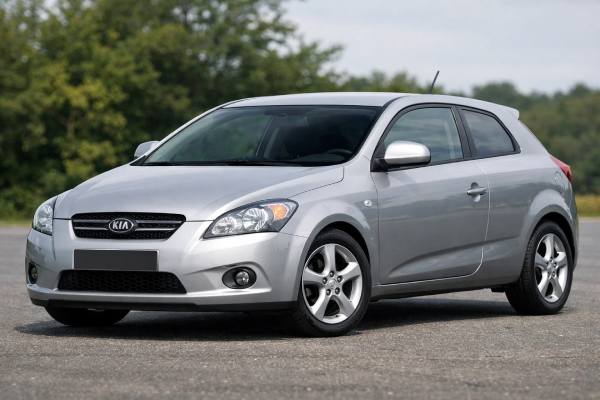
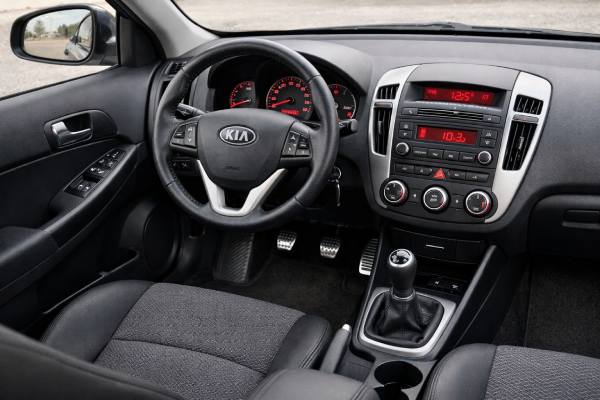
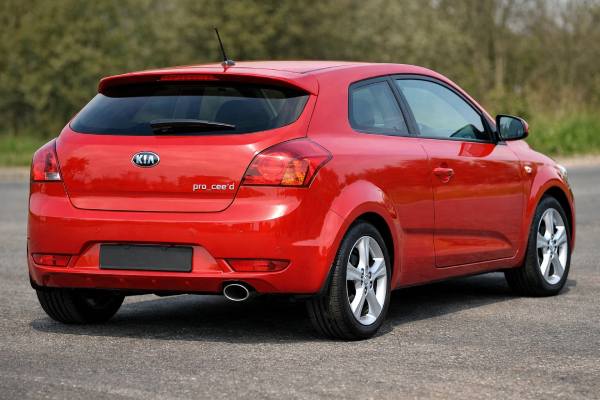
The 2007–2009 Kia Pro Cee’d (ED) with the 1.6 CRDi D4FB in 115 hp tune is a practical “torque-first” hatchback. It’s built around a compact common-rail diesel that feels stronger than its horsepower figure suggests, especially in everyday mid-range driving. For owners, the appeal is straightforward: solid interior space for the footprint, a stable motorway gait, and efficiency that can be excellent when the car is used as intended—longer trips with steady heat in the exhaust system.
The key ownership theme is condition and usage pattern. These engines handle mileage well when serviced on time with the right low-ash oil (especially on diesel particulate filter-equipped cars), but repeated short trips can accelerate soot and EGR (exhaust gas recirculation) buildup. Buy well, maintain it correctly, and it can be a durable, low-cost commuter.
What to Know
- Strong mid-range pull makes it easy to drive in traffic and on grades, even with passengers.
- Highway fuel economy is a real advantage if you do frequent longer trips at steady speeds.
- Stable chassis and predictable braking make it a relaxed daily car, not a “nervous” hatchback.
- DPF/CPF-equipped cars need correct low-ash oil and more frequent oil changes than some owners expect.
- Plan on engine oil and filter service every 15,000 km (10,000 mi) or 12 months on DPF/CPF setups.
Section overview
- Kia Pro Cee’d ED 115 CRDi ownership brief
- Kia Pro Cee’d ED 115 CRDi technical specs
- Kia Pro Cee’d ED 115 options and crash protection
- Common faults and service campaigns
- Care schedule and buyer checks
- Road feel and real economy
- How it stacks up vs competitors
Kia Pro Cee’d ED 115 CRDi ownership brief
This Pro Cee’d sits in a sweet spot for drivers who want a compact hatch with genuine diesel strengths: low-end torque, calm cruising, and strong range per tank. The D4FB 1.6 CRDi is a common-rail diesel that typically delivers its best character between roughly 1,800 and 3,000 rpm, so you don’t need to rev it hard to make progress. In 115 hp form, it’s notably more flexible than the lower-output versions, and it’s often paired with a 6-speed manual that helps keep motorway revs down.
From an engineering point of view, ownership success is mostly about controlling heat and soot. Diesel emissions hardware works best when the engine reaches full temperature and stays there. If your use is mostly short, stop-start trips, the EGR system and intake can accumulate deposits faster, and DPF/CPF-equipped cars may struggle to complete regeneration events. That doesn’t mean the car is “bad for city driving,” but it does mean you must be stricter about oil quality, service intervals, and giving the car regular longer drives.
The chassis is the other quiet strength. The ED platform is generally stable at speed, and the Pro Cee’d body style gives it a slightly sportier feel than some five-door hatches without becoming harsh. As the car ages, comfort and steering precision depend heavily on front suspension bushings, drop links, and alignment—items that are affordable but easy to neglect.
Who this car suits best:
- Commuters with regular highway time and predictable weekly mileage.
- Owners who value fuel efficiency and range more than outright acceleration.
- Buyers willing to keep service records and use the correct specifications.
Who should think twice:
- Drivers who do only short trips in cold weather without occasional longer runs.
- Buyers who cannot verify oil type and interval history on DPF/CPF cars.
Kia Pro Cee’d ED 115 CRDi technical specs
Below are practical, owner-facing specifications for the 2007–2009 Pro Cee’d (ED) with the D4FB 1.6 CRDi ~115 hp diesel. Some values vary by market, emissions equipment, and wheel/trim package; where that’s common, a typical range is noted.
Powertrain and efficiency
| Item | Spec |
|---|---|
| Engine code | D4FB |
| Engine layout | Inline-4, DOHC (common-rail diesel) |
| Displacement | 1.6 L (1,582 cc) |
| Induction | Turbocharged (VGT on many 115 hp variants) |
| Fuel system | Common-rail direct injection |
| Max power | 115 hp (85 kW) @ ~4,000 rpm |
| Max torque | ~255 Nm (188 lb-ft) @ ~1,900–2,750 rpm |
| Timing drive | Chain (varies by exact build; verify by VIN/service data) |
| Rated efficiency (typical) | ~4.7–5.4 L/100 km (50–43 mpg US / 60–52 mpg UK) |
| Real-world highway @ 120 km/h (75 mph) | ~5.5–6.2 L/100 km (43–38 mpg US / 51–46 mpg UK) |
Transmission and driveline
| Item | Spec |
|---|---|
| Drive type | FWD |
| Transmission (typical) | 6-speed manual (some markets also offered 5-speed manual on lower outputs) |
| Differential | Open |
Chassis and dimensions
| Item | Spec |
|---|---|
| Front suspension | MacPherson strut |
| Rear suspension | Multi-link |
| Steering | Rack and pinion (electric assist on many ED builds) |
| Length / Width / Height | 4,235 / 1,790 / 1,480 mm (166.7 / 70.5 / 58.3 in) |
| Wheelbase | 2,650 mm (104.3 in) |
| Ground clearance (typical) | ~140–155 mm (5.5–6.1 in), varies by tyres/springs |
| Kerb weight (typical) | ~1,320–1,390 kg (2,910–3,064 lb), trim-dependent |
| Fuel tank | 53 L (14.0 US gal / 11.7 UK gal) |
| Most common tyre sizes | 195/65 R15 or 205/55 R16 (market/trim dependent) |
Performance and capability (typical)
| Item | Spec |
|---|---|
| 0–100 km/h (0–62 mph) | ~11.2–12.0 s (gearbox and wheels matter) |
| Top speed | ~180–190 km/h (112–118 mph) |
| Braking 100–0 km/h | ~38–41 m (tyres and brake condition dominate) |
| Towing capacity (typical) | ~1,300–1,500 kg (2,866–3,307 lb) braked / ~600 kg (1,323 lb) unbraked |
| Payload (typical) | ~450–550 kg (992–1,213 lb), trim dependent |
Fluids and service capacities (from owner documentation)
| Item | Spec |
|---|---|
| Engine oil (with CPF/DPF) | 5.9 L (6.2 US qt) |
| Engine oil (without CPF/DPF) | 5.3 L (5.6 US qt) |
| Engine oil grade (typical guidance) | 5W-30 (DPF/CPF: ACEA C3 preferred) |
| Engine coolant | ~6.2–6.3 L (~6.6 US qt), 50/50 mix typical |
| Manual transaxle fluid | 2.0 L (2.1 US qt), 75W-85 GL-4 |
| Brake fluid | ~0.7–0.8 L (~0.7–0.8 US qt) |
| A/C refrigerant type | R-134a (charge amount: verify under-hood label) |
| Key torque spec | Wheel lug nuts: 88–107 Nm (65–79 lb-ft) |
Safety and driver assistance (period-correct)
| Item | Spec |
|---|---|
| Euro NCAP (publication year 2007) | Adult occupant: 5 stars (score 34); Child occupant: 4 stars (score 37); Pedestrian: 2 stars (score 11) |
| Airbags (typical) | Front + side + curtain (varies by trim/market) |
| Core stability systems (typical) | ABS with EBD; ESC often standard or widely available (market dependent) |
| ADAS | Pre-2010 era: typically no AEB/ACC/lane assist |
Kia Pro Cee’d ED 115 options and crash protection
Trims and options vary by country, but the “shape” of the lineup is usually similar. The 115 hp diesel often sits above base diesels because it’s the more flexible motorway engine, and it’s commonly bundled with a 6-speed gearbox and stronger equipment lists. When shopping, it helps to focus on functional differences rather than badge names, because “LX/EX/SR” (or similar) can mean different things depending on market.
Typical trim walk-through (what changes in real life):
- Entry trims: smaller wheels (often 15-inch), simpler audio, fewer convenience features, and sometimes fewer airbags depending on market and year.
- Mid trims: climate control may appear, upgraded upholstery, 16-inch wheels, cruise control more common, and stability control more likely to be standard.
- Sport-oriented trims: firmer tyre packages, body styling, and sometimes different seat fabric/leather options. On a diesel, the “sport” value is more about feel than speed.
Quick identifiers to check in photos or a driveway:
- Gear lever pattern: a 6-speed manual is a good sign you’re looking at a higher-output diesel setup.
- ESP/ESC button: if present, it suggests stability control is fitted (not universal on all early builds).
- Curtain airbag tags: often visible on A-pillars or headliner edges.
Safety ratings and what they mean here:
The Cee’d family scored well for its era, with strong adult protection in frontal and side impacts. That said, 2007-era tests reflect the standards of the time. You’ll generally have a solid passenger cell concept, but you won’t have the active crash-avoidance tech that newer cars rely on.
Child-seat usability (practical notes):
- Look for ISOFIX/LATCH anchor points in the rear outboard seats.
- Confirm you have the correct top tether arrangement if your region uses them.
- If the front passenger airbag can be disabled, verify the switch and indicator work correctly—this matters for rear-facing seats in the front.
Driver assistance reality check (important):
Don’t buy this expecting modern ADAS. No matter how “high spec” the trim looks, most examples won’t have AEB, adaptive cruise, or lane-centering. Instead, your safety advantages come from fundamentals: stable handling, predictable braking, and occupant protection equipment.
After repairs, remember that even basic systems (ABS/ESC) can require correct steering angle and yaw sensor calibration. If you see warning lights after an alignment or battery replacement, treat it as a diagnostic priority, not a cosmetic annoyance.
Common faults and service campaigns
The D4FB 1.6 CRDi family can be long-lived, but it rewards owners who fix small issues early. Below are common patterns grouped by how often they appear and how expensive they usually become.
Common and usually manageable
- EGR and intake soot buildup (low–medium cost):
Symptoms: hesitation, uneven idle, reduced fuel economy, occasional smoke.
Likely cause: short-trip driving and high soot load in the EGR/intake tract.
Remedy: cleaning or replacement of the EGR valve/solenoid components; intake cleaning when deposits are heavy; confirm boost leaks aren’t contributing. - Boost leaks and vacuum control issues (low–medium cost):
Symptoms: weak pull, overboost/underboost codes, “limp mode.”
Likely cause: split intercooler hoses, tired clamps, vacuum hose cracks, sticky turbo actuator control.
Remedy: smoke test for leaks; replace hoses; verify turbo actuator movement and vacuum supply. - Glow plug system aging (low cost, can become medium):
Symptoms: hard cold starts, rough first seconds, glow light behavior changes.
Likely cause: glow plugs or relay/module wear.
Remedy: test each plug’s resistance/current draw; replace as a set if multiple are weak.
Occasional but worth budgeting for
- Injector sealing washer “blow-by” (medium cost if early, high if ignored):
Symptoms: chuffing sound, diesel smell, tar-like deposits around injectors, misfire at idle.
Likely cause: failed copper sealing washer or clamp load loss.
Remedy: reseal promptly, clean seat correctly, and confirm injector clamp torque procedure. - Dual-mass flywheel (DMF) and clutch wear (medium–high):
Symptoms: vibration at idle, rattling with clutch engagement, shudder on take-off.
Likely cause: high torque at low rpm, city driving, age.
Remedy: clutch + DMF together is often the durable repair; inspect gearbox input shaft seal while there.
More serious (often linked to usage pattern)
- DPF/CPF loading issues (medium–high):
Symptoms: rising oil level (fuel dilution), frequent regenerations, warning lights, reduced power.
Likely cause: repeated short trips, incorrect oil, failing sensors (pressure/temp), or intake/EGR faults increasing soot.
Remedy: diagnose root cause first; forced regeneration only after confirming sensors and boost/EGR are healthy.
Recalls, TSBs, and verification
Campaigns vary by country and VIN range. For any candidate car:
- Request the vehicle’s VIN and check for open recalls in your region.
- Ask for dealer history printouts where possible.
- Confirm any software updates were completed if the car has persistent drivability faults.
Care schedule and buyer checks
A strong maintenance routine is the difference between a happy diesel and a frustrating one. Use the schedule below as a practical baseline, then match it to your VIN, emissions equipment, and driving pattern.
Practical maintenance schedule (distance/time)
- Engine oil and filter:
- DPF/CPF-equipped: every 15,000 km (10,000 mi) or 12 months
- Without DPF/CPF: every 20,000 km (12,500 mi) or 12 months
Use the correct low-ash oil specification where required; this is non-negotiable for DPF longevity. - Air filter (engine): inspect every service; typically replace around 40,000 km (25,000 mi) or sooner in dusty areas.
- Cabin filter: often yearly, or every 15,000–20,000 km if you drive in cities/pollen-heavy regions.
- Fuel filter (cartridge): typically 30,000 km (20,000 mi) intervals. A restricted filter can mimic injector problems.
- Coolant: first change around 100,000 km (62,000 mi) or 60 months, then every 40,000 km (25,000 mi) or 24 months after that.
- Brake fluid: every 24 months is a sensible rule even if mileage is low.
- Manual transaxle fluid: many cars treat it as long-life, but a change around 100,000 km (62,000 mi) can improve shift quality and longevity.
- Serpentine/aux belt and hoses: inspect at each service; replace on cracking, glazing, or noisy pulleys.
- Battery (12 V): expect 4–6 years typical life; test before winter.
Buyer’s inspection checklist (diesel-specific)
- Cold start: should fire cleanly without excessive cranking; listen for injector “chuffing.”
- Idle quality: stable idle with minimal vibration; check for warning lights.
- Boost behavior: strong, smooth pull from ~2,000 rpm; no surging or sudden cut in power.
- DPF/CPF clues: ask how the car is driven; frequent short trips increase risk. Look for signs of frequent regenerations (fan running after shutdown, higher idle, fuel smell).
- Clutch/DMF: test for shudder or rattling; check bite point and smooth engagement.
- Service records: confirm oil grade/spec, not just “oil changed.”
Durability outlook
With correct oil, timely filters, and a driving pattern that allows full warm-up, the 1.6 CRDi can age gracefully. The most expensive outcomes usually come from ignoring early soot, boost, and injector seal symptoms.
Road feel and real economy
In daily driving, the 115 hp D4FB Pro Cee’d feels defined by torque rather than top-end power. It’s the kind of engine that encourages short shifting: you let it lean on the mid-range, ride the wave, and use the gearbox to keep it in a comfortable band. With a 6-speed manual, motorway cruising is relaxed for the class, and the car feels more “grown up” than its size suggests.
Ride, handling, and NVH
- Ride quality: generally compliant on 15–16 inch tyres, with a firmer edge on larger wheel packages. If the ride feels harsh or noisy, suspect tired dampers, worn top mounts, or incorrect tyre pressures.
- Steering feel: light to moderate effort, predictable response. If it wanders on the motorway, alignment and front bushings are common culprits.
- Cabin noise: diesel clatter is noticeable at idle and low speeds, then settles at cruise. Wind noise tends to rise more from door seals and mirrors than from the engine.
Powertrain character
- Throttle response: best once warmed up; cold engines often feel flat for the first minutes.
- Low-rpm behavior: plenty of usable pull, but avoid lugging the engine at very low rpm in high gears—this can stress the DMF and increase soot.
- Gearbox behavior: a healthy manual shift should feel precise. Notchy shifting can improve with correct fluid and linkage condition.
Real-world efficiency (what owners typically see)
- City-heavy use: often 6.5–7.8 L/100 km (36–30 mpg US / 43–36 mpg UK) depending on traffic and temperature.
- Highway 100–120 km/h (60–75 mph): often 5.5–6.2 L/100 km (43–38 mpg US / 51–46 mpg UK) with stable speeds.
- Mixed driving: commonly lands around 5.8–6.8 L/100 km (41–35 mpg US / 49–42 mpg UK).
Cold weather matters. Short trips with a cold engine can easily add 10–20% consumption, and they increase soot load. If you want the diesel advantage, give it at least one longer run per week where the engine reaches full operating temperature.
How it stacks up vs competitors
Against other late-2000s compact diesels, the Pro Cee’d 1.6 CRDi 115 sits in the “sensible and efficient” lane rather than the sporty one. Its strongest argument is the balance of usable torque, stable road manners, and straightforward maintenance—provided the car hasn’t been abused by short-trip use and missed services.
Where it wins
- Everyday flexibility: the torque-heavy tuning makes it easy to drive without constant downshifts. In real traffic, it often feels stronger than some similarly rated diesels.
- Highway value: if your routine includes long commutes, it can deliver excellent range from a modest tank.
- Parts and servicing practicality: consumables and common suspension/brake work are typically affordable, and many independent shops understand this powertrain family.
Where rivals can be better
- Refinement: some competitors offer quieter cabins and smoother diesel sound insulation at idle. If you’re sensitive to NVH, test drive carefully.
- Emissions hardware complexity: any DPF-era diesel can become costly if used incorrectly, but some rival systems are more tolerant of short-trip life or have more robust regeneration strategies.
- Performance feel: certain competitors provide quicker acceleration in the same era, especially those with higher-output 2.0 diesels or later-generation 1.6 units.
Choosing the right version
If you want this generation, the 115 hp diesel is generally the “sweet spot” because it pairs decent pace with efficient gearing. The smartest buy is rarely the cheapest example—it’s the one with:
- Evidence of correct oil specification and sensible intervals,
- A driving history that includes longer trips,
- No warning lights, no boost irregularities, and clean injector seating.
If you can’t verify that, a simpler petrol version may be the safer ownership bet, even if fuel economy is worse on paper.
References
- Kia Recalls | Kia Europe 2025 (Recall Database)
- Car Safety Recalls | What They Are & What To Do | Kia UK 2025 (Recall Database)
- Kia Car Owners Manual | Kia UK 2025 (Owner’s Manual)
- euroncap_kia_ceed_2007_5stars.pdf 2007 (Safety Rating)
- cee’d product Guide 2007 (Product Guide)
Disclaimer
This article is for informational purposes only and is not a substitute for professional diagnosis, inspection, or repair. Specifications, torque values, service intervals, fluids, and procedures can vary by VIN, market, model year, and equipment (including emissions hardware). Always verify details using the official owner’s manual and service documentation for your specific vehicle.
If you found this guide useful, please consider sharing it on Facebook, X (Twitter), or your favorite forum to help others find reliable ownership information.