
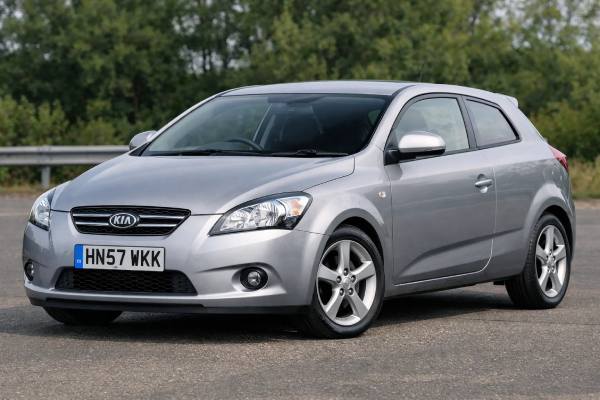
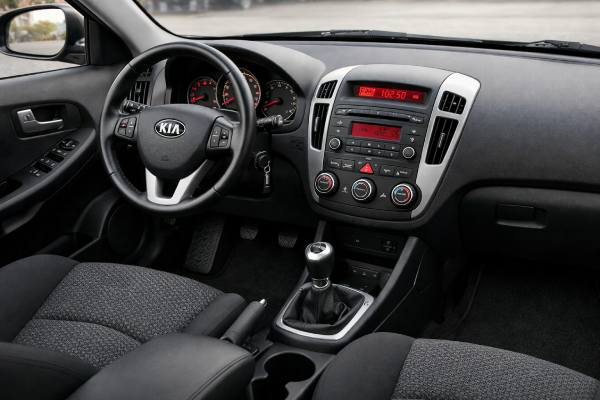
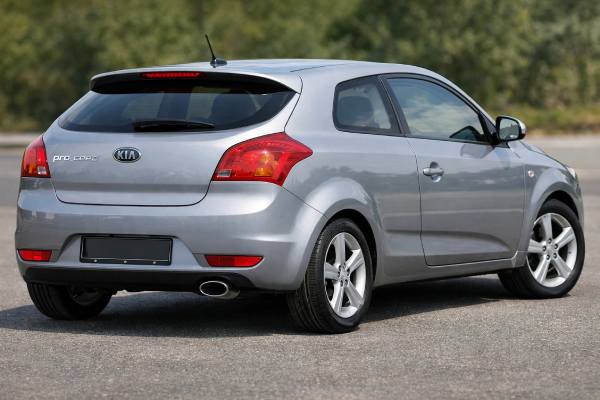
The 2007–2009 Kia Pro Cee’d (ED) with the 1.6-litre G4FC is a straightforward, naturally aspirated hotchback that rewards owners who value simple engineering and predictable running costs. The DOHC, chain-driven “Gamma” petrol engine uses multi-point injection (not direct injection), which keeps fueling and intake maintenance uncomplicated compared with later DI designs. With about 122 hp, it is not a hot hatch, but it has enough pace for daily motorway work and overtakes without feeling strained. Where this model tends to shine is balance: stable chassis tuning, practical cabin packaging for a 3-door, and a safety baseline that was strong for its era. The key to a good ownership experience is condition. Service history, cooling-system health, and suspension wear matter more than badge or trim.
Owner Snapshot
- Strong everyday performance without turbo complexity, and smooth power delivery across the rev range.
- Multi-link rear suspension gives composed ride and tidy handling for a compact 3-door.
- Simple MPI petrol layout keeps intake and fueling service more predictable than DI engines.
- Watch for age-related wear: coils, sensors, and suspension bushes can add up if neglected.
- Plan oil service every 15,000 km (9,000 mi) or 12 months (shorter in harsh use).
Section overview
- Kia Pro Cee’d ED 1.6 explained
- Kia Pro Cee’d ED 1.6 key specs
- Kia Pro Cee’d ED grades and safety kit
- Common problems and service bulletins
- Maintenance plan and buyer checks
- Road manners and real economy
- Pro Cee’d ED against key rivals
Kia Pro Cee’d ED 1.6 explained
Think of this Pro Cee’d as a “clean-sheet Europe car” from Kia’s mid-2000s push: tight body control, a properly damped chassis, and an engine choice that avoids the long-term surprises common to early small turbos. The 1.6 G4FC is a naturally aspirated, chain-driven DOHC unit with variable valve timing (CVVT). In practice, that means you get linear throttle response, consistent cold starts, and fewer heat-stress failure modes than boosted engines of the same era.
The Pro Cee’d body (3-door) is more than styling. It is slightly longer and lower than the 5-door Cee’d in many markets, which subtly changes the feel: a bit more planted at speed, and often a little noisier over coarse road surfaces because of the larger door openings and longer glass. The trade-off is access. Front access is easy; rear access depends on how well the seat mechanisms still work. A tired seat recline cable or a sticky slide rail can turn daily use into a nuisance, so it is worth checking in person.
From an ownership standpoint, the “good” versions are rarely defined by one option package. Instead, the best cars are those with:
- A complete maintenance record (oil services on time, coolant changes documented).
- Cooling system integrity (no recurring top-ups, stable operating temperature).
- Clean steering and suspension behavior (no knocks, no uneven tyre wear).
When this model is looked after, it tends to be a calm long-distance companion. Its biggest advantage today is that it delivers modern-enough safety structure and road manners without asking you to manage complicated electronics or high-cost powertrain parts.
Kia Pro Cee’d ED 1.6 key specs
Below are the core technical figures that most affect maintenance, parts compatibility, and real-world use. (Some figures vary slightly by market, wheel size, and transmission choice, so treat them as a baseline and verify by VIN when ordering parts.)
Powertrain and efficiency
| Item | Specification |
|---|---|
| Engine code | G4FC |
| Layout | Inline-4, DOHC |
| Valvetrain | 4 valves per cylinder, CVVT (variable valve timing) |
| Bore × stroke | 77.0 × 85.44 mm (3.03 × 3.36 in) |
| Displacement | 1.6 L (1,591 cc) |
| Induction | Naturally aspirated |
| Fuel system | Multi-point injection (MPI) |
| Compression ratio | 10.5:1 |
| Max power | 122 hp (91.9 kW) @ ~6,300 rpm |
| Max torque | 154 Nm (114 lb-ft) @ ~4,200 rpm |
| Timing drive | Chain |
| Official fuel use (manual) | 7.8 / 5.2 / 6.1 L/100 km city/highway/combined (38.6 mpg US / 46.3 mpg UK combined) |
| Real-world highway @ 120 km/h | Commonly ~6.8–7.6 L/100 km depending on tyres, wind, and load |
Transmission and driveline
| Item | Specification |
|---|---|
| Drive type | FWD |
| Manual | 5-speed (common on early cars) |
| Automatic | 4-speed (where fitted) |
| Differential | Open |
Most owners prefer the manual for feel and running costs. The 4-speed automatic is durable when serviced, but it blunts response and usually uses more fuel in mixed driving.
Chassis, dimensions, and capacities
| Item | Specification |
|---|---|
| Suspension (front/rear) | MacPherson strut / multi-link |
| Steering | Electric power steering |
| Front brakes | Ventilated discs (family spec commonly ~280 mm / 11.0 in) |
| Rear brakes | Discs (family spec commonly ~262 mm / 10.3 in) |
| Common tyre sizes | 195/65 R15, 205/55 R16, 225/45 R17 (market and trim dependent) |
| Length / width / height | 4,250 / 1,790 / 1,450 mm (167.3 / 70.5 / 57.1 in) |
| Wheelbase | 2,650 mm (104.3 in) |
| Turning circle | 5.17 m (17.0 ft) (larger with 17 in wheels) |
| Kerb weight (typical range) | 1,257–1,338 kg (2,771–2,950 lb) |
| GVWR (typical) | ~1,750 kg (3,858 lb) |
| Fuel tank | 53 L (14.0 US gal / 11.7 UK gal) |
| Cargo volume | 340 / 1,210 L (12.0 / 42.7 ft³) seats up / seats folded |
Performance and capability
| Item | Specification |
|---|---|
| 0–100 km/h (0–62 mph) | ~10.8 s (manual) |
| Top speed | ~192 km/h (119 mph) |
Braking distance and towing limits vary by market homologation, wheel and tyre package, and whether the car is approved for towing. If towing matters, confirm the braked and unbraked limits from your market’s type-approval plate or handbook supplement before purchase.
Fluids and service capacities
| Item | Specification |
|---|---|
| Engine oil | API SM (or later), viscosity per climate (often 5W-30); 3.3 L (3.5 US qt) with filter |
| Coolant | Ethylene glycol-based; 5.3 L (5.6 US qt) |
| Manual transmission oil | 1.8 L (1.9 US qt) |
| Automatic transmission fluid | 7.0 L (7.4 US qt) |
| Brake fluid | 0.7 L (0.74 US qt) |
| Washer fluid | 4.5 L (4.8 US qt) |
| A/C refrigerant | R134a; 550 g (19.4 oz) |
| A/C compressor oil | ND-OIL8; 120 mL (4.1 fl oz) |
| Key torque specs | Value |
|---|---|
| Oil drain plug | 30–40 Nm (22–30 lb-ft) |
| Spark plugs | 20–30 Nm (15–22 lb-ft) |
| Wheel nuts | 90–110 Nm (66–81 lb-ft) |
Kia Pro Cee’d ED grades and safety kit
Trim names differ by country, but the practical differences usually fall into a few buckets: wheels and tyres, cabin comfort features, audio and infotainment level, and whether stability control was standard or optional. For buyers, the most important “options” are the ones that change safety and running costs.
Trims and options that matter
Common identifiers you can check quickly during a viewing:
- Wheel size: 15-inch setups ride softer and are cheaper to keep in tyres; 17-inch wheels look sharper but can add road noise and are less forgiving over potholes.
- Climate control vs manual A/C: automatic systems are comfortable, but blend-door actuators and control panels add complexity as the car ages.
- Heated seats and mirrors: useful in winter markets and often a sign of a better-equipped car.
- Parking sensors: helpful on the 3-door because rear visibility depends heavily on the mirror setup and rear glass tint.
If two cars are equal in condition, a mid-trim with smaller wheels is often the sweet spot: quieter, cheaper consumables, and less likely to have been “modified” by past owners.
Safety ratings and what they mean
For its era, the Cee’d platform scored strongly in Euro NCAP testing. The 2007 result shows:
- Adult occupant: 5 stars, score 34
- Child occupant: 4 stars, score 37
- Pedestrian: 2 stars, score 11
These are not directly comparable with today’s percentage-based protocols, but they confirm a solid passenger cell and effective restraint design for the time. Pedestrian performance was a known weak point across many mid-2000s compacts.
Safety systems and driver assistance
On 2007–2009 cars, “driver assistance” mostly means foundational stability and braking systems rather than modern camera and radar features:
- ABS with EBD (electronic brakeforce distribution) is common.
- ESC (stability control) may be standard on higher trims and optional on lower ones, depending on market.
- Airbags typically include front airbags and side protection; verify curtain airbags specifically, as equipment can vary.
There is generally no factory AEB, adaptive cruise, or lane-keep assist on this generation. That is a downside compared with newer cars, but it also reduces calibration complexity after windshield replacement or front-end repair. For family use, check ISOFIX/LATCH marking clarity and confirm the passenger airbag disable function works if you need a rear-facing child seat up front.
Common problems and service bulletins
Age and maintenance history drive most issues on the Pro Cee’d ED. Below is a practical map by prevalence and cost tier, aimed at helping you triage a car quickly.
Common and usually low-cost
- Ignition coils and plugs (common, low to medium cost)
Symptoms: misfire under load, rough idle, flashing engine light.
Likely cause: coil aging or moisture intrusion; worn plugs accelerate coil stress.
Remedy: replace coils as needed (often best in pairs or full set on high-mileage cars), fit correct plugs and torque properly. - Crank or cam position sensors (common, low to medium)
Symptoms: intermittent stalling, long crank, random no-start that “fixes itself.”
Remedy: sensor replacement; inspect wiring near heat sources. - PCV valve and vacuum leaks (common, low)
Symptoms: unstable idle, oil smell, increased oil mist in intake.
Remedy: replace PCV valve, check hoses, and inspect valve cover gasket seepage.
Occasional and medium-cost
- Cooling system aging (occasional, medium)
Symptoms: slow coolant loss, sweet smell, temperature creep in traffic.
Likely causes: radiator end-tank seepage, thermostat sticking, tired hose clamps.
Remedy: pressure test, replace weak components proactively, refill with correct coolant mix. - Electric power steering knock or dead spot (occasional, medium)
Symptoms: clunk over small bumps, light “click” in the column, vague on-center feel.
Remedy: diagnose the steering column and intermediate couplings before assuming rack failure. - Suspension wear (occasional, medium)
Symptoms: front-end clunks, steering vibration, uneven tyre wear.
Likely causes: anti-roll bar links, lower control arm bushes, worn dampers.
Remedy: replace in pairs and align; many “handling” complaints are simply worn rubber.
Rare but higher-cost
- Timing chain stretch (rare, high if ignored)
Symptoms: rattle on cold start that persists, timing correlation faults, poor running.
Remedy: confirm with diagnostic data and mechanical inspection; replace chain, guides, and tensioner if out of spec. Chain systems are durable, but not immortal—especially with neglected oil service.
Recalls, TSBs, and how to verify
Rather than relying on memory for exact campaigns (which vary by market), use a VIN-based recall check and request dealer printouts showing completion. This is also where you catch “quiet” service actions such as updated switches, wiring repairs, or airbag-related campaigns. Start with official channels and confirm by VIN before purchase.
Maintenance plan and buyer checks
A simple maintenance rhythm is the best way to keep the 1.6 G4FC smooth and inexpensive. The schedule below blends typical owner-manual intervals with “best practice” for older engines that see short trips.
Practical maintenance schedule
- Engine oil and filter: every 15,000 km (9,000 mi) or 12 months; consider 7,500–10,000 km if most driving is short trips or cold starts. Use the correct API grade and viscosity for your climate.
- Engine air filter: inspect at each service; replace about every 30,000 km (or sooner in dusty areas).
- Cabin filter: yearly is realistic if you want good HVAC airflow.
- Spark plugs: replace by interval and condition; always torque to spec to protect the threads.
- Coolant: refresh on schedule and whenever components are replaced; use the specified ethylene-glycol coolant and bleed properly.
- Brake fluid: every 2 years is a sensible baseline, especially in humid climates.
- Manual gearbox oil: change periodically (for example every 60,000–100,000 km) if you want long synchronizer life; use the correct fill quantity.
- Automatic transmission fluid: service matters more than mileage bravado—fluid condition is a stronger predictor of shift quality than odometer readings.
- Tyres and alignment: rotate if sizes allow, and align when you fit new tyres or replace suspension parts.
Buyer’s inspection checklist
- Cold start test: listen for chain noise beyond the first second, and confirm stable idle.
- Cooling integrity: check for dried coolant residue, wet hose joints, and heater performance.
- Steering and suspension: drive over small bumps at low speed; clunks often reveal worn links or steering couplers.
- Transmission behavior: manual should shift cleanly without second-gear crunch; automatic should not flare or slam into gear.
- Brake feel: consistent pedal, no steering pull, and no vibration under moderate braking.
- Electrical basics: windows, locks, seat slide, mirrors, and A/C performance. The 3-door’s long doors make window regulators work harder over time.
Long-term durability outlook
With timely oil service, coolant care, and suspension refreshes as needed, the Pro Cee’d ED 1.6 ages well. The cars that become “expensive” are the ones with deferred basics: old fluids, tired cooling parts, and mismatched tyres hiding alignment problems.
Road manners and real economy
The Pro Cee’d ED’s driving character is defined more by chassis balance than raw power. The 1.6 engine feels most energetic in the mid-range and stays smooth as it approaches the top of the rev band. You will not get the punch of a turbocharged modern 1.4, but you also avoid turbo lag, heat soak, and the extra plumbing that often drives repair bills on older forced-induction cars.
Ride, handling, and NVH
- Ride: On 15- or 16-inch tyres, it is composed over broken pavement and does a good job controlling secondary bounce. On 17-inch wheels, impacts sharpen and road noise rises—especially as tyres age.
- Handling: The multi-link rear helps the car track cleanly through long bends, with predictable lift-off behavior. It is not “playful,” but it is confidence-inspiring.
- Steering: Electric assistance is light in town and generally stable on the motorway. If the steering feels vague or knocks over small bumps, suspect wear rather than “how the car is.”
- Cabin noise: Expect more wind and tyre noise than a new compact. Seals and door alignment matter on the 3-door; small changes can make a big difference at speed.
Performance metrics that shape expectations
For the 1.6 manual, published figures around 10.8 seconds 0–100 km/h and 192 km/h top speed set the tone: brisk enough for modern traffic, but not fast. In real life, passing performance depends heavily on downshifting; the engine prefers revs over lugging.
Fuel economy in daily use
Official combined fuel use for the 1.6 manual is commonly listed around 6.1 L/100 km (about 38.6 mpg US / 46.3 mpg UK). Many owners see higher numbers in dense city driving and colder months, where warm-up time dominates. On steady motorway runs, economy often improves—until speed climbs above ~120 km/h, where aero drag rises quickly for a compact hatch. If your commute is mostly short trips, focus on maintenance (oil quality, correct tyre pressures, clean filters) because small inefficiencies show up immediately in consumption.
Pro Cee’d ED against key rivals
When you cross-shop a 2007–2009 Pro Cee’d 1.6, you are usually looking at mainstream European compacts with similar power: Ford Focus 1.6, Volkswagen Golf 1.6, Opel or Vauxhall Astra 1.6, Renault Mégane 1.6, and Toyota Auris 1.6. The Kia’s value depends on what you prioritize.
Where the Pro Cee’d tends to win
- Mechanical simplicity for the era: Naturally aspirated MPI petrol and a conventional driveline keep long-term maintenance more predictable than early small turbos or complex direct injection systems.
- Chassis confidence: The platform’s stability and multi-link rear suspension give a composed feel that can match or beat some rivals on rough roads.
- Safety structure credibility: A strong Euro NCAP result for the platform helps it stand out against older compacts that scored lower under similar-era tests.
Where rivals can be better
- Cabin refinement: A Golf of the same era often feels quieter and more solid in switchgear, though repair costs can be higher.
- Steering feel: A Focus typically offers more feedback and better “fun” factor, especially with fresh suspension components.
- Fuel economy edge: Some rivals, particularly with taller gearing, can beat the Kia on fast motorway runs—though the gap is rarely huge with comparable tyres and condition.
How to choose smartly
If you want the best chance of low-stress ownership, choose the car with the cleanest history and the least deferred maintenance, even if it is not the “best” badge. For the Pro Cee’d specifically, prioritize:
- Evidence of consistent oil servicing.
- Cooling-system stability (no repeat overheating stories).
- Straight steering with even tyre wear (a quick proxy for suspension health).
If those boxes are ticked, the Pro Cee’d ED 1.6 is often one of the more rational, lower-drama picks in its used-class set—especially if you do your due diligence on recalls by VIN.
References
- euroncap_kia_ceed_2007_5stars.pdf 2007 (Safety Rating)
- Check if a vehicle, part or accessory has been recalled 2024 (Recall Database)
- MOTOR / SNAGA 2012 (Technical Data)
- ED Swedish 9.qxp 2009 (Owner’s Manual)
- cee’d product Guide 2007 (Product Guide)
Disclaimer
This article is for informational purposes only and is not a substitute for professional diagnosis, inspection, or repair. Specifications, torque values, service intervals, and procedures can vary by VIN, market, transmission, and equipment. Always verify details using official Kia service information and the documentation specific to your vehicle before ordering parts or performing work.
If you found this guide useful, please consider sharing it on Facebook, X (Twitter), or your favorite forum to help others discover it.