
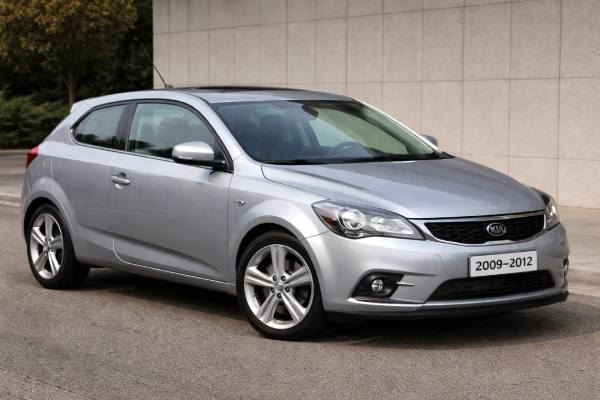
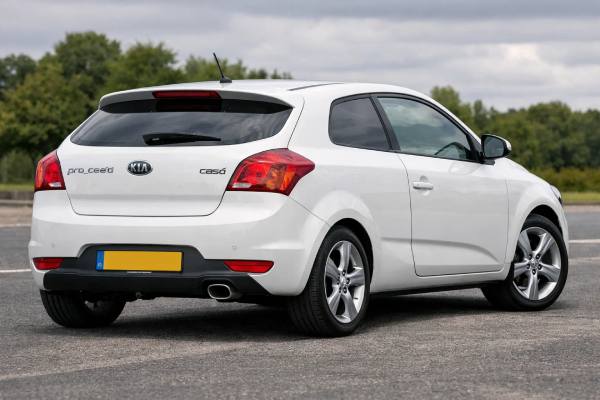
The facelifted Kia Pro Ceed (ED) with the G4FC 1.6-liter petrol is one of those “quietly competent” European-market hatchbacks: simple naturally aspirated power, a well-packaged chassis, and running costs that stay predictable if you keep up with routine service. With 126 hp and a timing chain, it avoids some of the long-term anxiety owners associate with small turbo engines or belt-driven setups. At the same time, it’s not a neglect-tolerant car—oil quality matters, and the valvetrain design can require periodic valve clearance checks as mileage rises.
For buyers today, the appeal is straightforward: solid road manners, good parts availability, and a practical 3-door body that still offers real rear-seat usability. The key to a satisfying ownership experience is choosing the right trim and verifying maintenance and recall status before you commit.
Fast Facts
- Strong everyday drivability with a simple 1.6 NA petrol setup and predictable maintenance needs.
- Stable, confidence-building chassis at highway speeds; good for commuting and longer trips.
- Generally affordable parts and straightforward repairs compared with many modern direct-injection turbos.
- Watch for steering-column clunks, suspension bushing wear, and signs of skipped oil services.
- Plan on engine oil and filter service about every 15,000 km (12 months) in normal use (shorter for harsh driving).
Quick navigation
- Kia Pro Ceed ED facelift in depth
- Kia Pro Ceed ED 1.6 specs and data
- Kia Pro Ceed ED trims, options, and safety
- Common failures and recall checks
- Maintenance plan and ownership costs
- How it drives in real traffic
- How it stacks up to competitors
Kia Pro Ceed ED facelift in depth
The 2009–2012 facelift version of the Pro Ceed (ED) is the “mature” iteration of Kia’s first Europe-focused C-segment hatch. In 3-door form, it blends a sporty silhouette with the same basic underpinnings as the 5-door cee’d, which matters for ownership: suspension parts, brakes, and many service items are common, so long-term parts sourcing tends to be easier than with niche coupes.
With the G4FC 1.6 petrol, you’re looking at a naturally aspirated inline-four designed around everyday usability rather than drama. The power delivery is linear, and the engine is happiest when driven with moderate revs and clean throttle inputs—think smooth rather than aggressive. That character matches the platform well: the Pro Ceed is stable and predictable, and it rewards good tires and correct alignment more than it rewards “performance mods.”
A practical way to think about this model is as a dependable daily driver that can still feel tidy on a back road. The steering and suspension tuning are generally set up to inspire confidence, but age now plays a bigger role than original design intent. Many examples on the market will have wear in bushings, ball joints, and dampers, which can make the car feel loose or noisy even if the engine is healthy.
Ownership satisfaction usually comes down to three things:
- Service history quality: consistent oil changes and documented cooling-system care matter more than the odometer number.
- Chassis condition: worn rear suspension bushings and tired dampers can make an otherwise good car feel “cheap.”
- Correct trim expectations: higher trims may add comfort and appearance items, but they don’t magically change the underlying mechanical package.
If you’re shopping today, aim for the cleanest, best-documented car you can find—especially one that shows evidence of regular oil service, brake fluid changes, and periodic alignment checks. A well-kept Pro Ceed can still be an honest, pleasant car; a neglected one can become a slow drip of small, annoying fixes.
Kia Pro Ceed ED 1.6 specs and data
Below are the most relevant technical figures for the facelifted Pro Ceed (ED) with the G4FC 1.6 petrol (126 hp). Exact values vary by market, gearbox, wheel size, and emissions calibration, so treat these as the baseline you should verify against your VIN and equipment.
Powertrain and efficiency
| Item | Spec |
|---|---|
| Code | G4FC |
| Engine layout and cylinders | Inline-4 (I-4), DOHC, 16-valve (4 valves/cyl) |
| Displacement | 1.6 L (1591 cc) |
| Bore × stroke | 77.0 × 85.4 mm (3.03 × 3.36 in) |
| Induction | Naturally aspirated |
| Fuel system | MPI (multi-point injection) |
| Compression ratio | ~10.5:1 (varies by calibration) |
| Max power | 126 hp (93 kW) @ ~6,300 rpm* |
| Max torque | ~157 Nm (116 lb-ft) @ ~4,200–4,850 rpm* |
| Timing drive | Chain |
| Rated efficiency | ~6.4–7.2 L/100 km (37–33 mpg US / 44–39 mpg UK)** |
| Real-world highway @ 120 km/h (75 mph) | ~7.0–8.0 L/100 km (34–29 mpg US / 40–35 mpg UK) |
*Power/torque peaks can differ slightly by market and emissions version.
**Depends heavily on gearbox and wheel/tyre package.
Transmission and driveline
| Item | Spec |
|---|---|
| Transmission | 5- or 6-speed manual (market-dependent); some markets offered 4-speed automatic |
| Drive type | FWD |
| Differential | Open |
Chassis and dimensions
| Item | Spec |
|---|---|
| Suspension (front/rear) | MacPherson strut / multi-link-type rear (market-dependent details) |
| Steering | Rack-and-pinion, typically electric assist |
| Brakes | Front ventilated disc ~280 mm (11.0 in); rear disc ~262 mm (10.3 in) |
| Wheels and tyres (common) | 205/55 R16 (popular fitment) |
| Ground clearance | ~150 mm (5.9 in) |
| Length / width / height | ~4250 / 1790 / 1450 mm (167.3 / 70.5 / 57.1 in) |
| Wheelbase | ~2650 mm (104.3 in) |
| Turning circle (kerb-to-kerb) | ~10.3–10.8 m (33.8–35.4 ft) |
| Kerb weight | ~1250–1290 kg (2756–2844 lb) |
| GVWR | ~1750 kg (3858 lb) (varies) |
| Fuel tank | ~53 L (14.0 US gal / 11.7 UK gal) |
| Cargo volume | ~340 L (12.0 ft³) seats up; ~1210 L (42.7 ft³) seats down (method varies) |
Performance and capability
| Item | Spec |
|---|---|
| 0–100 km/h (0–62 mph) | ~10.5–11.5 s |
| Top speed | ~190–195 km/h (118–121 mph) |
| Braking 100–0 km/h | typically ~38–42 m (setup dependent) |
| Towing capacity | up to ~1200 kg (2646 lb) braked; ~550 kg (1213 lb) unbraked (market rules apply) |
| Payload | often ~450–500 kg (992–1102 lb) depending on trim |
Fluids and service capacities
| Item | Spec |
|---|---|
| Engine oil | API SJ/SL class equivalents; commonly 5W-20 (some markets allow 5W-30); ~3.3 L (3.5 US qt) |
| Coolant | Phosphate-based ethylene glycol mix (typically 50/50); ~5.5–5.9 L (5.8–6.2 US qt) |
| Manual transmission | GL-4 gear oil; ~1.9–2.0 L (2.0–2.1 US qt) (typical) |
| Automatic (4AT, if equipped) | SP-III type ATF; ~6.8 L (7.2 US qt) (typical total fill) |
| A/C refrigerant | R134a; ~500 ± 25 g (17.6 ± 0.9 oz) (typical) |
| A/C compressor oil | PAG46; ~150 mL (5.1 fl oz) (typical) |
| Key torque specs | Wheel nuts commonly ~88–110 Nm (65–81 lb-ft); verify by wheel/market |
Safety and driver assistance
- Euro NCAP (2007-era protocol for cee’d family): 5-star adult occupant, 4-star child occupant, 2-star pedestrian (VRU). The published result is in points; approximate normalization gives Adult ~92%, Child ~76%, VRU ~31%; Safety Assist was not scored in that protocol.
- ADAS: This generation typically predates widespread AEB/ACC; expect ABS and stability control (ESC) depending on trim/year, not modern camera/radar suites.
Kia Pro Ceed ED trims, options, and safety
Trim naming for the Pro Ceed (ED) varies more than many buyers expect. Depending on country, you may see badges like LX/EX, numeric “levels,” or marketing trims (for example, comfort-focused vs sport-appearance trims). The smartest approach is to identify the car by mechanicals first (engine + gearbox) and then confirm equipment by VIN build data, door-jamb tyre placard, and the original sales invoice if available.
Typical trim differences that matter
Even when the engine is the same, trims can change how the car feels day to day:
- Wheel and tyre packages: 15–16 inch wheels usually ride more comfortably and cost less in tyres; 17s can sharpen turn-in but amplify road noise and pothole harshness.
- Brakes: Most 1.6 models use a strong baseline setup; some higher trims bundle larger wheels and slightly different pad/rotor combinations.
- Cabin comfort: Automatic climate control, heated seats, and better sound insulation tend to show up on mid-to-high trims.
- Lighting: Projector-style lamps or fog lights may be trim-dependent. If a car has aftermarket lamps, inspect beam pattern and wiring quality carefully.
Options and packages to look for
Because these cars are now older, the best “option” is often the one that reduces repair risk:
- ESC (Electronic Stability Control): If it’s not standard in your market/year, prioritize a car that has it. ESC can be the single biggest real-world safety feature after good tyres.
- Cruise control: Helpful if you do highway mileage; also a clue that the car was purchased for calmer, longer-distance use.
- Parking sensors: Nice to have and usually reliable; check for water ingress and intermittent beeping.
Quick identifiers when you inspect
- Wheels and brake rotor size: A fast way to confirm the trim “level” in practice.
- Steering feel at idle: Some cars develop a steering-column clunk; if you hear it, budget for diagnosis and repair.
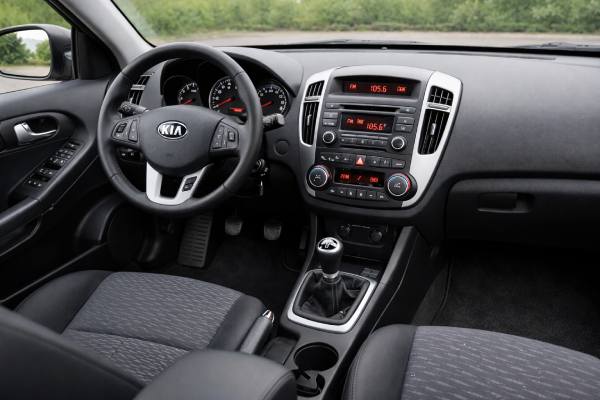
- Cluster and switchgear: Factory heated-seat switches, climate panel type, and steering wheel buttons often match trim packages more reliably than exterior badges.
Safety equipment reality check
Most Pro Ceed (ED) cars rely on a conventional safety stack: airbags, strong passenger cell design for its era, ABS, and (where fitted) ESC and traction control. Don’t expect modern driver assistance such as automatic emergency braking, lane centering, or adaptive cruise. If a seller claims it has those features, verify carefully—aftermarket accessories and misunderstood terminology are common.
Finally, remember that safety is a system: a well-maintained Pro Ceed with fresh tyres, straight suspension, and healthy brakes will often be safer in the real world than a “better trim” car with tired dampers and mixed-budget tyres.
Common failures and recall checks
A well-serviced G4FC Pro Ceed can be durable, but age and maintenance habits create predictable patterns. Below is a practical map of what owners and inspectors most often run into, grouped by prevalence and cost impact.
Common and usually low-to-medium cost
- Front suspension wear (bushings, drop links, strut mounts)
- Symptoms: knocking over bumps, vague steering on-center, uneven tyre wear.
- Likely cause: rubber bushing aging and repeated pothole impacts.
- Remedy: replace worn links/bushings; follow with alignment. Consider replacing dampers in pairs if ride control is poor.
- Brake service issues (slider pins, rear caliper sticking)
- Symptoms: uneven pad wear, dragging brake smell, steering pull under braking.
- Likely cause: corrosion and dried grease on slide pins, torn boots.
- Remedy: clean and lubricate with correct brake grease; replace hardware/boots where needed.
- Ignition coils and plugs (age-driven misfires)
- Symptoms: rough idle, flashing MIL under load, hesitation in humid weather.
- Likely cause: coil breakdown or overdue plugs.
- Remedy: confirm with scan data and misfire counters; replace coils/plugs as required.
Occasional but important to catch early
- Timing chain noise and tensioner wear (usually neglect-related)
- Symptoms: rattle on cold start, timing correlation faults, rough running at idle.
- Likely cause: long oil intervals, low oil level, or poor oil quality leading to tensioner/guide wear.
- Remedy: diagnose promptly—continued driving can escalate repair scope. A quiet engine with clean oil history is the best “fix.”
- Steering column clunk (electric assist coupler/column play)
- Symptoms: clunking during small steering inputs at low speed, especially parking maneuvers.
- Likely cause: wear in column components or coupler.
- Remedy: confirm source before buying parts; repairs are usually straightforward but labor varies.
Less common, higher cost if ignored
- Cooling system leaks (thermostat housing, radiator seams, water pump seep)
- Symptoms: coolant smell, low reservoir level, temperature creep in traffic.
- Likely cause: gasket aging, plastic components fatigue.
- Remedy: pressure test; fix leaks early to avoid overheating damage.
- Corrosion hotspots (depending on climate and storage)
- Symptoms: bubbling paint, flaky underbody components, seized fasteners.
- Likely cause: salted roads and neglected underbody cleaning.
- Remedy: inspect rear arches, sills, subframes, and brake lines; budget realistically if corrosion is present.
Recalls, TSBs, and how to verify
Rather than memorizing recall headlines, use a repeatable process:
- Run an official recall check using the vehicle’s registration number or VIN (depending on your country).
- Ask for dealer history printouts showing campaign completion.
- Match dates and mileage to the car’s service book so you can spot gaps.
For a pre-purchase inspection, request scan results (even a basic OBD report), a cold-start video, and a clear photo set of the underbody. Those three items often reveal more than a short test drive.
Maintenance plan and ownership costs
The Pro Ceed 1.6 rewards routine care. The goal is not “over-servicing,” but consistency—fluids on time, correct specs, and early attention to small noises and leaks before they snowball.
Practical maintenance schedule (typical guidance)
Use distance or time, whichever comes first:
- Engine oil and filter: every 15,000 km / 12 months (consider 7,500–10,000 km for short trips, frequent idling, or very hot/cold climates).
- Engine air filter: inspect every service; commonly replace 30,000–45,000 km depending on dust.
- Cabin filter: typically 15,000–30,000 km or annually if you want strong HVAC airflow.
- Spark plugs: often around 60,000 km on many MPI setups; shorten if you see misfire history.
- Coolant: many owners target 5 years / 100,000–120,000 km; replace sooner if contamination is visible or overheating history exists.
- Brake fluid: every 2 years regardless of mileage.
- Manual gearbox oil: not always listed as a frequent service item, but a refresh around 100,000–150,000 km can improve shift quality.
- Tyre rotation and alignment: rotate 10,000–15,000 km; check alignment yearly or after suspension work.
- 12 V battery: test annually after year 4; many last 4–6 years depending on climate.
Valve clearance and timing chain reality
Some G4FC engines use valvetrain designs that can require periodic valve clearance inspection/adjustment at higher mileage. If you hear persistent ticking that doesn’t match normal injector noise, or if idle quality degrades without clear ignition faults, ask a shop familiar with Kia/Hyundai petrol engines to evaluate clearances.
Timing chains do not have a fixed “replace at X km” interval the way belts do, but they do have wear limits. A good ownership habit is simple: keep oil level correct, avoid extended oil intervals, and treat cold-start rattles as a reason to investigate—not as “normal old car sounds.”
Buyer’s guide checklist
Before purchase, prioritize:
- Evidence of regular oil changes (receipts beat stamps).
- No overheating history and stable coolant level.
- Smooth clutch take-up (manual) and consistent shifts; no grinding into second gear when cold.
- Even tyre wear across the tread and no steering pull under braking.
- Minimal corrosion on subframes, brake lines, and rear suspension mounts.
Cost outlook
Most expenses are predictable: tyres, brakes, suspension refreshes, and fluids. The “expensive” surprises typically come from neglected cooling issues, ignored chain noise, or buying a car with hidden corrosion. Choose condition and history over low price, and the ownership math usually works in your favor.
How it drives in real traffic
In daily use, the facelift Pro Ceed 1.6 feels balanced rather than flashy. The chassis was tuned for European roads, and it shows: straight-line stability is reassuring at motorway speed, and the car doesn’t feel nervous in crosswinds when the suspension is in good condition. The tradeoff is that worn dampers or cheap tyres can quickly dull that “sorted” feel—so how the car drives today tells you a lot about how it has been maintained.
Ride, handling, and NVH
- Ride: On 16-inch tyres, the Pro Ceed generally rides with a firm but controlled motion. Sharp edges (potholes, expansion joints) will be felt, especially on lower-profile 17s, but it shouldn’t crash or rattle. If it does, suspect worn mounts, drop links, or tired dampers.
- Handling: The car’s cornering balance is safe and predictable. It isn’t a hot hatch, but it responds well to smooth inputs. The rear follows neatly when bushings are healthy; if the back feels “steppy” over bumps, rear suspension wear is a likely culprit.
- Noise: Expect moderate road noise by modern standards. Tyre brand and alignment make a big difference. Wind noise is usually reasonable; loud droning often points to wheel bearings or aggressive tyres.
Powertrain character
The naturally aspirated 1.6 is at its best when you drive it like a well-sorted small engine: keep momentum, use the midrange, and downshift early for overtakes. Throttle response is typically clean, and the engine is happy to rev, but it won’t deliver strong low-end torque like a modern turbo.
- Manual gearbox: Generally pairs well with the engine. A healthy box shifts cleanly when warm; stiffness when cold can improve with correct oil and normal wear-in, but crunching or persistent notchiness suggests deeper issues.
- Automatic (where fitted): Smooth rather than quick. It can feel reluctant to downshift on inclines, which is normal behavior for older 4-speed automatics.
Real-world efficiency
What most owners see depends on speed and city traffic density:
- City: often ~8.0–9.5 L/100 km (29–25 mpg US / 35–30 mpg UK).
- Highway (100–120 km/h): often ~6.8–8.0 L/100 km (35–29 mpg US / 42–35 mpg UK).
- Mixed: commonly ~7.2–8.5 L/100 km (33–28 mpg US / 39–33 mpg UK).
Cold weather and short trips can push consumption notably higher because the engine spends more time warming up, and the cabin heater load increases. If fuel use seems unusually high, check tyre pressures, alignment, stuck brake calipers, and whether the thermostat allows the engine to reach normal operating temperature.
Overall, the Pro Ceed 1.6 delivers a composed, confidence-inspiring drive when maintained properly—more “solid daily tool” than “weekend toy,” and that’s exactly why many people still seek it out.
How it stacks up to competitors
The Pro Ceed (ED) 1.6 sits in a crowded used-car field, and your best alternative depends on what you value most: simplicity, refinement, performance, or parts cost. The Kia’s advantage is its honest mechanical layout—an MPI naturally aspirated engine and mainstream chassis hardware—combined with a body style that still feels distinctive.
Against mainstream C-segment rivals
- Ford Focus (same era): Often sharper steering and handling feel, but can come with more suspension and bushing wear as mileage rises. If you love driving dynamics, Focus can win; if you value straightforward ownership, the Kia holds its own.
- Volkswagen Golf (Mk5/Mk6 era): Typically feels more refined inside and can be quieter, but maintenance and parts can cost more, and you may face more complex engine variants depending on trim.
- Opel/Vauxhall Astra: Frequently good value and comfortable on the motorway, but condition varies widely; some engines and transmissions have known quirks that demand careful research by exact code.
Against “cousins” and close relatives
- Hyundai i30 (FD): Very similar fundamentals. Shopping between them often comes down to which individual car has the better history and the trim you want.
- Japanese options (Corolla, Civic): Often strong long-term durability reputations, but pricing can be higher for clean examples. The Kia can be a better “value per euro” when you find a well-kept one.
Where the Pro Ceed makes the most sense
Choose the Pro Ceed 1.6 if you want:
- A simple petrol engine without turbo complexity and without direct-injection carbon maintenance.
- A car that can be kept healthy with routine service discipline and sensible preventative repairs.
- A 3-door hatch that still functions as a daily driver, not a cramped coupe.
Skip it—or at least be more selective—if you need modern ADAS, you regularly tow heavy loads in hilly terrain, or you live in a region where rust is aggressive and the car hasn’t been protected.
The best competitor is often not a different model, but a better example. In this age bracket, a clean Pro Ceed with proof of care will usually outperform a “more prestigious” rival that has been serviced on a shoestring.
References
- Engine Oil Grades and Capacities 2023 (Service Information)
- Kia cee’d 2007 (Safety Rating)
- Methodological notes 2009 (Rating Method Notes)
- Kia Recalls | Kia Europe 2026 (Recall Checker)
- Check if a vehicle, part or accessory has been recalled 2018 (Recall Database)
Disclaimer
This article is for informational purposes only and is not a substitute for professional diagnosis, inspection, or repair. Specifications, torque values, service intervals, and procedures vary by VIN, market, and equipment. Always confirm details using official Kia service documentation for your exact vehicle and follow qualified technician guidance when safety-critical work is involved.
If this guide helped, please consider sharing it on Facebook, X (Twitter), or your favorite forum/community to support our work.