
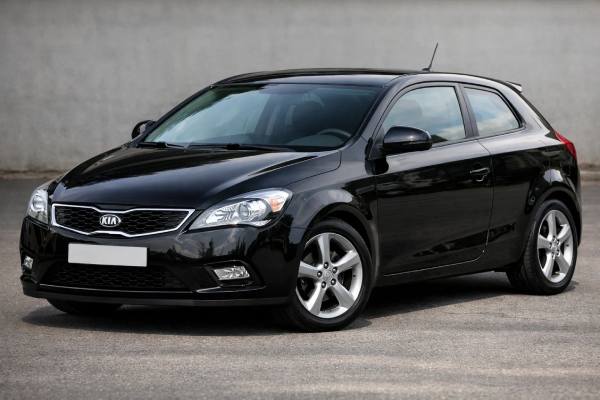
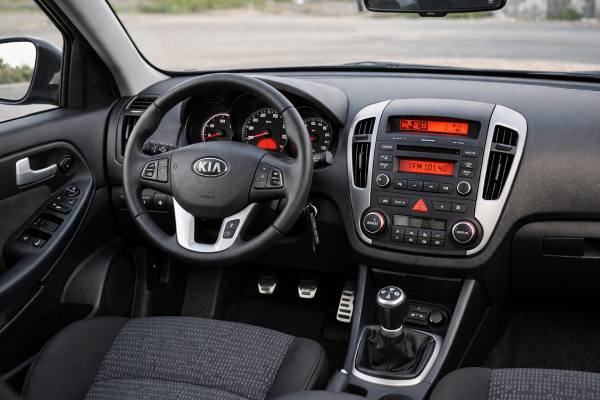
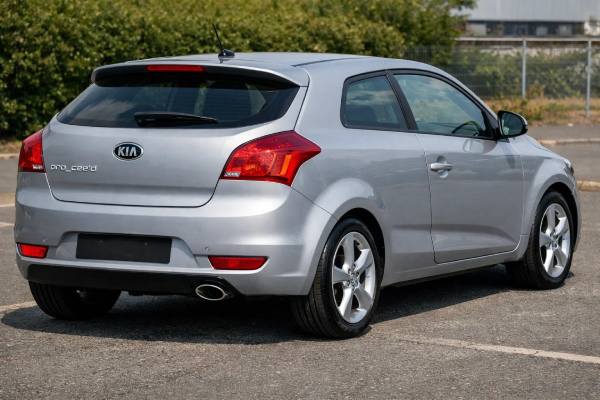
The facelift Kia Pro Ceed (ED) with the 1.6 CRDi 90 hp (D4FB) is a practical way into diesel efficiency without stepping up to higher running costs. In this tune, the engine focuses on low-end pull and steady motorway pace rather than outright speed. That makes it a good match for mixed commuting, longer trips, and drivers who value range and relaxed cruising.
Because this is an older common-rail diesel, ownership is mostly about how it was used: frequent short trips, skipped oil services, or low-quality fuel can accelerate EGR and intake fouling, injector wear, and turbo control issues. On the plus side, the Pro Ceed’s simple front-wheel-drive layout and mainstream parts availability keep many repairs straightforward. If you buy with service records and a clean running test, it can still be a sensible, economical daily.
What to Know
- Strong low-rpm torque makes city driving and overtakes easier than the 90 hp figure suggests.
- Long-leg cruising and good range on a tank suit motorway mileage.
- Expect periodic diesel-system cleaning work (EGR and intake) if it was driven mostly on short trips.
- Plan on engine-oil and filter service every 20,000 km (12,500 mi) or 12 months (whichever comes first).
- Budget for clutch and dual-mass flywheel wear checks around 160,000–240,000 km (100,000–150,000 mi) on many cars.
Contents and shortcuts
- Kia Pro Ceed ED diesel profile
- Kia Pro Ceed ED D4FB specs
- Kia Pro Ceed ED trims and safety
- Common D4FB diesel problems
- Maintenance plan and buying tips
- On-road feel and economy
- Rivals worth cross-shopping
Kia Pro Ceed ED diesel profile
The facelifted Pro Ceed (ED) is the three-door, slightly sportier-bodied sibling of the Cee’d hatch. In diesel form, especially with the D4FB 1.6 CRDi 90 hp, it’s best understood as a torque-first compact rather than a hot hatch. The engine’s strength is usable pull from low revs, which reduces gear changes in everyday traffic and makes motorway gradients easier to manage than similarly powered petrol versions.
This 90 hp calibration typically trades top-end urgency for smoother combustion and lower thermal stress. That can be a reliability advantage, but only if basic diesel health is maintained: clean oil, proper warm-up, and regular longer drives that let exhaust temperatures rise. On cars that lived in short-trip city duty, soot loads tend to build in the EGR valve, intake tract, and sometimes the turbo’s control hardware, creating the classic diesel symptoms (hesitation, uneven boost, smoke, and fault codes).
Chassis-wise, the Pro Ceed’s formula is simple and durable: front strut suspension, torsion-beam rear, and front-wheel drive. That simplicity keeps the car predictable and affordable to maintain, and it also means most ride and handling character comes down to tyre choice, alignment, and bushing condition. A healthy example feels stable on the motorway and tidy in corners, though it won’t mask worn rear beam bushes, tired dampers, or cheap tyres.
From an ownership perspective, the “good” examples share a pattern:
- Documented oil changes (ideally more frequent than the maximum interval if driven hard or mostly in town)
- Fuel filter replaced on schedule
- Evidence of periodic longer runs, not just cold starts and short commutes
- No persistent warning lights, limp mode history, or unresolved smoke complaints
If you want a compact diesel that prioritizes range, everyday torque, and manageable running costs, this specific Pro Ceed can still make sense—provided you buy on condition rather than mileage alone.
Kia Pro Ceed ED D4FB specs
Below are practical specifications for the Kia Pro Ceed (ED) facelift (2009–2012) with the D4FB 1.6 CRDi 90 hp. Exact values can vary by market, emissions version (Euro 4 vs Euro 5), wheel and brake package, and VIN-specific equipment.
Powertrain and efficiency
| Item | Specification |
|---|---|
| Engine code | D4FB |
| Layout | Inline-4, DOHC, 16-valve (4 valves/cyl) |
| Displacement | 1.6 L (1,582 cc) |
| Bore × stroke | ~77.2 × 84.5 mm |
| Induction | Turbocharged, intercooled |
| Fuel system | Common-rail direct injection |
| Compression ratio | ~17:1 (varies by revision) |
| Max power | 90 hp (66 kW) @ ~4,000 rpm |
| Max torque | ~235–255 Nm (173–188 lb-ft) @ ~1,750–2,000 rpm |
| Timing drive | Chain (inspect for noise and correlation faults, replace if out of spec) |
| Rated efficiency (typical) | ~4.5–5.2 L/100 km (52–45 mpg US / 63–54 mpg UK) |
| Real-world highway @ 120 km/h | ~5.0–5.8 L/100 km (47–41 mpg US / 56–49 mpg UK) |
Transmission and driveline
| Item | Specification |
|---|---|
| Drive type | FWD |
| Transmission (typical) | 5-speed manual (market-dependent code) |
| Differential | Open |
Chassis and dimensions
| Item | Specification |
|---|---|
| Suspension (front / rear) | MacPherson strut / torsion beam |
| Steering | Electric or hydraulic assist (market/year-dependent); ~2.7–3.0 turns lock-to-lock (typical) |
| Brakes (typical) | Front ventilated discs / rear discs or drums (depends on trim) |
| Common tyre sizes | 195/65 R15, 205/55 R16 (most common fitments) |
| Length / width / height | ~4,250 / 1,790 / 1,450 mm |
| Wheelbase | ~2,650 mm |
| Turning circle (kerb-to-kerb) | ~10.4–10.8 m |
| Kerb weight | ~1,300–1,420 kg (trim and emissions equipment dependent) |
| Fuel tank | ~53 L |
| Cargo volume (VDA, typical) | ~340 L seats up / ~1,300 L seats down |
Performance and capability
| Item | Specification |
|---|---|
| 0–100 km/h (0–62 mph) | ~13.5–14.5 s (typical test spread) |
| Top speed | ~170–180 km/h |
| Braking distance (100–0 km/h) | ~40–43 m (tyres and brake package dominate) |
| Towing capacity | Market-dependent; commonly ~1,200 kg braked / ~650 kg unbraked |
| Payload | Often ~430–520 kg (check door-jamb plate) |
Fluids, service capacities, and key torque specs (typical)
| Item | Specification |
|---|---|
| Engine oil | ACEA C3/C2 (DPF-equipped), common viscosity 5W-30; capacity ~5.3 L (with filter) |
| Coolant | Phosphate-OAT type for Hyundai/Kia; typical 50/50 mix; capacity ~6–7 L |
| Manual transmission oil | GL-4 75W-85 (typical); capacity ~1.8–2.1 L |
| Brake fluid | DOT 4 |
| A/C refrigerant | R134a; charge varies by system (often ~450–550 g) |
| Wheel nuts | ~88–110 Nm (verify by wheel type) |
| Oil drain plug | ~30–40 Nm (verify by sump design) |
Safety and driver assistance
| Item | Specification |
|---|---|
| Euro NCAP (Cee’d family, 2007 protocol) | 5-star adult; 4-star child; 2-star pedestrian (points-based era) |
| IIHS | Not typically applicable for EU-market ED |
| ADAS | Typically none beyond ABS and stability control (ESC availability varies by trim and market) |
If you want one “spec shortcut” for ownership: treat this car as a durable compact as long as diesel airflow and fuel delivery stay clean—and that depends heavily on service history and driving pattern.
Kia Pro Ceed ED trims and safety
Trim naming varies a lot by country, but most facelift Pro Ceed diesels followed a familiar ladder: a base trim focused on value, mid trims adding comfort and convenience, and higher trims bundling sport styling with larger wheels and more infotainment. The D4FB 90 hp was often positioned as the economy diesel option, while higher-output diesels (where offered) carried more equipment and sometimes different gearing or wheel packages.
Trims and options that change how the car feels
A few option choices matter more than people expect:
- Wheel and tyre size: 15-inch wheels with taller sidewalls usually ride better and can return slightly better real-world economy. 16-inch wheels sharpen turn-in but can increase road noise and harshness on broken pavement.
- Rear brakes: some lower trims may use rear drums, while others use rear discs. Discs tend to offer more consistent feel under repeated braking and simplify some service tasks, but drums can be long-lasting in gentle use.
- Climate control and electrical load: automatic climate control, heated seats, and other comfort options raise electrical demand. That’s not a problem by itself, but weak batteries and tired alternator pulleys show up sooner on higher-load cars.
- Infotainment: factory head units and speakers differ widely. If you plan an upgrade, confirm steering-wheel controls and CAN-bus integration before buying parts.
Quick identifiers that help when viewing a car:
- Tyre placard and wheel stamping confirm the intended wheel size.
- Rear caliper presence confirms rear discs; a simple peek through the wheel tells the story.
- VIN plate and emissions label help distinguish Euro 4 vs Euro 5 versions, which matters for DPF presence and some sensor layouts.
Safety ratings and what they mean for a 2009–2012 car
The Cee’d family achieved a strong Euro NCAP result in its era, especially for adult occupant protection. Keep the time context in mind: older protocols emphasized structural crash protection and basic restraint performance more than today’s active safety tech. So while the underlying structure and airbag system can still protect well in many impacts, the car generally lacks modern crash-avoidance systems like autonomous emergency braking.
Safety equipment and real-world checks
Common safety hardware on these cars includes:
- Front airbags, side airbags, and curtain airbags (often standard on many EU versions)
- ABS and typically ESC (check that ESC is actually fitted and functional; not all markets made it standard in every trim/year)
- ISOFIX/LATCH points in the rear outboard seats
When you test-drive or inspect:
- Confirm the airbag warning light illuminates at key-on and then goes out.
- Confirm ABS activation on a safe surface (or scan for stored ABS faults).
- Check tyre quality and matching axle pairs—tyres are a real safety system on older compacts.
- If the car has ESC, verify no steering-angle sensor faults and that the system calibrates cleanly after an alignment.
On this generation, safety is less about “features” and more about condition: tyres, brakes, suspension bushings, and correct alignment determine how confidently it stops and avoids trouble.
Common D4FB diesel problems
A well-kept D4FB can run a long time, but most problems fall into a few repeatable patterns. The key is recognizing what is common vs costly, and matching symptoms to the most likely root cause before replacing parts.
Common (frequent) issues
- EGR valve and intake soot buildup (low to medium cost):
Symptoms: hesitant throttle, uneven idle, smoke under load, reduced mpg, intermittent limp mode.
Root cause: short trips and low exhaust temperatures allow soot and oily vapor to accumulate.
Remedy: EGR cleaning or replacement; intake cleaning when heavily restricted; address stuck thermostat (engine running too cool worsens soot). - Boost control faults and sticky turbo actuator (medium cost):
Symptoms: flat acceleration, overboost/underboost codes, surging at steady throttle.
Root cause: carbon buildup in control hardware, vacuum leaks (if vacuum-actuated), or worn actuator mechanism.
Remedy: smoke-test and vacuum checks, replace cracked hoses, verify actuator movement, and confirm sensors (MAP/boost) are reading correctly. - Fuel filter neglect leading to rail pressure complaints (low to medium cost):
Symptoms: hard starting, stumbling under load, rail pressure codes.
Root cause: restricted filter or water contamination stressing the high-pressure pump/injectors.
Remedy: replace fuel filter on schedule; drain water separator if fitted; use quality fuel and consider periodic injector balance checks.
Occasional issues
- Injector sealing and combustion blow-by (medium to high cost if ignored):
Symptoms: ticking noise, diesel smell, carbon buildup around injector base, misfire-like roughness.
Root cause: leaking injector copper washer or clamp issues.
Remedy: reseal early, clean seats correctly, replace bolts/clamps as specified. Delay can lead to stubborn carbon and higher labor. - Clutch and dual-mass flywheel wear (high cost tier):
Symptoms: vibration at idle, rattling when shutting off, clutch slip under load, harsh engagement.
Root cause: normal wear, especially with frequent stop-start driving or lugging in high gears.
Remedy: plan clutch and DMF together if symptoms exist; verify gearbox mounts at the same time. - DPF-related behavior (market-dependent):
Some facelift diesels may have a DPF depending on emissions spec and country.
Symptoms: frequent regeneration events, rising oil level (fuel dilution), warning lights, reduced power.
Remedy: confirm DPF presence by VIN; ensure correct low-ash oil; resolve sensor faults; avoid constant short trips.
Rare but important
- Cooling system control issues (medium cost):
Symptoms: slow warm-up, weak cabin heat, higher soot loading, poor mpg.
Root cause: thermostat stuck open.
Remedy: replace thermostat and recheck warm-up behavior; diesels need correct operating temperature for clean running.
Software and calibration notes
If a car has recurring limp mode or sensor faults, don’t skip the boring step: scan it with a proper tool and check for ECU updates and known fault patterns for that market. Sometimes the official fix is a reflash or revised sensor logic rather than hardware.
A practical rule: if the car drives perfectly only when fully warm, but feels rough or flat cold, suspect temperature management (thermostat), airflow (EGR/intake), or fuel delivery (filter/injector balance) before blaming the turbo.
Maintenance plan and buying tips
For this Pro Ceed diesel, maintenance success comes from doing a few things on time, every time—and not stretching intervals just because the engine “seems fine.” Here is a practical schedule you can adapt to your mileage.
Maintenance schedule (distance or time, whichever comes first)
- Engine oil and filter: every 20,000 km (12,500 mi) or 12 months. If most driving is short trips, consider 10,000–15,000 km intervals to reduce soot loading and turbo stress. Use the correct low-ash oil if DPF-equipped.
- Fuel filter: every 30,000–60,000 km (shorten interval if fuel quality is inconsistent).
- Air filter: inspect every service; replace typically 20,000–30,000 km depending on dust conditions.
- Cabin filter: every 15,000–30,000 km or yearly for air quality.
- Coolant: commonly every 5 years (verify exact coolant type and interval for your VIN).
- Brake fluid: every 2 years, regardless of mileage.
- Manual transmission oil: often overlooked—consider a change around 100,000–150,000 km, especially if shifts feel notchy.
- Serpentine belt and pulleys: inspect at each service; replace if cracked/noisy or if the alternator pulley shows play.
- Glow plugs (inspection): check if cold starts become rough or smoky; replace as needed.
- Timing chain: no routine replacement interval, but inspect for startup rattle, guide wear, and timing correlation faults; replace if symptoms or measured stretch appears.
- Tyres and alignment: rotate every 10,000–12,000 km; align if you see uneven wear or steering pull.
- 12 V battery: test annually after year 5; many last 5–7 years depending on climate.
Buyer’s guide: what to check before you pay
A smart pre-purchase check is less about cosmetics and more about diesel health:
- Cold start behavior: it should start promptly without extended cranking. Excess white smoke or heavy knocking suggests glow plug or compression/fueling issues.
- Warm-up time: if it takes unusually long to reach operating temperature, suspect thermostat problems (which can cascade into EGR/soot issues).
- Boost delivery: accelerate in a higher gear from low rpm; a healthy car pulls steadily without surging or sudden limp mode.
- Clutch/DMF clues: listen for rattles at idle, vibrations through the pedal, or harsh shutdown shudder.
- Service records: prioritize proof of oil services and fuel filter changes. Missing paperwork is a bigger risk on diesels than petrol cars.
- Rust and water leaks: check rear hatch seals, door bottoms, and underbody seams; older compacts can hide corrosion where liners trap dirt.
Recommended ownership profile
This is one of those diesels that rewards longer trips. If you drive mostly short, cold runs, you can still own it—but expect more frequent intake/EGR attention and be disciplined about oil changes. For mixed or motorway-heavy use, it can be a cost-effective compact with good range and solid everyday usability.
On-road feel and economy
In real driving, the D4FB 90 hp Pro Ceed feels more capable than the headline power suggests because the engine delivers meaningful torque early. Around town, you can short-shift and ride the midrange, which reduces noise and keeps fuel use low. The trade-off is that acceleration above typical motorway speeds is not aggressive; passing is best done by keeping the engine in its torque band rather than expecting strong top-end pull.
Ride, handling, and NVH
- Ride: On 15-inch tyres, the car absorbs bumps with reasonable composure for a compact. Larger wheels can introduce sharper impacts over potholes and expansion joints.
- Handling: The chassis is predictable and stable. The torsion-beam rear end gives safe, mild understeer at the limit. Worn rear bushes can make the back feel skittish on mid-corner bumps.
- Steering: Light to moderate effort; feedback is adequate rather than sporty. A proper alignment transforms straight-line confidence.
- Noise and vibration: Diesels transmit more vibration at idle and low rpm, especially if engine mounts are tired. At motorway speeds, tyre noise often dominates more than engine noise—again, tyre choice matters.
Powertrain character and gearing
With a manual gearbox, this car rewards smooth throttle inputs and avoiding lugging in high gears. Lugging (heavy throttle at very low rpm) increases soot and stress on the drivetrain. If you want longevity:
- Downshift earlier on hills.
- Let the engine warm fully before heavy load.
- Avoid repeated stop-start “half warm” cycles.
Real-world efficiency
Real-world results vary widely with traffic and temperature, but typical patterns look like this:
- City: ~5.5–7.0 L/100 km (43–34 mpg US / 51–40 mpg UK) depending on congestion and warm-up length.
- Highway (100–120 km/h): ~5.0–5.8 L/100 km (47–41 mpg US / 56–49 mpg UK) if tyres and alignment are good.
- Mixed: ~5.2–6.3 L/100 km (45–37 mpg US / 54–45 mpg UK).
Cold weather can raise consumption significantly because warm-up takes longer and cabin heat demand is higher. If the thermostat is weak and the engine runs cool, economy and cleanliness both suffer.
Key performance metrics that matter
The numbers are not the headline here; what matters is consistency. A healthy car accelerates smoothly, holds speed on grades without constant downshifts, and brakes straight without vibration. If you feel surging, flat spots, or repeated hesitation under steady throttle, treat that as a diagnostic clue rather than “old diesel behavior.”
Rivals worth cross-shopping
If you’re shopping a Pro Ceed ED 1.6 CRDi 90, you’re really shopping a class of late-2000s to early-2010s compact diesels. Many are good—condition and history matter more than badge—but each rival has a slightly different ownership “shape.”
Comparable compact diesels
- Ford Focus 1.6 TDCi (90/95 hp): Often sharper steering and chassis feel. Watch for injector sealing issues and DPF-related complaints on certain versions, plus routine maintenance sensitivity similar to the Kia.
- Volkswagen Golf 1.6 TDI (90/105 hp): Strong cabin quality and resale. More complex emissions equipment on many versions; repairs can be pricier, and service history matters a lot.
- Peugeot 308 1.6 HDi (90/92 hp): Very efficient when healthy, comfortable ride. Pay attention to turbo oil feed maintenance and DPF additive system on models that use it.
- Opel/Vauxhall Astra 1.7 CDTi: Solid motorway manners and torque. Some versions have more vibration and noise; check for EGR and swirl-related issues depending on exact engine.
- Hyundai i30 (FD) 1.6 CRDi: Closest mechanical cousin in many markets, with similar strengths and diesel-specific risks. Great comparison point on parts cost and maintenance approach.
When the Pro Ceed makes the most sense
Choose the Pro Ceed if you want:
- A straightforward compact platform with manageable repair complexity
- Good real-world range and low fuel spend on longer drives
- Practical everyday ergonomics without premium-brand parts pricing
Look elsewhere if you want:
- Stronger high-speed acceleration (consider higher-output diesels or petrol turbos)
- Modern active safety (AEB, lane support), which this generation typically lacks
- The quietest cabin in the segment (some rivals isolate diesel noise better)
A simple buying decision rule
If you find a Pro Ceed with:
- clear service records,
- clean cold start and smooth boost behavior,
- no drivetrain shudder,
- and evidence it was driven regularly on longer trips,
it can be a smarter purchase than a “nicer” rival with patchy history. In this class, maintenance history beats brand reputation almost every time.
References
- Engine Oil Grades and Capacities 2023 (Service and Maintenance PDF)
- Kia Recalls | Kia Europe 2026 (Recall Information and VIN Check)
- Kia Car Owners Manual | Kia UK 2026 (Owner’s Manual Portal)
- Kia cee’d wins 5-Star Euro NCAP safety rating – Kia Slovakia s.r.o. 2007 (Safety Rating)
Disclaimer
This article is for informational purposes only and is not a substitute for professional inspection, diagnosis, or repair. Specifications, torque values, service intervals, and procedures can vary by VIN, market, model year, and installed equipment, so always verify details against the official service documentation for your specific vehicle.
If this guide helped you, please consider sharing it on Facebook, X (Twitter), or your favorite forum to support our work.