
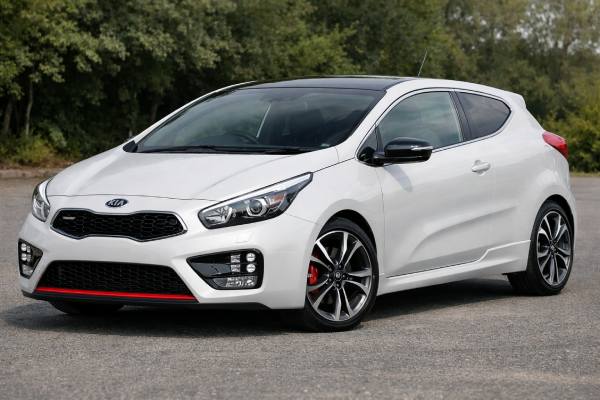
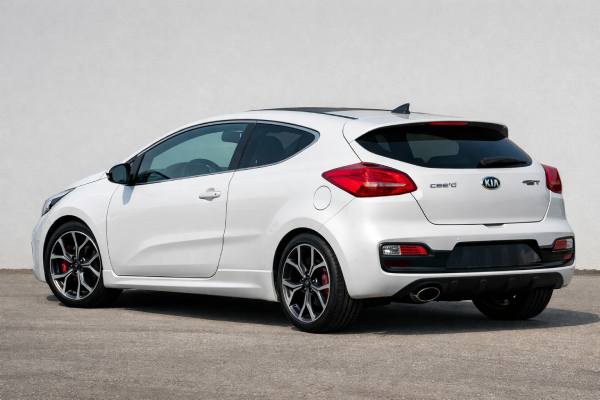
The Kia Pro Cee’d GT (JD) is the “warm-hatch that behaves like a grown-up.” You get a compact three-door body, a 1.6-liter turbo direct-injection engine, and a chassis tuned to feel more tied down than the regular Pro Cee’d—without turning daily driving into a punishment. The key engineering story is balance: a punchy midrange from the turbo, a manual gearbox that encourages smooth momentum driving, and suspension calibration that keeps the rear stable under braking and the front predictable on uneven pavement.
For ownership, the GT’s strengths are durability under normal use and reasonable running costs for a performance trim—if you stay ahead of maintenance that matters on turbo GDI engines: oil quality, spark plugs, and cooling system health. Buy well, maintain properly, and it’s a rewarding, practical performance classic-in-the-making.
Top Highlights
- Strong mid-range pull and easy overtakes, especially from 2,000–4,500 rpm.
- Daily-friendly ride and cabin comfort compared with harsher hot hatches.
- Good safety baseline for the era, with stable braking and predictable handling.
- Ownership caveat: turbo GDI engines punish neglected oil changes and cheap fuel habits.
- Sensible interval: change engine oil and filter every 10,000–12,000 km or 12 months (whichever comes first) for long-term health.
Quick navigation
- Kia Pro Cee’d GT JD model profile
- Kia Pro Cee’d GT JD specs and measurements
- Kia Pro Cee’d GT JD trims safety and tech
- Known faults and service campaigns
- Maintenance plan and buying tips
- On-road performance and economy
- GT rivals and alternatives
Kia Pro Cee’d GT JD model profile
The Pro Cee’d GT sits in a sweet spot: quicker and more composed than standard Cee’d variants, but less extreme than full “track-first” hot hatches. In most markets it came with a single powertrain concept—front-wheel drive, a 1.6 turbo gasoline engine (Gamma II T-GDi), and a 6-speed manual—wrapped in a three-door body that looks sportier than the five-door.
What makes this car work is how its components complement each other. The turbocharged engine delivers torque early, so the car feels responsive in normal driving without needing high revs. The manual gearbox, paired with a well-chosen final drive, encourages clean, short-shift acceleration rather than frantic rev chasing. The chassis tuning typically adds firmer springs and dampers, stronger anti-roll control, and grippier tire fitments than non-GT trims. The goal is confidence and consistency—stable under braking, predictable on bumpy corners, and calm at highway speeds.
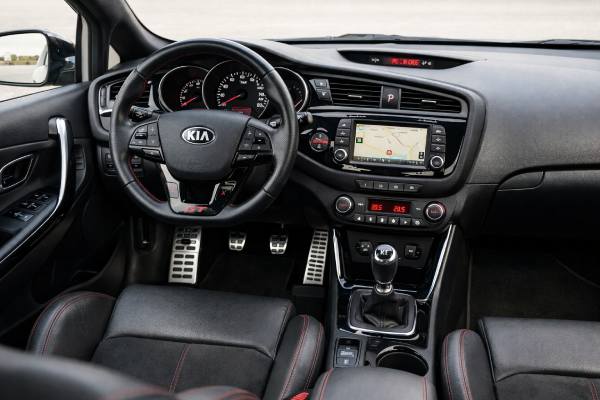
Inside, the GT usually brought better bolstering (sport seats), a more substantial steering wheel, and trim touches that make it feel like a performance model rather than a styling package. Importantly for ownership, it’s still a “normal car” underneath: standard service access, mainstream parts supply, and straightforward front-wheel-drive packaging.
Where buyers can misjudge it is expectations. It’s not a razor-edged, limited-slip-differential monster from the factory in most configurations, so it will spin an inside front tire if you hammer the throttle mid-corner on cold or worn tires. But driven with good technique—rolling into the throttle, choosing the right gear, and using the torque band—it’s genuinely quick on real roads.
For long-term value, the GT’s appeal is durability when maintained, a usable cabin and cargo area, and performance that still feels relevant. It rewards owners who treat it like a turbo engine (oil, warm-up habits, cooling) rather than a basic commuter.
Kia Pro Cee’d GT JD specs and measurements
Below are the core specs that matter for maintenance, comparisons, and real-world expectations. Values can vary slightly by market, wheel size, and build date—use these as a practical baseline.
Powertrain and efficiency
| Item | Specification |
|---|---|
| Code | Gamma II T-GDi (commonly referenced as G4FJ, market dependent) |
| Engine layout and cylinders | Inline-4; DOHC; 16 valves (4 valves/cyl) |
| Bore × stroke | 77.0 × 85.4 mm (3.03 × 3.36 in) |
| Displacement | 1.6 L (1,591 cc) |
| Induction | Turbocharged, intercooled |
| Fuel system | Gasoline direct injection (GDI) |
| Compression ratio | ~10.0:1 (varies by calibration) |
| Max power | 201 hp (148 kW) @ ~6,000 rpm |
| Max torque | 265 Nm (195 lb-ft) @ ~1,750–4,500 rpm |
| Timing drive | Chain |
| Rated efficiency (typical) | ~6.8–7.7 L/100 km (35–31 mpg US / 42–37 mpg UK) |
| Real-world highway @ 120 km/h | ~7.5–8.5 L/100 km (31–28 mpg US / 38–33 mpg UK) |
Transmission and driveline
| Item | Specification |
|---|---|
| Transmission | 6-speed manual (code varies by market) |
| Drive type | FWD |
| Differential | Open (traction control manages wheelspin) |
Chassis and dimensions
| Item | Specification (typical JD Pro Cee’d GT) |
|---|---|
| Suspension (front/rear) | MacPherson strut / multi-link (market dependent) |
| Steering | Electric power steering |
| Brakes | 4-wheel discs; front typically ~300 mm (11.8 in) class |
| Wheels and tyres (popular) | 225/40 R18 (18 in rim) |
| Ground clearance | ~135 mm (5.3 in) (varies with tyres) |
| Length / width / height | ~4,310 / 1,780 / 1,430 mm (169.7 / 70.1 / 56.3 in) |
| Wheelbase | ~2,650 mm (104.3 in) |
| Turning circle | ~10.6 m (34.8 ft) |
| Kerb weight | ~1,350–1,420 kg (2,976–3,131 lb) |
| Fuel tank | ~53 L (14.0 US gal / 11.7 UK gal) |
| Cargo volume | ~380 L seats up / ~1,300 L seats down (method varies) |
Performance and capability
| Item | Typical value |
|---|---|
| 0–100 km/h (0–62 mph) | ~7.4–7.9 s |
| Top speed | ~225–230 km/h (140–143 mph) |
| Braking distance (100–0 km/h) | ~36–39 m (test and tyre dependent) |
| Payload | Typically ~450–550 kg depending on spec |
Fluids and service capacities (practical baselines)
| Item | Specification (confirm by VIN) |
|---|---|
| Engine oil | Full synthetic; commonly 5W-30; capacity ~4.0–4.5 L (4.2–4.8 US qt) |
| Coolant | Ethylene glycol long-life; 50/50 mix; ~6–7 L (6.3–7.4 US qt) |
| Manual transmission fluid | 75W-85 GL-4; ~1.8–2.1 L (1.9–2.2 US qt) |
| A/C refrigerant | Typically R134a; charge varies by market and condenser type |
Safety and driver assistance (typical equipment for the era)
| Item | Notes |
|---|---|
| Crash ratings | Euro NCAP 5 stars for the Cee’d family (protocol-year dependent) |
| Core safety systems | ABS, stability control, traction control, multiple airbags, ISOFIX |
| ADAS | Limited in 2013–2015; some markets offered basic parking sensors/camera rather than AEB |
Kia Pro Cee’d GT JD trims safety and tech
Most buyers will encounter the Pro Cee’d GT as a fairly “fixed recipe” rather than a wide trim ladder. The big differences tend to be option packs and regional equipment levels—infotainment, seats, sunroof, lighting, and convenience features—more than mechanical changes. That’s good news for shoppers: the driving experience is usually consistent, and you can focus on condition and history.
Trims and options that matter
Common GT identifiers include GT badging, sport seats with stronger bolsters, 18-inch wheel packages, larger brakes than standard trims, and a more aggressive front fascia. Equipment can vary, but these are the options that most affect ownership:
- Infotainment generation and navigation: Earlier systems may feel dated and can suffer from slow boot or map update headaches. If you value modern phone integration, plan for a head unit upgrade or choose a later, better-equipped car.
- Sunroof or panoramic roof: Nice feature, but inspect for wind noise, stuck drains, and water marks around the headliner.
- HID/LED lighting (market dependent): Better night visibility, but replacement costs are higher. Check for condensation, flicker, and level sensor faults.
- Parking sensors and camera: Useful on the three-door body; verify they work consistently, especially in wet conditions.
Mechanical differences across the 2013–2015 run are usually subtle: minor calibration updates, infotainment revisions, and occasional feature reshuffles. You may see small changes in wheel designs, seat trims, or standard equipment lists rather than power output changes.
Safety ratings and what they mean
The JD-generation Cee’d family generally scored well in Euro NCAP testing for its era, reflecting a strong passenger cell and effective restraint systems. Understand two things when comparing ratings:
- Protocol changes over time: A “5-star” in 2012–2013 is not identical to a “5-star” in later years with tougher tests. Use the star rating as context, not a direct cross-decade comparison.
- Trim and tyre effects: Braking distances and stability-control behavior depend heavily on tyres. A GT on premium tyres can feel dramatically safer than the same car on old budget rubber.
Safety systems and ADAS availability
Expect a solid baseline suite: front, side, and curtain airbags; ABS; electronic stability control; and ISOFIX/LATCH-compatible rear seating positions (market dependent). Advanced driver assistance—automatic emergency braking, lane centering, adaptive cruise—was not commonly standard in this era. If you see those features advertised, verify carefully: many listings confuse parking aids or warning chimes with true braking intervention.
After collision repairs or steering/suspension work, insist on a proper alignment and a scan for stability-control faults. A GT that “feels twitchy” is often telling you it needs tyres, alignment, or a worn bushing—rather than being inherently unstable.
Known faults and service campaigns
The Pro Cee’d GT’s drivetrain is generally robust, but turbocharged direct-injection engines have predictable weak points—especially when previous owners stretched oil intervals or drove hard without warm-up and cool-down habits. Use the guide below as a practical “what fails, how it shows, and what to do.”
Common issues (most likely to encounter)
- Carbon buildup on intake valves (GDI trait)
Symptoms: rough idle, hesitation, loss of crisp throttle response, occasional misfire codes.
Root cause: fuel doesn’t wash the intake valves in GDI engines, so oil vapors and soot can accumulate.
Remedy: walnut blasting or intake cleaning; ensure PCV system is healthy; use quality oil and avoid endless short trips. - Ignition coils and spark plug sensitivity under boost
Symptoms: misfires under load, jerky acceleration, flashing engine light.
Root cause: worn plugs or weak coils struggle at high cylinder pressures.
Remedy: replace plugs at sensible intervals (often earlier than non-turbo cars), use correct heat range, replace coils as needed. - PCV and crankcase ventilation stress
Symptoms: oil smell, increased oil consumption, idle fluctuations.
Root cause: boosted engines push more blow-by; PCV valves and hoses age.
Remedy: inspect PCV valve, hoses, and turbo inlet plumbing; fix leaks early.
Occasional issues (seen, but not guaranteed)
- Turbo control quirks (wastegate rattle or boost control faults)
Symptoms: metallic rattle near turbo area, inconsistent boost, limp mode.
Root cause: wear in wastegate mechanism or vacuum/solenoid issues (system varies).
Remedy: diagnose properly—sometimes it’s plumbing or a solenoid, not the turbo itself. - Cooling system aging (thermostat, water pump seepage)
Symptoms: slow warm-up, overheating in traffic, coolant smell, small leaks.
Remedy: replace aging components proactively; never ignore minor coolant loss. - Clutch wear and drivetrain mounts
Symptoms: clutch slip in higher gears, vibration on take-off, wheel hop.
Root cause: torque plus enthusiastic driving accelerates wear; mounts soften with age.
Remedy: budget for clutch and mounts if the car has been driven hard.
Rare but expensive (watch carefully)
- High-pressure fuel system faults
Symptoms: long cranks, power loss, fuel pressure codes.
Remedy: proper fuel-pressure diagnosis; don’t guess parts.
Software, calibrations, and service actions
Driveability complaints (hesitation, odd throttle mapping, intermittent sensor codes) can sometimes be improved by ECU updates depending on market support. Treat software as a “last mile” fix: first confirm basics—boost leaks, plugs/coils, fuel quality, sensors, and vacuum lines.
Recalls and verification
Because recall coverage is market-specific, the correct process is consistent: run the VIN through your national recall portal (or a dealer system) and request proof of completion. On a performance trim, recall completion matters because many campaigns target safety-related components (brake hoses, airbags, wiring) that you do not want to discover the hard way.
Maintenance plan and buying tips
A Pro Cee’d GT that’s serviced like a turbo engine will age far better than one treated like a basic commuter. The plan below is intentionally practical—aimed at preventing expensive failures rather than chasing the minimum schedule.
Maintenance schedule (distance or time, whichever comes first)
- Engine oil and filter: every 10,000–12,000 km or 12 months. If driven hard, in heat, or on short trips, shorten to 8,000–10,000 km.
- Air filter (engine): inspect every 15,000 km, replace ~30,000 km (earlier in dusty areas).
- Cabin filter: every 15,000–20,000 km or annually for HVAC performance.
- Spark plugs: typically every 50,000–60,000 km on turbo GDI; sooner if tuned or misfiring.
- Brake fluid: every 2 years regardless of mileage.
- Coolant: commonly 5–10 years depending on coolant type; replace earlier if history is unknown.
- Manual gearbox oil: not always listed as routine, but a smart interval is 80,000–120,000 km for shift quality and synchro life.
- Tyre rotation and alignment: rotate every 10,000–12,000 km; align at least annually or after pothole hits.
- 12 V battery: test annually after year 4; many last 4–6 years depending on climate.
Practical fluids and “good enough” specs
Use high-quality full synthetic oil appropriate for turbo gasoline engines in your climate (commonly 5W-30 in moderate climates). Prioritize the correct manufacturer approvals over a brand name. Cheap oil plus long intervals is the fastest route to turbo and timing system stress.
Essential torque values (decision-level only)
- Wheel lug nuts: typically ~90–110 Nm (confirm for your wheels)
- Spark plugs: typically ~18–25 Nm (confirm plug type and seat design)
- Oil drain plug: typically ~30–40 Nm (confirm pan and plug style)
Buyer’s guide: what to inspect before purchase
- Cold start behavior: listen for rattles, unstable idle, or misfires in the first minute.
- Full-load pull (warm engine): the GT should pull cleanly without hesitation; misfire under boost is a red flag.
- Cooling system integrity: check coolant level, stains, and stable temperature in traffic.
- Clutch test: accelerate hard in a higher gear; rising revs without matching speed suggests slip.
- Tyres and alignment clues: uneven wear often means worn bushings or poor alignment.
- Service history quality: look for documented oil intervals and correct spark plug replacements.
- Corrosion hotspots: rear suspension mounting areas, subframe edges, and door seams—especially in salty climates.
Long-term outlook is good when maintained: the GT is not fragile, but it does not forgive neglect. The best cars are owned by people who changed oil early, used decent tyres, and didn’t ignore small coolant or misfire symptoms.
On-road performance and economy
Ride, handling, and NVH (noise, vibration, and harshness)
On the road, the Pro Cee’d GT feels more planted than the standard car without becoming harsh. At city speeds, you’ll notice firmer control over bumps and less float, but it’s still compliant enough for daily use. At highway speeds, the car’s stability is a standout: it tracks straight, resists crosswinds well for a compact, and feels confident during quick lane changes.
Steering is typically light-to-moderate in effort with predictable response rather than rich feedback. That’s normal for electric power steering of this era. The chassis balance is front-led: it prefers smooth inputs, and it rewards drivers who brake in a straight line and roll speed through corners.
Cabin noise is reasonable for a sporty three-door. Expect more tyre noise on 18-inch wheels, and listen for droning if tyres are worn unevenly—often a sign of alignment or bush wear, not “just how the car is.”
Powertrain character and real-world pace
The 1.6 T-GDi’s personality is midrange strength. In normal driving, you can short-shift and still get quick progress. When you push, it builds boost early and pulls strongly through the middle gears, making overtakes easy without a downshift in many situations. Throttle response is good for a turbo engine, but it’s still smoother than a naturally aspirated hot hatch; there’s a brief buildup as boost rises.
The 6-speed manual typically suits the engine well: keep it in the 2,000–5,500 rpm band for best results, and avoid lugging the engine at very low rpm under heavy throttle, which increases knock control activity and heat stress.
Real-world efficiency
Your real consumption depends heavily on driving style:
- City: ~8.5–10.5 L/100 km (28–22 mpg US / 33–27 mpg UK)
- Highway (100–120 km/h): ~7.5–8.5 L/100 km (31–28 mpg US / 38–33 mpg UK)
- Mixed: ~7.8–9.2 L/100 km (30–26 mpg US / 36–31 mpg UK)
Cold weather can add a noticeable penalty because turbo engines run richer during warm-up and because short trips never let the oil and coolant stabilize. If you want the GT to last, treat warm-up gently: drive off normally but avoid full boost until temperatures are settled, and allow a brief cool-down after hard runs.
GT rivals and alternatives
The Pro Cee’d GT competes in the “fast but usable” corner of the hot hatch world. The right rival depends on what you value: sharpness, comfort, tuning potential, or long-term costs.
If you want something sharper and more aggressive
- Ford Focus ST (Mk3): typically feels faster and more playful, with stronger character and a bigger performance ceiling. Trade-off: higher fuel use and often harder-driven examples on the used market.
- Renault Mégane RS: usually the handling benchmark, with more track-ready responses. Trade-off: firmer ride and higher risk of expensive neglect in cheap listings.
If you want a similar “grown-up GT” vibe
- Volkswagen Scirocco 2.0 TSI: refined and stable at speed with strong tuning support. Trade-off: maintenance complexity and the need to confirm DSG history if equipped.
- Hyundai i30 Turbo / i30 (GD/PD variants): similar engineering philosophy and often similar parts support. Trade-off: model-year differences matter a lot; compare spec carefully.
If you want lightweight feel and steering engagement
- Peugeot 308 GTi (where available): often lighter on its feet with strong chassis tuning. Trade-off: more sensitivity to tyre choice and maintenance detail.
Why the Pro Cee’d GT still makes sense
- Value and usability: it offers real performance with a calmer daily personality.
- Simple configuration: FWD + 6MT keeps ownership straightforward.
- Durability when maintained: it’s not “delicate,” but it requires turbo-friendly care.
Quick buyer guidance
Choose the Pro Cee’d GT if you want a sporty car that you can commute in, road-trip in, and maintain without exotic costs. Choose the more extreme rivals if you prioritize track-day sharpness over comfort and you’re willing to accept higher running costs and greater risk of previous hard use.
References
- Vehicle recalls and safety defects 2017 (Recall Database)
- cee’d GT / pro_cee’d GT (2013) 2013 (Manufacturer Publication)
- cee’d GT / pro_cee’d GT (2015) 2015 (Manufacturer Publication)
- Euro NCAP Spreadsheet v6.15.0 2024 (Safety Rating Data)
Disclaimer
This article is for informational purposes only and is not a substitute for professional diagnosis, inspection, or repair. Specifications, torque values, service intervals, and procedures vary by VIN, market, model year, and equipment. Always verify details using official owner and service documentation for your specific vehicle and consult qualified technicians when needed.
If you found this guide useful, please consider sharing it on Facebook, X (Twitter), or your favorite forum to support our work.