
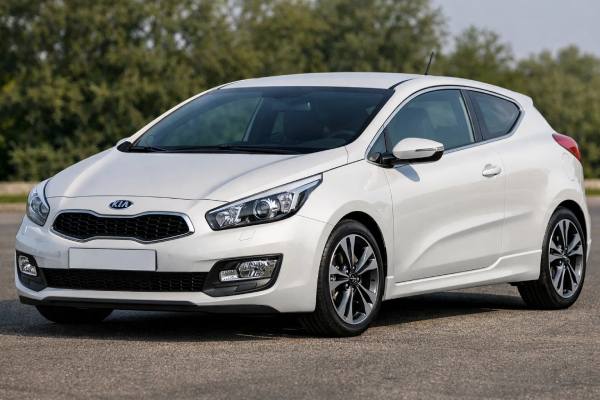
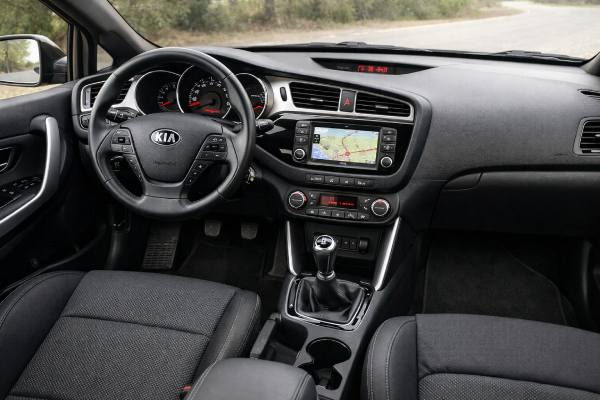
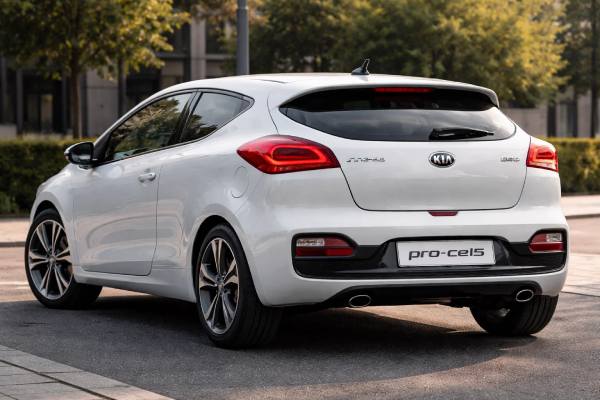
The 2012–2015 Kia Pro Cee’d (JD) with the 1.6 U-II CRDi 128 hp diesel is the “long-legs” version of the range: strong mid-range torque for motorway work, good real-world economy, and a chassis that feels planted at speed. It’s also a modern diesel in the practical sense—common-rail injection, turbocharging, EGR, and (on most markets) a DPF—so ownership is as much about how you use it as how you service it. Frequent short trips, skipped oil changes, and ignored warning lights can turn a reliable commuter into an expensive project.
Buy a good one, keep the maintenance honest, and this Pro Cee’d rewards you with low running costs, a mature ride for a sporty three-door, and the kind of passing power that makes daily driving calmer.
Owner Snapshot
- Strong low-to-mid rpm pull makes overtakes easier than the petrol options, especially with passengers.
- Efficient at steady speeds; motorway commuting is where the 1.6 CRDi feels most “in its element.”
- Cabin refinement is better than many older diesels, but cold starts and regen cycles can add noise.
- DPF and EGR health depends on usage; lots of short trips often mean more cleaning and forced regens.
- Sensible oil service cadence: every 12 months or ~15,000 km (9,000 mi) for mixed city use, even if the official interval is longer.
Section overview
- Kia Pro Cee’d JD diesel profile
- U-II 1.6 CRDi specs and dimensions
- Pro Cee’d JD trims and safety gear
- Common faults and recall checks
- Maintenance plan and buying advice
- Real driving and fuel economy
- How it stacks up against rivals
Kia Pro Cee’d JD diesel profile
This Pro Cee’d (JD) configuration sits in the sweet spot for drivers who want the “sporty three-door look” without the running costs of a hot hatch. The 1.6 U-II CRDi at 128 hp focuses on usable torque rather than high-rpm power. In daily driving, the car feels relaxed: you can short-shift, surf the mid-range, and still keep pace with traffic easily. That character also suits the Pro Cee’d’s longer doors and slightly more style-led packaging—this is a car that often ends up doing longer commutes rather than school-run stop-start.
From an engineering standpoint, you’re looking at a modern small diesel: a turbocharged common-rail four-cylinder with emissions hardware that is very sensitive to maintenance quality and operating temperature. If it spends its life on motorways or steady A-roads, it tends to be straightforward. If it spends its life doing cold 3–5 km trips, the same car can become a regular visitor to a workshop for soot-related issues. That’s not a “bad engine” problem—it’s a usage match problem.
Where the JD platform helps is refinement. Compared with older C-segment diesels, the structure is stiffer and the suspension tuning is more mature. You get a stable front-drive chassis, predictable braking, and a cabin that stays calm at cruising speeds. The trade-off is that the sportier body style doesn’t magically create more boot space or rear access—practicality is “fine,” not class-leading.
The biggest ownership advantage is cost-per-kilometre when the car is used as intended. The biggest risk is buying a neglected example with a tired DPF/EGR system, weak battery/charging health (which affects regens), or a clutch/dual-mass flywheel that’s near the end of its life. With the right checks up front, this variant can be a durable, efficient daily.
U-II 1.6 CRDi specs and dimensions
Below are typical specifications for the 2012–2015 Pro Cee’d (JD) with the 1.6 U-II CRDi 128 hp diesel. Exact figures can vary by market, gearbox, wheel size, and VIN-specific equipment.
Powertrain and efficiency
| Item | Specification (typical) |
|---|---|
| Code | U-II CRDi (1.6 common-rail turbo diesel) |
| Engine layout and cylinders | Inline-4, DOHC, 16-valve (4 valves/cyl) |
| Bore × stroke | ~77.2 × 84.5 mm (3.04 × 3.33 in) |
| Displacement | 1.6 L (1582 cc) |
| Induction | Turbocharged (VGT on many variants) |
| Fuel system | Common-rail direct injection (CRDi) |
| Compression ratio | ~17:1 (varies by version) |
| Max power | 128 hp (94 kW) @ ~4,000 rpm |
| Max torque | ~260 Nm (192 lb-ft) @ ~1,900–2,750 rpm |
| Timing drive | Chain (typical for this family) |
| Rated efficiency | Commonly ~4.2–4.8 L/100 km combined (56–67 mpg UK / 49–56 mpg US), by market/test cycle |
| Real-world highway @ 120 km/h (75 mph) | Often ~5.0–5.8 L/100 km (49–56 mpg UK / 41–47 mpg US), wind/tyres/temperature dependent |
Transmission and driveline
| Item | Specification (typical) |
|---|---|
| Transmission | 6-speed manual is most common; some markets offer an automatic |
| Drive type | FWD |
| Differential | Open (traction managed by ESC/brake-based systems where fitted) |
Chassis and dimensions
| Item | Specification (typical) |
|---|---|
| Suspension (front/rear) | MacPherson strut / multi-link (most EU-spec JD) |
| Steering | Electric power steering |
| Brakes | Ventilated front discs / rear discs (diameters vary by trim) |
| Wheels/tyres (popular sizes) | 205/55 R16, 225/45 R17 (varies by trim) |
| Ground clearance | ~130–150 mm (5.1–5.9 in), market dependent |
| Length / width / height | ~4,310 / 1,780 / 1,430 mm (169.7 / 70.1 / 56.3 in) |
| Wheelbase | ~2,650 mm (104.3 in) |
| Turning circle (kerb-to-kerb) | ~10.4–10.8 m (34–35 ft) |
| Kerb weight | ~1,300–1,420 kg (2,866–3,131 lb) depending on gearbox/trim |
| Fuel tank | ~53 L (14.0 US gal / 11.7 UK gal) |
| Cargo volume | Typically ~380 L seats up (VDA), varies with spare wheel and trim |
Performance and capability
| Item | Specification (typical) |
|---|---|
| 0–100 km/h (0–62 mph) | ~10.5–11.5 s (gearbox and tyres matter) |
| Top speed | ~190–200 km/h (118–124 mph) |
| Braking distance (100–0 km/h) | Commonly ~36–40 m on good tyres (test dependent) |
| Towing capacity | Often offered in EU markets; typically up to ~1,300–1,500 kg braked (confirm by VIN) |
| Payload | Usually ~450–550 kg (confirm by door jamb label) |
Fluids and service capacities (common references)
| Item | Specification (typical) |
|---|---|
| Engine oil | ACEA C2/C3 low-SAPs; commonly 5W-30 (DPF-friendly) |
| Engine oil capacity | ~5.3 L (5.6 US qt) including filter (common listing for JD diesel range) |
| Coolant | Long-life OAT/HOAT type used by Kia/Hyundai (confirm spec) |
| A/C refrigerant | R134a on many 2012–2015 variants (verify under-hood label) |
Key torque specs (typical “decision-making” values)
These vary by brake size, hub design, and market, so treat them as guidance only until verified:
- Wheel nuts: commonly 90–110 Nm (66–81 lb-ft)
- Engine oil drain plug: commonly 30–40 Nm (22–30 lb-ft)
- Front caliper bracket bolts: often 75–100 Nm (55–74 lb-ft)
Safety and driver assistance (typical)
| Item | Notes |
|---|---|
| Euro NCAP | JD-era Cee’d achieved a 5-star rating in 2012 testing, with strong adult and child scores |
| ADAS | Primarily ESC, traction control, brake assist; advanced AEB/ACC/lane systems were limited or market-specific in this era |
Pro Cee’d JD trims and safety gear
Trim naming varies heavily by country, but most Pro Cee’d (JD) diesels follow a familiar pattern: a value-focused base grade, one or two mid trims, and a higher trim that bundles comfort and styling. When you’re shopping used, it’s smarter to focus on functional equipment (lights, tyres, infotainment, parking sensors, climate control) than on badge names.
Trims and options that matter in ownership
Common differences you’ll feel day to day include:
- Wheels and tyres: Moving from 16-inch to 17-inch usually sharpens steering response but increases tyre cost and can worsen ride quality on rough roads. Tyres also change braking performance more than many owners expect.
- Lighting: Some trims offer brighter projector or HID/LED-style lamps (market dependent). Better lights reduce fatigue on winter commutes.
- Climate and cabin comfort: Dual-zone climate, heated seats, and a heated steering wheel (where offered) are high-value used options because they’re expensive to retrofit.
- Parking aids: Rear sensors and a camera help because the Pro Cee’d’s long doors can make tight parking less graceful than a five-door.
- Audio and infotainment: Higher trims may add better speakers/navigation. Check for Bluetooth stability and whether the unit has had software updates for phone compatibility.
Quick identifiers when viewing a car
- VIN and build plate: Use them to confirm engine output version and gearbox pairing—this matters for service parts and recalls.
- Tyre placard: Confirms factory wheel sizes and recommended pressures; useful for spotting mismatched wheels.
- DPF presence: Many markets have a DPF on this generation diesel. Look for a DPF-related lamp on the cluster and check the exhaust for a pressure sensor line or temperature sensor wiring.
Safety ratings and structure
The JD Cee’d platform performed well in its era. In 2012 Euro NCAP testing for the Cee’d family, the rating achieved 5 stars with strong results for adult and child occupant protection and a solid “Safety Assist” score for systems like ESC and seatbelt reminders. For a used buyer, the practical takeaway is that the underlying crash structure is competent, and the car’s stability systems are meaningful in poor weather—assuming tyres and brakes are in good shape.
Safety systems and child-seat practicality
Typical equipment includes:
- Front, side, and curtain airbags (exact count varies by trim/market)
- ESC (electronic stability control) and traction control
- ISOFIX/LATCH points for child seats (usually outboard rear seats)
If you regularly carry children, confirm:
- ISOFIX covers are present and not damaged.
- Rear seatbelt buckles retract properly (no slack or twisting).
- The passenger airbag disable function (if fitted) works correctly and displays its status clearly.
Finally, remember that driver assistance is limited compared with newer cars. Treat this Pro Cee’d as a strong “passive safety + stability control” package rather than a modern ADAS car.
Common faults and recall checks
The 1.6 U-II CRDi can be reliable, but it has predictable weak spots—mostly tied to soot management, heat cycles, and wear items that diesel torque stresses.
Reliability map (prevalence × cost)
Common (often low-to-medium cost):
- EGR valve and intake soot buildup: Symptoms include hesitant acceleration, uneven idle, reduced power, and recurring engine lights. Root cause is soot and oil vapor forming deposits, especially with short trips. Remedy ranges from cleaning to replacement; sometimes an ECU update changes EGR behavior.
- DPF regeneration complaints: Frequent regens, rising oil level (fuel dilution), or a DPF warning lamp. Root cause is repeated interrupted regens or a sensor issue (pressure/temperature). Remedy is diagnosis first—don’t jump straight to “new DPF.”
Occasional (medium cost):
- Boost leaks and charge-air hose issues: Hissing, oily misting around hoses, underboost codes, and sluggish pull. Often a split hose, loose clamp, or intercooler seal.
- Injector sealing or combustion blow-by (varies by history): Ticking sounds, diesel smell, or tar-like deposits around injectors. If present, address early to avoid more difficult removal later.
Rare but expensive:
- Turbocharger wear: Whining, smoke under load, persistent underboost/overboost faults. Root causes include oil neglect, ingestion (filter issues), or prolonged high EGT events.
- Clutch and dual-mass flywheel (manual cars): Rattle at idle, vibration on takeoff, slipping under torque. City driving and aggressive launches shorten life.
Mileage/age bands that often matter
- 80,000–140,000 km (50k–87k mi): DPF/EGR pattern issues start to appear if the car did mostly city work.
- 120,000–200,000 km (75k–125k mi): Clutch/DMF and suspension wear (bushes, dampers) become more common.
- 10+ years: Electrical “small annoyances” show up—battery health, alternator load, door wiring in long doors, and aging sensors.
Software updates and calibrations
On this era of Kia diesel, drivability faults are sometimes resolved by:
- ECU reflashes for emissions-related fault logic
- Updates that refine idle control or regeneration strategy
- Infotainment updates for connectivity stability
When viewing a car, ask for service history evidence of dealer visits where software updates were applied, especially if there’s a history of warning lights.
Recalls and service actions
Rather than relying on hearsay, verify recalls by VIN using official recall databases and the car’s dealer record. The key is not only whether a recall existed, but whether the remedy was completed. If paperwork is missing:
- Request a printout from a dealer.
- Check the VIN in an official recall checker for your market.
- Confirm that any recall-related parts (airbags, wiring, fuel system components) show as completed in the service record.
Pre-purchase checks worth paying for
- Full diagnostic scan for stored and pending codes (DPF, EGR, boost, injector correction values if available).
- Battery and charging test (weak batteries can worsen diesel running quality and regen success).
- Evidence of regular oil servicing with a DPF-suitable oil spec.
- A sustained test drive: the car should reach full operating temperature and pull cleanly in 3rd/4th gear without flat spots.
Maintenance plan and buying advice
A good maintenance plan for this Pro Cee’d diesel is about preventing soot-related problems and protecting the turbo and fuel system.
Practical maintenance schedule (distance/time)
Use the official schedule as your baseline, then adjust for real-world use:
- Engine oil and filter: every 12 months or 10,000–15,000 km (6k–9k mi) for mixed city driving. If the car does mostly motorway miles, longer intervals may be acceptable—still, many long-life intervals are optimistic for aging diesels.
- Air filter: inspect every service; replace about every 20,000–30,000 km (12k–18k mi) depending on dust and environment.
- Cabin filter: every 12 months (keeps HVAC efficient and reduces window fogging).
- Fuel filter (diesel): commonly every 40,000–60,000 km (25k–37k mi); shorten if poor fuel quality is common.
- Coolant: often long-life, but a conservative approach is 5 years then every 3–5 years thereafter unless documentation proves the longer interval.
- Brake fluid: every 2 years (moisture raises boiling point risk and corrodes internals).
- Manual gearbox oil: not always listed as routine, but refreshing around 120,000–160,000 km (75k–100k mi) can improve shift quality.
- Serpentine/aux belt and tensioner: inspect each service; replace at signs of cracking/noise or around 100,000–160,000 km depending on condition.
- Glow plugs (diesel): not always scheduled; replace when cold starts degrade or faults appear—often after 150,000+ km.
Fluids and specs to insist on
- Engine oil: a low-SAPs oil meeting ACEA C2/C3 is common for DPF-equipped variants. Viscosity is often 5W-30 for this era.
- Oil capacity: listings commonly show ~5.3 L including filter for the JD diesel range.
- Coolant: use the correct Kia/Hyundai-approved long-life coolant type; mixing incompatible coolants causes sludge and heater-core issues.
“Keep the DPF happy” habits
You don’t have to baby the car, but you do need to operate it like a diesel:
- If you mostly do short trips, plan a longer drive periodically (for example, 20–30 minutes at steady speed) so regens can complete.
- Don’t ignore rising oil level—fuel dilution from interrupted regens is real and it accelerates wear.
- If a DPF light appears, address it promptly. Continuing to drive short trips can push it from “recoverable” to “forced regen or replacement.”
Buyer’s guide: what to check, what to budget
Inspection checklist:
- Cold start: should fire cleanly with minimal smoke and settle quickly.
- Idle quality: no hunting, excessive vibration, or strong diesel smell in the cabin.
- Under load: strong, smooth pull from ~1,800 rpm; no limp mode.
- Cooling system: stable temp, no unexplained coolant loss.
- Suspension: listen for front strut top noises and rear multi-link bush knocks.
- Corrosion hotspots: rear subframe areas, brake lines, and exposed fasteners in salted climates.
Common reconditioning items on used examples:
- Tyres (quality tyres matter for braking and stability control effectiveness)
- Front brakes (pads/rotors)
- Battery (a tired battery causes lots of “mystery” issues)
Best-match ownership profile:
- You drive longer distances regularly, want low fuel spend, and value torque.
- If you only do short urban trips, a petrol version may be a better long-term fit.
Real driving and fuel economy
The 128 hp 1.6 CRDi’s defining trait is how effortlessly it carries speed. It doesn’t feel “fast” in a dramatic way; it feels capable. The torque arrives early, which reduces the need to downshift for everyday overtakes. In the Pro Cee’d body, that character pairs well with the car’s stable platform and relatively planted stance.
Ride, handling, and NVH
- Ride: Generally firm enough to feel controlled, especially on larger wheels, but not harsh when suspension is healthy. Worn dampers or rear bushes make the car feel “busy” over ripples.
- Handling: Neutral and predictable for a FWD hatch. It will understeer when pushed, but it communicates clearly through the front tyres. Good tyres transform the car more than most modifications.
- Steering: Light-to-medium effort. Feedback isn’t sports-car rich, but it’s accurate enough for confident placement.
- Cabin noise: At steady motorway speeds, the diesel settles down. You’ll notice more diesel clatter when cold and during some regeneration events.
Powertrain character
- Throttle response: Best when already rolling. From a standstill, it’s smooth rather than punchy.
- Mid-range pull: The reason to buy this engine. It makes merging and passing calm and repeatable.
- Gearbox behavior: The common 6-speed manual suits the torque curve well. If equipped with an automatic in your market, focus on shift smoothness and service history; diesel torque is hard on neglected transmissions.
Real-world efficiency
Expect economy to vary more with usage than with small spec differences:
- City-heavy: ~6.0–7.2 L/100 km (39–47 mpg UK / 33–39 mpg US) depending on traffic and temperature.
- Highway 100–120 km/h: ~5.0–5.8 L/100 km (49–56 mpg UK / 41–47 mpg US).
- Mixed: ~5.5–6.5 L/100 km (43–51 mpg UK / 36–43 mpg US).
Cold weather can raise consumption noticeably because the engine takes longer to warm, regens may be more frequent, and winter tyres add rolling resistance.
Key performance metrics that change the verdict
- 0–100 km/h: Often around the low 11-second range, but the car feels quicker in rolling acceleration than the stopwatch suggests.
- Passing power: The 80–120 km/h zone is where the diesel shines; it typically needs fewer downshifts than petrol alternatives.
Load and long trips
With passengers and luggage, the diesel maintains cruising speed without constant gear changes. That’s also where it tends to be mechanically happiest: steady temperatures, fewer interrupted regens, and less soot accumulation. If you regularly do long trips, this engine is a strong match for the body style.
How it stacks up against rivals
The Pro Cee’d (JD) 1.6 CRDi 128 sits in a competitive space: stylish C-segment hatches and coupes that aim to feel “special” without going full performance model. Here’s how it generally compares.
Versus Volkswagen Golf / Scirocco 2.0 TDI (and similar)
- Strengths of the Kia: Often better value used, simpler equipment levels, and a strong warranty story in many markets (if transferable/valid).
- Strengths of the VW: Some interiors feel more premium; certain drivetrains offer stronger performance.
- Verdict: If you want cost control and a sensible torque-forward commute car, the Kia is compelling. If you want maximum refinement and are willing to pay for it, VW alternatives can feel a class higher—maintenance history is everything.
Versus Hyundai i30 (GD) 1.6 CRDi
- Similarity: Very close mechanically in many respects, since the brands share engineering DNA.
- Differences: The Pro Cee’d’s three-door shape feels more style-led; the i30 often wins on rear access and everyday practicality.
- Verdict: Choose the Pro Cee’d for styling and “specialness,” choose the i30 if you regularly use the back seats.
Versus SEAT Leon / Opel Astra GTC / Renault Mégane variants
- Handling: Some rivals feel sharper at the limit, especially sporty trims.
- Comfort: The Kia tends to be a balanced all-rounder; not the softest, not the stiffest.
- Ownership: The Kia’s appeal is predictability—parts availability is good, and the engine is well-known in service networks.
Who should pick the 128 hp diesel Pro Cee’d?
Pick it if:
- You do regular longer drives and want strong mid-range torque.
- You want a stylish three-door that still behaves like a sensible hatchback.
- You’re willing to maintain it like a modern diesel (oil quality, warm-up, regen awareness).
Avoid it if:
- Your driving is mostly very short trips where the engine rarely warms fully.
- You want modern driver assistance tech; newer cars do this better.
In short, this Pro Cee’d is at its best as an efficient, stable, torque-rich daily—especially for commuters who rack up consistent mileage and want a car that feels more “grown up” than its styling suggests.
References
- Oil-Grades-and-Capacities.pdf 2023 (Service Manual)
- euroncap_kia_ceed_2012_5stars.pdf 2012 (Safety Rating)
- Check if a vehicle, part or accessory has been recalled – GOV.UK 2026 (Recall Database)
- Owners Overview | Kia UK 2026 (Owner Support)
Disclaimer
This article is for informational purposes only and is not a substitute for professional diagnosis, inspection, or repair. Specifications, torque values, service intervals, and procedures can vary by VIN, market, model year, and installed equipment, so always verify details using official Kia service documentation for your specific vehicle.
If you found this guide helpful, please consider sharing it on Facebook, X/Twitter, or your favorite forum to support our work.