
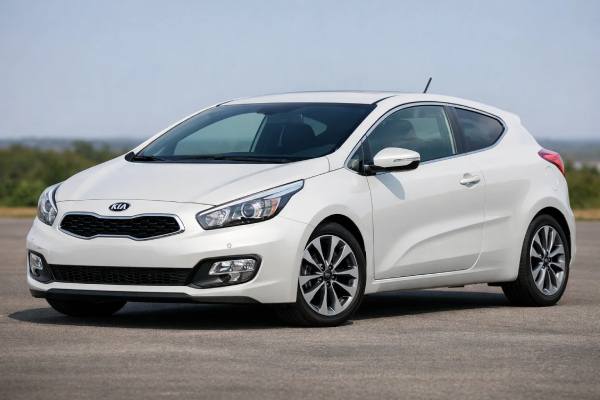
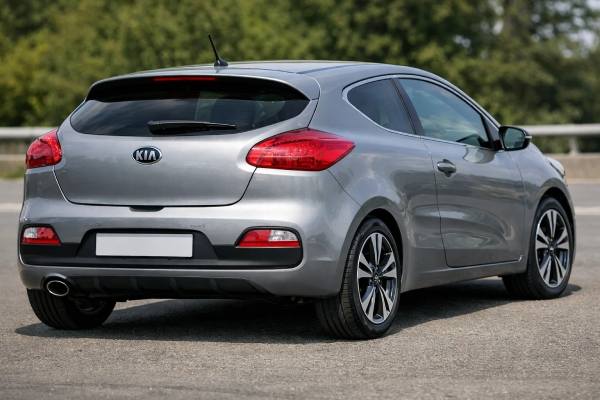
The 2012–2015 Kia Pro Cee’d (JD) with the 1.6 Gamma MPi in 130 hp tune is often the “best-balanced petrol” choice in this generation: noticeably stronger than the 1.4 MPi, but still simpler than many turbo engines of the same era. It keeps a naturally aspirated, multi-port-injected layout, which usually means predictable throttle response, fewer heat-stressed components, and less sensitivity to driving style. For owners, that translates into straightforward servicing, stable long-term running costs, and a car that feels relaxed at motorway speeds.
The trade-off is that it is still a small-displacement engine that rewards proper oil care and good cooling-system health. When neglected, common age-related issues show up first in the chassis and electrical systems—steering feel, suspension bushings, battery condition—rather than in dramatic engine failures. Buy on condition, not the badge on the tailgate.
Owner Snapshot
- Stronger day-to-day performance than the 1.4 MPi without stepping into turbo complexity.
- Usually consistent reliability when serviced on time with the correct oil grade and filters.
- Comfortable motorway pace with fewer “must downshift” moments during overtakes.
- Watch for EPS steering knocks, worn suspension links, and misfires from tired coils or plugs.
- Sensible baseline interval: engine oil and filter every 10,000–12,000 km (6,000–7,500 mi) or 12 months, whichever comes first.
Contents and shortcuts
- Pro Cee’d JD 1.6 MPi ownership profile
- Pro Cee’d JD 1.6 MPi specs tables
- Pro Cee’d JD equipment and safety gear
- Common faults, recalls, and fixes
- Service schedule and buying tips
- Road manners and fuel economy
- Rival cars and value verdict
Pro Cee’d JD 1.6 MPi ownership profile
In the JD-era Pro Cee’d lineup, the 1.6 Gamma MPi (130 hp) sits in a sweet spot: it keeps the naturally aspirated, multi-port-injection approach but adds the extra displacement and torque you feel every time you merge, climb a grade, or carry passengers. If you drive in mixed conditions—town during the week, motorway on weekends—this engine generally feels less “busy” than the 1.4 because it needs fewer downshifts to do the same work.
From an engineering and ownership angle, there are three reasons this configuration stays popular with second and third owners:
- Predictable fuel delivery (MPi): Multi-port injection sprays fuel into the intake ports rather than directly into the combustion chamber. In practice, that usually means stable idle quality, fewer sensitivity issues with fuel quality, and less risk of intake-valve carbon build-up compared with many early direct-injection petrols. It is not a guarantee of zero issues, but it can lower the likelihood of expensive “cleaning campaigns” later.
- Lower thermal stress than small turbos: A naturally aspirated engine typically runs with simpler charge-air plumbing and fewer high-heat components (turbo, intercooler piping, extra sensors and control hardware). Over long ownership, fewer high-temperature parts often means fewer leaks and fewer brittle plastic failures.
- Chassis match: The Pro Cee’d’s suspension tuning on the JD platform is generally composed at speed. With the 1.6 MPi, the car feels more in its element when you use that chassis—steady 120–130 km/h cruising, quick lane changes, and confident braking—because the powertrain can keep up without feeling strained.
Where owners get caught out is assuming “simple engine” equals “ignore maintenance.” It does not. If oil intervals are stretched or the wrong viscosity is used for the climate, timing-chain wear and sticky hydraulic components become more likely as mileage rises. Similarly, most of the ownership costs after 8–12 years are not engine-related at all: they come from tyres, alignment, suspension bushings, steering-column play, brakes, and battery health.
If your goal is a compact 3-door hatch you can keep dependable, this version usually rewards a buyer who prioritizes: full service history, a quiet front end over broken pavement, and clean electrical behavior (no intermittent warning lights) over cosmetic extras.
Pro Cee’d JD 1.6 MPi specs tables
The tables below are a practical baseline for 2012–2015 Pro Cee’d (JD) models equipped with the 1.6 Gamma MPi around 130 hp. Exact figures vary by market, emissions calibration, wheel package, and gearbox, so confirm against VIN-specific documentation when ordering parts or fluids.
Powertrain and efficiency
| Item | Specification |
|---|---|
| Code | Gamma MPi 1.6 (commonly referenced within the Gamma family; exact code varies by market) |
| Engine layout and cylinders | Transverse inline-4, DOHC, 4 valves/cyl |
| Displacement | 1.6 L (≈1,591 cc) |
| Bore × stroke | ≈77.0 × 85.4 mm (≈3.03 × 3.36 in) |
| Induction | Naturally aspirated |
| Fuel system | MPi (multi-port injection) |
| Compression ratio | Typically around 10.5:1 (market dependent) |
| Max power | 130 hp (≈97 kW) @ ~6,300 rpm |
| Max torque | Often around 155–160 Nm (≈114–118 lb-ft) @ ~4,800–5,000 rpm |
| Timing drive | Chain |
Rated efficiency (typical range):
- Combined: ~6.2–6.9 L/100 km (≈ 41–34 mpg UK / 38–30 mpg US) depending on homologation cycle and wheels.
- Real-world highway at 120 km/h (75 mph): often ~6.3–7.2 L/100 km if the car is aligned and the brakes are not dragging.
Transmission and driveline
| Item | Typical specification |
|---|---|
| Transmission | 6-speed manual is common; some markets may offer an automatic |
| Drive type | FWD |
| Differential | Open |
Chassis and dimensions
| Item | Typical specification (varies by trim and wheels) |
|---|---|
| Suspension (front/rear) | MacPherson strut / multi-link (common EU spec) |
| Steering | Electric power steering (EPS) |
| Brakes | Usually front ventilated discs; rear discs on many trims (diameters vary) |
| Wheels/tyres (popular) | 205/55 R16 or 225/45 R17 depending on trim |
| Ground clearance | Typically in the ~130–150 mm band (varies with wheels and market) |
| Length / width / height | ~4,310 / 1,780 / 1,430 mm (≈169.7 / 70.1 / 56.3 in) |
| Wheelbase | ~2,650 mm (≈104.3 in) |
| Turning circle (kerb-to-kerb) | ~10.6 m (≈34.8 ft) |
| Kerb weight | Commonly ~1,230–1,340 kg (≈2,712–2,955 lb) |
| Fuel tank | ~53 L (≈14.0 US gal / 11.7 UK gal) |
| Cargo volume | Often quoted around ~380 L seats up (VDA), larger with seats down |
Performance and capability (typical)
| Item | Typical figure |
|---|---|
| 0–100 km/h (0–62 mph) | ~9.8–11.0 s (depends on gearbox and wheels) |
| Top speed | ~195–205 km/h (121–127 mph) |
| Braking distance | Highly tyre-dependent; healthy brakes and quality tyres matter more than brand |
| Towing capacity | Market-specific; verify VIN plate and handbook |
Fluids, service capacities, and key torque priorities
Because official capacities differ by engine code and market, use these as planning ranges only:
- Engine oil: commonly 5W-30 (or 5W-40 in some climates/markets); correct ACEA/API spec matters as much as viscosity.
- Oil capacity: often around 3.6–4.0 L with filter (verify for your exact engine).
- Brake fluid: typically DOT 4.
- Coolant: long-life ethylene-glycol type; correct mix and proper bleeding are critical.
For torque values, prioritize accuracy over guesswork: wheel bolts, brake-caliper bracket bolts, and suspension fasteners should always be tightened to VIN-correct specs from official service documentation.
Pro Cee’d JD equipment and safety gear
Because trims and option bundles differ by country, it helps to think of the 2012–2015 Pro Cee’d (JD) range in “equipment layers” rather than specific trim names. The 1.6 MPi was commonly available in mid and higher trims, where it makes the most sense: the engine’s extra flexibility pairs well with larger wheels, added sound insulation, and comfort features that increase kerb weight.
Trims and options that change the driving feel
Wheel and tyre packages
- 16-inch (often 205/55 R16): usually the best balance for ride quality, tyre cost, and steering precision.
- 17-inch (often 225/45 R17): sharper initial response and stronger stance, but more impact harshness and greater sensitivity to alignment. If the car “wanders,” assume tyres or geometry before blaming the steering system.
Brakes and suspension
- Higher trims may include larger brake hardware. Even if the parts look similar, pad compounds and disc quality make a real difference in pedal feel.
- Multi-link rear suspension (common in many European specs) helps stability over mid-corner bumps and during quick lane changes.
Comfort and convenience
- Heated seats and steering wheel can be a real value add in cold climates.
- Parking sensors and camera reduce “three-door blind spots” and can prevent low-speed bumper damage.
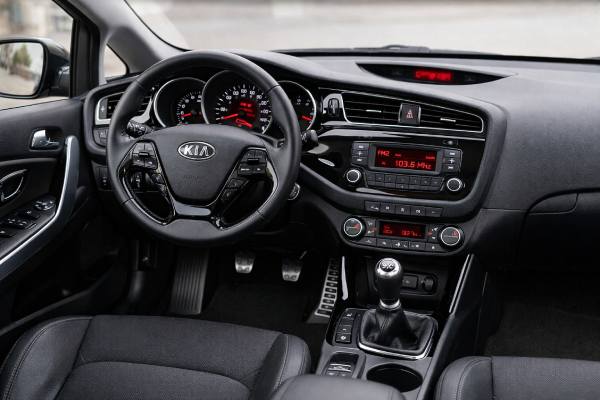
- Infotainment varies by year and market; during inspection, test Bluetooth calls, microphone clarity, and steering-wheel button response.
Quick identifiers during a viewing
- Tyre size on the sidewall often hints at trim level and how the car will ride.
- Look for factory sensor fitment (clean integration) versus aftermarket installs (often messy wiring).
- Check the instrument cluster and steering-wheel controls: higher trims tend to have more driver-information menus and audio controls.
Safety ratings and safety systems
Structurally, the JD-generation Cee’d family is generally regarded as strong for its era, and many variants achieved high Euro NCAP results under the test protocols at the time. In daily ownership terms, the most important safety contributors you can control are not the published stars—they are:
- Tyre quality and tread depth (the biggest real-world stopping-distance variable).
- Brake condition (pad material, disc thickness, caliper slider freedom).
- Steering and suspension tightness (worn bushings reduce stability in emergency maneuvers).
Core safety systems you should expect
- Multiple airbags (front and side; curtain coverage varies by market and trim).
- ABS and ESC (electronic stability control) on most mainstream specs of this era.
- ISOFIX/LATCH child-seat points (confirm the exact seating positions supported in your market).
Driver assistance (ADAS) reality check
Most 2012–2015 compact hatches did not offer modern, always-on ADAS in the way newer cars do. Expect the basics—ESC, traction control, parking aids—and treat anything beyond that as a trim-specific bonus rather than a reason to buy. If the car has camera-based features, remember that windscreen replacements and front-end repairs can require calibration or at least careful verification of correct operation.
Bottom line: choose the safest example by buying the one with the best tyres, the straightest braking, and the cleanest warning-light behavior.
Common faults, recalls, and fixes
The 1.6 MPi Pro Cee’d tends to age in predictable patterns. The engine itself is usually not the first thing to fail; instead, ownership friction comes from steering feel, suspension wear, sensors, and the consequences of skipped fluid service. Below is a practical way to prioritize what you check and what you budget for.
Common issues (high likelihood)
EPS steering knock or clunk (low to medium cost)
- Symptoms: tapping or knocking through the steering wheel on small bumps; sometimes worse in cold weather.
- Likely cause: wear in steering column coupler/bushing or related intermediate components.
- Fix approach: confirm play is not from tie rods or ball joints; replace the worn coupler/bushing or steering-column component as required; align afterward.
Front suspension consumables (medium cost, but routine)
- Symptoms: thumps over potholes, vague turn-in, uneven tyre wear, “floaty” braking stability.
- Likely cause: drop links, strut top mounts, control-arm bushings, and occasionally rear bushings depending on roads and mileage.
- Fix approach: replace in pairs, then do a full alignment with correct rear geometry settings if adjustable.
Ignition misfires (low cost if addressed early)
- Symptoms: rough idle, hesitation, flashing engine light under load in severe cases.
- Likely cause: worn plugs, weak coils, or oil contamination from a small leak into plug wells.
- Fix approach: confirm with scan data and plug inspection; replace plugs at the correct interval; swap coils to see if the misfire follows; address any oil leak before it damages new coils.
Occasional issues (more dependent on maintenance history)
Timing chain noise or stretch indicators (medium to high cost)
- Symptoms: persistent cold-start rattle, correlation faults, roughness that does not match ignition problems.
- Likely cause: extended oil intervals, incorrect oil spec, or repeated short-trip use that accelerates contamination.
- Fix approach: diagnose with noise pattern, scan data, and inspection; replace chain, guides, and tensioner if out of spec.
Cooling system aging (medium cost)
- Symptoms: slow warm-up, temperature swings, coolant odor, or unexplained coolant loss.
- Likely cause: thermostat wear, hose aging, radiator damage, or a small seep at a joint.
- Fix approach: pressure test, inspect for dried residue, replace thermostat or components as indicated, and bleed properly.
Recalls, service actions, and verification
Recall and campaign coverage is market-specific. The correct process is the same everywhere:
- Run an official VIN or registration check using a manufacturer portal in your region.
- Ask the seller for dealer invoices or a printout showing completed campaigns.
- If in doubt, call a dealer with the VIN and request confirmation of outstanding actions.
As a buyer, you do not need to memorize recall headlines. You need proof the car has been checked, and you need to budget for a dealer visit if the seller cannot provide that proof.
Service schedule and buying tips
A clean-running 1.6 MPi is typically the result of consistent, boring maintenance. The schedule below is intentionally practical for real-world use—especially if the car sees short trips, winter driving, or heavy traffic.
Practical maintenance schedule (distance and time)
- Engine oil and filter: every 10,000–12,000 km (6,000–7,500 mi) or 12 months. If your use is mostly short trips, stick to 10,000 km or 12 months.
- Engine air filter: inspect every 15,000 km; replace around 30,000 km (18,000 mi) or sooner in dusty conditions.
- Cabin air filter: every 15,000–20,000 km (9,000–12,000 mi) or yearly to keep HVAC airflow strong and reduce window fogging.
- Spark plugs: commonly 60,000 km (37,000 mi); confirm plug type and interval for your exact engine calibration.
- Brake fluid: every 2 years, regardless of mileage.
- Coolant: follow the official interval for your coolant type; also inspect hoses and the thermostat at major services.
- Manual gearbox oil (where serviceable by market guidance): consider 80,000–120,000 km (50,000–75,000 mi) if you want long-term shift quality and bearing protection.
- Accessory belt and hoses: inspect at each major service; replace if cracked, squealing, or oil-soaked.
- Tyre rotation: every 10,000–12,000 km (6,000–7,500 mi); align yearly or after any suspension work.
- 12 V battery: test annually after year 4; many batteries last 4–6 years depending on climate.
Fluids and specs: how to avoid expensive mistakes
- Match the oil specification recommended for your market and engine variant. Viscosity alone is not enough; the correct ACEA/API category matters for wear control and timing-chain health.
- Use the correct coolant type and do not mix incompatible coolants. If history is unknown, a proper drain, refill, and bleed is safer than topping up blindly.
Buyer’s guide: the highest-value inspection steps
1) Start with steering and suspension
Drive over small bumps at low speed with the windows down. A knock you can repeat is a negotiation point and a repair you should plan.
2) Check braking behavior like a technician
Do a few firm stops from 60–90 km/h (where safe). The car should track straight with no steering shake. Shake usually means warped discs, pad deposits, or worn suspension geometry—not “just how it is.”
3) Verify engine smoothness under load
In a high gear at low rpm, apply throttle gently. If the car hesitates or surges, think plugs, coils, or fueling. A smooth pull is a good sign.
4) Look for evidence of routine care
Fresh filters, clean fluids, and consistent invoices are worth more than a long options list.
Long-term durability outlook
If you buy a well-kept example and maintain it on a sensible schedule, the 1.6 MPi Pro Cee’d often delivers a stable ownership curve: predictable service costs, few “surprise” failures, and a chassis that stays pleasant when you refresh wear items before they cascade into tyre wear and steering looseness.
Road manners and fuel economy
The 1.6 MPi changes the Pro Cee’d’s character in a helpful way: it does not turn it into a hot hatch, but it makes the car feel more confident and less dependent on constant shifting. You still use the gearbox, but you do it because you want to, not because the car demands it for every small rise or overtake.
Ride, handling, and NVH
- Motorway stability: This is where the JD platform generally feels mature. With correct alignment and good tyres, it tracks cleanly at 120–130 km/h and feels secure in crosswinds.
- Cornering balance: Neutral and predictable at normal speeds. The rear suspension tuning tends to keep the car settled mid-corner, which makes it easy to place on a B-road.
- Steering feel: EPS is light in parking maneuvers and steady at speed, but it filters feedback. Any clunking or inconsistent self-centering should be treated as a fault to diagnose, not a “feature.”
- Cabin noise: Wheel choice matters. 17-inch tyres typically add road noise and impact harshness; 16-inch setups often feel quieter and more forgiving.
Powertrain character
- Throttle response: Linear and easy to modulate. It rewards smooth inputs rather than aggressive stabs.
- Useful torque band: The 1.6 gives you more flexibility at low and mid rpm than the 1.4, so you can hold a gear longer in traffic and still accelerate cleanly.
- Passing and hills: You still downshift for fast passing, but it feels more composed and less strained, especially with passengers.
Real-world efficiency (what owners usually see)
Expect fuel economy to vary strongly with trip length and wheel size:
- City-heavy short trips: ~7.8–9.5 L/100 km (≈36–30 mpg UK / 30–25 mpg US).
- Mixed driving: ~6.6–7.6 L/100 km (≈43–37 mpg UK / 36–31 mpg US).
- Highway 100–120 km/h: ~6.3–7.2 L/100 km (≈45–39 mpg UK / 37–33 mpg US).
- Cold weather: short-trip consumption can jump noticeably due to slower warm-up and thicker fluids.
Two high-impact efficiency fixes that also improve safety:
- Alignment and tyre pressure: incorrect toe settings and underinflation quietly increase fuel use and make the car feel nervous.
- Brake drag: sticking caliper sliders or a partially seized caliper can waste fuel and overheat discs.
Performance metrics that matter in practice
- 0–100 km/h: typically around 10 seconds in good conditions, which feels meaningfully stronger than the 1.4 MPi for merging and overtakes.
- Real-world pace: the car’s advantage is not “launch speed,” it is the way it holds speed on grades and responds in the midrange when you need a quick gap.
Rival cars and value verdict
When you compare the Pro Cee’d 1.6 MPi (130 hp) to rivals from the same era, you are really comparing ownership philosophy. Many competitors offered smaller turbo petrols with stronger midrange and sometimes better official economy, but they also introduced more complexity. The Kia’s appeal is that it can deliver “enough performance” while staying comparatively straightforward to keep healthy.
Versus Volkswagen Golf and similar turbo-petrol rivals
- Kia strengths: predictable naturally aspirated response; generally fewer high-heat components than small turbo engines; often strong value on the used market for comparable age and mileage.
- Rival strengths: turbo petrols often feel quicker in everyday overtakes because they make torque lower down; some also return excellent highway economy when lightly loaded.
- Who wins: if you prioritize low drama and consistent costs, the Kia has a strong case. If you prioritize effortless torque and don’t mind added complexity, the turbo rivals can feel more modern.
Versus Ford Focus and handling-first alternatives
- Kia strengths: stable, confident motorway behavior and a comfortable daily feel, especially on sensible wheel sizes.
- Rival strengths: Focus often provides better steering feedback and a more playful chassis at the limit.
- Who wins: choose on condition. A tight Focus can be more rewarding; a worn Focus can feel worse than a well-maintained Kia.
Versus platform cousins and direct competitors
- Hyundai i30 (related): very similar mechanical story in many markets; let history and condition decide.
- Opel/Vauxhall Astra and Renault Mégane (era peers): often comparable comfort and practicality; parts pricing and local specialist familiarity vary by region.
- Who wins: buy the car that has had its suspension and brakes kept fresh and its fluids changed on time. In this age bracket, maintenance quality outweighs brand stereotypes.
Value verdict: who should buy this exact configuration?
Buy the Pro Cee’d JD 1.6 MPi if you want:
- a compact hatch that feels composed at motorway speeds,
- enough power to reduce constant shifting compared with smaller engines,
- and a petrol drivetrain that stays understandable for independent shops.
Consider a different engine or rival if:
- you routinely carry heavy loads in hilly terrain and want stronger torque without downshifts,
- you want modern ADAS features as a priority,
- or you are willing to accept higher powertrain complexity to gain stronger low-rpm performance.
The best example is the one with a quiet front end, clean electrical behavior, and evidence of regular oil and brake-fluid service—because that is what determines whether the next five years feel inexpensive or irritating.
References
- Kia C’eed – Crash Test 2012 2012 (Safety Rating)
- New-generation Kia cee’d awarded top safety score by EuroNCAP – Kia Slovakia s.r.o. 2012 (Safety Rating)
- Käyttöohjekirjat | Kia Finland 2025 (Owner’s Manual)
- Engine Oil Grades and Capacities 2023 (Service Manual)
- Car Safety Recalls | What They Are & What To Do 2026 (Recall Database)
Disclaimer
This article is for informational purposes only and is not a substitute for professional diagnosis, inspection, or repair. Specifications, torque values, service intervals, and procedures can vary by VIN, market, engine calibration, and equipment. Always verify details using the official owner’s manual and service documentation for your exact vehicle.
If you found this guide useful, please consider sharing it on Facebook, X (Twitter), or your preferred community to support our work.