

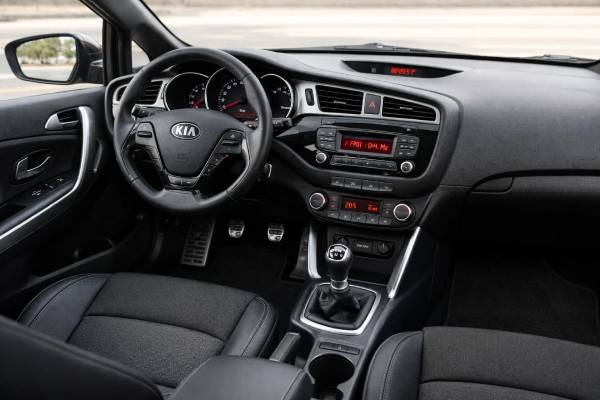
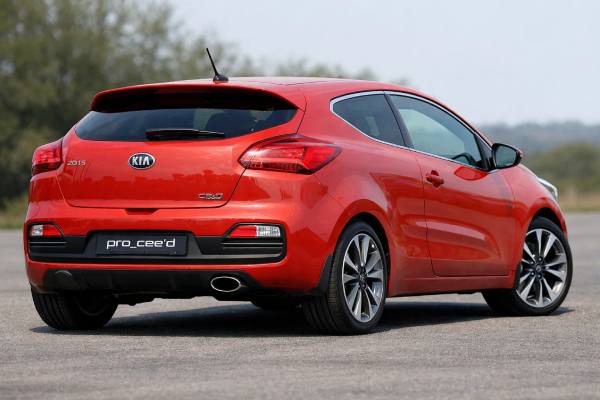
The 2012–2015 Kia Pro Cee’d (JD) with the 1.6-litre Gamma GDi is the “rev-happy” petrol choice in the range: smooth at idle, eager past mid-rpm, and noticeably sharper than the smaller MPi engines when you’re already moving. It’s also a simple, naturally aspirated package—no turbo plumbing, no intercooler, fewer heat-stress parts—yet it uses gasoline direct injection (GDi), which changes what “good maintenance” means.
If you’re shopping or maintaining one today, the ownership story usually comes down to three things: how consistently it received oil changes, whether it spends its life on short trips (a common GDi stress case), and how well the chassis has been kept tight (tyres, alignment, and front-end bushings make a big difference). Get those right, and this Pro Cee’d can be a durable, pleasant daily driver with honest running costs.
What to Know
- Strong mid-range and top-end pull for a naturally aspirated 1.6, especially once rolling.
- Generally uncomplicated drivetrain (no turbo), with predictable servicing and parts availability.
- Solid crash-test record for the generation, with standard stability control in most markets.
- GDi ownership caveat: intake-valve deposits can build up if it’s used mainly for short trips.
- Practical baseline interval: change engine oil every 10,000–12,000 km or 12 months (whichever comes first), especially in city use.
Navigate this guide
- Kia Pro Cee’d JD 1.6 GDi in depth
- Kia Pro Cee’d JD 1.6 GDi specs tables
- Kia Pro Cee’d JD trims and safety equipment
- Reliability fault patterns and fixes
- Maintenance routine and buyer’s checklist
- Driving feel and real economy
- Rivals and segment alternatives
Kia Pro Cee’d JD 1.6 GDi in depth
This Pro Cee’d variant sits in a sweet spot for drivers who like a naturally aspirated engine that still feels modern. The 1.6 Gamma GDi is designed to make its best power higher in the rev range, with direct injection helping efficiency and response once the engine is warm. In daily use that means two different personalities: calm and quiet when you drive gently, then noticeably more energetic if you’re willing to downshift and let it spin.
From an engineering point of view, the big change versus MPi engines is where the fuel is delivered. With GDi, fuel is injected directly into the combustion chamber at high pressure. That improves charge cooling and can support a higher compression ratio, but it also removes one “side benefit” of port injection: gasoline no longer washes the intake valves. Over time, oil vapour from the crankcase ventilation system (PCV) and blow-by residues can stick to the back of the intake valves and bake into deposits. It doesn’t happen to every car at the same rate, but it’s common enough that you should treat driving pattern and oil-change discipline as part of reliability.
Chassis-wise, the Pro Cee’d body style tends to feel slightly tighter than a well-used five-door simply because many examples have lived less utilitarian lives—fewer child seats, fewer curb hits, fewer years as a high-mileage fleet tool. That’s not a rule, but it’s a useful buying angle: condition matters more than the badge on the tailgate. A tidy suspension, decent tyres, and correct alignment can make this car feel a class above a tired example with the same mileage.
Finally, set expectations on modern driver assistance: most 2012–2015 cars deliver strong passive safety (structure, airbags) and solid stability-control tuning, but limited “active” automation compared with newer models. If you’re coming from a recent car with standard AEB and lane centring, the Pro Cee’d will feel more analog—and that’s either a downside or the point, depending on why you’re buying.
Kia Pro Cee’d JD 1.6 GDi specs tables
Below are the most useful, ownership-relevant specifications for the 2012–2015 Pro Cee’d (JD) fitted with the 1.6 Gamma GDi petrol engine. Exact figures can vary by market, gearbox, wheel size, and trim, so treat weights, gearing-linked performance, and some capacities as “typical ranges” unless you confirm by VIN and handbook for your exact car.
Powertrain and efficiency
| Item | Spec |
|---|---|
| Code | Gamma GDi (commonly listed as G4FD in many markets) |
| Engine layout and cylinders | Inline-4, front transverse; DOHC; 4 valves/cyl |
| Displacement | 1.6 L (1,591 cc) |
| Induction | Naturally aspirated |
| Fuel system | Gasoline direct injection (GDi) |
| Compression ratio | ~11.0:1 (typical listing) |
| Max power | 135 hp (99 kW) @ ~6,300 rpm (market-dependent rating standard) |
| Max torque | ~165 Nm (122 lb-ft) @ ~4,850 rpm |
| Timing drive | Chain (inspect for noise/stretch symptoms as mileage rises) |
| Rated efficiency | Typically ~6.0–6.5 L/100 km combined (varies by wheels/gearbox/test cycle) |
| Real-world highway @ 120 km/h | Often ~6.5–7.5 L/100 km depending on tyres, wind, and load |
Transmission and driveline
| Item | Spec |
|---|---|
| Transmission | 6-speed manual is common; some markets may offer an automatic (verify by market/year) |
| Drive type | FWD |
| Differential | Open |
Chassis, dimensions, and practicality
| Item | Spec (typical for JD Pro Cee’d) |
|---|---|
| Suspension (front/rear) | MacPherson strut / torsion beam (trim-dependent tuning) |
| Steering | Electric power steering; rack-and-pinion |
| Brakes | 4-wheel discs on many trims; rotor sizes vary by trim/market |
| Wheels and tyres (common) | 205/55 R16 or 225/45 R17 (varies by trim) |
| Ground clearance | Typically ~135–145 mm (5.3–5.7 in) |
| Length / Width / Height | ~4,310 mm / ~1,780 mm / ~1,430 mm (varies slightly by equipment) |
| Wheelbase | ~2,650 mm |
| Turning circle (kerb-to-kerb) | Typically ~10.4–10.8 m |
| Kerb (curb) weight | Often ~1,250–1,350 kg (2,756–2,976 lb) depending on trim/gearbox |
| Fuel tank | Typically ~53 L (14.0 US gal / 11.7 UK gal) |
| Cargo volume | Often ~380 L seats up; ~1,200+ L seats down (method and trim can change the number) |
Performance and capability
| Item | Typical figure (varies by tyres/gearbox/trim) |
|---|---|
| 0–100 km/h (0–62 mph) | ~9.5–10.5 s |
| Top speed | ~190–200 km/h (118–124 mph) |
| Towing capacity | Market- and approval-dependent; confirm in your registration/handbook |
| Payload | Trim-dependent; confirm on door-jamb plate |
Fluids and service capacities (owner-focused)
Because capacities and fluid standards can vary by VIN and service bulletin, confirm in the owner’s handbook. These are typical decision-making pointers:
| System | What matters most |
|---|---|
| Engine oil | Use the handbook-specified grade for your climate; many owners stick to high-quality synthetic in the recommended viscosity |
| Coolant | Use OEM-spec long-life coolant (correct mix ratio per handbook) |
| Manual gearbox oil | Use the specified gear oil standard; change intervals are often “long,” but earlier service can help shift quality in older cars |
| A/C refrigerant | Type and charge vary; check the under-bonnet label |
Key torque specs (common checkpoints)
These are “sanity check” values used across many compact cars; always verify for your exact engine and hardware:
- Wheel nuts: typically ~90–120 Nm (66–89 lb-ft) depending on wheel/hub spec
- Engine oil drain plug: often ~30–40 Nm (22–30 lb-ft)
- Spark plugs (if removed): often ~18–25 Nm (13–18 lb-ft)
Safety and driver assistance (snapshot)
| Item | Typical for the generation |
|---|---|
| Crash ratings | Euro NCAP: 5-star rating for the generation (protocol-year specific) |
| Core stability systems | ABS, ESC (stability control), traction control on most markets |
| ADAS | Limited by modern standards; parking aids and basic lane warning may appear on higher trims/late years |
Kia Pro Cee’d JD trims and safety equipment
Trim naming varies sharply by country, so it’s more useful to think in “equipment bands” than memorize badges. Most markets offered a base grade focused on value, one or two mid grades with comfort features, and a higher grade that bundled larger wheels, upgraded lighting, and infotainment. The 1.6 GDi often sat in the middle-to-upper part of the petrol lineup, so you’ll frequently see it paired with nicer interiors and bigger wheels than the entry engines.
Trims and options: what changes in real life
Common upgrade items you’ll encounter:
- Wheel and tyre packages: 16-inch setups ride more quietly and are cheaper to refresh; 17-inch packages look better and sharpen turn-in, but increase road noise and can make the suspension feel busier on broken pavement.
- Climate and convenience: manual A/C vs dual-zone climate; heated seats and heated steering wheel on some higher trims; folding mirrors; keyless entry and push-button start on better-equipped cars.
- Infotainment tiers: basic radio with Bluetooth vs factory navigation; some markets offered better speakers or an external amplifier.
- Lighting: projector or HID-style headlamps in certain trims; front fog lamps and LED signature elements may appear on later cars.
Quick identifiers when viewing a used example:
- Larger alloy wheels plus projector-style lamps often signal a higher grade.
- A reverse camera integrated into the tailgate trim is a common “upper trim” tell.
- Dual-zone climate controls and seat-heater buttons usually indicate a higher equipment band.
Safety ratings: what the numbers mean
The JD generation achieved a strong Euro NCAP result for its time. Keep in mind that Euro NCAP protocols evolve, so a “5-star” from 2012 is not directly comparable to a new car tested under the latest rules. Still, it’s a meaningful baseline: the structure, restraint systems, and stability control calibration were competitive in the segment when new.
Safety systems and ADAS: what to expect (and what not to)
Most cars in this period include:
- Multiple airbags (commonly front, side, and curtain; exact count depends on market/trim)
- ISOFIX/LATCH-style child-seat anchors (typically outer rear seats)
- ABS and ESC with traction control
- Hill-start assist on many trims
What’s typically limited or optional:
- Automatic emergency braking (AEB): often not available on early JD cars, and not common until later model years in many brands.
- Adaptive cruise control (ACC) and lane centring: generally not part of this generation’s mainstream equipment.
- Lane departure warning: may appear on select trims/late years, but it’s not universal—verify by the presence of the camera module and the correct steering-wheel buttons.
A practical ownership note: if your car has any camera- or radar-based driver aids (even basic lane warning), windscreen replacement and wheel alignment can affect calibration. After major glass work or front-end repairs, it’s worth confirming that warning lights clear properly and systems behave normally on a test drive.
Reliability fault patterns and fixes
The 1.6 Gamma GDi Pro Cee’d is usually dependable when it gets consistent oil service and occasional longer runs, but its most common problems are pattern-based—meaning you can often predict them from usage history. Below is a practical map of what tends to go wrong, when, and what to do about it.
Common and low-to-medium cost issues
- Intake-valve deposits (common, medium cost over time)
Symptoms: rough cold start, light misfire at idle, reduced response, worse fuel economy.
Likely cause: GDi doesn’t wash intake valves; short trips and extended oil intervals accelerate deposit formation.
Remedy: confirm ignition health first (plugs/coils), then consider intake cleaning (often walnut blasting for best results). Reduce short-trip use where possible and tighten oil intervals. - Ignition coils and spark plugs (common, low-to-medium)
Symptoms: intermittent misfire under load, flashing MIL, hesitation.
Cause: normal wear; heat cycles; plugs overdue.
Remedy: replace plugs at the correct interval with the correct spec; replace coils as needed (many owners replace in pairs or as a full set if failures repeat). - PCV and crankcase ventilation quirks (occasional, low)
Symptoms: oil misting, idle quality changes, higher oil consumption, deposit acceleration.
Cause: stuck PCV valve or tired hoses.
Remedy: inspect/replace PCV valve and hoses; check for vacuum leaks.
Occasional, higher-impact items
- High-pressure fuel system sensitivity (occasional, medium-to-high)
Symptoms: hard starting, stumbling under load, fuel-pressure codes, loss of power.
Cause: injector deposits, high-pressure pump wear, or fuel-quality issues.
Remedy: proper diagnosis with fuel-pressure logging; use correct injectors/pump parts rather than “universal” fixes. If the car sat unused, expect more deposit-related work. - Timing-chain noise or correlation faults (rare-to-occasional, high if ignored)
Symptoms: rattling at start-up, persistent timing correlation codes, poor running.
Cause: stretched chain, tired tensioner, or oil neglect.
Remedy: treat timing-related faults seriously; confirm oil pressure and service history; replace components if out of spec.
Chassis and body age-related items
- Front suspension wear (common, medium)
Symptoms: clunks over bumps, vague steering, uneven tyre wear.
Cause: worn stabilizer links, bushings, ball joints, or tired dampers.
Remedy: refresh wear items in a targeted way, then align the car. This Pro Cee’d responds very well to a “tight front end.” - Brake hardware and slider corrosion (common in wet/cold climates, low-to-medium)
Symptoms: uneven pad wear, pulling, hot brakes, poor fuel economy.
Cause: sticky caliper sliders or seized pins.
Remedy: clean and lubricate sliders with correct brake grease; replace hardware if pitted.
Recalls, TSBs, and service actions
Without your VIN it’s not responsible to guess exact campaigns. The right approach is:
- Run the official recall check for your market.
- Ask a dealer to confirm completion status.
- Use service records to verify software updates were applied (where relevant).
For a pre-purchase inspection, request evidence of: regular oil services, plug replacements on schedule, and any work addressing misfires or fuel-system faults. A GDi car with repeated “it just needs a sensor” stories is one you want to approach carefully.
Maintenance routine and buyer’s checklist
A good maintenance plan for the 1.6 GDi Pro Cee’d is less about exotic work and more about consistency. GDi engines reward clean oil, good air filtration, and driving that occasionally brings full operating temperature for long enough to burn off moisture and fuel dilution. If you maintain it with that mindset, long-term costs tend to stay predictable.
Practical maintenance schedule (distance/time)
Use the stricter interval if the car does many short trips, winter use, or heavy city driving.
- Engine oil and filter: every 10,000–12,000 km or 12 months.
If you drive mostly highway, you can follow the handbook interval—many owners still choose the shorter interval on GDi for peace of mind. - Cabin air filter: every 15,000–20,000 km or 12 months (cheap comfort win).
- Engine air filter: inspect every service; replace about 30,000–40,000 km (earlier in dusty conditions).
- Spark plugs: commonly 60,000–90,000 km depending on plug type and handbook spec.
If you get cold-start misfires, verify plugs early rather than chasing sensors. - Brake fluid: every 2 years (feel and corrosion protection).
- Coolant: follow the handbook long-life interval (often many years); replace sooner if history is unknown.
- Manual gearbox oil: if shifting feels notchy when cold, consider a service around 100,000–120,000 km (even if not “required”).
- Tyre rotation and alignment: rotate every 10,000–12,000 km; align at least annually or after suspension work.
- 12 V battery health: test annually once the battery is 4–5 years old.
Ownership items that prevent bigger problems
- Keep the intake tract clean: strong filtration and no air leaks reduce deposit acceleration.
- Use good fuel: consistent quality helps injectors and combustion stability.
- Don’t baby it forever: occasional full-temperature runs and moderate load can reduce deposit and moisture buildup (without driving aggressively).
Buyer’s guide: what to check in 30 minutes
Paperwork and history
- Evidence of oil changes at reasonable intervals (not “whenever the car asked” for a decade).
- Any record of misfire repairs: plugs, coils, injectors, intake cleaning.
- Proof of recall completion through an official check.
Under the bonnet
- Listen for extended rattles at cold start (brief noise can be normal; persistent rattle needs attention).
- Check for oil seepage around the valve cover and timing cover area.
- Look for cracked intake hoses or signs of vacuum leaks.
Test drive
- Cold start should be stable within seconds; repeated stumbling suggests ignition or deposits.
- Under load, it should pull cleanly to higher rpm; hesitation can point to ignition or fuel pressure issues.
- Straight-line braking should be stable with no steering shake; feel for caliper drag after the drive (hot wheel smell is a clue).
Chassis condition
- Drive over small bumps with the radio off; clunks often reveal stabilizer links or bushings.
- Check tyre wear: inner-edge wear can hint at alignment or worn components.
Long-term durability outlook
With steady oil service and timely ignition work, the 1.6 GDi can age well. The biggest “budget swing” item is usually intake cleaning and any related misfire chasing—avoidable for some owners, unavoidable for others depending on drive cycle. Choose a car with honest maintenance records and a smooth cold start, and you’re starting on the right foot.
Driving feel and real economy
On the road, the 1.6 GDi Pro Cee’d feels like a classic European-market hatch: stable at speed, easy to place in a lane, and more composed than you might expect from a torsion-beam rear end—assuming the suspension is healthy. The steering is typically light in town and more settled on the motorway, but don’t expect hydraulic-style feedback. What you will notice is how much the car’s character changes with tyres; a good set can reduce noise and sharpen the first turn-in more than many owners anticipate.
Powertrain character
This engine’s torque peak arrives relatively high, so the car rewards a driver who uses the gearbox. Around town it’s perfectly fine, but it won’t give turbo-like shove at low rpm. For overtakes, a downshift is the difference between “adequate” and “confident.” Once you’re above the mid-range, it pulls cleanly and feels smoother than smaller engines that are constantly working hard.
If your car is a manual:
- Expect a fairly conventional, easy clutch take-up.
- Notchy shifting when cold can happen as fluid ages; fresh correct-spec oil can improve feel.
If your car is an automatic (market-dependent):
- Pay attention to shift quality when warm, and ensure there are no delayed engagements or flare-like rev jumps.
Ride, handling, and NVH
- Ride: 16-inch wheels usually deliver the best comfort-to-control balance. 17-inch wheels can feel sharper but more brittle over potholes.
- Handling: predictable and safe. It will understeer first, especially on cheaper tyres.
- Braking feel: generally consistent; any pulse or steering shake suggests warped rotors or sticking hardware.
- Noise: wind and tyre noise are more noticeable than engine noise at motorway speeds; again, tyre choice matters.
Real-world efficiency
Real consumption varies more with route than many owners expect:
- City-heavy driving: often 8.0–9.5 L/100 km (stop-start traffic and short trips hurt GDi efficiency).
- Highway 100–120 km/h: often 6.5–7.5 L/100 km with sensible tyres and correct pressures.
- Mixed use: commonly 6.8–8.0 L/100 km.
Cold weather typically adds noticeable consumption due to longer warm-up time and cabin heating demands. If you see unusually poor economy paired with rough cold starts, suspect ignition wear, deposits, or brake drag before blaming the engine design.
Selective performance metrics that matter
In healthy condition, this Pro Cee’d feels strongest in rolling acceleration—joining a fast road or passing from 80–120 km/h is comfortable if you downshift. The car is not a drag racer, but it’s quick enough to feel “right” in modern traffic while staying relaxed as a commuter.
Rivals and segment alternatives
The Pro Cee’d JD 1.6 GDi sits among sporty-looking compact hatches that prioritize everyday usability over hot-hatch drama. How it compares depends on what you value: steering feel, interior durability, fuel economy, or the likelihood of expensive engine-specific issues.
Where the Pro Cee’d 1.6 GDi tends to win
- Simple performance without a turbo: If you want naturally aspirated response and fewer forced-induction parts, it’s appealing.
- Value-for-equipment: Many examples are well-optioned for the money (heated features, good infotainment for the era).
- Comfortable motorway manners: Stable and quiet enough when tyres and suspension are sorted.
Where rivals can be stronger
- Low-rpm torque and flexibility: Small turbo petrol rivals often feel faster at everyday rpm without downshifting.
- Modern safety tech (if you cross-shop newer years): Later competitors may offer more standard ADAS.
- Steering feedback: Some drivers prefer the feel of certain European setups, though condition still matters most.
Cross-shopping guide (what to consider)
- Volkswagen-group alternatives (like the Golf/Leon family) often deliver strong cabin materials and a broad engine lineup, but maintenance costs can climb depending on engine choice and service history.
- Ford Motor Company’s Focus of the era can feel lively and precise, but you should evaluate engine/gearbox combinations carefully, as ownership experience varies widely by variant.
- Hyundai’s i30 sibling shares a lot of the underlying philosophy; the best choice often comes down to condition, spec, and local pricing rather than fundamentals.
- Opel and Renault competitors can offer strong seats and motorway comfort, but again, powertrain choice and maintenance history are decisive.
Practical verdict
Choose the Pro Cee’d 1.6 GDi if you want a straightforward petrol hatch that feels eager when driven with intent, and you’re willing to maintain it like a GDi (shorter oil intervals, attention to misfire symptoms, and a realistic attitude about intake deposits). If you want effortless low-end pull or the latest driver-assistance features, a newer turbo petrol hatch will likely fit your needs better—even if it’s less mechanically simple.
References
- Kia C’eed – Crash Test 2012 2012 (Safety Rating) ([Euro NCAP Newsroom][1])
- New-generation Kia cee’d awarded top safety score by EuroNCAP – Kia Slovakia s.r.o. 2012 (Safety Rating) ([kia.sk][2])
- Car Safety Recalls | What They Are & What To Do | Kia UK 2026 (Recall Database) ([Kia][3])
- Kia Car Owners Manual | Kia UK 2026 (Owner’s Manual Portal) ([Kia][4])
- Carens 2013 (Press Release) ([prod2-press.kia.com][5])
Disclaimer
This article is for informational purposes only and is not a substitute for professional inspection, diagnosis, or repair. Specifications, torque values, service intervals, and procedures can vary by VIN, market, model year, and installed equipment. Always verify details using your vehicle’s official owner’s manual and service documentation, and consult a qualified technician when needed.
If you found this guide helpful, please consider sharing it on Facebook, X (Twitter), or your favorite forum to support our work.