
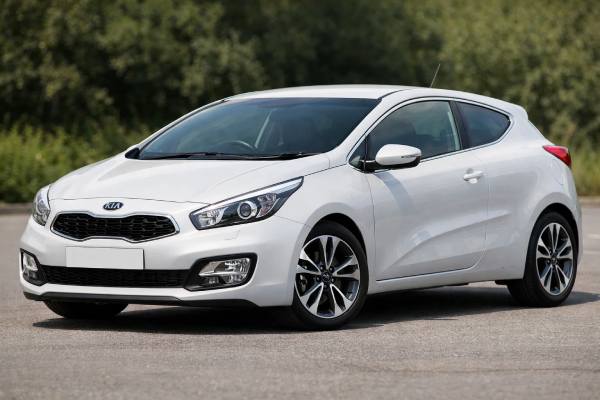
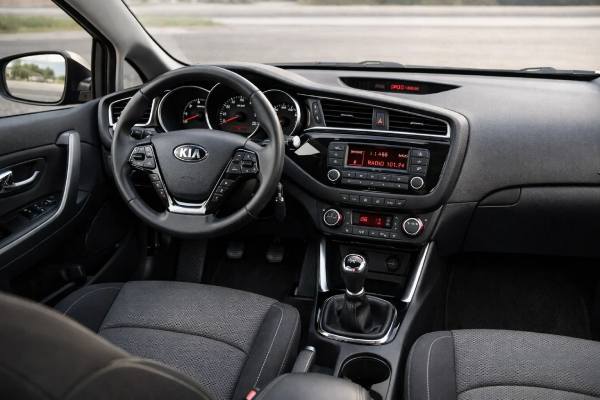
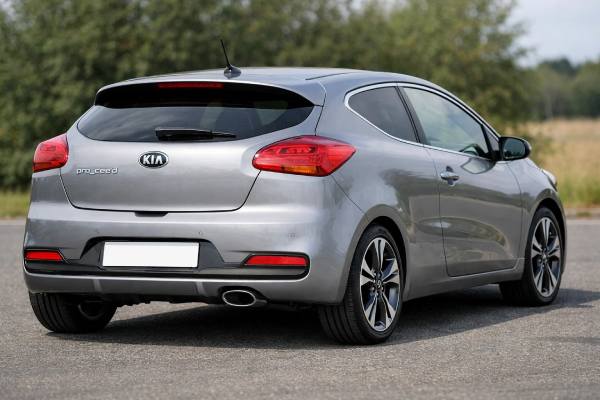
The 2012–2015 Kia Pro Cee’d (JD) with the 1.4 CRDi (U-II) 90 hp diesel is built around a simple ownership idea: deliver long-range efficiency and solid everyday drivability in a compact, well-packaged three-door. This engine is not about speed; it is about usable low-rpm torque, steady motorway cruising, and low running costs when you drive it in a diesel-friendly way.
Where owners win is fuel economy, stable handling, and a platform that generally wears well if serviced on time. Where owners get caught out is emissions hardware: repeated short trips can load up the EGR and (where fitted) the DPF, and neglected oil changes can shorten turbo and timing-chain life. If your use includes regular longer drives, this Pro Cee’d diesel can be a durable, low-consumption daily with a straightforward mechanical layout.
Owner Snapshot
- Strong real-world range on a full tank, especially on steady 90–120 km/h routes
- Diesel torque suits relaxed driving and hilly commutes better than the headline power suggests
- Cabin and boot packaging are practical for a three-door, with predictable road manners
- If your driving is mostly short, cold trips, plan for more EGR/DPF attention over time
- Change engine oil and filter at least every 12 months or 15,000–20,000 km (whichever comes first)
What’s inside
- Kia Pro Cee’d JD 1.4 CRDi explained
- Kia Pro Cee’d JD diesel specifications
- Kia Pro Cee’d JD trims and safety
- Diesel reliability and known fixes
- Service schedule and buying advice
- On-road performance and economy
- Comparing this diesel to rivals
Kia Pro Cee’d JD 1.4 CRDi explained
This Pro Cee’d (JD) variant pairs Kia’s three-door body with the 1.4 CRDi U-II diesel tuned to about 90 hp. In practice, it behaves like a “torque-first” compact: it pulls cleanly from low revs, settles into a quiet cruise once warm, and rewards smooth throttle rather than high-rpm work. Most cars are front-wheel drive with a 6-speed manual, which is a good match for the engine’s narrow sweet spot.
The engineering story is typical modern small diesel. You get a turbocharger and common-rail injection for efficiency and torque, plus emissions controls that keep it clean when used correctly. That last part matters: these systems expect heat. If the car spends its life doing short trips, the EGR (exhaust gas recirculation) and intake can coke up, and DPF-equipped versions can struggle to complete regenerations (burning soot out of the filter). Used as intended—regular longer runs—it tends to stay healthier.
As a chassis, the JD generation is mature and predictable. Steering is light, high-speed stability is good, and the suspension tune is typically European-compact: firm enough to feel controlled, soft enough to commute without drama. The three-door layout gives you long front doors and decent front comfort; rear access is naturally less convenient, but the boot remains genuinely usable for the class.
Ownership value comes down to matching the car to your driving pattern. If you drive 15–30 km at a time, mix in motorway, and keep up with oil service, it can be a low-cost long-runner. If your usage is mostly 3–5 km errands, you should either budget for emissions cleaning and sensor work or consider a petrol alternative in the same model family.
Kia Pro Cee’d JD diesel specifications
Below are practical, commonly published specs for the 1.4 CRDi 90 hp configuration. Treat values as “typical for the variant” because weights, tyres, and some equipment vary by market, model year, and trim.
Powertrain and efficiency
| Item | Specification (typical) |
|---|---|
| Engine family | U-II CRDi (small diesel) |
| Common engine code | D4FC (market-dependent) |
| Layout | Inline-4, transverse, front |
| Valvetrain | DOHC, 4 valves/cyl |
| Displacement | 1.4 L (≈1,396 cc) |
| Bore × stroke | ≈73.0 × 82.0 mm |
| Induction | Turbocharged, intercooler |
| Fuel system | Common-rail direct injection |
| Compression ratio | ≈17.0:1 (typical) |
| Max power | ≈90 hp (≈66 kW) @ ≈4,000 rpm |
| Max torque | ≈220 Nm (≈162 lb-ft) @ ≈1,500–2,750 rpm |
| Timing drive | Chain (typical for this family) |
| Rated efficiency | ≈4.1–4.5 L/100 km (NEDC-era figures vary by spec) |
| Real-world highway @ 120 km/h | ≈5.5–6.2 L/100 km (load, tyres, wind matter) |
Transmission and driveline
| Item | Specification (typical) |
|---|---|
| Transmission | 6-speed manual |
| Drive type | FWD |
| Differential | Open (traction control via brake-based systems) |
Chassis and dimensions
| Item | Specification (typical) |
|---|---|
| Front suspension | MacPherson strut |
| Rear suspension | Multi-link (common on JD Cee’d family) |
| Steering | Electric power steering |
| Brakes (front/rear) | Disc / disc (sizes vary by trim) |
| Popular tyre size | 205/55 R16 (common), 225/45 R17 (sport trims) |
| Length / width / height | ≈4,310 / 1,780 / 1,470 mm |
| Wheelbase | ≈2,650 mm |
| Turning circle | ≈10.6 m |
| Kerb weight | ≈1,290–1,365 kg |
| Fuel tank | ≈53 L |
| Cargo volume | ≈380 L seats up; ≈1,300+ L seats down (method varies) |
Performance and capability
| Item | Specification (typical) |
|---|---|
| 0–100 km/h (0–62 mph) | ≈14.0–14.5 s |
| Top speed | ≈170 km/h (≈106 mph) |
| Towing | Often limited; check the VIN plate for braked/unbraked ratings |
Fluids and service capacities (common references)
| Item | Specification (typical) |
|---|---|
| Engine oil | ACEA C2/C3 (market dependent), commonly 5W-30 |
| Oil capacity (service fill) | ≈5.3 L (with filter) |
| Coolant | Long-life OAT coolant; mix commonly 50:50 |
| Brake fluid | DOT 4 (typical) |
| A/C refrigerant | Often R134a on this era; charge varies by system |
Key torque specs (critical fasteners only, typical ranges)
| Fastener | Typical torque |
|---|---|
| Wheel bolts/nuts | ≈88–108 Nm |
| Engine oil drain plug | ≈35–45 Nm (verify for your sump/plug) |
Kia Pro Cee’d JD trims and safety
Trim naming depends heavily on country, but the equipment pattern is usually consistent. Lower trims focus on value (smaller wheels, simpler infotainment), mid trims add comfort and convenience, and higher trims bring larger wheels, sportier styling, and more tech. For the 1.4 CRDi 90, the drivetrain itself is normally the same across trims; what changes is weight, tyre width, and the amount of electrical equipment—each of which can shift real-world consumption and ride comfort.
Common trim and option themes (market-dependent):
- Eco-focused packages (often branded around stop-start): can include an ISG system (idle stop), low rolling-resistance tyres, and sometimes minor aero tweaks. These help in certification cycles, and they can help in city driving if the starter and battery are kept healthy.
- Wheel and tyre packages: 16-inch wheels tend to ride better and protect fuel economy. 17-inch packages sharpen steering response but can make pothole impacts harsher and raise tyre costs.
- Infotainment tiers: base audio vs touchscreen navigation units. Older head units can be sensitive to low battery voltage; weak batteries often show up as Bluetooth glitches and random resets.
- Comfort options: heated seats and steering wheel (common in colder markets), dual-zone climate on higher grades, and upgraded lighting.
Quick identifiers when viewing a used car:
- Tyre size on the sidewall tells you a lot about the trim intent (comfort vs sport).
- Look for an ISG/idle stop button if the car has stop-start.
- Rear parking sensors/camera and headlight washer caps often indicate higher equipment lines.
Safety ratings and structure
For this JD generation, the Cee’d family earned a strong Euro NCAP result for its era, with a 5-star rating and high adult/child scores under the test protocol used at the time. As always, remember that “5 stars” is not directly comparable across very different test years, but it is still a positive sign of baseline structure and restraint design.
Typical safety equipment (varies by trim/market):
- Multiple airbags (commonly front, side, and curtain; some markets add a driver knee airbag)
- ESC (electronic stability control) and traction control
- ISOFIX child-seat mount points
- ABS with brake assist
Driver assistance (ADAS) reality check
On 2012–2015 compact cars, advanced ADAS is usually limited. Many Pro Cee’d diesels rely on strong fundamentals—brakes, stability control, and predictable handling—rather than modern automated safety. Lane departure warning may appear in later years or higher trims in some markets, but automatic emergency braking is typically not a core feature on this specific era/trim mix. If ADAS matters to you, check the build sheet and physically verify sensors and camera modules, because availability is uneven.
Diesel reliability and known fixes
This 1.4 CRDi can be dependable, but it is less forgiving of neglected maintenance and short-trip usage than the petrol versions. The most useful way to think about reliability is by prevalence (how often it happens) and severity (how expensive it can get).
Common and usually manageable (low to medium cost)
- EGR and intake soot build-up
Symptoms: hesitant acceleration, rough idle, reduced power, engine light.
Likely cause: soot and oil vapour residue restricting airflow and EGR valve movement.
Remedy: cleaning (EGR/intake), checking boost hoses, and making sure the car regularly reaches full operating temperature. - DPF loading issues (where fitted)
Symptoms: rising oil level (diesel dilution), frequent fan operation, warning light, limp mode.
Likely cause: repeated short trips preventing full regeneration; faulty pressure/temperature sensors can contribute.
Remedy: assisted regeneration, sensor diagnosis, and changing oil if dilution is suspected. Driving pattern changes are often the long-term fix. - Glow plug and relay wear (age-related)
Symptoms: hard starting when cold, rough first minute, fault codes.
Remedy: replace plugs as a set if multiple are weak; check the relay and battery health. - Vacuum and boost-control leaks
Symptoms: inconsistent torque, over/under-boost codes, whistle/hiss noises.
Remedy: smoke test intake, inspect vacuum lines and intercooler hoses, verify turbo actuator operation.
Occasional but can become expensive (medium to high cost)
- Turbocharger actuator or bearing wear
Symptoms: persistent limp mode under load, blue smoke (oil), siren-like noise.
Root causes: contaminated oil, long service intervals, hot shutdown habits.
Remedy: fix the cause first (oil, breather, leaks), then repair/replace turbo as required. - Injector sealing or injector wear
Symptoms: diesel smell, ticking, rough idle, starting issues, correction values out of range.
Remedy: replace seals, inspect injector seats, or refurbish/replace injectors if spray patterns and corrections are poor. - Clutch and dual-mass flywheel (manual cars)
Symptoms: rattle at idle, shudder on take-off, slipping in higher gears, vibration under load.
Remedy: clutch kit and DMF together if symptoms point to both; avoid “clutch-only” shortcuts when a DMF is clearly noisy.
Software, recalls, and service actions
On modern diesels, updates can matter—especially for drivability, sensor logic, and sometimes idle-stop behaviour. Because actions vary by market and VIN range, your best move is to verify completion using an official recall checker and dealer history. Do not rely solely on a stamp book; ask for itemized invoices or digital service records where possible.
Service schedule and buying advice
A good maintenance plan for this Pro Cee’d diesel has two goals: protect the turbo and timing system with clean oil, and keep the emissions system healthy with correct driving cycles and timely filter changes.
Practical maintenance schedule (owner-friendly)
Use the shorter interval if the car does frequent short trips, cold starts, or heavy city traffic.
- Engine oil and filter: every 12 months or 15,000–20,000 km
Use a low-ash diesel oil meeting the correct ACEA category for your DPF/emissions spec. Short-trip cars should not run long oil intervals. - Air filter: inspect every service; replace around 30,000 km (sooner in dusty areas)
- Cabin (pollen) filter: 15,000–20,000 km or annually if you want consistent HVAC airflow
- Fuel filter: commonly every 60,000 km (diesels are sensitive to water/contamination)
- Brake fluid: every 2 years regardless of mileage
- Coolant: typically long-life; many owners renew around 5–10 years depending on the coolant spec and service guidance for their market
- Manual gearbox oil: often described as long-life, but a preventive change around 100,000–120,000 km can improve shift quality and longevity
- Aux/serpentine belt and tensioner: inspect every service; replace on condition or around 90,000–120,000 km depending on wear and noise
- Battery and charging system test: yearly from year 5 onward; stop-start cars are harder on batteries
Emissions-health habits (especially for DPF cars)
- Aim for a 20–30 minute drive at steady speed every couple of weeks (motorway or open road).
- Avoid repeatedly shutting the engine down immediately after a hard climb or fast motorway run; give it 30–60 seconds of gentle driving or idle to stabilize turbo temperature.
- If you see rising oil level or smell diesel in oil, treat it as urgent: dilution can damage bearings.
Buyer’s guide: what to inspect before purchase
Bring a scan tool if possible, and insist on a cold start.
Engine and emissions
- Cold start quality, idle stability, and smoke (a little condensation is normal; persistent blue smoke is not)
- Boost response on a short test drive (should pull cleanly from ~1,500 rpm)
- DPF status indicators (if available) and evidence of frequent forced regenerations
- Oil level and condition (overfilled oil can suggest diesel dilution)
Drivetrain and chassis
- Clutch bite point and any shudder; listen for DMF rattle at idle with clutch engaged/disengaged
- Suspension knocks over sharp bumps, uneven tyre wear, and steering-centre feel
- Brake feel and straight-line stability under moderate braking
Paperwork
- Proof of oil services by time, not just mileage
- Any injector, turbo, or DPF work should be documented with reasons and parts used
- Confirmation of recalls/updates completed via official channels
Long-term outlook is good when maintenance is consistent and the car’s usage pattern matches a diesel’s needs. The cars that disappoint are usually the ones run like a petrol—short trips, long oil intervals, and ignored warning lights.
On-road performance and economy
Driven normally, the 1.4 CRDi 90 feels stronger than the headline horsepower suggests because torque arrives early. In city traffic, you can short-shift and ride the midrange without constantly chasing revs. On the motorway, it is happier at a steady cruise than in repeated high-speed bursts; passing is possible, but you plan it and downshift earlier than you would in a more powerful diesel.
Ride, handling, and NVH
The JD platform typically offers a controlled, confidence-building drive. Steering is light at parking speeds and settles down on the move. With 16-inch tyres, ride comfort is noticeably better over rough surfaces; 17-inch packages can feel sharper but also louder and more brittle over potholes. Road noise depends heavily on tyre brand and wear—an important point on used cars, because cheap tyres can make the cabin feel much noisier than it should.
Noise and vibration change a lot with engine temperature. Cold, the diesel is more audible and can feel slightly gruff; warm, it becomes smoother and more muted at cruise. If a warmed-up car still feels harsh or boomy, look for worn engine mounts, intake leaks, or injector imbalance.
Powertrain character
Throttle response is best described as progressive. Below ~1,400 rpm it can feel sleepy; once the turbo is working, it pulls consistently through the midrange. The 6-speed manual helps keep the engine in its best band, but it also means you will downshift on hills sooner than expected if you are used to higher-output diesels.
Real-world efficiency
Real-world economy depends more on route type than driving style:
- City with short trips: can climb into the 6–8 L/100 km range, especially in winter
- Mixed driving: often lands around 5–6 L/100 km
- Steady highway (100–120 km/h): commonly 5.5–6.2 L/100 km, with wind and tyres making a big difference
If you are chasing economy, the biggest wins are tyre pressures, smooth acceleration, and avoiding repeated cold starts. If you are chasing longevity, the biggest win is keeping oil clean and ensuring the car completes hot running cycles often enough to keep emissions hardware from loading up.
Comparing this diesel to rivals
In the 2012–2015 compact class, this Pro Cee’d diesel sits in a sensible middle ground: not the quickest, not the most high-tech, but often strong value with a mature chassis.
Versus Volkswagen Golf 1.6 TDI (90–105 hp era)
- Golf advantages: often stronger resale, broad specialist support, and (in many trims) a more premium cabin feel.
- Kia advantages: frequently better equipment for the money on the used market and a straightforward ownership experience when serviced well.
- Decision point: choose the Golf if you prioritize brand ecosystem and refinement; choose the Kia if you want value, predictability, and you find a well-maintained example.
Versus Ford Focus 1.6 TDCi
- Focus advantages: steering feel and handling finesse are often class-leading.
- Kia advantages: a calmer, more “set-and-forget” daily character and typically competitive running costs.
- Decision point: Focus for driving feel; Kia for balanced daily use and equipment value.
Versus Renault Mégane 1.5 dCi
- Mégane advantages: the 1.5 dCi can be very efficient and relaxed when healthy.
- Kia advantages: a more solid-feeling chassis baseline and, depending on market, fewer electrical quirks as the cars age.
- Decision point: pick based on service history quality; either can be excellent or frustrating depending on prior care.
Versus Hyundai i30 1.4 CRDi
This is the closest mechanical cousin in many markets. Differences come down to trim packaging, cabin design, and which example has the better maintenance record. In practice, you should shop the condition of the individual car—tyres, clutch feel, emissions health, and service evidence—more than the badge.
The big picture
If your priority is low fuel use and long-range commuting in a compact three-door, the Pro Cee’d 1.4 CRDi makes sense—especially when priced below more brand-premium rivals. If your priority is short city errands, consider petrol alternatives or be realistic about the extra emissions-system attention modern diesels may demand.
References
- Engine Oil Grades and Capacities 2023 (Service Maintenance)
- Kia C’eed – Crash Test 2012 2012 (Safety Rating)
- Car Safety Recalls | What They Are & What To Do | Kia UK 2026 (Recall Information)
- Kia Car Owners Manual | Kia UK 2026 (Owner’s Manual Portal)
Disclaimer
This article is for informational purposes only and is not a substitute for professional diagnosis, inspection, or repair. Specifications, torque values, service intervals, and procedures can vary by VIN, market, model year, emissions equipment, and installed options. Always confirm details using your vehicle’s official owner’s manual and service documentation, and follow qualified technician guidance where appropriate.
If you found this guide useful, please consider sharing it on Facebook, X (Twitter), or your favorite forum to help others and support our work.