

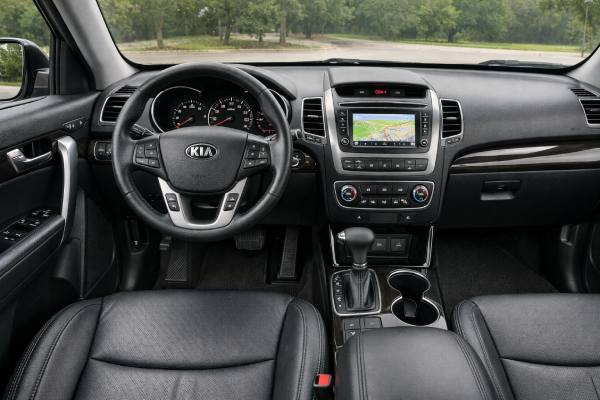
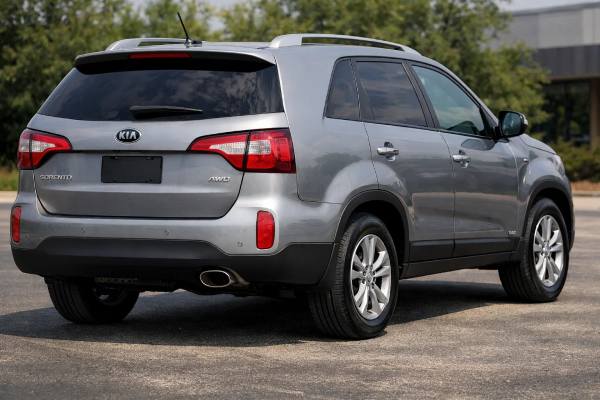
The 2013–2014 facelift Kia Sorento XM with the 2.2-liter diesel is one of the most usable “do-everything” crossovers of its era: strong mid-range torque, relaxed highway cruising, and the ability to carry a family without feeling fragile. The D4HB 2.2 CRDi (common-rail turbo diesel) suits this heavy body better than most gasoline four-cylinders, especially when you drive loaded or cover long distances. Ownership, though, hinges on diesel-specific habits: correct low-ash oil for the DPF, clean fuel, and a driving pattern that lets the exhaust system complete regenerations. Another point to clarify early is drivetrain naming. Many markets offered a 2WD Sorento that is typically front-wheel drive; some listings casually call it “RWD.” Treat “RWD/2WD” claims as something you verify by VIN and underbody inspection rather than an assumption.
Quick Specs and Notes
- Strong real-world pull from low rpm makes daily driving and overtakes easier than most 2.0–2.4 gasoline rivals.
- Efficient long-distance cruiser: diesel torque and gearing suit highway use and full-load driving.
- Facelift models often feel more refined inside, with better noise control and feature packaging.
- Diesel ownership requires discipline: DPF and EGR issues get expensive when service history is unclear.
- Plan fuel filter service every 30,000–40,000 km (19,000–25,000 mi) or 24 months (sooner with poor fuel quality).
Jump to sections
- Sorento XM RWD diesel profile
- Sorento XM 2.2 CRDi technical specs
- Sorento XM trims, options, and safety
- Diesel reliability and common faults
- Maintenance plan and buyer’s guide
- Driving feel and real-world economy
- How it stacks up against rivals
Sorento XM RWD diesel profile
The facelifted 2013–2014 Sorento XM paired with the D4HB 2.2 CRDi is defined by one thing: usable torque in a heavy, family-sized body. Where many mid-size crossovers of this era feel fine until you add passengers, cargo, or hills, the 2.2 diesel typically keeps its composure. The turbocharger builds boost early, and the engine delivers its strongest work in the everyday band (roughly 1,700–3,000 rpm), so you spend less time “revving for progress.” For owners who commute, travel, or drive with full loads, that character is the diesel’s main advantage.
The facelift years also tend to feel more “finished” than early XM builds. You commonly see small improvements in cabin materials, reduced wind noise, and better feature availability depending on market. The vehicle remains a straightforward crossover underneath: unibody construction, independent suspension, and a conventional automatic transmission on many examples. This matters for long-term running costs because the platform does not rely on specialized off-road hardware to do its job.
A key clarification for shoppers is the drivetrain label in listings. Many Sorento XM “2WD” diesels are front-wheel drive, not rear-wheel drive, because the platform is front-drive-based in most regions. Some sellers and importers use “RWD” loosely to mean “not AWD.” If drivetrain type changes your decision, verify with:
- The VIN build data (dealer printout or OEM build sheet)
- The underbody (presence or absence of a rear driveshaft and rear differential)
- The dashboard controls (AWD lock button, if applicable)
In day-to-day use, the 2WD configuration has real benefits: fewer driveline fluids, fewer wear items, and usually slightly lower fuel consumption than AWD. The tradeoff is traction in deep snow and on steep, slippery inclines. With good winter tires, many owners find 2WD entirely adequate, but tire choice becomes more important than drivetrain badges.
If you approach this Sorento as a long-distance, family-hauling diesel with sensible maintenance, it can be an excellent value. If you approach it as a short-trip city vehicle with irregular servicing, the same diesel systems that make it efficient can become your biggest risk.
Sorento XM 2.2 CRDi technical specs
The tables below summarize common specifications for the 2013–2014 facelift Sorento XM with the D4HB 2.2-liter diesel around 197 hp. Numbers vary by market, emissions standard, and transmission, so use this as a technical map and confirm against your VIN and official documentation.
Powertrain and efficiency
| Item | Specification (typical for D4HB 2.2 CRDi) |
|---|---|
| Code | D4HB |
| Engine layout and cylinders | Inline-4 (I-4), DOHC, 4 valves/cyl |
| Bore × stroke | ~85.4 × 96.0 mm (3.36 × 3.78 in) |
| Displacement | 2.2 L (2,199 cc) |
| Induction | Turbocharged (variable geometry common), intercooled |
| Fuel system | Common-rail direct injection (CRDi) |
| Compression ratio | ~16.0:1 (varies by calibration) |
| Max power | 197 hp (145 kW) @ ~3,800 rpm |
| Max torque | ~421 Nm (310 lb-ft) @ ~1,800–2,500 rpm |
| Timing drive | Chain (typical for this family) |
| Rated efficiency | ~6.1–7.2 L/100 km (38–33 mpg US / 46–39 mpg UK) depending on test cycle and trim |
| Real-world highway @ 120 km/h | often ~7.2–8.0 L/100 km (33–29 mpg US / 39–35 mpg UK) depending on load and tires |
Transmission and driveline
| Item | Typical specification |
|---|---|
| Transmission | 6-speed automatic (common) or 6-speed manual (market-dependent) |
| Drive type | 2WD (often FWD in many markets; verify if listed as “RWD”) |
| Differential | Open (traction control manages wheel slip) |
Chassis and dimensions
| Item | Typical specification range |
|---|---|
| Suspension (front/rear) | MacPherson strut / multi-link |
| Steering | Rack and pinion; assist type varies by market |
| Brakes | 4-wheel disc (sizes vary by trim) |
| Wheels and tires (popular) | 235/65 R17 or 235/60 R18 (market-dependent) |
| Ground clearance | ~185 mm (7.3 in), wheel and market dependent |
| Length / width / height | ~4,685 / 1,885 / 1,685–1,735 mm (184.4 / 74.2 / 66.3–68.3 in) |
| Wheelbase | ~2,700 mm (106.3 in) |
| Turning circle (kerb-to-kerb) | ~11.0 m (36 ft) typical |
| Kerb weight | ~1,650–1,850 kg (3,640–4,080 lb) depending on seats and trim |
| GVWR | commonly ~2,450–2,550 kg (5,400–5,620 lb) depending on market |
| Fuel tank | often ~64 L (16.9 US gal / 14.1 UK gal) |
Performance and capability
| Item | Typical range |
|---|---|
| 0–100 km/h (0–62 mph) | ~9.0–10.0 s (trim and transmission dependent) |
| Top speed | ~190–200 km/h (118–124 mph) market-dependent |
| Braking distance | strongly tire-dependent; maintain quality tires for consistent stops |
| Towing capacity | commonly ~1,600–2,000 kg (3,530–4,410 lb) braked, varies by market and tow package |
| Payload | often ~500–650 kg (1,100–1,430 lb), trim dependent |
Fluids and service capacities
| Item | Typical guidance (verify by VIN) |
|---|---|
| Engine oil | Low-ash diesel oil suitable for DPF; viscosity often 5W-30 (ACEA class depends on market) |
| Engine oil capacity | ~6.5–7.0 L (6.9–7.4 US qt) with filter (variant dependent) |
| Coolant | Long-life ethylene glycol; mix commonly 50/50 |
| ATF (if automatic) | OEM-specified ATF for the 6-speed unit; do not mix types |
| A/C refrigerant | Type and charge vary by market; confirm under-hood label |
Safety and driver assistance
For 2013–2014 vehicles, prioritize what is realistically present:
- Core systems: ABS, ESC, traction control, multiple airbags, and child-seat anchors
- Common convenience safety: parking sensors and rear camera on many trims
- Emerging driver aids (market-dependent): blind-spot monitoring and rear cross-traffic alert on higher trims in some regions
Full modern AEB and lane-centering are generally not “baseline” equipment for this generation, so treat any listing claims carefully and verify by option code.
Sorento XM trims, options, and safety
Trim names vary by country, but the facelift Sorento XM usually follows a predictable structure: a base trim designed around value, mid trims that add comfort features, and upper trims that bundle convenience tech, larger wheels, and sometimes premium lighting. For long-term ownership, the most important differences are not cosmetic. They are the options that affect ride quality, repair cost, and how the diesel systems are stressed in real life.
Trims and options that change the experience
- Wheel and tire package: 17-inch wheels with a taller tire sidewall often ride better and protect suspension components on rough roads. Larger wheels can look great but increase tire cost and can amplify pothole impacts.
- Seating layout: many markets offered 5- and 7-seat configurations. Seven-seat versions add weight and usually see more wear in rear shocks and rear spring sag when the third row is used often.
- Climate system and cabin equipment: dual-zone climate control and heated seats are not just comfort; they can influence short-trip behavior. In cold weather, owners often idle diesels longer for heat, which is not ideal for DPF health. A well-functioning climate system reduces the temptation to “warm it up forever.”
- Parking aids: this Sorento’s rear visibility is workable but not perfect. A functional camera and sensors reduce bumper damage, and bumper damage is more than cosmetic because it can affect sensor systems on higher trims.
Year-to-year changes to watch in 2013–2014
Facelift updates often include small but meaningful changes:
- Infotainment revisions and phone integration differences
- Lighting updates (projectors or DRLs in some markets)
- Packaging shifts where a feature moves from optional to standard, or becomes tied to a specific wheel package
When shopping, treat “2013 vs 2014” as less important than build date, service history, and whether the vehicle matches your needs. A well-maintained earlier facelift can be a better buy than a neglected later one.
Safety ratings and what they really mean for this model
Safety ratings can be confusing because the Sorento XM spans multiple regions and test regimes. Some markets reference earlier Euro NCAP tests of a closely related Sorento configuration, while others publish their own assessments. Use ratings as context, not as a single-number verdict, and focus on what you can control now:
- Tires (quality and correct load rating)
- Brake condition and brake fluid freshness
- Suspension bushings and alignment
Safety systems and calibration considerations
Even without modern AEB, this Sorento relies heavily on ABS and ESC to keep it stable under emergency braking and sudden avoidance maneuvers. Two ownership notes matter:
- Low battery voltage can create intermittent warnings that look like “ABS problems” but are actually electrical supply issues. A battery load test is cheap and revealing.
- If the car has blind-spot sensors or a camera system, collision repairs and bumper replacements can disturb alignment and wiring. Verify that all warnings stay off after a long test drive, not just at startup.
Think of trim selection as risk management: choose the equipment that improves your daily use without adding fragile complexity you do not need.
Diesel reliability and common faults
The D4HB 2.2 CRDi is generally a strong match for the Sorento’s weight, but diesel reliability is less about “the engine block” and more about supporting systems: fuel quality, air path cleanliness, and exhaust aftertreatment health. Below is a practical breakdown by prevalence and cost tier, with the symptoms that help you identify problems early.
Common issues (low to medium cost)
- EGR valve and intake contamination: Symptoms include hesitant throttle response, rough idle, or reduced power at low rpm. Root cause is soot and oil vapor mixing in the intake path. Remedy is cleaning and, when needed, replacing the EGR components and checking the crankcase ventilation system.
- DPF loading and incomplete regenerations: If the vehicle is used for short trips and frequent cold starts, the diesel particulate filter (DPF) may not complete regeneration cycles. Symptoms include rising fuel consumption, frequent fan operation after shutdown, and sometimes warning lights. Remedy is changing the driving pattern (regular steady-speed runs), ensuring correct low-ash oil, and addressing any upstream issues that create excess soot.
- Fuel filter restriction: Modern common-rail systems are sensitive to water and dirt. A clogged fuel filter shows up as hard starting, hesitation under load, or rail-pressure faults. Remedy is timely filter changes and using reputable fuel sources.
Occasional issues (medium to high cost)
- Turbo control and boost leaks: You may hear whistling, feel flat acceleration, or see overboost and underboost codes. Root causes include split boost hoses, intercooler leaks, or turbo actuator problems. Remedy is pressure testing the charge air system before replacing expensive turbo components.
- Injector sealing and combustion leak-by: A ticking sound, diesel smell, or sooty residue around injectors can indicate sealing issues. Left untreated, this can become a more expensive repair. Remedy is resealing with correct hardware and ensuring injector seats are clean and undamaged.
- Cooling system aging: Overheating is less common than on neglected gasoline engines, but any diesel run hot risks turbo and head gasket damage. Remedy is preventive coolant service and early leak repair.
Rare but severe
- High-pressure fuel system failures: Rare, but expensive if it occurs because metal contamination can spread. Remedy typically involves replacing multiple components and thoroughly flushing the system. The best prevention is clean fuel, timely filters, and immediate attention to fuel-pressure faults.
Service actions and recall mindset
Because these vehicles are region-specific, your best approach is universal:
- Run a VIN recall and service campaign check using official databases and dealer records
- Ask for evidence of software updates related to emissions, drivability, or stability control
- Treat undocumented “freshly serviced” claims skeptically unless you see invoices and part numbers
A diesel Sorento with evidence of correct oil, fuel filter discipline, and periodic longer drives is usually a safer bet than a lower-mileage example used only for short city trips.
Maintenance plan and buyer’s guide
A practical maintenance plan for a diesel Sorento XM facelift aims to protect three expensive systems: the fuel system, the turbocharged air path, and the DPF. The good news is that disciplined service intervals are often cheaper than one major repair.
Practical maintenance schedule
Use the following as a conservative baseline for mixed driving. If the vehicle does many short trips, lives in cold climates, or tows, shorten intervals.
- Engine oil and filter: every 10,000–12,000 km (6,000–7,500 mi) or 12 months. Use the correct low-ash specification required for DPF-equipped diesels in your market.
- Fuel filter: every 30,000–40,000 km (19,000–25,000 mi) or 24 months. If fuel quality is uncertain, shorten the interval.
- Engine air filter: inspect at every oil change; replace around 20,000–30,000 km (12,000–18,000 mi) in dusty regions.
- Cabin air filter: every 15,000–20,000 km (9,000–12,000 mi) or yearly.
- Coolant: if history is unknown, consider a refresh around 5 years / 100,000 km (60,000 mi), then follow the official schedule.
- Automatic transmission fluid (if equipped): drain-and-fill service around 60,000–80,000 km (40,000–50,000 mi); earlier for towing or mountain use.
- Brake fluid: every 2 years, regardless of mileage.
- Brake inspection: check pads, rotors, and caliper slider pins at every tire rotation.
- Tires: rotate every 10,000–12,000 km (6,000–7,500 mi); align yearly or after significant impacts.
- Battery and charging test: yearly. Low voltage can trigger false stability-control and sensor faults.
Fluid choices and capacities that matter
- Oil specification matters more than brand. For DPF-equipped diesels, use the correct low-SAPS oil spec listed in your official documents. The wrong oil can shorten DPF life.
- Do not gamble on off-spec ATF. The 6-speed automatic’s shift quality and longevity depend on correct friction characteristics.
- Use fresh, correct coolant mixture to protect the turbo and prevent hot-spot corrosion.
Key torque specs for decision-making
Exact values vary, so treat this as guidance to verify:
- Wheel lug nuts are commonly in the 90–110 Nm (66–81 lb-ft) range.
- Drain plugs and filter housings vary widely; overtightening causes leaks and cracked housings, so use a torque wrench and the correct spec.
Buyer’s guide: inspection checklist
- Service history: oil type and interval, fuel filter receipts, and any DPF or EGR work.
- Cold start: look for excessive smoke, rough idle, or loud diesel knock that does not settle.
- Test drive at steady speed: a diesel should pull cleanly from 1,700–3,000 rpm without surging.
- Turbo and boost: listen for abnormal whistle or whoosh; check for oil misting around boost hoses.
- DPF behavior: frequent warning lights, repeated forced regenerations, or “recently cleaned DPF” with no evidence is a red flag.
- Underbody: confirm drivetrain layout (2WD vs AWD) and check for corrosion on brake lines and subframe areas in salted climates.
- Electronics: scan for stored codes, not just current warning lights.
A well-maintained diesel Sorento XM is often a satisfying long-term companion. A neglected one can become a cycle of emissions and intake repairs. Choose the car with proof, not promises.
Driving feel and real-world economy
In daily driving, the 2.2 diesel Sorento XM facelift feels confident in the way owners usually want a family crossover to feel: stable at speed, unbothered by hills, and calm when loaded. The steering is typically tuned for ease and straight-line stability rather than sports feedback. That tuning suits long-distance travel, and it pairs well with diesel torque because you rarely need to push the engine hard to keep pace.
Ride, handling, and NVH
Ride quality is generally best on the smaller wheel packages. The Sorento’s suspension deals well with broken pavement, but worn bushings and tired dampers can make it feel heavy and slightly delayed over repeated bumps. Listen for:
- Clunks over potholes (sway bar links or bushings)
- Thumps at low speed (strut mounts)
- A growl that changes with gentle steering input (wheel bearings)
Cabin noise at highway speeds depends heavily on tires. A budget tire with aggressive tread can make the car seem “older” overnight. If you prioritize quietness, choose touring tires and maintain correct pressures.
Powertrain character and transmission behavior
The D4HB’s strong low-rpm torque is the star. Around town, the car moves with light throttle, and the transmission typically upshifts early. Under moderate acceleration, you’ll feel a quick surge as boost builds, then a steady pull rather than a dramatic top-end rush. This is exactly what makes the diesel feel well matched to the Sorento’s weight.
On a 6-speed automatic, pay attention to:
- Smooth lockup: a healthy torque converter locks without shudder at steady speeds.
- Kickdown logic: it should respond promptly without flaring or slipping.
- Heat management: repeated hard pulls in hot weather on old ATF can cause rougher shifts.
Real-world fuel economy expectations
Fuel use varies widely by driving style and route, but diesel Sorentos typically reward steady-speed driving:
- City: often 8.0–10.0 L/100 km (29–24 mpg US / 35–28 mpg UK) depending on traffic and warm-up time
- Highway at 100–120 km/h: often 7.2–8.0 L/100 km (33–29 mpg US / 39–35 mpg UK)
- Mixed: commonly 7.5–9.0 L/100 km (31–26 mpg US / 38–31 mpg UK)
Cold weather can increase fuel use and can also stress the DPF regeneration process because the engine spends more time warming up and the exhaust stays cooler. A simple habit helps: once a week, give the vehicle a steady 20–30 minute drive at operating temperature. That routine supports DPF health and reduces moisture buildup in the exhaust.
For most owners, this powertrain’s best advantage is not outright speed. It is the ability to move a heavy family vehicle efficiently without feeling strained.
How it stacks up against rivals
The Sorento XM facelift diesel sits in a competitive space where many rivals were either gasoline-focused or used smaller diesels that felt more stressed when loaded. Your “best choice” depends on how you drive and what kind of maintenance culture you prefer.
Versus Hyundai Santa Fe (similar platform DNA)
In many markets, the Santa Fe offers similar driving manners and powertrain philosophy. The decision usually comes down to condition, equipment, and service history rather than a large engineering gap. Choose the one with clearer diesel maintenance records and fewer signs of short-trip use (frequent DPF/EGR work, inconsistent oil history).
Versus Toyota Highlander and Honda Pilot (ownership simplicity benchmarks)
In regions where these are common, the Highlander and Pilot often win on “low drama” ownership, especially if they are gasoline-only offerings in your market. The Sorento diesel can be more efficient on long trips and feel stronger in mid-range pull, but it demands better fuel and stricter oil discipline. If you want the least diesel-related complexity, a gasoline rival may fit better, even if it uses more fuel.
Versus Ford Edge, Nissan Murano, and comfort-led crossovers
These often feel quiet and comfortable, sometimes with stronger acceleration in certain trims. Long-term risk can revolve around transmission type and service history. The Sorento’s conventional automatic can be an advantage when maintained, and the diesel’s torque makes highway driving easy. The tradeoff is emissions-system upkeep that some gasoline rivals avoid.
When the Sorento XM diesel makes the most sense
This model is especially strong for:
- High-mileage drivers who spend time at steady speeds
- Families who frequently drive loaded, on hills, or with moderate towing needs
- Buyers who can commit to correct oil and fuel filter intervals
It is a weaker match for:
- Short-trip city driving with long idle warm-ups
- Owners who prefer minimal emissions-system complexity
- Buyers who cannot verify service history
If you buy on condition and maintenance evidence, the 2013–2014 facelift Sorento XM diesel can offer an appealing balance of torque, practicality, and running efficiency that still feels relevant today.
References
- Kia Sorento | Safety Rating & Report | ANCAP 2013 (Safety Rating)
- Safety comes clean 2009 (Safety Rating)
- Kia Sorento – Euro NCAP Results 2009 2009 (Safety Rating)
- Check for Recalls: Vehicle, Car Seat, Tire, Equipment | NHTSA 2026 (Recall Database)
- Owners Manual Download | Kia Owners | Kia Australia 2026 (Owner’s Manual)
Disclaimer
This article is for informational purposes only and is not a substitute for professional inspection, diagnosis, or repair. Specifications, torque values, fluid types, capacities, intervals, and procedures can vary by VIN, market, emissions equipment, and production date. Always verify details using your official owner’s manual, service documentation, and dealer VIN records before performing maintenance or repairs.
If you found this guide useful, please consider sharing it on Facebook, X/Twitter, or your favorite forum to support our work.