
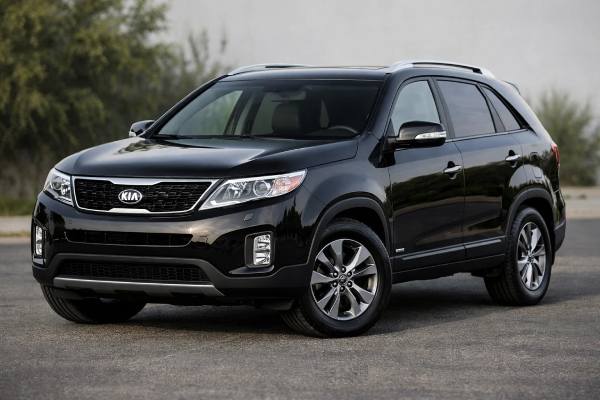
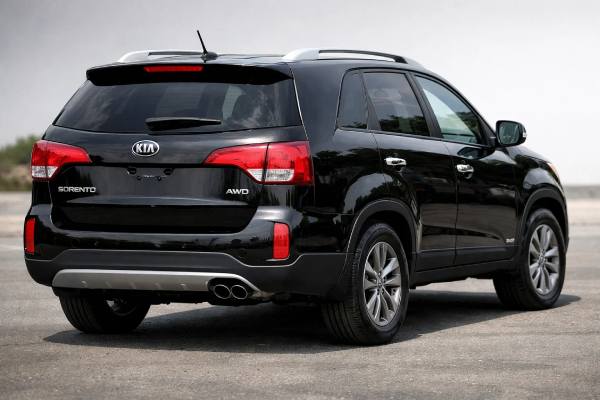
The 2013–2014 facelift of the XM-generation Sorento is a sweet spot for buyers who want a midsize family SUV that still feels “mechanical” in a good way: a conventional automatic transmission, straightforward suspension, and proven V6 architecture. In this configuration, the Sorento leans into smooth, relaxed power rather than chasing outright speed, and it delivers a long-distance-friendly ride with decent ground clearance for rough roads and winter use.
If your market labels this version as “RWD,” treat that as a drivetrain descriptor used in listings rather than a universal engineering truth. Many “2WD” Sorentos of this era are front-drive-based, while AWD models add a rear coupling and extra hardware. The practical takeaway is simple: 2WD versions are usually lighter, simpler to service, and cheaper to keep on the road—if you don’t need maximum traction.
Top Highlights
- Strong V6 smoothness for towing and highway merging, with fewer “busy” shifts than small turbo engines.
- Cabin and cargo flexibility work well for family duty, and the facelift models improved structure and refinement.
- Ground clearance around 185 mm (7.3 in.) helps on bad pavement and winter ruts.
- Ownership caveat: budget for cooling-system and gasket seepage checks as the vehicle ages, not just oil changes.
- Plan engine oil service about every 10,000–12,000 km (6,000–7,500 mi) or 12 months (shorten for heavy city use).
Contents and shortcuts
- Sorento XM V6 facelift profile
- Sorento XM 3.5 V6 spec tables
- Sorento XM trims and safety tech
- Common faults and campaigns
- Maintenance plan and buying checks
- Road manners and real economy
- Rivals and best alternatives
Sorento XM V6 facelift profile
This facelifted XM Sorento sits in the practical middle ground: big enough to carry a family and luggage, small enough to park daily, and conventional enough that most independent shops can service it without drama. The V6 version (often listed as G6DC 3.5) is the comfort-focused choice in the range. It typically uses multi-point fuel injection (rather than direct injection), which helps long-term cleanliness of the intake valves and keeps cold-start behavior predictable. Power delivery is smooth and linear, and the engine’s main virtue is effortlessness—especially with passengers, hills, or a trailer.
Chassis tuning on the facelift models tends to feel calmer than earlier years. You get decent bump absorption at city speeds, more settled highway tracking, and a cabin that’s generally quiet enough for long trips. Steering is light and easy, aimed more at stability than feedback. Brakes are sized for family use and behave consistently if the system is kept fresh—fluid changes matter more than many owners expect.
For “RWD” listings, translate that into your real buying decision: 2WD vs AWD. Two-wheel-drive versions are typically simpler—fewer fluids, fewer couplers, fewer bearings—so they can be cheaper to own when traction demands are modest. AWD versions give extra confidence in snow, gravel, and steep driveways, but they add maintenance items (rear coupling/transfer system fluids, additional joints) that become important after 120,000–160,000 km (75,000–100,000 mi).
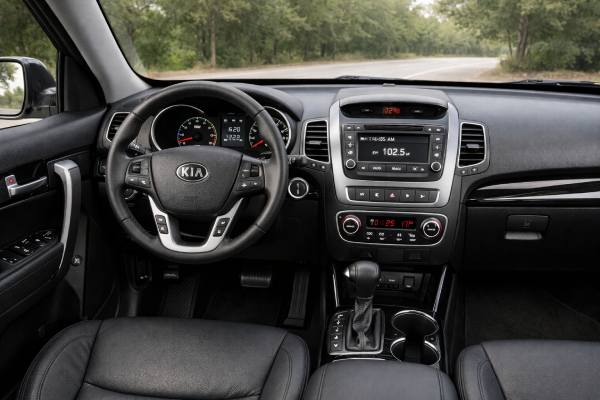
Interior practicality is one of the Sorento’s strongest points. Many markets offered both 5-seat and 7-seat layouts; even when the third row is present, it is best treated as “occasional use.” The real value is the second-row space, the easy cargo opening, and the way the cabin works for child seats. For long-term comfort, look for trims with better seat cushioning and factory parking sensors or camera—these age well and make daily driving easier.
Bottom line: this Sorento is a solid fit for owners who prioritize predictable V6 power, family usability, and straightforward serviceability over the newest infotainment and advanced driver aids.
Sorento XM 3.5 V6 spec tables
Below are practical, ownership-oriented specifications for the facelift XM Sorento with the 3.5-liter V6. Exact numbers can vary by market, emissions calibration, and 5-seat vs 7-seat configuration. If your listing states G6DC / 3.5 l / 290 hp, note that some markets rate similar 3.5 V6 setups closer to the high-270s hp; treat the figures as “same family, different tune” and verify by VIN.
Powertrain and efficiency
| Item | Spec (typical for 2013–2014 facelift) |
|---|---|
| Code | G6DC (3.5 V6, Lambda-family) |
| Engine layout and cylinders | V6, 6 cylinders, DOHC, 4 valves/cyl |
| Bore × stroke | ~92.0 × 87.0 mm (3.62 × 3.43 in) |
| Displacement | 3.5 L (≈ 3,470 cc) |
| Induction | Naturally aspirated |
| Fuel system | Usually MPFI (market dependent) |
| Compression ratio | ~10.3–11.0:1 (by tune/market) |
| Max power | 290 hp (216 kW) @ ~6,300–6,400 rpm (verify by VIN) |
| Max torque | ~330–345 Nm (243–255 lb-ft) @ ~4,500–5,200 rpm |
| Timing drive | Chain |
| Rated efficiency | Commonly ~10.5–12.5 L/100 km combined (22–27 mpg US equiv.), depends heavily on drive type and tyres |
| Real-world highway @ 120 km/h (75 mph) | Often ~9.0–10.5 L/100 km (22–26 mpg US equiv.) when lightly loaded |
Transmission and driveline
| Item | Spec |
|---|---|
| Transmission | 6-speed automatic (market codes vary) |
| Drive type | Marketed as “RWD” in some listings; typically 2WD on a front-drive-based platform, AWD optional in many regions |
| Differential | Open (traction managed by brake-based stability/traction control) |
Chassis and dimensions
| Item | Spec (typical) |
|---|---|
| Suspension (front/rear) | MacPherson strut / multi-link |
| Steering | Electric power steering |
| Brakes | 4-wheel discs (trim-dependent sizes) |
| Wheels/tyres (popular sizes) | 235/60 R18 or 235/55 R19 (varies by trim/region) |
| Ground clearance | 185 mm (7.3 in) |
| Length / width / height | 4,685 mm (184.4 in) / 1,885 mm (74.2 in) / ~1,700–1,735 mm (66.9–68.3 in) |
| Wheelbase | 2,700 mm (106.3 in) |
| Turning circle | ~11.0–11.4 m (36–37 ft), depends on wheels/tyres |
| Kerb (curb) weight | Typically ~1,690–1,850 kg (3,725–4,080 lb) by trim and drive type |
| Fuel tank | ~66 L (17.4 US gal / 14.5 UK gal) |
| Cargo volume (approx.) | Up to ~2,050 L (72.5 ft³) with rows folded; about ~1,045 L (36.9 ft³) behind 2nd row; about ~258 L (9.1 ft³) behind 3rd row on 7-seat models |
Performance and capability
| Item | Typical real-world range |
|---|---|
| 0–100 km/h (0–62 mph) | ~7.3–8.2 s (drive type, tyres, load) |
| Top speed | ~195–205 km/h (121–127 mph) |
| Braking 100–0 km/h | ~38–41 m (trim/tyres, brake condition) |
| Towing capacity (braked) | Often 1,600–2,000 kg (3,500–4,400 lb) by market and cooling package |
| Payload | Commonly ~550–700 kg (1,200–1,540 lb) (verify on door sticker/plate) |
Fluids and service capacities (verify by VIN)
| Item | Typical spec |
|---|---|
| Engine oil | Often API SN/ILSAC; viscosity commonly 5W-20 or 5W-30; capacity ~5.5–6.0 L (5.8–6.3 US qt) |
| Coolant | Ethylene-glycol long-life; typical mix 50/50; capacity ~8–10 L (8.5–10.6 US qt) |
| Transmission/ATF | Commonly Hyundai/Kia SP-IV; service approach varies (drain/fill vs exchange) |
| Differential / transfer case | Only if AWD-equipped; use specified gear oil/ATF per service literature |
| A/C refrigerant | Usually R-134a for this era; charge varies by HVAC layout |
| Key torque specs (critical only) | Wheel lug nuts commonly ~90–110 Nm (66–81 lb-ft) depending on wheel and market |
Safety and driver assistance (typical for 2013–2014 facelift)
| Item | Notes |
|---|---|
| Crash ratings | Strong results in multiple programs for 2014; results vary by test version and region |
| ADAS suite | Typically stability control, traction control, ABS; AEB/ACC/lane features were generally limited or unavailable on many 2013–2014 trims |
| Airbags | Usually front, side torso, and curtain airbags (trim/market dependent) |
Sorento XM trims and safety tech
Trim structure varies widely by region, but most facelift XM Sorentos follow a familiar ladder: an entry model focused on value, a mid-grade with comfort and convenience, and a higher trim with leather, premium audio, and larger wheels. The V6 tends to appear in the upper half of the range because it’s positioned as the “effortless” option for highway and towing duty.
Trims and options that change the experience
1) Seating configuration and interior packaging
- 5-seat vs 7-seat matters more than most shoppers expect. A 7-seat Sorento can be extremely practical for occasional extra passengers, but the third row reduces “default” cargo depth.
- If you regularly carry adults, prioritize second-row comfort over the presence of a third row. Many owners find the best real-world setup is a well-trimmed 5-seat model with maximum cargo volume.
2) Wheel and tyre packages
- Larger wheels (19-inch) can look great but tend to ride firmer and can increase tyre costs.
- If you drive on rough roads, a smaller wheel with a taller tyre sidewall is often the better long-term choice.
3) Tow and cooling equipment
- A factory tow package (or the market’s towing preparation) can mean more than just a hitch: it may include transmission cooling and revised wiring provisions.
- When towing is part of the plan, pick the trim that is officially rated for it in your country, not just “what fits a hitch.”
4) Convenience tech that ages well
- Rear parking sensors and a reversing camera are high-value as the vehicle ages.
- Heated seats, dual-zone climate, and better seat materials improve day-to-day satisfaction more than many “spec sheet” upgrades.
Safety ratings: how to read them
Safety results for this generation can look inconsistent because different organizations test different things, and test methods evolved quickly in the early 2010s. As a general pattern, the facelift Sorento performs well in traditional frontal/side evaluations and roof strength. Some programs later introduced more demanding small-overlap tests, where many vehicles of this era struggled.
Safety systems and driver aids (what’s usually included)
Most facelift XM Sorentos include:
- Electronic Stability Control (ESC) and traction control
- ABS with electronic brake-force distribution
- Multiple airbags (front, side torso, and curtains are common)
- ISOFIX/LATCH child-seat anchors (positions vary by market)
Advanced driver assistance (automatic emergency braking, adaptive cruise, lane centering) is typically limited or absent on 2013–2014 models. If a seller advertises these, verify carefully—many “lane” or “collision” claims in listings are misunderstandings of stability control warnings or parking sensors.
Common faults and campaigns
A well-kept facelift Sorento can be durable, but age and mileage reveal predictable weak points. The best approach is to think in tiers: what’s common and cheap, what’s occasional and annoying, and what’s rare but expensive.
Common issues (low to medium cost)
- Valve cover gasket seepage
- Symptoms: burning-oil smell after a drive, light smoke near the rear of the engine bay, oily residue on covers.
- Likely cause: gasket hardening with heat cycles.
- Remedy: replace valve cover gaskets; consider spark plug tube seals if applicable.
- Ignition coils and spark plug wear
- Symptoms: misfire under load, flashing check-engine light, rough idle.
- Cause: normal wear; coils can fail with heat and age.
- Remedy: replace plugs at the correct interval; replace coils as needed (often best in matched sets if multiple fail close together).
- Cooling system aging (hoses, thermostat, radiator end tanks)
- Symptoms: slow coolant loss, sweet smell, temperature fluctuations, heater performance changes.
- Cause: rubber and plastic aging, clamp fatigue, thermostat wear.
- Remedy: pressure test, address leaks early, keep coolant fresh to protect seals and aluminum components.
- Suspension bushings and link wear
- Symptoms: clunks over bumps, vague steering on rough roads, uneven tyre wear.
- Cause: bushing deterioration, stabilizer links, ball joints.
- Remedy: replace worn components; align after significant front-end work.
Occasional issues (medium to higher cost)
- Automatic transmission shift quality (fluid condition sensitive)
- Symptoms: shudder at light throttle, delayed engagement, harsh 2–3 or 3–4 shifts.
- Cause: degraded ATF, adaptation issues, sometimes valve body wear.
- Remedy: correct fluid service with the proper spec; if symptoms persist, diagnostic scan for codes and adaptation checks.
- Engine mounts and driveline vibrations
- Symptoms: vibration at idle in gear, thump on takeoff.
- Cause: mount collapse with age.
- Remedy: replace mounts; re-check exhaust clearances afterward.
Rare but important (high cost if ignored)
- Timing chain stretch or tensioner/guide wear (uncommon, but real)
- Symptoms: rattle on cold start that persists, timing correlation codes, rough running.
- Cause: long oil intervals, poor oil quality, or high-mileage wear.
- Remedy: confirm with scan data and mechanical inspection; replace chain components when out of spec.
Recalls, TSBs, and service actions
Campaigns vary by country and production month. Your best practice is to run a VIN recall check through an official database and request dealer documentation showing completion. If the seller cannot provide that paperwork, assume you’ll need to verify and potentially schedule recall work yourself.
Pre-purchase, also ask for proof of:
- routine oil services (especially at shorter intervals if driven in the city),
- transmission fluid history, and
- cooling system upkeep (coolant changes and leak repairs).
Maintenance plan and buying checks
If you want this Sorento to feel “tight” at 200,000 km (125,000 mi), maintenance has to be more than oil changes. The good news: the plan is straightforward, and most tasks are familiar to any competent workshop.
Practical maintenance schedule (distance/time)
- Engine oil and filter: every 10,000–12,000 km (6,000–7,500 mi) or 12 months
- Use the correct oil spec for your climate; shorten to 7,500–8,000 km for frequent short trips, towing, or heavy traffic.
- Engine air filter: inspect every service; replace about 20,000–30,000 km (12,000–18,000 mi) depending on dust.
- Cabin air filter: every 15,000–20,000 km (9,000–12,000 mi) for HVAC performance and reduced blower strain.
- Coolant: typically every 5 years or 100,000–120,000 km (60,000–75,000 mi) (verify for your market)
- If any overheating event occurs, treat coolant service as immediate, not “next time.”
- Spark plugs: commonly 60,000–100,000 km (37,000–62,000 mi) depending on plug type and tune
- Replace coils only when needed, but keep plugs on schedule to reduce coil stress.
- Automatic transmission fluid (ATF):
- Conservative ownership approach: 60,000–80,000 km (37,000–50,000 mi) drain-and-fill cycles, especially with towing or hot climates.
- If shifting quality changes, service sooner and verify the correct ATF specification.
- Brake fluid: every 2 years, regardless of mileage.
- Brake pads/rotors: inspect every service; replace based on thickness and vibration, not time alone.
- Tyre rotation and alignment: rotate every 10,000–12,000 km; align annually or after suspension work.
- 12 V battery test: annually after year 4; many batteries last 4–6 years depending on climate and trip length.
- AWD-only items (if equipped): rear coupling/transfer fluids at 60,000–100,000 km intervals depending on official guidance and use.
Fluids and parts: what to confirm before you buy
Ask for receipts showing the exact fluids used, not just “serviced.” For this platform, correct specifications matter most for ATF and coolant compatibility. Also confirm that the brake fluid has been changed at least once in the last 2–3 years; many cars skip this and end up with soft pedal feel or caliper issues.
Buyer’s checklist (quick but high-yield)
- Cold start: listen for timing-area rattle beyond the first second or two.
- Test drive at 60–90 km/h (35–55 mph): check for steering vibration (tyres, alignment, wheel bearings).
- Light throttle at 1,500–2,000 rpm: feel for transmission shudder.
- Cooling system: look for dried coolant residue and ask about any overheating history.
- Underbody and subframes: inspect for corrosion hotspots, especially in salted climates.
- Electronics: verify all windows, locks, HVAC modes, parking sensors/camera, and seat heaters.
Long-term durability outlook: a maintained V6 Sorento can age well, but the “make or break” items are fluid discipline (oil, ATF, brake fluid) and catching small leaks early.
Road manners and real economy
With the V6, the facelift XM Sorento is at its best as a calm, steady all-rounder. The engine’s character is smooth and confident rather than urgent. Around town, it pulls cleanly from low rpm without needing to rev hard, and on the highway it has the reserve power that makes passing less stressful—especially with passengers onboard.
Ride, handling, and NVH
- Ride quality: generally comfortable, with a “solid” feel over broken pavement. Larger wheels can make impacts sharper; if ride comfort matters, prioritize a trim with more tyre sidewall.
- Handling: safe and predictable. It resists sudden body motions well enough for an SUV, but it’s not sporty. The limit behavior is stability-control-led and conservative.
- Steering: light and easy to place, built for daily comfort. Don’t expect much road feel, but expect decent straight-line stability.
- Cabin noise: wind and tyre noise depend heavily on tyres and door sealing. Fresh, quality tyres often make the biggest difference to perceived refinement.
Powertrain behavior and shifting
The 6-speed automatic is tuned for smoothness. In normal driving it upshifts early and holds taller gears to keep the cabin quiet. Under heavier throttle it will downshift decisively, but kickdown response can feel a step slower than modern 8-speeds. That’s not a flaw—it’s simply an older calibration style. If you feel repeated “hunting” between gears on gentle hills, it can point to mismatched tyre sizes, low ATF quality, or engine load issues (like a tired ignition coil).
Real-world fuel consumption
Expect economy to depend heavily on speed and load:
- City-heavy use: often 12–15 L/100 km (16–20 mpg US) in congestion or short trips.
- Highway 100–120 km/h: often 9–11 L/100 km (21–26 mpg US) if the vehicle is healthy and tyres are properly inflated.
- Mixed driving: commonly 10.5–12.5 L/100 km (19–22 mpg US).
Cold weather and short trips can push consumption up noticeably because the engine spends more time warming up, and the transmission runs richer calibration during cold operation.
Towing and load notes
With towing, the Sorento’s strengths are stability and smooth torque delivery. The main risks are heat and maintenance: keep the cooling system healthy, don’t ignore ATF service, and use a realistic towing speed on grades. As a rule of thumb, expect fuel consumption to rise 20–40% under moderate towing, and more when fully loaded or driving fast.
Rivals and best alternatives
This Sorento competes best against other early-2010s midsize crossovers that offered conventional V6 power. Your “best alternative” depends on what you value most: simplicity, AWD capability, interior space, or long-term parts costs.
If you want similar V6 comfort with a simple ownership story
- Toyota Highlander V6 (same era): often wins on resale value and long-term predictability. It can cost more upfront, but ownership surprises are typically fewer.
- Honda Pilot V6: excellent space and family usability, with strong drivetrain performance. Focus on service history and verify transmission behavior on older examples.
If you prioritize towing and ruggedness
- Ford Explorer (V6 versions): strong towing and highway confidence, but complexity and repair costs can rise with age depending on engine and drivetrain.
- Hyundai Santa Fe (V6): closely related in engineering philosophy; can be a strong value buy when maintained, with similar strengths and similar “fluid discipline” needs.
If AWD traction matters more than V6 power
- Subaru Outback (six-cylinder or later turbo, depending on year): excellent winter confidence and stable road manners. Cargo shape can be very practical, but towing and third-row seating are not its focus.
- AWD Sorento vs 2WD/RWD listing: if you regularly see snow, steep gravel, or muddy access roads, AWD can be worth the added complexity. If you don’t, 2WD is often the smarter long-term ownership choice.
Where the Sorento V6 fits best
Choose this Sorento when you want:
- A traditional SUV feel without “new-car tech” dependency
- Smooth, naturally aspirated power for highway life and occasional towing
- Practical family packaging and a comfortable ride
Skip it (or buy very carefully) when:
- You need modern driver-assistance features (AEB/ACC/lane centering)
- You can’t confirm service history, especially oil and transmission fluid
- The vehicle shows signs of overheating, persistent transmission shudder, or heavy underbody corrosion
In the used market, the Sorento’s value advantage is strongest when you buy on condition and history—not on trim badges. A clean, well-documented mid-trim is usually a better long-term bet than a neglected “top spec” example.
References
- 2014 Kia Sorento Specifications 2013 (Technical Data)
- 2014 Kia Sorento 4-door SUV 2014 (Safety Rating)
- Check for Recalls: Vehicle, Car Seat, Tire, Equipment | NHTSA 2026 (Recall Database)
- 2014 Warranty and Consumer Information Manual 2012 (Warranty Guide)
Disclaimer
This article is for informational purposes only and is not a substitute for professional inspection, diagnosis, or repair. Specifications, torque values, service intervals, fluids, and procedures can vary by VIN, market, production date, and equipment. Always confirm details using official service documentation for your exact vehicle and consult a qualified technician for safety-critical work.
If you found this guide useful, please consider sharing it on Facebook, X (Twitter), or your favorite forum—it helps support our work and keeps more detailed owner resources coming.