
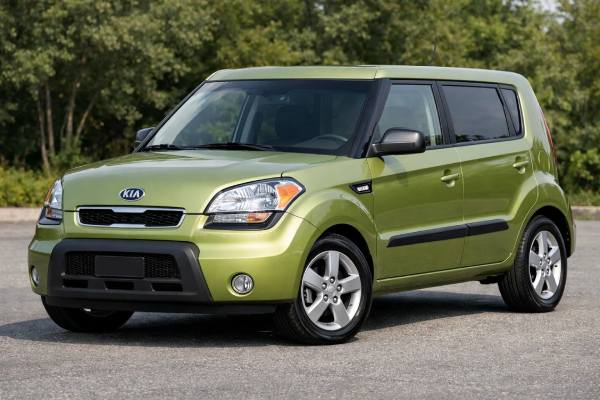

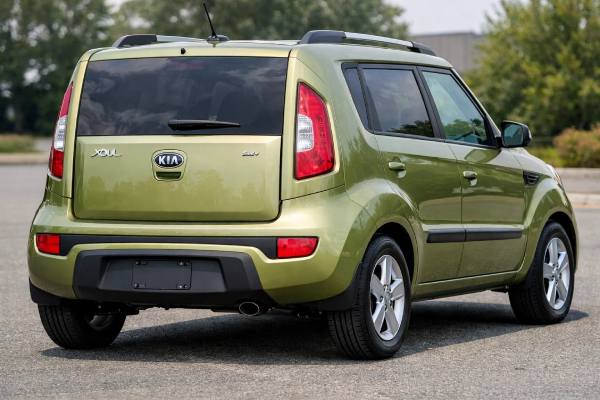
The 2009–2011 Kia Soul AM with the G4FC 1.6-liter petrol engine sits in a sweet spot for buyers who want simple mechanicals, easy entry, and a shape that still feels fresh. Under the boxy body is a straightforward naturally aspirated four-cylinder with multi-point injection, a timing chain, and front-wheel drive. That matters, because this version avoids some of the extra complexity that came with later direct-injection engines and more feature-heavy trims.
It is not a fast car, and it does not pretend to be. What it does well is everyday use: upright seating, good visibility, honest steering, and a cabin that is easier to live with than many small hatchbacks of the same era. The Soul’s biggest ownership question is not whether the basic platform is sound. It usually is. The real question is whether the specific car was serviced on time, kept free of rust underneath, and updated for any open recall work. Buy a tidy one, and this early Soul can still be a sensible long-term choice.
Owner Snapshot
- Simple MPI petrol engine with a timing chain and no direct-injection carbon issue.
- Upright seating, easy access, and a useful 354 L boot make it more practical than many small hatchbacks.
- Suspension and brake parts are usually affordable, and the 1.6 engine is widely understood by independent shops.
- Neglected cars can suffer from coil-pack misfires, worn front-end bushings, sticky brakes, and recall gaps.
- A practical baseline service cadence is every 15,000 km or 12 months, with shorter oil intervals in heavy city use.
Explore the sections
- Kia Soul AM in Context
- Kia Soul AM Specs and Data
- Kia Soul AM Trims and Safety
- Reliability and Known Faults
- Maintenance and Buying Tips
- Road Manners and Economy
- Rivals and Value Case
Kia Soul AM in Context
The first-generation Soul arrived as a small crossover before that label became routine. In practice, it is closer to a tall hatchback than an SUV, but that is exactly why the AM-generation car still makes sense. It gives you the high roof, easy ingress, and square cargo area people want from a crossover, without the extra mass, drivetrain complexity, or running costs that often come with all-wheel drive and turbocharging.
For this article, the focus is the G4FC 1.6 petrol model sold in 2009–2011. Depending on market and rating method, you will see this engine described as roughly 122 to 124 hp, or 126 PS. The important point is less the badge figure and more the engine type itself. It is a 1,591 cc naturally aspirated Gamma-family unit with multi-point injection, dual overhead camshafts, and a timing chain. That combination gives the car a reputation for being more durable than many later small direct-injection engines, especially when buyers stick to sensible oil-change habits.
The Soul’s character is defined by packaging. The upright seating position makes it easy to get in and out. The large glass area helps urban visibility. The rear seat is not limousine-large, but it is usefully square and airy. The boot is not class-leading against some MPV-shaped rivals, yet it is easy to load because the tailgate opening is tall and the floor is straightforward. This is a car that suits commuting, school runs, short trips, and low-stress mixed use better than it suits repeated high-speed motorway work.
It also has a clear ownership profile. The Soul AM is best for drivers who value simplicity, reasonable parts prices, and character. It is less ideal for people who expect class-leading refinement, fast overtaking, or modern active-safety hardware. There is no hidden performance reserve in the G4FC car. You need to use the gearbox, keep revs in the useful band, and accept that the boxy body shape creates more wind noise than lower hatchbacks.
That said, the early Soul has aged better than many expected. The styling still stands out. The engine is well known. The chassis is honest. Most problems are the sort that can be fixed with normal workshop skills rather than specialist electronic diagnosis. In used-car terms, that is a real advantage.
Kia Soul AM Specs and Data
The G4FC-powered Soul is mechanically straightforward, but the details matter because some published numbers vary by market, tyre package, and transmission. The table below reflects the 2009–2011 1.6 petrol Soul AM as commonly sold in Europe, with notes where public consumer literature differs.
| Powertrain and efficiency | Value |
|---|---|
| Code | G4FC |
| Engine layout and cylinders | Inline-4, DOHC, 16-valve, 4 cyl, 4 valves/cyl |
| Bore × stroke | 77.0 × 85.4 mm (3.03 × 3.36 in) |
| Displacement | 1.6 L (1,591 cc) |
| Induction | Naturally aspirated |
| Fuel system | MPFI |
| Compression ratio | 10.5:1 |
| Max power | about 122–124 hp (90–93 kW) @ 6,300 rpm |
| Max torque | 156 Nm (115 lb-ft) @ 4,200 rpm |
| Timing drive | Chain |
| Rated efficiency | about 6.5–6.8 L/100 km (34.6–36.2 mpg US / 41.5–43.5 mpg UK) combined |
| Real-world highway @ 120 km/h (75 mph) | about 7.2–7.8 L/100 km |
| Transmission and driveline | Value |
|---|---|
| Transmission | 5-speed manual; 4-speed automatic optional in some markets |
| Drive type | FWD |
| Differential | Open |
| Chassis and dimensions | Value |
|---|---|
| Suspension, front / rear | MacPherson strut / torsion beam |
| Steering | Motor-driven electric rack-and-pinion |
| Brakes | Front ventilated discs, rear discs or drums depending on market and trim |
| Wheels and tyres | 195/65 R15, 205/55 R16, or 225/45 R18 |
| Ground clearance | about 160–165 mm (6.3–6.5 in) |
| Length / Width / Height | 4,105 / 1,785 / 1,610 mm (161.6 / 70.3 / 63.4 in) |
| Height with roof rails | up to about 1,660 mm (65.4 in) |
| Wheelbase | 2,550 mm (100.4 in) |
| Turning circle, kerb-to-kerb | about 10.6 m (34.8 ft) |
| Kerb weight | about 1,275–1,325 kg (2,811–2,921 lb), depending on trim and gearbox |
| Fuel tank | 48 L (12.7 US gal / 10.6 UK gal) |
| Cargo volume | 354 / 994 L (12.5 / 35.1 ft³), VDA seats up/down |
| Towing capacity | 1,300 / 550 kg (2,866 / 1,213 lb), braked / unbraked |
| Performance and service data | Value |
|---|---|
| 0–100 km/h (0–62 mph) | about 11.0 s manual |
| Top speed | about 177 km/h (110 mph) manual |
| Engine oil | API SL/SM or ILSAC GF-3 or higher; commonly 5W-30 or 5W-20 depending climate; capacity 3.3 L (3.5 US qt) |
| Coolant | Ethylene-glycol aluminum-safe coolant; typical 50:50 mix; capacity 6.5 L (6.9 US qt) |
| Manual gearbox oil | API GL-4 SAE 75W-85; 1.9 L (2.0 US qt) |
| Automatic transmission fluid | Diamond ATF SP-III or SK ATF SP-III; full dry capacity about 6.8 L (7.2 US qt) |
| Brake and clutch fluid | FMVSS 116 DOT 3 or DOT 4 |
| Wheel nut torque | 88–107 Nm (65–79 lb-ft) |
Safety equipment was decent for the period. Euro-market cars were built around six airbags, ABS, electronic brake-force distribution, brake assist, and stability control on many trims. Child-seat anchors were provided on the outer rear seats. There was no modern camera- or radar-based driver assistance suite on this version, so buyers should not expect automatic emergency braking, lane centering, or blind-spot monitoring.
The main thing to remember is that exact figures can change with trim and region. A 15-inch car on smaller tyres will not feel or measure quite the same as an 18-inch special edition, and automatic cars are a little slower and thirstier.
Kia Soul AM Trims and Safety
Trim naming on the early Soul depended heavily on market. In continental Europe, you often see straightforward grade structures with option packs. In the UK, Kia leaned into the car’s style-first image and launched memorable editions such as Shaker, Samba, and Burner, followed later by special versions like Echo, Inferno, Hunter, and Quantum. That sounds dramatic, but mechanically the 2009–2011 1.6 MPI cars were usually much more alike than the names suggest.
The core differences were usually these:
- Wheel and tyre package, with 15-, 16-, and 18-inch options.
- Interior trim finish, cloth pattern, color accents, and audio specification.
- Convenience features such as climate control, cruise control, Bluetooth, heated mirrors, parking sensors, and sunroof.
- Exterior styling details such as bumper inserts, roof color, privacy glass, and trim-specific decals or wheel finishes.
For buyers, that means the best-value used Soul is rarely the most basic or the flashiest. Mid-spec cars with 16-inch wheels often strike the nicest balance. They ride better than 18-inch editions, tyre replacement costs are lower, and the equipment list is usually enough to make the cabin feel complete. The 18-inch style-led cars look good, but they add harshness and can magnify suspension wear.
Quick identifiers are useful when you inspect one in person. Early UK special editions often carry unique wheel designs, contrasting interior inserts, trim-name embroidery, or specific exterior colors. Higher trims usually have steering-wheel audio controls, better sound systems, climate control, and more decorative cabin trim. If a seller describes a car as a rare edition, check the wheel size, interior finish, and original brochure-style details rather than trusting the badge alone.
Safety was one of the Soul’s stronger points at launch. Euro NCAP awarded the 2009 Soul five stars, with strong adult and child occupant scores for the era. The structure, six-airbag layout, and standard stability control on tested European cars helped it perform better than some style-focused small cars of the same period. In real ownership terms, that makes the Soul feel like a sensible buy rather than just a design-led one.
Driver assistance in the modern sense was limited. This car’s safety hardware is mostly passive and foundational: airbags, ABS, ESC, and seatbelt reminders. There is no camera-based ADAS calibration burden after windscreen replacement because there is no camera-based ADAS to begin with. The one service note worth keeping in mind is that any ABS, ESC, or steering warning light after suspension alignment or steering work should be checked properly. These cars can need steering-angle or EPS-related diagnosis, even though they are far simpler than later ADAS-equipped vehicles.
Reliability and Known Faults
At its best, the 1.6 MPI Soul AM is a durable, low-drama used car. The key phrase is “at its best,” because condition matters more than the badge. A fully serviced car is usually solid. A neglected one becomes an accumulation of small faults that make the car feel much worse than it really is.
Most common, usually low to medium cost
The most frequent issues are age-and-use items rather than design disasters. Front anti-roll-bar links, control-arm bushes, top mounts, and wheel bearings are common wear points, especially on cars that spent their lives on poor roads or on 18-inch wheels. Symptoms are familiar: front-end knocking, vague straight-line tracking, and uneven tyre wear. These are normal used-car repairs, not deal-breakers.
Ignition-related misfires are also common enough to expect. Typical pattern: rough idle, flashing engine light under load, or a stumble in damp weather. The usual causes are tired spark plugs or a weak coil pack. Remedy is straightforward and rarely expensive. Because this is a multi-point injection engine, you do not have the same intake-valve carbon issue that often affects later direct-injection units.
Brake drag shows up on underused cars. Rear calipers can get sticky, handbrake operation can become uneven, and discs rust quickly if the car only does short trips. A road test should include checking whether the car rolls freely and brakes straight.
Occasional faults
Cooling-system seepage is worth watching as the cars age. Thermostat housings, hose joints, and older radiators can develop small leaks. Symptoms are a slow drop in expansion-tank level, white residue near hose connections, or a cabin heater that goes weak. Catching these early is cheap. Ignoring them can lead to overheating.
Electrical faults are usually small but annoying: blower-motor resistors, door-lock actuators, hatch wiring fatigue, and tired batteries. None are unusual for the age.
What is less common, but important
Timing-chain trouble is not common on a well-kept G4FC, but it can happen on cars with poor oil history. Warning signs are cold-start rattle, cam-crank correlation faults, or weak top-end performance. On this engine, the chain is better thought of as condition-based rather than lifetime-guaranteed.
The biggest official service action to know is the later HECU-related fire-risk recall that affected certain 2011 cars with ESC in some markets. It is not a reason to avoid every 2011 Soul. It is a reason to verify recall completion by VIN and dealer history before purchase.
For pre-purchase inspection, ask for full service history, proof of recall work, evidence of recent brake service, and clear records of oil changes. Then check the underside carefully for subframe corrosion, impact damage, and leaking dampers. A good Soul feels tight and ordinary. A bad one feels noisy from every corner.
Maintenance and Buying Tips
The Soul AM rewards routine maintenance more than heroic repair work. Keep the fluids fresh, do not stretch oil changes, and address suspension or brake issues before they spread into tyre wear and poor drivability.
A practical ownership schedule for the 1.6 MPI looks like this:
| Item | Practical interval |
|---|---|
| Engine oil and filter | Every 15,000 km or 12 months; every 10,000 km in severe use |
| Engine air filter | Inspect every 15,000 km; replace about every 30,000 km, sooner in dust |
| Cabin filter | Every 15,000–20,000 km or 12 months |
| Spark plugs | Inspect around 45,000 km; replace by 60,000–90,000 km depending on plug type |
| Brake fluid | Every 2 years |
| Coolant | Check level and strength yearly; replace by official coolant type and market interval |
| Manual gearbox oil | Sensible refresh every 60,000–90,000 km |
| Automatic ATF | Sensible drain-and-fill every 60,000 km |
| Serpentine belt | Inspect every 30,000 km; replace on cracking or noise |
| Brakes, tyres, alignment | Inspect at every service; rotate tyres about every 10,000 km |
| Battery | Test from year 4 onward; many need replacement by year 5 or 6 |
| Timing chain | No fixed interval; inspect on noise, faults, or poor oil-history evidence |
For fluids, the public owner information is clear enough for buying decisions. Engine oil capacity is 3.3 L, the cooling system is 6.5 L, the manual gearbox takes 1.9 L of GL-4 75W-85, and wheel nut torque is 88–107 Nm. Those are useful benchmarks when you review invoices. If a seller cannot show what fluid was used or how often it was changed, assume you will need a full baseline service.
Buyer checks should focus on five areas. First, listen to the engine from cold. It should settle quickly without chain rattle or misfire. Second, inspect the cooling system and undertray area for staining. Third, drive the car long enough to assess clutch take-up, steering straightness, and brake drag. Fourth, look underneath for corrosion on subframes, seams, and brake lines if the car lived in salted-road climates. Fifth, confirm all electrics work, including the blower on every speed, central locking, and rear hatch wiring.
As a used buy, late 2010 and 2011 cars are often the smartest targets if they have clear history and completed recall work. They tend to have the fewest early-build quirks while still keeping the simple pre-facelift mechanical package. I would be more cautious with heavily modified cars, neglected 18-inch-wheel editions, and any example with missing service records. A sound one should still feel durable enough for years of low-cost use.
Road Manners and Economy
On the road, the Soul AM 1.6 feels exactly like a small tall hatchback should: light, upright, and easy to place. It is happier in towns and on mixed secondary roads than on long, fast motorway runs. Visibility is good, the high seating position inspires confidence, and the short nose makes parking simple. The steering is light at low speed and predictable at normal pace, though it is not rich in feedback.
Ride quality depends a lot on wheel size. Cars on 15- or 16-inch tyres are noticeably more forgiving and quieter over broken surfaces. The 18-inch editions look sharper, but they transmit more thump and road texture into the cabin. Straight-line stability is decent, not exceptional. Crosswinds and coarse road surfaces remind you that the Soul is tall and square. That is normal for the shape.
The G4FC engine is smooth enough, but it needs revs. There is no strong low-end shove, so overtakes often require a downshift and a firm right foot. Around town, that is fine. On a motorway slip road with a full load, it feels merely adequate. The 5-speed manual usually suits the engine better than the older 4-speed automatic because it lets you keep the engine in its useful band with less delay.
Noise, vibration, and harshness are fair for the class and age. At 50 km/h in town the Soul feels calm. At 120 km/h, tyre and wind noise become much more obvious than in a lower hatchback. Long-distance drivers should expect that.
Real-world economy is decent rather than special. In normal city use, most cars land around 8.5–9.5 L/100 km, which is about 24.8–27.7 mpg US or 29.7–33.2 mpg UK. On open-road driving at moderate speeds, 6.8–7.4 L/100 km is realistic, or roughly 31.8–34.6 mpg US and 38.2–41.5 mpg UK. At a steady 120 km/h, expect more like 7.2–7.8 L/100 km. Mixed-use ownership usually settles around 7.5–8.5 L/100 km.
Braking feel is reassuring when the system is healthy, but many used examples are held back by cheap tyres, corroded rear brakes, or neglected fluid. Fresh brake service makes a bigger difference to how this car feels than many buyers expect. Overall, the Soul’s dynamic verdict is simple: it is not sporty, but it is easy, honest, and comfortable enough when set up correctly.
Rivals and Value Case
The early Soul makes the most sense when you compare it to the cars buyers actually cross-shopped, not to later compact SUVs. Its closest used-car rivals are practical small hatchbacks and mini-MPVs with some attitude: cars like the Nissan Note 1.6, Suzuki SX4 1.6, Skoda Roomster, and, in spirit, the later Hyundai ix20 and Kia Venga.
Against a Nissan Note, the Soul wins on style, seating position, and cabin personality. The Note is usually a little more space-efficient in the rear and often rides more softly, but it feels more anonymous. If you want a car that disappears into the background, the Note is stronger. If you want something that still feels distinctive, the Soul is the better pick.
Against a Suzuki SX4, the Soul is usually the better road car in everyday urban use. It feels roomier, more modern inside, and easier to live with. The SX4, however, can make more sense if you want occasional rough-road confidence or all-wheel-drive availability. The Soul is not pretending to be that kind of car.
Against a Skoda Roomster or early Yeti, the Soul loses some points for ultimate seat flexibility and long-distance refinement. The VW-group alternatives can feel more grown-up on the motorway. But they can also bring more complexity and, depending on engine choice, more expensive age-related repairs. The Soul’s simple MPI petrol engine is its ace card here.
That is the Soul’s biggest advantage in 2026 used-car logic: it gives you personality, practical packaging, and a relatively uncomplicated petrol drivetrain in one place. Later Souls brought nicer cabins and better tech, but the early G4FC car is still the one I would point a cost-conscious buyer toward if they want the simplest long-term ownership path.
So how does the value case shake out? Choose the Soul if you want:
- simple petrol mechanicals,
- easy access and good visibility,
- cheap-to-understand running gear,
- and a design that still has character.
Choose a rival if you need:
- the quietest motorway cruiser,
- the biggest rear-space trickery,
- or all-wheel drive.
For the right buyer, the 2009–2011 Soul AM 1.6 is still one of the more charming and rational used small crossovers of its era.
References
- Kia gets ready to put Soul in the city at Paris Show – Kia Media Site 2008 (Press Release)
- Käyttöohjekirjat | Kia Finland 2025 (Owner’s Manual)
- TempisticaManutenzione 1 06/06/2019 2019 (Maintenance Schedule)
- KIA Soul – Euro NCAP Results 2009 2009 (Safety Rating)
- Part 573 Safety Recall Report 23V-652 2023 (Recall Database)
Disclaimer
This article is for informational purposes only and is not a substitute for professional diagnosis, repair, or vehicle-specific service advice. Specifications, torque values, maintenance intervals, procedures, and equipment can vary by VIN, market, production date, and trim, so always verify details against official service documentation for the exact vehicle.
If this guide helped you, please share it on Facebook, X, or your favorite community to support our work.