

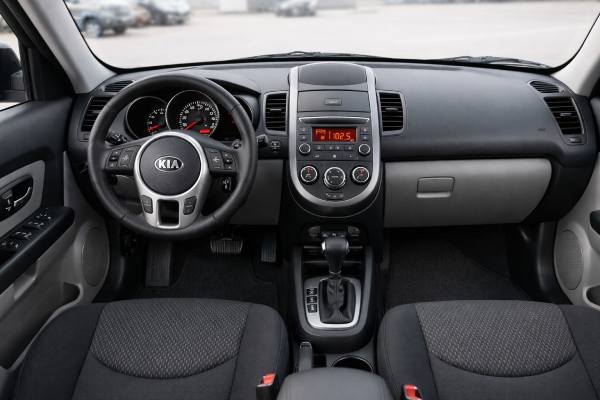
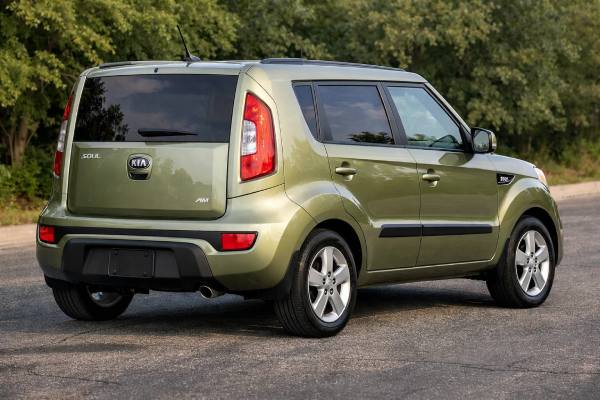
The first-generation Kia Soul AM with the 1.6-litre D4FB diesel is one of those cars that makes more sense the longer you live with it. It pairs the Soul’s upright, easy-entry body and surprisingly roomy cabin with a torque-rich diesel that feels stronger in daily driving than the power figure suggests. For owners who want a small car with a higher seating position, simple front-wheel-drive packaging, and useful motorway economy, this version still has real appeal.
It is not a sports hatch, and it is not as refined as newer compact crossovers. But it is honest, practical engineering. The 128 hp diesel gives the Soul better long-distance ability than the petrol versions, and the boxy body makes it easy to load and easy to judge in traffic. The main ownership story is straightforward: buy a rust-free example with good service history, watch the EGR and intake side on short-trip cars, and this can be a durable, characterful used buy.
Owner Snapshot
- Strong low-rpm torque makes it feel livelier than the numbers suggest.
- Upright seating, wide-opening doors, and a tall roof give it genuine daily usability.
- Simpler mechanical layout than many newer small crossovers keeps repair costs more manageable.
- Short-trip use can accelerate EGR, intake, and DPF-related trouble on neglected cars.
- A sensible baseline service rhythm is every 20,000 km or 12 months, whichever comes first.
Section overview
- Kia Soul AM diesel overview
- Kia Soul AM specs and data
- Kia Soul AM trims and safety
- Reliability and known faults
- Maintenance and buying advice
- Road manners and performance
- Kia Soul AM versus rivals
Kia Soul AM diesel overview
The 2009–2011 Kia Soul AM diesel sits in an unusual sweet spot. It has the footprint of a small hatchback, the seating position of a mini-crossover, and the cabin shape of a compact MPV. That mix is the whole point of the car. It was designed to stand out visually, but its real value is practical: big doors, good headroom, simple controls, and a square rear opening that makes everyday loading easier than in many style-first rivals.
In 1.6 CRDi 128 hp form, the Soul is also the best early AM for drivers who cover regular A-road or motorway miles. The diesel’s broad torque band suits the car’s upright body much better than the lower-output petrol engines. You do not need to rev it hard to make progress. In daily traffic, it pulls cleanly from low rpm and feels relaxed at medium speeds. That makes it a better real-world companion for commuting, family use, and light touring than the headline numbers alone suggest.
The chassis is conventional and easy to understand. You get a MacPherson-strut front end, a torsion-beam rear axle, and front-wheel drive. That means no clever packaging tricks and no off-road hardware, but it also means fewer expensive surprises. The Soul’s tuning leans toward stability and predictability rather than precision. It rides acceptably on 15- or 16-inch wheels, though 18-inch versions look better than they ride.
The main ownership question is not whether the Soul AM diesel is good in theory. It is whether the example in front of you has been used in a way that suits a small turbo diesel. Cars that have seen regular longer runs usually age well. Cars used mostly for short urban trips can suffer from soot build-up, sticky EGR hardware, tired glow plugs, and neglected intake cleaning. That does not make the model bad. It just means usage history matters more here than on a simple non-turbo petrol version.
At its best, this Soul is a sensible buy for owners who want character without giving up function. It is distinctive, easy to live with, and mechanically conventional enough to remain serviceable long after many newer cars start to feel overcomplicated.
Kia Soul AM specs and data
For the 2009–2011 Kia Soul AM diesel, the key mechanical story is the D4FB-family 1.6 CRDi. Public Kia literature for this generation does not publish every workshop-level detail for every market, so a few items vary by region and equipment. The table below keeps to the figures that are consistent across open Kia material and commonly catalogued Soul AM diesel data.
| Item | Kia Soul AM 1.6 CRDi diesel |
|---|---|
| Engine code | D4FB |
| Engine layout | Inline-4, DOHC, 4 valves per cylinder |
| Displacement | 1.6 L (1,582 cc) |
| Bore × stroke | 77.2 × 84.5 mm (3.04 × 3.33 in) |
| Induction | Variable-geometry turbocharger |
| Fuel system | Common-rail direct injection |
| Max power | 128 hp (94 kW) @ 4,000 rpm |
| Max torque | 260 Nm (192 lb-ft) @ 1,900–2,750 rpm |
| Timing drive | Chain-driven valvetrain |
| Drive type | FWD |
| Differential | Open |
| Main gearbox | Manual transmission, market-dependent gearing |
| Automatic availability | Offered in some markets |
| Chassis and dimensions | Figure |
|---|---|
| Front suspension | MacPherson strut |
| Rear suspension | Torsion beam |
| Steering | Rack-and-pinion with power assistance |
| Brakes | Front discs; rear disc or drum depending on market and trim |
| Common tyre sizes | 195/65 R15, 205/55 R16, 225/45 R18 |
| Length | 4,105 mm (161.6 in) |
| Width | 1,785 mm (70.3 in) |
| Height | 1,610 mm (63.4 in), 1,661 mm (65.4 in) including roof rails |
| Wheelbase | 2,550 mm (100.4 in) |
| Front track | 1,570 mm (61.8 in) |
| Rear track | 1,575 mm (62.0 in) |
| Fuel tank | 48 L (12.7 US gal / 10.6 UK gal) |
| Cargo area | Up to about 570 L with rear seatbacks folded; seats-up figure varies by method and market |
| Performance and service data | Figure |
|---|---|
| 0–100 km/h | Roughly 11 seconds, market and wheel dependent |
| Top speed | Around 175–180 km/h (109–112 mph) |
| Rated fuel economy | Typically low-5 L/100 km on the combined cycle, market dependent |
| Highway use at 120 km/h | Usually about 6.0–6.7 L/100 km in real driving |
| Engine oil | ACEA C3 5W-30 |
| Engine oil capacity | 5.3 L (5.6 US qt) |
| Service interval | 20,000 km or 12 months in many EU markets; 12,500 miles or 12 months in UK guidance |
A few practical notes matter more than the raw table. First, wheel size changes the character of the car more than many buyers expect. A 15- or 16-inch Soul feels more settled over rough roads and usually returns slightly better fuel economy. Second, published kerb weights vary enough by market, trim, and equipment that it is better to verify the exact figure from the VIN label rather than assume a single number.
The Soul AM diesel is not a towing star and was not engineered as an off-roader. Its strengths are packaging efficiency, medium-speed flexibility, and simple front-drive architecture. In that context, the spec sheet is well judged. It gives the Soul enough torque to suit its bluff shape without adding much complexity beyond what any modern small diesel already brings.
Kia Soul AM trims and safety
Trim structure varied widely by market, which is typical for Kia in this era. In the UK, many buyers will know the early Soul range through simple numbered grades such as 1, 2, and 3, while other European markets leaned on trim names, design packs, or special editions. The important point for a used buyer is that the 1.6 CRDi 128 hp engine did not usually change the Soul’s core mechanical layout. Most differences were equipment-based rather than chassis-based.
Base cars tend to have 15-inch wheels, more durable cloth trim, manual air conditioning, and fewer cosmetic extras. Mid-spec cars often bring 16-inch alloys, better audio, cruise control in some markets, and more exterior color detailing. Higher trims are where you find 18-inch wheels, upgraded audio, leather or part-leather trim, a sunroof on some cars, and the more design-led cabin finishes that made the Soul famous when new. Quick identifiers are simple: wheel size, speaker-lighting trim, seat material, roof-rail presence, and whether the center console and door cards carry body-color accents.
From a buyer’s standpoint, the best balance usually sits in the middle. Entry cars can feel sparse, but top-spec cars add larger wheels and extra age-sensitive equipment without transforming the driving experience. A clean mid-spec diesel on 16-inch wheels is often the smartest ownership choice.
Safety was a strong point for the early Soul. Euro NCAP gave the 2009 Soul a five-star overall result, with 87% adult occupant protection, 86% child occupant protection, 39% pedestrian protection, and 86% safety assist. Standard ESC availability was an important part of that result, as were front and rear seatbelt reminders. Structurally, the Soul used a reinforced passenger cell, side-impact protection in the doors, and multiple airbags.
In practical terms, the safety equipment to look for includes:
- Front airbags, side thorax airbags, and curtain airbags.
- ESC and traction-related stability functions.
- ISOFIX child-seat mountings.
- Active front head restraints on some versions.
- Rear parking sensors or reversing aids on upper trims.
This was still a pre-ADAS era car. Do not expect autonomous emergency braking, adaptive cruise control, lane-centering, blind-spot monitoring, or traffic-sign systems. That absence is not a flaw for the period, but it does shape the ownership experience. Repairs are simpler, calibration costs are lower, and windscreen replacement is usually less painful than on newer cars.
One final point: if a car has a sunroof or unusual factory equipment, confirm it by build data rather than trim badges alone. Early Soul special editions were often appearance-heavy, and many used cars now wear mixed parts from later repairs or styling swaps.
Reliability and known faults
The Soul AM diesel is generally a decent long-term car when it has been serviced on time and driven in a way that suits a turbo diesel. Its problems are usually familiar small-diesel issues rather than model-specific disasters. That is good news, because most faults are understandable and diagnosable. The bad news is that neglected examples can stack several medium-cost jobs at once.
Here is the pattern most owners and buyers should expect.
Common and low-to-medium cost
- EGR valve and intake soot build-up: Hesitation, flat response below 2,000 rpm, uneven idle, and fault lights often point to a dirty EGR circuit or intake restriction. Short-trip cars are most vulnerable. Cleaning or replacing the EGR hardware usually solves it.
- DPF stress on urban cars: Frequent regens, fan running after shutdown, rising fuel use, or limp mode usually mean interrupted regeneration cycles. A longer road run may help early on, but ash-loaded filters eventually need professional cleaning or replacement.
- Boost hose and vacuum-control issues: Split hoses or sticky control hardware can mimic turbo failure. Symptoms include poor boost, whistle changes, and underboost codes.
- Rear brake drag or uneven wear: Cars that sit outside or do short trips can suffer sticky rear calipers or handbrake mechanisms.
Occasional and medium cost
- Dual-mass flywheel and clutch wear: On higher-mileage manual cars, listen for idle rattle, shudder on take-up, or a heavy engagement point. A clutch-only repair is the cheaper outcome; flywheel replacement adds real cost.
- Injector seal leakage: A chuffing sound, diesel smell, or black carbon around injector bases can point to failing copper seals. Catch this early before the seat area becomes badly contaminated.
- Glow plugs and cold-start hardware: Hard starting in winter, rough initial idle, and smoke on startup can be plug-related, relay-related, or simply battery-related.
- Thermostat or cooling-system ageing: A diesel that takes too long to warm up may have a thermostat stuck open. This hurts cabin heat, economy, and DPF behavior.
Less common but more serious
- Turbocharger wear: True turbo failure is less common than online discussion suggests, but it does happen on oil-neglected cars. Blue smoke, strong shaft play, or persistent boost faults after hose checks deserve closer inspection.
- Timing-chain noise from poor lubrication history: The chain setup is usually durable, but long oil intervals and wrong oil can accelerate wear. Rattle on cold start is a warning sign, not a sound to ignore.
- Corrosion underneath in salted regions: Rear axle areas, brake-pipe mounts, subframe edges, and seam areas deserve close inspection. Kia issued an anti-corrosion service action in some markets, which makes record checking worthwhile.
On the service-action side, ask for proof of campaign completion and dealer-history printouts. Also verify recalls by VIN, especially on cars with sunroof equipment or cars that spent their lives in heavily salted climates.
For a pre-purchase inspection, request these checks:
- Full cold start.
- Diagnostic scan for stored boost, glow, EGR, and DPF faults.
- Clutch and flywheel assessment.
- Underbody rust inspection with covers removed where possible.
- Brake condition and handbrake function.
- Evidence of correct low-ash diesel oil use.
A cared-for Soul diesel can be sturdy. A neglected one can be cheap to buy and expensive to sort. That gap is what matters most.
Maintenance and buying advice
The best way to own a Soul AM 1.6 diesel is to service it a little earlier than the longest published interval if the car does mixed or urban use. Kia’s published schedule is acceptable for ideal conditions, but older diesels repay conservative care.
Here is a practical maintenance plan for real ownership.
| Item | Practical interval |
|---|---|
| Engine oil and filter | Every 10,000–15,000 km or 12 months on mixed use; do not exceed official schedule |
| Engine air filter | Inspect every service; replace about every 20,000–30,000 km |
| Cabin filter | Every 12 months or 15,000–20,000 km |
| Fuel filter | About every 30,000–40,000 km, sooner if fuel quality is doubtful |
| Coolant | About every 5 years, then by condition and official spec |
| Brake fluid | Every 2 years |
| Manual gearbox oil | Inspect for leaks; refresh around 80,000–100,000 km if shifting quality drops |
| Clutch hydraulic system | Check fluid condition and pedal feel at each service |
| Serpentine belt and tensioner | Inspect each service; replace on wear, cracks, or noise |
| Timing chain | No fixed replacement interval; inspect for rattle, correlation faults, and oil-history risk |
| Glow plugs | Test when cold starts worsen |
| Battery | Load-test from about year 4 onward |
| Tyre rotation and alignment | Every 10,000–15,000 km and after suspension work |
| Brake inspection | Every service, especially rear calipers and parking-brake function |
| DPF and EGR health | Watch regen behavior and scan soot load if the car is short-tripped |
Fluid and service essentials
- Engine oil: ACEA C3 5W-30.
- Engine oil capacity: 5.3 L.
- Fuel tank: 48 L.
- Coolant, gearbox oil, and A/C refrigerant quantities can vary by market and equipment, so confirm from VIN-specific workshop data before major service work.
Buyer’s checklist
- Inspect the rear axle, subframe edges, jacking points, and brake-line areas for corrosion.
- Look for oil mist around boost hoses and listen for boost leaks under load.
- Check for injector-seat blow-by around the cylinder head.
- Make sure the engine warms up properly and cabin heat arrives in normal time.
- Test the clutch for slip and the flywheel for chatter.
- Scan for stored DPF, EGR, glow-plug, and boost-control faults.
- Confirm service history shows the correct diesel oil, not generic petrol-grade oil.
- Verify recall and campaign history by VIN.
The best examples are usually mid-spec cars with 15- or 16-inch wheels, regular longer-run use, and unmodified engines. Cars to treat cautiously are heavily customized ones, low-mileage urban diesels with repeated short-trip use, and any example with rust being hidden by fresh underseal.
Long-term durability is respectable. The engine, gearbox, and basic chassis are not fragile. Most expensive stories start with neglect, not with a bad design brief.
Road manners and performance
On the road, the Soul AM diesel is better than many people expect, provided you judge it for what it is. It is a tall, square compact car, so it will never feel as tied down as a low hatchback. Still, the diesel version suits the platform well. The engine’s torque arrives early enough that you do not need to work it hard, and that gives the whole car a more relaxed character.
Around town, visibility is one of the Soul’s quiet strengths. The upright driving position and bluff corners make it easy to place. Steering is light, which helps in parking, though feedback is limited. The ride is acceptable on smaller wheels and becomes noticeably busier on 18-inch trims. Over broken city surfaces, you can feel the short wheelbase and firm tyre sidewalls, but the car stays predictable.
At 60 to 75 mph, the 1.6 diesel makes the Soul feel more grown up than the petrol cars. It settles into a comfortable cruise, and the engine does not need frequent downshifts for mild gradients or overtakes. There is some wind noise from the upright body and mirrors, and coarse-road tyre noise can be more obvious than in a Ceed or Golf of the same era. Even so, it is a capable small long-distance car.
Real-world fuel economy depends heavily on use:
- City use: roughly 6.2–7.0 L/100 km.
- Mixed use: roughly 5.5–6.3 L/100 km.
- Highway at 100–120 km/h: roughly 5.3–6.7 L/100 km.
Cold weather usually adds around 0.5 to 1.0 L/100 km, especially on short trips where the engine and aftertreatment never settle fully. That is normal for an older diesel.
Performance feels stronger in rolling acceleration than in a standing-start sprint. The Soul does not leap off the line, but it pulls steadily once moving. Braking feel is straightforward rather than sporty, and good tyres make a bigger difference here than many buyers expect. Cheap ditchfinder rubber can turn a decent chassis into a noisy, understeery one.
The verdict from behind the wheel is simple: the Soul AM diesel is not exciting, but it is easy to drive, easy to see out of, and very well matched to regular everyday use. That is why many owners keep them for years.
Kia Soul AM versus rivals
The Soul AM diesel does not compare neatly with one single rival, because it borrowed traits from several classes at once. That is also why it remains interesting on the used market.
Against the Hyundai ix20 or Kia Venga 1.6 CRDi, the Soul is the more distinctive choice. The others feel a little more family-MPV in concept and often offer slightly softer ride comfort. The Soul wins on style, image, and the higher seating feel many buyers want.
Against the Skoda Yeti 1.6 TDI, the Soul is less polished and less premium inside, but often simpler to buy and easier to understand. The Yeti feels more mature on the motorway and more solidly damped. The Soul fights back with easier urban visibility, lower used-entry prices in many markets, and a cabin shape that wastes very little space.
Against the Nissan Note 1.5 dCi, the Soul looks and feels more like a crossover, while the Note is usually the better pure efficiency play. The Note can be the smarter commuter tool. The Soul is the more characterful all-rounder.
Against a conventional C-segment hatch diesel such as a Ceed, Focus, or Golf from the same years, the Soul gives away some refinement and handling sharpness. In return, it gives you easier access, a more flexible cabin shape, and a more distinctive ownership experience.
So which buyer should choose the Soul? The best match is someone who values seating position, cabin practicality, and design, but still wants diesel torque and reasonable running costs. If you care most about cornering finesse or premium feel, choose a mainstream hatch. If you want a practical small car that feels a bit different every time you walk up to it, the Soul AM still makes a strong case.
References
- Free Your Mind 2010 (Brochure)
- KIA Soul – Euro NCAP Results 2009 2009 (Safety Rating)
- Kia Service Intervals 2023 (Service Intervals)
- Engine Oil Grades and Capacities – Kia 2023 (Owner Support)
- application of additional anti-corrosion material (sc122) 2015 (Service Campaign)
Disclaimer
This article is for informational purposes only and is not a substitute for professional diagnosis, repair, or VIN-specific service information. Specifications, torque values, service intervals, fluids, procedures, and equipment can vary by VIN, market, production date, and trim level, so always verify critical details against official Kia service documentation for the exact vehicle.
If this guide helped you, please consider sharing it on Facebook, X/Twitter, or another social platform to support our work.