
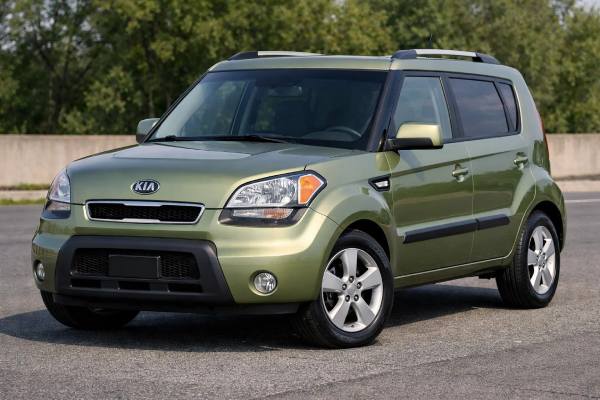
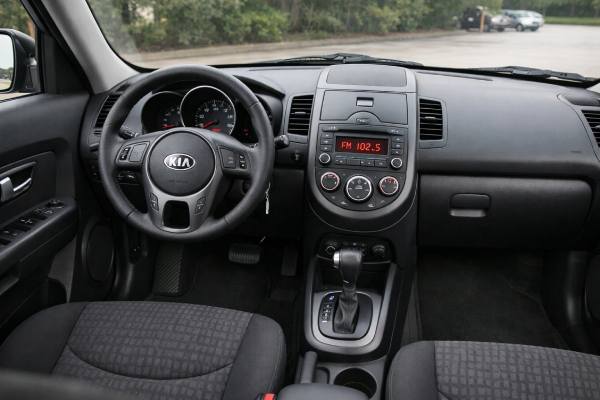
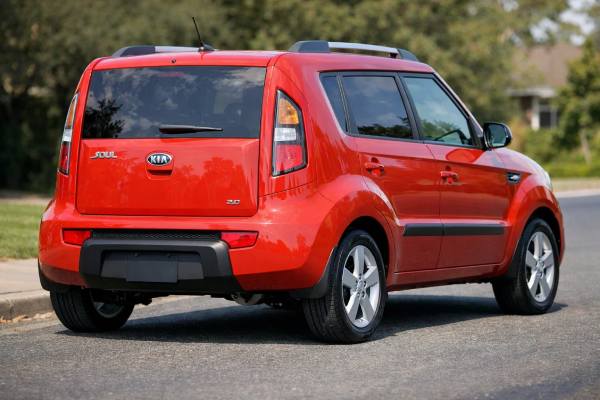
The 2009–2011 Kia Soul 2.0 is one of those rare practical hatchbacks that still feels distinct. In AM-generation form, with the naturally aspirated G4GC 2.0-liter four-cylinder and 142 hp, it blends simple mechanicals, upright packaging, and low running costs better than many fashion-first small cars of the same era. It is not especially fast, and the old four-speed automatic already felt dated when new, but the Soul’s boxy body, easy entry, good visibility, and useful cabin space still make it a smart urban and suburban daily. The key ownership question is less about outright performance and more about condition: service history, timing-belt proof, recall completion, and whether the steering, brakes, and cooling system have been kept ahead of age-related wear. Buy a cared-for one, and the early 2.0 Soul remains an honest, usable, and surprisingly likeable compact car.
Fast Facts
- Strong cabin packaging and easy entry make it more useful than its size suggests.
- The 2.0-liter engine is simple and adequate for daily driving, especially with the 5-speed manual.
- Standard safety equipment was good for its class, with stability control and full-length curtain airbags.
- The biggest ownership caveat is deferred maintenance, especially timing-belt age, fluids, and outstanding recalls.
- A sensible oil-service rhythm is every 12 months or about 15,000 km in normal service, with shorter intervals for short-trip or severe use.
Guide contents
- Kia Soul AM in context
- Kia Soul AM specs and data
- Kia Soul AM trims and safety
- Reliability issues and recalls
- Maintenance and buying advice
- Driving and real-world performance
- Kia Soul AM vs rivals
Kia Soul AM in context
The first-generation Soul arrived as a small, tall hatchback with more personality than a conventional subcompact and more everyday usefulness than many style-led city cars. This article focuses on the 2009–2011 AM-generation Soul with the G4GC 2.0-liter gasoline engine rated at 142 hp and 137 lb-ft. In this form, the Soul sits in a sweet spot: simple naturally aspirated power, front-wheel drive, compact exterior dimensions, and a cabin that feels larger than the footprint suggests. Kia sold it in several trims, but the core engineering package remained straightforward and easy to understand.
That simplicity is one of the model’s real strengths today. The G4GC belongs to an older school of four-cylinder engines: multi-point fuel injection rather than direct injection, no turbocharger, and a conventional timing belt instead of more complex hybrid or downsized solutions. That does not make it maintenance-free, but it does make faults easier to diagnose and repair than on many newer small crossovers. The trade-off is refinement. The engine is willing rather than silky, and the four-speed automatic can feel short-geared and busy at motorway speeds.
Ownership appeal depends heavily on what you value. The Soul is not the sharpest handler in the segment, nor the most fuel-efficient. What it does offer is upright seating, good outward visibility, a broad-opening hatch, and trim-dependent equipment that was competitive for the time. Kia emphasized features such as standard stability control, traction control, ABS, brake assist, active front head restraints, and side-curtain airbags across the range. That gave the early Soul a strong everyday-safety story, even if later crash-test methods exposed weaknesses that were less visible under older standards.
The best way to think about the 2009–2011 Soul 2.0 is as a practical compact hatch with character, not as a mini-SUV. It rewards buyers who shop by condition rather than image. A clean, unmodified example with recall work done, healthy cooling and braking systems, and documented timing-belt replacement is usually a much better bet than a cheaper car with patchy records and cosmetic upgrades.
Kia Soul AM specs and data
The core factory and service data for the 2009–2011 Kia Soul AM 2.0 are summarized below. Public Kia material for this generation is strongest on output, dimensions, equipment, and service capacities. Some workshop-level details, such as rotor diameters, steering ratio, and certain axle-load figures, vary by market and should always be confirmed by VIN and service documentation before parts ordering or repair.
| Item | Kia Soul (AM) 2.0 |
|---|---|
| Engine code | G4GC |
| Engine layout and cylinders | Inline-4, 4 cylinders, DOHC, 4 valves per cylinder |
| Displacement | 2.0 l (about 1,975 cc) |
| Induction | Naturally aspirated |
| Fuel system | Multi-point fuel injection |
| Compression ratio | About 10.1:1 |
| Max power | 142 hp (106 kW) @ 6,000 rpm |
| Max torque | 186 Nm (137 lb-ft) @ 4,600 rpm |
| Timing drive | Belt |
| Transmission | 5-speed manual or 4-speed automatic |
| Drive type | Front-wheel drive |
| Differential | Open |
| Rated efficiency | About 24/30/26 mpg US city/highway/combined, depending on year and gearbox |
| Real-world highway at 120 km/h (75 mph) | Usually mid-7 to high-8 l/100 km depending on wind, tyres, and transmission |
| Chassis and dimensions | Kia Soul (AM) 2.0 |
|---|---|
| Front suspension | Independent MacPherson strut |
| Rear suspension | Coupled torsion beam axle |
| Steering | Motor-driven power steering |
| Brakes | Four-wheel discs with ABS, ESC, EBD, and brake assist |
| Most common tyre sizes | 205/55 R16 on mainstream 2.0 trims; 225/45 R18 on sportier trims |
| Ground clearance | Market-dependent, commonly around 164 mm (6.5 in) |
| Length | 4,105 mm (161.6 in) |
| Width | 1,785 mm (70.3 in) |
| Height | 1,610 mm (63.4 in), about 1,661 mm (65.4 in) with roof rack |
| Wheelbase | 2,550 mm (100.4 in) |
| Turning circle, kerb-to-kerb | About 10.5 m (34.4 ft) |
| Kerb weight | Roughly 1,250 to 1,330 kg (about 2,756 to 2,932 lb), depending on trim and gearbox |
| Fuel tank | 48 l (12.7 US gal / 10.6 UK gal) |
| Passenger volume | 102.3 ft³ |
| Cargo volume | Commonly quoted at about 19.3 ft³ seats up and 53.4 ft³ seats folded |
| Fluids and service capacities | Kia Soul (AM) 2.0 |
|---|---|
| Engine oil | API SM or better, ILSAC GF-4 or better; 5W-20 preferred, 5W-30 acceptable; about 4.0 l (4.23 US qt) with filter |
| Coolant | Ethylene-glycol based coolant for aluminum radiator; about 7.2 l (7.61 US qt) |
| Manual transmission fluid | API GL-4 SAE 75W-85; about 1.9 l (2.0 US qt) |
| Automatic transmission fluid | SP-III specification; about 6.6 l (6.97 US qt) total |
| Brake and clutch fluid | DOT 3 or DOT 4 |
| Power steering fluid | Confirm by market specification before topping up |
| A/C refrigerant | R-134a |
| Wheel-nut torque | 88 to 107 Nm (65 to 79 lb-ft) |
| Performance and capability | Kia Soul (AM) 2.0 |
|---|---|
| 0–100 km/h (0–62 mph) | Roughly 9 seconds in independent tests |
| 0–60 mph | About 8.7 seconds for a 2.0 automatic in period testing |
| Top speed | Typically around 177 km/h (110 mph), market-dependent |
| 100–0 km/h braking distance | Not consistently published by Kia |
| 60–0 mph braking distance | Around 128 ft in one U.S. instrumented test |
| Towing capacity | Not a mainstream towing platform; verify by VIN and handbook before towing |
| Payload and GVWR | Vary by trim, gearbox, and market |
The main takeaway from the numbers is clear. This is not a high-tech powertrain, but it is a usable one: enough torque for daily traffic, enough space for real family use, and service capacities that remain well within independent-shop comfort zones. The missing deep workshop figures are not a deal-breaker, but they do reinforce the point that exact capacities and torque values should always be checked against VIN-specific documentation before repairs.
Kia Soul AM trims and safety
For 2010 and 2011 in the U.S., the Soul lineup broadly consisted of Soul, Soul+, Soul!, and Soul sport. The 2.0-liter engine sat above the base 1.6 and was available with either a 5-speed manual or 4-speed automatic. The Soul+ was the volume choice, while Soul! and Soul sport added larger wheels, appearance upgrades, and extra equipment. For a used buyer, that means condition and equipment matter more than tiny year-to-year differences.
Quick identifiers help when listings are vague. Soul+ cars commonly wear 16-inch wheels and are the most common 2.0-liter mainstream spec. Soul! and Soul sport models are easier to spot by 18-inch wheels, more aggressive exterior trim, and richer audio or appearance content. Modified stereos, aftermarket lighting, and non-standard wheels are common in this generation, so decode the actual trim through the VIN and verify what the car left the factory with before assuming a listing is accurate.
Safety equipment was strong for the class. Kia listed dual front advanced airbags, front-seat side airbags, side-curtain airbags, ABS, electronic stability control, traction control, electronic brake-force distribution, brake assist, active front head restraints, and a tire-pressure monitoring system as standard or widely fitted core features. LATCH or ISOFIX child-seat mounting points were part of the expected safety package as well. That baseline matters because a buyer does not need to chase the highest trim just to get essential passive and active safety hardware.
Crash-test results need context. Euro NCAP awarded the Soul five stars in 2009, with 87 percent for adult occupant protection, 86 percent for child occupant protection, 39 percent for pedestrian protection, and 86 percent for safety assist. IIHS gave the 2010 Soul a Good rating in the original moderate-overlap frontal test and the original side-impact test, and the model was recognized under the Top Safety Pick criteria in period form. However, the same generation later posted a Poor driver-side small-overlap result under newer IIHS testing. In plain terms, the early Soul tested well by the standards of its day but looks less convincing when judged by later offset-crash protocols.
ADAS, in the modern sense, is mostly absent. There is no factory autonomous emergency braking, adaptive cruise control, lane centering, blind-spot monitoring, or rear cross-traffic braking story here. What you are buying is a conventional small hatchback with solid basic safety equipment, not a semi-automated commuter. That simplicity keeps calibration headaches low after repairs, but it also means buyers should not overestimate the car’s accident-avoidance capability in current traffic.
Reliability issues and recalls
The 2009–2011 Soul 2.0 is generally a straightforward used car, but it has two risk profiles. The first is ordinary age-related wear: belts, fluids, suspension parts, brakes, wheel bearings, and electrical items. The second is official service-action territory, where recalls and steering-related bulletins matter more than owner folklore. In practice, the recall side is the more important one because unresolved safety campaigns can change the purchase decision immediately.
The most important official items to know are these:
- Brake-light switch fault, common and important: Certain 2010–2011 Souls were recalled for a stop-lamp switch issue. Symptoms can include brake lamps not illuminating correctly, cruise control not canceling properly, inability to shift from Park, or an ESC warning lamp.
- Door-speaker wiring issue, more specific but real: Some 2010 Souls built within a defined production range were recalled because front-door speaker wiring could interfere with side-curtain airbag deployment on cars fitted with advanced lighting speakers in the door trim.
- Sunroof headliner plate issue, trim-dependent: Certain cars with a sunroof were later recalled because headliner plates could detach during curtain-airbag deployment and increase injury risk.
- HECU fire-risk campaign, mostly relevant to some later 2011 cars: Some 2011 Souls with ESC fall within later HECU-related fire-risk recalls. If the car is in an affected population, parked-outside guidance and completion of the remedy matter more than anything else.
Outside recalls, the best-known workshop issue is electric steering noise on some C-MDPS-equipped cars. Owners may report scraping, rubbing, or mechanical noise from the steering column or motor area, sometimes with normal steering effort but growing annoyance over time. Proper repair may involve inspection of bearings, worm gear components, the motor area, or column-related parts, followed by calibration and fault-code checks where required.
For the G4GC engine itself, the biggest ownership mistake is neglect, not a single famous defect. This is a timing-belt engine, so overdue replacement is a real risk. Cooling-system maintenance also matters because old coolant, tired hoses, or a weak radiator cap can turn a simple commuter into an overheating car very quickly. On higher-mileage examples, expect ordinary wear items such as front-end bushings, brake hardware, wheel bearings, engine mounts, and exhaust corrosion. These are manageable jobs, but they should be priced into the purchase.
Issue patterns usually look like this:
- Common, low to medium cost: brake wear, tyre wear from poor alignment, weak batteries, noisy suspension links, worn mounts, and aging filters and belts.
- Occasional, medium cost: wheel bearings, steering-column noise, leaking cooling components, automatic-transmission neglect, and corroded exhaust sections.
- Less common but high consequence: overdue timing-belt service, unresolved recall work, or overheating damage caused by ignored coolant loss.
Before buying, ask for four things: full service history, proof of timing-belt replacement, proof that recall work was completed, and a cold-start inspection with the steering, brakes, and cooling system checked carefully. Then run the VIN through the official recall lookup and compare that result with dealer records.
Maintenance and buying advice
A healthy Soul 2.0 responds well to routine maintenance because its core mechanical package is simple. The important nuance is that published intervals differ by market and operating conditions. In many Kia service schedules for petrol cars of this period, a normal-use rhythm of 15,000 km or 12 months appears reasonable. On an older used example, shorter fluid intervals are usually cheap insurance, especially if the car sees urban stop-start use, repeated cold starts, short trips, dust, heat, or long periods of sitting.
A practical ownership schedule looks like this:
| Item | Practical interval for an older Soul 2.0 |
|---|---|
| Engine oil and filter | Every 8,000 to 15,000 km or 12 months, depending on use |
| Engine air filter | Inspect at each oil service; replace about every 30,000 to 45,000 km |
| Cabin air filter | Every 15,000 to 30,000 km, sooner in dusty or urban use |
| Spark plugs | Check service history; replace to schedule and by plug type fitted |
| Timing belt | Replace at about 160,000 km or earlier by age and history risk |
| Serpentine belt and hoses | Inspect every service; replace on cracking, glazing, swelling, or seepage |
| Coolant | Refresh by schedule and condition; do not ignore age |
| Brake fluid | About every 2 years is a sensible target |
| Manual transmission fluid | Inspect for leaks; periodic replacement is wise even if described as long-life |
| Automatic transmission fluid | Service preventively rather than waiting for shift quality to worsen |
| Brake pads and rotors | Inspect every service |
| Tyre rotation | About every 12,000 km |
| Alignment check | At tyre replacement or after pull, impact, or uneven wear |
| 12 V battery | Test yearly after year 4; replace on weak-crank or low reserve capacity |
The most decision-useful fluids and capacities are straightforward: engine oil is about 4.0 liters with filter and generally prefers 5W-20; coolant capacity is about 7.2 liters; the manual gearbox takes about 1.9 liters of GL-4 75W-85; the automatic needs SP-III fluid at about 6.6 liters total; wheel-nut torque is 88–107 Nm. Those are the numbers an owner or buyer actually uses when planning maintenance or checking workshop invoices.
For buyers, the inspection checklist is simple but important:
- Look for timing-belt documentation, not just verbal assurance.
- Check for coolant staining, hose age, radiator condition, and signs of past overheating.
- Test every electrical function, especially lighting, brake-light operation, central locking, audio, HVAC controls, and steering feel.
- Inspect under the car for subframe corrosion, exhaust rust, fluid leaks, and poor accident repair.
- Drive it from cold and warm. Listen for steering-column noise, wheel-bearing hum, brake pulsation, drivetrain vibration, and suspension knocks.
- Verify recall completion through the VIN, especially on 2010–2011 cars.
The best buys are usually unmodified Soul+ or Soul sport examples with complete records, because surviving cars in those trims tend to have predictable equipment and fewer mystery parts. A 5-speed manual is the enthusiast’s choice and often feels more alive; the 4-speed automatic is easier in traffic but hurts refinement and sometimes economy. Whichever gearbox you choose, long-term durability is good when maintenance has been kept current. Neglected cars, by contrast, get expensive through accumulated small faults rather than one dramatic engine failure.
Driving and real-world performance
On the road, the Soul 2.0 feels honest rather than polished. The upright seating position and big glass area make it easy to place in traffic, and the short body helps in tight urban parking. Straight-line stability is acceptable, but the car’s tall shape and short wheelbase mean it never feels as planted as a lower compact hatch at higher motorway speeds. The steering is light and easy around town, while ride quality is tuned more for everyday compliance than outright body control. Sportier trims on 18-inch wheels look better, but they can feel firmer and noisier on rough surfaces.
The engine’s character suits the car’s mission. The 2.0-liter pulls cleanly enough from low revs, and 142 hp is enough to keep the Soul from feeling strained in normal use. The manual gearbox makes the most of that power. The automatic is workable but clearly old-school, with wider ratio gaps and less decisive kickdown than later six-speed units. Period instrumented testing put the 2.0 automatic at about 8.7 seconds to 60 mph, which is respectable for the class without making the car feel quick in modern terms.
Real-world economy is decent rather than class-leading. Official U.S. fuel-economy figures for the 2.0-liter Soul sit around 26 mpg combined, with city figures near 24 mpg and highway figures near 29 to 30 mpg depending on year and transmission. In metric terms, that usually translates to roughly 9 to 10 l/100 km in city use, around 7 to 8.5 l/100 km on a steady highway run, and somewhere in the low-8s for mixed driving if the car is healthy. Cold weather, roof loads, aggressive tyres, old spark plugs, and the four-speed automatic can all push consumption upward.
Braking feel is generally easy to modulate, and the Soul’s compact footprint makes it a relaxed city car. The main dynamic limitation is not grip so much as composure: it leans, it reminds you it is tall, and it does not hide cheap tyres. Fit the right rubber, keep the alignment true, and it drives better than its image suggests. Fit bargain tyres and ignore worn dampers, and it quickly becomes noisy, vague, and less confidence-inspiring.
NVH is mixed. Around town, the Soul’s upright layout and short overhangs help it feel light and maneuverable. On the highway, tyre roar and wind noise are more noticeable than in lower, more aerodynamic hatchbacks. The manual car usually feels a little more alert and connected, while the automatic car feels calmer in traffic but less satisfying when you ask for a quick overtake. In daily use, the verdict is simple: the Soul drives well enough to support its practical strengths, but it does not exceed them.
Kia Soul AM vs rivals
Compared with its period rivals, the Soul 2.0 wins on identity and packaging. Against the Nissan Cube, it looks less quirky and usually feels easier to buy parts for and service. Against the Scion xB, it offers a similarly upright, useful cabin but leans more into style and trim variety. Against the Honda Fit, it cannot match the Fit’s interior packaging brilliance or overall polish, yet it counters with a more relaxed seating position, stronger visual character, and in many markets a lower buy-in cost on the used market.
Its real comparative strength is balance. The Soul is roomy without being large, simple without feeling bargain-basement, and distinctive without turning every ownership task into a specialty-car exercise. That makes it especially attractive for first-time buyers, city users, and anyone who values easy entry, good visibility, and hatchback practicality over sharp handling or class-leading fuel economy.
Where it falls behind is equally clear. Newer rivals and even some same-era competitors offered more advanced transmissions, quieter cabins, or better crash compatibility in newer test regimes. The later small-overlap crash result is the biggest reminder that this is an older design, and the lack of modern driver-assistance systems matters if you are cross-shopping against newer used hatchbacks and compact crossovers.
So which buyer should pick the Soul AM 2.0? Choose it if you want a practical, characterful, easy-to-live-with compact hatch and you are willing to buy on service history. Skip it if you want the best highway refinement, the lowest fuel use, or modern active-safety tech. As a used buy, the Soul is at its best when it is treated as a well-kept tool, not a cheap fashion accessory. That is the core advantage of this version: it offers simple engineering, useful space, and easy ownership when the basics have been done on time.
References
- ALL-NEW 2010 KIA SOUL 2009 (Manufacturer Press Release)
- 2011 KIA SOUL 2010 (Manufacturer Press Release)
- 2010 Kia Soul 2025 (Safety Rating)
- KIA Soul – Euro NCAP Results 2009 2009 (Safety Rating)
- Check for Recalls 2026 (Recall Database)
Disclaimer
This article is for informational purposes only and is not a substitute for professional diagnosis, inspection, or repair. Specifications, torque values, service intervals, capacities, recalls, and procedures can vary by VIN, market, production date, transmission, and equipment level, so always verify details against official service documentation and the exact vehicle you are working on.
If this guide helped you, please consider sharing it on Facebook, X, or another social platform to support our work.