
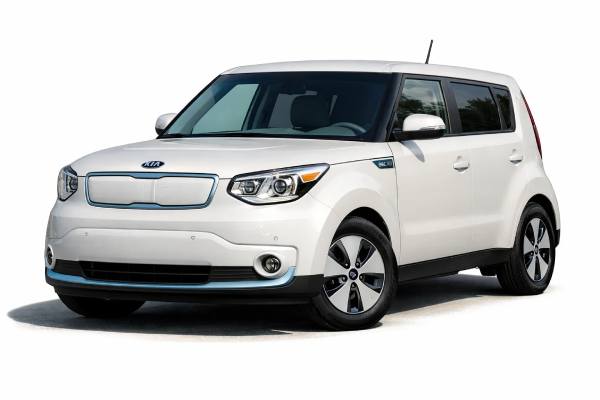
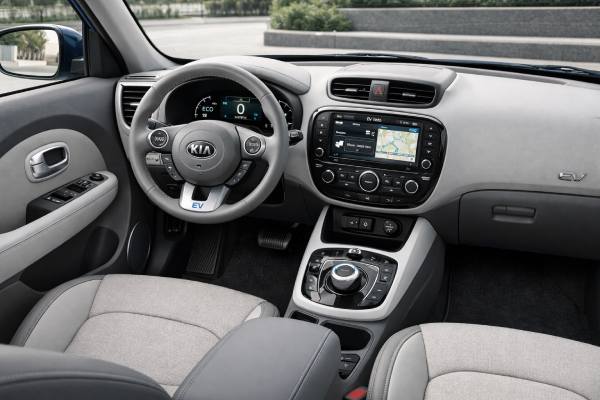
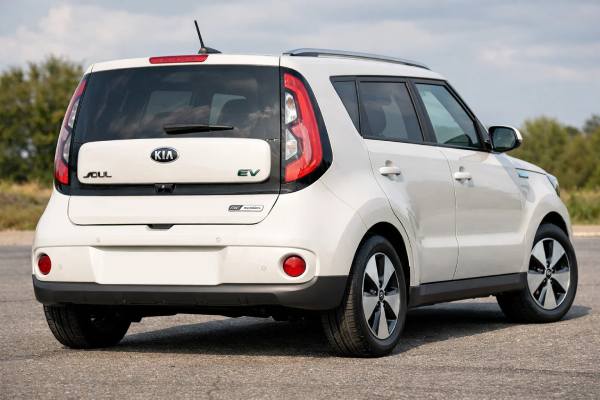
The 2019–2021 Kia Soul EV SK3 is the model that turned the Soul EV from an interesting early electric car into a genuinely complete one. It kept the upright seating, square cabin, and easy city manners that always suited the Soul, but added a much stronger 150 kW motor, a far larger 64 kWh battery, CCS fast charging, and a more sophisticated rear suspension. That changed the ownership experience in real ways. This version is quicker, calmer at speed, and far more flexible on mixed journeys than the earlier Soul EV.
Its engineering focus is easy to understand. Kia built it as a practical front-wheel-drive EV with useful range rather than as a niche city runabout. The battery sits under the floor, the torque arrives instantly, and the car still offers the easy entry and visibility that many buyers want more than sporty styling. The main thing to judge today is not design or speed. It is battery health, service record, and how well the car was charged and maintained.
Essential Insights
- The 64 kWh pack and 150 kW motor make this Soul EV vastly more usable than the earlier generation.
- CCS charging, a heat pump, and strong regeneration improve everyday efficiency and winter drivability.
- The tall body, wide-opening doors, and practical boot still make it one of the easiest compact EVs to live with.
- Used examples need careful checks for battery health, 12 V battery condition, brake corrosion, and software history.
- A sensible real-world inspection and service rhythm is every 15,000 km or 12 months.
Contents and shortcuts
- Kia e-Soul SK3 Big Picture
- Kia e-Soul SK3 Spec Tables
- Kia e-Soul SK3 Trims and Safety
- Ownership Risks and Service Actions
- Maintenance Rhythm and Buyers Checklist
- Real Range and Road Behavior
- Where It Beats Its Rivals
Kia e-Soul SK3 Big Picture
The third-generation Soul EV, sold in Europe as the e-Soul, is the version that finally delivered the Soul idea without the compromises of an early short-range EV. That is why it remains relevant in the used market. It does not just look different from the old car. It works differently in the areas that matter most to owners: range, charging, ride quality, and day-to-day ease.
The headline engineering upgrades were substantial. The long-range model paired a 64 kWh lithium-ion polymer battery with a 150 kW front motor producing 395 Nm. That was enough to give the tall hatchback real pace, with strong mid-range pull and a useful reserve on fast roads. Kia also moved to a liquid-cooled battery setup and fitted CCS fast charging in Europe, which made regional travel much more realistic than it was in the old Soul EV. Just as important, the SK3 switched to a fully independent multi-link rear suspension. That is not a glamorous change, but it improves body control and makes the car feel more grown-up on uneven roads.
The body still follows the classic Soul formula. It is upright, boxy, and honest about its priorities. The roofline is tall, the glass area is generous, and the doors open wide. That means easier entry than a low hatchback and a more natural seating position for drivers who dislike dropping down into a car. Rear passengers also benefit because the roof shape protects headroom better than in many sleeker EV crossovers.
This Soul EV suits a very specific kind of owner. It is strong for commuters, local families, and drivers who want a compact EV that does not feel cramped. It is also good for people who care about visibility, cabin access, and useful packaging more than they care about sharp aerodynamics. The trade-off is obvious: the bluff shape costs efficiency at motorway speed. A Hyundai Ioniq Electric or Tesla Model 3 will stretch the same kilowatt-hours further on a fast road. The Soul answers with a friendlier cabin and better ease of use.
As a used purchase in 2026, the SK3 Soul EV still makes sense because it combines enough battery capacity for modern local use with relatively straightforward hardware. It is not the cheapest used EV, and it is not the longest-range choice. But it is one of the more convincing “normal life” EVs of its era, especially when battery health is strong and the car has not been neglected.
Kia e-Soul SK3 Spec Tables
Powertrain, battery, and efficiency
| Spec | Value |
|---|---|
| Motor type | Permanent Magnet Synchronous Motor |
| Motor count and axle | Single motor, front axle |
| System voltage | 356 V |
| Battery chemistry | Lithium-ion polymer |
| Traction battery | 64 kWh, underfloor pack |
| Battery structure | 294 cells |
| Battery capacity | 180 Ah |
| Max power | 201 hp (150 kW) |
| Max torque | 395 Nm (291 lb-ft) |
| Thermal management | Liquid-cooled battery, heat pump, waste-heat recovery |
| Efficiency / test standard | WLTP |
| Rated efficiency | 15.7 kWh/100 km (157 Wh/km) |
| Rated range | 452 km (281 mi) WLTP combined |
Driveline and charging
| Spec | Value |
|---|---|
| Transmission / drive unit | Single-speed automatic reduction gear |
| Drive type | FWD |
| Differential | Open |
| Charging connector (AC) | Type 2, AC single-phase |
| Charging connector (DC) | CCS |
| Charging port location | Front grille |
| Onboard charger (AC) | 7.2 kW |
| AC 0–100% | 9 h 35 min at 7.2 kW |
| AC emergency charge | 31 h at 220 V |
| DC 20–80% | 42 min at 100 kW DC fast charger |
Performance and capability
| Spec | Value |
|---|---|
| 0–100 km/h (0–62 mph) | 7.6 s |
| Top speed | 167 km/h (104 mph) |
| Drive modes | Normal, Eco, Eco+, Sport |
| Regenerative braking | Adjustable paddles with single-pedal mode |
Chassis and dimensions
| Spec | Value |
|---|---|
| Suspension, front / rear | MacPherson strut / multi-link |
| Wheels and tyres | 215/55 R17 |
| Length / Width / Height | 4,195 / 1,800 / 1,605 mm (165.2 / 70.9 / 63.2 in) |
| Wheelbase | 2,600 mm (102.4 in) |
| Kerb weight | 1,682 kg (3,708 lb) |
| GVWR | 2,180 kg (4,806 lb) |
| Cargo volume | 315 / 1,339 L (11.1 / 47.3 ft³), VDA |
Safety and service data
| Spec | Value |
|---|---|
| Crash rating | Euro NCAP tested under the 2019 protocol |
| ADAS suite | Available FCA, SCC, LKA, BCW, BCA-R, DAW, HBA |
| Brake fluid | DOT 3 or DOT 4 |
| A/C refrigerant | R-1234yf, 600 ± 25 g without heat pump, 650 ± 25 g with heat pump |
| A/C compressor oil | POE-1, 150 ± 10 mL |
| Wheel nut torque | 107–127 Nm (79–94 lb-ft) |
| Service interval | 15,000 km or 12 months |
Kia e-Soul SK3 Trims and Safety
Trim structure for the SK3 e-Soul depended on market, but the used-car pattern is easy to understand. Most European long-range cars were sold with the 64 kWh battery and the same 150 kW front motor, while the main differences came from equipment level rather than drivetrain hardware. In practice, that means buyers should shop the spec sheet carefully, because two cars with the same motor and battery can feel very different in comfort, winter usability, and safety equipment.
The better-equipped cars usually stand out in three ways. First, they often carry more complete driver-assistance packages, which can include forward collision avoidance, lane-keeping support, blind-spot monitoring, rear cross-traffic functions, adaptive cruise control, and high-beam assist. Second, they may bring cabin upgrades such as leather trim, heated and ventilated seats, upgraded infotainment, premium audio, head-up display, or full LED lighting. Third, they can include convenience items that matter more in an EV than in a petrol car, such as heat-pump-supported climate control, battery-related charging menus, and better trip-planning integration in the navigation system.
Quick identifiers help at inspection time. Cars with the 64 kWh pack usually sit on 17-inch wheels and carry the long-range performance figures that separate them clearly from the smaller-battery model. Inside, higher-spec examples often have a larger central display, more contrast cabin trim, a head-up display, and more visible drive-assistance menu options. The heat pump itself is not something most sellers advertise clearly, so it is worth checking original equipment listings or the factory spec by VIN if winter efficiency matters to you.
Safety is one of the SK3’s stronger areas, but there is a nuance many buyers miss. The car’s basic passive-safety package is solid: a strong shell, multiple airbags, ESC, modern restraint systems, and good child-seat practicality. The more meaningful used-market difference comes from active-safety content. Some markets bundled the stronger ADAS set into upper trims or safety packs, which means one e-Soul can be materially better equipped than another even if both look similar in photos.
That matters after purchase as well. Windscreen replacement, front camera work, radar service, and bumper repair can require proper calibration on ADAS-equipped cars. This is not unusual, but it does mean a supposedly minor repair can be more involved than it would be on an older Soul EV. Buyers who want the simpler ownership path may prefer a car with fewer driver aids. Buyers who care about active safety should do the opposite and make sure every camera- and radar-based function works exactly as it should before money changes hands.
Ownership Risks and Service Actions
The SK3 e-Soul is usually a stronger long-term proposition than the earlier Soul EV, but it still has a clear pattern of things to watch. The expensive item remains the high-voltage battery, yet the day-to-day complaints owners actually encounter are often smaller: 12 V battery weakness, brake hardware corrosion, charging glitches, and software-related warning messages.
The good news is that the battery system itself is generally more robust than the old PS-generation Soul EV because the SK3 moved to a liquid-cooled pack and a more mature long-range setup. In normal temperate use, this tends to support steadier battery health over time. The cars that deserve the closest inspection are those that spent their life in very hot climates, sat at very high state of charge for long periods, or lived on repeated rapid charging without much AC charging in between. Those patterns do not automatically create a bad car, but they can show up as weaker rapid-charge behavior, more aggressive tapering, or disappointing real-world range relative to displayed state of charge.
Common lower-cost issues include the 12 V auxiliary battery. When it weakens, the car can produce odd warning messages, charging interruptions, or no-ready conditions that look more dramatic than they are. Brake issues are similarly ordinary but easy to miss. Because regeneration does a large share of the slowing, friction brakes on lightly used cars may corrode, bind, or wear unevenly. A rough-feeling or noisy e-Soul is often crying out for proper brake service rather than major EV repair.
Occasional faults tend to sit around charging and cooling hardware. Charge-port latch issues, worn seals, occasional onboard charger faults, coolant warnings, or sensor-related EV system messages can all appear. Most are fixable, but they matter because they affect confidence in a way a worn suspension link does not. The same goes for drive-unit noises. Reduction-gear whine is not the norm, but any humming or pitch change that rises with road speed and not just motor load deserves closer inspection.
Software matters more on this generation than on the first Soul EV. Battery-management updates, charging logic updates, infotainment fixes, and ADAS-related software improvements can materially change how the car behaves. A dealer record showing campaign work and software updates is a real asset, not a minor detail.
One final point: I did not find a single market-wide, model-defining SK3 battery recall that defines this car the way earlier Soul EV battery campaigns defined the old generation. That does not remove the need for caution. It makes VIN-based history checks even more important, because campaign and software status can differ by region and production batch.
Maintenance Rhythm and Buyers Checklist
The SK3 e-Soul needs less routine service than an ICE Soul, but “less” does not mean “none.” The cars that age best are the ones that receive steady low-drama maintenance instead of being ignored because they are electric.
A practical maintenance plan looks like this:
- Full inspection every 15,000 km or 12 months.
- Cabin air filter every 15,000 to 20,000 km or 12 months.
- Brake inspection every 15,000 km or 12 months, with special attention to slider movement, pad freedom, rear-disc corrosion, and the handoff between regenerative and friction braking.
- Brake fluid every 24 months.
- Tyre rotation about every 10,000 km, because the front axle carries both steering and drive torque.
- Alignment check yearly or whenever steering-centre position or shoulder wear looks wrong.
- Suspension and steering inspection at every annual service.
- 12 V battery test every year from year four onward.
- High-voltage battery state-of-health check at least yearly, and always before purchase.
- Cooling-system inspection every service, including fans, radiators, hoses, and correct coolant history.
- Drive-unit and reduction-gear leak and noise inspection at every service.
For hard use, shorten the inspection mindset even if the official interval does not change. Frequent DC charging, repeated high-speed motorway driving, heavy winter heating use, mountain driving, and long periods parked near 100% charge all justify closer monitoring of tyres, brakes, and battery behavior.
The buyer’s checklist should focus on what actually separates a good used EV from a risky one. Start with battery health. Ask for a dealer battery report, not just an optimistic dashboard range number. Then observe charging if possible. A car that AC charges normally but behaves oddly on DC is not necessarily a deal-breaker, but it deserves explanation and price adjustment. Next, inspect the charge port, flap, latch, and cable condition. After that, look underneath. The battery case area, subframes, fasteners, and undertrays should look intact and dry, not scraped, bent, or crudely repaired.
Inside the car, test every EV-specific function. Regeneration level control, climate settings, pre-conditioning menus, navigation energy screens, camera systems, parking sensors, and any ADAS features should work cleanly. If the windscreen was replaced, ask whether camera calibration was done. If the seller has no idea, check the lane- and collision-support systems more carefully.
The best used examples are usually 2020 or 2021 cars with complete service history, documented software work, and a battery report that matches the car’s displayed behavior. I would prioritize battery condition over cosmetic extras every time. A plain but healthy e-Soul is a better buy than a loaded one with weak charging behavior or neglected brake hardware.
Real Range and Road Behavior
On the road, the SK3 e-Soul is better than its tall shape suggests. The immediate impression is not outright speed, even though 150 kW is enough to make it genuinely brisk. What stands out first is the way the car combines strong step-off torque with an easy seating position and very predictable controls. That gives it a low-stress quality that suits everyday driving extremely well.
Ride and handling are improved over earlier Soul EVs because of the independent rear suspension and the battery mass low in the floor. The car still sits tall, so it does not corner like a sport hatch, but it feels planted and composed through fast bends. The steering is light and accurate rather than rich in feedback. In town that is exactly what most owners want. On broken roads, the standard 17-inch setup is a reasonable compromise between grip and comfort.
Noise levels are mixed. Around town the car feels quiet, refined, and smooth. On the motorway, the boxy body shape still creates more wind noise than a lower, slipperier EV. That does not make it tiring, but it does explain why the Soul’s highway range is never as strong as the battery size alone suggests.
The powertrain is easy to like. Step-off is immediate, mid-range pull is strong, and overtakes happen without delay. Sport mode sharpens response, while Eco and Eco+ are useful without feeling crippling. Regenerative braking is one of the car’s better features. Kia gave the e-Soul multiple regen levels and a one-pedal-style single-pedal mode, which helps drivers tailor the car to traffic, weather, and preference. Most owners adapt quickly.
Real range is where context matters. In mild urban and suburban use, a healthy 64 kWh car can often deliver roughly 400 to 470 km if speeds stay moderate. Mixed driving usually lands nearer 340 to 420 km. On a steady 120 km/h motorway run, a more realistic figure is often around 250 to 300 km depending on temperature, wind, load, and tyre condition. In winter, cabin heating, wet roads, and cold-soaked battery temperatures can pull that lower by 15 to 30 percent.
Charging behavior remains respectable for the era. Home charging on the 7.2 kW onboard charger is easy to live with and suits overnight replenishment well. Public DC charging is usable rather than class-leading. The official 20 to 80 percent figure of 42 minutes on a 100 kW charger is fine for regional travel, but this is not a modern 800 V car with a flat high-power charge curve. Temperature, starting state of charge, and charger quality still matter a lot. For most owners, the Soul EV works best when it lives on home AC charging and uses DC charging as a travel tool rather than a daily habit.
Where It Beats Its Rivals
The SK3 e-Soul sits in a very interesting place among used EVs because it mixes practical packaging with enough range and performance to feel modern. Its natural rivals are the Hyundai Kona Electric 64 kWh, Kia e-Niro 64 kWh, Nissan Leaf e+, and Volkswagen ID.3.
Against the Kona Electric, the Soul usually loses on pure efficiency and sometimes on outright range. The Hyundai is the more aerodynamic tool. But the Soul answers with a roomier-feeling cabin, easier entry, and a less cramped rear compartment. If you carry adults often or value visibility over sleekness, the Soul can be the better real-world choice.
Against the e-Niro, the comparison is tighter because the two share a lot of core hardware. The e-Niro tends to feel more conservative and family-oriented, while the Soul feels more upright, more distinctive, and easier to access. The Niro is often the more rounded long-distance car. The Soul is often the friendlier urban one.
Against the Nissan Leaf e+, the Soul brings one big structural advantage for many buyers: CCS charging. That is a simpler place to be in 2026 than relying on CHAdeMO infrastructure. The Soul also feels more modern in driver-assistance philosophy and cabin design. The Leaf still rides comfortably and has a loyal following, but the charging standard alone can swing the verdict toward the Kia.
Against the Volkswagen ID.3, the Soul looks older in software and EV-specific packaging, and the ID.3 is usually better on motorway efficiency and rear-drive balance. But the Kia can still win on visibility, seating position, cabin familiarity, and the fact that it feels like a very well-sorted conventional car that happens to be electric.
That is the Soul EV’s real advantage. It makes the EV transition easy for people who care about straightforward ergonomics and day-to-day usability. Choose it if you want:
- a usable long-range compact EV,
- upright access and strong visibility,
- quick response without complicated dual-motor hardware,
- and charging hardware that still makes practical sense.
Choose a rival if you want:
- the best highway efficiency,
- the newest infotainment ecosystem,
- or the flattest fast-charge performance.
For the right owner, though, the SK3 e-Soul remains one of the most appealing used compact EVs of its period.
References
- All-electric Kia e-Soul to make European debut 2019 (Press Release)
- The e-Soul 2020 (Brochure)
- Käyttöohjekirjat | Kia Finland 2026 (Owner’s Manual)
- Übersicht Serviceintervalle – Kia 2022 (Service Intervals)
- Euro NCAP | Latest Safety Ratings 2026 (Safety Rating)
Disclaimer
This article is for informational purposes only and is not a substitute for professional diagnosis, repair, or vehicle-specific service advice. Specifications, torque values, service intervals, battery behavior, charging performance, and procedures can vary by VIN, market, production date, software level, and equipment, so always verify details against official service documentation for the exact vehicle.
If this guide helped you, please share it on Facebook, X, or another platform to support our work.