


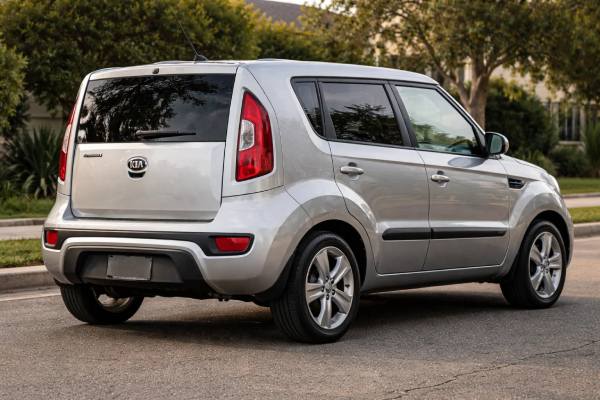
The facelifted 2011–2013 Kia Soul AM with the 1.6-litre diesel is the most mature version of the first-generation Soul for drivers who want torque, modest running costs, and a shape that is still easy to spot in traffic. This version pairs the D4FB-family 1.6 CRDi engine with the AM platform’s upright seating, square cargo area, and simple front-wheel-drive layout. It also benefits from the facelift’s cleaner nose, improved cabin details, six-speed transmissions, and extra stability aids in many markets.
There is one detail worth clearing up early. In some European materials this diesel is described as 128 PS, while UK literature often lists the same 94 kW tune as 126 bhp. In practice, it is the same output class and the same ownership proposition. The bigger question is not the brochure number. It is whether the car was used in a way that suits a small diesel: regular long enough drives, timely oil changes, and proper attention to the DPF, brakes, and suspension.
What to Know
- Strong low-rpm torque makes this Soul easier to drive than the equivalent petrol on hills and motorways.
- The facelift brought six-speed gearboxes, sharper styling, and better day-to-day equipment in many markets.
- Upright seating, easy access, and a useful square cabin still make it a practical small crossover.
- Short-trip cars can suffer from DPF loading, EGR soot build-up, and underused rear brakes.
- A sensible real-world service rhythm is every 15,000 km or 12 months, even where official intervals are longer.
Guide contents
- Kia Soul Diesel Snapshot
- Kia Soul Diesel Technical Tables
- Kia Soul Facelift Equipment and Protection
- Failure Patterns and Recall Notes
- Service Planning and Used-Buy Advice
- Road Feel and Real Economy
- Soul Diesel Versus Rivals
Kia Soul Diesel Snapshot
The facelifted Soul AM diesel occupies a narrow but useful niche. It is not a true SUV, yet it gives many of the things buyers want from one: easy entry, a raised hip point, a commanding view out, and a body shape that makes urban driving stress-free. Unlike many later compact crossovers, it does this with a relatively simple front-wheel-drive layout and a small diesel engine that was designed to deliver torque rather than drama.
That matters, because the diesel changes the car’s character more than the styling update does. The petrol Soul of the same period is honest but needs revs. The 1.6 CRDi feels more relaxed. With 260 Nm available low in the range, it pulls better from junctions, carries passengers more easily, and needs fewer downshifts on open roads. For owners who commute, cover mixed A-road mileage, or routinely drive loaded, the diesel is the more convincing powertrain.
The facelift itself is worth having. Kia revised the front and rear styling, upgraded interior details, improved standard equipment, and introduced six-speed transmissions across the range. Those changes made the AM feel more grown up without changing its basic recipe. It still rides on a simple chassis with MacPherson struts at the front and a torsion-beam rear axle, but the car feels tidier and more settled than some early pre-facelift examples.
This version is best for drivers whose usage pattern suits a diesel. The engine is efficient on the motorway and pleasantly strong in the middle of the rev range, but repeated short trips can work against it. DPF regeneration, EGR cleanliness, and general soot management become more important when the car spends its life in heavy traffic and never gets properly warm. That does not make it a bad car. It simply means buyer and use case need to match.
The Soul’s other lasting strength is packaging. The roofline is tall, the doors open wide, and the cabin is easier to access than a low hatchback. That makes it a solid used choice for older drivers, young families, and anyone who values comfort getting in and out over outright cornering polish. Its weakness is refinement at speed. The bluff body brings more wind noise than sleeker rivals, and the ride can turn sharp on larger wheels. Still, as a practical, characterful diesel runabout, the facelifted Soul has aged well.
Kia Soul Diesel Technical Tables
The facelift diesel Soul was sold with some market-specific differences, so the table below reflects the common European 2011–2013 1.6 CRDi specification. Where values vary by trim, tyre package, or transmission, the most typical range is shown.
| Powertrain and efficiency | Value |
|---|---|
| Code | D4FB / 1.6 CRDi U-II |
| Engine layout and cylinders | Inline-4, DOHC, 16-valve, 4 cylinders, 4 valves per cylinder |
| Bore × stroke | 77.2 × 84.5 mm (3.04 × 3.33 in) |
| Displacement | 1.6 L (1,582 cc) |
| Induction | Turbocharged |
| Fuel system | Common-rail direct injection |
| Compression ratio | about 17.3:1 |
| Max power | 128 PS / about 126 bhp (94 kW) @ 4,000 rpm |
| Max torque | 260 Nm (192 lb-ft) @ 1,900–2,750 rpm |
| Timing drive | Chain |
| Rated efficiency | about 4.9 L/100 km (48.0 mpg US / 57.6 mpg UK) manual |
| Real-world highway @ 120 km/h (75 mph) | about 6.2–6.8 L/100 km |
| Transmission and driveline | Value |
|---|---|
| Transmission | 6-speed manual; 6-speed automatic optional in some markets |
| Drive type | FWD |
| Differential | Open |
| Chassis and dimensions | Value |
|---|---|
| Suspension, front / rear | MacPherson strut / torsion beam |
| Steering | Motor-driven electric power steering |
| Brakes | Front discs; rear discs on many higher diesel trims, market-dependent |
| Wheels and tyres | Most common: 205/60 R16; style trims often 225/45 R18 |
| Length | 4,120 mm (162.2 in) |
| Width | 1,785 mm (70.3 in), excluding mirrors |
| Height | about 1,610 mm (63.4 in) |
| Wheelbase | 2,550 mm (100.4 in) |
| Turning circle, kerb-to-kerb | about 10.5–10.6 m (34.4–34.8 ft) |
| Kerb weight | typically about 1,330–1,400 kg (2,932–3,086 lb) |
| Fuel tank | 48 L (12.7 US gal / 10.6 UK gal) |
| Performance and service data | Value |
|---|---|
| 0–100 km/h (0–62 mph) | about 10.7–10.9 s manual |
| Top speed | about 180 km/h (112 mph) manual |
| Engine oil | ACEA C3 5W-30; 5.3 L (5.6 US qt) |
| Brake fluid | DOT 4 |
| Manual gearbox oil | Use exact spec by gearbox code; prudent change interval 60,000–80,000 km |
| Automatic transmission fluid | Use exact Kia specification by VIN; prudent service at about 60,000 km |
| Wheel nut torque | 88–107 Nm (65–79 lb-ft) |
| Safety and driver assistance | Value |
|---|---|
| Euro NCAP | 5 stars; adult 87%, child 86%, pedestrian 39%, safety assist 86% |
| Airbags | Usually six: front, side, and curtain |
| Core safety systems | ABS, EBD, ESC; facelift cars often add VSM and HAC |
| ADAS suite | No AEB, ACC, LKA, BSD, or modern camera-based assistance |
The important technical takeaway is that this Soul is built around straightforward hardware. The diesel adds useful torque, but the rest of the car remains simple: front-wheel drive, compact dimensions, and a chassis that most independent workshops understand well. That simplicity is a real ownership advantage today, especially compared with later crossovers that mix turbocharging, heavier bodies, and much more electronics.
Kia Soul Facelift Equipment and Protection
Trim naming depended heavily on market, so it helps to think in equipment layers rather than in one universal badge structure. In the UK, facelift-era cars commonly appeared as Soul 1, Soul 2, and style-led special editions such as Hunter and Quantum. Other European markets used their own trim names, but the pattern was similar: a modestly equipped base car, a better-balanced mid-grade, and a style-focused upper version with larger wheels and more cabin features.
For most buyers, the mid-spec diesel is the sweet spot. It usually brings the most useful upgrades without the compromises of the flashier variants. That often means 16-inch alloy wheels instead of 18s, better audio controls, Bluetooth, cruise control, and more cabin trim detail without the firmer ride and higher tyre costs of the special editions. If you want the Soul mainly as an everyday car, not a fashion piece, that is the one to seek out.
The upper trims are easy to spot. Hunter- and Quantum-type versions often have distinctive wheel finishes, LED daytime running lights, privacy glass, more elaborate interior trim, upgraded sound systems, climate control, heated seats, reversing cameras, parking sensors, or a sunroof. Mechanically, though, the differences are smaller than the badges suggest. You are still getting the same core chassis and the same 1.6 CRDi engine, with the biggest functional variation usually coming from wheel size or automatic transmission fitment.
Safety equipment was good for the period and, importantly, broad rather than token. The Soul’s structure performed well in Euro NCAP testing, and the rating applied across the model line. Six airbags, ESC, and seatbelt reminders were part of the package that helped the car achieve a strong result by early-2010s small-car standards. On facelift cars, Vehicle Stability Management and Hill-start Assist Control further improved low-speed confidence and slippery-surface behavior in many markets.
What the Soul does not have is modern driver assistance. There is no autonomous emergency braking, no lane-centering system, no blind-spot radar, and no adaptive cruise control. In one sense, that is a weakness against newer rivals. In another, it keeps ownership simpler. Windscreen replacement does not trigger camera recalibration, and there is less hidden electronic cost when the car ages. The only caution is that steering, ABS, and ESC faults should still be diagnosed properly after alignment work, wheel-speed sensor replacement, or battery-related voltage problems.
For family use, the Soul remains sensible. Rear ISOFIX points, good outward visibility, and a tall cabin make it easy to live with. It is not a minivan, but it is far more practical than its playful shape first suggests.
Failure Patterns and Recall Notes
The facelift Soul diesel is usually dependable when its maintenance history makes sense, but it does have a clear pattern of age- and use-related issues. The most important distinction is between cars that did regular mixed or motorway mileage and cars that lived on short trips. The second group is more likely to be expensive.
Common and usually medium cost
DPF-related trouble is the first thing to watch. Symptoms include a regeneration warning, rising fuel use, frequent fan operation, loss of power, or limp mode. The usual root cause is repeated short journeys that interrupt regeneration, sometimes made worse by tired sensors or poor servicing. The remedy can be as simple as a proper regeneration cycle, or as involved as pressure-sensor diagnosis, forced regeneration, or DPF cleaning.
EGR and intake soot build-up is another regular complaint. Symptoms are hesitation, rough response, smoke under load, and uneven idle quality. In many cases the fix is cleaning or replacing the EGR valve and checking the intake tract for heavy deposits.
Suspension wear is also routine. Anti-roll-bar links, bushes, dampers, and wheel bearings take a beating on rough roads, especially on 18-inch wheel cars. None of these jobs is unusual, but a neglected car can need several at once.
Occasional but worth checking closely
Turbo control faults often start with split boost hoses, sticky vane control, vacuum leaks, or sensor issues rather than a destroyed turbocharger. Look for low boost, whistle changes, limp mode, or black smoke under hard acceleration. Many cars are fixed without replacing the whole turbo.
Manual cars can also develop clutch and dual-mass flywheel wear once mileage climbs. Judder on take-off, vibration through the pedal, or a rattle at idle with the clutch engaged are typical clues. The diesel’s torque is useful, but it asks more from the driveline than the petrol.
Injector seal seepage and diesel leakage around the top of the engine are less common than DPF trouble, but they deserve attention. A chuffing sound, fuel smell, or baked-on carbon around an injector should not be ignored.
Rare but important
Timing-chain trouble is not the first thing owners complain about, but it can happen on engines that went too long between oil changes. A chain rattle on cold start, correlation faults, or poor running should be investigated early.
The official recall item worth knowing is the HECU fuse campaign affecting certain 2011–2013 Soul AM cars with ESC. The issue concerns an electrical short risk in the hydraulic electronic control unit area. Any used buyer should verify completion by VIN and dealer record, not by seller memory alone.
Rust is the other age-related issue that can quietly change the economics of the car. Check rear arch lips, the tailgate edge, subframes, and brake-line mounting points in cars from salted-road climates. A tidy diesel Soul can still be a good buy. A neglected one can absorb money surprisingly fast.
Service Planning and Used-Buy Advice
The best way to own this Soul is to service it a little earlier than the longest official interval and to treat the diesel system as something that needs the right use pattern. That means clean oil, regular filter changes, and enough long runs for proper regeneration.
A practical schedule for long-term ownership looks like this:
| Item | Practical interval |
|---|---|
| Engine oil and filter | Every 15,000 km or 12 months; shorten to 10,000–12,000 km in hard urban use |
| Engine air filter | Inspect every 15,000 km; replace around 30,000 km |
| Cabin filter | Every 15,000–20,000 km or 12 months |
| Fuel filter | Replace around 40,000–60,000 km, sooner if fuel quality is suspect |
| Brake fluid | Every 2 years |
| Coolant | Check yearly; replace by market schedule, commonly around 5 years |
| Manual gearbox oil | Sensible refresh at 60,000–80,000 km |
| Automatic transmission fluid | Sensible service at about 60,000 km |
| Serpentine belt and hoses | Inspect every service; replace on cracking, noise, or age |
| Brake pads, discs, sliders | Inspect at every service |
| Tyre rotation and alignment | Rotate about every 10,000 km; align when tyre wear appears uneven |
| Battery test | Start annual testing from year 4 |
| Timing chain | No fixed change interval; inspect on noise, faults, or poor oil history |
| DPF and EGR condition | Monitor actively on short-trip cars |
For fluids, the clearest owner-facing numbers are the most useful buying numbers. The engine takes 5.3 L of ACEA C3 5W-30 oil. Brake fluid is DOT 4. Wheel nuts are tightened to 88–107 Nm. Beyond that, transmission and cooling details can vary by gearbox and market, so the safest approach is to verify exact fill data by VIN before major service work.
As a used buy, the best version is usually a 2012 or 2013 manual diesel on 16-inch wheels with a fully documented history. That combination delivers the facelift’s improved gearbox and equipment without the harsher ride of the showier trims. I would be more cautious with cars that have had only city use, heavily delayed oil services, unknown DPF history, or cheap aftermarket tuning boxes.
On inspection, check five areas carefully:
- Cold start quality, smoke, and idle smoothness.
- Evidence of DPF stress, including warning lights and recent forced regeneration invoices.
- Clutch take-up, flywheel vibration, and boost response under load.
- Rear brake drag, uneven tyre wear, and front-end knocks.
- Underside corrosion and proof of recall completion.
Long-term, the durability outlook is decent. This is not a fragile diesel, but it is one that clearly rewards correct use and punishes neglect.
Road Feel and Real Economy
The facelift diesel Soul drives better than its shape suggests. It is still a tall, boxy small crossover, so it does not hide physics, but the extra torque gives it a more natural rhythm than the petrol version. In daily use, that matters more than the styling or the published sprint number.
The six-speed manual suits the engine well. First and second are short enough for town work, while the upper ratios let the diesel settle into a calmer motorway stride than the older five-speed cars. Low-rpm pull is the powertrain’s strong point. You do not need to thrash it to make progress, and overtakes on secondary roads are less stressful than in the naturally aspirated petrol. The automatic is smoother in traffic and easy to live with, but it is slower and usually a little more expensive to keep happy.
Ride quality is acceptable on 16-inch wheels and distinctly firmer on 18s. Around town, the Soul feels compact and easy to position. Visibility is one of its best traits. The upright glasshouse, short overhangs, and higher seat help nervous drivers immediately. Steering is light rather than rich in feel, but it is predictable. On fast roads, the Soul is secure rather than sporty. There is body movement in quick direction changes, and crosswinds remind you that the car has a bluff profile.
Noise is fair for the class, not outstanding. At urban speeds the diesel settles down well. At 120 km/h, wind and tyre noise become the dominant sounds. It is entirely usable for long trips, but it is not as quiet as a lower, more conventional hatchback.
Real-world economy is where the diesel makes its case. In mixed use, a healthy manual car usually returns about 5.8–6.7 L/100 km. Highway cruising often lands around 5.3–6.0 L/100 km if the road is open and the weather mild. At a steady 120 km/h, expect roughly 6.2–6.8 L/100 km. City driving pushes that to about 6.8–8.0 L/100 km, especially in winter or with lots of stop-start running. Cold weather can add about 0.5 to 1.0 L/100 km, and repeated short trips will usually make the car feel less efficient than the brochure suggests.
In short, the Soul diesel is not quick in an exciting sense. It is quick enough in the exact way an owner needs: easy overtakes, relaxed cruising, and useful torque with sensible fuel use.
Soul Diesel Versus Rivals
The facelift Soul diesel makes the most sense when compared with small crossovers and tall hatchbacks from the same era, not with later compact SUVs. Its natural rivals include the Nissan Juke 1.5 dCi, Skoda Yeti 1.6 TDI, Hyundai ix20 1.6 CRDi, and Kia Venga diesel.
Against the Nissan Juke, the Soul usually wins on cabin usability and ease of access. The Juke is more style-led and, in some trims, feels more playful to look at, but the Kia is roomier, easier to see out of, and less compromised inside. The Juke can also feel tighter in the rear and less practical for older passengers or child-seat work. For family use, the Soul is the stronger tool.
Against the Skoda Yeti, the picture changes. The Yeti is more refined at speed, often more polished in ride and handling, and can feel like the more mature long-distance car. But it can also be more complex depending on engine, transmission, and trim. The Soul answers with simpler character, lower visual fuss, and strong value when bought well. If you want the more premium driving experience, the Yeti edges it. If you want easy ownership and personality, the Soul remains persuasive.
Against the Hyundai ix20 and Kia Venga, the Soul is the more interesting choice but not always the most rational. Those MPV-shaped cousins often package rear space more efficiently and can ride a little more softly. The Soul, however, has more visual character and a more distinct seating environment. Buyers who dislike anonymous practicality often end up preferring it.
That leaves the main verdict. The Soul diesel is a good rival if you value:
- easy ingress and good visibility,
- honest, torquey real-world performance,
- simple front-wheel-drive mechanicals,
- and a design that still feels individual.
A rival may be the better buy if you need:
- the quietest motorway car,
- the most flexible rear-seat arrangement,
- or the lowest risk for short-trip-only driving.
For the right owner, though, the facelifted Soul 1.6 diesel remains one of the more appealing small used crossovers of its generation. It combines practicality and character better than many rivals, and when serviced properly, it usually asks for manageable rather than frightening money.
References
- The new 2012 Kia Soul – Kia Media Site 2011 (Press Release)
- Engine Oil Grades and Capacities – Kia 2023 (Service Data)
- Kia szerviz intervallumok 2025 (Service Intervals)
- KIA Soul – Euro NCAP Results 2009 2009 (Safety Rating)
- Part 573 Safety Recall Report 23V-652 2023 (Recall Database)
Disclaimer
This article is for informational purposes only and is not a substitute for professional diagnosis, repair, or vehicle-specific service advice. Specifications, torque values, maintenance intervals, procedures, and fitted equipment can vary by VIN, market, production date, and trim, so always verify details against official service documentation for the exact vehicle.
If this guide was useful, please share it on Facebook, X, or another platform to support our work.