
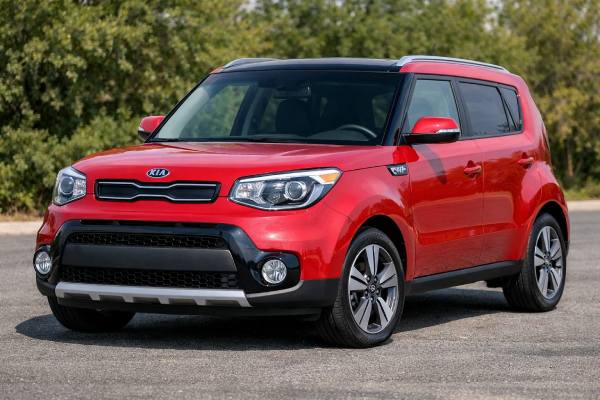
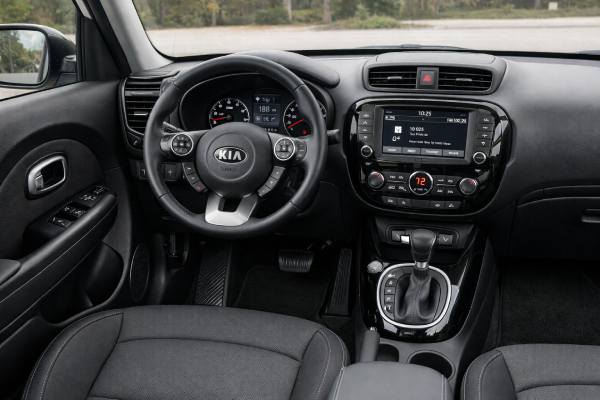
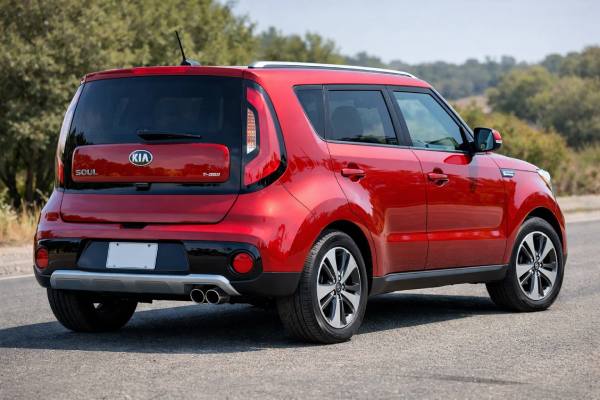
The facelifted 2017–2019 Kia Soul 1.6 GDI occupies a useful middle ground in the used-car market. It keeps the second-generation Soul’s upright shape, easy access, and smart interior packaging, but pairs them with the simpler naturally aspirated G4FD 1.6-liter direct-injection engine rather than the quicker but more complex turbo setup. That matters for buyers who care more about long-term running costs than outright pace. With 130 hp, front-wheel drive, and either a 6-speed manual or 6-speed automatic, this version is not fast, but it is easy to drive, easy to park, and easier to understand mechanically than many small crossovers sold alongside it. The trade-off is clear: the base 1.6 feels adequate rather than energetic, and buyers still need to watch service history, recall completion, and the usual direct-injection maintenance issues. Shop carefully, though, and this facelifted Soul remains a practical, honest, and cost-conscious compact hatchback.
Essential Insights
- Upright packaging, wide-opening doors, and strong visibility make daily use easier than many lower hatchbacks.
- The 1.6 GDI engine is simpler and cheaper to own than the turbo Soul, especially if you want a basic long-term commuter.
- Ride comfort and cabin usefulness are better than the modest power output suggests.
- The main ownership caveat is condition: oil-change history, carbon build-up risk, and open recalls matter more than trim badges.
- A sensible oil and inspection interval is every 10,000 to 15,000 km or 12 months, with shorter gaps for short-trip use.
Section overview
- Kia Soul PS facelift profile
- Kia Soul PS technical figures
- Kia Soul PS trims and protection
- Failure points and service campaigns
- Care schedule and smart buying
- On-road manners and economy
- Soul 1.6 GDI versus rivals
Kia Soul PS facelift profile
The facelifted 2017–2019 Soul is easy to misunderstand. From a distance it looks like a small crossover, but in practice it behaves more like a tall hatchback with excellent packaging. For the 130 hp G4FD version, that is actually a strength. The car is light enough to feel tidy in town, compact enough to park without stress, and upright enough to deliver a driving position many owners prefer over lower compact cars. The facelift did not reinvent the Soul, but it sharpened the lineup, improved trim logic, and made the second-generation car feel more settled.
For this specific version, the headline is mechanical simplicity. The G4FD 1.6-liter direct-injection four-cylinder sits at the bottom of the facelift range, below the larger 2.0 and well below the 1.6 turbo. That means you do not get the strongest passing performance, but you also avoid the dual-clutch and turbo complexity attached to the more powerful Soul !. In base form, the 1.6 came with a 6-speed manual or 6-speed automatic, both sending power to the front wheels through an open differential. There is no AWD option, no complicated chassis hardware, and no hidden performance agenda.
That simplicity shapes the ownership experience. Around town, the Soul 1.6 feels lighter and more honest than its numbers suggest. The boxy cabin gives it a “use all the space you paid for” character, and the upright roofline makes rear-seat access easier than in many fashionable small crossovers. Visibility is another major advantage. Thick front pillars still exist, but the Soul is easier to place on narrow streets and in parking garages than many rivals.
The drawbacks are equally clear. At highway speed, the car’s bluff body creates more wind noise than lower rivals, and the 1.6 engine has to work harder than the larger 2.0 when fully loaded or climbing grades. This is not the trim for drivers who want effortless acceleration. It is the trim for buyers who value predictable upkeep, useful interior space, and a lower entry price.
That makes the facelifted 1.6 GDI Soul especially appealing as a commuter, city car, or practical second household vehicle. It is also one of the better ways into the Soul range if you prefer modest complexity over peak specification. Buy it with full records, keep the direct-injection engine maintained properly, and it offers something many used compact cars no longer do: a straightforward ownership case.
Kia Soul PS technical figures
The facelifted 2017–2019 Kia Soul 1.6 GDI uses a simple front-drive layout with official U.S.-market figures that are easy to compare across trims and years. The table set below focuses on the naturally aspirated 130 hp version, not the 2.0-liter or 1.6 turbo variants.
| Powertrain and efficiency | Kia Soul (PS) 1.6 GDI facelift |
|---|---|
| Engine code | G4FD |
| Engine layout and cylinders | Inline-4, DOHC, 4 cylinders, 4 valves per cylinder |
| Bore × stroke | 77.0 × 85.44 mm (3.03 × 3.36 in) |
| Displacement | 1.6 l (1,591 cc) |
| Induction | Naturally aspirated |
| Fuel system | Gasoline direct injection |
| Compression ratio | 11.0:1 |
| Max power | 130 hp (97 kW) @ 6,300 rpm |
| Max torque | 160 Nm (118 lb-ft) @ 4,850 rpm |
| Timing drive | Chain |
| Rated efficiency, 6MT | 8.7 / 7.8 / 8.7 l/100 km city / highway / combined (24 / 30 / 27 mpg US) |
| Rated efficiency, 6AT | 9.0 / 7.6 / 8.4 l/100 km city / highway / combined (26 / 31 / 28 mpg US) |
| Real-world highway @ 120 km/h (75 mph) | Typically about 7.5–8.5 l/100 km (27–31 mpg US) |
| Transmission and driveline | Kia Soul (PS) 1.6 GDI facelift |
|---|---|
| Transmission | 6-speed manual or 6-speed automatic |
| Drive type | FWD |
| Differential | Open |
| Final drive, 6MT | 4.563 |
| Final drive, 6AT | 3.957 |
| Chassis and dimensions | Kia Soul (PS) 1.6 GDI facelift |
|---|---|
| Front suspension | MacPherson strut with stabilizer |
| Rear suspension | Coupled torsion beam axle |
| Steering | Motor-driven power steering; 15.7:1 |
| Brakes | 279 mm (11.0 in) vented front discs / 262 mm (10.3 in) solid rear discs |
| Wheels and tyres | 205/60 R16 |
| Ground clearance | 150 mm (5.9 in) |
| Approach / departure angle | 19.2° / 29.8° |
| Length | 4,140 mm (163.0 in) |
| Width | 1,801 mm (70.9 in) |
| Height | 1,613 mm (63.5 in) |
| Wheelbase | 2,570 mm (101.2 in) |
| Turning circle, kerb-to-kerb | 10.6 m (34.8 ft) |
| Kerb weight | 1,308 kg (2,884 lb) manual / 1,334 kg (2,942 lb) automatic |
| Fuel tank | 53.8 l (14.2 US gal / 11.8 UK gal) |
| Cargo volume | 532 l (18.8 ft³) seats up with tray / 1,402 l (49.5 ft³) seats folded with tray |
| Performance and service capacities | Kia Soul (PS) 1.6 GDI facelift |
|---|---|
| 0–100 km/h (0–62 mph) | About 10.5–11.0 s, depending on gearbox |
| Top speed | About 180 km/h (112 mph) |
| Engine oil | 3.6 l (3.8 US qt) |
| Engine oil grades | 5W-20, 5W-30, 5W-40, or 0W-40 depending on market and climate |
| A/C refrigerant | R-134a |
| Wheel-nut torque | 107–127 Nm (79–94 lb-ft) |
| Safety and driver assistance | Kia Soul (PS) 1.6 GDI facelift |
|---|---|
| Euro NCAP rating | 4 stars |
| Euro NCAP adult / child / vulnerable road users / safety assist | 84% / 82% / 59% / 56% |
| IIHS moderate overlap front | Good |
| IIHS side | Good |
| IIHS roof strength | Good |
| IIHS head restraints and seats | Good |
| IIHS small overlap, driver side | Good |
| IIHS small overlap, passenger side | Acceptable |
| Headlights | Poor with halogen reflector lamps; Good with optional HID projector setup |
| ADAS suite | ESC standard; AEB, FCW, LDW, BSD, and RCTA available only on higher trims or option packages |
Kia Soul PS trims and protection
The facelifted Soul range matters because the 1.6 GDI was not sold in isolation. In the U.S., the post-facelift lineup broadly used Base, +, and ! trims, with the 1.6 naturally aspirated engine living at the entry point. That makes this version the simplest mechanically, but not the richest in convenience or safety technology.
The base 1.6 GDI trim is easiest to identify by its 16-inch wheels, simpler cloth interior, and lower equipment ceiling. It usually carries the most direct ownership logic in the entire range: less to break, lower curb weight, and fewer expensive trim-specific parts. Buyers looking for the 130 hp version generally want this exact simplicity. Later model-year updates improved everyday usability through infotainment and camera integration, but the car never turned into a luxury hatch.
Above it sat the Soul +, usually with the 2.0-liter engine and more option flexibility, and the Soul ! with the turbo engine and sportier appearance details. That matters because some shoppers assume any late PS Soul can be compared directly. It cannot. The 130 hp 1.6 GDI cars do not share the turbo car’s performance, DCT character, or risk profile. If you are shopping the base engine on purpose, that difference is an advantage.
Safety equipment on the facelifted body is respectable. Even basic cars generally include ABS, brake assist, ESC, hill-start assist, vehicle stability management, tyre-pressure monitoring, full airbags, and rear child-seat anchors. That gives the Soul a solid passive and basic active safety foundation without forcing the buyer into a higher trim. Structurally, the second-generation body held up reasonably well in IIHS testing, with strong scores in the older major crash tests and a good driver-side small-overlap result.
Where trim choice really matters is driver assistance. The 1.6 base car is typically sparse. Blind-spot detection, rear cross-traffic alert, forward collision warning, autonomous emergency braking, lane-departure warning, and smart cruise control were not broad-range standard features. They arrived only on higher trims or specific option packages, generally attached to the + or !. In real-world used buying, that means many 1.6 GDI cars have solid basic safety but very little modern assistance.
Headlights are another hidden trim issue. The mainstream halogen reflector setup does not perform especially well in crash-test body evaluations, while optional projector systems fitted to better-equipped cars score much better. For buyers who drive often at night, this is more than a paper detail.
So which trim logic makes sense? For pure low-cost ownership, the 1.6 base is the sensible choice. For buyers who want more highway power or modern safety options, a higher trim may be a better overall buy, but it will no longer be the same low-complexity ownership proposition. That is the key point: on the facelifted Soul, trim choice changes the character of the car as much as the equipment list.
Failure points and service campaigns
The facelifted 2017–2019 Soul 1.6 GDI is not a notorious problem car, but it does have a clear pattern of issues that matter more than the average used-car ad will admit. The good news is that the 130 hp naturally aspirated engine avoids some of the more expensive concerns tied to the turbocharged Soul !. The bad news is that neglect still shows up quickly, especially with direct injection, urban short-trip use, and skipped fluid services.
The most common low-to-medium cost issues are straightforward:
- Carbon build-up on intake valves: Direct injection sprays fuel into the combustion chamber, not over the intake valves. Over time, especially with short trips and lower-quality fuel, deposits can build on the valves. Symptoms usually appear as rough idle, cold-start stumble, hesitant throttle response, or slight loss of smoothness. The practical remedy is intake-valve cleaning, often by walnut blasting on higher-mileage cars.
- Ignition and minor running faults: Coil packs, spark plugs, and dirty throttle bodies can create misfire complaints or uneven idle. These are not rare on aging small GDI engines and are usually manageable.
- Brake and chassis wear: Souls used mostly in town often show sticky slide pins, rusty rear brake hardware, worn front links, and the occasional wheel-bearing hum before anything serious happens.
- Steering-system noise: The motor-driven power steering setup can develop noise or wear in column or motor-related components. This is usually more annoying than dangerous, but it deserves proper diagnosis rather than guesswork.
Occasional issues are more expensive but still understandable. Some cars show mild oil use if maintenance history is poor. Others may develop timing-related fault codes after earlier engine work, especially if replacement or repair procedures were not performed accurately. Those are not common everyday faults, but they are worth knowing about because cheap used Souls are often cars that have already had improvised repair history.
The most important official campaign affecting facelifted 2017–2019 Souls is the later airbag control unit recall. Certain cars could set an airbag warning light because internal contact at the control unit created an open circuit. In real terms, that means a lit warning lamp cannot be ignored. Depending on vehicle condition, the remedy path involved software action or airbag control unit replacement. A buyer should treat proof of completion as essential.
A useful point of clarification for shoppers is this: many online discussions mix earlier Soul problems into the facelifted 2017–2019 1.6 GDI cars. That can exaggerate risk. The high-profile earlier engine-fire and catalytic-converter concerns often cited in Soul forums are not the headline issue for this exact facelifted 130 hp version. That does not make the car maintenance-free. It simply means the used-buyer conversation should stay focused on the right faults.
For pre-purchase inspection, ask for service records, cold-start behavior, scan-tool results, recall proof, and evidence of recent fluids, plugs, and brake work. The Soul 1.6 usually ages honestly. Trouble comes when routine maintenance has been treated as optional.
Care schedule and smart buying
A facelifted Soul 1.6 GDI tends to respond very well to boring maintenance. That is good news because boring maintenance is relatively affordable. The best way to own one long-term is to shorten the “maximum” service logic often seen in brochures and instead treat the car like a direct-injection commuter that benefits from regular attention.
A practical maintenance schedule looks like this:
- Engine oil and filter: every 10,000 to 15,000 km or 12 months. For short-trip use, very hot weather, or repeated stop-start driving, move closer to the shorter end.
- Engine air filter: inspect at every service and replace around 30,000 to 45,000 km depending on dust and traffic conditions.
- Cabin air filter: every 15,000 to 20,000 km or 12 months.
- Spark plugs: inspect by service history and replace on schedule for the plug type fitted. On a DI engine, do not wait for a misfire before caring.
- Brake fluid: every 2 years is a sensible target.
- Brake inspection: every service, including slider movement, pad thickness, rotor condition, and corrosion on lightly used cars.
- Transmission fluid: a preventive change at roughly 60,000 to 90,000 km is smart for both the manual and automatic if the car will be kept long-term.
- Coolant and hoses: inspect annually and replace coolant by age and schedule, not only by color.
- Tyre rotation: every 10,000 to 12,000 km.
- 12 V battery test: yearly from year four onward.
The timing chain is important because it changes how buyers think about service. There is no routine belt replacement interval, but that does not mean the chain can be ignored. Good oil history matters. If the engine develops start-up rattle, timing-correlation faults, or clear oil-starvation history, the chain, guides, and tensioner should be inspected rather than dismissed.
For buyers, the inspection checklist is simple but effective:
- Check for clean cold starts and steady idle.
- Look for old oil residue around the valve cover and front engine area.
- Inspect the underbody, rear arches, subframe areas, and exhaust for corrosion.
- Test the steering for noise, notchiness, or warning lights.
- Confirm that the airbag warning lamp proves out correctly and does not remain on.
- Drive the car long enough to feel the gearbox warm.
- Check that all infotainment, reversing camera, HVAC, and window functions work normally.
The best examples are usually 2018 or 2019 cars with complete records and no modification history. For this exact engine, a base automatic often makes the most sense as a daily car because it is easy to resell and slightly more efficient on paper than the manual. The manual is still attractive if you want the lightest, simplest version. The cars to avoid are the cheap ones with vague oil history, permanent warning lights, or obvious deferred maintenance. Long-term durability is good when the basics have been respected. The Soul usually becomes expensive only when prior owners tried to save money by skipping the basics.
On-road manners and economy
The 130 hp Soul is better to drive than it is to boast about. On paper, it looks slow, and in outright acceleration terms it is. Yet the driving experience is more pleasant than the power figure suggests because the car’s upright shape, light controls, and short overhangs make it easy to use every day. In town, that matters more than sprint numbers.
Throttle response is clean and predictable. The naturally aspirated 1.6 does not produce a strong low-rpm shove, but it is linear and easy to meter. That makes parking, slow traffic, and wet-road maneuvering feel natural. The 6-speed manual suits the engine well and helps it feel a little more alert. The 6-speed automatic is calmer and often the better daily choice for mixed traffic, even if it softens the limited performance further.
Ride quality is one of the car’s quiet strengths. The Soul absorbs ordinary broken pavement better than many small hatchbacks on larger wheels, and the standard 16-inch tyre package helps. The chassis is tuned more for comfort and predictable control than enthusiasm. There is noticeable body lean in quicker corners, and the light steering does not offer much feedback, but the car remains stable and confidence-inspiring in everyday driving.
Highway behavior is mixed. Straight-line stability is acceptable, though the bluff body creates more wind noise than lower rivals. On long grades or full-load overtakes, the 1.6 can feel busy, especially with passengers and luggage. That is where the bigger 2.0 or turbo cars pull away in usefulness. Still, for one or two occupants and normal commuting, the 1.6 remains adequate.
Fuel economy is one of the car’s stronger practical arguments. Official figures sit at 27 mpg US combined for the manual and 28 mpg US combined for the automatic. In real use, city driving often lands around 8.5 to 10.0 l/100 km, mixed driving in the low-to-mid 8s, and a steady highway run at 100 to 120 km/h often falls between roughly 7.5 and 8.5 l/100 km. Cold weather, roof loads, cheap tyres, and neglected spark plugs will push those figures higher.
Braking feel is simple and predictable, with no unusual pedal behavior. The main ownership note is not feel but condition: Souls that spend their lives in urban stop-start traffic can build brake corrosion if inspections are skipped. With healthy tyres and fresh alignment, the car drives neatly. With poor tyres and worn front-end hardware, it quickly feels noisier and less settled.
In short, the Soul 1.6 is not fun in the hot-hatch sense. It is useful, calm, and easy to live with. That is exactly why many owners end up liking it more than they expected.
Soul 1.6 GDI versus rivals
The facelifted Soul 1.6 GDI competes best when you judge it as a practical compact hatch with crossover-like packaging, not as a true SUV. Against a Honda Fit, the Soul gives up some handling sharpness and interior cleverness, but it wins on seating height, visual character, and easy entry. Against a Nissan Kicks, it feels more substantial inside and often more honest mechanically, though the Kicks can feel newer in design and safety packaging. Against older cube-shaped rivals such as the Scion xB or Nissan Cube, the Soul feels more modern and easier to find parts for.
Its biggest advantage remains packaging. Few cars of this size combine this much headroom, this much door opening, and this much useful cargo flexibility without becoming bulky outside. For older drivers, urban families, and commuters who regularly load bags or child seats, that matters more than 0–100 km/h bragging rights.
Its second advantage is lineup logic. The 1.6 GDI variant is the simplest facelifted Soul you can buy. That alone makes it appealing for buyers who do not want a turbocharger, do not want a dual-clutch transmission, and do not need the heavier 2.0 model. In a used market full of increasingly complicated small crossovers, simplicity still has value.
Where it loses is equally clear. The engine is only adequate, not strong. The base trim does not offer a rich ADAS story. Night-driving performance is weaker on halogen-headlight cars. Highway refinement also trails lower, more aerodynamic hatchbacks. If long-distance motorway work is the main job, there are better choices.
Within the Soul family itself, the comparison is revealing. The 2.0 is the more relaxed all-rounder. The turbo is the enthusiast’s version, though it is also the more complex used buy. The 1.6 GDI sits at the sensible end of the range: slower, cheaper, simpler, and often more rational.
So who should buy this exact version? Choose it if you want a compact, upright, easy-entry daily car with manageable running costs and you are comfortable with modest performance. Skip it if you want strong passing power, the newest active safety tech, or a more refined highway companion. As a used proposition, the facelifted Soul 1.6 works best when bought on records and condition rather than on a bargain price alone. That is also its biggest advantage over many rivals: it still makes sense when approached with realistic expectations.
References
- 2019 Kia Soul Specifications 2018 (Specifications)
- 2019 Kia Soul Features & Options 2018 (Features and Options)
- 2019 Kia Soul 2025 (Safety Rating)
- Kia Soul – Euro NCAP Results 2014 2014 (Safety Rating)
- Part 573 Safety Recall Report 22V-031 2022 (Recall Report)
Disclaimer
This article is for informational purposes only and is not a substitute for professional diagnosis, repair, or VIN-specific technical guidance. Specifications, torque values, service intervals, procedures, recalls, and equipment can vary by market, production date, trim, transmission, and vehicle history, so always verify details against official service documentation for the exact car.
If this guide helped you, please consider sharing it on Facebook, X, or another platform to support our work.