

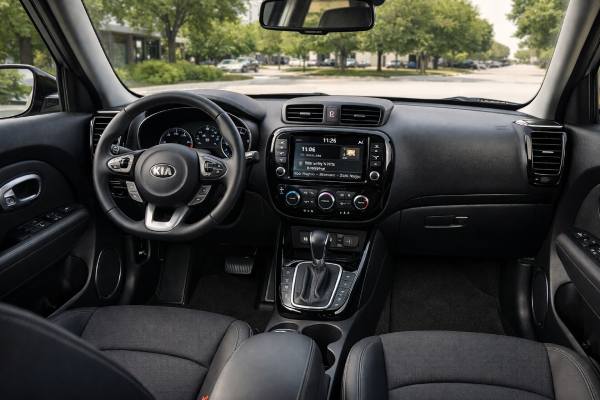
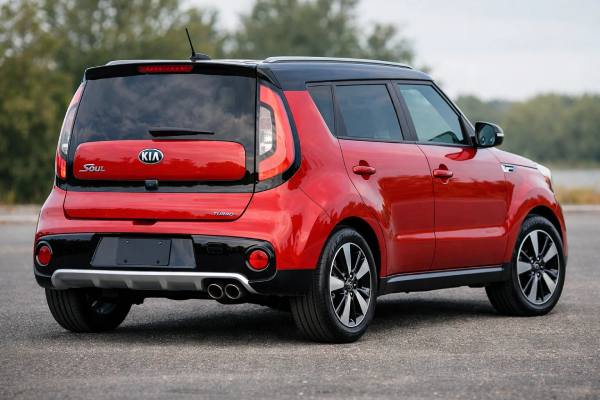
The 2017–2019 facelift-era Kia Soul PS with the G4NA 2.0-liter petrol engine is a very specific kind of used car. It is not the most advanced small crossover of its time, and it does not try to be sporty in the hot-hatch sense. What it does offer is a rare mix of upright cabin space, simple front-wheel-drive packaging, and a naturally aspirated four-cylinder with enough torque to make the boxy body feel relaxed in daily driving.
This version also deserves careful market context. In many regions, the second-generation Soul was sold mainly with 1.6-liter petrol, diesel, turbo, or EV powertrains, while the 2.0 GDI facelift car was especially relevant in North America. That matters for parts ordering, emissions calibration, and trim content. If you confirm the VIN and engine code, though, the 2.0 Soul is easy to understand. It is roomy, honest, and useful. The real ownership questions are not style or performance. They are oil service discipline, campaign history, and whether the car has been maintained like a direct-injection engine should be.
Quick Specs and Notes
- The 2.0 GDI gives the Soul stronger everyday performance than the base 1.6 without adding turbocharger complexity.
- The upright body delivers excellent entry, rear headroom, and a square cargo area that works better than many rivals.
- Plus-trim cars often have the best balance of comfort, features, and wheel size for daily ownership.
- Engine software campaign history matters on this Nu 2.0, especially if you want to avoid expensive knock-related surprises.
- A careful real-world oil service rhythm of about 8,000–10,000 km or 6–12 months is wiser than stretching intervals on an older GDI engine.
Section overview
- Kia Soul PS Facelift Snapshot
- Kia Soul PS G4NA Data
- Kia Soul PS Trims and Tech
- Trouble Spots and Service Campaigns
- Upkeep Plan and Smart Buying
- Road Feel and Fuel Use
- Where This Soul Fits
Kia Soul PS Facelift Snapshot
The facelift-era PS Soul is best understood as a packaging-first compact crossover with a surprisingly mature chassis. Kia did not reinvent the car for 2017–2019. Instead, it refined a formula that already worked: short overall length, tall roof, wide doors, easy visibility, and a cabin that feels larger than the exterior suggests. In that sense, the Soul remained true to itself. What changed most for buyers was the equipment mix and the way the mid-range 2.0-liter Plus version fit into the lineup.
For owners, the G4NA 2.0-liter Soul sits in the most sensible part of the range. The base 1.6 can feel merely adequate once the car is loaded, and the 1.6 turbo Exclaim adds pace but also more drivetrain heat and complexity through the dual-clutch transmission. The 2.0 Plus lands in the middle. It is not fast, yet it is strong enough to suit the Soul’s tall, square body. It also came with the regular six-speed automatic rather than the seven-speed DCT used in the turbo car. For many long-term owners, that alone makes it the safer bet.
Another important point is market specificity. The G4NA 2.0 GDI facelift Soul is largely a North American story. European buyers usually saw different engine menus. That has two practical effects. First, not every parts catalogue outside North America will identify the car correctly. Second, some public maintenance and emissions documents refer to different service patterns depending on whether the car is ULEV or SULEV. This is why VIN-based parts lookup matters more than it does on simpler global Kia models.
The Soul’s biggest non-mechanical strength is still everyday usability. The seating position is high but not truck-like. Rear passengers get genuine space, not just crossover styling. The cargo bay is square, and the liftgate opening is useful. Older owners often appreciate the easy step-in height, while younger buyers still like the personality of the design.
Its main ownership caveat is not structural weakness or poor basic design. It is powertrain discipline. The Nu 2.0 GDI needs better oil-service habits and better campaign awareness than the Soul’s simple shape might suggest. Buyers who understand that usually find the 2.0 PS Soul to be one of the more practical and less stressful used small crossovers of its era.
Kia Soul PS G4NA Data
The table below focuses on the facelift-period 2.0-liter GDI Soul Plus sold in the U.S. market, because that is where the G4NA 161 hp version is most clearly documented. Some emissions-state cars were rated at 160 hp rather than 161 hp, so VIN and state-spec details still matter.
| Powertrain and efficiency | Data |
|---|---|
| Code | G4NA |
| Engine layout and cylinders | Inline-4, DOHC, 16 valves, 4 valves per cylinder |
| Bore × stroke | 81.0 × 97.0 mm (3.19 × 3.82 in) |
| Displacement | 2.0 L (1,999 cc) |
| Induction | Naturally aspirated |
| Fuel system | Gasoline direct injection (GDI) |
| Compression ratio | 11.5:1 |
| Max power | 161 hp (120 kW) @ 6,200 rpm, or 160 hp in some SULEV calibrations |
| Max torque | 203 Nm (150 lb-ft) @ 4,700 rpm, or 202 Nm (149 lb-ft) in some SULEV calibrations |
| Timing drive | Chain |
| Rated efficiency | EPA 25/30/27 mpg US automatic, about 9.4 / 7.8 / 8.7 L/100 km |
| Real-world highway @ 120 km/h (75 mph) | Usually about 7.8–8.8 L/100 km (27–30 mpg US / 32–36 mpg UK) |
| Transmission and driveline | Data |
|---|---|
| Transmission | 6-speed automatic with Sportmatic and Active Eco |
| Drive type | FWD |
| Differential | Open |
| Final gear ratio | 3.270:1 |
| Chassis and dimensions | Data |
|---|---|
| Suspension (front/rear) | MacPherson strut / coupled torsion beam axle |
| Steering | Motor Driven Power Steering (MDPS), 15.7:1 ratio |
| Brakes | Vented front disc / solid rear disc, 279 mm / 262 mm (11.0 / 10.3 in) on 2.0 Plus |
| Wheels and tyres | 215/55 R17 most common; 235/45 R18 optional |
| Ground clearance | 150 mm (5.9 in) |
| Approach / departure angle | 19.2° / 29.8° |
| Length / width / height | 4,140 / 1,801 / 1,613 mm (163.0 / 70.9 / 63.5 in) |
| Wheelbase | 2,570 mm (101.2 in) |
| Turning circle | 10.6 m (34.8 ft) |
| Kerb weight | 1,434 kg (3,163 lb) |
| Fuel tank | 53.8 L (14.2 US gal / 11.8 UK gal) |
| Cargo volume | 685 L (24.2 ft³) seats up / 1,736 L (61.3 ft³) seats folded, SAE-style U.S. measurement |
| Fluids and service capacities | Data |
|---|---|
| Engine oil | 4.0 L (4.2 US qt); public Kia spec sheets confirm capacity, but confirm viscosity by VIN and emissions spec before purchase |
| Fuel requirement | Regular unleaded, 87 AKI or higher |
| Automatic transmission | VIN-specific Kia fluid required; verify exact spec and fill method from service literature |
| Brake fluid | DOT 3 or DOT 4 depending on market literature and service documentation |
| Key torque spec | Wheel nuts 88–107 Nm (65–79 lb-ft) |
| Safety and driver assistance | Data |
|---|---|
| Crash ratings | IIHS ratings for 2015–19: strong core crashworthiness, but passenger-side small overlap remained an Acceptable result rather than top-tier |
| Headlight rating | Equipment-dependent; top safety status depended on optional lighting and front crash prevention content |
| ADAS suite | AEB, FCW, LDWS, SCC optional on Plus; BSD and RCTA optional on Plus and Exclaim; none were universal across the range |
These numbers show the Soul’s real personality. It is compact outside, roomy inside, and built around a straightforward front-drive layout. The spec sheet is not dramatic, but it is honest.
Kia Soul PS Trims and Tech
In facelift form, the U.S.-market Soul range was easy to understand. The base Soul used the smaller 1.6 engine and could be had with either manual or automatic transmission. The Exclaim went the other direction with a turbo engine, larger wheels, and the dual-clutch gearbox. The Plus was the middle car, and that is where the 2.0 G4NA lived. For many buyers, it was also the best all-round trim.
Mechanically, the Plus mattered because it paired the strongest non-turbo engine with the conventional six-speed automatic. That made it a calmer long-term proposition than the Exclaim for buyers who cared more about durability than outright pace. Standard 17-inch alloy wheels suited the chassis well. Optional 18s looked sharper, but they also brought a firmer ride and higher tyre costs. On a used-car budget, the 17-inch Plus is the sweet spot.
Equipment spread changed slightly through the facelift years. The broad pattern stayed the same, but packages evolved. On 2018 cars, Kia expanded UVO availability and added more advanced safety content to the Plus Primo package. Smart Cruise Control and Autonomous Emergency Braking were key upgrades because they moved the Soul closer to the safety expectations of newer buyers. By 2019, Kia made small packaging changes and added a standard five-inch touchscreen, rear camera display, and voice recognition on the base model. That did not transform the 2.0 car, but it made later vehicles feel less dated.
The most relevant Plus options for used buyers are these:
- Primo-type comfort content: leather, heated seats, panoramic roof, premium audio, power front seats.
- Safety and lighting content: HID headlamps, LED positioning lights, AEB, forward collision warning, lane departure warning, smart cruise control.
- Awareness features: blind-spot detection and rear cross-traffic alert.
Quick identifiers help when listings are vague. A real 2.0 facelift car in this period is usually a Plus with 17-inch wheels standard, six-speed automatic only, and badging or equipment that separates it from the turbo Exclaim. The Exclaim’s DCT and 18-inch stance are easy clues. The base car uses the smaller 1.6 and often a plainer equipment mix.
On safety ratings, the Soul remained respectable. IIHS results for the 2015–2019 generation showed very strong performance in most core crash tests, though the passenger-side small overlap result was not a clean sweep. Kia’s own U.S. materials also highlighted an Overall 5-Star NHTSA rating and IIHS Top Safety Pick+ status for certain 2018 configurations equipped with optional AEB and HID headlights. That detail matters: not every Soul on the used market is equipped the same way, so buyers should verify option content instead of assuming top safety hardware is present.
Trouble Spots and Service Campaigns
The 2017–2019 Soul 2.0 is not a fragile car, but it does have a clear list of known weak areas. The right way to think about them is by severity.
Common, low-to-medium cost issues usually start with ordinary wear. Front drop links, bushes, and top mounts wear more quickly on cars used on broken city roads, especially on 18-inch wheels. Rear brake corrosion is also common on lightly used cars because the Soul is often driven gently around town. Cabin rattles, door lock issues, and small infotainment irritations are annoying but rarely serious.
The next tier is more important. Direct-injection carbon build-up is an occasional problem once mileage climbs and oil service discipline slips. It may show up as rough cold idle, hesitation, or reduced smoothness rather than an immediate warning light. Ignition coils, plugs, purge-valve problems, and PCV-related breathing issues can create similar symptoms, so diagnosis matters. Oil consumption is another known concern on some Nu-family engines. That does not mean every Soul 2.0 burns oil heavily, but any car that arrives at service visits low on oil deserves more scrutiny than the seller may want to give it.
The highest-risk issue is connecting-rod-bearing damage in certain Nu 2.0 GDI engines. Kia issued a Product Improvement Campaign to update the ECU logic with the knock-sensor detection strategy for affected 2017–2019 Souls with the 2.0 Nu GDI engine. In plain terms, buyers want proof that the campaign was completed. Symptoms that deserve immediate attention include metallic knock, P1326, limp mode, or repeated oil-pressure concerns. A car with those signs should not be treated as “probably just a sensor.”
There is also an emissions-related logic campaign for certain 2017–2019 Soul 2.0 GDI SULEV vehicles. It is less dramatic than the knock campaign, but still important because it affects compliance logic and confirms the software history of the car.
Steering should be checked carefully as well. The PS Soul is covered by MDPS-related technical guidance for abnormal steering noises and component repair, including small-bearing and worm-gear issues on some 2018–2019 cars. If the steering makes scraping, ticking, or rough-feeling noises when turned at a stop, do not dismiss it as “normal electric steering sound.”
For a pre-purchase inspection, ask for:
- Proof of ECU campaign completion.
- Recent oil-level records or service invoices.
- Cold-start video if buying remotely.
- Steering noise check at parking speed.
- Transmission shift check when fully warm.
This car is reliable when maintained properly. It becomes expensive when warning signs are ignored because the big risk is concentrated in the engine.
Upkeep Plan and Smart Buying
A good maintenance plan for the Soul 2.0 is shaped by what the engine is, not just by what the official maximum interval might suggest. This is a direct-injection Nu four-cylinder. It rewards clean oil, stable cooling, and regular inspection more than it rewards stretched service gaps.
A practical schedule for used ownership looks like this:
| Interval | What to do |
|---|---|
| Every 8,000–10,000 km or 6–12 months | Engine oil and filter, fluid-level check, tyre inspection, brake inspection, scan for stored faults |
| Every 15,000–20,000 km | Cabin air filter, engine air filter inspection, battery test, underbody corrosion and bush inspection |
| Every 30,000–45,000 km | Engine air filter replacement, spark plug inspection or replacement by condition, throttle-body and intake inspection if idle quality has changed |
| Every 2 years | Brake fluid replacement |
| Every 50,000–70,000 km | Automatic transmission fluid service is sensible for longevity even if the car is not showing symptoms |
| Every service | Check oil level between visits, inspect serpentine belt, coolant level, radiator seams, hoses, brake wear, and tyre shoulder wear |
| Around 6–8 years | Coolant refresh if history is unclear, 12 V battery likely due by condition |
For chain-driven engines like the G4NA, there is no routine timing-belt interval, but that does not mean “ignore it forever.” Chain wear usually shows itself through start-up rattle, correlation faults, or poor maintenance history. If a car has missed oil changes, chain and tensioner health become more important.
Fluid decisions should stay conservative:
- Engine oil capacity is 4.0 L.
- Use a VIN-correct viscosity and modern API-grade oil suitable for the engine’s emissions calibration.
- Use only the correct Kia-specified automatic-transmission fluid.
- Wheel nuts tighten to 88–107 Nm.
The buyer’s checklist should focus on the engine first, not cosmetics:
- Verify the engine code and model year by VIN.
- Confirm knock-sensor software campaign completion.
- Check oil level before and after the road test.
- Listen for cold-start rattle and warm idle knock.
- Inspect tailpipe and bumper area for heavy soot or oil-burning hints.
- Confirm smooth 2–3 and 3–4 shifts from the automatic.
- Check panoramic roof operation if equipped, because repairs are not cheap.
The best used examples are usually well-kept Plus models on 17-inch wheels with simple, documented service histories. Cars to avoid are the ones with oversized wheel culture, thin maintenance paperwork, and stories about warning lights that “went away.” Long-term durability is good when the engine is serviced on time. It is mediocre when oil level is treated casually.
Road Feel and Fuel Use
The Soul 2.0 drives in a way that matches its shape. It is upright, easy to place, and tuned for normal life rather than enthusiastic corner carving. That sounds obvious, but the PS-generation chassis is better than many people expect. The body is reasonably stiff, the steering is accurate enough around town, and the suspension keeps the car composed on typical urban pavement. It does not feel fragile or crude.
Ride quality is most convincing on the standard 17-inch wheel package. That setup gives the best blend of control and compliance. On 18-inch wheels, the Soul looks more assertive but starts to feel busier over sharp edges. Impacts come through more clearly, and the car’s short wheelbase is easier to notice. That is one reason many experienced buyers prefer the Plus on 17s over a better-looking but less forgiving optioned car.
The G4NA engine’s character is straightforward. It revs cleanly and responds predictably, but it does not have the low-end shove of a turbocharged rival. Around town, the 2.0 is still clearly better than the base 1.6 because it has enough torque to move the Soul without constant effort. On the highway, it cruises calmly enough, though the car’s bluff shape means wind noise builds sooner than in a lower hatchback.
The six-speed automatic suits the engine reasonably well. It is not especially fast, but it is smoother and more proven than the turbo model’s dual-clutch unit. Kickdown is adequate rather than sharp, and the transmission will sometimes hold lower gears longer than enthusiastic drivers want. For the actual mission of this car, though, it makes sense.
Real-world economy usually lands close to these numbers:
- City: about 9.0–10.5 L/100 km
- Highway at 100–120 km/h: about 7.5–8.8 L/100 km
- Mixed: about 8.4–9.4 L/100 km
That works out to roughly 22–26 mpg US in town, 27–31 mpg US on the highway, and around 25–28 mpg US mixed. Cold weather, short trips, roof-rack use, and 18-inch tyres can move those figures in the wrong direction.
Braking feel is dependable, and straight-line stability is decent, but the Soul never hides its tall body. It leans earlier than a lower hatch, and steering feel is light rather than rich. That is acceptable because the car’s main strength is ease. It is simple to drive, simple to park, and less tiring than many rivals in real traffic.
Where This Soul Fits
The Soul 2.0 Plus makes the most sense when compared with cars that solve the same daily problem in different ways. The Nissan Juke is the obvious style rival. It feels more playful in some versions and often looks more aggressive, but the Kia is easier to live with. Rear-seat access is better, visibility is stronger, and the cargo opening is much more useful. For buyers who actually use the rear seat, the Soul wins on practicality without much effort.
The Hyundai Kona arrived later in some markets and feels more modern in its interior electronics and safety packaging, but the older Soul can still make a smart used buy because it is easier to understand mechanically and usually less expensive to purchase. The Soul also offers a more upright cabin and better step-in access. For some buyers, especially older drivers, that is more valuable than a newer dashboard.
The Honda HR-V is another practical alternative. It often rides more softly and offers a more conventional crossover image, while the Soul answers with stronger personality and easier basic visibility. The Kia’s boxy shape remains one of its best engineering decisions because it makes almost every daily task simpler.
Against the turbocharged Soul Exclaim, the 2.0 Plus is the rational choice. You give up a useful amount of performance, but you also avoid the dual-clutch transmission and some of the heat-and-complexity concerns that come with the turbo drivetrain. For most long-term owners, that is a fair trade.
That is really the verdict on this car. The 2017–2019 Soul 2.0 is not a hidden performance bargain and not the class leader in modern ADAS. It is the Soul for buyers who want the best mix of space, simplicity, and usable power in the PS lineup. Buy it with full campaign history, check oil consumption honestly, and it can be one of the more satisfying used small crossovers of its generation.
References
- 2019 Kia Soul Specifications 2019 (Technical Specifications)
- 2019 Kia Soul Features and Options 2019 (Features and Options)
- 2019 Kia Soul Overview 2019 (Model Overview)
- 2017 Kia Soul 2017 (Safety Rating)
- Microsoft Word – PI2107 – Dealer Principal Memo 2021 (Service Campaign)
Disclaimer
This article is for informational purposes only and is not a substitute for professional diagnosis, repair, or VIN-specific technical guidance. Specifications, torque values, intervals, procedures, emissions calibrations, and equipment can vary by VIN, market, trim, and build date, so always verify against official service documentation before ordering parts or performing repairs.
If this guide helped you, please share it on Facebook, X/Twitter, or another platform you use. That support helps us continue publishing detailed, owner-focused vehicle guides.