

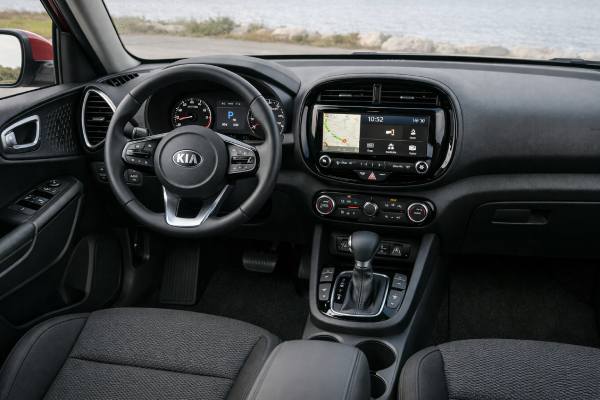
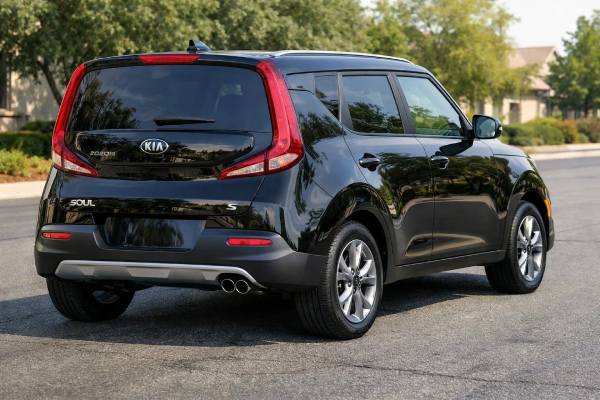
The 2020–2022 Kia Soul SK3 with the 2.0-litre G4NH engine is the version that turns the Soul from a quirky compact into a genuinely mature daily driver. It keeps the upright roofline, easy entry, and square cargo opening that have always defined the model, but adds a stiffer platform, better cabin isolation, and a smoother, more efficient Atkinson-cycle 2.0 MPI engine. In this form, the Soul is less about style alone and more about intelligent packaging. It gives you useful rear-seat room, strong visibility, and compact exterior dimensions without feeling stripped down. The trade-off is clear too: front-wheel drive only, modest outright performance, and an IVT transmission that rewards careful maintenance. For most owners, though, the SK3 2.0 makes sense because it is honest. It is simple compared with many turbo rivals, comfortable enough for real use, and practical in ways that matter every day, not just on a spec sheet.
Essential Insights
- Roomy cabin design and a square tailgate make it more useful than many style-led small crossovers.
- The 2.0 MPI engine is simpler than many small turbo rivals and works well for daily commuting.
- Good crash-test performance and available driver-assistance features make later, well-optioned cars more appealing.
- Watch for piston-ring recall completion, oil-use history, and IVT software or drivability complaints.
- Change engine oil every 7,500 miles or 12 months in normal use, and sooner in severe driving.
Start here
- Kia Soul SK3 design brief
- Kia Soul SK3 data tables
- Kia Soul SK3 trim map and safety tech
- Failure trends and support campaigns
- Maintenance roadmap and buyer filters
- Drive feel and fuel use
- Soul SK3 and its rivals
Kia Soul SK3 design brief
The SK3-generation Soul is a useful reminder that good packaging still matters. Kia kept the boxy profile because it works. The roof is tall enough for easy entry, the glass area helps visibility, and the tailgate opening is wide and square. On paper that sounds simple. In daily use it makes the Soul one of the easiest small cars in the class to load, park, and live with.
The 2.0-litre G4NH model is the mainstream version of the range. It uses a naturally aspirated Atkinson-cycle four-cylinder engine with multi-port fuel injection rather than a small turbo engine. That choice shapes the whole ownership experience. The engine is not exciting, but it is straightforward, smooth enough in normal use, and generally easier to maintain than many direct-injection turbo alternatives. It suits buyers who want predictable running costs more than strong acceleration.
This generation also feels more mature than older Souls. The structure is stiffer, the cabin is quieter at speed, and the ride is calmer over rough surfaces. The Soul still is not sporty, but it no longer feels like a novelty car that happens to be practical. It feels like a proper compact crossover-sized hatch with a well-defined purpose.
That purpose is everyday ease. The driving position is upright but not awkward. The dashboard is simple to understand. Rear passengers get better room than the exterior footprint suggests. Cargo space is especially useful because the load floor is broad and the opening is nearly vertical. This is one reason the Soul keeps a loyal following. It does not waste space trying to look more dramatic than it needs to.
The limits are just as clear. There is no all-wheel drive, and the 147 hp 2.0-litre engine is tuned for economy and smoothness rather than speed. Most buyers get the IVT, Kia’s continuously variable automatic, and while it works well when healthy, it does not add much character. The Soul also sits in a middle ground between a hatchback and a crossover, which means it never fully matches the best hatchbacks for refinement or the best crossovers for rugged image.
Still, judged honestly, the SK3 2.0 is a strong package. It delivers practical dimensions, simple gasoline power, good visibility, and real cabin usefulness in a segment where many rivals chase fashion first. That makes it especially attractive as a used buy, provided the service history is strong and campaign work has been completed. The car’s best trait is not one headline feature. It is the way the whole package makes sense.
Kia Soul SK3 data tables
The SK3 Soul 2.0 uses hardware that is simple on paper but well matched in practice. The engine, platform, and dimensions are all aimed at space efficiency and low operating cost rather than outright performance. For the 2020–2022 147 hp non-turbo car, these are the figures that matter most.
Powertrain and efficiency
| Item | Data |
|---|---|
| Code | G4NH |
| Engine layout and cylinders | Inline-4, DOHC, 4 cylinders, 4 valves per cylinder |
| Bore × stroke | 81.0 × 97.0 mm (3.19 × 3.82 in), commonly listed for the 2.0 Nu family |
| Displacement | 2.0 L (1,999 cc) |
| Induction | Naturally aspirated |
| Fuel system | Multi-port gasoline injection |
| Compression ratio | 12.5:1 |
| Max power | 147 hp (110 kW) @ 6,200 rpm |
| Max torque | 179 Nm (132 lb-ft) @ 4,500 rpm |
| Timing drive | Chain |
| Rated efficiency | EPA 27/33/30 mpg for most 2020–2022 2.0 IVT trims; some later trims with different calibration reach 29/35/31 mpg |
| Real-world highway at 120 km/h (75 mph) | Usually about 6.8–7.6 L/100 km (31–35 mpg US / 37–42 mpg UK) |
Transmission and driveline
| Item | Data |
|---|---|
| Transmission | 6-speed manual on early base trim in limited markets; most 2020–2022 cars use IVT |
| Drive type | FWD |
| Differential | Open |
Chassis and dimensions
| Item | Data |
|---|---|
| Suspension front / rear | MacPherson strut with stabilizer bar / coupled torsion beam axle |
| Steering | Motor Driven Power Steering |
| Brakes | 4-wheel disc; front ventilated 280 mm (11.0 in), rear solid 262 mm (10.3 in) |
| Wheels and tyres | 205/60 R16, 215/55 R17, or 235/45 R18 |
| Ground clearance | 170 mm (6.7 in) |
| Length / Width / Height | 4,196 / 1,801 / 1,600 mm (165.2 / 70.9 / 63.0 in) |
| Wheelbase | 2,601 mm (102.4 in) |
| Turning circle | 10.6 m (34.8 ft) |
| Kerb weight | About 1,310–1,360 kg (2,888–2,998 lb), trim dependent |
| Fuel tank | 54.1 L (14.3 US gal / 11.9 UK gal) |
| Cargo volume | 686 L (24.2 ft³) seats up / 1,759 L (62.1 ft³) seats folded, SAE |
Performance and capability
| Item | Data |
|---|---|
| Acceleration | Roughly 0–100 km/h in the high-8s to low-9s, depending on trim, gearbox, and test method |
| Top speed | Roughly 180 km/h (112 mph) |
| Braking distance | Usually around 37–39 m from 100–0 km/h on OE-type all-season tyres |
| Towing capacity | Not a major selling point in North American literature; verify local market rating before towing |
| Payload | Usually around 380–450 kg (838–992 lb), trim dependent |
Fluids and service capacities
| Item | Data |
|---|---|
| Engine oil | Full synthetic; 5W-20 or 5W-30 depending VIN, climate, and service information |
| Engine oil capacity | About 4.0 L (4.23 US qt) |
| Coolant | Long-life ethylene-glycol coolant; verify exact fill by VIN |
| Transmission / ATF | Kia IVT-specific fluid; verify exact fill capacity by service procedure |
| Brake fluid | DOT-3 or DOT-4 |
| A/C refrigerant | Verify by under-hood label |
| A/C compressor oil | Verify by under-hood label or service manual |
| Wheel-nut torque | 88–107 Nm (65–79 lb-ft) |
Safety and driver assistance
| Item | Data |
|---|---|
| Crash ratings | Euro NCAP: not directly applicable to this North American 2.0 configuration; IIHS: Good in core crash tests for the 2020 redesign family |
| Headlight rating | IIHS: Good on Turbo LED setup, Poor on most halogen headlight setups |
| ADAS suite | Forward Collision-Avoidance Assist, Lane Keeping Assist, lane support, blind-spot warning, rear cross-traffic alert, and rear automatic braking depending on trim and package |
The important takeaway from the table is that the Soul’s strengths are balance and efficiency. It is not especially light or fast, but the dimensions are smart, the engine is simple, and the space utilization is excellent.
Kia Soul SK3 trim map and safety tech
The easiest way to shop a 2020–2022 Soul 2.0 is by trim content, not by model-year badge alone. Kia changed equipment combinations and package names across the run, but the broad trim pattern stayed familiar. The lower trims focused on value and simplicity, the middle trims added the equipment most buyers actually want, and the higher non-turbo trims layered on more appearance features, better screens, and extra comfort.
Early in the run, the line centered on trims such as LX, S, X-Line, EX, and sport-themed variants. In practice, the 2.0 buyer usually chooses between a basic value car, a mid-grade car with the best safety and convenience mix, or an upper trim with larger wheels and more visual appeal. That means two Souls with the same engine can feel very different in use.
The most important trim difference is not cosmetic. It is the combination of wheels, lights, and safety equipment. Sixteen-inch wheel cars generally ride best and cost less to tyre. Seventeen-inch versions are often the sweet spot. Eighteen-inch trims look sharper but can add noise, cost, and a firmer ride without giving the 2.0 car extra performance to match the image.
The safety story is stronger than many buyers expect. The SK3 Soul’s structure performed well in IIHS crash testing, with Good ratings across the main crash categories that apply to the 2020 redesign family. That means the platform itself is solid. The complication comes from equipment variation. Headlights vary sharply by trim, and that matters because IIHS rated the LED Turbo setup Good while the halogen setups on most non-turbo trims were Poor. That is a real ownership difference for night driving.
Driver-assistance equipment also depends on trim. Forward Collision-Avoidance Assist was not universal in the same way it is on newer small crossovers. Depending on year and trim, it could be optional on lower versions and standard on better-equipped ones. IIHS notes Superior front-crash-prevention performance on the optional systems that apply to 2020–2022 cars, including the system fitted to higher trims. Lane departure warning, lane departure prevention, blind-spot detection, and rear automatic braking were also trim- and package-dependent rather than universally standard across the whole 2.0 line.
That leads to the most useful trim advice. If you want the best balance of value and equipment, look for a mid-grade car with the safer assistance package, heated features if you care about comfort, and 16-inch or 17-inch wheels. If you care about looks first, the GT-Line-style and X-Line-style cars deliver that, but not every attractive trim gives you the best headlights or the lowest running cost. If you care about crash-test awards, remember that the 2022 Top Safety Pick recognition applies only when the car has the right front-crash-prevention system and the right headlights.
In short, the best Soul 2.0 trim is not the flashiest. It is the one that gives you the strongest safety package, reasonable wheel size, and the features you will actually use.
Failure trends and support campaigns
The SK3 2.0 is not a fragile car, but it has several known issues that matter enough to shape a used-car decision. The main reliability split is between cars with careful oil-service history and completed campaign work, and cars with vague records and ignored warnings.
Here is the practical fault pattern.
- Common, low to medium cost: IVT drivability complaints on affected early vehicles.
Symptoms: delayed acceleration, flare, slip-related fault codes, or sluggish take-up.
Likely root cause: software logic issues or, in some cases, IVT hardware damage.
Recommended remedy: confirm whether the TCM software campaign was completed and whether the transmission was replaced or repaired if required. - Common, medium cost on neglected cars: rising oil consumption.
Symptoms: oil level dropping between services, abnormal mechanical noise, warning lights, or roughness under load.
Likely root cause: poor maintenance, extended intervals, or piston-ring and cylinder-wall damage on affected engines.
Recommended remedy: do not guess. Check recall status, service receipts, oil-consumption history, and cold-start behavior. - Occasional, medium cost: ignition and combustion-quality issues.
Symptoms: rough idle, misfire, hesitation, or a weak-feeling engine.
Likely root cause: tired plugs, coil issues, or deposit-related running problems.
Recommended remedy: baseline ignition service first, then evaluate fuel and induction condition. - Occasional, low to medium cost: suspension and brake wear.
Symptoms: front-end knocks, wheel-bearing hum, rear-brake corrosion, or uneven tyre wear.
Likely root cause: mileage, rough roads, and city use.
Recommended remedy: inspect links, bushes, dampers, bearings, and rear brake hardware together.
The most important factory actions concern the 2.0 Nu MPI engine. There were two overlapping phases. First, certain 2020–2021 Souls were recalled under campaign SC209 because improperly heat-treated piston oil rings could chip, scuff the cylinder bore, raise oil consumption, and in extreme cases lead to bearing seizure, engine damage, loss of motive power, or fire risk. Kia’s remedy involved engine inspection and replacement if necessary, plus later software measures to help detect piston-ring noise.
Second, Kia expanded the issue in 2025 under recall 25V-099 for certain 2021–2023 Souls with 2.0L Nu MPI engines manufactured from July 2, 2020 through April 19, 2022. The defect summary again points to piston oil ring quality problems that can damage cylinder walls and lead to increasing oil consumption, abnormal engine noise, oil-pressure warnings, loss of power, and fire risk if ignored.
That means used buyers should treat 2021 and 2022 cars with special care. A clean service history is good, but recall completion is better. Ask for dealer proof, not just a seller’s verbal assurance. Also confirm whether the car had the early engine-vibration inspection and any later ECM logic update related to piston-ring noise sensing.
For pre-purchase inspection, request a cold start, scan for stored engine and transmission codes, inspect for oil-level neglect, and verify all campaign work through a Kia dealer or official VIN lookup. On this Soul, paperwork matters almost as much as condition.
Maintenance roadmap and buyer filters
The Soul SK3 2.0 is easy to own when you stay ahead of service. The mistake owners make is assuming the naturally aspirated engine means they can stretch maintenance without consequences. The engine itself is simple, but campaign history shows clearly that oil quality, oil level, and service timing matter.
Practical maintenance schedule
| Item | Practical interval | Notes |
|---|---|---|
| Engine oil and filter | 7,500 miles / 12 months normal use | Shorten to 3,750 miles / 6 months in severe use |
| Engine air filter | Inspect every service, replace around 22,500–30,000 miles | Sooner in dusty use |
| Cabin air filter | 15,000–20,000 miles or yearly | Cheap and worth doing |
| Spark plugs | Around 97,500–105,000 miles, earlier if running quality drops | Use exact VIN-correct specification |
| Coolant | About 10 years / 120,000 miles first change, then shorter thereafter | Baseline service is wise if history is unclear |
| Brake fluid | Every 2–3 years practical rule | Time matters more than mileage |
| IVT fluid | No simple one-size-fits-all interval in owner-facing literature | Inspect for leaks and address drivability early |
| Brakes | Inspect every service | Rear corrosion can appear before pad wear is severe |
| Tyre rotation | About every 7,500 miles | Check alignment at the same time |
| Belts and hoses | Inspect every service | Age matters as much as mileage |
| 12 V battery | Test yearly after year 4 | Low voltage can create misleading electronic faults |
| Timing chain | Inspect by symptom only | Listen for noise and watch for timing-related fault codes |
Useful service data
| Item | Specification |
|---|---|
| Engine oil capacity | About 4.0 L (4.23 US qt) |
| Oil type | Full synthetic, generally 5W-20 or 5W-30 depending VIN and climate |
| Brake fluid | DOT-3 or DOT-4 |
| Fuel requirement | Unleaded, 87 octane or higher |
| Wheel-nut torque | 88–107 Nm (65–79 lb-ft) |
| Normal oil interval | 7,500 miles / 12 months |
| Severe-use oil interval | 3,750 miles / 6 months |
Buyer’s checklist
- Check recall completion for both the 2020–2021 and 2021–2022 2.0 engine campaigns.
- Verify oil changes with invoices, not only stamps or seller claims.
- Listen for abnormal engine noise on cold start and after warm idle.
- Scan for IVT-related codes and test for delay, slip, or flare on acceleration.
- Inspect tyres for uneven wear and the rear brakes for corrosion.
- Test all ADAS functions, camera, infotainment, charging ports, and steering-wheel controls.
- Prefer cars with 16-inch or 17-inch wheels unless appearance is your top priority.
The best used buy is usually a 2022 or late-run car with proof of completed campaign work, a consistent oil-service record, and a mid-grade trim. The car to avoid is a low-price example with missing campaign paperwork, uncertain oil history, and a seller who says “they all do that” about noise or oil use. Long-term durability is good when preventive care is strong, but a neglected SK3 can become expensive faster than its friendly shape suggests.
Drive feel and fuel use
The Soul SK3 2.0 drives the way its shape suggests it should: upright, easy, and useful. The surprise is that it feels more composed than many people expect. The 2020 redesign brought better body control, less noise over rough pavement, and more confidence at highway speed. It still is not sporty, but it feels grown up.
Around town, the Soul is excellent. Visibility is strong, the driving position is natural, and the square body makes it easy to judge in tight spaces. The steering is light without feeling vague. Parking is simple. This is one of the best arguments for the Soul over sleeker rivals: daily ease. It feels friendly from the first mile.
Ride quality depends on wheel size. Sixteen-inch cars are the most comfortable and the quietest over broken surfaces. Seventeen-inch cars remain well balanced. Eighteen-inch trims look sharper, but they give back some compliance and add tyre cost. The chassis itself is competent. It keeps the body settled and tracks straight, but it is tuned for comfort, not quick responses.
The 2.0-litre engine behaves exactly like a naturally aspirated Atkinson-cycle four-cylinder. It is smooth enough, efficient enough, and a bit flat when you ask for hard acceleration. Throttle response is clean in light use, but merging or climbing with passengers asks more from the engine than the styling suggests. This is not a powertrain for impatient drivers.
The IVT suits the Soul’s mission when it is working properly. It keeps the engine in an efficient range and makes stop-start driving easy. The downside is the typical CVT-style sensation under heavier throttle, plus the need to confirm software and drivability on used examples. The early manual transmission cars are simpler and more direct, but they are also less common.
Cabin noise is fair for the class. At city speed the Soul is pleasantly subdued. At highway speed, wind and tyre noise become more noticeable than in lower hatchbacks, but the SK3 is still quieter and more refined than earlier Souls. Straight-line stability is good, and the Soul resists the floaty feeling some tall small crossovers develop on open roads.
Typical real-world economy
| Use case | Typical figure |
|---|---|
| City | 8.0–9.4 L/100 km (25–29 mpg US / 30–35 mpg UK) |
| Mixed | 7.1–8.1 L/100 km (29–33 mpg US / 35–40 mpg UK) |
| Steady 100 km/h | 6.0–6.8 L/100 km (35–39 mpg US / 42–47 mpg UK) |
| Steady 120 km/h | 6.8–7.6 L/100 km (31–35 mpg US / 37–42 mpg UK) |
| Cold-weather mixed use | Often 0.5–1.0 L/100 km worse |
The Soul 2.0 is best judged as a comfort-and-usability car, not a performance car. It does not thrill, but it does make ordinary driving easier. For many owners, that is the more valuable trait.
Soul SK3 and its rivals
The Soul makes the most sense when you compare it with the small cars and crossovers people actually shop beside it.
Against the Nissan Kicks, the Soul feels more substantial, offers stronger available safety equipment depending on trim, and provides a more useful cargo shape. The Kicks can be lighter on fuel, but the Kia usually feels more grown up and better built for long-term daily use.
Against the Hyundai Venue, the Soul offers a bigger cabin, more rear-seat comfort, and a more flexible cargo area. The Venue is simpler and often cheaper, but the Soul feels like a class up in real utility. If you need adult rear-seat room, the Soul is the better answer.
Against the Honda HR-V, the comparison is closer. The Honda often feels more polished in steering and chassis tuning, and its resale can be stronger. The Soul answers with easier entry, clearer outward visibility, and a cargo opening that is simpler to use. The better choice depends on whether you value driving polish or everyday practicality.
Against the Mazda CX-30, the Soul loses on cabin richness, handling, and highway refinement. It wins on space efficiency, visibility, and usually lower running costs. The Mazda feels more premium. The Soul feels more honest and useful.
Against the Subaru Crosstrek, the Soul falls short if you need all-wheel drive, winter-road confidence, or a tougher image. But it can be the smarter buy for city life because it is easier to park, easier to load, and often cheaper to own. If you do not need AWD, the Kia’s packaging is hard to ignore.
That leaves the Soul in a clear position. It is not the premium choice, the sporty choice, or the adventurous choice. It is the practical choice for buyers who want:
- easy access and good visibility
- a genuinely useful rear seat and hatch opening
- simple gasoline power instead of a small turbo
- compact size without a cramped feel
That is why the SK3 2.0 still stands out. It does not try to be everything. It focuses on the parts of ownership that matter every day: getting in comfortably, loading things easily, seeing out clearly, and running on regular fuel with manageable service needs. For a lot of owners, that is enough to make it the better rival.
References
- 2020-soul.pdf – Dealer E Process 2020 (Brochure)
- Compare Trim Levels of the 2025 Kia Soul | Model Chart: LX, S, GT-Line, EX Prestige | Kia 2025 (Technical Specifications)
- 2022 Kia Soul 2022 (Safety Rating)
- Part 573 Safety Recall Report 21V-259 2021 (Recall Database)
- Part 573 Safety Recall Report 25V-099 2025 (Recall Database)
Disclaimer
This article is for informational purposes only and is not a substitute for professional diagnosis or repair. Specifications, torque values, service intervals, procedures, and equipment can vary by VIN, market, trim, and build date, so always verify critical details against the official service documentation for the exact vehicle.
If this guide helped, please share it on Facebook, X, or another social platform to support our work.