
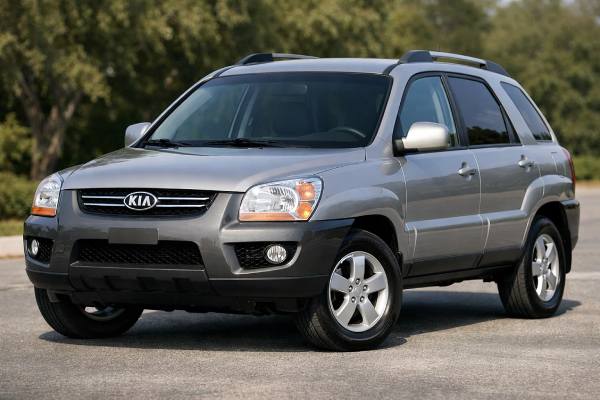
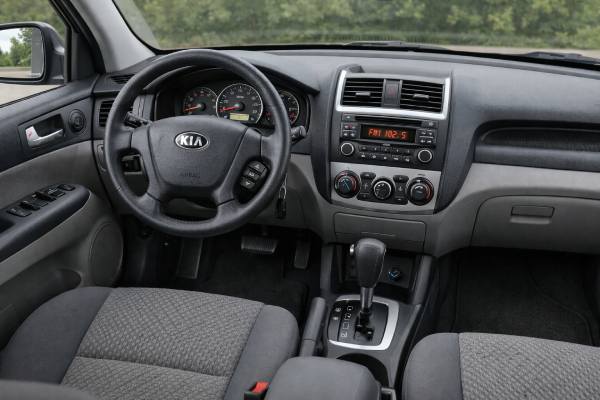
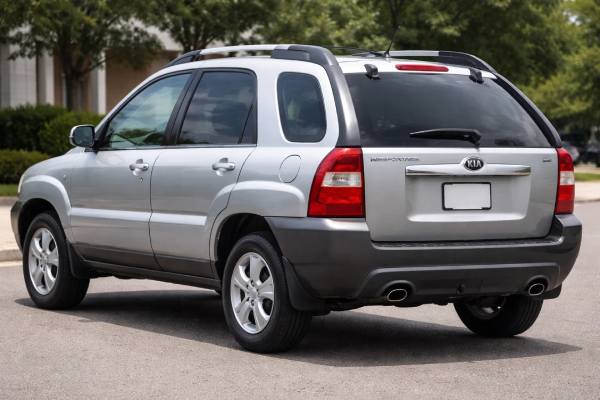
The 2004–2007 Kia Sportage KM AWD with the G4GC 2.0-litre petrol engine sits in a useful middle ground: newer and more car-like than the old ladder-frame Sportage, but still simple enough to appeal to owners who want straightforward mechanicals. In this version, you get a naturally aspirated inline-four, a 5-speed manual in many markets, independent suspension, four-wheel disc brakes, and an electronically controlled on-demand AWD system rather than a heavy-duty low-range setup. That makes it better suited to wet roads, winter use, and mixed family duty than serious off-road work. The engine is not especially fast, but it is easy to understand and generally affordable to service if the timing belt, fluids, and corrosion prevention have been handled properly. For used buyers today, condition matters far more than trim badge alone.
What to Know
- The 2.0-litre G4GC is one of the simpler KM engines to own, with no turbocharger and no direct injection.
- On-demand AWD and independent rear suspension make it more secure on wet or snowy roads than many cheap older crossovers.
- Cabin and cargo space are still practical, with roughly 668 L behind the rear seats and about 1,886 L with the rear seats folded.
- Rust, recall history, and underbody condition matter more than cosmetic trim differences on this generation.
- Factory information points to 10,000 km or 12 months for oil service and 160,000 km for timing-belt replacement, but age and use should shorten that in real ownership.
Guide contents
- Kia Sportage KM profile
- Kia Sportage KM specs
- Kia Sportage KM trims and safety
- Reliability issues and service actions
- Maintenance and buying advice
- Road manners and real use
- How it stacks up
Kia Sportage KM profile
The KM-generation Sportage marked a major change in what a Sportage was. Instead of the older, tougher-feeling body-on-frame formula, Kia moved to a steel unibody compact SUV with independent suspension front and rear, hydraulic rack-and-pinion steering, and a much more passenger-car-like layout. In AWD 2.0-litre form, the basic recipe was a naturally aspirated Beta-series petrol four-cylinder, a 5-speed manual in many baseline configurations, and an electronically controlled on-demand four-wheel-drive system that used a wet clutch coupling rather than a traditional transfer case with low range.
That engineering mix explains the model’s character even now. The G4GC is a conventional multi-port injected engine with DOHC, CVVT, and a timing belt, so it avoids some of the complexity that later turbocharged or direct-injected SUVs added. It also means this Sportage responds well to ordinary, disciplined maintenance: fresh oil, a documented timing-belt service, healthy coolant, and matched tyres matter more than fancy diagnostics. Power output of 140 hp and 184 Nm is adequate rather than strong, but the car’s size and gearing still make it usable as a daily family vehicle.
The rest of the package is practical. The wheelbase is 2,630 mm, the body is roughly 4.35 m long, and the rear cargo area measures about 23.6 ft³ with the rear seats up and 66.6 ft³ with them folded. Ground clearance is about 195 mm, so rough roads and winter ruts are manageable, but this is not a rock-crawler. Disc brakes all around, standard ABS in period North American literature, and available ESP/TCS on AWD configurations gave it a respectable safety and traction base for the mid-2000s.
For ownership today, the Sportage KM AWD makes the most sense for buyers who want value, simplicity, and usable bad-weather traction. It is less attractive if you expect modern driver assistance, low cabin noise, or a refined automatic. At twenty years old, the real separator is not mileage alone but whether the car has had rust prevention, recall work, and routine belt-and-fluid service done on time.
Kia Sportage KM specs
The figures below focus on the 2004–2007 pre-facelift Kia Sportage KM AWD with the 2.0-litre G4GC petrol engine. Open factory material is strongest for North American brochure data, while common EU AWD performance figures fill in a few metric gaps such as 0–100 km/h and top speed. Minor differences by market, tyre package, gearbox, and equipment are normal.
| Category | Data |
|---|---|
| Code | G4GC |
| Engine layout and cylinders | Inline-4, 4 cylinders, DOHC, 4 valves per cylinder |
| Bore × stroke | 82.0 × 93.5 mm (3.23 × 3.68 in) |
| Displacement | 2.0 L (1,975 cc) |
| Induction | Naturally aspirated |
| Fuel system | Multi-port injection |
| Compression ratio | 10.0:1 |
| Max power | 140 hp (104 kW) @ 6,000 rpm |
| Max torque | 184 Nm (136 lb-ft) @ 4,500 rpm |
| Timing drive | Belt |
| Transmission | 5-speed manual |
| Drive type | AWD, electronically controlled on-demand |
| Differential | Open, with controlled wet-clutch torque transfer |
| Low range | None |
| Chassis and dimensions | Data |
|---|---|
| Suspension, front / rear | MacPherson strut / dual-link independent |
| Steering | Rack-and-pinion hydraulic assist, about 3.06 turns lock-to-lock |
| Brakes, front / rear | 279 mm (11.0 in) disc / 284 mm (11.2 in) disc on AWD |
| Wheels and tyres | 16-inch alloys; common sizes 215/65 R16 or 235/60 R16 |
| Ground clearance | 195 mm (7.7 in) |
| Approach / departure angle | 29.5° / 28.7° |
| Length / width / height | 4,350 / 1,800 / 1,695 mm (171.3 / 70.9 / 66.7 in) |
| Wheelbase | 2,630 mm (103.5 in) |
| Turning circle | 10.8 m (35.4 ft) |
| Kerb weight | About 1,525–1,547 kg (3,362–3,411 lb), market dependent |
| GVWR | About 2,120 kg (4,674 lb) for the AWD manual baseline |
| Fuel tank | 58 L (15.3 US gal / 12.8 UK gal) |
| Cargo volume | 668 L / 1,886 L (23.6 / 66.6 ft³), SAE method |
| Performance, service, and safety | Data |
|---|---|
| 0–100 km/h (0–62 mph) | About 11.3 s |
| Top speed | About 176 km/h (109 mph) |
| Rated efficiency | Typical EU AWD manual: 8.2 L/100 km combined (28.7 mpg US / 34.4 mpg UK); US EPA-style brochure figure for AWD manual: 21/26 mpg city/highway |
| Real-world highway at 120 km/h | Usually about 8.5–9.5 L/100 km (27.7–24.8 mpg US / 33.2–29.7 mpg UK) in a healthy car |
| Towing capacity | North American brochure baseline: 454 kg unbraked / 680 kg braked (1,000 / 1,500 lb) |
| Payload | About 530 kg (1,168 lb) for the AWD manual baseline |
| Engine oil | API SJ, commonly 10W-30; 4.0 L (official later Kia sheet) or 4.2 qt with filter in period brochure data |
| Coolant capacity | 7.29 qt (6.9 L) |
| IIHS crash ratings | Moderate overlap front: Acceptable; side original test: Acceptable, applied to 2005–10 Sportage |
| ADAS | No modern AEB, ACC, lane centering, or blind-spot monitoring |
The open-source record does not consistently publish every VIN-specific fluid capacity, refrigerant charge, or fastener torque for this exact engine and AWD combination, so transmission, rear differential, and A/C service data should be confirmed against the workshop manual before parts ordering or repair work.
Kia Sportage KM trims and safety
Trim strategy for the KM Sportage varied a lot by market, but the broad pattern stayed consistent. The 2.0-litre petrol usually sat in the value-focused part of the range, often with cloth trim, 16-inch wheels, a manual gearbox, and simpler audio and climate equipment. Higher grades added cosmetic upgrades and comfort features such as heated seats, leather, auto lamps, body-colour mirrors and handles, and in some markets a sunroof. The AWD system itself was a meaningful divider because it changed the driveline hardware and gave the vehicle much better winter and wet-weather usefulness than the front-drive version.
Mechanically, the important distinction is not luxury trim but which driveline and tyre package the car carries. Kia’s own period material describes the AWD system as electronic control on-demand with a controlled wet clutch coupling and no low gear. That means buyers should think of it as traction help for slippery roads and light loose-surface use, not a substitute for a low-range 4×4. On the road, tyre choice matters more than badge language. A Sportage on tired mixed-brand budget tyres will not feel like the same vehicle as one on a fresh, matched set.
Safety equipment was competitive for the time. Period Kia brochure data lists front dual airbags, front seat-mounted side airbags, head curtain airbags, 4-wheel ABS, child-seat anchors, and front seatbelt pretensioners with force limiters. That is a useful feature set for a mid-2000s compact SUV, even if it now lacks the active safety systems buyers expect in newer cars. There was no factory modern ADAS suite here: no autonomous emergency braking, no adaptive cruise control, no lane-centering assistance, and no blind-spot monitoring.
Crash-test results are respectable rather than class-leading. IIHS lists the 2005–10 Sportage as Acceptable in the original moderate-overlap front test and Acceptable in the original side test, using testing performed on the closely related Hyundai Tucson and applying the results to the Sportage. That is an important detail for shoppers: the structure was competent by mid-2000s standards, but this is still an older SUV without later small-overlap testing, modern crash-avoidance tech, or today’s restraint tuning. In practice, that makes maintenance of brakes, tyres, suspension, and seatbelts even more important than on newer vehicles with stronger electronic backup.
Quick identifiers help, but paperwork is better. AWD badging, a visible rear differential and prop shaft, 16-inch alloys, and a manual shifter often point you in the right direction, yet market differences were wide enough that the VIN, build sticker, and service history are the only safe way to confirm exact equipment. For this generation, paper trail beats trim name every time.
Reliability issues and service actions
At a basic mechanical level, the 2.0-litre AWD Sportage is not a scary vehicle. The G4GC is a simple multi-port injected petrol engine, and the AWD system is less complex than the heavy-duty hardware found in larger off-road SUVs. That matters because most surviving examples now fail from age, neglect, or corrosion rather than from exotic engineering. A well-kept one can still be a reasonable long-term budget SUV. A neglected one can become a chain of small repairs: rust, leaks, worn suspension joints, tired tyres, weak batteries, sticky switches, and old fluid problems all stack up fast.
The biggest issue to rank as common and potentially expensive is underbody corrosion in salt-use regions. Kia ran campaign SC104 for certain 2005–2010 Sportages in heavy-road-salt states to add additional anti-corrosion material to the underbody. Later, product improvement campaign PI1801 addressed fuel-tank-strap durability on certain 2005–2007 vehicles, specifically noting long-term corrosion exposure in salted-road areas. On an inspection, this pushes the rear underbody, tank straps, brake and fuel lines, mounting points, and subframe areas to the top of the checklist. Surface rust alone is not fatal; rust that changes the metal’s shape or integrity is.
There are also model-year-specific service actions to know. NHTSA documents show a 2005 recall involving the ESP control module, where improper logic could apply braking unintentionally under certain conditions; the remedy was ECU/HECU reprogramming. Another 2005 recall covered the fuel tank, where fuel could leak past an O-ring into the vapor chamber, leading to filling problems or fuel odor concerns. A separate stop-lamp-switch defect affected later vehicles in the family and can show up as intermittent brake-light operation, cruise-control cancellation problems, shift-lock issues, or an ESC warning lamp. If a seller has no proof that those campaigns were completed, assume you need VIN verification.
One smaller but real issue is water ingress on sunroof-equipped 2005–2007 cars. Kia bulletin PS075 describes water leaks from the sunroof glass on vehicles built before December 17, 2007 because of poor sealing at the glass-to-seal interface. This is usually lower cost than corrosion or fuel-system issues, but it can create stained headliners, damp carpets, and electrical annoyance if ignored.
For pre-purchase work, ask for five things before anything else: complete service history, timing-belt proof, recall or campaign completion records, evidence of recent AWD and brake-fluid service, and close photos of the rear underbody and tank-strap area. On a road test, check for clutch slip, vibration through the driveline, brake pull, ABS or ESC warning lights, and any mismatch in tyre brand or tread depth. On a lift, inspect the underbody before you fall in love with the paint.
Maintenance and buying advice
Open factory information confirms three anchor service points for this Sportage: engine oil at 10,000 km or 12 months in Kia’s oil-capacity sheet, timing-belt replacement at 160,000 km in the period owner’s manual schedule, and tyre rotation every 12,000 km in the same manual family. For a twenty-year-old AWD SUV, I would treat those as outer limits rather than the ideal real-world plan. Age, short-trip use, winter salt, and unknown history justify a more conservative approach.
A practical ownership schedule looks like this:
| Item | Practical interval |
|---|---|
| Engine oil and filter | Every 8,000–10,000 km or 6–12 months |
| Engine air filter | Inspect every service; replace about every 20,000–30,000 km or sooner in dust |
| Cabin air filter | Every 12 months or as airflow drops |
| Timing belt, tensioner, and water pump | Replace by 160,000 km at the latest; sooner if age or history is unknown |
| Coolant | Refresh immediately if history is unclear, then keep it on an age-based cycle |
| Spark plugs | Inspect early; replace by plug type and service history |
| Manual gearbox oil | Refresh around 40,000–60,000 km in hard use or if history is unknown |
| Rear differential and AWD driveline fluids | Refresh around 40,000–60,000 km, especially for winter or towing use |
| Brake fluid | Every 2 years |
| Brake pads and rotors | Inspect at every service |
| Tyre rotation | Every 12,000 km |
| Alignment check | At tyre replacement, after suspension work, or when wear suggests it |
| 12 V battery | Test yearly after year four |
| Hoses and auxiliary belts | Inspect at every service |
The buyer’s checklist is straightforward. First, demand proof of timing-belt service. Second, inspect the underbody for rust, especially rearward. Third, check for fuel smell after filling, damp headliner corners on sunroof cars, and any brake-light, ESC, or cruise-control oddities. Fourth, make sure all four tyres match closely in brand, size, and wear. Finally, confirm cooling-system health; an old compact SUV with a marginal radiator, stale coolant, and a missed timing-belt service is never a bargain for long.
The best buys are usually 2006–2007 examples with complete paperwork, dry floors, a clean rear underbody, and recent belt service. The ones to avoid are not tied to a single trim; they are the vehicles with no recall history, no belt proof, obvious salt corrosion, mismatched tyres, and owners who cannot explain the last major service. Long-term durability is decent when the basics are done, but this is not a model that forgives neglect.
Road manners and real use
The Sportage KM drives like a crossover from the moment when compact SUVs were becoming more car-like but had not yet become soft, isolated appliances. The independent rear suspension and hydraulic steering give it a more connected feel than many budget SUVs of its era. Straight-line stability is decent, the steering is more natural than later over-assisted electric systems, and the body stays controlled enough for everyday driving. You still feel its height and weight, though, and the ride is firmer and busier than a newer family crossover on broken city surfaces.
The 2.0-litre petrol engine is honest but not quick. Peak power arrives at 6,000 rpm and peak torque at 4,500 rpm, so this engine prefers revs rather than lazy low-rpm driving. Around town it feels smooth enough, but once the car is loaded with passengers or climbing grades, you need to use the gearbox. That is why the 5-speed manual suits the engine better than the old automatic for many drivers: it lets you keep the engine in its useful range. Published AWD manual figures of roughly 11.3 seconds to 100 km/h and 176 km/h flat out match that impression.
Fuel use is fair for the period, not impressive by modern standards. Period published figures land around 8.2 L/100 km combined, 10.6 in urban use, and 6.8 extra-urban for the AWD 2.0 manual, while North American brochure data lists 21/26 mpg city/highway for the AWD manual. In current real use, a healthy example on proper tyres usually lands around low-10s in heavy city driving, high-8s to mid-9s at a true 120 km/h cruise, and around 9–10 L/100 km in mixed driving. Winter fuel, cold starts, roof bars, or aggressive all-terrain-style tyres will move those numbers the wrong way quickly.
AWD behavior is best understood as preventive traction support, not off-road theatre. On wet roads or in light snow, the system gives the Sportage a calmer, more secure feel than a front-drive equivalent. But there is no low range, no locking differential, and no huge reserve of torque, so deep mud, steep loose climbs, and heavy towing are not its happy place. Light trailers and winter commuting are fine; hard off-road work is not what this version was built for.
How it stacks up
Against the Hyundai Tucson of the same era, the Sportage is the closest like-for-like rival because the two are so closely related that IIHS applies Tucson crash-test results to the Sportage for these years. In used-car terms, that means condition, corrosion, service history, and local parts support matter more than the badge difference. Buy the cleaner one.
Against Toyota’s RAV4, the Kia usually wins on simplicity-for-money but not on objective safety results from the same period. IIHS gave the 2004 RAV4 a Good rating in the frontal offset test, and the 2005 page explains that side-impact results depended heavily on side-airbag fitment. The Sportage’s Acceptable front and side results are not bad, but they do not put it at the front of the class. The Toyota also tends to feel like the more conservative engineering choice, while the Kia’s appeal is value and feature content.
The Honda CR-V is a slightly split comparison because the 2005–2006 CR-V belongs to the older generation, while the 2007 redesign moved the class forward again. If your shopping budget stretches across that boundary, the 2007-up CR-V is the stronger safety benchmark, with IIHS Good ratings in the moderate-overlap front test. The Sportage is still a viable buy if price, manual gearbox availability, and straightforward petrol maintenance matter more than the newest safety envelope.
So where does the 2.0 AWD Sportage land? It is not the segment champion for refinement, performance, or safety leadership. It is the practical value pick for buyers who want a compact AWD SUV with understandable mechanicals, decent space, and reasonable parts availability. If you find one with documented belt service, completed campaigns, and a genuinely solid underbody, it can still make good sense. If those boxes are missing, a rival is the wiser answer.
References
- Engine Oil Grades and Capacities – Kia 2016 (Service Information)
- 2005 Kia Sportage 2005 (Safety Rating)
- 2005 MY Kia Sportage ESP Control Module 2005 (Recall Report)
- 2005 MY Kia Sportage Fuel Tank 2005 (Recall Report)
- SC104 – 2005-2010 MY Sportage – Application of Additional Anti-Corrosion Material to Underbody of Vehicle Voluntary Service Campaign 2014 (Service Campaign)
Disclaimer
This article is for informational purposes only and is not a substitute for professional diagnosis, repair, or safety inspection. Specifications, torque values, service intervals, procedures, and fitted equipment can vary by VIN, market, model year, and gearbox, so always verify work against the correct official service documentation for the exact vehicle.
If this guide helped you, please consider sharing it on Facebook, X, or another social platform to support our work.