
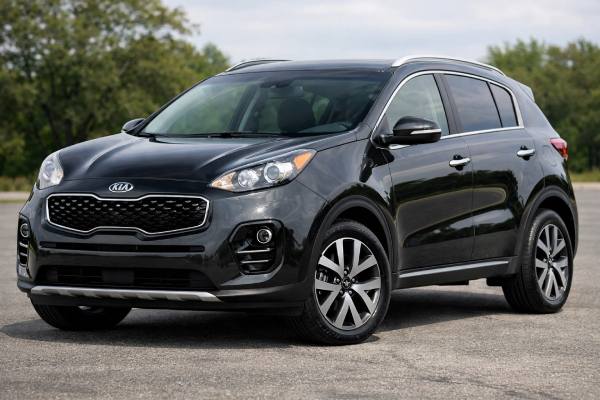
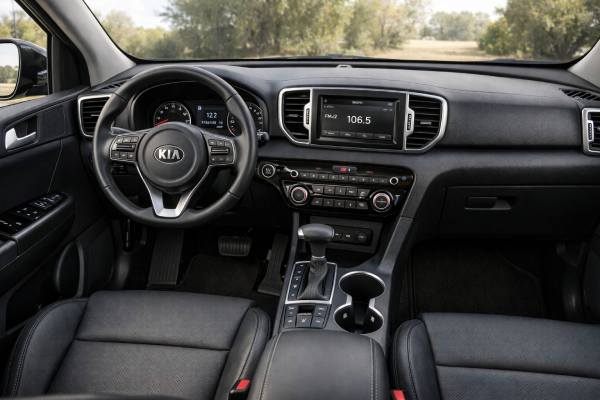
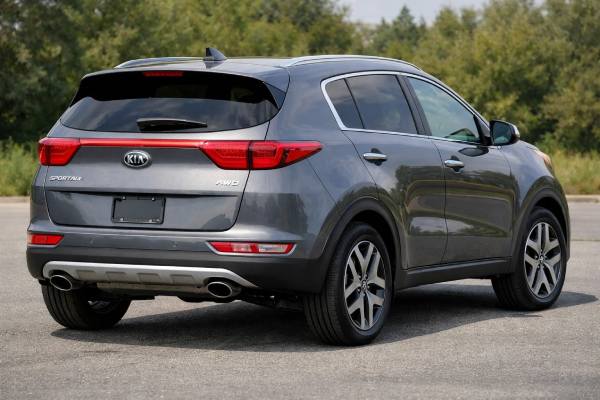
The 2016–2018 Kia Sportage QL with the 1.6-litre G4FD petrol engine is one of the simplest versions of the fourth-generation Sportage. That matters. In a market full of small turbo engines, dual-clutch gearboxes, and increasingly complex drivetrains, this naturally aspirated 1.6 paired with a six-speed manual gives the QL a more straightforward ownership profile. It is not the quickest Sportage, and it is not the version to buy for towing or fast motorway overtakes. What it does offer is predictable throttle response, lower mechanical complexity than the turbo petrol models, and the stronger, quieter QL body introduced for this generation. For many used-car buyers, that mix still works well. The real question is not whether it is exciting, but whether it is dependable, practical, and good value to own. In the right condition, the answer is usually yes, as long as expectations stay realistic and maintenance has not been delayed.
Quick Specs and Notes
- The 1.6 petrol is mechanically simpler than the turbo Sportage and usually cheaper to own long term.
- The QL body feels more refined than the older Sportage, with solid ride comfort and good cabin space.
- Official figures show a useful 62 L fuel tank and up to 503 L of luggage space with the tyre mobility kit.
- The main ownership caveat is modest performance, especially with passengers, hills, or motorway overtakes.
- A sensible service baseline is every 12 months, with 15,000 km common in some markets and 20,000 miles in others depending on the official VIN-market schedule.
What’s inside
- Kia Sportage QL in context
- Kia Sportage QL technical facts
- Kia Sportage QL grades and protection
- Fault patterns and campaign checks
- Service planning and used-buy tips
- Road manners and real fuel use
- How the Sportage QL stacks up
Kia Sportage QL in context
The fourth-generation QL Sportage was a bigger step forward than its styling alone suggests. Kia engineered it around a much stronger structure, with far greater use of advanced high-strength steel and a large gain in torsional rigidity over the previous model. That stronger shell helped in three areas owners feel every day: it improved crash performance, gave the suspension a better platform to work from, and reduced the shake and noise that older crossovers often develop over rough surfaces. Even now, that engineering base is one of the QL’s best strengths.
In this specific 1.6-litre petrol form, the Sportage is best understood as the calm, simple end of the lineup. The naturally aspirated Gamma-family engine does not produce the low-rpm shove of the 1.6 T-GDI. It needs revs, and it rewards a measured driving style rather than a hard-charging one. That can sound like a weakness, but it is also why many buyers still like it. There is no turbocharger to manage, no dual-clutch gearbox on the usual European 1.6 GDi setup, and no attempt to make the car feel artificially urgent. It is an honest drivetrain in a class that often chased headline numbers.
That honesty shapes the ownership experience. The 1.6 GDi QL is easy to drive in town, easy to park, and usually smoother at very low speeds than some small-turbo rivals with more complicated transmissions. It also suits buyers who mostly use their SUV as a family car rather than as a tow vehicle or long-distance autobahn machine. The downside is clear enough: once the car is fully loaded, climbing hills, or overtaking at motorway speed, the engine feels more adequate than strong. The Sportage’s size and weight ask a fair amount from 97 kW.
Market variation matters here. Some regions sold the 1.6 GDi mainly as a two-wheel-drive entry or mid-range model, while others packaged it with different wheel sizes, trim names, and safety features. That means equipment, tyre size, ride height, and service schedules can vary more than buyers expect. A 2016 car and a 2018 car can look almost identical while differing in ADAS availability, infotainment, seat trim, and even luggage setup.
As a used buy, the 1.6 GDi Sportage makes the most sense for people who want a durable-feeling, roomy compact SUV with simple petrol ownership and who do not mind modest performance. It is not the headline Sportage, but it may be the easier version to keep on the road if bought carefully. In used-car terms, that can be a more important advantage than raw speed.
Kia Sportage QL technical facts
The 1.6 GDi Sportage is mechanically straightforward, but the details still matter because this engine was sold in slightly different regional trims and efficiency packages. The core powertrain data is stable across the 2016 launch material, while a few service and market-specific figures vary enough that VIN-based checking remains important.
| Powertrain item | Specification |
|---|---|
| Engine code | G4FD |
| Engine family | Gamma petrol |
| Layout | Inline-4, naturally aspirated |
| Valvetrain | DOHC, 16 valves |
| Valves per cylinder | 4 |
| Displacement | 1.6 L (1,591 cc) |
| Bore × stroke | 77.0 × 85.4 mm (3.03 × 3.36 in) |
| Fuel system | Direct injection |
| Compression ratio | 11.0:1 |
| Max power | 132 PS class (97 kW / about 130 hp) @ 6,300 rpm |
| Max torque | 160.8 Nm (119 lb-ft) @ 4,850 rpm |
| Timing drive | Chain |
| Transmission | 6-speed manual |
| Drive type | FWD |
| Differential | Open |
The output tells the story immediately. Peak torque arrives quite high in the rev range, so this is not a lazy, torque-rich engine. It needs to be worked harder than the turbo petrol or the diesels. In exchange, it keeps the mechanical layout simple and predictable.
| Chassis and dimensions | Specification |
|---|---|
| Front suspension | MacPherson struts, coil springs, anti-roll bar |
| Rear suspension | Multi-link, coil springs, anti-roll bar |
| Steering | Electric motor-driven rack-and-pinion power steering |
| Steering ratio | 14.34:1 |
| Turns lock-to-lock | 2.71 |
| Turning circle | 5.3 m (17.4 ft) |
| Brakes | 305 mm front ventilated discs / 302 mm rear solid discs |
| Standard tyre size | 215/70 R16 |
| Optional tyre sizes | 225/60 R17, 245/45 R19 |
| Length | 4,480 mm (176.4 in) |
| Width | 1,855 mm (73.0 in) |
| Height | 1,635 mm (64.4 in) |
| Wheelbase | 2,670 mm (105.1 in) |
| Fuel tank | 62 L (16.4 US gal / 13.6 UK gal) |
| Cargo volume | 503 L with tyre mobility kit / 491 L with temporary spare |
| Kerb weight | 1,379 kg (3,040 lb) |
| GVWR | 1,895 kg (4,178 lb) |
| Payload | 516 kg (1,138 lb) |
| Towing capacity | 1,400 kg braked / 650 kg unbraked |
| Performance and efficiency | Specification |
|---|---|
| 0–100 km/h | 11.5 s |
| Top speed | 176 km/h (109 mph) |
| Rated combined economy | 6.7 L/100 km without ISG / 6.3 L/100 km with ISG |
| Extra-urban economy | 5.6 / 5.4 L/100 km |
| Urban economy | 8.6 / 7.9 L/100 km |
| CO₂ | 156 / 147 g/km |
| Fluids and service data | Published figure |
|---|---|
| Engine oil capacity | 3.6 L (3.8 US qt) |
| Engine oil grade | ACEA A5 |
| Engine oil viscosity | 5W-30 |
| Coolant, gearbox oil, A/C charge, torque values | Verify by VIN-market service data |
| Safety and assistance | Published figure |
|---|---|
| Euro NCAP | 5 stars |
| Euro NCAP adult occupant | 90% |
| Euro NCAP child occupant | 83% |
| Euro NCAP safety assist | 71% |
| IIHS 2017 Sportage | Top Safety Pick with optional front crash prevention |
| IIHS headlights | Poor |
| Core passive safety | Six airbags in many markets, ISOFIX in second row |
| Core active safety | ABS, ESC, VSM, HAC commonly fitted |
The main technical verdict is simple: this is a family SUV built around a strong platform and a modest but uncomplicated engine. The hardware is sensible. The limitation is performance, not design quality.
Kia Sportage QL grades and protection
The 1.6 GDi Sportage usually sat toward the practical end of the QL range. In many markets it was the entry petrol or the mainstream non-turbo option, which means trims often focused on comfort and equipment rather than mechanical variety. That is useful for used buyers because it keeps the basic engine-and-gearbox package consistent. The differences you are most likely to find are in wheels, cabin materials, convenience features, and safety technology rather than in suspension or driveline layout.
Lower and mid-grade versions often carried 16- or 17-inch wheels, cloth upholstery, manual or simple automatic climate control, and smaller infotainment screens. Upper trims or special editions could add leather or part-leather trim, larger touchscreens, navigation, heated seats, parking sensors, reverse camera, keyless entry, and upgraded cabin detailing. In daily ownership, these differences matter more than they do on paper. A smaller-wheel car often rides better and costs less to tyre, while an upper trim can feel meaningfully more upscale if all the equipment still works.
Quick identifiers help. Smaller wheels, cloth seats, and simpler instrument screens usually point to the more basic grades. Panoramic roofs, larger alloy wheels, brighter exterior trim, powered tailgates, and richer interior materials typically indicate the better-equipped versions. Buyers should also check whether the car uses a tyre mobility kit or temporary spare, because luggage volume changes slightly and the underfloor arrangement differs.
Safety was one of the QL’s major selling points. Kia’s own European material emphasized that this generation was the safest Sportage yet, helped by a stronger shell with much wider AHSS use. Euro NCAP gave the model a five-star rating, and Kia’s own summary highlighted a 90% adult-occupant score, 83% child-occupant score, and 71% safety-assist score. In the U.S., IIHS testing was also strong overall, though the detail that matters for buyers is that Top Safety Pick status depended on optional front crash prevention and the headlights were still rated Poor.
That last point is important because buyers often treat a five-star score as the end of the story. It is not. On the QL, the real-world safety result depends heavily on the actual equipment fitted. Standard features generally included airbags, ESC, vehicle stability management, and child-seat anchors. More advanced systems such as AEB, lane support, blind-spot monitoring, rear cross-traffic alert, high-beam assist, and speed-limit recognition were often optional or trim-dependent.
There is also a repair implication. If the car has camera- or radar-based assistance, a windscreen replacement, bumper repair, or front-end accident can affect calibration. Ask whether post-repair calibration was done. On this Sportage, the basic safety structure is strong across the board, but the extra safety value of ADAS depends on correct trim identification and proper repair history. A modest trim with a clean body and working fundamentals can be the wiser buy than a high-spec car with uncertain crash repairs.
Fault patterns and campaign checks
The 1.6 GDi Sportage is not defined by one notorious engine defect. Its reliability profile is broader and more ordinary than that. That is good news, but it also means buyers need to pay attention to the smaller systems that age gradually. The most expensive examples are usually not the cars with dramatic failures. They are the ones where many medium-cost jobs have been ignored at the same time.
Common and usually low to medium cost
- Battery and stop-start sensitivity: cars used for short trips can show weak-battery behavior before the battery actually fails. Symptoms include slow cranking, stop-start refusing to work, and minor electrical complaints.
- Rear brake corrosion: low-mileage or damp-climate cars can develop sticking sliders, uneven pad wear, or rusty rear discs.
- Suspension wear: front drop links, bushes, and top mounts are normal wear items by this age, especially on rough roads.
- Tyre wear from alignment drift: larger-wheel cars can scrub inner shoulders quickly if alignment is neglected.
Occasional and medium cost
- Carbon build-up on intake valves: the 1.6 GDi uses direct injection, so intake-valve deposits can build over time. Symptoms are rough idle, hesitation, or less eager response, usually at higher mileage or in heavy short-trip use.
- Ignition-related rough running: coils and spark plugs can cause minor misfires before they trigger a hard fault.
- Cooling-system age issues: hose seepage, tired clamps, radiator aging, or thermostat behavior can appear on older cars.
- Manual-clutch wear: because this engine is usually paired with a 6-speed manual, clutch condition matters. A high bite point or slip under load should not be ignored.
Less common but higher cost
- Timing-chain stretch from poor oil service: there is no scheduled timing-belt replacement, but a chain still depends on clean oil. Neglected cars can develop cold-start rattle or timing-correlation faults.
- Steering or wheel-bearing noise: not common enough to define the model, but worth checking on rough, noisy cars.
For software and calibration, this Sportage is simpler than later hybrids and turbo models, but updates still matter. Infotainment glitches, camera issues, and ADAS warnings can sometimes be linked to outdated software or poor recalibration after repairs. That is especially true on cars with AEB or lane-support equipment.
Recall and campaign history is best treated as VIN-specific. The Sportage line as a whole has had market-dependent recall activity, but not every campaign applies to every engine, region, or trim. The safest approach is to request dealer printouts or official VIN-check confirmation rather than relying on broad model-year assumptions.
Pre-purchase checks should include:
- Full service history, ideally with dated oil changes rather than vague stamps.
- Proof of recall or service-campaign completion where applicable.
- Cold start from fully cold engine.
- Clutch test on a hill or in a high gear at low rpm.
- Brake inspection, especially rear hardware.
- Matching tyres on all four corners.
- Scan for stored engine and safety-system faults.
The durability outlook is good when maintenance has been consistent. The 1.6 GDi is more likely to punish neglect than to surprise a careful owner.
Service planning and used-buy tips
The best maintenance strategy for the 1.6 GDi Sportage is simple: follow the official market schedule as the baseline, then shorten it if the car lives a hard life. Official Kia service schedules vary by region. Some published Kia schedules list 15,000 km or 12 months for Sportage petrol models, while others use 20,000 miles or 12 months for petrol non-turbo cars. That sounds inconsistent, but it is normal for a global model. The right answer always starts with the VIN-market handbook.
For long-term ownership, a conservative plan is smarter than the maximum allowed interval.
| Item | Practical schedule |
|---|---|
| Engine oil and filter | Annually at minimum; every 10,000–12,000 km is a sensible real-world target on short trips |
| Engine air filter | Inspect every service; replace around 15,000–30,000 km depending on dust |
| Cabin filter | Every 12 months or about 15,000–20,000 km |
| Spark plugs | Inspect around 60,000 km; replace around 90,000–100,000 km depending on plug type and condition |
| Brake fluid | Every 2 years |
| Coolant | Check condition yearly; replace per VIN-market schedule or sooner if history is unknown |
| Manual transmission oil | Inspect for leaks and shift quality; consider preventive replacement around 80,000–100,000 km |
| Clutch hydraulic system | Check fluid condition and pedal feel at each service |
| Tyre rotation | About every 10,000 km |
| Wheel alignment | When tyres wear unevenly, steering pulls, or after suspension work |
| 12 V battery test | Yearly from around year 4 onward |
| Timing chain | No routine fixed interval; inspect if noisy or if timing faults appear |
| Drive belts and hoses | Inspect every service |
The one easily confirmed engine-fluid figure is the engine oil requirement: 3.6 L, ACEA A5, 5W-30. For coolant fill, refrigerant charge, and detailed torque values, the official VIN-specific service data is still the right source, because these items can vary by market, supplier, and equipment level.
A good used-car inspection checklist for this model should include:
- Look underneath for rust on brake lines, rear brake hardware, and shield edges.
- Check the rocker cover area and front engine area for oil residue.
- Listen for chain noise at cold start.
- Feel for clutch slip or judder.
- Confirm that the manual gearbox shifts cleanly when cold and hot.
- Test the air conditioning, reverse camera, parking sensors, and all window switches.
- Inspect tyre brand, size, and age on all four corners.
- Check the boot floor setup for mobility kit or spare-wheel arrangement.
The best versions to seek are usually clean mid trims on sensible wheels, with full service records and no signs of accident shortcuts. A flashy trim on large wheels is not automatically the better buy. From a durability standpoint, the 1.6 GDi Sportage is a condition-led purchase. A careful, boring example is often the right one.
Road manners and real fuel use
The QL Sportage drives like a mature compact SUV, and that remains one of its strongest qualities. Straight-line stability is good, the body feels tightly put together, and the suspension does a respectable job of filtering rough surfaces without floating or crashing. It is not soft in the old crossover sense, but it is composed and easy to live with. The longer wheelbase and stiffer shell help it feel more settled than the older Sportage.
In town, the 1.6 GDi version is pleasant enough. The clutch is usually light, steering effort is low, and the engine responds cleanly off idle. The lack of turbo lag makes it easy to meter at parking speeds and in traffic. At suburban pace, the car feels smooth and predictable. Once speeds rise, the limitations become clearer. With only modest torque and a fairly heavy body, the engine needs revs to make progress. On a two-lane road, overtakes often require a downshift and more planning than buyers coming from a diesel or turbo petrol may expect.
That does not make the car bad to drive. It simply makes it honest. The Sportage is tuned more for stability and confidence than for enthusiasm. Steering is accurate enough, but not especially rich in feedback. Body control is tidy, yet it does not invite fast cornering the way a Mazda CX-5 can. The upside is that it feels secure in poor weather and relaxed on longer trips.
Noise levels are one of the pleasant surprises. The stronger QL bodyshell helps the cabin feel calmer than many rivals of the period, especially on standard or mid-size wheels. Wind and tyre noise still rise on coarse surfaces, and the engine becomes more audible when worked hard, but overall NVH is respectable for the class.
Real-world economy normally lands close to this range:
- City: about 8.5–10.5 L/100 km
- Highway at 100–120 km/h: about 6.8–7.8 L/100 km
- Mixed driving: about 7.2–8.4 L/100 km
Cold weather, roof accessories, heavy traffic, and larger wheels will move those numbers upward. A full load also changes the car’s character more than it would in a torquier variant. That is why the 1.6 GDi Sportage suits measured driving better than urgent driving.
In plain terms, the on-road verdict is easy to understand. The chassis is better than the engine. That sounds critical, but it is actually useful. It means the car’s ride, structure, braking feel, and day-to-day refinement are solid enough to age well. You simply need to accept that the naturally aspirated 1.6 is there to carry the vehicle competently, not quickly.
How the Sportage QL stacks up
The 1.6 GDi Sportage makes the most sense when compared with rivals on ownership balance rather than on raw numbers.
Against the Hyundai Tucson of the same period, the comparison is naturally close because the two share so much underneath. The Sportage usually feels more expressive in design and a little more premium in dashboard ambiance, while the Tucson often presents itself as the safer visual choice. In used form, condition matters far more than badge.
Compared with a Mazda CX-5, the Kia gives away steering feel and dynamic sharpness. The Mazda is the better driver’s car. The Sportage answers with a solid cabin impression, a simpler non-turbo petrol story in this trim, and often strong value on the used market.
Next to a Honda CR-V, the Kia usually loses on outright packaging efficiency and sometimes on rear-seat cleverness. The Honda remains one of the smartest family tools in the class. The Sportage counters with a more modern-feeling cabin design and, in good trim, a more upmarket first impression.
Versus a Nissan Qashqai, the Sportage feels more substantial and more SUV-like. The Qashqai often feels lighter and easier in tight urban use, but the Kia tends to offer a sturdier body feel, stronger perceived quality, and a roomier impression.
Compared with a Toyota RAV4, the Sportage cannot match the Toyota’s hybrid appeal or long-held durability reputation. But in a straightforward petrol-versus-petrol used comparison, the Kia can feel like the better bargain, especially when equipment level and interior presentation matter to the buyer.
So where does the 1.6 GDi Sportage win? It wins when the buyer wants a compact SUV that feels solid, roomy, and easy to understand mechanically. It loses when the buyer wants quick overtaking, strong towing ability, or best-in-class fuel economy.
That makes the final verdict fairly clear. The 2016–2018 Kia Sportage QL 1.6 GDi is not the star of the range, but it may be one of the easier versions to own well. Buy it for build feel, comfort, simple petrol running, and family usefulness. Do not buy it expecting effortless performance. When those expectations are set correctly, it remains a very sensible used crossover.
References
- Sportage 2016 2016 (Press Kit)
- Five-star safety ratings for all-new Kia Optima and Sportage 2015 (Safety Rating)
- 2017 Kia Sportage 2017 (Safety Rating)
- Engine Oil Grades and Capacities – Kia 2016 (Service Guide)
- Kia Service Intervals 2025 (Service Schedule)
Disclaimer
This article is for informational purposes only and is not a substitute for professional diagnosis or repair. Specifications, torque values, service intervals, procedures, and equipment can vary by VIN, market, and trim, so always verify critical details against the official owner’s manual, service information, and parts documentation for your exact vehicle.
If this guide was useful, please consider sharing it on Facebook, X, or another platform to support our work.