
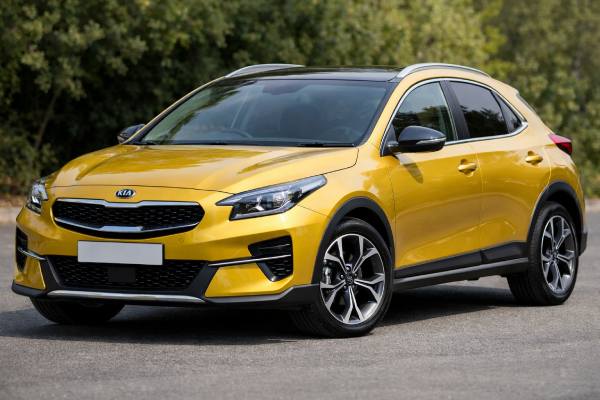
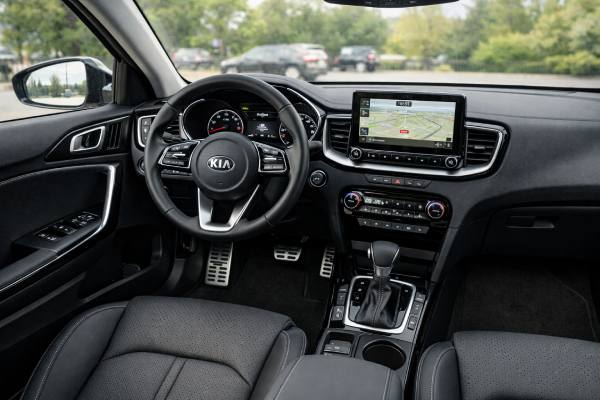
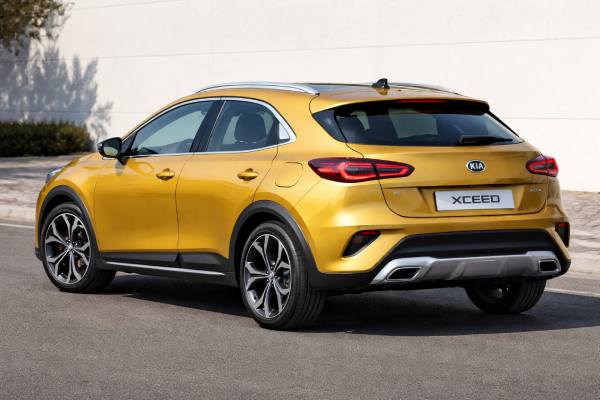
The Kia XCeed CD with the 1.0-litre Kappa II T-GDi sits in an interesting sweet spot. It is not a conventional hatchback, yet it is not a heavy small SUV either. Instead, Kia gave the Ceed platform more ground clearance, a taller driving position, and a more lifestyle-focused body without losing the road manners that made the regular Ceed easy to like. In 1.0 T-GDi form, the XCeed combines modest size, useful turbo torque, and simple front-wheel-drive packaging with a six-speed manual. Most European documents list this engine at 120 PS, which many sales listings round to 120 hp.
For owners, the appeal is clear. The XCeed feels lighter and tidier than taller B-SUV alternatives, but it still offers a genuinely useful boot, comfortable front seats, and lower running costs than larger crossovers. The main catch is that this is still a small direct-injection turbo petrol, so oil quality, service timing, and careful used-buy checks matter more than the stylish bodywork suggests.
Top Highlights
- The 1.0 T-GDi gives the XCeed enough low-rpm torque to feel stronger than many non-turbo rivals in daily driving.
- The chassis uses fully independent rear suspension, which helps the car feel more composed than many torsion-beam crossovers.
- Cargo space is a real strength, with 426 L seats up and 1,378 L seats folded by the VDA method.
- The ownership caveat is simple: buy on service history first, because missed oil changes matter on this engine.
- A sensible routine is an oil and filter change every 10,000 miles or 12 months, whichever comes first.
Explore the sections
- Kia XCeed CD 1.0 Explained
- Kia XCeed CD Technical Figures
- Kia XCeed CD Grades and Safety
- Common Faults and Factory Actions
- Upkeep Priorities and Buying Checks
- Road Manners and Real Efficiency
- XCeed Versus Key Alternatives
Kia XCeed CD 1.0 Explained
The XCeed only makes full sense when you view it as a Ceed-based crossover hatch rather than a mini SUV. Kia did not start from scratch. It took the CD-platform Ceed family, changed the body panels, lifted the ride height, altered the suspension tuning, and built something that offers easier access and a slightly more upright seating position without the bulk or dynamic compromise of a taller crossover. That decision shapes the whole ownership experience.
The 1.0 T-GDi is the lightest mainstream petrol engine in the early XCeed range, and that gives it a specific role. It was never meant to turn the XCeed into a fast car. Its job was to keep the entry petrol model efficient, affordable, and pleasant in normal traffic. On paper, 120 PS and 172 Nm do not sound generous for a C-segment crossover. In practice, the low-down turbo torque and six-speed manual gearbox help the engine feel more willing than the numbers suggest, especially with one or two adults on board rather than a full load.
That matters because the XCeed is not especially heavy by class standards. Depending on trim and equipment, kerb weight lands around the high-1,200 kg to low-1,300 kg range. That lets the 1.0 engine do enough without feeling completely out of place. It will not deliver the mid-range shove of the 1.4 T-GDi or later 1.5 T-GDi cars, but it is noticeably more flexible than an old-school naturally aspirated 1.0 or 1.2 would be in the same body.
There is also a broader ownership advantage. The early 1.0 T-GDi XCeed usually stays away from the more expensive drivetrain complexity seen elsewhere in the range. No plug-in hybrid battery, no rear axle drive hardware, and on this exact configuration, usually no dual-clutch transmission. That simplicity can matter more over six or seven years than the difference between 120 PS and 160 PS.
The compromises are predictable. The engine needs planning on fast roads, it works harder at motorway speed than the larger petrols do, and a fully loaded car exposes its limits quickly. Buyers who often travel with four adults, luggage, or steep motorway climbs may prefer the bigger engines. Buyers who mostly want a well-packaged crossover-hatch with reasonable costs, smart steering, and enough turbo torque for everyday life will understand the 1.0’s appeal.
In short, this version of the XCeed succeeds because it keeps the car honest. It does not oversell itself. It gives buyers a more stylish and slightly more versatile Ceed without turning the ownership brief into something complicated or expensive.
Kia XCeed CD Technical Figures
The 2019–2022 XCeed 1.0 T-GDi was sold across Europe with small regional differences in trim and emissions data, but the core technical picture is consistent. The most useful public figures come from official Kia brochures, price lists, and owner support documents. Where those sources do not publish workshop-level detail for this exact early CD 1.0 manual, the table below says so rather than guessing.
Powertrain and efficiency
| Item | Specification |
|---|---|
| Code | Kappa II 1.0 T-GDi |
| Engine layout and cylinders | Inline-3, DOHC, 12 valves, 4 valves/cyl |
| Bore × stroke | 71.0 × 84.0 mm (2.80 × 3.31 in) |
| Displacement | 1.0 L (998 cc) |
| Induction | Turbocharged |
| Fuel system | Direct injection |
| Compression ratio | 10.0:1 |
| Max power | 120 hp (88.3 kW) @ 6,000 rpm |
| Max torque | 172 Nm (127 lb-ft) @ 1,500–4,000 rpm |
| Timing drive | Chain |
| Rated efficiency | WLTP combined about 5.9–6.4 L/100 km (39.9–36.8 mpg US / 47.9–44.1 mpg UK) on later MY22 literature; earlier NEDC-converted brochure figures sit lower |
| Real-world highway @ 120 km/h (75 mph) | Typically about 6.4–7.1 L/100 km (36.8–33.1 mpg US / 44.1–39.8 mpg UK) |
Transmission, chassis, and dimensions
| Item | Specification |
|---|---|
| Transmission | 6-speed manual |
| Drive type | FWD |
| Differential | Open |
| Suspension, front / rear | MacPherson strut / compact multi-link rear axle |
| Steering | Rack-and-pinion with MDPS electric assist |
| Steering ratio | Public Kia brochures reviewed do not list a single numeric ratio for this exact variant |
| Brakes | Front ventilated discs / rear solid discs |
| Front brake size | 288 × 25 mm (11.3 × 1.0 in) |
| Rear brake size | 272 × 10 mm (10.7 × 0.39 in), with some market-dependent variation |
| Wheels and tyres | 205/60 R16 on lower trims; 235/45 R18 on richer grades |
| Ground clearance | 172 mm (6.8 in) on 16-inch trims; 184 mm (7.2 in) on 18-inch trims |
| Length / width / height | 4,395 / 1,826 / 1,483 mm on 16-inch trims, 1,495 mm on 18-inch trims (173.0 / 71.9 / 58.4–58.9 in) |
| Wheelbase | 2,650 mm (104.3 in) |
| Turning circle, kerb-to-kerb | 10.6 m (34.8 ft) |
| Kerb weight | About 1,257–1,383 kg (2,771–3,049 lb), depending on trim and equipment |
| GVWR | 1,820 kg (4,012 lb) |
| Fuel tank | 50 L (13.2 US gal / 11.0 UK gal) |
| Cargo volume | 426 / 1,378 L (15.0 / 48.7 ft³), VDA |
Performance, fluids, and safety
| Item | Specification |
|---|---|
| 0–100 km/h (0–62 mph) | 11.3 s |
| Top speed | 186 km/h (116 mph) |
| Braking distance 100–0 km/h | No open official Kia consumer figure published for this exact variant |
| Towing capacity | 1,200 kg (2,646 lb) braked / 600 kg (1,323 lb) unbraked |
| Payload | About 437–563 kg (964–1,241 lb), depending on exact trim weight |
| Engine oil | 3.6 L (3.8 US qt), ACEA C2 0W-30 in 2019–2020 UK guidance; later Kia guide also lists API SN Plus 0W-20 for later CD-family petrols |
| Coolant | Ethylene-glycol, phosphate-based coolant; public open-market documents reviewed do not list one exact early-CD 1.0 fill quantity for all markets |
| Manual transmission fluid | API GL-4 SAE 70W; open public documents for this exact early-XCeed application do not consistently publish a single fill figure |
| Differential / transfer case | Not applicable |
| Brake / clutch fluid | DOT-4 LV / ISO 4925 Class 6 |
| A/C refrigerant | Verify by VIN and under-bonnet label before service |
| Key torque specs | Not published in open Kia consumer documentation; use VIN-specific workshop data |
| Crash ratings | Euro NCAP Ceed-family reference: 88% adult, 85% child, 52% vulnerable road user, 68% safety assist |
| IIHS | Not applicable |
| ADAS suite | FCA, LKA, DAW, HBA, ISLW, SCC, BCW, and lane-centering related features varied by grade and pack |
The numbers explain the XCeed well. It is roomy for its footprint, light enough to tolerate a small engine, and engineered more like a raised C-hatch than a soft SUV.
Kia XCeed CD Grades and Safety
Trim structure depends heavily on country, which is why used-car listings can be confusing. The safest way to understand the 2019–2022 XCeed 1.0 is by equipment pattern rather than badge alone. In Ireland, for example, the car was sold in a K-series trim structure, while Belgium used names such as Pure, Pulse, Pace, and Business Line. The names changed, but the logic stayed similar.
Entry-grade cars are the simplest value buys. These usually pair the 1.0 T-GDi with 16-inch wheels, cloth trim, a smaller central display, and the core active-safety equipment. They are often the most sensible used buys for owners who care about tyre cost, ride comfort, and long-term simplicity more than appearance.
Mid-level trims are where the XCeed starts to make the strongest case for itself. This is usually where you find the larger navigation screen, wireless phone charging, richer interior materials, rear camera support, and a better spread of convenience equipment. In many markets, this is also the point where the ADAS suite becomes meaningfully broader.
Upper trims add the equipment buyers notice during ownership rather than just during the test drive. Better audio, digital driver display, privacy glass, more seat adjustment, blind-spot monitoring, adaptive cruise, and extra lighting features usually sit here. They can make the XCeed feel more expensive than its badge suggests, but they also increase repair exposure after minor parking damage or windscreen replacement.
Mechanical differences across the 1.0 T-GDi trims are limited but still worth noting:
- 16-inch cars ride a little more calmly and usually return slightly better fuel economy.
- 18-inch cars look better and steer a touch more sharply, but road noise and tyre cost rise.
- Tow ratings stay useful for the class, but the 1.0 is still the light-duty engine of the range.
- This variant remains front-wheel drive only.
Year-to-year changes matter too. The XCeed launched in 2019 with the 1.0 T-GDi as one of the core petrol options. By 2020, the range widened with the plug-in hybrid and more safety technology in richer trims. In 2021 and into 2022, some markets began shifting attention toward the 1.5 T-GDi and electrified derivatives, but the 1.0 stayed relevant as the lighter, cheaper petrol choice.
Safety is a little more nuanced than a simple star rating suggests. Euro NCAP’s public reference point is the 2019 Ceed-family assessment, which returned 88% for adult occupant protection, 85% for child occupant protection, 52% for vulnerable road users, and 68% for safety assist. Earlier Euro NCAP communication also highlighted how the Ceed family could show different star outcomes depending on whether the safety pack was included. For used buyers, the lesson is simple: do not assume every XCeed has the same safety kit just because the platform tested well.
On a car like this, ADAS calibration matters. Windscreen replacement, front-end repair, camera alignment, and radar condition all deserve attention during inspection. A higher-trim XCeed is only a better buy if those systems actually work properly.
Common Faults and Factory Actions
The 1.0 T-GDi XCeed is generally a sound used buy, but it is not the engine to buy blindly. Its reliability pattern is typical of a modern small turbo petrol. Most issues are manageable, yet maintenance quality strongly affects how the car ages.
A good way to read the ownership picture is by frequency and cost.
Common and lower-cost
- Ignition wear and mild misfire: Rough running under load, hesitation, or a brief engine light often points to spark plugs or a coil pack rather than something serious.
- 12 V battery weakness: Cars used for short urban trips can develop stop-start complaints, slow cranking, or nuisance warnings earlier than expected.
- Tyre wear and noise: The XCeed’s crossover stance and optional 18-inch wheel package make it sensitive to poor tyres and minor alignment errors.
- Brake wear: This is not a heavy car, but mixed family use still wears front pads and discs faster than many owners assume.
Occasional and medium-cost
- Carbon build-up on intake valves: This is a direct-injection petrol engine, so long-term intake deposit build-up is possible, especially on short-trip cars.
- Boost-side leaks or hose issues: Flat response, a slight whistle, or inconsistent pull can come from intake plumbing or small boost leaks rather than a failed turbo.
- Cooling-system age faults: Thermostat behavior, sensor issues, and slow warm-up deserve attention because small turbo engines dislike poor thermal control.
- Clutch wear: The six-speed manual is generally a strong point, but heavily urban cars can show a high bite point or slip earlier than motorway-driven ones.
Less common but more important
- Oil-neglect damage: This is the real long-term risk. Dirty or overdue oil can shorten timing-chain life, accelerate turbo wear, and worsen overall drivability.
- Timing-chain noise or correlation faults: There is no routine chain replacement interval, but cold-start rattle or timing-related fault codes should never be ignored.
- ADAS or infotainment glitches after repair work: On richer trims, cameras, sensors, and electronic modules can create annoying and sometimes costly follow-up work after accident repair.
One useful ownership note is what this exact engine avoids. It does not carry the plug-in hybrid battery pack, and in this configuration it normally avoids the seven-speed DCT that worries some buyers elsewhere in the range. That makes the 1.0 manual XCeed one of the cleaner long-term bets in the lineup, provided the service history is strong.
Open official recall summaries are less clear-cut here than they are for some larger Kia models. In the sources reviewed for this guide, no major 1.0 T-GDi XCeed-specific campaign dominates the ownership conversation the way some model-wide recalls do elsewhere. That does not mean “nothing happened.” It means recall checking should be VIN-led, not rumor-led. A dealer history printout and the local official recall portal matter more than forum chatter.
For a pre-purchase inspection, request a genuine cold start, a full service file, and a proper road test that includes low-rpm pull in a higher gear. That combination usually reveals more about a small turbo petrol than a short urban drive ever will.
Upkeep Priorities and Buying Checks
The XCeed 1.0 T-GDi is easy to keep healthy if the owner treats it like a modern turbo petrol rather than an old small-displacement economy car. The public Kia guides give a clear basic service rhythm, but a practical owner should be a little more conservative where oil, plugs, and inspections are concerned.
Practical maintenance schedule
| Item | Sensible interval | Notes |
|---|---|---|
| Engine oil and filter | 10,000 miles / 12 months, or 15,000 km / 12 months depending on market schedule | Use the shorter interval for short trips, dust, towing, or repeated cold starts |
| Engine air filter | Inspect every service; replace about every 20,000–30,000 km | Earlier in dusty or urban use |
| Cabin air filter | Every 20,000–30,000 km or 12–24 months | Cheap and worth doing on time |
| Coolant | Inspect yearly; replace to official schedule or sooner if condition is poor | Correct phosphate-based coolant matters |
| Spark plugs | About every 45,000–60,000 km is a practical owner interval | Earlier replacement is cheap insurance on hard-used cars |
| Manual transmission fluid | Inspect condition at higher mileage; many careful owners refresh around 80,000–100,000 km | Public open fill data is limited, but fresh fluid helps shift feel |
| Brake fluid | Every 24–36 months | Time matters as much as mileage |
| Brake pads and discs | Inspect at every service | 18-inch cars can make wear and cost more noticeable |
| Timing chain | No fixed routine replacement interval | Investigate noise, poor oil history, or timing faults early |
| Auxiliary belts and hoses | Inspect from midlife onward | Replace on cracks, glazing, or noise |
| Tyre rotation and alignment | Check every 10,000 km or when wear pattern changes | Essential on 18-inch cars |
| 12 V battery | Test yearly after year four | Replace before winter if reserve is weak |
The most important decision-making data point is the oil service history. Kia’s official support documents place the CD-family 1.0 T-GDi at a 3.6 L oil fill with a 10,000-mile / 12-month UK oil guide interval, while Irish petrol service guidance for the Ceed family shows 15,000 km / 12 months. In real life, the harshest-use owner should not stretch it.
For buyers, the inspection checklist is straightforward:
- start the car cold and listen for chain or top-end rattle
- watch for smooth idle and clean response under boost
- check clutch bite point and full-throttle pull in third gear
- inspect coolant level, hoses, and signs of seepage
- check tyre brand, wear pattern, and wheel damage
- verify camera, lane-assist, and parking features where fitted
- confirm all routine servicing and VIN recall checks
The best-value cars are often mid-trim examples on 16-inch wheels with strong paperwork. They usually deliver the best mix of comfort, equipment, and tyre cost. Upper trims are still good buys, but only if the extra electronics and wheel packages have been cared for properly.
Long-term durability is encouraging. The body is practical, the chassis is strong, and the cabin generally ages well. The engine is the part that punishes neglect first, which is why buying history matters more than chasing the shiniest trim.
Road Manners and Real Efficiency
The XCeed’s biggest dynamic advantage is that it still feels like a Ceed underneath. Many small crossovers sacrifice steering response and body control for a tall seating position. The XCeed does not. It gives you a slightly raised driving position and easier entry, but it still behaves more like a well-sorted C-segment hatch than a mini SUV.
That shows up in the first few miles. The steering is light enough in town, but it is not vague. The front axle turns in cleanly, and the compact multi-link rear suspension helps the car stay composed over fast undulations and mid-corner bumps. Compared with many torsion-beam B-SUVs, the XCeed feels more settled and more mature.
The 1.0 T-GDi is better in this body than some buyers expect. In city driving, the early torque delivery masks the modest power figure well. You do not need to work the engine hard to stay with traffic, and the manual gearbox usually suits the engine’s character. Around town and on suburban roads, that makes the XCeed feel alert enough.
The limitations appear once speed and load climb. At motorway pace, especially with passengers and luggage, the 1.0 has to work harder than the larger petrols. Overtaking requires planning, and hills expose the fact that this is still a small turbo three-cylinder hauling a C-segment crossover body. It is competent, not effortless.
Ride quality depends strongly on wheel size. Sixteen-inch cars are usually the most convincing all-rounders. They soften impacts better, reduce tyre noise, and still suit the car’s proportions well. Eighteen-inch cars look sharper and feel a touch more tied down, but they also pick up more road texture and can sound busier on rough surfaces.
NVH is acceptable rather than class-leading. Under light load the engine fades into the background reasonably well. Under harder acceleration you hear the familiar three-cylinder note. At motorway speed, tyre and wind noise become as important as engine sound, particularly on larger wheels.
Real-world efficiency remains one of the 1.0’s strongest arguments:
- City: about 6.6–7.4 L/100 km (35.6–31.8 mpg US / 42.8–38.2 mpg UK)
- Highway at 110–120 km/h: about 6.4–7.1 L/100 km (36.8–33.1 mpg US / 44.1–39.8 mpg UK)
- Mixed: about 5.9–6.7 L/100 km (39.9–35.1 mpg US / 47.9–42.1 mpg UK)
Cold weather and short-trip driving can add around 0.5–1.0 L/100 km. Cheap tyres and poor alignment can also hurt the numbers more than owners expect.
In short, the XCeed 1.0 is at its best when used as intended: commuting, mixed-road family use, and occasional longer trips rather than constant fully loaded motorway work. In that role, it feels balanced and easy to live with.
XCeed Versus Key Alternatives
The XCeed 1.0 T-GDi sits in a slightly unusual corner of the market. It is not as upright as a typical small SUV, but it offers more visual presence and easier access than a regular hatchback. That gives it a different set of rivals than the average crossover buyer might expect.
Against the Ford Focus Active 1.0 EcoBoost, the Kia feels slightly more design-led and a little more premium inside in the right trim. The Ford often feels a bit sharper to steer, but the XCeed counters with better perceived cabin quality and strong packaging.
Against the Volkswagen T-Roc 1.0 TSI, the Kia often feels more like a real C-segment car rather than a supermini-based crossover stretched upward. The T-Roc carries stronger brand weight in some markets, yet the XCeed usually offers more equipment value and a more distinctive middle ground between hatchback and SUV.
Against the Hyundai Kona 1.0 T-GDi, the Kia is the more mature long-distance choice for many drivers. The Kona is compact and easy to place, but the XCeed offers a roomier cabin, a larger boot, and a chassis that feels closer to the class above in everyday use.
Against the Mazda CX-30 2.0, the Kia loses out on engine smoothness and the premium polish of the Mazda cabin. The XCeed responds with a more affordable ownership proposition, lighter-feeling turbo torque at low revs, and often better equipment per euro or pound spent.
Its hardest in-house rival is actually the standard Ceed hatchback. The hatch can feel a little lighter and cleaner dynamically, but the XCeed gives back a more versatile driving position, easier access, and a crossover image many buyers now prefer without taking a major hit in efficiency.
Where the XCeed 1.0 wins:
- more cargo usefulness than many style-led compact crossovers
- a chassis that still behaves like a good hatchback
- enough turbo torque for everyday driving
- strong value in mid-level trims
- simpler long-term ownership than the plug-in hybrid version
Where it loses ground:
- motorway performance is only adequate with a full load
- direct injection and turbo hardware demand better servicing than a basic MPI petrol
- 18-inch trims can erode comfort and tyre budget
- richer rivals can feel quieter at sustained speed
The final verdict is simple. The Kia XCeed CD 1.0 T-GDi 120 is not the fastest or most glamorous crossover-style car in its class. It is one of the smartest if you want a raised, stylish family car that still drives like a proper hatchback and does not overcomplicate the ownership brief.
References
- The Xceed – Kia 2020 (Brochure)
- La XCeed. – Kia 2022 (Technical Data)
- Official Kia Cee’d 2019 safety rating 2019 (Safety Rating)
- Engine Oil Grades and Capacities 2023 (Service Guide)
- Kia Service Intervals 2022 (Service Intervals)
Disclaimer
This article is for informational purposes only and is not a substitute for professional diagnosis, repair, or VIN-specific workshop guidance. Specifications, torque values, service intervals, procedures, safety equipment, and trim content can vary by market, model year, production date, and vehicle identification number, so always verify details against official Kia service documentation for the exact vehicle.
If this guide helped you, please consider sharing it on Facebook, X, or another social platform to support our work.