
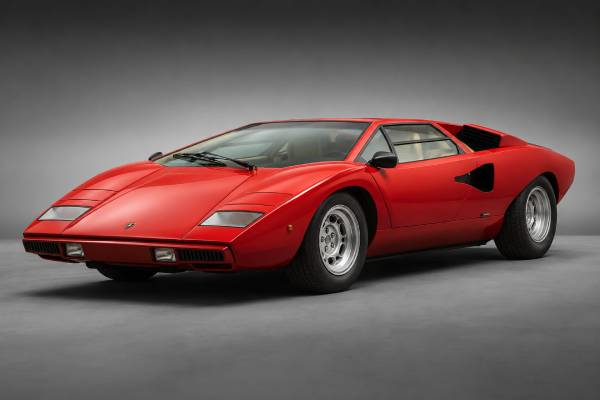
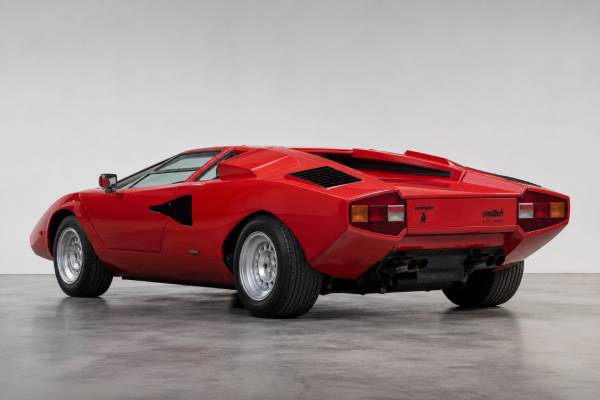
The Lamborghini Countach LP 400 is the purest production Countach and one of the defining supercars of the 1970s. Built from 1974 to 1978, it used Lamborghini’s L406 3.9-liter naturally aspirated V12, mounted longitudinally behind the cabin and paired with a five-speed manual gearbox. The LP 400 sits at the start of the Countach story: before the wide arches, huge rear tires, deep spoilers, and optional wings that later made the model an 1980s poster icon. Collectors often call it the “Periscopio” because of the roof channel linked to its rearward-visibility concept. Its value comes from more than rarity. The LP 400 combines Marcello Gandini’s original wedge shape, hand-built Sant’Agata production, a compact early body, and the most delicate visual balance of the entire Countach line.
Table of Contents
- Why the LP 400 Still Matters
- L406 V12 Specs and Chassis Data
- Periscopio Production and Identification
- Wedge Design and Hand-Built Engineering
- How the Early Countach Drives
- Maintenance, Weak Spots, and Restoration Risk
- Market Values and Buying Priorities
Why the LP 400 Still Matters
The LP 400 matters because it is the first road-going Countach and the closest production version to the original 1971 LP 500 concept. Later Countachs became wider, heavier, and more theatrical; the early LP 400 is lower, cleaner, narrower, and more faithful to Gandini’s first wedge idea.
Lamborghini needed the Countach to follow the Miura, a car that had already changed the idea of a road-going supercar. The Miura placed a V12 behind the seats, but it used a transverse engine layout. The Countach moved the V12 into a longitudinal rear-mid position, which is why “LP” stands for “Longitudinale Posteriore.” That packaging became a core part of Lamborghini’s V12 identity.
The Countach LP 500 prototype appeared at Geneva in 1971. Its shape looked almost impossible for a road car: a sharply pointed nose, a cabin pushed forward, scissor doors, a low roof, and a body that seemed drawn with a ruler. The production LP 400 arrived after several years of development, testing, and major changes. The original 5.0-liter prototype engine gave way to the proven 3.9-liter V12 family, and the production car used a tubular spaceframe rather than the prototype’s platform-style frame.
For Lamborghini, the LP 400 was also important as a manufacturing step. Earlier Lamborghini bodies were built by outside coachbuilders and then sent to Sant’Agata for assembly. The Countach changed that pattern. The body panels and interiors became part of Lamborghini’s in-house production work, with aluminum panels shaped, checked, adjusted, and assembled by hand.
For collectors, the LP 400 carries three layers of importance:
- It is the first production Countach and the foundation for every later version.
- It keeps the cleanest body shape, without wide wheel-arch extensions or the optional rear wing associated with later cars.
- It was built in very small numbers, with early hand-built variation that makes originality and documentation especially important.
The LP 400 is also the Countach that feels least like an exaggeration of itself. It still has the drama: the doors, the V12, the view over the low nose, the tight cockpit, and the difficult rear visibility. But it also has a visual lightness that later cars lost. The narrow tires and unflared body give it an almost concept-car purity.
Its reputation today is unusually broad. Design historians value it as one of Gandini’s greatest statements. Lamborghini enthusiasts see it as the beginning of the brand’s modern V12 line. Collectors prize it because good examples rarely appear, and because condition, provenance, matching numbers, and factory-correct details can change value dramatically.
L406 V12 Specs and Chassis Data
The LP 400’s technical appeal starts with its 3,929 cc L406 V12, a four-cam, carbureted engine rated around 375 hp in European specification. The rest of the car is just as important: a tubular spaceframe, aluminum bodywork, manual steering, a gated five-speed gearbox, independent suspension, and ventilated disc brakes.
| Category | Specification |
|---|---|
| Production years | 1974–1978 |
| Internal project family | LP112 |
| Engine code | L406 |
| Engine layout | Rear-mid-mounted 60-degree V12, longitudinal |
| Displacement | 3,929 cc |
| Valvetrain | Double overhead camshafts per bank, two valves per cylinder |
| Fuel system | Six Weber twin-choke side-draft carburetors |
| Power | About 375 hp / 370 bhp / 375 CV, depending on rating convention |
| Torque | About 266 lb-ft |
| Transmission | Five-speed manual |
| Drive | Rear-wheel drive |
| Chassis | Tubular steel spaceframe |
| Body | Hand-formed aluminum panels |
| Suspension | Independent front and rear, coil springs, telescopic dampers |
| Brakes | Ventilated discs front and rear |
| Steering | Unassisted rack-and-pinion |
| Wheelbase | About 95.5 inches |
| Top speed | Period claims and later references vary, commonly around 180–192 mph |
The L406 V12 is related to the earlier Lamborghini V12 family but packaged very differently from the Miura’s transverse installation. In the Countach, the engine sits lengthwise behind the cabin. The gearbox is mounted forward of the engine, closer to the cabin, with the driveline routed back toward the rear wheels. This helped Lamborghini centralize mass, but it also created the long, high central tunnel that shapes the cockpit.
The carburetors are a major part of the car’s character. Six twin-choke Webers give the LP 400 sharp intake noise, strong high-rpm response, and a very mechanical feel. They also demand careful setup. Synchronization, jetting, linkage adjustment, fuel pressure, ignition condition, and valve clearances all affect how the engine starts, idles, pulls, and stays cool.
The LP 400 is often quoted with a dry weight near 1,065 kg, while road-ready weights are higher depending on fluids, equipment, and source. This is one reason performance figures vary. Period road tests, factory claims, and modern catalog references do not always use the same measurement methods. A healthy LP 400 is genuinely fast for its era, but buyers should treat exact acceleration and top-speed numbers as period-context figures, not modern verified test data.
The chassis is central to the Countach experience. A tubular spaceframe gives the car its structural backbone, while the hand-finished aluminum panels create the shape. Unlike a modern carbon-tub supercar, the LP 400 depends heavily on the condition and accuracy of its frame, suspension pick-up points, body mounts, and panel fit. Accident damage, poor repairs, and corrosion can be far more serious than cosmetic paint flaws.
Periscopio Production and Identification
The LP 400 is rare, and its exact production count is usually cited in the low 150s. Lamborghini has cited 152 LP 400 units for 1974–1978, while some auction and registry sources refer to 150 or 157 “Periscopio” examples depending on how prototypes, early chassis, and classification methods are counted.
That variation matters because buyers will see different numbers in catalogs, registries, and sales descriptions. The practical point is simple: the LP 400 is a very low-production first-series Countach, and each individual car needs to be judged by chassis identity, engine identity, documentation, and physical correctness rather than by a headline production figure alone.
What makes an LP 400 a Periscopio
The nickname comes from the roof channel running along the center of the car. The idea was linked to rearward visibility, with the channel and roof detail becoming the visual signature of the early LP 400. In real-world use, rear visibility remains poor, so “Periscopio” is more of a collector and design identifier than a practical solution.
A correct LP 400 should have the early narrow-body look:
- no wide wheel-arch extensions
- no LP 400 S-style flared stance
- slim early wheels and tires
- clean rear bodywork without later badging clutter
- the central roof recess associated with Periscopio cars
- early interior layout and period-correct details
- body proportions that look lighter and less muscular than later Countachs
The LP 400 S arrived in 1978 and changed the Countach’s appearance. It brought wider tires, wheel-arch extensions, a lower and more aggressive stance, and the visual direction most people associate with later Countachs. Some cars also received wings or period modifications, but these are not part of the original LP 400’s pure specification.
Documentation and numbers
For an LP 400, paperwork is not a bonus; it is part of the car’s value. A serious buyer should look for factory records, invoices, ownership history, restoration files, photographs, old registrations, import documents, and evidence of major mechanical work. Lamborghini Polo Storico certification or documentation can add confidence, especially when the car has been restored, repainted, retrimmed, or mechanically rebuilt.
Matching engine and chassis numbers are especially important. The Countach market rewards originality, and the earliest cars are judged closely. A replacement engine, incorrect gearbox, changed colors, later seats, missing original components, altered body details, or non-factory modifications can all reduce value unless the car has exceptional history or the changes are reversible and well documented.
Factory colors also matter, but condition and authenticity matter more. Bright period colors suit the Countach shape, while rare or original color combinations can add appeal. A car repainted in a non-original shade can still be desirable if the work is excellent, but it should be priced against a correctly restored or highly original car, not above one.
Wedge Design and Hand-Built Engineering
The LP 400’s design is special because it looks radical without relying on add-on aggression. Gandini’s shape is low, sharp, and clean, with the drama built into the proportions rather than attached as decoration.
The nose is extremely low, the windscreen is steeply raked, and the cabin sits far forward. The rear body is broad but not swollen. The side profile has the famous wedge line, while the scissor doors solve a packaging problem as much as they create theater. In a car this low and wide, with large sills and tight parking clearance, upward-opening doors make entry easier than conventional doors would have.
The LP 400 also shows how design and cooling fought each other during development. The 1971 LP 500 concept had a cleaner body and different intake treatment, but the production car needed more effective airflow for the V12. The LP 400 gained the side NACA ducts and rear intake boxes that became Countach signatures. These were not decorative styling games; they were responses to heat, packaging, and the demands of a mid-mounted V12.
The body construction adds another layer. Panels were shaped and adjusted by hand, so two LP 400s may not be perfectly identical in small details. Door fit, panel gaps, bonnet fit, headlamp alignment, intake fit, and rear clamshell alignment all need expert judgment. A perfect modern uniformity is not always realistic, but uneven gaps, stress cracks, poor repairs, and distorted body lines can point to accident history or a weak restoration.
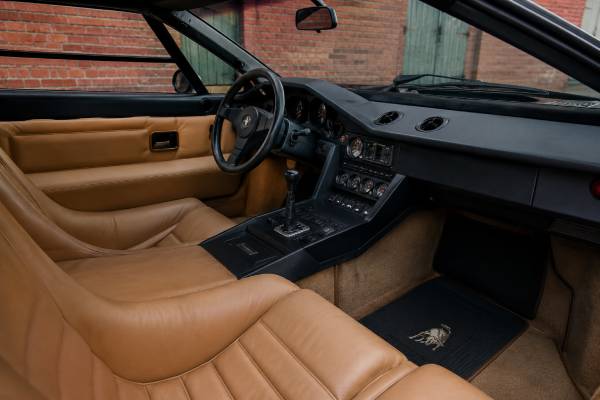
Inside, the LP 400 is more intimate than its exterior suggests. The driving position is low and offset, the dashboard is busy by modern standards, and the view forward is dramatic. Rearward visibility is poor, which is why the Countach reversing posture became famous: door open, driver sitting partly on the sill, looking backward over the roof and rear body.
The cabin also reflects the car’s hand-built nature. Leather trim, switchgear, gauges, carpets, vents, and hardware should be assessed for period correctness. Many cars have been retrimmed, modernized, or repaired over the decades. A fresh interior is not automatically better than an older one if it uses wrong grain, wrong stitching, incorrect carpets, non-original instruments, or modern materials that change the feel.
The sound is part of the engineering. The LP 400 does not have the deeper, heavier sound of later larger-displacement Countachs. It has a sharper, cleaner V12 voice, with carburetor intake noise and a hard mechanical edge as revs rise. Much of the emotional appeal comes from that combination: a futuristic shape powered by a highly mechanical, old-school, naturally aspirated engine.
How the Early Countach Drives
A sorted LP 400 feels lighter, cleaner, and more delicate than later Countach versions, but it is still a demanding 1970s exotic. It rewards patience, warm-up, mechanical sympathy, and confident inputs more than casual driving.
The engine is the main event. When properly tuned, the L406 V12 starts cleanly, settles into a busy idle, and pulls with increasing urgency as the revs rise. It is not a modern torque-rich engine that does everything from low rpm. The Countach comes alive when the carburetors, ignition, oil temperature, and driver are all working together.
Cold behavior depends heavily on tune. A well-maintained car should not be impossible, but it may need a careful start procedure, gentle throttle, and time before it feels crisp. Rough idle, spitting through carburetors, fuel smell, hesitation, or uneven running may point to carburetor imbalance, ignition weakness, old fuel lines, poor tuning, or deeper engine issues.
The gearbox is part of the ritual. The five-speed manual requires deliberate shifts, especially when cold. The clutch can be heavy in traffic, and the shift quality depends on adjustment, oil temperature, linkage condition, and internal wear. A healthy gearbox should feel mechanical and precise once warm, not vague, crunchy, or reluctant.
Steering is heavy at parking speeds because there is no assistance. Once moving, the steering becomes clearer and more communicative. The narrow early tires help. Compared with later Countachs on wider rubber, the LP 400 can feel more progressive and less physically stubborn, though it still demands respect because of its width, value, visibility limits, and mid-engine balance.
Ride quality is firm but not simply crude. Much depends on tire choice, suspension condition, bushings, dampers, alignment, and ride height. A tired car can feel nervous, harsh, or loose. A properly set-up LP 400 should feel tied together, with good steering response and a sense of low mass by Countach standards.
The brakes are ventilated discs, but buyers should judge them in period context. They do not feel like modern carbon-ceramics or large assisted brakes. Pedal feel should be firm and consistent, not long, spongy, or pulling to one side. Old hoses, caliper issues, contaminated fluid, worn discs, and poor pad choice can transform an expensive car into a nervous one.
Usability is limited but not irrelevant. Heat, noise, steering effort, clutch weight, poor rear visibility, low ground clearance, and awkward access are part of the experience. Highway driving can be thrilling once the car is warm and settled. City driving can be tiring. Mountain-road driving can be superb if the car is healthy and the driver respects the gearbox, brakes, and cooling system.
The most important driving point for buyers is this: a bad LP 400 can still look spectacular. Never judge one only by cosmetics. A correct road test by a marque specialist can reveal overheating, weak synchros, poor carburetion, worn suspension, brake imbalance, driveline vibration, clutch problems, and chassis issues that are invisible in auction photos.
Maintenance, Weak Spots, and Restoration Risk
The LP 400 is not unreliable in the simple used-car sense; it is an old, hand-built, carbureted V12 exotic that punishes neglect. Preventive maintenance, correct setup, and specialist knowledge matter more than mileage alone.
The engine is robust when cared for, but expensive when it has been ignored. The most important areas are oil pressure, cooling, valve adjustment, carburetor condition, ignition health, timing-chain condition, fuel delivery, and leaks. A car that has sat unused may need major recommissioning even if the odometer reading looks attractive.
Common ownership concerns include:
- fuel hoses, pumps, filters, and carburetor seals aged by time and modern fuels
- cooling-system weakness from old radiators, fans, hoses, thermostats, or blocked passages
- ignition problems from worn distributors, leads, coils, plugs, or poor setup
- oil leaks from gaskets, seals, cam covers, and old hardware
- carburetor imbalance causing poor idle, hesitation, flat spots, or fuel smell
- clutch wear from traffic use, poor adjustment, or hard launches
- gearbox synchro wear, especially if shifted aggressively before warm
- tired suspension bushings, dampers, ball joints, and wheel bearings
- brake-system deterioration from age, moisture, old hoses, and inactive use
- electrical faults from old wiring, relays, grounds, switches, and added accessories
Cooling deserves special attention. Mid-engined V12 Lamborghinis produce a lot of heat, and the Countach’s shape creates packaging challenges. A car that runs hot in traffic may need more than a simple fan repair. Radiator condition, coolant flow, hose routing, thermostat function, water pump health, carburetor mixture, ignition timing, and airflow all matter.
Corrosion and chassis damage are serious risks. The tubular frame must be inspected carefully, especially around suspension pick-up points, lower tubes, engine and gearbox mounting areas, body mounting points, and any area that may have trapped moisture. Poor repairs can be hidden under paint, underseal, interior trim, or fresh restoration work.
Body restoration is difficult because the aluminum panels are hand formed and the fit depends on skilled metalwork. Replacing or repairing panels is not like ordering ordinary replacement parts. A car with accident history can be restored well, but the work must be documented and inspected. Evidence of filler-heavy repairs, uneven shut lines, distorted door openings, cracking paint, or poor headlamp fit should slow the purchase process.
Interior restoration is also more complex than it looks. Correct materials, instruments, switches, vents, seats, carpets, and small trim parts can be difficult to source. A visually clean interior may still be wrong in detail. For a seven-figure collector car, those details matter.
Originality versus upgrades is a real tradeoff. Some owners improve cooling, ignition reliability, fuel safety, or drivability. Sensible reversible upgrades can make the car safer and more usable, but permanent changes can hurt value. The best approach is to preserve original parts, document every change, and avoid modifications that alter the car’s identity.
A pre-purchase inspection should be done by a specialist who knows early Countachs, not just Italian cars in general. The inspection should include chassis measurement where needed, compression and leak-down testing, cooling checks, carburetor and ignition assessment, gearbox evaluation, brake inspection, suspension inspection, documentation review, and confirmation of numbers and specification.
Market Values and Buying Priorities
The LP 400 sits near the top of the classic Countach market because it is rare, early, visually pure, and historically important. Recent public sales show strong but selective demand, with condition, originality, provenance, and restoration quality driving large price differences.
As of the mid-2020s, public auction results for LP 400 Periscopio cars commonly sit around the high-six-figure to low-seven-figure range in U.S. dollar or euro terms, depending on the car and venue. Some examples have sold above $1 million in earlier peak moments, while more recent public sales have also appeared below that level. Private sales can differ, especially for exceptional cars with original colors, matching numbers, known ownership, concours history, or factory certification.
Do not treat an online average as the value of a specific car. LP 400s are too rare for simple pricing. One car may be a restored, matching-numbers, factory-color example with strong documentation. Another may have a replacement engine, older restoration, uncertain history, accident repairs, non-original trim, or long storage needs. They are not comparable just because both are LP 400s.
| Value factor | Why it matters |
|---|---|
| Matching numbers | Original engine and chassis identity are central to collector confidence. |
| Factory documentation | Build records, ownership history, and certification reduce uncertainty. |
| Original color and trim | Correct period colors and interiors improve authenticity and desirability. |
| Restoration quality | Poor metalwork, incorrect trim, or weak mechanical work can be costly to fix. |
| Chassis condition | Spaceframe damage or corrosion can turn a beautiful car into a major risk. |
| Mechanical health | V12, gearbox, cooling, brakes, and suspension work can be very expensive. |
| Provenance | Long-term ownership, famous owners, concours history, and known specialists add confidence. |
| Correct early details | LP 400-specific body, cabin, wheel, and trim details separate top cars from compromised ones. |
The best LP 400 to buy is not always the cheapest or the freshest-looking. A slightly older restoration with excellent records, correct parts, and known specialist care may be safer than a newly painted car with limited history. Likewise, a highly original car with patina can be more desirable than an over-restored car if the originality is genuine and the mechanical condition is strong.
A serious buying process should follow this order:
- Confirm the car’s identity, chassis number, engine number, and claimed specification.
- Review factory records, ownership history, restoration invoices, and old photographs.
- Inspect the chassis and body before being impressed by paint quality.
- Test the engine, cooling system, gearbox, clutch, brakes, and suspension with a specialist.
- Compare the car against recent sales only after adjusting for condition, originality, and documentation.
- Budget for recommissioning even if the car presents well.
Cars to seek include matching-numbers examples with known history, correct early features, strong mechanical condition, documented restoration by respected specialists, and original or factory-correct colors. Cars to approach carefully include long-stored examples, cars restored without detailed invoices, cars with unclear import or title history, cars modified to later Countach style, and cars with fresh paint over unknown metalwork.
Long-term collectability looks strong because the LP 400 has all the ingredients collectors usually reward: low production, landmark design, first-series status, analog V12 engineering, manual gearbox, visual purity, and a direct place in Lamborghini history. The risk is not desirability; the risk is buying the wrong car at the right-car price.
References
- 50 Years Ago the First Countach in Sant’Agata Bolognese 2024 (Manufacturer History)
- Milestones | Lamborghini.com 2026 (Manufacturer Timeline)
- Lamborghini Countach LP500 Turns 50: the story of a legend 2021 (Manufacturer History)
- 1976 Lamborghini Countach LP400 ‘Periscopio’ by Bertone | Monterey 2015 | RM Sotheby’s 2015 (Auction Catalog)
- 1975 Lamborghini Countach LP400 ‘Periscopio’ by Bertone | Paris 2025 | RM Sotheby’s 2025 (Auction Result)
Disclaimer
This article is for informational purposes only and is not a substitute for professional diagnosis, inspection, repair, valuation, or restoration advice. Specifications, torque values, service intervals, procedures, and correct parts can vary by VIN, market, production date, and equipment. Owners and buyers should verify all details against official Lamborghini service documentation, factory records, and a qualified marque specialist before making maintenance, restoration, or purchase decisions.
If you found this guide useful, please consider sharing it on Facebook, X/Twitter, or with other Lamborghini enthusiasts to support our work.