
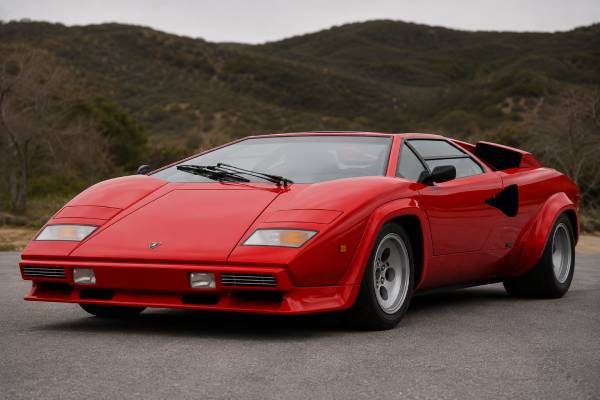
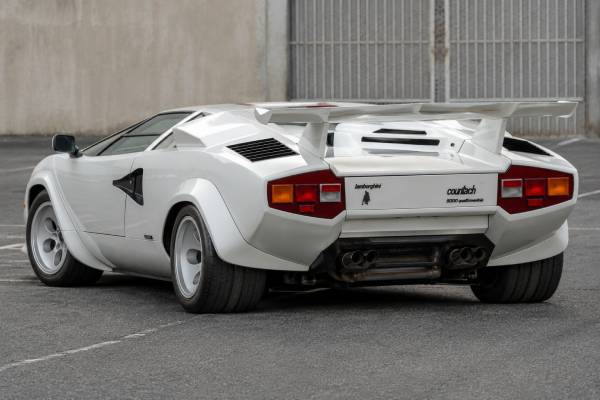
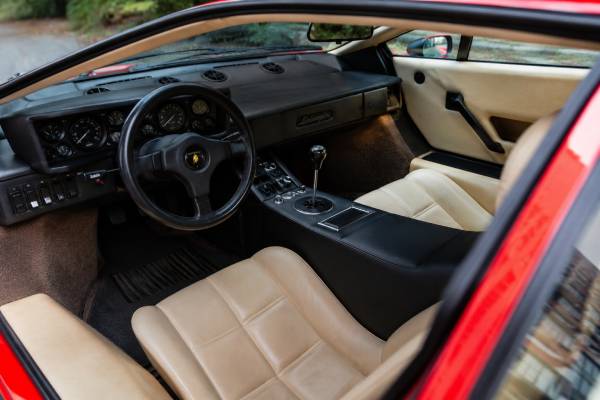
The Lamborghini Countach LP 400 S is the version that turned the original clean Countach into the wide-arched poster car most people remember. Built from 1978 to 1982 on the LP112 platform, it kept the L406 3.9-liter V12 and five-speed manual layout of the early Countach, but added wider Pirelli P7 tires, flared arches, revised suspension, new wheels, and the optional rear wing that became a defining visual cue. It sits between the purer LP 400 “Periscopio” and the later larger-engine LP 500 S, Quattrovalvole, and 25th Anniversary cars. For collectors, the LP 400 S matters because it is rare, hand-built, highly specification-sensitive, and split into important early and later series. For enthusiasts, it matters because it shows Lamborghini learning how to make the Countach more dramatic, more usable at speed, and far more visually aggressive without losing the original 3.9-liter V12 character.
Table of Contents
- Why the LP 400 S Matters
- L406 V12, Chassis, and Core Specs
- Series Changes, Options, and Identification
- Wedge Design, Cooling, and Countach Details
- Road Feel, Sound, and Real Performance
- Maintenance, Restoration, and Common Risks
- Values, Inspection Priorities, and Buying Advice
Why the LP 400 S Matters
The LP 400 S matters because it is the first Countach to wear the wide-body look that defined Lamborghini supercars for a generation. It kept the early car’s compact 3.9-liter V12 layout, but changed the visual and dynamic attitude of the Countach in a major way.
The Countach began as the LP500 concept shown in 1971, then reached production as the LP 400 in 1974. Marcello Gandini’s Bertone design was already extreme: low, sharp, cab-forward, and almost architectural. The production LP 400 was cleaner than later Countach models, with narrow tires, no arch extensions, and the roof-channel “periscope” rear-view idea that gave early cars their nickname.
By the late 1970s, Lamborghini needed to keep the Countach exciting and competitive. The LP 400 S arrived in 1978 as the first major production evolution. Its roots came from the special Countach builds associated with Canadian enthusiast Walter Wolf, whose cars used wider wheels, flares, more assertive stance, and winged styling cues. The factory LP 400 S translated that idea into a series-production model.
The result was not just a styling package. The LP 400 S changed the Countach’s stance, tire contact patch, suspension setup, wheel design, and high-speed personality. It also shifted the Countach’s image from futuristic wedge to full exotic theater. The scissor doors, low body, huge rear tires, deep side intakes, and optional rear wing became part of the Countach identity that later LP 500 S, 5000 QV, and 25th Anniversary cars developed further.
Lamborghini’s own production history lists the LP 400 S as a low-volume model, with 235 examples from 1978 to 1982. Some specialist registers and auction catalogues count slightly different totals because of prototype, series, and chassis-number interpretation, so buyers should treat the exact number as something to verify by chassis and factory records. Either way, it is a genuinely rare Countach.
Its historical importance comes from three things:
- It is the bridge between the pure LP 400 and the later poster-era Countach.
- It introduced the wide-tire, flared-arch shape that became the model’s public image.
- It remains one of the most collectible Countach versions, especially in early “lowbody” form.
The LP 400 S is not the fastest Countach on paper. Later cars gained displacement, more torque, and more power. But the LP 400 S has a special place because it combines the early 3.9-liter V12, carburetors, small-cabin drama, and raw mechanical feel with the outrageous visual presence most buyers expect from a Countach.
L406 V12, Chassis, and Core Specs
The LP 400 S uses Lamborghini’s L406 3.9-liter naturally aspirated V12, mounted longitudinally behind the cabin and paired with a five-speed manual gearbox. Its specification is simple by modern supercar standards, but the packaging and driveline layout were advanced and unusual for a road car of its era.
The engine is a 60-degree all-alloy V12 with double overhead camshafts and two valves per cylinder. In LP 400 S form, output is commonly listed around 353 hp at high rpm, with period and market sources sometimes quoting nearby metric horsepower figures. The important point for buyers is not just the number. It is the engine’s condition, originality, carburetor setup, compression health, cooling behavior, and whether the engine number matches the car’s documented identity.
| Item | Specification |
|---|---|
| Model | Lamborghini Countach LP 400 S |
| Internal project code | LP112 |
| Production period | 1978–1982 |
| Engine code | L406 |
| Engine type | 60-degree naturally aspirated V12 |
| Displacement | 3,929 cc |
| Valvetrain | DOHC, 2 valves per cylinder |
| Fuel system | Six twin-choke Weber carburetors on most European-spec cars |
| Maximum output | About 353 hp, depending on market and period rating method |
| Transmission | 5-speed manual |
| Drivetrain | Rear-wheel drive |
| Chassis | Tubular steel spaceframe |
| Body | Hand-formed aluminum panels with fiberglass arch extensions and aerodynamic pieces |
| Front tires | 205/50 VR15 Pirelli P7 |
| Rear tires | 345/35 VR15 Pirelli P7 |
| Wheelbase | 2,450 mm |
| Typical top speed | Roughly 170–180 mph, depending on wing, tune, tires, and test conditions |
The Countach driveline layout is one of its most important engineering features. Instead of placing the gearbox behind the engine, Lamborghini placed the transmission forward of the engine, near the cabin. Power then travels rearward through the engine sump to the differential. This kept more mass closer to the center of the car and helped Lamborghini avoid some packaging and balance issues associated with the Miura’s transverse layout.
The LP 400 S chassis is a tubular steel spaceframe with hand-finished bodywork. This construction makes the car light and stiff for its period, but it also means accident repair and corrosion assessment require real Countach experience. A poor repair can look presentable from outside while hiding alignment, door-fit, suspension-pickup, or tube-frame problems.
Suspension is independent at all four corners, with unequal-length wishbones, coil springs, telescopic dampers, and anti-roll control. The LP 400 S suspension geometry was revised to work with its much wider rear tires. Steering is unassisted rack-and-pinion, so low-speed effort is high. Brakes are four-wheel discs without modern electronic safety aids.
The 345-section rear tires are central to the car’s personality. They improved grip and created the LP 400 S stance, but they also changed steering feel, tramlining, ride behavior, and replacement cost. On a modern inspection, tire age matters as much as tread depth. A Countach on old tires can feel nervous, harsh, and unsafe even if the suspension is correct.
Series Changes, Options, and Identification
The LP 400 S is not one uniform model; early and later cars differ in stance, wheels, interior details, and collector appeal. The most valuable examples are usually the early “lowbody” cars, especially when they retain original colors, trim, drivetrain, wheels, and factory documentation.
Specialists usually divide the LP 400 S into three broad series. The exact language varies by register, but the practical distinctions are clear enough for buyers.
| Series | Typical traits | Collector relevance |
|---|---|---|
| Series I | Lowest stance, early “Bravo” style magnesium wheels, early cabin details, small-production run | Usually the most sought-after LP 400 S group |
| Series II | Still lowbody, different smooth concave wheels, detail updates | Highly desirable, especially with strong originality |
| Series III | Higher ride height, improved cabin space, later details | Still rare, often valued below the best lowbody cars |
The first cars are especially important because they carry the rawest version of the LP 400 S idea. They sit low, look more dramatic, and often feel closer to the special Wolf-influenced Countach concept. Series I cars are commonly associated with Campagnolo “Bravo” wheels and early dashboard or steering-wheel details. Series II cars kept much of the lowbody appeal but adopted smoother wheel designs and incremental changes. Series III cars are easier to live with for some drivers because of slightly improved cabin accommodation, but they lose some of the extreme low stance that collectors prize.
The optional rear wing is one of the most debated Countach features. It gives the car the full poster look and many buyers want it. It can also reduce top speed and adds questions about originality because not every winged car left the factory that way. A buyer should not assume that a wing is factory-installed just because it has been on the car for decades.
Useful authenticity checks include:
- chassis number and engine number against factory or specialist records
- body-number evidence where available
- original color and trim combination
- early or later wheel type
- dashboard gauge style and steering wheel type
- wing installation history
- evidence of federalization or market conversion
- period photos, invoices, books, and ownership records
- Polo Storico documentation or other respected specialist certification
Factory colors and interiors matter. Red over tan is iconic, but unusual period colors such as blue, black, white, silver, gold, or distinctive interiors can be highly desirable when original. Repainted cars are not automatically bad, but a color change affects value unless it is old, well documented, reversible in spirit, and beautifully executed.
A matching-numbers LP 400 S with original body panels, known colors, good books, strong ownership chain, and sympathetic maintenance will almost always be more valuable than a shiny car with missing identity details. On this model, paperwork is not decoration. It is part of the car’s value.
Wedge Design, Cooling, and Countach Details
The LP 400 S looks extreme because every major visual change supports a real packaging, grip, or cooling need. The flares, tires, intakes, low nose, and short cabin are not just decoration; they are part of how Lamborghini adapted the original Countach shape for more grip and stronger road presence.
Marcello Gandini’s Countach shape is a pure wedge: flat nose, steep screen, sharp creases, short tail, and almost no conventional softness. The LP 400 S kept that basic architecture, then added fiberglass wheel-arch extensions to cover the much wider Pirelli P7 tires. The front spoiler helped balance the visual mass and manage airflow at the nose.
The famous scissor doors are more than a party trick. The Countach is very wide and very low, with thick sills and poor rearward visibility. The upward-opening doors make entry easier in tight spaces and became a signature Lamborghini feature. They also add complexity. Door struts, hinges, latch alignment, and weather sealing need careful inspection.
Cooling is central to Countach design. The side NACA ducts, rear shoulder intakes, radiator layout, engine-bay vents, and rear body openings all help manage heat from the longitudinal V12. In good condition, the car can be driven properly, but a tired cooling system quickly becomes a problem. Blocked radiators, old hoses, weak fans, poor carburetor tuning, and incorrect ignition timing can turn normal traffic into a stressful experience.
The cabin is intimate, hot, noisy, and highly physical. The driving position is offset, the pedal box is narrow, and tall drivers may struggle. Visibility forward is better than the shape suggests, but rear visibility is poor. Reversing often requires the classic Countach technique: open the door, sit on the sill, and look backward over the roofline.
The LP 400 S also has a sensory character later cars do not fully duplicate. The smaller-displacement V12 likes revs. The carburetors add intake noise and throttle texture. The gearbox, steering, clutch, and brakes all require deliberate input. Nothing feels isolated. Every control reminds the driver that this is a hand-built 1970s exotic, not a modern supercar with filters.
Important design and engineering details to inspect include:
- door gaps and hinge behavior
- fit of aluminum panels around the nose, roof, and rear deck
- condition of fiberglass flares and spoilers
- evidence of old accident damage around suspension points
- cooling duct integrity and radiator condition
- engine-cover alignment and latch operation
- originality of wheels, mirrors, lights, badges, and wing
- condition of the dashboard, leather, switchgear, and instruments
Hand-built variation is normal, but poor fit is not always harmless. A Countach with uneven doors, strange ride height, mismatched wheels, or crude arch repairs may be hiding a long and expensive story.
Road Feel, Sound, and Real Performance
The LP 400 S feels fast, loud, low, and demanding rather than effortless. Its performance numbers still matter, but the true experience comes from the high-revving carbureted V12, heavy controls, wide tires, and the sense that the car needs an alert driver every moment.
A healthy LP 400 S pulls cleanly once warm, with the V12 becoming sharper and more urgent as revs rise. Low-speed driving needs patience. Carburetors may feel uneven when cold, and the clutch, gearbox, and throttle respond best to measured inputs. Once oil temperature is correct and the engine is cleanly on song, the car feels much more alive.
The gearbox is a major part of the experience. The five-speed manual rewards deliberate shifts and mechanical sympathy. Rushed cold shifts can damage expensive parts, so good owners let the fluids warm and avoid forcing the lever. A properly set up gearbox should not feel vague, obstructive, or noisy once warm, though it will never feel like a modern cable-shift unit.
Steering is heavy at parking speeds because there is no power assistance and the front tires are wide for the period. At speed, it becomes more communicative. The Countach does not flatter lazy inputs. It prefers clean braking, smooth steering, and early planning. The rear tires give huge mechanical grip, but old tires, tired dampers, wrong alignment, or uneven corner weights can make the car feel intimidating.
Performance varies by car and by test conditions. A well-sorted LP 400 S is often associated with 0–60 mph in roughly the high-five-second range and a top speed near the high-170-mph area without the drag of a wing. Winged cars may give up some ultimate speed for the look and added high-speed stability. Modern owners should treat period top-speed claims as historical context, not as a target.
The brakes are capable for the era but need realistic expectations. They do not have modern ABS, carbon ceramics, or electronic assistance. Pedal feel should be firm and predictable. Pulling, vibration, long travel, or weak response points to age, contamination, caliper issues, hose deterioration, or incorrect setup.
The LP 400 S is also physically tiring. Cabin heat, noise, offset controls, limited rear visibility, heavy clutch action, and low ground clearance all shape the ownership experience. On an open road, these traits become part of the magic. In city traffic, they become work. Buyers should drive a sorted example before assuming they want the most extreme early Countach specification.
A good LP 400 S should feel:
- eager once warm
- stable at speed
- mechanical but not crude
- heavy at low speed but accurate on the move
- loud and hot, but not chaotic
- demanding, yet confidence-building when maintained correctly
A bad one often feels like a parody: overheating, misfiring, wandering, scraping, smelling of fuel, and fighting every gearshift. The difference is usually maintenance quality, not just age.
Maintenance, Restoration, and Common Risks
The LP 400 S is reliable only when treated like a hand-built carbureted V12 exotic with specialist needs. Deferred maintenance is the biggest danger, because one ignored system often leads to engine, cooling, fuel, clutch, brake, or electrical problems that cost far more than routine care.
The L406 V12 is fundamentally strong, but it is not cheap to rebuild. Compression and leak-down results matter. So do oil pressure, coolant temperature, timing-chain condition, valve adjustment history, carburetor balance, ignition health, and evidence of overheating. A car that has spent years sitting can need major work before it is safe, even if it starts and idles.
The fuel system deserves special attention. Old fuel lines, tired pumps, dirty tanks, sticking carburetor floats, and poor clamps create drivability problems and fire risk. Because the engine sits behind the cabin and above hot exhaust components, fuel smell should never be dismissed as normal old-car behavior.
Cooling-system condition is another major ownership issue. Radiators, fans, thermostat, hoses, header tank, water pump, and coolant passages all need to be correct. A Countach that overheats in traffic may need more than a simple flush. Poor tuning can also add heat, so the cooling and ignition systems should be diagnosed together.
Common inspection areas include:
- engine oil leaks around cam covers, sump, and seals
- timing-chain noise or poor service history
- carburetor wear, imbalance, or fuel seepage
- weak cooling fans or blocked radiators
- clutch wear and hydraulic issues
- gearbox synchro wear, especially if abused cold
- brake caliper sticking, old hoses, and contaminated fluid
- suspension bushing, damper, and ball-joint wear
- magnesium wheel condition and age-related cracking risk
- electrical faults from old wiring, relays, grounds, and switches
- corrosion in hidden chassis and body areas
- old accident repairs around the front structure, sills, and suspension mounts
Restoration is difficult because body fit, chassis alignment, original materials, correct wheels, trim, gauges, and period details all affect value. A beautiful repaint over poor metalwork is a major risk. So is an interior retrim using incorrect grain, stitching, pattern, or color. Countach buyers often pay more for a slightly aged but original cabin than for a fresh interior that looks wrong.
Parts availability is better than it once was because of specialist suppliers, donor knowledge, reproduction parts, and Lamborghini Polo Storico support. Even so, many parts are expensive, slow to source, or require expert fitting. Original magnesium wheels, correct early details, body trim, glass, lights, and interior pieces can be especially important.
Owners must also balance originality against usability. Upgraded fans, modern fuel lines, improved insulation, better relays, or carefully chosen cooling improvements can make sense if they are discreet and reversible. Major non-original changes, engine swaps, crude stereo installations, aftermarket body pieces, or incorrect wheels usually hurt value.
For a serious purchase, the inspection should be done by someone who knows early Countach cars specifically. A general exotic-car shop may miss model-specific details. A proper pre-purchase inspection should include a lift inspection, compression and leak-down test, road test from cold to fully warm, documentation review, chassis-number check, engine-number check, paint-depth mapping, and verification of factory configuration.
Values, Inspection Priorities, and Buying Advice
The LP 400 S sits near the top of the Countach market, below the best LP 400 Periscopio cars but often above later high-production variants when the example is an early lowbody car with strong provenance. In mid-2026, public market data and recent auction results suggest good LP 400 S examples often trade in the high-six-figure range, with exceptional early cars, rare colors, and highly original examples capable of moving higher.
Values depend heavily on the exact car. A Series I lowbody with original colors, original drivetrain, rare specification, known history, and factory certification is a different market proposition from a later car with color changes, missing books, tired mechanicals, and uncertain wing history. Mileage matters, but condition and documentation matter more. A low-mileage Countach that has sat for years can be more expensive to make right than a higher-mileage car maintained by the right specialists.
The strongest value drivers are:
- confirmed LP 400 S identity and correct chassis range
- matching engine and gearbox where documented
- early lowbody configuration
- original colors and trim
- factory or period-correct rear wing status
- original wheels and hard-to-find trim
- complete ownership chain
- major invoices from respected Lamborghini specialists
- Polo Storico certification or strong equivalent documentation
- careful restoration that respects original materials and details
Cars to approach carefully include those with missing records, unclear federalization work, major color changes, incorrect wheels, modified bodywork, non-original interiors, overheating history, unknown engine rebuilds, poor gearbox behavior, or signs of accident repair. The cost to correct a compromised Countach can exceed the price gap between an average car and a great one.
A practical buyer checklist should include:
| Area | What to verify | Why it matters |
|---|---|---|
| Identity | Chassis, engine, gearbox, body details, and documentation | Defines authenticity and market value |
| Series | Lowbody details, wheel type, dashboard features, ride height | Series affects desirability and price |
| Body and chassis | Panel fit, tube-frame condition, accident evidence, corrosion | Structural repair is expensive and specialist-only |
| Engine | Compression, leak-down, oil pressure, cooling, carburetor setup | V12 rebuilds are major cost events |
| Transmission | Cold and warm shift quality, clutch operation, synchro behavior | Gearbox work can be costly and invasive |
| Originality | Paint color, trim, wheels, wing, instruments, lights, badges | Small details influence collector value |
| Use readiness | Tires, brakes, fuel lines, cooling fans, hoses, electrical systems | A static show car may need extensive recommissioning |
The best LP 400 S to buy is not always the shiniest one. It is the one with the clearest story, strongest identity, best specialist care, and fewest hidden compromises. A preserved car with honest age can be a better long-term asset than an over-restored example with missing factory details.
For investors, the LP 400 S has durable appeal because it is rare, visually iconic, mechanically engaging, and positioned at a key turning point in Lamborghini history. For drivers, it offers a rawer experience than later Countach models while still having the wide-body presence people expect. For collectors, early lowbody cars remain the main prize, but a well-documented Series II or Series III car can be a smarter buy if priced correctly and maintained to a high standard.
The main rule is simple: buy the best-documented, best-inspected example you can afford, not the cheapest running car. A Countach LP 400 S is expensive to buy, but it is even more expensive to rescue after years of poor storage, incorrect repairs, or missing history.
References
- 50 Years Ago the First Countach in Sant’Agata Bolognese 2024 (Manufacturer History)
- “The Cannonball Run” Countach LP 400 S turns 45 2024 (Manufacturer History)
- Lamborghini Polo Storico | Lamborghini.com 2026 (Factory Heritage and Certification)
- Polo Storico: Authenticity Certification 2025 (Factory Certification)
- Lamborghini Countach LP400 S Market 2026 (Market Database)
Disclaimer
This article is for informational purposes only and is not a substitute for professional diagnosis, repair, valuation, or pre-purchase inspection. Specifications, torque values, service intervals, restoration procedures, and factory details can vary by VIN, market, production date, and equipment. Always verify details against official service documentation, factory records, and a qualified Lamborghini specialist before buying, repairing, restoring, or driving a Countach LP 400 S.
If this guide helped you, please consider sharing it on Facebook, X/Twitter, or your preferred car community to support our work.