
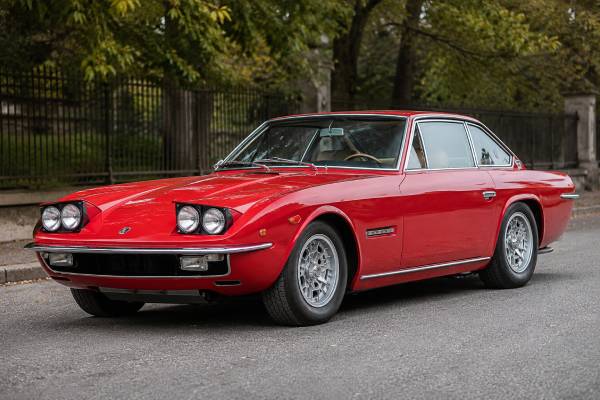
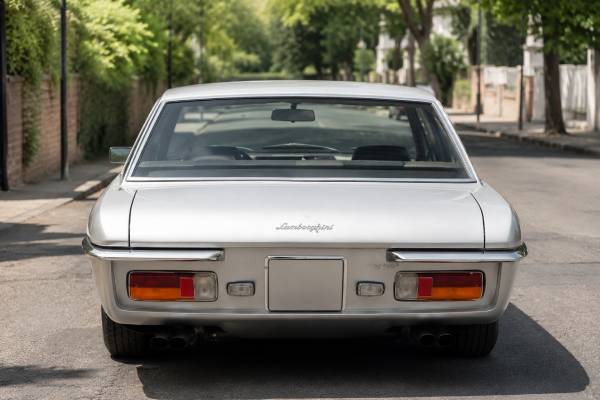
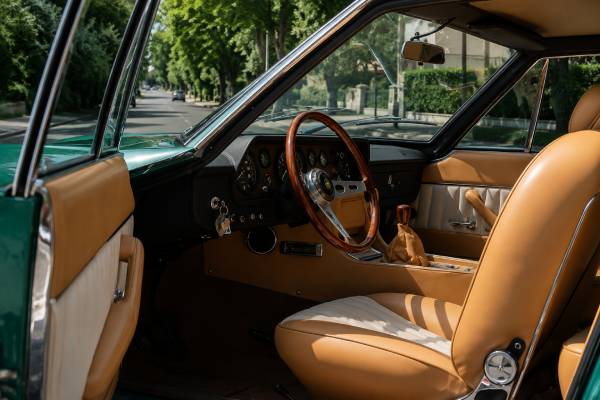
The Lamborghini Islero 400 GTS is one of the quietest great V12 Lamborghinis: rare, fast, hand-built, and far less obvious than a Miura or Countach. Built as the improved late version of the Islero grand tourer, it used Lamborghini’s 3.9-liter quad-cam V12, six Weber carburetors, a five-speed manual gearbox, and a front-engine 2+2 layout aimed at fast road use rather than theatre alone. The GTS, also widely called the Islero S, matters because it sits at a turning point in Lamborghini history. It carried forward the refined 400 GT idea while the company was also building the radical Miura and the spacious Espada. Today, the Islero 400 GTS appeals to buyers who value rarity, mechanical purity, understated design, and the special feel of an early Lamborghini V12 without the public drama of the brand’s poster cars.
Table of Contents
- Why the Islero 400 GTS Still Matters
- V12 Specs, Chassis, and Performance Data
- Production Numbers, S Details, and Originality
- Marazzi Design, GT Engineering, and Character
- How the Islero 400 GTS Drives
- Maintenance, Restoration, and Ownership Risk
- Market Values and Smart Buying Checks
Why the Islero 400 GTS Still Matters
The Islero 400 GTS matters because it represents Lamborghini before the brand became defined mainly by visual shock. It is a fast, expensive, hand-built V12 grand tourer made for long-distance speed, comfort, and mechanical sophistication.
Lamborghini introduced the Islero in 1968 as the successor to the 400 GT. It arrived at the Geneva Motor Show in the same period as the Espada, which created an interesting split in Lamborghini’s range. The Espada was bold, low, wide, and futuristic. The Islero was more restrained: a compact, formal 2+2 coupe with a long hood, clean sides, pop-up headlights, and a practical trunk. That made it closer in spirit to Ferruccio Lamborghini’s original vision of a refined high-performance road car than to the later bedroom-wall supercar image.
The 400 GTS was the improved late version. It added more power, visual identifiers, and mechanical refinements that made the car more desirable than the early Islero 400 GT. Its 3.9-liter V12 was still mounted at the front, driving the rear wheels through a five-speed manual gearbox. The formula was traditional, but the execution was exotic: quad overhead camshafts, six twin-choke carburetors, independent suspension, four-wheel disc brakes, leather trim, and hand-finished coachwork.
The car also sits in a difficult but fascinating production moment. Carrozzeria Touring, which had shaped earlier Lamborghinis, was no longer available. Lamborghini turned to Carrozzeria Marazzi, a coachbuilder connected to former Touring personnel, while Bertone was involved in body-panel production according to Lamborghini’s own historical account. The result was elegant and purposeful, though not always finished with the consistency of the earlier Touring-bodied cars.
For collectors, that mixed history is part of the attraction. The Islero 400 GTS is not the obvious choice. It is rarer than many better-known classic Lamborghinis, more discreet than a Miura, and more intimate than an Espada. It rewards people who understand early Lamborghini engineering rather than people who only want an icon everyone recognizes.
Its reputation today rests on five strengths:
- Rarity: total Islero production was very small, and GTS/S production was smaller still.
- Mechanical pedigree: it uses the classic Lamborghini V12 lineage that began with the 350 GT and evolved through the 400 GT, Miura, Espada, Jarama, and later cars.
- Usability: it is a real grand tourer with luggage space, a more comfortable cabin than its size suggests, and strong high-speed manners when properly sorted.
- Understatement: its design is sharp but not flamboyant, which appeals to collectors tired of obvious poster-car choices.
- Authenticity value: originality, matching components, correct trim, and documentation matter heavily because so few cars exist.
The Islero 400 GTS is not a concours queen by default. Many examples have lived complicated lives, and some were restored when values were lower and standards were less exacting. A great one is a deeply appealing early V12 Lamborghini. A poor one can become a long, expensive project with difficult parts sourcing and specialist labor needs.
V12 Specs, Chassis, and Performance Data
The Islero 400 GTS used Lamborghini’s 3,929 cc naturally aspirated V12 tuned to about 350 horsepower. The headline numbers are impressive, but the more important point is the engine’s character: high-revving, carbureted, mechanically complex, and built for sustained speed.
| Category | Specification |
|---|---|
| Production years | 1969–1970, depending on registration and source convention |
| Body style | Two-door 2+2 grand touring coupe |
| Layout | Front engine, rear-wheel drive |
| Engine | 60-degree Lamborghini V12, aluminum block and heads |
| Displacement | 3,929 cc |
| Bore x stroke | 82 mm x 62 mm |
| Valvetrain | Dual overhead camshafts per bank, two valves per cylinder |
| Fuel system | Six twin-choke Weber side-draft carburetors |
| Output | About 350 hp at 7,500 rpm |
| Torque | About 289 lb-ft at 5,500 rpm |
| Transmission | Five-speed all-synchromesh manual |
| Suspension | Independent suspension with coil springs and telescopic dampers |
| Brakes | Four-wheel disc brakes |
| Wheelbase | About 2,550 mm |
| Length | About 4,525 mm |
| Width | About 1,730 mm |
| Height | About 1,300 mm |
| Fuel capacity | About 80 liters |
| Top speed | Commonly quoted around 160–165 mph when new |
| 0–60 mph | Commonly quoted around 6.2 seconds |
The V12 is the center of the car. It is not a lazy engine with a huge low-speed shove. It likes revs, accurate carburetor setup, good ignition health, and proper warm-up. The short stroke helps the engine feel eager near the top of the tachometer, while the twelve-cylinder layout gives it smoothness that few period rivals can match.
The GTS tune is commonly associated with the later, more powerful version of the Islero engine. It used the same basic displacement as the earlier 400 GT and standard Islero, but with a higher state of tune. Period and modern references vary slightly in quoted horsepower and engine-speed figures because some use CV, some use bhp, and some repeat factory or road-test data without converting the numbers consistently. For practical buying purposes, the key fact is that the GTS/S is the stronger late Islero, rated around 350 hp.
The gearbox is a major part of the ownership experience. A good five-speed unit should feel mechanical, deliberate, and satisfying, not vague or crunchy. Cold oil can make early shifts slower. A rushed driver can damage synchros. Buyers should not dismiss a stiff shift immediately, but a gearbox that grinds when warm, jumps out of gear, or whines badly may point to expensive work.
The chassis is a tubular steel structure carrying hand-built bodywork. The Islero is not a lightweight sports racer; it is a road GT. Even so, independent suspension, disc brakes, and a compact body give it a more capable foundation than many luxury coupes of the era. The GTS upgrades are important because they improved braking and road manners compared with early cars.
| Feature | Why it matters |
|---|---|
| Six Weber carburetors | Wonderful sound and response when tuned, but sensitive to wear, balance, fuel quality, and heat. |
| Quad-cam V12 | High-end engineering with major rebuild cost if neglected or poorly assembled. |
| Five-speed manual | A core value feature; condition and correct operation strongly affect desirability. |
| Independent suspension | Gives proper GT handling, but old bushings, dampers, and geometry errors can ruin the car. |
| Hand-built body | Panel fit varies, but corrosion, accident repair, and poor restoration are bigger concerns than small original irregularities. |
Performance claims should be read with period context. A healthy Islero 400 GTS was very fast in 1969, especially as a refined 2+2. But modern tires, modern brakes, and modern engine management have changed expectations. The car’s appeal is not only the stopwatch. It is the way a carbureted V12 gathers speed with a rising intake note, the long-legged gearing, and the feeling that the whole machine was built for open-road momentum.
Production Numbers, S Details, and Originality
The Islero 400 GTS is rare, but production figures need careful wording because sources do not always count the late cars the same way. Many specialist references describe about 225 total Isleros, with roughly 100 in GTS/S form, while Lamborghini’s own historical page lists 155 Isleros and 70 Islero S cars.
That discrepancy matters to serious buyers. It does not mean the car is common or that one source should be ignored. It means the Islero’s build history, naming conventions, and chassis accounting require documentation at the individual-car level. “Islero S,” “Islero 400 GTS,” and “GTS” are often used for the same late upgraded model, but market listings, factory records, old registrations, and restoration files may use different wording.
The late GTS/S is generally identified by a group of mechanical and visual details rather than a single badge. Important identifiers include:
- additional air outlets on the front fenders
- a larger hood scoop
- slightly more assertive wheel-arch treatment
- revised dashboard and interior details
- upgraded braking compared with early cars
- revised rear suspension details
- higher-output V12 tune
- late-production trim and equipment differences
These features should be checked carefully because body repairs, restorations, and missing parts can blur the line between original specification and later modification. A car wearing GTS-style details is not automatically a genuine GTS. Likewise, a genuine car may have lost small trim pieces or factory details during decades of use.
Factory identity and documentation
For a collector-grade Islero 400 GTS, paperwork is not decoration. It is part of the car’s value. The best examples have a coherent chain of evidence: chassis number, engine number, ownership history, import documents, old registration papers, restoration invoices, period photographs, specialist correspondence, and, where available, factory or heritage documentation.
The most important questions are simple:
- Does the chassis identity match the paperwork?
- Does the engine number match factory or historical records?
- Does the body show signs of being the original shell?
- Are the GTS/S features consistent with the car’s build period?
- Are color and trim original, period-correct, or later choices?
- Are restoration invoices detailed enough to show who did the work and what was replaced?
Matching numbers are especially important on early Lamborghini V12 cars. A non-original engine does not make the car worthless, but it changes the buyer pool and should change the price. A replacement gearbox, incorrect carburetors, modernized interior, or missing original components can also affect value, especially if the seller prices the car as a top-tier example.
Colors, interiors, and special orders
The Islero looks best in colors that suit its sharp, formal shape: silver, dark metallics, deep red, dark green, bronze, blue, and restrained period tones. Bright modern repaint choices can make the car look less elegant and may raise questions about restoration taste. Interior materials matter just as much. Correct leather grain, seat pattern, dashboard layout, switchgear, carpets, steering wheel, and instruments all affect authenticity.
Factory air conditioning is valuable where fitted, but it also adds inspection points. Old A/C systems can be incomplete, converted, or cosmetically present but non-functional. Electric windows, instruments, lighting, and ventilation controls should all be tested during inspection. On a car this rare, “minor interior details” can become long searches for correct parts.
The best GTS is not always the shiniest car. A slightly used but original, well-documented example may be more desirable than a heavily restored car with incorrect details. For concours use, restoration quality and authenticity must align. For driving, mechanical health and cooling-system reliability may matter more than microscopic trim correctness. The strongest cars combine both.
Marazzi Design, GT Engineering, and Character
The Islero 400 GTS looks restrained because it was designed as a gentleman’s express, not a showpiece. Its straight lines, pop-up headlights, long hood, glassy cabin, and high rear bumper give it a serious, compact, late-1960s GT personality.
The body was associated with Carrozzeria Marazzi, a small coachbuilder created after Touring’s collapse. That matters because Lamborghini’s earlier 350 GT and 400 GT had a close connection to Touring’s Superleggera-era design culture. The Islero replaced that rounded Touring elegance with a sharper, more angular form that pointed toward the 1970s.
The styling is easy to underrate in photos. In person, the car is compact, low, and clean. The hood is long enough to announce the V12, but the cabin is not pushed as far back as on a pure two-seat sports car. The Islero had to work as a 2+2, so the roofline, rear glass, and trunk were shaped around real grand touring use.
The GTS details add welcome aggression without changing the car’s character. The fender vents and larger hood scoop make the late version easier to identify and visually more interesting. They also prevent the car from looking too plain next to a Miura or Espada. Still, the Islero remains understated. It is the Lamborghini for someone who knows what it is, not someone who needs everyone else to know.
Cabin layout and usability
The cockpit is one of the Islero’s strongest features when restored correctly. The driver faces a traditional instrument layout with clear analog gauges, a wood-rim steering wheel on many cars, and a purposeful center control area. The car feels more intimate than an Espada and more practical than a pure two-seater.
The rear seats are best thought of as occasional seats or luggage space. They can serve children or short trips, but the Islero’s real use case is two adults traveling quickly with bags. Visibility is good for an exotic car of the period because the glass area is generous and the shape is not extreme. That makes the car easier to place on narrow roads than some later Lamborghinis.
Sound insulation was part of the GT idea, but no well-sorted Islero feels isolated in the modern luxury-car sense. The V12 is always part of the cabin experience. At low speed, the driver hears carburetor breath, mechanical movement, fan noise, and driveline sounds. At speed, the engine smooths out and the car settles into the rhythm that defines a classic Italian GT.
Engineering choices that define the car
The Islero 400 GTS is technically interesting because it blends advanced engine design with traditional construction. The V12 was sophisticated, but the car was still hand-built and adjusted by craft rather than computer-controlled production. That creates charm and risk in equal measure.
Important engineering traits include:
- Front-mounted V12 packaging: easier service access than a mid-engine Miura, but still tight around ancillaries, exhaust, cooling, and carburetors.
- Six carburetors: beautiful response when synchronized, but poor behavior when floats, jets, linkages, or ignition settings are wrong.
- Independent suspension: capable when renewed and aligned, vague when bushings and dampers are old.
- Four-wheel disc brakes: strong for the period when rebuilt properly, but not modern in pedal feel or fade resistance.
- Hand-built body fit: original cars may not have modern panel uniformity, but rust and accident damage are not “character.”
The car’s special feature is not one dramatic gimmick. It is the combination: a rare coachbuilt body, a high-revving V12, a manual gearbox, 2+2 practicality, and early Lamborghini identity. That is why well-informed collectors often describe the Islero as underrated rather than unknown.
How the Islero 400 GTS Drives
A sorted Islero 400 GTS drives like a fast classic GT with real mechanical depth. It is not a modern supercar, and it should not be judged like one; its reward comes from warm-up, rhythm, sound, steering feel, and long-distance pace.
The start-up experience is pure carbureted V12 theatre. The engine needs mechanical sympathy when cold. Oil must warm, carburetors may need a little time to settle, and the gearbox usually improves after the lubricant reaches temperature. A properly tuned car should not cough, load up, or smell excessively rich once warm. If it does, the issue may be carburetor balance, ignition, fuel pressure, choke setup, or general engine health.
At low speed, the Islero can feel heavy compared with a small sports car. The clutch should be firm but not brutal. The gearshift asks for a deliberate hand, especially when cold. Steering effort depends on tires, alignment, and setup, but buyers should expect period weight rather than fingertip ease.
Once moving, the car makes more sense. The V12 pulls cleanly and becomes more exciting as revs rise. The sound is not the raw scream of a race car; it is smoother, richer, and more layered. The intake note from the Webers is a major part of the appeal. The engine’s best character lives in the middle and upper range, where the car feels expensive, mechanical, and alive.
Road manners and cornering feel
The Islero 400 GTS is at its best on flowing roads. It prefers smooth inputs, good sightlines, and momentum. The chassis does not reward abrupt modern track-day aggression. It rewards planning, clean braking, steady steering, and progressive throttle use.
Cornering balance should feel stable and predictable when the suspension is healthy. If the car wanders, dives excessively, skips over bumps, or feels nervous under braking, the problem is likely condition rather than basic design. Old tires, tired dampers, incorrect alignment, worn steering joints, and poor bushing condition can make a good Islero feel far worse than it should.
Brakes are period-correct, not modern. A healthy system should stop the car confidently, but pedal effort, fade resistance, and repeated high-speed braking will not feel like a contemporary performance car. Brake condition matters greatly because the GTS’s performance can outrun a neglected system.
Usability in real driving
As a road car, the Islero 400 GTS is more usable than its rarity suggests. It has decent visibility, a usable trunk, and a cabin designed for travel. It can cover distance comfortably when cooling, fueling, ignition, and suspension are correct. The problem is not the basic concept; it is the condition of any individual example after more than half a century.
Common classic-GT realities include:
- cabin heat in warm weather
- fuel smell if hoses, vents, or carburetors are not right
- slow warm-up behavior
- heavy controls in traffic
- ventilation and A/C weakness compared with modern cars
- sensitivity to tire age and tire choice
- electrical quirks if wiring has been patched repeatedly
The difference between a tired Islero and a properly sorted one is enormous. A neglected car may feel rough, hot, vague, and intimidating. A good car feels special, fast, and cohesive. This is why a short test drive around a dealer block is not enough. A serious inspection should include cold start, warm running, stop-and-go behavior, highway speed, braking, gear selection, cooling stability, and restart after heat soak.
Maintenance, Restoration, and Ownership Risk
The Islero 400 GTS is not unreliable in the simple sense, but it is a complex, low-volume V12 exotic that punishes neglect. The ownership risk comes from age, poor past work, corrosion, scarce parts, and the high cost of specialist labor.
A well-maintained Islero can be driven and enjoyed. The engine architecture is robust when assembled correctly, lubricated properly, and kept in tune. The trouble begins when owners defer maintenance because the car is rarely used. Long storage can damage fuel systems, dry seals, corrode brake components, gum carburetors, weaken cooling systems, and create electrical faults.
Mechanical areas to inspect closely
The V12 deserves a specialist inspection before purchase. A general classic-car mechanic may miss expensive Lamborghini-specific issues. The inspection should include compression and leak-down tests where practical, oil pressure evaluation, cooling-system behavior, carburetor condition, ignition condition, exhaust leaks, timing-chain noise, valve-train noise, and signs of past overheating.
Key mechanical risks include:
- worn or poorly synchronized Weber carburetors
- incorrect ignition components or timing
- oil leaks from aged gaskets and seals
- cooling-system deposits, tired radiator cores, weak fans, and old hoses
- timing-chain, tensioner, or valve-train wear
- clutch wear or hydraulic problems
- gearbox synchro wear, bearing noise, or poor linkage adjustment
- differential noise or leaks
- brake caliper seizure after storage
- old flexible brake hoses and corroded hard lines
- worn suspension bushings, dampers, ball joints, and steering components
Cooling deserves special attention. Many classic V12 cars are blamed for “running hot” when the real cause is a partially blocked radiator, incorrect fan operation, poor coolant flow, wrong ignition timing, lean carburetor settings, or missing shrouding. Fixing one symptom without restoring the system often leads to repeat problems.
Body, corrosion, and restoration quality
Body condition can be more important than engine condition because the Islero’s hand-built structure and panels are hard to repair correctly. Rust repair, panel fabrication, door fit, hood alignment, headlight operation, and bumper positioning all require skill. A shiny repaint can hide poor metalwork.
Inspect these areas carefully:
- lower doors and door bottoms
- sills and rocker structures
- floor pans
- trunk floor and spare-wheel area
- wheel arches and lower fender edges
- windshield and rear-window surrounds
- suspension mounting points
- battery area
- front structure for old accident repair
- rear bodywork around bumper and exhaust exits
Panel fit should be judged with period construction in mind, but large inconsistencies are warning signs. Uneven gaps, doors that drop when opened, fresh underseal, missing seams, cracked paint near structural points, or mismatched metal texture can signal deeper issues.
Restoration quality varies widely. Some cars were restored when parts were easier to improvise than source correctly. Others received cosmetic work without full mechanical renewal. A buyer should prefer detailed invoices, photographs of bare-metal work, known specialists, and evidence that the car has been used and sorted after restoration.
Parts and specialist support
Parts availability is better than for some obscure coachbuilt cars, but it is not simple. Engine components, carburetor parts, ignition parts, brake components, and some suspension pieces can be sourced through specialists or rebuilt. Body trim, correct interior pieces, glass, lamps, switches, and unique GTS details can be far harder.
The best ownership approach is preventive. Replace old fuel hoses before they fail. Rebuild brakes before a caliper sticks. Maintain coolant chemistry. Keep batteries healthy. Exercise the car. Store it properly. Use a mechanic who understands early Lamborghinis, not just Italian cars in general.
Owners should also be cautious with upgrades. Electronic ignition, improved cooling fans, modern tires in correct sizes, and discreet reliability improvements can make sense when reversible. Major deviations from original specification can reduce collector appeal. The right balance depends on whether the car is a concours candidate, a touring car, or a long-term driver.
Market Values and Smart Buying Checks
The Islero 400 GTS occupies a narrow but attractive market position: rarer and more mechanically special than its fame suggests, yet usually less expensive than Lamborghini’s most celebrated V12 icons. The best buys are documented, structurally sound, mechanically sorted cars with correct GTS/S identity.
Recent auction and listing data show the Islero market often sitting in the low-to-mid six-figure range in dollars or euros, with exceptional history, originality, condition, and specification pushing cars higher. Public sales are infrequent, so one auction result should not define the whole market. A single no-sale may reflect estimate, venue, timing, or car quality as much as demand.
Value is driven by the following factors:
| Value factor | Effect on price and desirability |
|---|---|
| Genuine GTS/S identity | Essential. A verified late car is more desirable than an early car with added details. |
| Matching engine | Strong positive, especially for collectors and concours buyers. |
| Original colors | Usually positive, especially in attractive period combinations. |
| Restoration quality | High-quality specialist work adds value; cosmetic-only work can hide risk. |
| Body structure | Excellent metalwork is critical because body restoration is difficult and expensive. |
| Mechanical sorting | A recently restored but untested car may still need major sorting. |
| Documentation | Factory records, old photos, invoices, and ownership history reduce uncertainty. |
| Correct details | Interior trim, switches, wheels, carburetors, badges, lights, and GTS features all matter. |
Buyer inspection checklist
A serious buyer should treat inspection as a structured process, not a casual viewing. The Islero 400 GTS is rare enough that emotional decisions are easy, but restoration mistakes are expensive.
Use this sequence:
- Confirm the car’s identity from chassis number, engine number, title, registration, and historical records.
- Check whether the car is a genuine GTS/S, not an early Islero upgraded later.
- Review restoration invoices, photos, ownership history, import papers, and specialist reports.
- Inspect the body and underside for corrosion, filler, poor welding, and old accident damage.
- Test all electrical systems, lights, instruments, fans, windows, ventilation, and accessories.
- Perform a cold start and assess smoke, oil pressure, noises, and carburetor behavior.
- Drive the car long enough to evaluate cooling, gearbox, clutch, brakes, steering, and heat soak.
- Put the car on a lift with an early Lamborghini specialist before negotiating final price.
Avoid cars with vague stories, missing identity evidence, heavy fresh underseal, poor panel fit after a repaint, non-original major components priced as original, or sellers who resist specialist inspection. Also be careful with “fresh restoration” claims. Fresh paint and new leather do not prove the engine, gearbox, chassis, cooling system, brakes, or wiring were restored properly.
What to seek
The ideal Islero 400 GTS has verified identity, known ownership, attractive original or period-correct colors, a matching or well-documented engine, correct GTS features, strong compression, stable cooling, a good gearbox, healthy brakes, and a body restored or preserved by people who understand coachbuilt Italian cars.
For a driver, prioritize structure and mechanical health over perfect cosmetics. For a collection, prioritize originality and documentation. For concours, make sure the car’s details can withstand expert scrutiny before paying a premium.
Long-term collectability looks strong because the Islero has the ingredients collectors usually return to: low production, V12 power, manual gearbox, coachbuilt construction, early Lamborghini history, and a distinctive place in the model line. It may never become as universally famous as the Miura, but it does not need to. Its appeal is narrower, more informed, and more durable than casual popularity.
References
- Lamborghini History – Islero | Lamborghini.com 2026
- LAMBORGHINI ISLERO S 400 GT DRIVER’S HANDBOOK MANUAL Pdf Download | ManualsLib 1969 (Driver’s Handbook)
- 1969 Lamborghini Islero S by Marazzi | Paris 2025 | RM Sotheby’s 2025 (Auction Listing)
- Lamborghini Islero Market – CLASSIC.COM 2026 (Market Data)
Disclaimer
This article is for informational purposes only and is not a substitute for professional diagnosis, repair, valuation, or pre-purchase inspection. Specifications, torque values, maintenance intervals, parts, procedures, and correct details can vary by VIN, market, production date, restoration history, and equipment. Always verify important information against official service documentation, factory records, and a qualified Lamborghini specialist before buying, repairing, restoring, or operating a Lamborghini Islero 400 GTS.
If this guide helped you, please share it on Facebook, X/Twitter, or your favorite enthusiast community to support our work.