
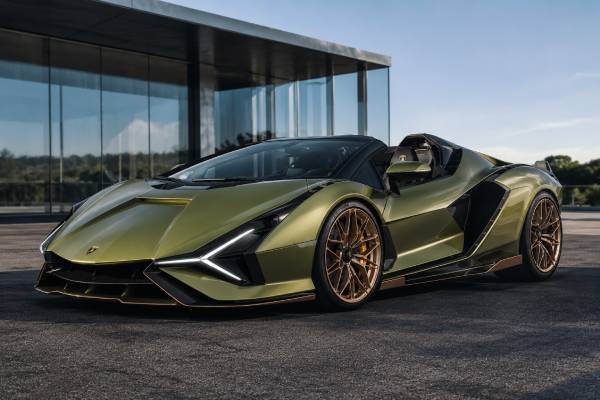
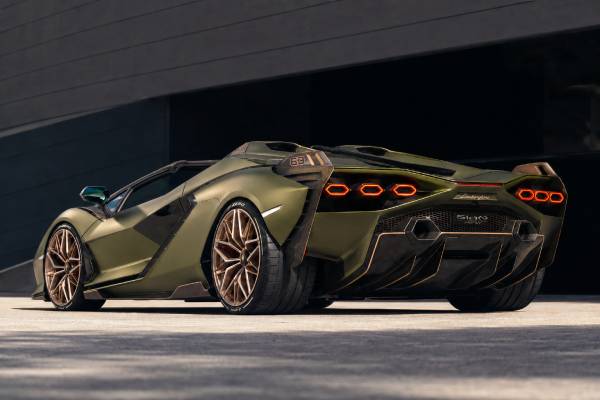
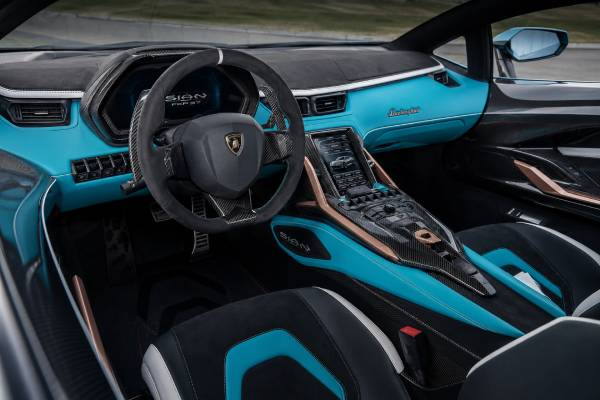
The Lamborghini Sián Roadster is one of the most important limited-run V12 Lamborghinis of the modern era because it joined the brand’s old and new identities in one roofless, 19-car package. It kept the naturally aspirated 6.5-liter V12 drama that collectors want, then added a 48-volt supercapacitor hybrid system that previewed Lamborghini’s electrified future. Unlike a normal production Aventador Roadster, the Sián Roadster was never meant to be common, rational, or easy to replace. It was a Few-Off statement car: part design study, part technology showcase, and part investment-grade collectible. For buyers, the real questions are not only power and top speed. The serious questions are originality, factory documentation, battery and supercapacitor health, carbon condition, service history, and whether the car’s specification will still matter years from now.
Table of Contents
- Why the Sián Roadster Matters
- V12 Hybrid Specifications and Chassis Data
- Production Numbers, Options, and Authenticity
- Design, Aero, and Hybrid Engineering
- Road and Track Driving Character
- Maintenance Risk and Specialist Care
- Market Value and Buyer Checklist
Why the Sián Roadster Matters
The Sián Roadster matters because it is Lamborghini’s first open-top hybrid super sports car and one of the rarest modern V12 roadsters the company has built. It sits at the turning point between the naturally aspirated Aventador era and Lamborghini’s full hybrid future.
Lamborghini unveiled the Sián Roadster in July 2020 as the roofless companion to the Sián FKP 37 coupe. The coupe itself marked Lamborghini’s first production hybrid, but the Roadster made the idea more dramatic: no fixed roof, no mass-production plan, and only 19 examples worldwide. That number alone puts it into serious collector territory. It is rarer than the 63-unit Sián coupe, rarer than many earlier Lamborghini special editions, and far rarer than ordinary Aventador derivatives.
The name “Sián” comes from Bolognese dialect and means “flash” or “lightning,” which fits the car’s electrified theme. The Roadster did not use the “FKP 37” tribute name as prominently as the coupe, but it shared the same core technical idea: a naturally aspirated V12 supported by an electric motor and a supercapacitor rather than a conventional large battery pack.
The car’s historical importance comes from several overlapping roles:
- It preserved the character of Lamborghini’s naturally aspirated V12 at a time when emissions rules and electrification were changing the supercar market.
- It previewed design and technology themes later seen in Lamborghini’s newer hybrid age.
- It showed how Lamborghini could use electrification for response, torque fill, and performance rather than quiet commuting.
- It strengthened the brand’s Few-Off strategy, where ultra-limited cars act as halo products for collectors and loyal clients.
The Sián Roadster is not a normal used exotic. It is closer to a factory-built collectible from day one. Most examples were personalized heavily through Lamborghini’s Ad Personam program, and mileage tends to be extremely low. Some cars may spend more time in climate-controlled collections than on open roads. That does not make condition irrelevant. It makes inspection more complex, because a car can look unused while still needing fluid services, tire replacement, software updates, brake checks, and hybrid-system verification.
Today, enthusiasts care about the Sián Roadster because it sounds and feels connected to the Aventador family, but it is more advanced, more exclusive, and more visually experimental. Collectors care because only 19 exist, factory allocation mattered, and configuration can have a major effect on long-term desirability.
V12 Hybrid Specifications and Chassis Data
The headline specification is simple: the Sián Roadster combines a 6,498 cc naturally aspirated V12 with a 48-volt electric motor for a total quoted output of 819 CV, commonly described as 819 hp. The deeper story is that Lamborghini used electrification to sharpen response without burying the V12 under heavy battery hardware.
| Item | Specification |
|---|---|
| Model | Lamborghini Sián Roadster |
| Internal engine code | L539 |
| Production period covered | 2020–2022 |
| Body style | Two-seat roadster |
| Engine | 6.5-liter naturally aspirated V12 |
| Displacement | 6,498 cc |
| Engine output | 785 CV at 8,500 rpm |
| Electric motor | 48-volt motor integrated with the transmission |
| Electric output | 34 CV |
| Total system output | 819 CV / 602 kW |
| Torque | 720 Nm |
| Transmission | 7-speed ISR automated manual |
| Drivetrain | All-wheel drive with rear mechanical self-locking differential |
| 0–100 km/h | Under 2.9 seconds |
| Top speed | Over 350 km/h / 217 mph |
| WLTP combined consumption | 18.5 l/100 km |
| WLTP CO2 emissions | 447 g/km |
The engine is a development of Lamborghini’s Aventador-era V12, but the Sián specification is not a simple carryover. Titanium intake valves and a higher state of tune help the combustion engine reach 785 CV before hybrid assistance. The electric motor adds power directly into the driveline, but the system’s purpose is not electric-only range. It is there to fill the gaps in response, smooth low-speed operation, and strengthen acceleration during gear changes.
The most unusual technical feature is the supercapacitor. A supercapacitor stores and releases energy faster than a normal battery, although it does not store as much total energy for long-distance electric driving. Lamborghini chose this system because it fit the Sián’s mission: short, intense bursts of power, rapid energy recovery, and lower weight than a larger hybrid battery.
| Area | Detail |
|---|---|
| Length | 4,979 mm |
| Width | 2,080 mm excluding mirrors |
| Height | 1,158 mm |
| Wheelbase | 2,700 mm |
| Kerb weight | About 1,645 kg |
| Front tires | 255/30 ZR20 |
| Rear tires | 355/25 ZR21 |
| Suspension | Pushrod layout with magneto-rheological dampers |
| Steering systems | Lamborghini Dynamic Steering and rear-wheel steering |
| Brakes | Carbon-ceramic braking system |
The chassis layout follows the Aventador family’s carbon-fiber monocoque principle, with the V12 mounted longitudinally behind the cockpit. The front tires are narrow compared with the huge rear tires, which tells you a lot about the car’s balance and traction priorities. It is an all-wheel-drive hypercar, but it still has the rear-heavy, V12 Lamborghini feel.
The 7-speed ISR transmission is important for buyers to understand. It is not a modern dual-clutch gearbox. It is a single-clutch automated manual designed for speed, drama, and mechanical connection. In aggressive modes, that gives the car a hard, theatrical shift. In gentle driving, it can feel less polished than newer dual-clutch systems. That is part of the car’s character, but it also means clutch condition and shift calibration matter during inspection.
Production Numbers, Options, and Authenticity
The Sián Roadster’s production number is the key fact: only 19 were built. That makes factory identity, original specification, and complete documentation more important than normal mileage-based used-car thinking.
The broader Sián family totals 82 cars: 63 coupes and 19 roadsters. The coupe count refers to Lamborghini’s founding year, 1963, while the Roadster count makes the open-top version much rarer. For collectors, the Roadster’s smaller production run is a major value driver, but it also makes price discovery difficult. A normal market has enough sales to create a pattern. A 19-unit roadster market often depends on private transactions, broker networks, and the exact desire for one specific car.
There were no ordinary trim levels. Every Sián Roadster was effectively a special build. Buyers worked with Lamborghini Centro Stile and the Ad Personam personalization department, so each car can differ meaningfully in paint, exposed carbon, interior materials, stitching, wheel finish, accent color, and 3D-printed details.
Factory specification areas that matter
The most desirable examples are not always the loudest or most expensive-looking cars. Long-term collectability usually rewards a specification that is both distinctive and coherent. The best cars tend to have a clear design idea and strong factory documentation.
Important specification areas include:
- Exterior paint, especially unique Ad Personam colors or historically meaningful Lamborghini tones.
- Exposed carbon-fiber layout and finish.
- Oro Electrum accents, which Lamborghini used to signal electrification.
- Wheel design and finish.
- Brake caliper color and carbon-ceramic brake condition.
- Interior leather, Alcantara, stitching, contrast piping, and carbon trim.
- 3D-printed air vents, including personalized initials where ordered.
- Factory books, tools, car cover, charger, delivery material, and build documentation.
The launch car appeared in Blu Uranus with Oro Electrum wheels and a white interior with Blu Glauco details. That specification matters because it set the visual language for the model, but it does not make every similar car automatically superior. For a 19-car series, provenance and originality usually count more than trying to copy the launch car.
Documentation is part of the car
For a Sián Roadster, paperwork is not a side detail. It is part of the asset. A buyer should expect the seller to provide clear factory documentation, service records, warranty and campaign records, import documents where relevant, and proof that the car’s current configuration matches its original build.
A proper file should answer these questions:
- Was the car delivered new through an official Lamborghini dealer?
- Does the VIN match all service, ownership, and registration records?
- Are all Ad Personam details documented?
- Has the car had paintwork, carbon repair, wheel repair, or interior retrimming?
- Are software updates and service campaigns recorded?
- Are all accessories and original delivery items present?
Low mileage is attractive, but it should not be the only selling point. A car with delivery mileage but weak documentation can be less attractive than a lightly used example with perfect history, correct servicing, and no cosmetic mysteries.
Design, Aero, and Hybrid Engineering
The Sián Roadster looks extreme because it was designed to show Lamborghini’s future without abandoning its past. Its shape blends Countach-inspired references, Aventador proportions, active aerodynamic thinking, and visible hybrid-era details.
The car’s basic stance is pure modern Lamborghini: low nose, wide body, huge rear haunches, sharp surfaces, and an engine bay treated as theater. The front uses Y-shaped headlights, a carbon-fiber splitter, and deep air management surfaces. The side profile is long and wedge-like, but more sculptural than a standard Aventador. From above, the Roadster’s open cockpit helps the periscopio-style design reference stand out, recalling the visual spine associated with the original Countach.
The rear is the most dramatic angle. Hexagonal forms, high-mounted exhaust outlets, deep vents, and the integrated rear wing create a shape that is more concept-car than regular production model. The wing stays integrated into the profile until needed, rather than looking like a separate track accessory.
Smart cooling without ordinary motors
One of the cleverest details is the Lamborghini Smart Material System. The rear cooling vanes use shape-memory alloy, a material that changes behavior with temperature. When the exhaust area gets hot enough, the material reacts and moves the flaps to improve thermal performance.
This matters because it fits the car’s philosophy. Lamborghini wanted a cooling solution that did not rely on a conventional electric, hydraulic, or mechanical actuator. The result saves weight, reduces complexity in that specific function, and adds a rare piece of materials science to the car’s identity. It is also the kind of detail collectors like, because it is specific to the Sián and easy to explain as part of the car’s story.
The hybrid system is about response, not silence
The Sián Roadster’s 48-volt system should not be confused with a plug-in hybrid system. There is no large charging port experience, no meaningful electric-only range, and no attempt to turn the car into a quiet city EV. The supercapacitor system is about performance bursts and quick energy exchange.
The electric motor helps at low speeds and during acceleration, especially when the ISR transmission would otherwise create a brief interruption in torque. In simple terms, the system gives the V12 a sharper supporting act. It does not replace the V12 as the emotional center of the car.
Interior details and personalization
Inside, the Sián Roadster mixes Aventador-family architecture with special materials and custom touches. The cabin is tight, low, and driver-focused. The scissor doors, low seating position, central controls, and exposed carbon all remind you that this is not a grand tourer.
The 3D-printed air vents are a small but important design feature. Lamborghini used them to support personalization in a way that would be difficult with normal high-volume tooling. A customer’s initials could be incorporated into the vent design, which means some cars carry highly personal factory details. For future buyers, that can be charming or limiting depending on the initials, the tastefulness of the execution, and the buyer’s attitude toward another owner’s personalization.
Road and Track Driving Character
The Sián Roadster drives like a faster, rarer, more electrically sharpened Aventador-based V12 Lamborghini, not like a quiet hybrid supercar. The main sensations are engine noise, open-air drama, huge traction, heavy visual presence, and a gearbox that makes every hard shift feel like an event.
Acceleration is violent but not sterile. The V12 builds power with revs, and the electric motor helps fill the low-speed and shift-response gaps. The result is not the silent, instant shove of a pure EV. It is more layered: electric assistance low down, then a rising V12 howl that dominates the experience as the revs climb.
The open cockpit changes the car’s personality. In the coupe, the Sián feels like a sealed object of speed and design. In the Roadster, the sound, heat, wind, and mechanical vibration are more exposed. That makes the car more emotional at sane speeds, but it also makes it less calm during long highway use. Anyone expecting luxury-convertible comfort will misunderstand the point.
Gearbox behavior
The ISR gearbox is a defining part of the experience. In the most aggressive modes, upshifts can feel brutally quick and physical. That suits the car’s character because the Sián is meant to feel theatrical. In traffic or low-speed maneuvering, the same gearbox can feel less smooth than a dual-clutch transmission.
A buyer should test the gearbox carefully if the seller permits driving. Jerky low-speed behavior can be normal to a point, but warning lights, harsh engagement from rest, slipping, delayed reverse selection, or inconsistent shift quality need specialist diagnosis.
Steering, grip, and body control
The combination of Lamborghini Dynamic Steering, rear-wheel steering, all-wheel drive, and magneto-rheological dampers makes the car feel more agile than its size suggests. Rear-wheel steering helps the long wheelbase feel less intimidating in tighter corners and more stable at speed. The wide rear tires and all-wheel drive create huge traction, but tire temperature still matters. Cold P Zero Corsa tires can make the car feel less secure than its specification suggests.
The ride is firm, but the adaptive dampers give the car more range than a fixed-rate track special. On smooth roads it feels planted and urgent. On broken city pavement, the low body, large wheels, and expensive carbon surfaces demand caution. The front lift system, where equipped and functioning correctly, is not a convenience feature to ignore. It is a protection system for a very expensive nose.
Braking feel and road use
Carbon-ceramic brakes suit the car’s performance level, but condition matters more than appearance. These systems can last a long time under light road use, but track use, heat cycles, damaged discs, chipped edges, and worn pads can create large bills. Pedal feel should be consistent, with no vibration, warning lights, pulling, or unusual noise beyond normal cold carbon-brake behavior.
In everyday use, the Sián Roadster is wide, low, and attention-heavy. Visibility is limited, luggage space is minimal, and every parking entrance feels like a decision. That does not make it unusable, but it does make it a car for deliberate drives rather than casual errands.
Maintenance Risk and Specialist Care
The Sián Roadster is not known as a high-mileage reliability story because almost none are used that way. Ownership risk comes from rarity, hybrid-specific parts, carbon construction, complex electronics, expensive consumables, and the need for official or deeply experienced Lamborghini specialists.
The V12 itself comes from a known Lamborghini engine family, which is helpful, but the Sián’s tune, packaging, cooling, and hybrid hardware make it more specialized than a normal Aventador. The car should be serviced by technicians who understand both the Aventador architecture and the Sián-specific electrical and supercapacitor system.
High-priority inspection areas
A pre-purchase inspection should go far beyond a visual check and a short start-up video. The most important areas include:
- Hybrid and supercapacitor diagnostics, including stored fault codes and system health.
- 48-volt electrical system checks.
- ISR gearbox operation, clutch wear data, and actuator behavior.
- Carbon-ceramic brake disc and pad condition.
- Tire date codes, tread depth, sidewall condition, and correct tire specification.
- Suspension lift function and hydraulic condition.
- Magneto-rheological damper operation.
- Rear-wheel steering calibration and fault history.
- Cooling system performance and evidence of leaks.
- Carbon-fiber body panels, splitter, undertray, diffuser, and exposed carbon finish.
- Paint-meter readings and evidence of refinishing.
- Battery tender use and conventional battery condition.
- Software updates, service campaigns, and dealer history.
The car may have extremely low mileage, but time still affects fluids, tires, seals, batteries, and electronics. A collector car that sits unused can develop its own problems: flat-spotted or aged tires, weak batteries, sticky controls, stale fluids, dried seals, and warning lights after long storage.
Consumables are exotic-car consumables
Tires should be treated as age-sensitive safety equipment, not just tread-depth items. A Sián Roadster with old original tires may look correct for a showroom, but it should not be driven hard without careful evaluation and likely replacement. The same logic applies to brake fluid, engine oil, coolant, and other time-based service items.
Carbon-ceramic brake replacement can be very expensive, so buyers should not accept vague statements such as “the brakes look fine.” Disc thickness, surface condition, edge damage, pad life, and system diagnostics all matter. Wheel damage also needs careful attention because the wheels are part of the car’s visual specification and may be hard or expensive to replace exactly.
Originality versus upgrades
Most upgrades hurt a Sián Roadster more than they help it. Exhaust modifications, aftermarket wheels, non-factory paint changes, interior retrims, and software tuning may appeal to some owners, but they reduce the car’s collector clarity. Reversible protection items, such as high-quality paint protection film, are different. They can be positive if installed well, documented, and not hiding paint damage.
For a 19-unit car, originality should be the default priority. Any modification should be judged by three questions: Was it factory-approved? Is it fully reversible? Is it documented clearly enough that a future buyer will trust it?
Recalls and service campaigns
Because the Sián Roadster is extremely rare, buyers should not rely only on broad model-name recall searches. The safest approach is to check the VIN through Lamborghini and the relevant national recall database, then compare those results with dealer service records. Some campaigns may be VIN-specific, market-specific, or handled through official service channels rather than widely discussed in public.
A clean public recall search is not the same as a complete clean bill of health. For this car, the selling dealer or specialist should confirm all applicable updates, campaigns, and software actions by VIN.
Market Value and Buyer Checklist
The Sián Roadster sits above normal Aventador-based collectibles because it combines a 19-unit build count, open-top body, V12 hybrid significance, and factory Few-Off status. Market value is hard to pin down because public sales are rare and many transactions happen privately.
As of June 2026, public market trackers show Sián coupe auction results generally around the low-to-mid $2 million range, while a listed Sián Roadster showed a last asking price just above $4 million in 2025. Dealer asking prices for Roadsters can be higher, especially for delivery-mileage cars or especially strong specifications. The important point is that asking price and real transaction price may differ sharply. With only 19 cars, one motivated buyer or one urgent seller can move the visible market.
What drives value
The strongest Sián Roadster examples usually have a mix of rarity, taste, and proof. Value drivers include:
- Original factory paint and interior.
- Complete Ad Personam documentation.
- Very low but believable mileage.
- Full Lamborghini dealer service history.
- No accident, carbon repair, or unexplained paintwork.
- Strong color combination with long-term appeal.
- Complete books, tools, accessories, charger, and delivery items.
- Verified VIN-specific campaign completion.
- Clean import and tax history.
- Known ownership chain and strong provenance.
Mileage matters, but it is not everything. A delivery-mileage car with old tires, weak records, and unknown service status is not automatically the best buy. A carefully maintained car with a few hundred miles may be easier to own and more credible.
Cars to seek
The best cars are complete, documented, original, and visually coherent. Seek an example that has been kept on a proper battery maintainer, serviced by authorized Lamborghini personnel, stored correctly, and inspected recently. A strong seller should be able to explain the car’s specification without guessing and provide records without delay.
A car is especially attractive when its configuration feels special without being too personal. Unique colors can add value, but only when they suit the shape and have factory provenance. Exposed carbon can also help, but condition must be excellent because poor refinishing or damaged weave is difficult to correct invisibly.
Cars to avoid
Avoid cars with unclear history, missing factory items, inconsistent mileage records, unverified paintwork, aftermarket tuning, unexplained warning lights, or sellers who resist a specialist inspection. Be careful with cars that have moved between countries without clean import paperwork. Also be cautious with a car advertised mainly through hype phrases rather than documentation.
Red flags include:
- “No inspection needed” sales pressure.
- Missing Ad Personam build records.
- Non-factory exhaust or ECU changes.
- Old tires presented as “new because mileage is low.”
- Carbon scratches, splitter damage, or underside impact marks.
- Incomplete service history.
- Unclear VAT, customs, or registration status.
- A seller who cannot confirm hybrid-system diagnostics.
Practical buying sequence
A serious buyer should follow a disciplined process:
- Confirm the VIN, original selling dealer, and factory build specification.
- Request complete service, campaign, and ownership records.
- Check national recall databases and Lamborghini dealer records by VIN.
- Commission an inspection from an authorized Lamborghini dealer or recognized marque specialist.
- Verify carbon, paint, brakes, tires, gearbox, suspension, and hybrid-system condition.
- Confirm that all accessories, books, keys, chargers, covers, and delivery items are present.
- Review taxes, import status, registration eligibility, and insurance before agreeing on price.
The Sián Roadster’s long-term collectability looks strong because it has the right ingredients: extreme rarity, V12 sound, first-generation Lamborghini hybrid importance, dramatic design, and Few-Off status. The main risk is not whether enthusiasts will remember it. They will. The risk is buying the wrong example at the wrong price with incomplete records or hidden condition issues. For this car, the smartest money buys the story, the specification, and the paperwork as much as the machine.
References
- Lamborghini Sián Roadster – Technical Specifications, Pictures, Videos 2026 (Manufacturer Specifications)
- New Lamborghini Sián Roadster unveiled: the future is here 2020 (Manufacturer Launch Information)
- Lamborghini Sián’s Smart Material System: How it works 2020 (Manufacturer Engineering Feature)
- Check for Recalls: Vehicle, Car Seat, Tire, Equipment 2026 (Recall Database)
- Lamborghini Sián FKP 37 Market – CLASSIC.COM 2026 (Market Database)
Disclaimer
This article is for informational purposes only and is not a substitute for professional diagnosis, repair, valuation, or pre-purchase inspection. Specifications, torque values, service intervals, software status, recall applicability, and repair procedures can vary by VIN, market, equipment, and factory update history. Always verify details against official Lamborghini service documentation and a qualified Lamborghini specialist before buying, servicing, or repairing a Sián Roadster.
If this guide helped you, please share it on Facebook, X/Twitter, or your favorite car community to support our work.