
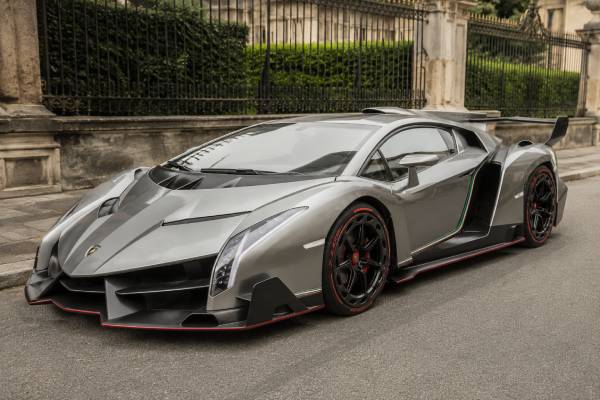
The Lamborghini Veneno is not a normal limited-edition supercar. It is Lamborghini’s 50th-anniversary V12 flagship turned into a road-legal racing prototype, with Aventador-based mechanicals, a carbon-fiber structure, extreme aero, and production numbers so small that each car is treated almost like a factory artwork. The 2013 coupe used the L539 6.5-liter naturally aspirated V12 tuned to 750 hp, paired with Lamborghini’s 7-speed ISR automated manual gearbox and permanent all-wheel drive. Only three customer coupes were built, plus Lamborghini’s own prototype. That scarcity is only part of the story. The Veneno matters because it previewed the sharper, aero-heavy direction Lamborghini would later use on cars such as the Aventador SVJ and other Few-Off models. For collectors, it is a provenance-first asset. For enthusiasts, it is one of the most dramatic expressions of the modern Lamborghini V12 era.
Table of Contents
- Why the Veneno Became a Modern Lamborghini Icon
- L539 V12 Specs, Chassis, and Performance Data
- Production, Variants, Colors, and Authenticity Details
- Carbon Aero Design and Signature Engineering
- How the Veneno Drives on Road and Track
- Maintenance Risks, Service, and Ownership Reality
- Market Values, Buying Checks, and Collector Outlook
Why the Veneno Became a Modern Lamborghini Icon
The Veneno is important because it turned Lamborghini’s Aventador platform into an ultra-limited, aero-led celebration car. It was revealed at the 2013 Geneva Motor Show for Lamborghini’s 50th anniversary, not as a regular model-line extension but as a “Few-Off” statement for the brand’s most committed collectors.
The car sits in the same spiritual family as the Reventón, Centenario, Sián, Countach LPI 800-4, and later one-off or few-off V12 specials. These cars are not meant to replace standard production models. They show what Lamborghini can do when design, rarity, and theater matter as much as lap times.
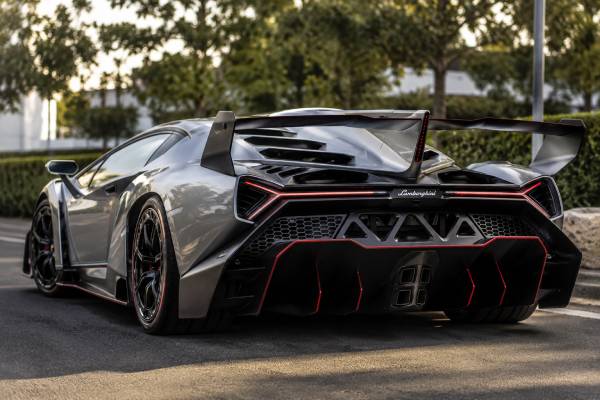
The Veneno was based on the Aventador LP700-4 architecture, but it was far more than a body kit. Lamborghini gave it a revised carbon-fiber body, more aggressive cooling, a lighter dry weight, a 750 hp version of the L539 V12, and bodywork shaped around downforce, air management, and high-speed stability. The visual result was extreme even by Lamborghini standards: open wheel-arch forms, a central fin, a vast rear wing, large diffuser, carbon wheel rings, and a front end designed to act like an aerodynamic wing.
Its reputation today rests on three points:
- It is one of the rarest modern Lamborghinis, with only three customer coupes and one factory prototype.
- It represents the peak of early Aventador-era shock design before later cars became more technically polished.
- It has become a reference point for modern Lamborghini collectability, where factory provenance and original delivery specification matter as much as mileage.
The Veneno also arrived at a turning point. In 2013, the hypercar world was focused on Ferrari LaFerrari, McLaren P1, and Porsche 918 Spyder. Those cars used hybrid technology to redefine performance. Lamborghini chose a different path: a naturally aspirated V12, radical carbon bodywork, and an almost concept-car level of visual aggression. That makes the Veneno less technically advanced than the hybrid hypercars of the same period, but also more theatrical and more purely Lamborghini.
For enthusiasts, the Veneno is memorable because it feels like a show car that somehow received license plates. For collectors, it is important because it is not replaceable. Mileage can be debated, service history can be checked, and condition can be inspected, but production volume cannot be repeated.
L539 V12 Specs, Chassis, and Performance Data
The core Veneno formula is simple: Aventador-derived carbon structure, a 6.5-liter L539 V12 raised to 750 hp, ISR automated manual shifting, and permanent all-wheel drive. The useful details matter because small differences in specification, weight, tires, and factory equipment can affect both driving character and collector value.
| Category | Specification |
|---|---|
| Model | Lamborghini Veneno coupe |
| Production year | 2013 |
| Engine code | L539 |
| Engine type | 6.5-liter naturally aspirated 60-degree V12 |
| Displacement | 6,498 cc |
| Bore x stroke | 95.0 mm x 76.4 mm |
| Induction | Naturally aspirated |
| Fuel system | Multi-point injection |
| Power | 552 kW / 750 hp |
| Torque | 690 Nm / 509 lb-ft |
| Transmission | 7-speed ISR automated manual |
| Drive | Permanent all-wheel drive |
| Chassis | CFRP monocoque with aluminum front and rear subframes |
| Body | Carbon-fiber reinforced polymer exterior panels |
| Suspension | Pushrod suspension with horizontal spring and damper units |
| Brakes | Carbon-ceramic discs |
| Wheels | 20-inch front, 21-inch rear center-lock alloy wheels |
| Tires | 255/30 ZR20 front, 355/25 ZR21 rear |
| Dry weight | 1,450 kg / 3,197 lb |
| Power-to-weight ratio | 1.93 kg per hp |
| 0–100 km/h | 2.8 seconds |
| Top speed | 355 km/h / about 221 mph |
The L539 engine is the same basic V12 family introduced with the Aventador, but the Veneno received airflow and exhaust changes to lift output above the standard LP700-4. The improvement was not about adding forced induction. It was about allowing the big V12 to breathe more freely and rev with even more urgency.
The gearbox is Lamborghini’s ISR unit, short for Independent Shifting Rods. It is not a modern dual-clutch transmission. It is a fast, dramatic, single-clutch automated manual designed to deliver hard, mechanical-feeling shifts. That matters for ownership because clutch wear, calibration, and software condition are major inspection points.
The chassis is also central to the car’s identity. The carbon monocoque gives the Veneno its stiffness, while aluminum subframes carry crash and suspension structures. The carbon body panels reduce weight and allow extreme shapes that would be harder to form in aluminum or steel. The pushrod suspension places the spring and damper units horizontally, a layout inspired by racing practice and shared with the Aventador family.
In real terms, the Veneno is not merely fast in a straight line. Its wide track, all-wheel drive, huge tires, and downforce-led bodywork give it serious high-speed stability. The numbers matter, but the engineering aim was clear: make a road car that looks, sounds, and reacts like a prototype racer filtered through Lamborghini’s V12 tradition.
Production, Variants, Colors, and Authenticity Details
The Veneno coupe is collectible because production was almost impossibly small: three customer cars and one factory prototype. The roadster followed as a related but separate Few-Off model, with nine units and its own identity.
Coupe production and factory colors
The coupe was built in 2013. Lamborghini retained the Geneva show car, often described as the prototype or number zero. The three customer coupes used a shared grey metallic and exposed-carbon visual theme, with each car receiving one Italian-flag accent color: green, white, or red.
That color logic is important. On a normal supercar, repainting or accent changes might be a matter of taste. On a Veneno, the original color identity is part of the car’s story. A buyer should treat factory paint, accent color, interior trim, and delivery documentation as major value items.
Key coupe identifiers include:
- extreme fixed rear wing with central stabilizing fin
- visible carbon-fiber body sections
- Italian tricolor accent concept across the three customer cars
- scissor doors carried over from Lamborghini’s V12 flagship tradition
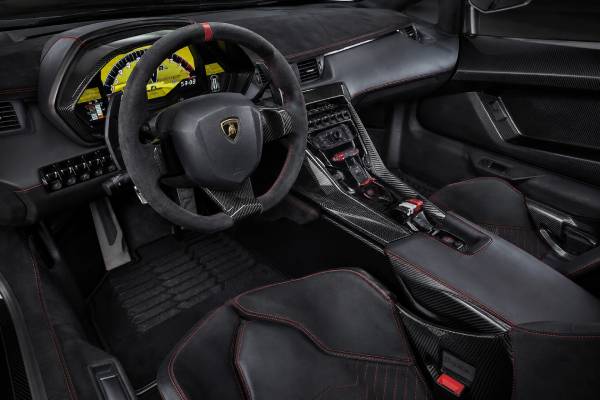
- forged composite bucket seats
- CarbonSkin cabin trim
- model-specific instrument graphics with performance functions such as a G-meter
Roadster relationship
The Veneno Roadster was introduced after the coupe and built in 2014. It was not a simple removable-roof version. It had no conventional roof at all, using an open layout with rollover protection. Lamborghini planned nine units, and the Roadster carried the same 6.5-liter V12 output and top-speed claim, with slightly higher dry weight due to structural reinforcement.
The Roadster matters to coupe buyers because it broadens the Veneno story and affects market comparisons. Some collectors prefer the coupe for its original 50th-anniversary launch role and smaller production count. Others prefer the Roadster for its open-air drama and larger public auction visibility.
| Version | Production | Body style | Dry weight | 0–100 km/h | Collector note |
|---|---|---|---|---|---|
| Veneno coupe | 3 customer cars plus factory prototype | Fixed-roof coupe | 1,450 kg | 2.8 seconds | Original 2013 50th-anniversary launch model |
| Veneno Roadster | 9 units | Open roadster with no conventional roof | 1,490 kg | 2.9 seconds | More examples, but still extremely rare and highly visible at auction |
Documentation that matters
A Veneno should be bought like a major collector asset, not a used exotic. Factory paperwork is essential. The strongest cars will have original purchase documents, Lamborghini correspondence, service records from authorized dealers or top-level specialists, books, tools, keys, battery equipment, transport records, and evidence that any campaigns or software work were completed correctly.
A complete file should also show whether paint protection film was installed, whether any carbon panels were repaired, whether the car has been displayed at major events, and whether it has crossed borders under temporary or permanent import paperwork. With a car this rare, even a small gap in the story can raise questions.
Carbon Aero Design and Signature Engineering
The Veneno’s shape is extreme because nearly every visible surface is trying to manage air. The car looks theatrical, but its design language is rooted in cooling, downforce, drag control, and stability rather than decoration alone.
The front end works like a broad aerodynamic device. Large channels guide air through and around the nose, while the front openings help reduce lift and feed cooling paths. The wheel arches are visually separated from the central body in a way that recalls endurance racing prototypes. This helps explain why the Veneno looks less like a conventional supercar and more like a Le Mans concept adapted for the street.
At the rear, the smooth underbody, large diffuser, central fin, and fixed rear wing work together. The fin helps directional stability, especially at high speed, while the rear wing and diffuser add downforce. The rear body is also full of heat-management features, which matter because the naturally aspirated V12 sits behind the cabin and produces intense thermal load.
The wheels are another example of function becoming style. The center-lock wheels use carbon-fiber rings that help direct air toward the carbon-ceramic brakes. On many cars, wheel design is mostly cosmetic. On the Veneno, even the wheels support brake cooling and aerodynamic efficiency.
Inside, Lamborghini used the Veneno to show off material technology. The forged composite bucket seats and CarbonSkin trim are not just exotic finishes. They reduce weight and make the cabin feel connected to the carbon monocoque. The visible carbon around the sills and center tunnel reminds the driver that the structure is not hidden under luxury trim.
The design also influenced later Lamborghinis. The Veneno’s Y-shaped light graphics, blade-like forms, large aero openings, and racing-prototype stance helped define the bolder look later seen across Aventador SV, SVJ, and other limited models. It did not invent Lamborghini sharpness, but it pushed it to a new level.
The emotional effect is part of the engineering. The Veneno is loud, wide, visually difficult, and intentionally uncompromising. Some hypercars try to look elegant. The Veneno does not. Its purpose is to make the mechanical parts feel exposed and urgent, even at rest.
How the Veneno Drives on Road and Track
The Veneno should feel more raw and physical than later dual-clutch Lamborghini models. Its character comes from the naturally aspirated V12, the ISR gearbox, the wide tires, and the stiff carbon structure rather than from hybrid torque fill or electronic smoothness.
The engine is the main event. Below the upper rev range, the 6.5-liter V12 has enough displacement to feel strong, but it becomes more special as revs rise. Throttle response is immediate because there are no turbochargers. The sound builds from mechanical intake and exhaust hard-edge to a high-rpm V12 scream. This is the part of the experience that no spec sheet can fully describe.
The ISR gearbox gives the car a different personality from modern dual-clutch cars. In gentle driving, it can feel abrupt if the driver expects luxury-car smoothness. In aggressive driving, its shift violence becomes part of the show. Correctly calibrated, it delivers quick, dramatic gear changes that suit the car’s prototype image. Poor clutch condition, weak battery voltage, or outdated software can make the gearbox feel clumsy, so the shift quality tells an inspector a lot.
Steering should feel direct, heavy enough to remind the driver of the huge front tires, and stable at speed. The car is wide, so road placement takes concentration. On narrow roads or in cities, the driver is always aware of the body width, low nose, and limited rear visibility. Front lift condition matters in real use, because scraping carbon bodywork is not a normal repair problem.
Braking performance is serious, but carbon-ceramic brakes need heat and condition awareness. A cold brake pedal can feel different from a conventional steel setup, and old tires can make the car feel far worse than its engineering suggests. On a low-mile collector example, tire age is often more important than tread depth.
On track, the Veneno has the grip, aero stability, and power to be extremely fast, but most owners will not treat it like a track-day consumable. The risk of carbon damage, tire wear, brake wear, and paint damage is too high. A buyer should be skeptical of any car described as “never driven hard” but showing overheated brakes, rubber pickup, or underside wear.
The Veneno is usable enough to move under its own power, attend events, and cover careful road mileage. It is not usable in the sense of a modern grand tourer. It asks the driver to plan routes, avoid bad ramps, manage heat, respect tire temperature, and think about every parking space.
Maintenance Risks, Service, and Ownership Reality
Veneno ownership is less about ordinary reliability and more about controlled risk. The mechanical base is Aventador-derived, which helps parts and service knowledge, but the body, trim, rarity, and documentation demands make every decision more expensive and more sensitive.
The L539 V12 is generally strong when serviced correctly, but age, storage, heat, and infrequent use can cause problems. A car that has covered very few miles can still need serious recommissioning if it has sat for long periods with old fluids, aged tires, weak batteries, sticky seals, or deferred campaign work.
The most important maintenance areas are:
- Fluids and annual servicing: Low mileage does not remove the need for time-based service. Oil, brake fluid, coolant, gearbox fluid, and differential fluids age even when the car is stored.
- Battery health: Modern Lamborghinis are sensitive to voltage. A weak battery can trigger faults, poor shift behavior, and control-module warnings.
- ISR clutch condition: Clutch wear readings, bite-point calibration, and shift adaptation should be checked with the correct diagnostic equipment.
- Carbon-ceramic brakes: Disc condition, surface wear, chips, heat marks, and pad life need specialist inspection. Replacement costs are high.
- Tires: Original-style tire fitment matters, but tire age matters more for safety. Old collector tires should not be trusted for hard driving.
- Cooling system: Heat management is critical. Radiators, hoses, fans, ducts, and coolant condition should be inspected carefully.
- EVAP and fuel system: Aventador-family recall and campaign history must be checked by VIN, especially for fuel vapor system updates.
- Suspension and lift system: Leaks, tired accumulators, lift-system faults, and worn joints can become expensive quickly.
- Carbon bodywork: Chips, cracks, underside scrapes, poor paint protection film removal, and past repairs can strongly affect value.
The Veneno also depends on software and campaign status. Because it shares systems with the Aventador family, a Lamborghini dealer or qualified specialist should check open campaigns, service bulletins, gearbox software, engine management updates, and diagnostic history. Never assume that a rare car automatically received every update. Some ultra-low-mile cars spend years in collections, cross borders, and miss normal dealer cycles.
Restoration is a different challenge from maintenance. A normal Aventador body panel may be costly. A Veneno-specific carbon panel can be far harder to source, document, fit, and refinish. If a car has had carbon repair, the buyer needs photographs before, during, and after the work, plus invoices from a qualified shop. Invisible repair quality matters, but so does future market confidence.
Originality usually beats upgrades. Aftermarket exhausts, non-factory paint changes, altered interiors, aftermarket electronics, and non-standard wheels may reduce value, even when the parts are expensive. On a Veneno, the factory specification is the asset.
Market Values, Buying Checks, and Collector Outlook
The Veneno market is thin, private, and provenance-driven. Published auction results help, but they do not capture the full market because many serious transactions happen quietly between known collectors.
The original coupe price was around the multi-million-euro level, and public sales of Roadsters have shown how strongly the market values the model’s rarity. A Veneno Roadster sold publicly in the high seven-figure range in Swiss francs in 2019, and another Roadster made headlines with a $6 million online sale in 2024. Coupes may command a different premium because only three customer examples exist, but a realistic value depends on the exact car, mileage, title history, color, originality, and whether a serious buyer is present.
Value is driven by:
- factory coupe versus Roadster status
- original delivery identity and color accents
- mileage and whether it is believable
- condition of exposed carbon
- completeness of books, keys, tools, covers, chargers, and accessories
- documented Lamborghini service history
- completed recalls and campaigns
- clean title and import history
- public provenance, event history, or notable original ownership
- absence of non-factory modifications
- quality of storage and preservation
A buyer should not begin with price alone. The correct first question is whether the car can be authenticated, serviced, imported, insured, and preserved without unanswered gaps.
| Area | What to verify | Why it matters |
|---|---|---|
| Identity | VIN, build documents, factory records, original delivery specification | Confirms the car is represented correctly |
| Body | Carbon panels, underside, diffuser, splitter, wing, paint protection film edges | Carbon damage can be costly and value-sensitive |
| Powertrain | Engine diagnostics, oil leaks, coolant condition, exhaust condition | Low mileage does not guarantee healthy systems |
| Transmission | Clutch wear, adaptation values, shift quality, software status | ISR issues are expensive and affect drivability |
| Brakes and tires | Carbon-ceramic disc condition, pad life, tire age and correct sizing | Old tires and damaged discs are common collector-car risks |
| Campaigns | Dealer check for recalls, service campaigns, and software updates | Rare cars can miss normal update cycles |
| Paperwork | Invoices, registration history, customs records, accessories, manuals | Documentation protects future resale value |
The best examples to seek are original, fully documented cars with clean history, careful storage, correct service, and no questionable cosmetic changes. The cars to avoid are those with missing documents, unexplained mileage gaps, unclear import status, accident history, carbon repairs without evidence, or modifications that cannot be reversed.
Long-term collectability looks strong because the Veneno combines several durable collector traits: tiny production, naturally aspirated V12 power, anniversary significance, dramatic design, and clear placement within Lamborghini’s Few-Off program. The main risk is not demand disappearing. The main risk is overpaying for the wrong car or accepting weak documentation because the model is rare.
For a serious buyer, the safest approach is to pay more for the best-known car rather than chase a discount on a car with questions. At this level, the cheapest Veneno can become the most expensive one to own.
References
- Lamborghini Veneno – Technical Specifications, Pictures, Performance 2026 (Official Specification Page)
- Veneno Roadster – Technical Specifications, Pictures, Videos 2026 (Official Specification Page)
- Lamborghini Veneno: the Few-Off for the 50th anniversary 2019 (Manufacturer Publication)
- FAQ_EVAP system update_ENGL_dealer 2017 (Recall Campaign)
- $6 million Lamborghini Veneno Roadster sets online auction record with SBX Cars – Magneto 2024 (Market Reference)
Disclaimer
This article is for informational purposes only and is not a substitute for professional diagnosis, repair, valuation, or pre-purchase inspection. Specifications, torque values, service intervals, procedures, recalls, campaign status, and parts fitment can vary by VIN, market, equipment, and later factory updates. Always verify details against official Lamborghini service documentation and have any car inspected by an authorized Lamborghini dealer or qualified marque specialist.
If this guide helped you, please consider sharing it on Facebook, X/Twitter, or your favorite car community to support our work.