
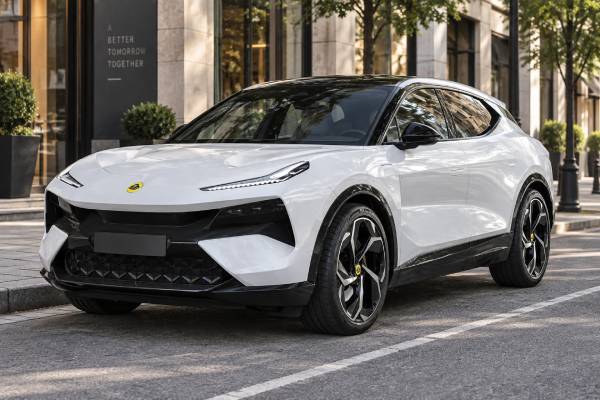
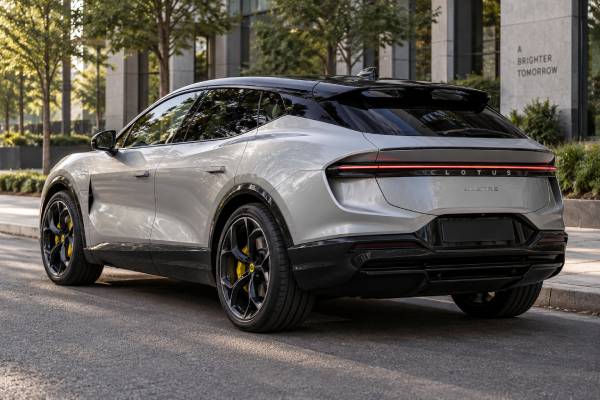
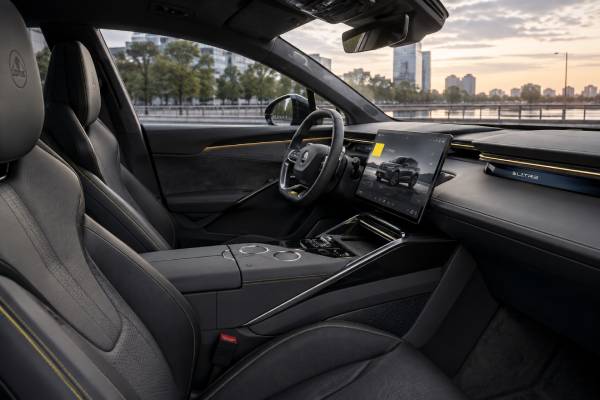
The 2025 Eletre 600 Executive is a luxury-first Chinese-market configuration of Lotus’s 450 kW electric SUV. It keeps the 612 PS dual-motor AWD system and 710 Nm used across the 600 family, but pairs it with a four-seat executive layout and a richer cabin specification. Chinese model data lists a 112 kWh battery and about 640 km of CLTC range, slightly below the lighter or less equipment-heavy 600 variants. That difference is a useful clue to the Executive’s purpose: it is not the maximum-range trim, and it is not the 675 kW performance flagship. It is aimed at owners who want rear-seat comfort, technology, and exclusivity while retaining the fast-charging 800-volt platform. For export buyers, the four-seat configuration should be treated as a major part of the car’s identity. So should its regional software and charging hardware. A 600 Executive can look similar to other Eletres from outside, but its value depends heavily on whether all executive-cabin equipment, connected services, and market-specific functions remain usable.
Table of Contents
- What makes the 600 Executive different
- Technical specifications
- Four-seat cabin and executive equipment
- 640 km CLTC range and charging strategy
- Performance and chassis character
- Maintenance and ownership costs
- Used and import buying checks
What makes the 600 Executive different
The 600 Executive is defined by its luxury configuration, especially the four-seat cabin, rather than a unique motor output. It shares 450 kW and 710 Nm with the Touring and Luxury versions but sits above them in equipment and price in the 2025 Chinese range.
Lotus’s move to “600” naming made the power hierarchy clearer: 600-series cars use the 450 kW drivetrain, while 900-series models use the 675 kW high-performance system. The number is a family designation, not a precise horsepower conversion.
For a buyer, this means the Executive should not be evaluated solely against another 612 PS Eletre. Rear-seat equipment, seat count, wheel specification, trim materials, electronic features, and certified range all affect the package.
Technical specifications
The 600 Executive is a dual-motor battery-electric AWD SUV using a single-speed reduction drivetrain. Its large battery and 800-volt system support both long-range use and very rapid DC charging.
| Item | Specification |
|---|---|
| Output | 450 kW / 612 PS |
| Torque | 710 Nm |
| Motors | Two, front and rear |
| Drive | AWD |
| Transmission | Single-speed reduction |
| Battery capacity | 112 kWh |
| Battery type | Ternary lithium/NMC in China-market listings |
| Item | Specification |
|---|---|
| CLTC range | 640 km |
| 0–100 km/h | About 4.5 seconds |
| Top speed | About 258 km/h |
| Seats | 4 |
| Item | Specification |
|---|---|
| Length | 5,103 mm |
| Width | 2,019 mm |
| Height | About 1,636 mm |
| Wheelbase | 3,019 mm |
| Body | Five-door large SUV |
| Item | Specification |
|---|---|
| Electrical platform | 800 V class |
| Fast-charge reference | 10–80% in roughly 20 minutes under favorable conditions |
| Battery thermal control | Active liquid system |
| Charging connector | China-market standard on domestic cars; destination compatibility must be verified |
| Item | Specification |
|---|---|
| Suspension | Adaptive air suspension |
| Common 22-inch tires | 275/40 R22 front; 315/35 R22 rear |
| Front luggage compartment | 46 L on common Eletre architecture |
| Braked towing reference | Up to 2,250 kg where homologated |
Four-seat versions can have a different rear luggage volume from five-seat cars, so buyers should use the Executive’s own homologation or owner documentation rather than automatically applying the five-seat 688-liter figure.
Four-seat cabin and executive equipment
The rear cabin is the reason to choose the 600 Executive. Two individual rear seats transform the Eletre from a conventional family SUV into something closer to an electric chauffeured lounge, and every function in that environment should be inspected before purchase.
Test powered seat movement through its full range, memory, heating, ventilation, massage, rear climate controls, charging ports, shades, audio, screens or rear-control interfaces where fitted, and any console storage/cooling features specific to the build. A fault in a highly integrated rear console can be more difficult to repair than a conventional bench-seat mechanism.
Four seats also change practicality. Families needing a center rear position should not assume it can be added later. The Executive is best for owners who regularly carry one or two rear passengers and value individual comfort over maximum seating capacity.
Material condition deserves close attention because replacement leather, trim, and decorative pieces may be market-specific. Check light-colored interiors for dye transfer and examine seat bolsters for wear from powered movement against consoles.
640 km CLTC range and charging strategy
The 640 km CLTC rating is strong, but it is lower than the 700 km Touring figure and should be interpreted within the Chinese test cycle. Extra equipment, seating hardware, wheel choices, and configuration can all affect certification.
For highway planning, assume real range will be lower than CLTC and build a route around charging opportunities rather than a single headline number. The 800-volt system is the Executive’s advantage: short, high-power charging stops can make the car efficient for long trips even when sustained high speed reduces range.
Battery preconditioning is especially useful in winter. If the imported car’s navigation cannot identify local fast chargers, learn whether preconditioning can be started manually or through another route-planning method. Arriving with a cold pack can turn a theoretically fast stop into a long one.
At home, an Executive owner should prioritize reliable overnight charging. The car’s large battery does not need to be replenished from empty every night. Even moderate AC power can restore typical daily usage while the driver sleeps.
Performance and chassis character
Despite its executive focus, 450 kW and 710 Nm make the car extremely quick. A 4.5-second 0–100 km/h time means rear passengers get sports-car acceleration whether they ask for it or not, so smooth pedal control matters in chauffeured use.
Air suspension is central to the car’s dual personality. In softer settings it should isolate occupants from small impacts without floating excessively; in sportier modes it should tighten body control. Test both ends of the range. A vehicle stuck in one damping state may still drive acceptably on a short route while hiding a fault.
Rear-wheel steering, when fitted, is valuable on a 5.1-meter vehicle. It can reduce low-speed turning effort and improve high-speed stability. Check it during full-lock parking manoeuvres and confirm there are no steering-system warnings.
The largest wheels can compromise the executive mission by adding impact harshness and tire noise. If comfort is the priority, a well-specified 22-inch car may be more satisfying than a 23-inch example chosen for appearance.
Maintenance and ownership costs
The Executive’s maintenance risk is concentrated in complex equipment rather than the electric motors themselves. Tires, air suspension, powered seats, climate systems, sensors, high-voltage cooling, and software all deserve a realistic budget.
Keep all service campaigns and OTA updates current. Luxury convenience systems often depend on body-control software, and a low-voltage fault can create multiple warning messages at once. The 12-volt battery should therefore be tested as part of routine inspection, especially on cars that sit unused.
Tire alignment matters because wide tires can wear internally. Brake discs should be checked for corrosion due to heavy regenerative use. The panoramic glass, powered tailgate, door seals, and drainage routes also deserve periodic inspection.
For the high-voltage battery, use recommended charge limits and avoid unnecessary long-term storage at full charge. If the car will sit for weeks, follow Lotus storage guidance rather than guessing at an ideal percentage.
Used and import buying checks
The correct 600 Executive buying process starts with proving that it really is a 2025 four-seat Executive and then proving that its market-specific technology will work after purchase.
Check VIN, build plate, original Chinese invoice or specification record, seating layout, 450 kW output, and 640 km CLTC certification. Then inspect the underbody and battery enclosure, wheels, tires, air suspension, and brakes.
Inside, test every rear-seat function individually. A seller may demonstrate only the front infotainment because it is easier; do not leave the costly executive hardware unchecked. Confirm all keys, account access, app binding, maps, voice functions, cameras, and driver-assistance systems.
Finally, perform real AC and DC charging tests using the hardware intended for the destination market. Establish whether local Lotus service will diagnose the vehicle and whether factory warranty remains valid after export.
The 600 Executive is a specialized Eletre. It is not the best choice for maximum seating or maximum rated range, but it can be the most appealing 450 kW version for owners who value rear-seat luxury and still want serious performance.
Executive rear-seat systems deserve their own inspection
A four-seat Eletre should be inspected from the rear seat, not only from the driver’s seat. Sit in each rear chair and test adjustment through its complete travel. Listen for motors that slow near one end of travel, clicking gears, or trim contact. Verify memory positions after switching the car off and restarting it.
Use heating, ventilation, and massage long enough to confirm that they operate continuously rather than for a few seconds. Test rear climate temperature and fan control independently of the front. If the car includes a powered center console, storage lid, cupholder mechanism, or display, operate each several times.
These checks matter because a single failed actuator may require removing expensive trim. An imported Executive can make parts sourcing harder if the exact rear-cabin component was never sold in the destination market.
Chauffeur use versus owner-driver use
The 600 Executive can serve two very different roles. As an owner-driven SUV, the rear cabin is a luxury bonus. As a chauffeured car, rear comfort is the primary product and the driver should favor smoothness over showing the 450 kW powertrain’s full performance.
For chauffeur use, assess low-speed ride, brake blending, accelerator calibration, and rear-seat body movement. Strong regenerative braking can feel abrupt to passengers if the driver lifts suddenly. A softer regeneration setting may produce a more limousine-like ride even if it is not the most aggressive energy-recovery mode.
Tire selection also changes with mission. A quieter, approved premium tire on 22-inch wheels may be preferable to a more aggressive 23-inch setup. The small reduction in steering sharpness is often worth improved impact comfort and lower cabin noise.
What the 640 km CLTC figure implies
The Executive’s 640 km rating is 60 km below the Touring’s 700 km figure despite the same nominal battery and output. That gap illustrates how configuration affects certification. Additional rear-seat hardware, luxury features, different wheels, and higher mass all consume energy or change test efficiency.
A buyer should not try to “restore” Touring range by simply fitting different wheels and expecting the certification number. Real-world efficiency may improve with lighter wheels and efficient tires, but software, ride height, alignment, and other equipment remain different.
The practical goal is to maximize the Executive’s own efficiency. Correct tire pressure, moderate speed, preconditioning, clean aero surfaces, and avoiding unused roof accessories matter more than chasing a theoretical 700 km number.
Long-trip comfort checks
Spend at least an hour in the car before buying if rear-seat comfort is a priority. Short showroom impressions can hide pressure points, headrest discomfort, or seat-base angles that become obvious later. Use rough pavement and motorway sections to judge secondary ride and tire roar.
Check whether rear passengers can control the climate and media functions without depending on the driver. If those features require an online account, test them with the vehicle’s current network connection. An executive cabin loses much of its purpose if region-locked software disables key controls after export.
Panoramic-glass heat load is another consideration in hot climates. Verify shade operation if fitted and test air-conditioning capacity after the vehicle has been parked in the sun.
Wear patterns on a four-seat luxury EV
A chauffeur-driven Executive may show unusual wear: the driver’s seat can be heavily used while front-passenger and rear seats remain pristine, or one rear seat can show more wear if the same passenger always sits behind the front passenger. That pattern is not suspicious by itself, but it can reveal the car’s usage history.
Inspect door sills, rear-console surfaces, seat-belt anchors, and charging ports for signs of frequent commercial operation. High mileage is not necessarily bad if servicing is complete, but the price should reflect use and remaining warranty.
Conversely, a very low-mileage Executive may have spent long periods parked. Check 12-volt battery history, tire date codes, brake corrosion, and air-suspension settling. Inactivity can produce its own costs.
Financial planning for a 600 Executive
Budget for the car as a high-end luxury SUV. Insurance, tires, wheel repair, specialist diagnostics, and electronic trim can outweigh savings from lower routine drivetrain service. Public rapid charging may also be expensive if home charging is unavailable.
Before import, price a full set of correct tires, a replacement windscreen, common suspension components, and shipping of a large trim piece from China. The exercise reveals whether the apparent purchase saving still makes sense when something goes wrong.
A strong warranty relationship can be worth more than a small discount. If two cars are otherwise similar, the one supported by a local Lotus center may be the better value even at a higher initial price.
Why the four-seat cabin changes the ownership equation
The 600 Executive is not simply a better-equipped five-seat Eletre with the middle rear belt removed. Its appeal depends on dedicated rear-passenger space and amenities, so a buyer should assess it like an executive transport vehicle. Sit in both rear positions, operate every powered adjustment, test heating, ventilation or massage functions if fitted, and confirm that rear controls communicate correctly with the front climate and infotainment systems.
The tradeoff is flexibility. A family that occasionally needs a fifth seat cannot create one, and large cargo loads may be less convenient if the executive rear arrangement restricts folding or pass-through options. Measure the items that will actually be carried. Airport transfers with two rear passengers and luggage may suit the car perfectly; school runs involving three children may not.
Rear-seat condition can also reveal the car’s history. Heavy chauffeur use may leave little odometer evidence beyond normal mileage but show wear on door pulls, seat controls, screens, carpets, and charging ports. Conversely, a privately owned car may have an almost unused rear cabin. Condition should influence price because replacing executive-specific trim can be more difficult than sourcing ordinary wear items.
Using the 112 kWh battery for executive duty
The large battery gives the 600 Executive enough energy capacity to handle long days, but scheduled professional use rewards conservative planning. Do not dispatch the car for a time-critical transfer based on the dashboard estimate alone. Account for motorway speed, cabin heating or cooling, passenger waiting time with climate control running, traffic, and the location of reliable charging alternatives.
A fleet or chauffeur operator can reduce downtime by defining a routine charging window and a minimum departure state of charge. Home or depot AC charging is ideal for predictable overnight replenishment. Rapid DC charging is most valuable between long legs rather than as the sole daily strategy, and the fastest advertised peak will not be maintained from empty to full.
Preconditioning matters when the schedule is fixed. Warming or cooling the cabin while connected to external power improves passenger comfort before departure and reduces the immediate battery load. In cold weather, route planning should leave a larger reserve because both HVAC demand and battery temperature can influence consumption and charge speed.
Comparing Executive with 600 Luxury and 900 Executive
A buyer choosing among the 2025 Chinese trims can make the decision by identifying which compromise is acceptable. The 600 Luxury retains five seats and offers the same 450 kW class of performance, making it more flexible for family use. The 600 Executive sacrifices that middle rear position for a more specialized passenger environment. The 900 Executive keeps the four-seat concept but adds the 675 kW high-performance drivetrain and its associated performance focus.
For most chauffeured driving, 450 kW is already excessive. The 600 Executive can therefore make more sense than the 900 if smooth range and operating costs matter more than maximum acceleration. Tire and energy use are still substantial because the vehicle is large and heavy, but there is less incentive to pay for performance that passengers may never want to experience.
The Luxury becomes the stronger choice when the owner needs five-person capacity or expects frequent bulky cargo. Trim hierarchy should not override use case. A less expensive Eletre that fits the passenger pattern is a better luxury car than a higher trim that repeatedly forces logistical compromises.
Glass, cameras, and sensor-rich body repairs
Executive cars often accumulate motorway mileage, making windscreen chips and front-end cosmetic damage common. On the Eletre, such repairs can involve much more than glass or paint. Cameras, radar, lidar-related hardware, parking sensors, and complex lighting can require calibration or diagnostic checks after components are removed or replaced.
Inspect the top of the windscreen, bumper apertures, mirrors, and roof hardware for signs of replacement or poor alignment. Ask for invoices from any glass or collision work and look for a calibration line item where procedures require it. During the test drive, check the instrument cluster for persistent driver-assistance warnings and verify cameras and parking functions in a safe environment.
A clean dashboard does not prove that calibration is correct. If repair history is uncertain, a specialist scan and alignment check can be worthwhile before purchase. This is particularly important for an imported car because a local workshop may need additional time to access parts or market-specific procedures.
Setting a realistic operating budget
A 600 Executive owner should budget for more than electricity and scheduled servicing. Wide tires, large wheels, air suspension, powered rear-seat hardware, glass, sensors, and high-voltage components all carry luxury-car replacement costs. Obtain actual local quotations for the fitted tire sizes and ask how long uncommon parts typically take to arrive.
Insurance should identify the car correctly as a four-seat Chinese-market Executive. Confirm how the policy handles battery damage, sensor calibration, imported parts, and replacement transport while the vehicle is waiting for repairs. For commercial use, make sure the policy and licensing regime permit the intended chauffeur or hire activity.
The strongest example is one with complete records, functioning rear equipment, proven local charging, and a support plan. Those qualities may justify paying more than for a visually similar import whose lower price depends on unresolved software, warranty, or registration questions.
References
– SEC Filing 2026 – Lotus Eletre – Explore Models | Lotus Cars 2026 – Lotus Eletre | How it Drives | Lotus Cars 2026 – Lotus Eletre Handbook for Drivers | Lotus Cars 2026 (Owner’s Manual) – Lotus Charging | Lotus Cars 2026 – Lotus Eletre: the world’s first electric Hyper-SUV – Lotus Cars Media Site 2022
Disclaimer
This article is for informational purposes and is not a substitute for professional diagnosis or repair. Specifications, torque values, intervals, charging equipment, trim features, and procedures vary by VIN, market, and equipment. Verify the vehicle against official Lotus service and homologation documents.
If this Executive guide was useful, please share it on Facebook, X/Twitter, or another Lotus or EV community.