
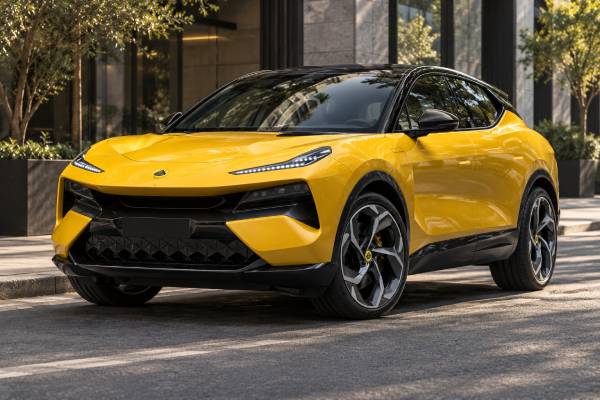
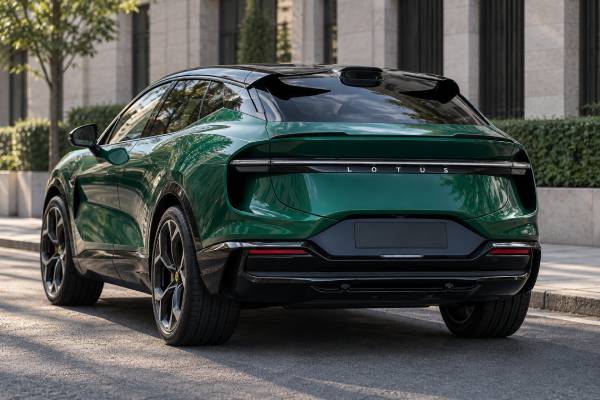
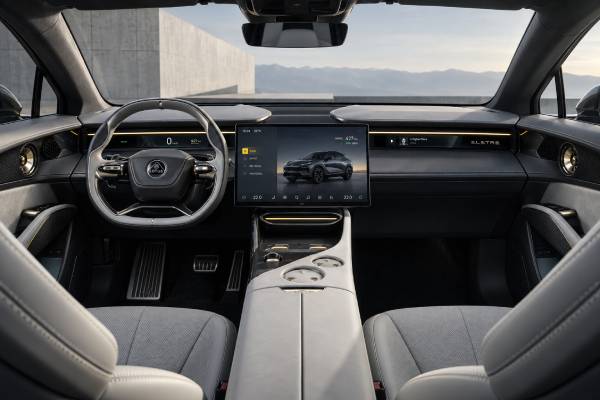
The 2025 Lotus Eletre 600 Luxury occupies the middle of the Chinese-market 600 range: more richly equipped than the Touring version, but less rear-seat-specialized than the four-seat Executive. It uses the same 450 kW dual-motor AWD system and 710 Nm of torque as the other 600 models, with a 112 kWh battery and an official 650 km CLTC range. That combination makes the Luxury an appealing compromise for drivers who want the five-seat practicality of a conventional SUV without giving up the premium cabin and technology expected from an Eletre. Its performance is still substantial—about 4.5 seconds to 100 km/h—yet the car’s real strengths are fast charging, long-range capability, active suspension, and a spacious interior. The key buying challenge is specification accuracy. Chinese-market listings can be translated inconsistently, and export examples may lose app, navigation, warranty, or charging convenience outside their home region. The best 600 Luxury is therefore not simply the lowest-mileage car; it is the one whose equipment, software, charging standard, and service history are fully understood.
Table of Contents
- Where the 600 Luxury sits in the range
- Specifications and technical data
- 650 km CLTC range and charging
- Cabin, seating, and useful luxury features
- Road manners, suspension, and tires
- Maintenance and battery care
- How to buy a used or imported 600 Luxury
Where the 600 Luxury sits in the range
The 600 Luxury is the balanced premium trim of the 2025 Chinese Eletre lineup. It keeps five seats and the 450 kW drivetrain while adding equipment over the range-focused 600 Touring, making it a better fit for buyers who want comfort without the Executive model’s four-seat layout.
Chinese-market data places the 600 Luxury at 650 km CLTC, between the 700 km Touring and 640 km Executive. That ordering makes sense: range changes can reflect tire choice, aerodynamic details, weight, and equipment rather than a different battery or motor system.
The “600” designation identifies the lower-output Eletre family after Lotus revised its naming. It should not be read as exactly 600 horsepower. The official 450 kW system converts to roughly 612 metric horsepower.
Specifications and technical data
The 600 Luxury is a BEV with one electric motor per axle, permanent all-wheel-drive capability, a large NMC battery, and a single-speed reduction drive. The 800-volt electrical architecture is one of its most important engineering features because it supports rapid high-power charging.
| Item | Specification |
|---|---|
| Maximum output | 450 kW / 612 PS |
| Maximum torque | 710 Nm |
| Motor count | 2 |
| Drive | AWD |
| Transmission | Single-speed electric reduction |
| Battery capacity | 112 kWh |
| Battery chemistry | Ternary lithium/NMC in Chinese data |
| Item | Specification |
|---|---|
| CLTC range | 650 km |
| 0–100 km/h | About 4.5 seconds |
| Maximum speed | About 258 km/h |
| Seating | 5 |
| Item | Specification |
|---|---|
| Length | 5,103 mm |
| Width | 2,019 mm |
| Height | 1,636 mm |
| Wheelbase | 3,019 mm |
| Typical listed curb mass | Around 2,600 kg for 600 Luxury listings |
| Item | Specification |
|---|---|
| Front storage | 46 L on common Eletre configuration |
| Rear luggage, five seats | 688 L on common five-seat Eletre configuration |
| Rear luggage, seats folded | Up to 1,532 L |
| Braked towing reference | Up to 2,250 kg where homologated |
| Item | Specification |
|---|---|
| High-voltage architecture | 800 V class |
| Rapid-charge benchmark | Approximately 10–80% in 20 minutes in favorable conditions |
| Suspension | Adaptive air suspension |
| Common 22-inch tires | 275/40 R22 front; 315/35 R22 rear |
The Luxury’s exact curb mass, wheel package, driver-assistance hardware, and interior specification should be confirmed from the individual vehicle. A trim label is not a substitute for a factory equipment record.
650 km CLTC range and charging
The 650 km CLTC figure is a certification result for the Chinese test cycle, not a guaranteed trip distance. It is most useful when comparing the 600 Luxury with other Chinese-market versions under the same procedure.
A realistic journey budget should account for speed, weather, elevation, tire pressure, wheel size, payload, and cabin climate. A 5.1-meter SUV traveling at high motorway speeds has considerable aerodynamic demand, so the gap between urban efficiency and fast-road efficiency can be large.
The Eletre’s charging system is designed to make range less restrictive. The 800-volt platform allows very high DC power when the charger, battery temperature, and state of charge all cooperate. The practical metric is not the highest number flashed on the charger screen but how quickly the car adds usable energy over a 15–25 minute stop.
Owners should route to high-power chargers using the car’s navigation when regional software supports it, because battery preconditioning can improve the start of the charging session. On a parallel import, verify whether preconditioning works with local map data or can be activated by another method.
At home, reliability matters more than maximum power. Most owners return with a partially depleted battery and can refill daily consumption overnight. A correctly installed, appropriately rated AC charger is more useful than chasing the maximum theoretical rate on a supply that cannot support it.
Cabin, seating, and useful luxury features
The five-seat layout is one of the 600 Luxury’s practical advantages. It preserves a center rear seat and conventional family flexibility while still offering the Eletre’s premium materials, large display system, connected features, and extensive seat comfort equipment depending on specification.
Inspect the cabin with the same seriousness as the battery. Test every powered seat function, climate zone, USB/charging outlet, ambient lighting mode, audio channel, camera view, and steering-wheel control. A luxury EV can have dozens of functions that appear trivial until one fails and requires a region-specific module.
The 15.1-inch central OLED interface is central to vehicle settings. Confirm that it boots quickly, retains profiles, responds without ghost touches, and can access all required menus. If the car has been imported, look for untranslated screens or services that depend on a Chinese account.
The panoramic roof makes the cabin feel spacious but should be checked for stone chips, edge damage, water staining, and squeaks over body twist. Large glass parts are expensive, and poor accident repair can create wind noise that is hard to diagnose.
Road manners, suspension, and tires
The 600 Luxury is quick enough to embarrass many performance cars, but its chassis should also deliver calm, predictable comfort. A test drive should therefore include rough roads, parking manoeuvres, medium-speed corners, and a firm brake application—not only a full-throttle run.
The air suspension should raise and lower evenly and settle without a corner sagging. Adaptive dampers should produce a noticeable but controlled change between comfort and sport-oriented settings. Excessive compressor operation after parking can indicate leakage or a height-control problem.
Rear-wheel steering, where fitted, makes the long wheelbase easier to manage. During a tight turn, listen for knocks and feel for smooth steering assistance. At higher speed, the car should track cleanly without wandering.
Tires have an outsized influence on ride and efficiency. The common 22-inch staggered setup already uses very wide rubber; 23-inch alternatives add cost and can increase impact sensitivity. Examine inner tread edges carefully because alignment wear can hide from an outside glance.
Maintenance and battery care
The 600 Luxury has no engine oil or spark plugs, but it still requires scheduled service and careful inspection. Brake fluid, cabin filtration, tires, suspension, coolant circuits, wipers, low-voltage electrical health, and software are all part of ownership.
The battery’s long-term health benefits from avoiding unnecessary extremes. Use the recommended daily charge limit, charge to 100% when a trip actually requires it, and follow Lotus guidance for long storage. The battery-management system provides safeguards, but it cannot make every owner habit irrelevant.
Cooling-system health matters because the same thermal network supports rapid charging and high-output driving. Any repeated high-voltage temperature warning, unusual fan behavior, or abrupt charging slowdown should be diagnosed by a qualified workshop.
Regenerative braking can leave friction brakes underused. Inspect disc surfaces and use the friction brakes enough to keep them clean, while following safe road conditions. Corroded discs can develop vibration long before pads are worn out.
How to buy a used or imported 600 Luxury
A careful 600 Luxury purchase has three layers: verify the trim, verify vehicle condition, and verify regional compatibility. Skipping any one can turn a low purchase price into a high total cost.
For identity, confirm the 2025 model, 450 kW output, five-seat layout, and 650 km CLTC certification in original paperwork. For physical condition, inspect the battery enclosure, undertrays, suspension, wheels, tires, brakes, roof, and body alignment.
For digital condition, scan control modules and test navigation, mobile data, app binding, OTA status, cameras, driver-assistance functions, and all cabin electronics. A clean dashboard is not proof that every feature works.
Finally, demonstrate charging. Use both the routine AC solution and the intended public DC solution in the destination country. Confirm that local service support and warranty terms are acceptable for a China-market VIN.
The 600 Luxury is the most broadly useful of the 2025 Chinese 600 trims for many families: five seats, strong range, the full 450 kW performance level, and more equipment than the Touring. Its main risk is not the powertrain but buying an imported example without understanding the regional technology around it.
Why the Luxury may be the easiest 600 to resell
The Luxury’s five-seat layout gives it a broader audience than the Executive, while its richer equipment can make it more desirable than the Touring to buyers who are not chasing maximum range. That balance can help resale, provided the car remains close to original specification and its software works locally.
A future buyer is likely to compare it with both 600 Touring and newer-market Eletre models. Keeping original wheels, service records, charging accessories, keys, and account-transfer documentation can make the car easier to understand and therefore easier to sell.
Avoid modifications that blur the trim’s identity. Rebadging, aftermarket screens, unsupported software flashing, or permanent charging conversions may solve short-term issues but make the vehicle harder to value later.
Five-seat family inspection
Bring the actual family equipment to the viewing when possible. Fit child seats using the appropriate anchorages, check whether bulky seats interfere with front-seat travel, and test access through the rear doors. Verify that the center seating position is practical for the intended use rather than assuming a wide SUV guarantees three comfortable child seats.
Load a stroller, suitcase, or sports equipment into the rear cargo area. The Eletre’s published luggage volume is generous, but shape and floor height determine whether the space works for a specific family.
If the car includes a powered tailgate with hands-free operation, test it repeatedly. Confirm the opening height can be limited for a low garage and that the tailgate does not reverse unexpectedly due to sensor or strut issues.
Evaluating cabin electronics without rushing
Modern luxury cars can hide faults because many functions are buried in menus. Create a checklist before the test drive. Pair a phone, make a call, stream audio, set a navigation destination, adjust charging limits, create a driver profile, test cameras, and change drive modes.
Restart the car and verify that settings persist. Intermittent infotainment resets, forgotten profiles, or Bluetooth dropouts may indicate software problems that are difficult to reproduce at a workshop.
If the car supports Apple CarPlay or Android Auto in its current software, test the exact phone that will be used. Market software can differ, and the presence of an icon in a translated brochure does not guarantee the feature works on an imported VIN.
Urban use in a 5.1-meter SUV
The Luxury is practical for a large SUV but still physically large. Measure the home garage width and length, including room to open doors and access the charging port. The 2,019 mm body width excludes mirrors, so a tight entrance can be much more challenging than the nominal number suggests.
Surround-view cameras and parking sensors should be treated as important usability equipment, not gadgets. Check image stitching, lens clarity, and sensor response. A single failed camera can make daily parking noticeably harder in a vehicle this wide.
Rear steering, where fitted, reduces the apparent size at low speed. Demonstrate it in a tight turning area. If the turning circle feels unexpectedly large or a steering warning appears, have the system diagnosed.
Summer and winter efficiency
Expect seasonal energy use to change. Summer heat increases air-conditioning demand but usually allows the battery to operate efficiently once cooled. Winter cold affects battery chemistry, cabin heating, tire pressure, and aerodynamic drag, so range loss can be more pronounced.
Preconditioning while plugged in is one of the simplest tools. Heat or cool the cabin before departure using grid electricity, and allow the battery-management system to bring the pack toward a favorable temperature when the vehicle supports it.
Check tire pressure more often during temperature swings. Pressure falls as ambient temperature drops, and underinflation increases rolling resistance and shoulder wear. On wide, expensive tires, maintaining pressure protects both range and budget.
What to do after buying
Immediately after purchase, establish a baseline. Record tire tread depths and pressures, obtain an alignment if wear is uneven, scan for stored faults, confirm software versions, and perform a full AC and DC charging test. Save the results with the service history.
Reset the driver profile and app ownership correctly rather than continuing to use a seller’s account. Update emergency contacts, navigation favorites, charge schedules, and home location. If the car was imported, document the charging adapter or conversion and keep its safety instructions in the vehicle.
A baseline turns future troubleshooting into comparison rather than guesswork. If charging slows or tire wear changes later, the owner has real earlier data to reference.
Where the 600 Luxury sits in the 2025 range
The 600 Luxury occupies a useful middle ground. It keeps five-seat practicality while adding equipment beyond the range-focused Touring, yet it avoids the fixed four-seat commitment of the 600 Executive. That positioning is more important than the trim name itself because all three share the same broad 450 kW performance class and can look very similar in photographs.
A buyer comparing listings should create a side-by-side equipment sheet from the actual cars. Note wheels, seats, audio, driver-assistance hardware, rear comfort features, trim materials, charging accessories, and any option packages. Do not assume every feature mentioned in a translated advertisement was standard on the Luxury. Demonstrate expensive items in person and photograph the menus that confirm them.
Range figures should also stay attached to the exact trim. The Luxury’s CLTC certification is lower than the Touring’s headline number, reflecting its configuration, while the Executive trades additional efficiency and seating flexibility for its rear-cabin focus. These differences make sense only when the car has been correctly identified.
Charging-port compatibility on an exported Luxury
For a China-market vehicle, charging compatibility deserves its own pre-purchase test. Identify the physical inlet standard and then separate AC from DC requirements. A cable that enables routine wallbox charging does not necessarily solve high-power public charging, and an adapter used successfully on one network may not prove compatibility with every charger type.
Ask the seller to demonstrate the exact hardware that will accompany the car. Inspect pins and housings for heat discoloration or damage, verify that locking and release mechanisms work, and keep the adapter’s model and rating documentation. High-current conversion hardware should provide appropriate communication and protection, not merely a mechanical change of connector shape.
When possible, test the car at a public DC site in the destination country before finalizing the purchase. Observe whether the session starts reliably, remains stable, and ends normally. Peak charge power depends on battery temperature and state of charge, so the goal is to prove compatibility and fault-free operation rather than demand one headline number.
Alignment, tires, and the cost of a heavy luxury EV
The Eletre’s mass and torque make alignment quality visible in the tire tread. Run a hand across each tire and inspect the inner shoulders with a light. Uneven wear can indicate toe or camber issues even when the car tracks straight on a short test drive. If the steering wheel sits off-center or the car has recently received new tires, ask why the old set was replaced and whether an alignment printout exists.
Rear-wheel steering and air suspension add reasons to use a workshop familiar with the platform. Alignment should be performed at the specified ride height and with the correct procedure for the steering system. A generic quick adjustment may produce acceptable steering feel while leaving tire-wearing geometry elsewhere.
Price a complete set of tires before purchase. Owners sometimes fit cheaper mixed models after discovering the cost of original-size premium rubber. Matching suitable tires across each axle protects predictable handling, wet grip, and load capability. If an attractive purchase needs four tires and a wheel refurbishment immediately, those costs belong in the negotiated price.
Warranty recognition and service planning
Factory warranty terms vary by market, and an exported Chinese car should never be assumed to inherit the same coverage as a locally delivered Eletre. Give the VIN to the servicing organization and ask what it can verify in writing. Distinguish between a manufacturer warranty, a seller’s commercial warranty, and a third-party insurance product because their exclusions and repair processes can be very different.
Even without transferable factory coverage, service planning can be made robust. Identify a workshop capable of high-voltage diagnostics, air-suspension work, ADAS calibration, and software scans. Ask how it obtains technical information and parts for the exact VIN. Routine mechanical service is only one part of supporting a software-defined luxury EV.
Keep a complete digital service file. Save charging-hardware details, software versions, recall or campaign records, alignment sheets, tire invoices, battery reports, and accident-repair documentation. That record improves troubleshooting today and gives a future buyer confidence that an imported Luxury has been managed deliberately rather than improvised from problem to problem.
Before the first long trip
After buying a 600 Luxury, use several local charging sessions before depending on the car for a cross-border journey. Confirm that home charging, the preferred rapid-charge networks, navigation, phone integration, and backup payment methods all work. Set tire pressures to the load and speed conditions in the handbook, and carry the correct charging cables rather than whatever happened to be in the boot at purchase.
A short shakedown period is especially useful for an import because it exposes account, connector, and software issues while the car is still close to home. Once those systems are proven, the large battery and rapid-charging capability can be used with much more confidence.
References
– SEC Filing 2026 – Lotus Eletre – Explore Models | Lotus Cars 2026 – Lotus Eletre | How it Drives | Lotus Cars 2026 – Lotus Charging | Lotus Cars 2026 – Lotus Eletre Handbook for Drivers | Lotus Cars 2026 (Owner’s Manual) – Lotus Eletre: the world’s first electric Hyper-SUV – Lotus Cars Media Site 2022
Disclaimer
This article is for informational purposes, not a substitute for professional diagnosis or repair. Specifications, torque values, service intervals, software features, and procedures can vary by VIN, market, and equipment. Verify the individual car against official Lotus service and homologation documentation.
If this 600 Luxury guide helped, please share it on Facebook, X/Twitter, or another automotive community to support our work.