
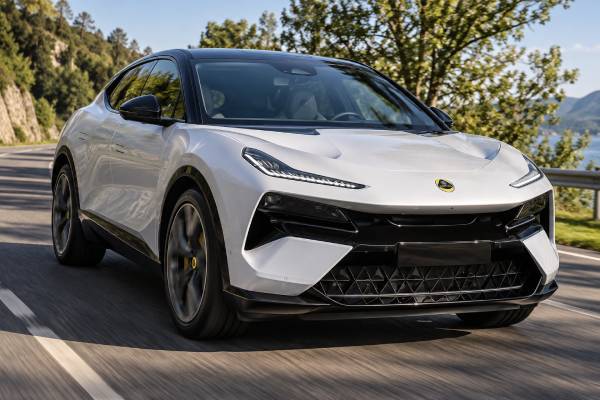
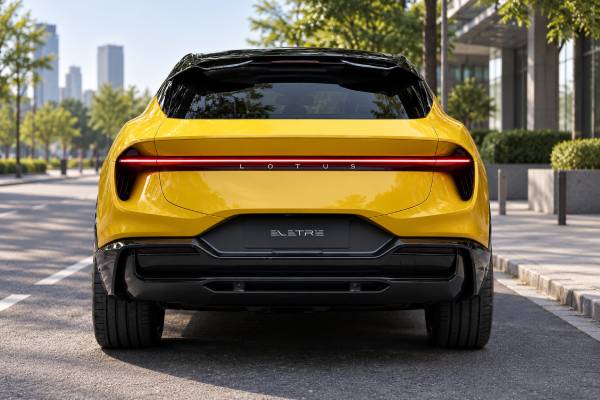
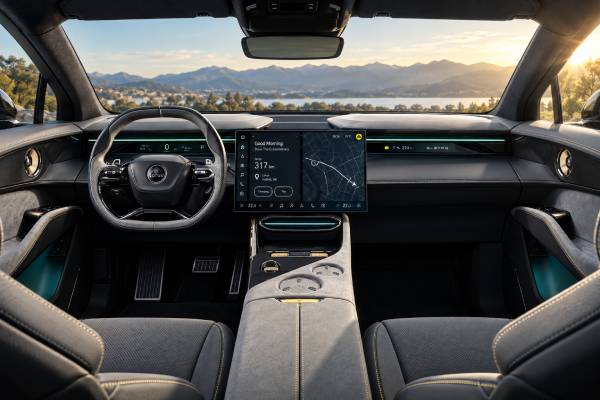
The Eletre 600 SE is easy to misunderstand because the badge can sit in different market lineups and equipment structures, while the underlying 450 kW AWD hardware remains familiar. It uses the 450 kW dual-motor all-wheel-drive branch of the Type 132 platform, with 710 Nm of combined torque and an 800 V electrical architecture built for very rapid DC charging. This guide concentrates on the SE equipment step and the importance of verifying market-specific standard equipment. It also separates verified family-wide engineering facts from equipment that can vary by country, wheel package and production date. That distinction matters with the Eletre because Lotus has revised naming and specifications across markets, and even horsepower figures can differ depending on whether a source uses metric horsepower or brake horsepower. The safest approach is to identify the exact car by VIN and factory build data, then judge its battery, charging, software, suspension, tires and options as a complete ownership package rather than relying on the badge alone.
Table of Contents
- Understanding the Eletre 600 SE badge
- Technical facts that define the 600 SE
- Acceleration, braking and chassis character
- Equipment differences and market variation
- Charging, efficiency and winter planning
- Ownership care and preventive maintenance
- Pre-purchase verification checklist
Understanding the Eletre 600 SE badge
The SE badge needs market context. Lotus has adjusted Eletre naming and equipment by region and model year, so an SE in one country can overlap with another market’s GT-oriented specification. The correct way to identify a car is by its VIN-linked build data, factory equipment and published market specification rather than by translating one country’s trim ladder into another.
Mechanically, the attraction remains straightforward: 450 kW dual-motor AWD, 710 Nm, high-voltage fast charging and the Eletre’s sophisticated chassis architecture. That is already a very high baseline. The rest of the ownership case depends on wheel size, comfort options, driver-assistance equipment and the condition of expensive exterior and interior trim.
Because the SE suffix is not globally uniform, an advertisement that lists “SE” without a market specification deserves follow-up. Ask for the original order sheet or build data and compare it with the hardware physically fitted to the vehicle.
Technical facts that define the 600 SE
The 600 SE should be treated as a 450 kW Eletre first and an equipment grade second. Because trim content varies by market, technical identity should be confirmed from the car itself and its factory records.
| Specification | Value |
|---|---|
| Powertrain type | Battery-electric vehicle (BEV) |
| Motor layout | One electric drive unit at each axle |
| Electrical architecture | 800 V class high-voltage system |
| Battery | 112 kWh class traction battery (Lotus market literature; verify gross/usable labeling for the exact car) |
| Drivetrain | All-wheel drive |
| Specification | Value |
|---|---|
| Maximum power | 450 kW (603 hp as specified for this assignment) |
| Maximum torque | 710 Nm (524 lb-ft) |
| Drive | Dual-motor all-wheel drive |
| Reduction gearing | Single-speed front and rear |
| 0–100 km/h | about 4.15 s, market specification dependent |
| Top speed | about 250 km/h, market specification dependent |
| Specification | Value |
|---|---|
| DC charging | Up to 350 kW CCS on compatible infrastructure |
| AC onboard charging | Up to 22 kW in markets/configurations that support it |
| DC rapid-charge claim | Lotus has advertised roughly 400 km / 250 miles of added range in about 20 minutes under favorable conditions |
| Regeneration | Adjustable regenerative braking |
| Charge planning | Navigation and app functions can support charging-route planning and battery monitoring |
| Specification | Value |
|---|---|
| Length | 5,103 mm (200.9 in) |
| Wheelbase | 3,019 mm (118.9 in) |
| Height | about 1,630 mm (64.2 in) |
| Width | 2,135 mm with camera mirror system in early published target specification |
| Body | Five-door luxury performance SUV |
| Seating | Four- or five-seat layouts have been offered, depending on market and configuration |
| Specification | Value |
|---|---|
| Front suspension | Multi-link |
| Rear suspension | Five-link / multi-link |
| Springing | Air suspension |
| Damping | Continuous Damping Control adaptive dampers |
| Steering | Electric power steering |
| Torque management | Brake-based torque vectoring; additional active chassis systems depend on trim/options |
| Specification | Value |
|---|---|
| High-voltage battery | Check state-of-health diagnostics, charging history and warning logs |
| Tires | Inspect inner and outer shoulders; large staggered performance tires are costly |
| Brakes | Check disc condition, corrosion and friction-brake operation despite strong regeneration |
| Software | Confirm current vehicle software and completion of applicable campaigns |
| 12 V system | Verify auxiliary-battery health because low-voltage faults can disable high-voltage vehicle functions |
Acceleration, braking and chassis character
The SE’s dynamic character comes from the Eletre platform more than from the suffix. Dual motors provide immediate front-rear traction, air suspension supports ride-height and damping control, and the low battery mass helps reduce the top-heavy sensation common to large SUVs. Optional active systems can sharpen that foundation further.
For an SE import, hard-use condition must be interpreted after the car’s exact market specification is established.
Drive modes change response, steering weight and chassis behavior, but they cannot compensate for poor tires. Correct load and speed ratings, matching axle pairs and appropriate pressure are basic safety requirements on a vehicle with this much torque.
Brake condition can reveal storage or usage history that paperwork from another country does not explain.
Equipment differences and market variation
Air-suspension functions should be checked locally because ride-height calibrations and wheel fitments may differ from the buyer’s assumptions.
Seating layout should be verified from the car itself rather than inferred from how “SE” is sold in another market.
Exterior aero hardware and sensors deserve extra scrutiny after international shipping or prior accident repair.
Confirm that infotainment, navigation and connected services operate correctly in the country where the car will live.
For this enhanced-equipment 600-series version, the practical point is the SE equipment step and the importance of verifying market-specific standard equipment. That should guide which options are worth paying for and which are only attractive on a showroom specification sheet.
Charging, efficiency and winter planning
SE owners should confirm what connected charging features are active in their market and subscription state. App services, remote climate control and route planning can be valuable, but availability may depend on region, software version and service plan.
Perform a local rapid-charge test to prove connector and network compatibility, not just battery performance.
Check AC cable and onboard-charger compatibility with local home or workplace infrastructure.
Cold-weather planning should include battery and cabin preconditioning where available. In hot climates, parking and charging conditions also matter because the thermal-management system may need to devote energy to keeping the pack within its preferred temperature range.
Ownership care and preventive maintenance
On an SE, the best maintenance habit is documentation discipline. Keep software versions, service invoices, tire specifications and any warranty work together. That record becomes particularly useful when the trim name itself is not enough to identify equipment across markets.
Ownership care should prioritize documentation of market conversion, software and any local retrofit work.
Use original-market service data together with Lotus guidance applicable to the current country.
Battery diagnostics remain universal evidence when trim naming is not.
Pre-purchase verification checklist
With a 600 SE, market identification comes first. Confirm the country specification and original equipment so the asking price is compared with like-for-like cars. Then apply the normal Eletre checks for battery, charging, suspension, tires, brakes and software.
- Confirm the VIN, original market and advertised 600 SE specification before discussing price.
- Review campaign and software history with special attention to market verification.
- Inspect wheels and tires for damage or wear that could affect import documentation and local feature support.
- Cycle the air suspension and test the car on both smooth and broken pavement.
- Verify normal AC charging and complete a DC rapid-charge test when practical.
- Operate every fitted camera, assistance function, seat, climate and infotainment feature.
- Review battery diagnostics, warranty position and repair history before final payment.
With the 600 SE, clear market documentation can be more valuable than a small mileage advantage. Buyers need to know what the car is before they can decide whether its use history is acceptable.
Why market identification comes first
The Eletre’s naming transition means “600 SE” should never be interpreted without a country and model year. Manufacturers often use the same suffix differently across regions because equipment packages, taxes and customer expectations differ. A seller who imported the car may honestly repeat the badge while overlooking that local-market brochures describe a different standard specification.
The cure is documentation. Ask for the original market, factory order or build sheet, VIN and first registration documents. Then inspect the car itself for the listed wheel, seat, audio, glass and chassis equipment. This process takes longer than reading a badge, but it prevents paying for features that are assumed rather than present.
The powertrain is the stable reference point
Whatever the equipment ladder, the 600 SE in this assignment belongs to the 450 kW dual-motor family. That makes 710 Nm, AWD and the 800 V charging architecture the reliable mechanical baseline. Compared with the 900-series system, there is no need for the high-output rear two-speed transmission, so the propulsion layout is simpler while remaining extremely quick.
For a road-focused owner, that can be a benefit. Fewer headline-performance components do not make the vehicle simple overall, but they narrow the number of high-load driveline systems that need to be evaluated on a used purchase.
Winter use and preconditioning
Cold weather affects both range and charging because the battery operates best in a controlled temperature window. Use scheduled cabin conditioning while the car is plugged in when possible, and use navigation-based battery preconditioning before a rapid-charge stop if the vehicle software supports it. The energy used to warm the cabin before departure then comes from the charger rather than immediately reducing driving range.
Tire choice matters just as much. A high-performance summer tire can lose effectiveness in low temperatures even when roads are dry. Where winter conditions are common, use an approved winter setup with the correct load and speed ratings rather than relying on AWD to compensate for unsuitable rubber.
SE value depends on verified equipment
A used SE is attractive when its added equipment is present, functional and useful to the buyer. It is less attractive when the price premium rests on a trim name that does not translate cleanly into the local market. Compare actual specification and condition with nearby 600, GT and GT SE examples, then decide whether the car earns its price on substance.
A market-aware buying method
Start by writing down the advertised model name exactly as shown in the original market documents. Next, list the installed equipment you can verify physically: wheel size, seating layout, audio system, glass, chassis features and driver-assistance hardware. Only after that should you compare the car with local-market prices. This avoids false comparisons between similarly named but differently equipped vehicles.
If the car is an import, confirm warranty transfer rules and connected-service availability. Some services may depend on the original region, telecommunications support or account eligibility. A mechanically excellent imported car can still be inconvenient if app functions or service coverage do not transfer cleanly.
For resale planning, keep the original foreign-market documents with translated summaries if needed. Future buyers will face the same naming confusion, and good documentation makes the car easier to explain. Retain invoices showing local software updates or campaign work as well.
The 600 SE can be a strong value when the buyer understands exactly what it is. The danger is not the car itself; it is paying a premium based on a suffix that was never verified against the actual build.
Imports require an extra charging check
For an imported 600 SE, confirm that the charge port, supplied cables and onboard charger suit local infrastructure. The underlying Eletre architecture may be global, but connector conventions, public-network compatibility and charging-account support can differ. Test the exact car at a local AC point and, if practical, a local DC rapid charger before purchase. Also confirm that navigation data and charging-station databases are appropriate for the country where the car will live. These checks are simple but can prevent an ownership problem that is invisible in a static inspection. An attractive imported specification is only a bargain when it integrates cleanly with local charging, service and connected-service systems.
Additional ownership perspective
The same discipline applies at resale. Describe the exact market specification, attach build documentation and avoid advertising the car as equivalent to a differently named local trim unless the equipment truly matches. Clear disclosure reduces buyer suspicion and makes pricing discussions easier. For unusual imports, a well-organized folder containing registration history, service invoices, software work and charging compatibility information can be worth more than minor cosmetic upgrades. The easier the car is to understand, the easier it is for the next owner to value it fairly.
For a buyer comparing several cars, this clarity also prevents wasting time on false bargains: a cheaper imported SE may simply omit equipment that a local buyer assumes is standard, while a slightly dearer example may include exactly the options that matter. Compare verified equipment, support and condition as one package.
One more ownership consideration
Imported SE cars can also create parts-identification challenges. When ordering trim, glass, wheels or electronic modules, the original VIN and market code may matter more than the local registration description. Keeping copies of foreign build records with the car makes future parts work faster and reduces the chance that a workshop orders a superficially similar but incorrect component.
Import paperwork can be as important as the test drive
A 600 SE that crossed borders can be mechanically excellent yet difficult to value if its documentation is incomplete. Keep the original registration, purchase invoice, build sheet and any export or import records together. These papers help explain why the equipment differs from locally sold cars and can make future parts ordering or resale much easier. A translated summary is useful, but retain the original documents as well.
Connected services deserve a specific check on imported cars. Verify that the vehicle can be linked to a local owner account, that navigation data covers the country correctly and that supported remote features function. Some services depend on regional telecommunications or contractual arrangements, so a feature shown in the original brochure may not behave identically after import.
Warranty and roadside support should also be confirmed by VIN. Do not assume a remaining term automatically transfers across markets. If coverage is limited, the purchase price should reflect that difference. An imported SE can be excellent value, but only when charging compatibility, software support, documentation and service access are understood before money changes hands.
Final practical note
Imported examples also deserve a careful check of language, units and navigation settings. Make sure the vehicle can display the preferred language, local speed units and regional map data without awkward workarounds. Check that emergency-call and assistance features are supported in the destination country where legally relevant. These details do not affect motor output, but they shape everyday usability and resale. A 600 SE that integrates cleanly into its new market can be a compelling purchase; one that retains unresolved regional limitations may remain difficult to support no matter how attractive its original specification looks.
For local servicing, give the workshop the original-market VIN information before booking parts or software work. That small step can prevent delays when trim naming differs from the domestic catalog and helps the technician identify the correct hardware from the start.
That documentation remains useful later.
References
- Lotus Eletre – The Electric Hyper SUV | Lotus Cars 2026
- Lotus Eletre – Explore Models | Lotus Cars 2026
- Lotus Eletre | How it Drives | Lotus Cars 2026
- Lotus Eletre – Specs, Features and More | Lotus Cars Netherlands 2026
- Lotus Eletre Handbook for Drivers | Lotus Cars 2026
- Lotus Charging | Lotus Cars 2026
Disclaimer
This article is for informational purposes only and is not a substitute for professional diagnosis, repair, or vehicle-specific service information. Specifications, torque values, maintenance intervals, charging behavior, software functions, and procedures can vary by VIN, market, production date, wheel package, and equipment. Verify all service work and technical values against official Lotus documentation for the exact vehicle.
If this guide was useful, please share it on Facebook, X/Twitter, or your preferred automotive community to support our work.