
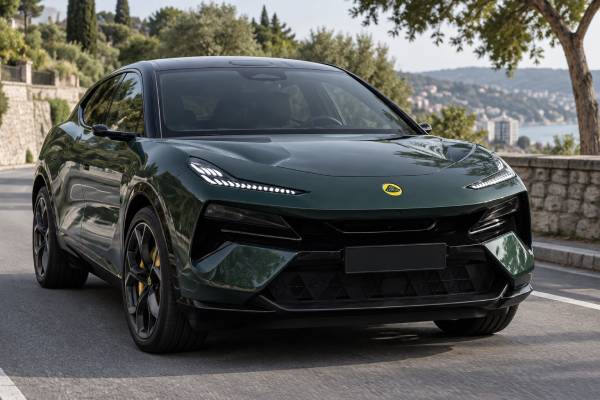
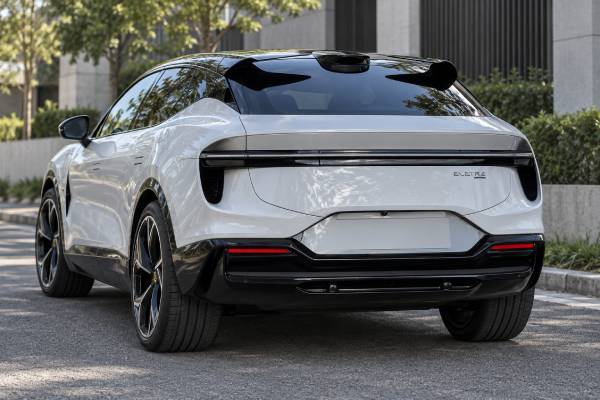
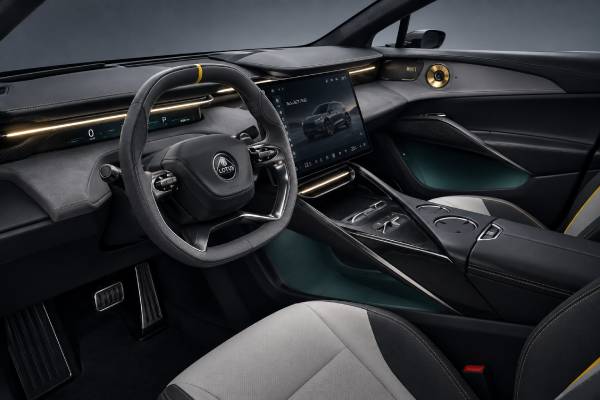
The Eletre 600 SPORT SE demonstrates an important truth about modern performance EVs: once power is already enormous, better chassis control can matter more than another increase in motor output. It uses the 450 kW dual-motor all-wheel-drive branch of the Type 132 platform, with 710 Nm of combined torque and an 800 V electrical architecture built for very rapid DC charging. This guide concentrates on chassis hardware and dynamic options that matter more than the unchanged 450 kW output. It also separates verified family-wide engineering facts from equipment that can vary by country, wheel package and production date. That distinction matters with the Eletre because Lotus has revised naming and specifications across markets, and even horsepower figures can differ depending on whether a source uses metric horsepower or brake horsepower. The safest approach is to identify the exact car by VIN and factory build data, then judge its battery, charging, software, suspension, tires and options as a complete ownership package rather than relying on the badge alone.
Table of Contents
- Why SPORT SE is about chassis, not more power
- 600 SPORT SE technical specification
- Active chassis systems and steering behavior
- Brakes, tires and repeatable performance
- Range and charging compromises of sport hardware
- Maintenance for a dynamically equipped Eletre
- Buying the SPORT SE for the right reasons
Why SPORT SE is about chassis, not more power
SPORT SE is the 600-series model for drivers who notice body control, steering response and cornering attitude more than they care about adding another few hundred horsepower. Lotus lists equipment such as intelligent anti-roll control and active rear steering in sport-oriented specifications, systems that can make a large SUV feel smaller and more settled in fast transitions.
Those systems also add inspection points. A warning-free dashboard is not enough; the car should change direction cleanly, track straight, sit level and remain quiet over broken surfaces. Uneven tire wear, steering offset or clunks deserve investigation because high-output EVs can conceal alignment or suspension issues behind enormous straight-line performance.
SPORT SE rewards a test drive with bends and imperfect pavement. A straight motorway route will not reveal much about active rear steering or anti-roll control, and it may hide the very reasons to pay extra for the sport-oriented trim.
600 SPORT SE technical specification
The SPORT SE uses the 450 kW system, so the interesting hardware is concentrated in chassis specification rather than extra motor output. Buyers should therefore pay close attention to active steering, anti-roll hardware and wheel/tire condition.
| Specification | Value |
|---|---|
| Powertrain type | Battery-electric vehicle (BEV) |
| Motor layout | One electric drive unit at each axle |
| Electrical architecture | 800 V class high-voltage system |
| Battery | 112 kWh class traction battery (Lotus market literature; verify gross/usable labeling for the exact car) |
| Drivetrain | All-wheel drive |
| Specification | Value |
|---|---|
| Maximum power | 450 kW (603 hp as specified for this assignment) |
| Maximum torque | 710 Nm (524 lb-ft) |
| Drive | Dual-motor all-wheel drive |
| Reduction gearing | Single-speed front and rear |
| 0–100 km/h | about 4.15 s, market specification dependent |
| Top speed | about 250 km/h, market specification dependent |
| Specification | Value |
|---|---|
| DC charging | Up to 350 kW CCS on compatible infrastructure |
| AC onboard charging | Up to 22 kW in markets/configurations that support it |
| DC rapid-charge claim | Lotus has advertised roughly 400 km / 250 miles of added range in about 20 minutes under favorable conditions |
| Regeneration | Adjustable regenerative braking |
| Charge planning | Navigation and app functions can support charging-route planning and battery monitoring |
| Specification | Value |
|---|---|
| Length | 5,103 mm (200.9 in) |
| Wheelbase | 3,019 mm (118.9 in) |
| Height | about 1,630 mm (64.2 in) |
| Width | 2,135 mm with camera mirror system in early published target specification |
| Body | Five-door luxury performance SUV |
| Seating | Four- or five-seat layouts have been offered, depending on market and configuration |
| Specification | Value |
|---|---|
| Front suspension | Multi-link |
| Rear suspension | Five-link / multi-link |
| Springing | Air suspension |
| Damping | Continuous Damping Control adaptive dampers |
| Steering | Electric power steering |
| Torque management | Brake-based torque vectoring; additional active chassis systems depend on trim/options |
| Specification | Value |
|---|---|
| High-voltage battery | Check state-of-health diagnostics, charging history and warning logs |
| Tires | Inspect inner and outer shoulders; large staggered performance tires are costly |
| Brakes | Check disc condition, corrosion and friction-brake operation despite strong regeneration |
| Software | Confirm current vehicle software and completion of applicable campaigns |
| 12 V system | Verify auxiliary-battery health because low-voltage faults can disable high-voltage vehicle functions |
Active chassis systems and steering behavior
SPORT SE is about making 450 kW easier to place on the road. Rear steering can improve low-speed maneuverability and high-speed stability, while active anti-roll control can reduce body movement in corners. Those systems do not repeal the vehicle’s mass, but they can make responses more consistent and give the driver clearer confidence.
A SPORT SE should be judged after several corners and braking events, because chassis consistency is the reason to pay extra.
Drive modes change response, steering weight and chassis behavior, but they cannot compensate for poor tires. Correct load and speed ratings, matching axle pairs and appropriate pressure are basic safety requirements on a vehicle with this much torque.
Brake feel should stay stable as pace increases; regeneration alone cannot demonstrate the condition of the performance hardware.
Brakes, tires and repeatable performance
Choose seating based on actual use, but do not let cabin configuration distract from verifying the sport chassis systems.
Check aerodynamic pieces and underbody areas for damage from aggressive driving or low ride-height use.
Confirm chassis menus, steering settings and sensor-dependent functions after software updates.
Cycle ride height and test active roll control over uneven roads, listening for noises that a smooth route might hide.
For this sport-chassis 600-series trim, the practical point is chassis hardware and dynamic options that matter more than the unchanged 450 kW output. That should guide which options are worth paying for and which are only attractive on a showroom specification sheet.
Range and charging compromises of sport hardware
SPORT SE range can be influenced strongly by wheel and tire choice. Wide high-performance tires trade some efficiency for grip, so a driver who covers large motorway distances should compare real observed consumption rather than relying only on the range displayed at 100% charge.
Charging performance is shared with the 600 family, so SPORT SE value should not be justified by a different DC claim.
Routine AC charging helps preserve the car’s road-ready convenience without turning every trip into a fast-charge session.
Cold-weather planning should include battery and cabin preconditioning where available. In hot climates, parking and charging conditions also matter because the thermal-management system may need to devote energy to keeping the pack within its preferred temperature range.
Maintenance for a dynamically equipped Eletre
SPORT SE maintenance should include closer chassis observation. Active rear steering and anti-roll systems add capability, and any warning, fluid leak, abnormal tire wear or inconsistent ride height should be investigated promptly rather than normalized as “sporty” behavior.
Alignment and tire inspection deserve shorter intervals on a car bought specifically for sharper driving.
Service values should match the sport wheel and chassis configuration, not a generic 600 reference.
Battery health matters, but chassis health is equally central to this trim’s used value.
Buying the SPORT SE for the right reasons
A SPORT SE should be bought on a road that reveals its chassis. Check rear-steering behavior at low speed, stability at motorway speed, ride-height operation, anti-roll system warnings and tire wear. If those systems are not important to you, a GT-oriented 600 may be the better value.
- Confirm the VIN, original market and advertised 600 SPORT SE specification before discussing price.
- Review campaign and software history with special attention to dynamic hardware.
- Inspect wheels and tires for damage or wear that could affect rear steering, anti-roll control and alignment.
- Cycle the air suspension and test the car on both smooth and broken pavement.
- Verify normal AC charging and complete a DC rapid-charge test when practical.
- Operate every fitted camera, assistance function, seat, climate and infotainment feature.
- Review battery diagnostics, warranty position and repair history before final payment.
A SPORT SE with moderate mileage and precise alignment can be preferable to a low-mileage car that has struck wheels, worn tire shoulders or unresolved active-chassis warnings.
Active chassis hardware changes the inspection
A SPORT SE deserves a more dynamic test than a normal luxury EV because the added value is tied to how the chassis works. Active rear steering should help the car feel more maneuverable at low speed and more stable at higher speed. Intelligent anti-roll control should reduce excessive body lean without making the ride feel broken over ordinary bumps. Any warning light, inconsistent steering response or unusual clunk weakens the case for paying a Sport premium.
A static inspection can still reveal clues. Uneven ride height, fluid traces near suspension components, damaged wheel rims and feathered tire tread can point to issues that deserve professional diagnosis. On a heavy EV, suspension and alignment faults can accelerate tire wear quickly.
Why unchanged power is not a disappointment
The 450 kW output is already strong enough to overwhelm normal-road opportunities, so adding power would not automatically make the SPORT SE better. Chassis changes can improve the driver’s ability to use the existing torque with precision. Better body control, quicker yaw response and more stable braking can create a faster and more satisfying car on a real road without changing the peak kW number.
This is an important buying principle. If a seller emphasizes horsepower while saying little about chassis specification, verify what active systems are actually fitted. The Sport suffix should correspond to hardware or calibration that matters to driving, not only cosmetic pieces.
Performance tires are part of the chassis
Tire brand, model and condition can transform steering feel. A mixed set of tires may meet legal tread requirements but still make the front and rear axles respond differently. For a SPORT SE, matching premium tires with correct load ratings are worth paying for. Check manufacturing dates, sidewall damage and repair history as well as tread depth.
Large wheels also increase the chance of impact damage. Look at the inner rim edge, not just the visible face. A wheel can appear cosmetically excellent while being slightly bent on the inside, producing vibration that only becomes obvious at motorway speed.
Who benefits from SPORT SE
Choose this version if you can identify and appreciate the chassis difference. Drivers who mainly commute on straight roads may gain more from GT comfort equipment. Drivers who regularly travel on winding roads and value steering response may find the Sport hardware much more meaningful than luxury upgrades. The right choice depends on road use, not status within the price list.
How to test the SPORT SE properly
Begin at low speed. Turn tightly in a safe parking area and feel for smooth, predictable steering as the rear-steering system works. Listen for clicks or knocks from suspension components. Then drive over ordinary broken pavement and confirm the active chassis does not produce harsh impacts, warning messages or uneven ride height.
On a flowing road, use moderate legal speeds and focus on response rather than outright pace. The car should take a set cleanly, resist excessive body roll and unwind steering naturally as the corner opens. If it feels nervous, pulls under braking or requires constant correction, inspect alignment, tires and chassis systems before blaming the calibration.
After the drive, inspect the tires again. Feathering or inside-edge wear can reveal geometry issues that are difficult to feel on smooth roads. Check wheel temperature cautiously for obvious side-to-side differences that might suggest a dragging brake, without touching hot brake components.
A SPORT SE that passes these checks justifies its purpose. One that cannot demonstrate a healthy active chassis is effectively carrying expensive hardware without delivering the reason to buy it.
Alignment deserves specialist attention
A SPORT SE with active chassis hardware should be aligned by a workshop that understands the correct ride-height and steering-system procedures. Generic alignment targets or measurements taken with the suspension in the wrong state can leave the car technically “within range” yet dynamically poor. If tire wear is uneven, ask for before-and-after alignment printouts and make sure the technician checks for damaged components rather than simply adjusting around them. After alignment, the steering wheel should sit centered and the car should track naturally on a level road. Because premium performance tires are expensive, a proper geometry check can pay for itself quickly while also restoring the steering precision that justifies the SPORT SE specification.
Additional ownership perspective
Owners who choose SPORT SE for its chassis should also preserve that chassis by avoiding unnecessary wheel-and-tire experimentation. Extremely heavy aftermarket wheels, incorrect offsets or unsuitable tire constructions can change steering effort, ride quality and suspension loads. Factory-approved dimensions are the safest baseline. If modifications are made, keep the original parts and record the specifications. A sport-oriented Eletre is most convincing when its responses feel coherent, and coherence is easier to maintain when the hardware remains close to the setup the control systems were calibrated around.
One more ownership consideration
A performance alignment baseline is useful after purchase. Record steering-wheel center, tire pressures and an alignment printout from a knowledgeable shop. If the car later begins to pull, wear an inner shoulder or feel less stable, there is a reference point for diagnosis. This is especially useful when rear steering or active roll control makes subjective handling changes difficult to separate from simple geometry problems.
Why chassis condition is more valuable than cosmetic sport cues
A SPORT SE should justify its premium through the way it drives. Cosmetic wheels, trim and badges are easy to see, but rear steering, anti-roll control, damping and geometry are what make the specification meaningful. If those systems are unhealthy, the car may still look expensive while delivering little of the intended dynamic advantage.
Use tire wear as an early diagnostic tool. Feathering, cupping or a worn inside shoulder can indicate alignment, damping or bushing issues. Because rear steering changes how the rear axle contributes to vehicle response, geometry should be checked by a workshop familiar with the system rather than adjusted to a generic SUV target. Keep the alignment printout after correction so later changes can be identified.
Road surface choice matters during the test. Smooth roads can make almost any Eletre feel composed. Include broken urban pavement, a tight parking maneuver and a flowing road with moderate legal-speed bends. The SPORT SE should feel controlled in all three situations. Paying for a sport chassis makes sense only when the active hardware remains quiet, precise and predictable outside perfect conditions.
Final practical note
Because the SPORT SE sells on handling, any accident history involving wheels or suspension should be examined closely. A repaired bumper or door is very different from an impact that bent a control arm, wheel or steering component. Ask for alignment records after the repair and compare tire wear from side to side. If rear-steering hardware was affected, confirm calibration work was completed by a qualified workshop. A cosmetically perfect car can still drive poorly when geometry has been corrected only enough to make the steering wheel appear straight. Dynamic consistency is the real standard for this trim.
After purchase, recheck alignment and tire wear after the first few thousand kilometers. If the chassis remains centered and the tread stays even, that confirms the active systems and geometry are working together as intended.
References
- Lotus Eletre – The Electric Hyper SUV | Lotus Cars 2026
- Lotus Eletre – Explore Models | Lotus Cars 2026
- Lotus Eletre | How it Drives | Lotus Cars 2026
- Lotus Eletre – Specs, Features and More | Lotus Cars Netherlands 2026
- Lotus Eletre Handbook for Drivers | Lotus Cars 2026
- Lotus Charging | Lotus Cars 2026
Disclaimer
This article is for informational purposes only and is not a substitute for professional diagnosis, repair, or vehicle-specific service information. Specifications, torque values, maintenance intervals, charging behavior, software functions, and procedures can vary by VIN, market, production date, wheel package, and equipment. Verify all service work and technical values against official Lotus documentation for the exact vehicle.
If this guide was useful, please share it on Facebook, X/Twitter, or your preferred automotive community to support our work.