
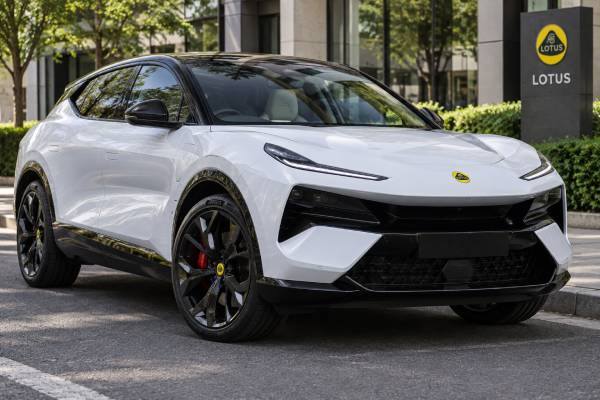
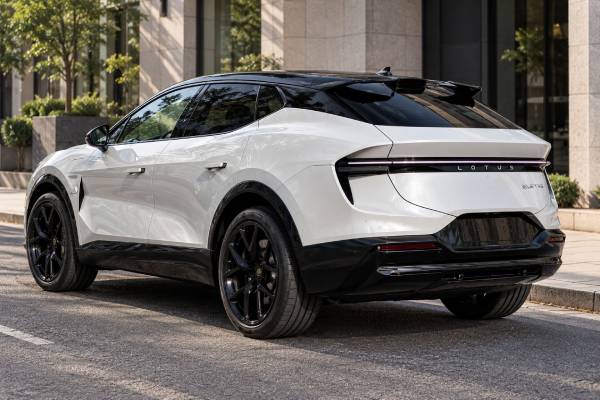
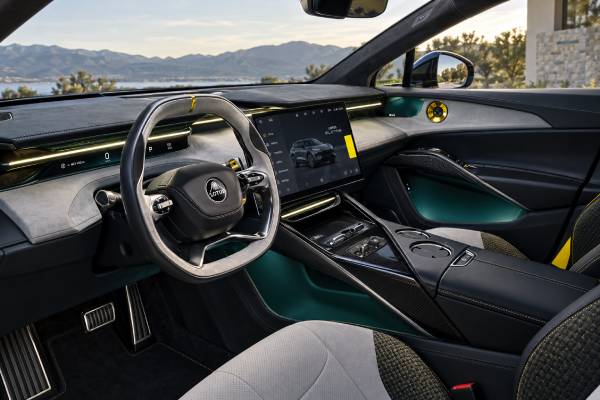
The Eletre 600 is the rational center of the refreshed range: it keeps the same 450 kW dual-motor foundation that is already far beyond normal family-SUV performance, while leaving expensive flagship hardware to the 900 models. It uses the 450 kW dual-motor all-wheel-drive branch of the Type 132 platform, with 710 Nm of combined torque and an 800 V electrical architecture built for very rapid DC charging. This guide concentrates on the value case for the entry 600-series powertrain without paying for mainly luxury or chassis-option upgrades. It also separates verified family-wide engineering facts from equipment that can vary by country, wheel package and production date. That distinction matters with the Eletre because Lotus has revised naming and specifications across markets, and even horsepower figures can differ depending on whether a source uses metric horsepower or brake horsepower. The safest approach is to identify the exact car by VIN and factory build data, then judge its battery, charging, software, suspension, tires and options as a complete ownership package rather than relying on the badge alone.
Table of Contents
- Where the Eletre 600 fits in the refreshed range
- Eletre 600 technical data and dimensions
- What 450 kW feels like in a large luxury EV
- Efficiency, charging and trip planning
- Standard chassis and technology: what matters
- Service, tires, brakes and software
- Who should buy the Eletre 600
Where the Eletre 600 fits in the refreshed range
The 600 is the version that makes the strongest argument for stopping once performance is already sufficient. A roughly four-second 0–100 km/h time in a five-door SUV is quick enough that most owners will reach legal-road limits long before they reach the car’s capability. The practical gain over the 900 series is simpler propulsion hardware and, in many configurations, a better range ceiling.
That does not make it basic. Air suspension, adaptive damping, strong regenerative braking, a large OLED interface and high-voltage fast charging give the 600 the same fundamental technology story as more expensive Eletres. The buying question is therefore about desired equipment rather than whether the base car is technically complete.
The 600 badge should not be read as a battery-size label. It identifies the lower-output performance family, while battery and range figures still depend on the exact market and configuration. That distinction prevents confusion when comparing advertisements.
Eletre 600 technical data and dimensions
The 600 uses the simpler of the two current Eletre propulsion layouts: 450 kW, 710 Nm, dual-motor AWD and single-speed reduction gearing. It retains the same high-voltage charging concept that makes the Eletre practical for long trips.
| Specification | Value |
|---|---|
| Powertrain type | Battery-electric vehicle (BEV) |
| Motor layout | One electric drive unit at each axle |
| Electrical architecture | 800 V class high-voltage system |
| Battery | 112 kWh class traction battery (Lotus market literature; verify gross/usable labeling for the exact car) |
| Drivetrain | All-wheel drive |
| Specification | Value |
|---|---|
| Maximum power | 450 kW (603 hp as specified for this assignment) |
| Maximum torque | 710 Nm (524 lb-ft) |
| Drive | Dual-motor all-wheel drive |
| Reduction gearing | Single-speed front and rear |
| 0–100 km/h | about 4.15 s, market specification dependent |
| Top speed | about 250 km/h, market specification dependent |
| Specification | Value |
|---|---|
| DC charging | Up to 350 kW CCS on compatible infrastructure |
| AC onboard charging | Up to 22 kW in markets/configurations that support it |
| DC rapid-charge claim | Lotus has advertised roughly 400 km / 250 miles of added range in about 20 minutes under favorable conditions |
| Regeneration | Adjustable regenerative braking |
| Charge planning | Navigation and app functions can support charging-route planning and battery monitoring |
| Specification | Value |
|---|---|
| Length | 5,103 mm (200.9 in) |
| Wheelbase | 3,019 mm (118.9 in) |
| Height | about 1,630 mm (64.2 in) |
| Width | 2,135 mm with camera mirror system in early published target specification |
| Body | Five-door luxury performance SUV |
| Seating | Four- or five-seat layouts have been offered, depending on market and configuration |
| Specification | Value |
|---|---|
| Front suspension | Multi-link |
| Rear suspension | Five-link / multi-link |
| Springing | Air suspension |
| Damping | Continuous Damping Control adaptive dampers |
| Steering | Electric power steering |
| Torque management | Brake-based torque vectoring; additional active chassis systems depend on trim/options |
| Specification | Value |
|---|---|
| High-voltage battery | Check state-of-health diagnostics, charging history and warning logs |
| Tires | Inspect inner and outer shoulders; large staggered performance tires are costly |
| Brakes | Check disc condition, corrosion and friction-brake operation despite strong regeneration |
| Software | Confirm current vehicle software and completion of applicable campaigns |
| 12 V system | Verify auxiliary-battery health because low-voltage faults can disable high-voltage vehicle functions |
What 450 kW feels like in a large luxury EV
The 600’s performance is best described as abundant rather than extreme. Around 4.15 seconds to 100 km/h is more than enough to make joining fast traffic effortless, while the lower-output drivetrain avoids the extra rear gearbox used by 900-series models. That simpler arrangement is a rational advantage for buyers who do not need sub-three-second launches.
The 600 does not need repeated launch tests; consistent response and even tire wear are better indicators of healthy everyday use.
Drive modes change response, steering weight and chassis behavior, but they cannot compensate for poor tires. Correct load and speed ratings, matching axle pairs and appropriate pressure are basic safety requirements on a vehicle with this much torque.
Normal brake use should feel smooth and quiet, especially on cars whose owners rely heavily on regeneration.
Efficiency, charging and trip planning
A five-seat 600 often suits family use better, while four seats may appeal to buyers prioritizing rear-cabin luxury.
Inspect active aero for damage because efficiency is part of the 600’s advantage over the faster 900 range.
Check the technology package you actually plan to use rather than paying for unused screen or assistance features.
Test air suspension in comfort-focused conditions because the 600’s value case depends partly on being easy to live with.
For this base 600-series model, the practical point is the value case for the entry 600-series powertrain without paying for mainly luxury or chassis-option upgrades. That should guide which options are worth paying for and which are only attractive on a showroom specification sheet.
Standard chassis and technology: what matters
The 600 is particularly well suited to owners who road-trip because it combines strong range potential with the same 350 kW DC ceiling used across the family. In practice, charger reliability and battery temperature usually matter more than whether a station advertises 300 or 350 kW.
Rapid charging should be repeatable, but the 600’s road-trip strength comes from range plus charging, not peak power alone.
Home AC access can matter more to total ownership convenience than any performance option on the base 600.
Cold-weather planning should include battery and cabin preconditioning where available. In hot climates, parking and charging conditions also matter because the thermal-management system may need to devote energy to keeping the pack within its preferred temperature range.
Service, tires, brakes and software
The 600’s simpler drive arrangement does not mean maintenance-free ownership. It still carries complex air suspension, high-voltage cooling, electronic driver assistance and large performance tires. Annual inspection should focus on condition rather than waiting for a dashboard warning.
Preventive care should focus on tires, alignment, suspension and software, all of which shape daily refinement.
Use the exact wheel and market specification when checking service values because “Eletre 600” still covers multiple configurations.
Battery diagnostics and observed efficiency make a stronger used-buying case than a single optimistic range display.
Who should buy the Eletre 600
A 600 buyer should compare total specification and tire size before focusing on price. A cheaper car with damaged 23-inch wheels or unwanted options can cost more to live with than a cleaner car on a sensible factory wheel package.
- Confirm the VIN, original market and advertised Eletre 600 specification before discussing price.
- Review campaign and software history with special attention to everyday value.
- Inspect wheels and tires for damage or wear that could affect wheel choice and simple single-speed propulsion.
- Cycle the air suspension and test the car on both smooth and broken pavement.
- Verify normal AC charging and complete a DC rapid-charge test when practical.
- Operate every fitted camera, assistance function, seat, climate and infotainment feature.
- Review battery diagnostics, warranty position and repair history before final payment.
On the 600, condition usually matters more than mileage within reason. A regularly driven car on fresh approved tires can make more sense than a lower-mileage bargain needing wheels, alignment work and overdue software attention.
The 600 is not a stripped-down Eletre
The entry point of a luxury EV range can sound like a compromise, but the Eletre 600 already includes the expensive engineering fundamentals: dual motors, AWD, an 800 V system, rapid DC charging, air suspension and a highly connected cabin. The money saved versus a 900-series car is mainly tied to powertrain escalation and specification, not the removal of the platform’s core technology.
That makes the 600 unusually easy to justify for road use. Its acceleration is already quicker than many dedicated sports cars, while the single-speed driveline avoids the additional rear gearbox used in the 900. Unless the buyer repeatedly uses the higher-speed performance of the flagship, the simpler model can deliver nearly all of the practical EV experience for less money.
Wheel size can change the whole ownership experience
Large wheels look appropriate under the Eletre’s body, but they affect more than appearance. A larger diameter usually means a lower-profile tire, which can sharpen initial steering response but gives less sidewall compliance over potholes. Wider performance tires can increase rolling resistance and road noise. Replacement cost also rises quickly, especially with staggered front and rear sizes.
A buyer choosing between two 600s should therefore compare wheel packages as carefully as interior trim. Inspect the inner rim barrels for bends, look across the full tire tread for uneven wear and check that all four tires are suitable matching products. A car on sensible wheels with fresh premium tires can be a better buy than a visually dramatic car needing an immediate four-tire replacement.
Using the 600 as a family EV
The five-door body, long wheelbase and available five-seat layout make the 600 practical in ways traditional Lotus models never attempted. Before purchase, test child-seat access, rear-door opening space, luggage loading height and visibility in the places the car will actually be used. The Eletre is over five meters long, so parking garages and narrow urban spaces deserve more thought than the performance figures suggest.
Driver-assistance cameras and sensors help, but they are not a substitute for understanding the vehicle’s size. Make sure every parking camera is clean and functioning, because repairing damaged sensor hardware after a minor impact can be disproportionately expensive.
Why range estimates should be personalized
A published WLTP ceiling is useful for comparing configurations, not for predicting every trip. Motorway speed, ambient temperature, wheel choice, rain, elevation and cabin heating can all move consumption significantly. The best ownership estimate comes from a test drive that resembles normal use, followed by a calculation using observed kWh/100 km rather than the dashboard’s optimistic or pessimistic recent history.
Making the 600 work as the everyday choice
Urban owners should test parking environments before buying. At more than five meters long, the Eletre can be awkward in older garages even though cameras and rear steering on some configurations help. Measure home parking width, charger-cable reach and door-opening space. These practical details can matter more than another option package.
Suburban and mixed-use drivers should focus on home charging. A 22 kW onboard charger is useful only if the electrical supply and wallbox can support it; many homes will charge at a lower rate. That is not a problem if the car sits overnight. Match charging hardware to actual daily mileage rather than paying for electrical upgrades that produce little real benefit.
High-mileage drivers should calculate tire cost per year. The Eletre’s weight and torque mean premium tires are a predictable ownership expense. Choosing an approved smaller wheel can reduce both tire price and impact damage risk while often improving comfort and efficiency.
The 600 works best when the owner accepts that “base” does not mean “basic.” Spend money on condition, useful options and the right wheel package before spending it on a higher badge whose extra performance will rarely be used.
Simple ownership choices can protect value
The 600 benefits from ordinary discipline: avoid curb damage, keep matching premium tires on each axle, repair alignment problems early and retain service invoices. Use protective charging-port practices in bad weather and do not force damaged connectors. Keep the cabin software and phone integration current, but document major updates in case behavior changes. When selling, provide a buyer with charging records, tire dates, service history and confirmation of outstanding campaigns. These details make the car easier to trust and can separate it from superficially similar listings. The 600 is likely to appeal most strongly as a complete, well-kept everyday EV, so evidence of careful routine use is more persuasive than aftermarket accessories or cosmetic modifications.
Additional ownership perspective
A practical advantage of the 600 is that it gives owners room to optimize for comfort and efficiency instead of chasing maximum specification. If ordering or shopping used, prioritize the wheel size, seat layout, charging access and assistance features that match normal routines. A carefully chosen 600 can be quieter, cheaper to tire and easier to live with than a more dramatic configuration. That is a meaningful form of performance: the car spends less time demanding compromises from its owner while still retaining far more acceleration than everyday driving requires.
One more ownership consideration
The 600 also suits owners who want to minimize complexity within the Eletre range. It is still a sophisticated vehicle, but it avoids the rear two-speed transmission used by the 900. That difference does not guarantee lower repair cost, yet it is a rational consideration for someone who values the platform’s charging speed and chassis more than maximum acceleration.
Where the 600 saves money without feeling compromised
The biggest economic advantage of the 600 is not necessarily energy consumption. It is the chance to avoid paying for performance hardware that many owners will seldom use. The single-speed 450 kW powertrain is already powerful enough for effortless overtaking and very rapid acceleration, while the 900-series rear transmission and extra output bring additional cost and complexity. Buyers who value range, charging speed and comfort can therefore spend on condition and useful equipment instead.
Wheel choice reinforces that logic. A slightly smaller factory wheel can reduce tire price, improve ride compliance and lower the risk of impact damage. On a heavy EV, those savings repeat every time a tire set is replaced. Before buying, compare real tire prices for the exact front and rear sizes rather than assuming all Eletres cost the same to maintain.
Insurance, home charging and dealer access should also be included in the comparison. A cheaper purchase becomes less attractive if it requires an electrical installation the owner cannot use efficiently or if specialist service is inconvenient. The 600 works best as a total-cost choice: strong core technology, sensible hardware and a configuration that fits everyday use without paying for bragging rights.
Final practical note
For owners planning several years of daily use, the 600’s simpler performance brief may age well. It gives up the 900-series rear two-speed hardware but keeps the platform features most people notice every day: quiet torque, AWD traction, air suspension, fast charging and a large connected cabin. That balance can make future replacement decisions easier because the car does not depend on maximum-output components to justify itself. A clean 600 with sensible wheels and strong support history is therefore worth considering as the “keep it and use it” choice in the Eletre range, not merely the cheapest way into the model.
References
- Lotus Eletre – The Electric Hyper SUV | Lotus Cars 2026
- Lotus Eletre – Explore Models | Lotus Cars 2026
- Lotus Eletre | How it Drives | Lotus Cars 2026
- Lotus Eletre – Specs, Features and More | Lotus Cars Netherlands 2026
- Lotus Eletre Handbook for Drivers | Lotus Cars 2026
- Lotus Charging | Lotus Cars 2026
Disclaimer
This article is for informational purposes only and is not a substitute for professional diagnosis, repair, or vehicle-specific service information. Specifications, torque values, maintenance intervals, charging behavior, software functions, and procedures can vary by VIN, market, production date, wheel package, and equipment. Verify all service work and technical values against official Lotus documentation for the exact vehicle.
If this guide was useful, please share it on Facebook, X/Twitter, or your preferred automotive community to support our work.