
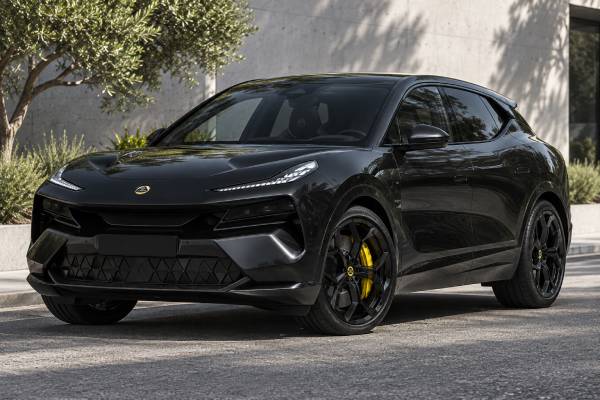
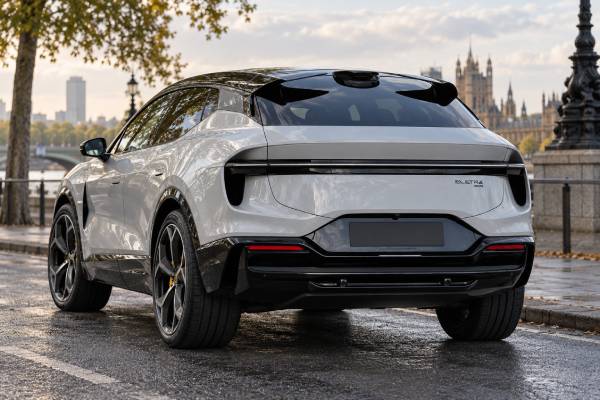
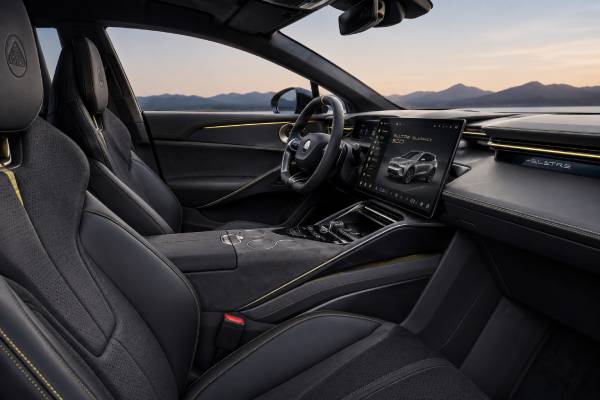
The Eletre 900 Performance is the version to understand if the numbers on the spec sheet are the main attraction. It uses the 675 kW dual-motor all-wheel-drive branch of the Type 132 platform, with 985 Nm of combined torque and an 800 V electrical architecture built for very rapid DC charging. This guide concentrates on the short-lived Performance naming and its maximum-output interpretation. It also separates verified family-wide engineering facts from equipment that can vary by country, wheel package and production date. That distinction matters with the Eletre because Lotus has revised naming and specifications across markets, and even horsepower figures can differ depending on whether a source uses metric horsepower or brake horsepower. The safest approach is to identify the exact car by VIN and factory build data, then judge its battery, charging, software, suspension, tires and options as a complete ownership package rather than relying on the badge alone.
Table of Contents
- What the 900 Performance name actually means
- Powertrain and charging specifications
- Why 675 kW changes the driving experience
- Chassis, braking and aero at hyper-SUV pace
- Range, charging strategy and daily use
- Maintenance priorities for a 900-series Eletre
- How to inspect and buy a 900 Performance
What the 900 Performance name actually means
At 675 kW, this is not a normal trim upgrade. It is a different performance regime, where traction management, tire temperature and the rear two-speed transmission become central to the way the car delivers speed. The 918 hp figure used in some global Lotus material reflects the metric-horsepower convention; UK-market material often expresses the same 675 kW output as about 905 bhp. The assignment title therefore identifies the same electrical output using a different horsepower convention rather than a different motor system.
For a buyer, the important distinction is not the badge alone but the hardware behind it. A genuine 900-series car should match the high-output specification, 985 Nm combined torque figure, faster acceleration claim and two-speed rear drive unit. Those features create the ownership differences that matter: more heat under repeated hard use, greater tire demand and more reason to verify software and driveline behavior on a test drive.
The model-year label also deserves care. Lotus has updated Eletre names and equipment as the range evolved, so registration year, build date and marketed model year may not tell exactly the same story. For any rare or transition-year car, the VIN-linked factory specification is the safest source of truth.
Powertrain and charging specifications
The defining engineering point is the 675 kW dual-motor system paired with a two-speed rear transmission. That hardware separates this car from the 450 kW branch more clearly than styling details do.
| Specification | Value |
|---|---|
| Powertrain type | Battery-electric vehicle (BEV) |
| Motor layout | One electric drive unit at each axle |
| Electrical architecture | 800 V class high-voltage system |
| Battery | 112 kWh class traction battery (Lotus market literature; verify gross/usable labeling for the exact car) |
| Drivetrain | All-wheel drive |
| Specification | Value |
|---|---|
| Maximum power | 675 kW (918 hp as specified for this assignment) |
| Maximum torque | 985 Nm (727 lb-ft) |
| Drive | Dual-motor all-wheel drive |
| Rear transmission | Two-speed |
| Front drive unit | Single-speed reduction |
| 0–100 km/h | 2.95 s |
| Top speed | 265 km/h (165 mph) |
| Specification | Value |
|---|---|
| DC charging | Up to 350 kW CCS on compatible infrastructure |
| AC onboard charging | Up to 22 kW in markets/configurations that support it |
| DC rapid-charge claim | Lotus has advertised roughly 400 km / 250 miles of added range in about 20 minutes under favorable conditions |
| Regeneration | Adjustable regenerative braking |
| Charge planning | Navigation and app functions can support charging-route planning and battery monitoring |
| Specification | Value |
|---|---|
| Length | 5,103 mm (200.9 in) |
| Wheelbase | 3,019 mm (118.9 in) |
| Height | about 1,630 mm (64.2 in) |
| Width | 2,135 mm with camera mirror system in early published target specification |
| Body | Five-door luxury performance SUV |
| Seating | Four- or five-seat layouts have been offered, depending on market and configuration |
| Specification | Value |
|---|---|
| Front suspension | Multi-link |
| Rear suspension | Five-link / multi-link |
| Springing | Air suspension |
| Damping | Continuous Damping Control adaptive dampers |
| Steering | Electric power steering |
| Torque management | Brake-based torque vectoring; additional active chassis systems depend on trim/options |
| Specification | Value |
|---|---|
| High-voltage battery | Check state-of-health diagnostics, charging history and warning logs |
| Tires | Inspect inner and outer shoulders; large staggered performance tires are costly |
| Brakes | Check disc condition, corrosion and friction-brake operation despite strong regeneration |
| Software | Confirm current vehicle software and completion of applicable campaigns |
| 12 V system | Verify auxiliary-battery health because low-voltage faults can disable high-voltage vehicle functions |
Why 675 kW changes the driving experience
The acceleration number is spectacular, but the more useful way to understand this version is through energy delivery. With 985 Nm available quickly and AWD managing traction, the car can build speed with almost no pause. The rear two-speed unit broadens that performance envelope, helping the 900-series combine launch force with a higher top speed than the 600-series cars.
Heat-soak behavior matters on this 675 kW car. After it is warm, power delivery should remain clean and free of warnings.
Drive modes change response, steering weight and chassis behavior, but they cannot compensate for poor tires. Correct load and speed ratings, matching axle pairs and appropriate pressure are basic safety requirements on a vehicle with this much torque.
Use the friction brakes enough to confirm a smooth pedal and clean discs; regeneration can hide corrosion during gentle ownership.
Chassis, braking and aero at hyper-SUV pace
Check active aero pieces after any body repair, because cooling and high-speed stability depend on correct operation.
Test the full digital cockpit and assistance suite after software updates, not just the central screen.
Cycle ride height and damping modes, then inspect whether the 900 Performance sits level after parking.
Choose four or five seats for actual passenger needs; the performance badge does not make one layout objectively better.
For this performance-focused 900-series configuration, the practical point is the short-lived Performance naming and its maximum-output interpretation. That should guide which options are worth paying for and which are only attractive on a showroom specification sheet.
Range, charging strategy and daily use
High output does not make charging fundamentally different, but it makes energy use easier to underestimate. Frequent full-throttle acceleration, high motorway speed, cold weather and 23-inch performance tires can all reduce distance between stops. Plan trips from observed consumption rather than the best brochure number.
Judge rapid charging by a stable session with a warm battery, not by whether one charger briefly shows 350 kW.
For daily charging, prioritize predictable access and cost; maximum DC power matters mainly on long trips.
Cold-weather planning should include battery and cabin preconditioning where available. In hot climates, parking and charging conditions also matter because the thermal-management system may need to devote energy to keeping the pack within its preferred temperature range.
Maintenance priorities for a 900-series Eletre
A 900-series car concentrates maintenance spending in tires, brakes, suspension hardware and software-supported systems rather than engine service. High torque can consume rear tires quickly if alignment is marginal, while strong regeneration can allow friction brakes to corrode from lack of use.
Watch tires, driveline behavior, brake feel and software together because the 900 Performance loads all four systems heavily.
Use VIN-specific service data for this rare transition model, especially wheel, chassis and high-voltage procedures.
Assess the battery with diagnostics and repeatable consumption. A post-launch range estimate alone says little about pack health.
How to inspect and buy a 900 Performance
Start by proving the car is the 675 kW Performance specification described in the advertisement. Then inspect tires and wheels, check the two-speed rear driveline under load, complete both AC and DC charging tests if possible, and obtain a VIN-based service/campaign check from Lotus.
- Confirm the VIN, original market and advertised 900 Performance specification before discussing price.
- Review campaign and software history with special attention to performance provenance.
- Inspect wheels and tires for damage or wear that could affect rear two-speed unit and very high tire load.
- Cycle the air suspension and test the car on both smooth and broken pavement.
- Verify normal AC charging and complete a DC rapid-charge test when practical.
- Operate every fitted camera, assistance function, seat, climate and infotainment feature.
- Review battery diagnostics, warranty position and repair history before final payment.
Mileage is a weak shortcut on this rare high-output model. A documented car that has been exercised regularly and maintained with correct tires can be preferable to a garage queen with stale software or storage-related faults.
How to interpret the 918 hp rating
The 918 hp number is best treated as a unit-convention issue, not evidence of a separate hidden powertrain. Lotus publishes the 675 kW output in markets that convert kilowatts to metric horsepower, while UK material commonly uses brake horsepower and lands at roughly 905 bhp. That difference is large enough to look like a mechanical change in a classified ad, yet the decisive identifier is the 675 kW rating. Buyers comparing imported cars should therefore write down the original market, the kW figure, torque, transmission type and VIN before deciding that one example is more powerful than another.
The same discipline helps with model-year labels. A car registered in 2025 can have been built earlier, and a market may have continued selling a previous naming scheme while another had already moved to the 600/900 structure. A rare badge is not proof by itself. Factory build data should show the drivetrain and equipment that physically belong to the car.
What repeated acceleration asks from the car
A single 0–100 km/h launch mainly demonstrates available grip and peak output. Repeated acceleration adds battery temperature, inverter temperature, motor cooling and tire heat to the equation. That is why a used inspection should not be limited to one dramatic run. After normal warm-up, the car should deliver strong, consistent response without drivetrain warnings, unusual rear-drive noises or abrupt changes in power delivery. The test must be done legally and safely, but consistency is more informative than spectacle.
The braking system deserves the same attention. Regeneration can handle much ordinary deceleration, yet the friction brakes still have to manage emergency stops and repeated high-energy braking. Cars that have spent long periods in gentle use may show disc corrosion, while cars driven very hard can show heat-related wear. Smooth pedal response, clean discs and even tire condition are more valuable than freshly detailed calipers.
Ownership economics beyond electricity
Electricity is only one running cost. The 900 Performance can consume expensive staggered tires at a pace that depends heavily on alignment, road surface and driving style. Large forged wheels are vulnerable to cosmetic and structural damage, and performance brake components are not cheap. Insurance may also reflect the car’s output and repair complexity. A realistic annual budget should therefore include tires, alignment, wheel repair, brake inspection and a reserve for electronic or suspension diagnosis.
Depreciation is harder to predict because the Eletre sits at the intersection of luxury EV, high-performance SUV and rapidly changing technology. A short-lived Performance badge may interest enthusiasts, but condition and documentation are likely to matter more than rarity alone. A collector-quality argument weakens quickly if the car has mismatched tires, missing original parts or uncertain accident history.
Configuration matters more than showroom drama
The ideal 900 Performance is not necessarily the car with every expensive option. A driver who covers long motorway distances may prefer a wheel package that improves ride and tire replacement cost. Someone who uses the car for repeated high-speed driving may value the strongest chassis and brake specification. Four-seat layouts can feel special but reduce flexibility. The correct car is the one whose original configuration fits the intended use without requiring expensive changes after purchase.
Practical scenarios for the 900 Performance
For a driver who commutes in traffic, the 900 Performance should be evaluated for smoothness at low speed rather than launch force. Check that the accelerator can be modulated cleanly in parking maneuvers, that regenerative braking is predictable, and that the air suspension does not make the car feel restless over patched urban roads. Extreme output is valuable only when the car remains easy to place in ordinary use.
For long motorway trips, consumption becomes a better metric than peak range. Record energy use at a steady legal cruising speed and compare it with the route distance between reliable chargers. High-speed aerodynamics mean a small increase in cruising speed can create a disproportionately large energy penalty. The fastest overall trip may come from driving slightly slower and needing one less charging stop.
For enthusiastic weekend use, begin with tire pressures and temperature, not drive mode. The chassis cannot deliver repeatable behavior if one axle has incorrect pressure or mixed tire condition. After driving, allow the car to cool normally and note any new warnings or noises. Consistency over several drives is a better sign of health than one impressive demonstration.
For resale, keep records of software updates, wheel repairs, tire replacements and any bodywork. A rare performance label attracts knowledgeable buyers who will ask detailed questions. Clear documentation reduces uncertainty and makes it easier to distinguish a carefully maintained example from a car that has simply been cosmetically prepared for sale.
One more ownership consideration
A sensible ownership baseline is to measure tire tread at several points, note cold pressures, photograph wheel condition and record software version immediately after purchase. Repeat those observations periodically. On a car with this much torque, small changes in alignment or tire wear can become expensive quickly, and a written baseline makes gradual deterioration easier to spot before it changes the way the vehicle drives.
Interpreting condition on a maximum-output Eletre
A 900 Performance can look immaculate while still carrying expensive mechanical clues in its consumables. Read the front and rear tires as a history of alignment and torque use. Heavy inside-edge wear suggests geometry problems or sustained aggressive use; one new axle paired with older tires on the other may indicate the seller corrected a symptom rather than a cause. Check wheel faces for cosmetic refinishing, but also inspect inner barrels because high-performance low-profile tires transmit impact loads directly into the rim.
The rear drive unit deserves a separate conversation from the battery. Ask whether the car has ever shown drivetrain, gearbox or propulsion warnings and whether any software or hardware work followed. A clean diagnostic scan after a proper road test is more useful than a seller saying the warning “went away.” The two-speed rear transmission is part of what makes this version special, so smooth, consistent behavior matters to both driving quality and future value.
Finally, think about where the car will be serviced. A general EV workshop may handle tires and basic chassis work, but specialist high-voltage and Lotus-specific driveline issues require the right diagnostic access and training. For a short-lived high-output specification, proximity to capable support can be worth more than a small saving in purchase price.
Final practical note
For insurance and resale, document the exact 675 kW identity rather than relying on the horsepower label alone. Market literature may describe the same electrical output using different horsepower conventions, so keep the original build record and market specification with the car. That avoids future confusion if a buyer sees 918 hp in one source and about 905 bhp in another. Clear documentation also helps an insurer or specialist understand that the vehicle is the high-output configuration with the two-speed rear drive unit, not a 450 kW car carrying later badges or cosmetic parts.
References
- Lotus Eletre – The Electric Hyper SUV | Lotus Cars 2026
- Lotus Eletre – Explore Models | Lotus Cars 2026
- Lotus Eletre | How it Drives | Lotus Cars 2026
- Lotus Eletre – Specs, Features and More | Lotus Cars Netherlands 2026
- Lotus Eletre Handbook for Drivers | Lotus Cars 2026
- Lotus Charging | Lotus Cars 2026
Disclaimer
This article is for informational purposes only and is not a substitute for professional diagnosis, repair, or vehicle-specific service information. Specifications, torque values, maintenance intervals, charging behavior, software functions, and procedures can vary by VIN, market, production date, wheel package, and equipment. Verify all service work and technical values against official Lotus documentation for the exact vehicle.
If this guide was useful, please share it on Facebook, X/Twitter, or your preferred automotive community to support our work.