
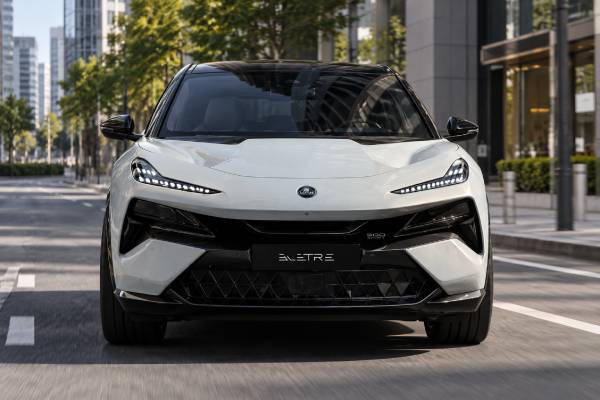
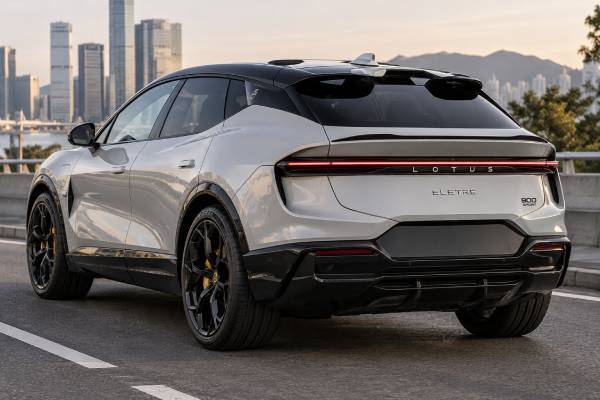
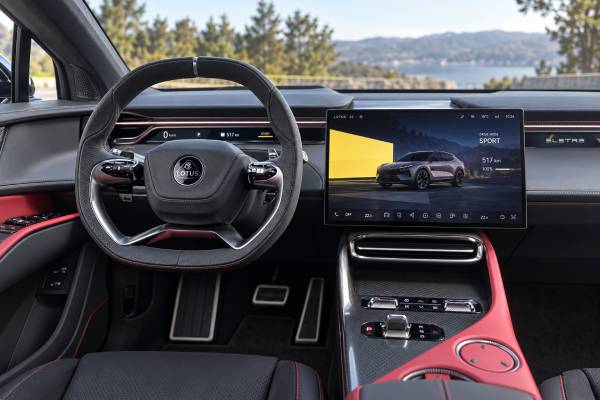
The Eletre 900 SPORT is for buyers who want the fastest Eletre architecture and also care about the chassis, wheel, brake and appearance decisions that make a high-output SUV feel deliberate rather than merely powerful. It uses the 675 kW dual-motor all-wheel-drive branch of the Type 132 platform, with 985 Nm of combined torque and an 800 V electrical architecture built for very rapid DC charging. This guide concentrates on combining the 900-series propulsion hardware with the sport-oriented chassis and appearance package. It also separates verified family-wide engineering facts from equipment that can vary by country, wheel package and production date. That distinction matters with the Eletre because Lotus has revised naming and specifications across markets, and even horsepower figures can differ depending on whether a source uses metric horsepower or brake horsepower. The safest approach is to identify the exact car by VIN and factory build data, then judge its battery, charging, software, suspension, tires and options as a complete ownership package rather than relying on the badge alone.
Table of Contents
- What makes the 900 SPORT the range-topper
- 900 SPORT specifications and hardware
- Performance systems that justify the Sport badge
- High-speed chassis, tires and braking
- Road-trip range and 350 kW charging
- Care, software and consumables
- Who the 900 SPORT suits best
What makes the 900 SPORT the range-topper
The SPORT badge makes sense only if the surrounding hardware supports the output. On a 675 kW Eletre, active chassis control, suitable performance tires and strong brakes are not styling accessories; they are the systems that keep nearly one megawatt of peak propulsion output usable in a tall, heavy five-door vehicle.
This is also the Eletre in which configuration matters most. Large wheels can sharpen response and fill the arches, but they raise unsprung mass and replacement cost. Carbon or high-performance brake options can be valuable for repeated hard driving yet unnecessary for owners whose cars spend most of their time on motorways. Buying the right specification is more important than simply buying the highest specification.
On the 900 SPORT, a clean cosmetic specification can be expensive to restore. Large wheels, performance tires, carbon trim and painted brake hardware all deserve close inspection because curb damage and poor refinishing can quickly erase the benefit of buying the flagship.
900 SPORT specifications and hardware
The 900 SPORT combines the 675 kW drivetrain with a sport-oriented chassis and equipment package. Its technical value is the integration of power, active chassis control, braking and tires rather than the horsepower figure in isolation.
| Specification | Value |
|---|---|
| Powertrain type | Battery-electric vehicle (BEV) |
| Motor layout | One electric drive unit at each axle |
| Electrical architecture | 800 V class high-voltage system |
| Battery | 112 kWh class traction battery (Lotus market literature; verify gross/usable labeling for the exact car) |
| Drivetrain | All-wheel drive |
| Specification | Value |
|---|---|
| Maximum power | 675 kW (905 hp as specified for this assignment) |
| Maximum torque | 985 Nm (727 lb-ft) |
| Drive | Dual-motor all-wheel drive |
| Rear transmission | Two-speed |
| Front drive unit | Single-speed reduction |
| 0–100 km/h | 2.95 s |
| Top speed | 265 km/h (165 mph) |
| Specification | Value |
|---|---|
| DC charging | Up to 350 kW CCS on compatible infrastructure |
| AC onboard charging | Up to 22 kW in markets/configurations that support it |
| DC rapid-charge claim | Lotus has advertised roughly 400 km / 250 miles of added range in about 20 minutes under favorable conditions |
| Regeneration | Adjustable regenerative braking |
| Charge planning | Navigation and app functions can support charging-route planning and battery monitoring |
| Specification | Value |
|---|---|
| Length | 5,103 mm (200.9 in) |
| Wheelbase | 3,019 mm (118.9 in) |
| Height | about 1,630 mm (64.2 in) |
| Width | 2,135 mm with camera mirror system in early published target specification |
| Body | Five-door luxury performance SUV |
| Seating | Four- or five-seat layouts have been offered, depending on market and configuration |
| Specification | Value |
|---|---|
| Front suspension | Multi-link |
| Rear suspension | Five-link / multi-link |
| Springing | Air suspension |
| Damping | Continuous Damping Control adaptive dampers |
| Steering | Electric power steering |
| Torque management | Brake-based torque vectoring; additional active chassis systems depend on trim/options |
| Specification | Value |
|---|---|
| High-voltage battery | Check state-of-health diagnostics, charging history and warning logs |
| Tires | Inspect inner and outer shoulders; large staggered performance tires are costly |
| Brakes | Check disc condition, corrosion and friction-brake operation despite strong regeneration |
| Software | Confirm current vehicle software and completion of applicable campaigns |
| 12 V system | Verify auxiliary-battery health because low-voltage faults can disable high-voltage vehicle functions |
Performance systems that justify the Sport badge
The 900 SPORT should feel complete rather than merely explosive. Massive power is useful only if steering, damping, tire grip and brake response remain coherent. On a good road the car should turn in cleanly, settle quickly after a bump and allow fine accelerator adjustment without making the driver fight its size.
A 900 SPORT should be tested as an integrated performance system, not as a sequence of isolated launch attempts.
Drive modes change response, steering weight and chassis behavior, but they cannot compensate for poor tires. Correct load and speed ratings, matching axle pairs and appropriate pressure are basic safety requirements on a vehicle with this much torque.
Brake hardware deserves close inspection because flagship speed can expose wear that regeneration masks in daily traffic.
High-speed chassis, tires and braking
Test every chassis control and driver display because the SPORT experience depends heavily on software integration.
Air suspension, anti-roll control and steering should feel coordinated over mixed surfaces rather than impressive only on smooth roads.
Seating layout changes the flagship’s practicality but should not distract from the condition of its costly dynamic hardware.
Inspect aero, wheels and exterior performance trim together, especially after any documented body repair.
For this sport-focused 900-series flagship, the practical point is combining the 900-series propulsion hardware with the sport-oriented chassis and appearance package. That should guide which options are worth paying for and which are only attractive on a showroom specification sheet.
Road-trip range and 350 kW charging
The 900 SPORT can be an excellent road-trip car if the driver separates road speed from charging speed. Sustained high velocity increases aerodynamic energy demand dramatically, often costing more journey time in extra charging than it saves on the road.
Fast charging should work consistently after spirited use; thermal management is part of flagship performance.
At home, predictable AC charging and preconditioning make a 900 SPORT far easier to use than its extreme output suggests.
Cold-weather planning should include battery and cabin preconditioning where available. In hot climates, parking and charging conditions also matter because the thermal-management system may need to devote energy to keeping the pack within its preferred temperature range.
Care, software and consumables
A 900 SPORT owner should treat tires as a calibrated component. Mixing brands, fitting the wrong load rating or replacing only one tire on an axle can undermine the chassis balance the expensive active systems are trying to create.
Tire, brake and active-chassis checks should be treated as routine ownership tasks rather than occasional repairs.
VIN-specific service values matter because the flagship may have wheel or brake options absent from lesser Eletres.
Battery-health evidence should be considered alongside tire and brake wear to understand how aggressively the car has been used.
Who the 900 SPORT suits best
The 900 SPORT should be assessed as a system. Verify the flagship drivetrain, then inspect wheel, tire, brake and active-chassis specification. Cosmetic condition matters too because the visual options that make the Sport desirable can be costly to restore correctly.
- Confirm the VIN, original market and advertised 900 SPORT specification before discussing price.
- Review campaign and software history with special attention to flagship system condition.
- Inspect wheels and tires for damage or wear that could affect performance tires, active chassis and expensive trim.
- Cycle the air suspension and test the car on both smooth and broken pavement.
- Verify normal AC charging and complete a DC rapid-charge test when practical.
- Operate every fitted camera, assistance function, seat, climate and infotainment feature.
- Review battery diagnostics, warranty position and repair history before final payment.
For a 900 SPORT, inspect the story told by tires, brakes, wheels and software. That evidence of use is more informative than mileage alone and is central to deciding whether the flagship has been cared for properly.
SPORT should mean a coherent system
The 900 SPORT has so much propulsion performance that every supporting component matters. Tires must convert torque into grip, brakes must handle the speed the motors can create, suspension must control the body and steering must remain predictable as load transfers rapidly. A flagship that is powerful but running on poor tires or damaged wheels is no longer functioning as the engineers intended.
That is why inspection should be system-based. Do not check the brakes, tires and suspension as isolated items. Ask whether they tell a consistent story about how the car has been used. Fresh rear tires with heavily heat-spotted front brakes, for example, may justify deeper questions about previous driving and maintenance.
Wheel and brake options need a use case
Large forged wheels and high-performance brakes can be worthwhile for repeated fast driving, but they also raise replacement cost. On rough roads, smaller approved wheels may deliver better compliance and lower the chance of rim damage. A buyer who never uses the car hard enough to heat the brakes may gain more from comfort and lower consumable cost than from the most aggressive factory setup.
If carbon-ceramic or other specialist brake hardware is fitted in a particular market configuration, inspection by someone familiar with that system is essential. Cosmetic appearance alone does not establish remaining service life, and replacement costs can be substantial.
Software is part of the flagship experience
The 900 SPORT relies on control software to coordinate motors, traction, stability systems, active chassis hardware and driver-assistance features. Keep the car current with Lotus updates and investigate persistent software warnings rather than repeatedly clearing them. A modern EV can have perfect mechanical components yet deliver a poor driving experience when sensors or control modules are not communicating correctly.
Digital ownership transfer also matters. Confirm that the seller removes the vehicle from personal accounts and that the new owner can activate supported connected services. This is an ordinary part of buying a connected car, not an optional administrative detail.
When the 900 SPORT is the right Eletre
Choose it when maximum power and chassis specification are both central to the reason for buying. If the car will mainly cover relaxed motorway miles, a 600 GT may deliver more of what matters with lower tire and drivetrain demands. If the appeal is the engineering excess itself, the 900 SPORT is compelling—but only when condition, history and specification support the badge.
Building a sensible 900 SPORT ownership plan
Before purchase, price the consumables on the exact wheel and brake specification. Do not use generic Eletre figures. Performance tire sizes, premium brake hardware and cosmetic wheel repairs can vary enough to change annual running costs materially. Add insurance and any connected-service fees to the same calculation.
After purchase, establish a baseline inspection even if the car has a recent service stamp. Record tire tread across each shoulder, photograph wheels, confirm software level and note suspension ride height. This creates a reference for spotting gradual changes later.
If the car is driven enthusiastically, shorten visual inspection intervals rather than assuming the normal service schedule covers every use case. Check tires after long fast trips, listen for new driveline noises and pay attention to brake feel. Preventive observation is inexpensive compared with repairing secondary damage caused by ignoring a developing problem.
For owners who mostly use the car gently, exercise the mechanical brakes periodically in a safe manner because strong regeneration can leave friction surfaces underused. The 900 SPORT may be engineered for extreme performance, but ordinary maintenance habits are what keep that performance available year after year.
Cosmetic repair quality matters on a flagship
A 900 SPORT often carries expensive paint, trim and wheel finishes, so inspect repairs in bright natural light. Look for color mismatch, overspray, uneven panel gaps and poorly refinished carbon or gloss-black pieces. Use the vehicle history and paint-depth measurements where appropriate, but remember that cosmetic work is not automatically a reason to reject a car. The important question is whether repairs were performed correctly and whether any structural, sensor or suspension damage was involved. Driver-assistance cameras and radar-related hardware may require calibration after body repair. A professionally repaired car with complete invoices can be a safer purchase than one with unexplained perfect-looking paint and no documentation.
Additional ownership perspective
The flagship also benefits from disciplined storage. If the car will sit for extended periods, follow Lotus guidance for traction-battery charge level and 12 V support rather than improvising. Avoid leaving tires underinflated and move or prepare the vehicle appropriately to reduce flat spotting. Keep the cabin dry and ventilated, and maintain account security for connected services. A 900 SPORT may be technically advanced, but long storage still creates familiar risks involving batteries, tires, moisture and brakes. Preventing those problems is much cheaper than repairing them later.
One more ownership consideration
The 900 SPORT’s resale market is likely to be sensitive to specification. Keep the original option documentation and avoid irreversible changes to wheels, suspension or exterior trim. A future buyer looking for the flagship may value factory coherence more than aftermarket claims of improvement, particularly when active chassis software was calibrated around approved hardware.
Flagship ownership rewards disciplined configuration choices
The 900 SPORT invites expensive options, but the best configuration is the one that fits the roads and driving the owner actually does. Large wheels can sharpen appearance and response while increasing tire cost and impact sensitivity. Aggressive brake hardware can be valuable for repeated high-energy stops yet unnecessary for relaxed motorway use. Every flagship option should therefore be tied to a real use case.
After purchase, resist the temptation to modify several systems at once. Changes to wheel weight, offset, tire construction or suspension height can affect steering and active-chassis behavior. If customization is important, make one reversible change at a time and keep the original components. That preserves both diagnostic clarity and resale flexibility.
The same discipline applies to software. Install manufacturer updates through approved channels and document major changes. If the car behaves differently after an update, note the version and symptom before pursuing mechanical fixes. A 900 SPORT integrates propulsion, chassis and electronics tightly; maintaining that integration is what keeps the flagship feeling coherent rather than simply powerful.
Final practical note
A flagship inspection should finish with a complete option audit. Compare the VIN-linked build information with the wheels, brakes, interior, glass and active-chassis features physically present on the car. Expensive components may have been replaced after damage with different factory or aftermarket parts, and the car can still look convincing at a glance. Photograph the specification at purchase so future changes are documented. For a 900 SPORT, originality is not only a collector concern: the control systems, tire sizes and suspension calibration were developed around known hardware, so a coherent factory configuration has practical dynamic value as well.
Keep the original wheel, tire and chassis specification documented even if later changes are made. Returning the car to a known factory baseline can simplify troubleshooting and strengthen resale confidence.
Preserve those records permanently.
References
- Lotus Eletre – The Electric Hyper SUV | Lotus Cars 2026
- Lotus Eletre – Explore Models | Lotus Cars 2026
- Lotus Eletre | How it Drives | Lotus Cars 2026
- Lotus Eletre – Specs, Features and More | Lotus Cars Netherlands 2026
- Lotus Eletre Handbook for Drivers | Lotus Cars 2026
- Lotus Charging | Lotus Cars 2026
Disclaimer
This article is for informational purposes only and is not a substitute for professional diagnosis, repair, or vehicle-specific service information. Specifications, torque values, maintenance intervals, charging behavior, software functions, and procedures can vary by VIN, market, production date, wheel package, and equipment. Verify all service work and technical values against official Lotus documentation for the exact vehicle.
If this guide was useful, please share it on Facebook, X/Twitter, or your preferred automotive community to support our work.